















Walk into any hunting camp these days and you’ll hear someone talking about thermal scopes. But along with the growing popularity of these devices comes a whole lot of misinformation. We’ve heard it all—from claims that thermals can see through walls to the belief they only work at night.
Look, we get it. Thermal technology sounds like something straight out of a sci-fi movie. And honestly, that’s part of the problem. Hollywood has done a number on public perception, creating expectations that don’t match reality. After years of working with hunters and testing thermal devices like our Sirius HD and Pegasus 2 LRF, we’ve identified the most persistent myths that need debunking.
Here’s the thing—thermal scopes are amazing tools. But they work best when you actually understand what they can and can’t do. Let’s clear up the confusion.
Myth 1: Thermal Scopes Can See Through Walls
This one tops the list for a reason. It’s probably the most common misconception out there, and it’s completely false.
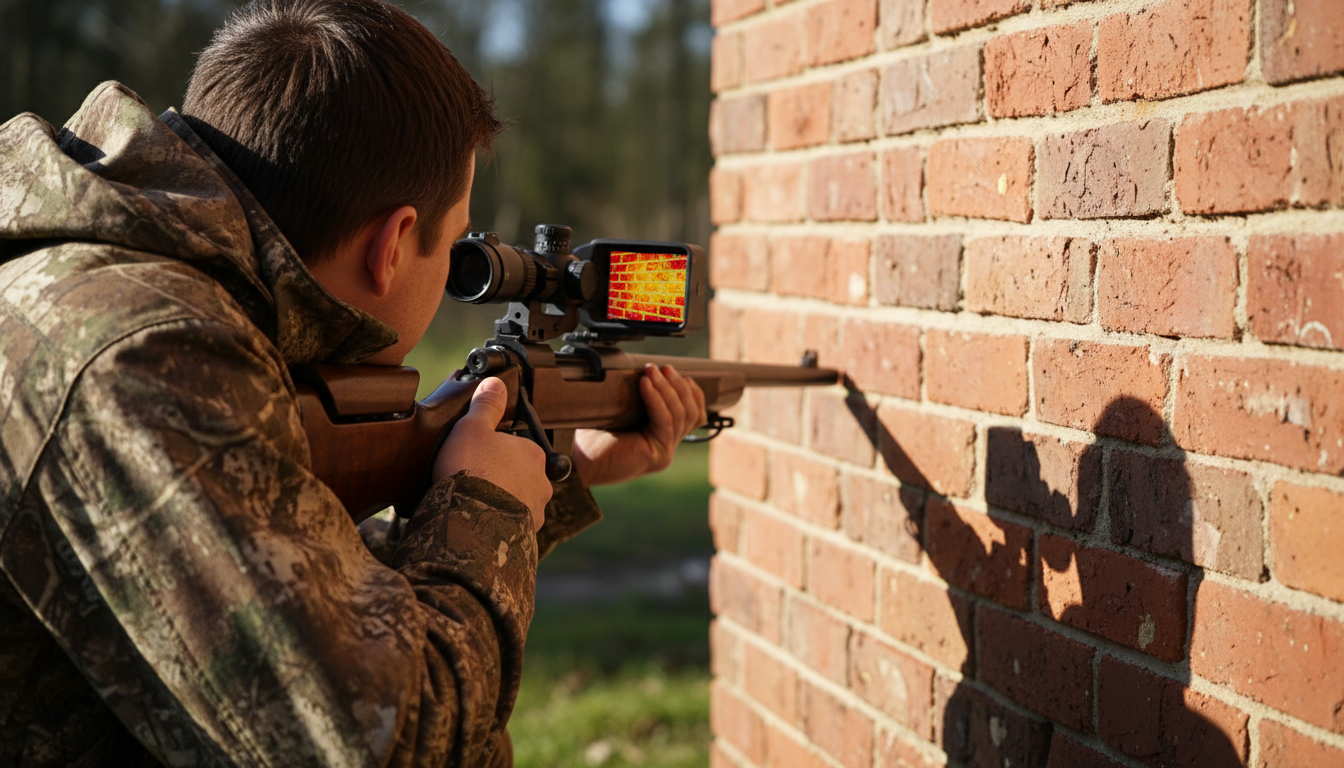
Thermal cameras detect infrared radiation—essentially heat energy—emitted from surfaces. They can’t penetrate solid materials like walls, doors, or concrete. When you point a thermal scope at a wall, you’re seeing the surface temperature of that wall, nothing more. A wall at uniform temperature will show up as a blank thermal image, even if there’s a person standing right behind it.
Think of it this way: thermal imaging detects surface heat, not X-rays. The infrared radiation that thermal sensors pick up doesn’t pass through most solid materials. In fact, some materials that are transparent to visible light—like glass and water—appear completely opaque when viewed through thermal imaging.
Now, there’s a tiny kernel of truth buried in this myth. If someone places their hand against a thin wall for an extended period, you might detect a slight temperature difference on the surface. But that’s just the wall warming up—you’re still not seeing through it. The same principle applies when we’re out in the field with our Draco thermal scope. It’ll spot a hog behind brush because the heat signature passes through vegetation gaps, not because it’s seeing through solid objects.
Myth 2: Thermal Scopes Only Work at Night
We hear this one constantly, and it drives us crazy because it limits how people use these tools.
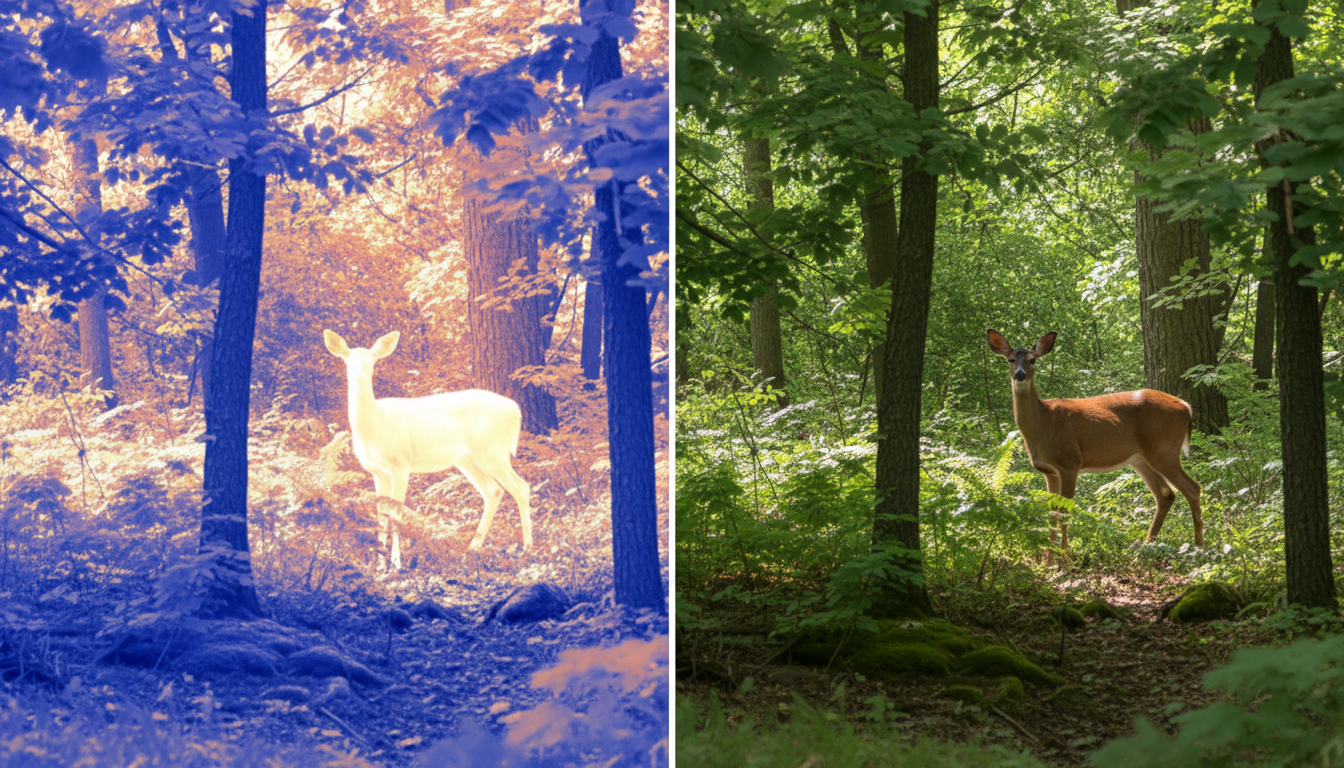
Thermal scopes work just as effectively during the day as they do at night. The reason is simple: thermal imaging doesn’t rely on visible light. It detects temperature differences, which exist 24/7. Whether it’s noon or midnight, warm-blooded animals still emit heat that contrasts with their surroundings.
During daylight hours, thermal scopes can actually give you advantages that traditional optics can’t match. Dense fog, heavy glare, or thick vegetation that would blind a regular scope? Not a problem. We’ve seen countless hunters use thermal devices to spot deer bedded in tall grass during midday scouting sessions—animals they would’ve walked right past with binoculars.
One real-world example really hammers this home. A group of hunters we know in Texas regularly use thermals during dawn and early morning hours to locate feral hogs in dense brush. The sun’s up, there’s plenty of light, but the vegetation is too thick for visual identification. Their thermal monocular picks up heat signatures in seconds that would take 10-15 minutes to spot with high-end glass.
Here’s what makes daytime thermal use so effective: while the ambient temperature rises, living creatures maintain their body temperature. That contrast is what thermal sensors pick up on. A deer at 98°F stands out whether the surrounding temperature is 40°F or 85°F.
Myth 3: Thermal Scopes Work Perfectly in All Weather Conditions
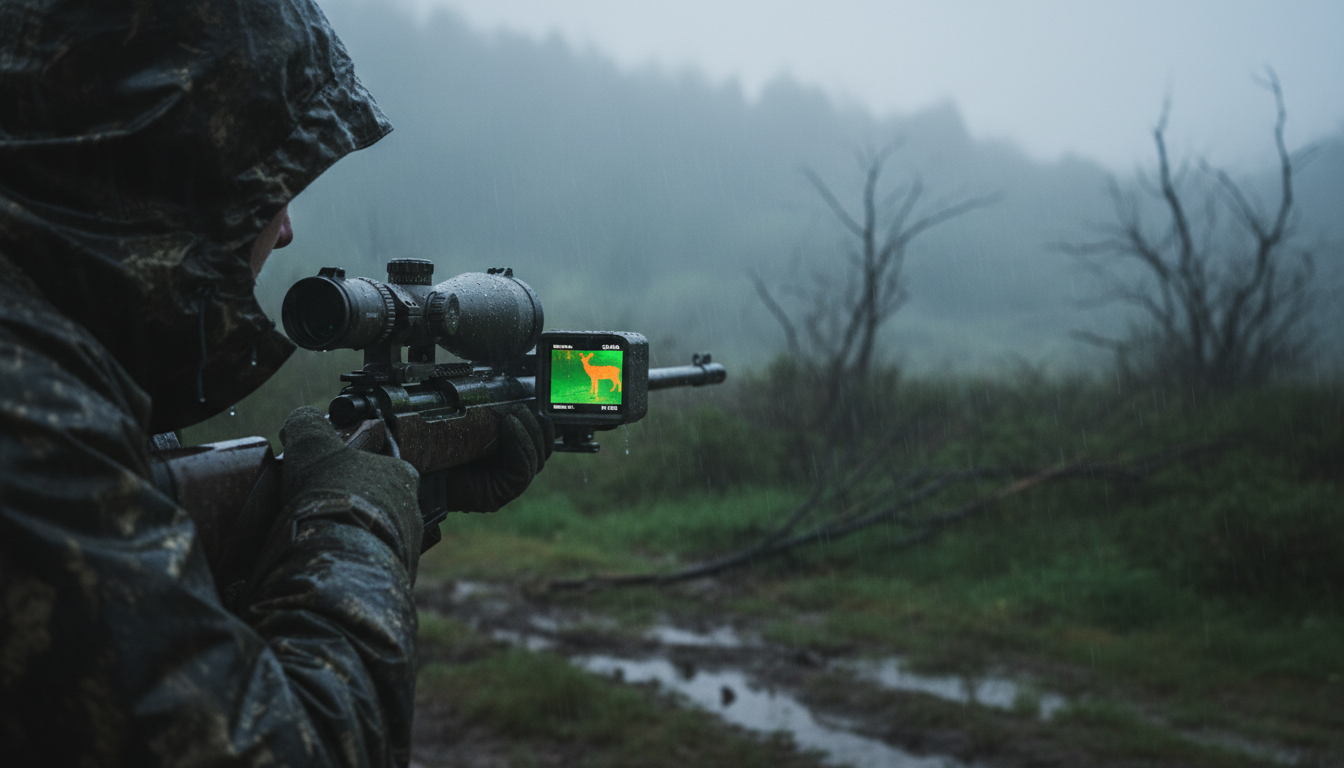
This myth swings too far in the other direction. Yes, thermal scopes perform better than traditional optics in adverse weather, but they’re not magic.
Rain, fog, and heavy snow can reduce thermal imaging effectiveness. While thermals cut through light fog and mist far better than night vision or standard scopes, extremely dense fog can shorten detection range. Heavy rain can mask heat signatures or create thermal “noise” that makes targets harder to identify at distance.
That said, thermal scopes still outperform other technologies in bad weather. We’ve tested our devices in everything from light drizzle to heavy downpours. Detection capability does decrease in extreme conditions, but we’ve never encountered a scenario where a traditional scope worked better than thermal in adverse weather.
Temperature contrast matters more than most people realize. In environments where ambient temperature closely matches body temperature—like a humid 95°F summer afternoon—thermal imaging becomes less effective. The heat signature contrast that makes thermals so useful diminishes when everything is roughly the same temperature.
Does this mean thermals are useless in hot weather? Not at all. But it does mean you need to adjust expectations and understand the technology’s limitations. A quality thermal device with good sensitivity, like those equipped with modern sensors, will still detect temperature differences as small as a few degrees.
Myth 4: Higher Price Always Means Better Detection Range
We’ve saved this one for last because it involves actual money, and nobody wants to overspend based on false assumptions.
Detection range isn’t just about price—it’s about the right combination of sensor resolution, lens size, and pixel pitch. Sure, more expensive models often include these features, but the relationship isn’t as straightforward as “spend more, see farther.”
Here’s what actually determines detection range: sensor resolution (like 384×288 vs 640×480), lens diameter and focal length, and the quality of the thermal detector itself. A scope with a 640×480 sensor and 50mm lens will generally detect targets farther than a 384×288 sensor with the same lens. But throw a larger 75mm lens on that 384 model, and suddenly the comparison changes.
We’ve seen hunters drop serious cash on high-end thermal scopes expecting to spot game at 1,000+ yards, only to discover that detection and identification are two very different things. You might detect a heat signature at 800 yards, but recognizing whether it’s a coyote or a deer requires much closer range or higher magnification.
The detection ranges listed in technical specifications typically refer to a human-sized heat signature under ideal conditions. A coyote or hog—smaller targets—will have shorter effective detection ranges. And those “ideal conditions” rarely exist in real hunting scenarios.
Smart money focuses on matching the thermal scope to your actual hunting style. Predator hunters working open terrain need different specs than hog hunters in thick South Texas brush. Before maxing out your budget, think about your typical shooting distances and environments. Our case study on feral hog eradication shows how proper thermal selection based on actual needs delivers better results than simply buying the most expensive option.
Conclusion
Thermal scopes represent serious technology that deserves serious understanding. The four myths we’ve covered—seeing through walls, night-only operation, perfect all-weather performance, and price-equals-range—all stem from the same problem: assumptions based on limited information or Hollywood fiction.
Reality is more nuanced. Thermal scopes detect surface heat, not X-ray visions of hidden objects. They work around the clock because temperature differences exist day and night. Weather affects them, just less than it affects other optics. And price reflects features and build quality, not just raw detection distance.
We’ve found that hunters who take time to learn how thermal imaging actually works get far more value from their investment. Understanding these tools’ real capabilities—and limitations—leads to smarter purchasing decisions and more effective use in the field. Whether you’re just starting to explore thermal technology or looking to upgrade your current setup, knowledge beats marketing hype every single time.
FAQs
Can thermal scopes detect animals hiding in water?
No, thermal scopes cannot see fish or animals submerged in water. Water blocks infrared radiation, appearing opaque to thermal sensors. You’ll only see the water’s surface temperature. However, animals partially in water—like a deer crossing a stream—will show their exposed body parts clearly on thermal imaging.
Do thermal scopes work through glass windows?
Thermal scopes cannot see through glass because glass reflects infrared radiation rather than allowing it to pass through. When you point a thermal device at a window, you’ll see reflections of heat signatures in front of the glass, not what’s behind it. This is true for both standard window glass and eyeglasses.
How long can a thermal scope hold a zero?
Modern thermal scopes hold their zero just as reliably as traditional scopes when properly mounted. Digital reticles in thermal devices are electronically overlaid on the image and maintain zero through the device’s internal calibration. Quality mounts and proper installation matter more than the technology type. Most thermal scopes feature one-shot zeroing that remains stable through hundreds of rounds.
Can you use an IR laser with a thermal scope?
No, infrared lasers don’t work with thermal scopes. IR lasers emit light in the near-infrared spectrum (850-950nm), while thermal scopes detect heat in the mid-wave or long-wave infrared spectrum. The thermal sensor can’t see the IR laser’s beam. IR lasers work with night vision devices, not thermal imaging. For thermal scopes, use the built-in digital reticle for aiming.
Are thermal scopes legal for hunting deer in the United States?
Thermal scopes themselves are legal to own and use for hunting in most states, but regulations vary significantly by state and species. Many states prohibit night hunting of game animals like deer, regardless of optic type. However, using thermal scopes during legal daylight hunting hours is typically permitted. Always check your specific state’s hunting regulations before using thermal technology in the field, as laws differ for game animals versus predators and nuisance species.