
















Illinois has established specific regulations governing night hunting for coyotes that differ significantly from many neighboring states. While some Midwestern states have gradually expanded night hunting opportunities, Illinois maintains a more restrictive approach with clear limitations on methods, equipment, and timing. These regulations have been shaped by both wildlife management considerations and safety concerns unique to the state’s mix of urban, suburban, and rural environments.
The Illinois Department of Natural Resources (IDNR) classifies coyotes as furbearers with an established hunting season, but with special provisions regarding after-dark hunting activities. Understanding these specific regulations is essential for anyone planning to pursue coyotes after sunset in Illinois, as violations can result in significant penalties including fines, equipment confiscation, and potential loss of hunting privileges.

For 2025, Illinois continues to permit limited night hunting for coyotes during specific seasonal windows, with the primary night hunting season running from December 1 through March 31. This winter-focused timeframe aligns with when coyote pelts reach prime condition and when agricultural impacts from predation often increase due to limited natural food availability. Outside this dedicated night hunting window, coyote hunting remains restricted to daylight hours only.
The state has implemented clear boundaries between what constitutes legal versus illegal equipment for night coyote hunting. Electronic predator calls remain legal for night operations, as do certain limited illumination devices, but thermal imaging technology like the Pixfra Vulcan thermal scope faces significant restrictions that we’ll explore in more detail later in this article.
Proper licensing represents another key component of legal night coyote hunting in Illinois. All hunters must possess a valid Illinois hunting license, habitat stamp, and furbearer stamp before engaging in any coyote hunting activities, regardless of time of day. Non-resident hunters face additional requirements and slightly higher fee structures compared to residents.
The IDNR regularly updates its coyote management policies in response to changing population dynamics and evolving research. Current estimates place the Illinois coyote population between 30,000-40,000 animals, with densities varying significantly between regions. These population management considerations directly influence the regulatory framework governing night hunting activities throughout the state.
Night Hunting Season Dates for Illinois Coyotes
The timing of when you can legally hunt coyotes after dark in Illinois follows a structured seasonal framework established by the IDNR. For the 2025 season, night hunting for coyotes is permitted from December 1, 2024, through March 31, 2025. This four-month window represents the only period when after-sunset coyote hunting is legal in the state, regardless of location or methodology.
This seasonal restriction contrasts with the state’s general coyote hunting season, which runs year-round with no closed period. During the remainder of the year (April 1 through November 30), coyote hunting remains legal but is restricted to daylight hours only, defined specifically as the period from 30 minutes before official sunrise to 30 minutes after official sunset.
The December-March timing for night hunting authorization coincides with several biological and management factors. Coyote pelts reach prime condition during winter months, making this period traditionally important for furbearer management. Additionally, natural food scarcity during winter months often correlates with increased livestock predation, creating agricultural protection priorities during this same timeframe.
Illinois defines “night hunting” specifically as any hunting activity occurring outside the legal shooting hours for regular hunting – meaning from 30 minutes after sunset to 30 minutes before sunrise. This definition creates clear compliance boundaries for hunters transitioning between daylight and after-dark operations, particularly during the early evening hours when light conditions may be ambiguous.
Weather considerations often impact the effectiveness of the night hunting season, with snow cover significantly influencing both coyote activity patterns and hunting tactics. Research from the Illinois Natural History Survey documents increased coyote movement during periods following fresh snowfall, with tracking data showing average movement distances increasing approximately 30-40% during the 24-72 hours after snow events. This behavior pattern creates optimal hunting opportunities immediately following winter storms during the authorized night hunting period.
The timing authorization explicitly covers hunting activities only, with no provisions for night trapping of coyotes. Trapping regulations follow a separate seasonal framework with different timing, methodology, and licensing requirements. This distinction creates important compliance considerations for predator management activities involving both hunting and trapping methodologies.
Several Illinois counties have implemented supplemental timing restrictions beyond the statewide regulations, typically in areas with higher population densities or specialized wildlife management objectives. These county-specific timing modifications typically appear as amendments to the standard IDNR regulations, making direct verification with local wildlife officials essential for areas with potential supplemental restrictions.
Legal Equipment for Night Coyote Hunting in Illinois
Illinois implements specific equipment regulations for night coyote hunting that differ significantly from daytime requirements. These specialized equipment provisions reflect both safety considerations and wildlife management objectives unique to after-dark hunting operations.
Illumination devices face partial restrictions during night coyote hunting in Illinois. The state permits the use of hand-held lights, hat-mounted lights, or gun-mounted lights with output not exceeding certain specifications. For 2025, lights cannot exceed 100,000 candlepower or its LED equivalent, creating a definitive upper limit on illumination intensity. This restriction aims to prevent excessive illumination that might impact neighboring properties or create safety concerns in mixed-use rural areas.
Electronic predator calls remain fully authorized for night coyote hunting, with no specific restrictions on call types, volume levels, or remote activation capabilities. This permissive approach to electronic calling reflects research showing minimal wildlife disturbance beyond target species when calls are used responsibly. Modern electronic callers with programmable sequences and remote operation capabilities remain fully compliant with Illinois regulations when used during legal night hunting hours.
Thermal imaging devices and night vision equipment face the most significant restrictions during Illinois night coyote hunting. Current regulations prohibit the use of thermal scopes like the Pixfra Vulcan thermal scope for actual hunting activities, though their use for observation only (without firearms present) remains legal. This distinction creates important compliance considerations regarding equipment configuration and usage methodology.
Hand-held thermal monoculars used strictly for observation (not mounted to firearms) remain legal for scouting and property monitoring, provided they’re not directly involved in hunting activities. This provision allows limited thermal technology utilization for detection purposes while maintaining restrictions on its use during actual hunting engagement.
Firearm regulations for night coyote hunting match daytime requirements, with no additional restrictions beyond standard hunting regulations. Shotguns, centerfire rifles, and rimfire firearms remain legal, subject to standard caliber restrictions and local ordinances. No special ammunition requirements exist specifically for night hunting beyond standard hunting regulations.
Suppressor restrictions remain unchanged from daytime regulations, with Illinois prohibiting suppressor use for hunting purposes regardless of time of day or target species. This prohibition applies to all hunting activities statewide regardless of firearm type, caliber, or specific methodology.
Vehicle-mounted lighting systems face complete prohibition for night coyote hunting, with regulations specifically prohibiting the use of vehicles as shooting platforms or for active spotlighting during hunting activities. This restriction aims to prevent unsafe shooting scenarios and potential wildlife harassment issues associated with vehicle-based spotlighting.
The mounting systems used for legal optics during night hunting must comply with quick-detach capability requirements if the hunter also carries equipment that cannot legally be mounted to firearms during hunting operations. The Pixfra Rail mounting system provides standardized Picatinny interface compatibility with quick-detach functionality that facilitates compliance with these equipment separation requirements. This mounting approach enables rapid conversion between observation and hunting configurations as needed for regulatory compliance.
| Equipment Type | Daytime Hunting | Night Hunting |
|---|---|---|
| Centerfire Rifles | Legal | Legal |
| Rimfire Rifles | Legal | Legal |
| Shotguns | Legal | Legal |
| Electronic Calls | Legal | Legal |
| Illumination Devices | Legal | Restricted (<100,000 cp) |
| Thermal Imaging | Legal | Prohibited for Hunting |
| Night Vision | Legal | Prohibited for Hunting |
| Suppressors | Prohibited | Prohibited |
| Vehicle Spotlights | Prohibited | Prohibited |
Where You Can Hunt Coyotes at Night in Illinois
Location restrictions for night coyote hunting in Illinois create a complex regulatory framework that varies significantly by property type, ownership, and specific county ordinances. These location-specific regulations significantly impact where legal night hunting activities can occur within the state.
Private land night hunting for coyotes requires explicit written permission from the landowner regardless of relationship or verbal agreements. This written permission requirement exceeds standard daytime hunting permission protocols, with specific documentation expectations for after-dark operations. The IDNR recommends a standardized permission form that includes property boundaries, authorized hunters, permitted dates, and specific activities covered by the authorization.
Public land access for night coyote hunting faces significant restrictions throughout Illinois, with most state-managed properties prohibiting all forms of night hunting regardless of species or methodology. State parks, conservation areas, and wildlife management areas typically maintain blanket prohibitions on after-dark hunting activities, creating a regulatory environment where night coyote hunting remains primarily limited to private property.
County-specific ordinances create additional location restrictions in certain regions, particularly in counties containing larger metropolitan areas. These supplemental regulations often implement complete prohibitions on night hunting within certain distances of occupied structures, public roads, or municipal boundaries. These distance requirements typically range from 300-500 yards depending on specific county regulations, creating buffer zones where night hunting remains prohibited despite landowner permission and otherwise legal compliance.
Several Illinois counties have implemented complete prohibitions on night coyote hunting regardless of location or methodology. These county-wide restrictions typically appear as specific amendments to standard IDNR regulations, with clear documentation in county-specific regulatory publications. Direct verification with local wildlife officials provides the most reliable confirmation of county-specific prohibitions before planning night hunting activities.
Property boundary verification takes on heightened importance during night coyote hunting, as visibility limitations can create unintentional trespass situations despite good intentions. GPS technology with property boundary overlays provides the most reliable verification method during darkness operations when traditional boundary markers may be difficult to identify. Many compliance violations occur when hunters inadvertently cross from permitted private property onto prohibited areas or neighboring properties without specific authorization.
“Property boundary compliance represents the most common violation category for night hunting activities in Illinois. Unlike daytime operations where boundaries remain visually apparent, darkness operations create significant identification challenges. We strongly recommend GPS technology with property boundary mapping for all night hunting activities to prevent unintentional trespass situations.” – Illinois Conservation Police
Urban interface zones surrounding larger municipalities often implement specialized restrictions beyond standard regulations, with specific prohibition boundaries sometimes extending significantly beyond actual municipal limits. These expanded restriction zones typically reflect safety considerations regarding population density rather than wildlife management priorities, creating substantial buffer zones where night hunting remains prohibited despite otherwise suitable habitat and coyote populations.
The fragmented nature of Illinois land ownership patterns creates practical limitations beyond regulatory restrictions, with suitable private properties often intermingled with prohibited areas. This patchwork ownership pattern necessitates careful planning to ensure continuous legal operation throughout potential coyote movement ranges, particularly when pursuing animals that may cross between properties with different authorization statuses.
Illinois Licensing Requirements for Night Coyote Hunting
Proper licensing represents a fundamental requirement for legal night coyote hunting in Illinois, with specific documentation necessary before engaging in any after-dark hunting activities. These licensing requirements apply universally throughout the state regardless of location, methodology, or specific hunting circumstances.
The basic licensing package for Illinois night coyote hunting includes three mandatory components: a valid Illinois hunting license, a habitat stamp, and a furbearer stamp. All three elements must be current and in possession while engaging in any night hunting activities. Digital licenses available through the IDNR mobile application satisfy the possession requirement, eliminating the need for physical documentation if using the official digital system.
For Illinois residents, the 2025 licensing costs include the standard hunting license ($12.50), habitat stamp ($5.50), and furbearer stamp ($5.50), creating a total package cost of $23.50 for the basic authorization. Senior residents (age 65+) qualify for reduced pricing on the hunting license component but must still purchase habitat and furbearer stamps at standard rates.
Non-resident hunters face significantly higher licensing costs, with non-resident hunting licenses priced at $57.75 plus the standard habitat stamp ($5.50) and furbearer stamp ($5.50), creating a total package cost of $68.75 for the basic non-resident authorization. This substantial price differential reflects Illinois’ approach to non-resident hunting access across multiple species and hunting categories.
Unlike some neighboring states, Illinois does not require any specialized permit or endorsement specifically for night hunting activities beyond the standard licensing package. Once properly licensed with all three required components, night hunting authorization is automatic during the legal season without additional paperwork or special permits.
License purchase options include online processing through the IDNR website, in-person purchase at authorized license vendors throughout the state, or telephone ordering through the IDNR call center. Online and telephone options provide immediate digital documentation, while in-person purchases provide both physical and digital licensing depending on vendor capabilities.
License validation requires signing the physical license if using printed documentation. Digital licenses through the official IDNR application require no additional validation steps beyond initial account verification during setup. Hunters utilizing both formats should ensure the digital account information exactly matches any physical documentation to prevent compliance questions during potential field checks.
Youth hunters (under age 16) must meet additional requirements for night coyote hunting, including direct supervision by a properly licensed adult and completion of hunter education certification regardless of supervision status. These youth hunting provisions exceed standard daytime requirements, reflecting additional safety considerations specific to after-dark operations.
Field Techniques for Illinois Night Coyote Hunting
Effective night coyote hunting in Illinois requires specialized field techniques that address both the natural behavior patterns of coyotes and the specific regulatory limitations established by state regulations. These methodology adaptations maximize effectiveness while maintaining full compliance with Illinois’ equipment and timing restrictions.
Calling strategies for night coyote hunting often differ from daytime approaches, with research suggesting modified sound selection, volume control, and timing patterns for optimal after-dark results. Field studies document highest response rates using distress sounds from prey species common during winter months (primarily rabbit and bird distress), with call sequences shorter than typical daytime setups (60-90 seconds of calling followed by 5-7 minutes of silence).
Stand duration expectations typically extend longer for night operations compared to daytime hunting. While daytime stands average 20-30 minutes before relocating, successful night hunting operations typically maintain stands for 45-60 minutes before considering relocation. This extended duration reflects both reduced hunter mobility in darkness and different coyote response timing after dark.
“Night coyote response patterns show distinctive differences compared to daytime behavior. While daytime responses typically occur within the first 15 minutes after calling or not at all, night responses frequently occur 30+ minutes after initial calling. This delayed response pattern requires significant adjustment to stand duration expectations compared to daytime operations.” – Midwestern Predator Research Institute
Wind direction management takes on heightened importance during night operations due to stable air conditions common after sunset. Thermal inversion layers frequently develop during clear winter nights, causing scent molecules to remain concentrated rather than dispersing as they typically would during daytime thermal mixing. This concentration effect dramatically increases detection ranges for human scent, requiring meticulous attention to wind direction throughout night hunting operations.
Entry and exit routing requires careful planning to minimize disturbance during night hunting setups. Unlike daytime operations where coyotes primarily rely on visual detection, night movement detection depends heavily on sound and scent – sensory inputs that remain fully functional regardless of light conditions. Accessing stands using routes that avoid likely coyote approach corridors reduces the probability of bumping animals before they respond to calling efforts.
The use of permitted illumination requires disciplined methodology to prevent educating coyotes to light-associated threats. Rather than continuous scanning with lights, most successful night hunters maintain complete darkness until detection through sound or limited ambient light, only activating illumination for final identification and shot execution. This minimal light discipline significantly reduces the negative conditioning that coyotes rapidly develop to premature or excessive lighting.
Equipment configuration for Illinois night hunting must address the state’s prohibition on certain technologies while maximizing effectiveness with permitted equipment. While thermal optics like the Pixfra Vulcan thermal scope cannot be used for direct hunting activities, their use for initial observation before reconfiguring equipment for hunting-legal setups remains compliant when managed correctly.
The Pixfra Rail mounting system provides rapid reconfiguration capability essential for transitioning between observation and hunting modes. This quick-detach functionality enables hunters to utilize thermal technology for initial detection, then quickly transition to hunting-legal configurations once potential targets are located. This methodology maximizes effectiveness while maintaining full compliance with Illinois equipment restrictions.
Shot placement precision takes on additional importance during night operations when follow-up opportunities may be limited and tracking becomes more challenging. Most successful night coyote hunters in Illinois report limiting engagement distances to 100-150 yards despite technical capability for longer shots, recognizing the practical limitations imposed by reduced visibility for tracking and recovery operations.
Legal Calling Hours for Illinois Coyote Hunting
Illinois implements specific timing regulations defining exactly when coyote calling can legally occur during night hunting operations. These time-of-day restrictions create clear boundaries between legal and illegal hunting activities, with precision requirements exceeding general seasonal authorizations.
The official definition of night hunting hours in Illinois spans from 30 minutes after official sunset to 30 minutes before official sunrise. This definition creates buffer periods during dawn and dusk transitions where hunting remains prohibited despite darkness conditions, providing clear separation from standard daytime hunting hours that run from 30 minutes before sunrise to 30 minutes after sunset.
For practical application, this timing definition requires reference to location-specific sunrise/sunset tables published by the IDNR or available through various mobile applications that calculate precise times based on GPS coordinates. These official times vary significantly throughout the December-March night hunting season, with legal calling hours expanding through December and early January, then gradually contracting through February and March as daylight periods extend.
County-specific modifications to standard calling hours exist in certain jurisdictions, particularly those with higher population densities or specific wildlife management objectives. These local restrictions typically appear as amendments to standard IDNR regulations, making direct verification with local wildlife officials essential for areas with potential supplemental timing restrictions.
Several Illinois counties implement shortened night hunting windows that end at midnight rather than extending through pre-dawn hours, regardless of official sunrise timing. These “half-night” restrictions typically appear in counties surrounding larger metropolitan areas, reflecting concerns regarding safety and noise disturbance rather than wildlife management considerations.
The legal calling hours specifically reference active hunting activities, with different standards applying to property access, equipment setup, and departure timing. Hunters may typically access properties and establish setups during legal daylight hours before transitioning to night hunting operations once legal hours begin. Similarly, non-hunting property exit after legal hours end generally remains permissible provided no hunting activities continue.
Electronic calling devices operated by timers or remote activation systems must strictly observe legal calling hours regardless of hunter presence or automation capabilities. The operation of electronic calls outside permitted hours constitutes a violation regardless of whether active hunting occurs simultaneously, creating compliance requirements for any automated or remotely operated calling systems.
Illinois conservation officers typically focus enforcement efforts during the transitional periods immediately after sunset and before sunrise, when violations of timing restrictions most commonly occur. These enforcement priorities reflect patterns documented through citation records showing highest violation rates during these boundary periods rather than during middle-of-night hours.
Safety Considerations for Night Coyote Hunting
Safety requirements take on heightened importance during night coyote hunting operations in Illinois, with darkness creating additional variables requiring careful management. These specialized safety protocols address unique challenges specific to after-sunset hunting activities.
Target identification represents the most critical safety component for night hunting operations. Illinois hunting regulations require “positive target identification” before any shot, with standard defined as “100% species certainty and awareness of complete backdrop.” This identification standard exceeds typical daytime requirements, reflecting the additional challenges darkness presents for both species identification and background assessment.
Specialized communication protocols become essential when hunting with partners after dark. Most experienced night hunters establish clear verbal confirmation standards before any shot, with specific terminology and response expectations defined before beginning operations. These communication systems prevent confusion regarding shooting opportunities, zones of coverage, and movement coordination once darkness limits visual communication methods.
Location familiarity requires comprehensive pre-hunt scouting in daylight conditions, as navigation becomes significantly more challenging after dark despite lighting equipment. This preparatory phase should include identification of potential hazards including water features, fence lines, terrain dropoffs, and other obstacles potentially invisible during night operations.
“Pre-hunt daylight scouting represents a non-negotiable safety requirement for responsible night hunting. Attempting to navigate unfamiliar properties after dark creates unacceptable risk regardless of lighting equipment or navigation technology. Complete daylight familiarity with all hunting locations should be established before any night hunting activities.” – Illinois Hunter Safety Program
Firearm handling discipline requires heightened attention during darkness operations, with specialized protocols addressing unique challenges associated with reduced visibility environments. These methodologies include expanded muzzle awareness zones, modified ready positions minimizing potential muzzle sweeps during movement, and simplified shooting position transitions eliminating complex movement sequences difficult to execute safely in darkness.
Shot selection criteria typically become more conservative during night operations, with most experienced hunters reducing maximum engagement ranges by 25-50% compared to their daytime standards. This range reduction accounts for both the increased difficulty of precise shot placement in reduced light and the greater challenges associated with tracking and recovery operations should follow-up be required.
Equipment organization systems prevent fumbling and unnecessary movement during darkness operations. Most effective night hunters implement specific equipment staging methodologies, with essential items arranged in consistent, easily-accessed locations. This organizational discipline minimizes excessive movement that might alert approaching coyotes while also reducing safety risks associated with hurried equipment handling in darkness.
The quick-detach capability of the Pixfra Rail mounting system contributes to safety by enabling rapid transitions between different optical configurations as lighting conditions change. This adaptability allows hunters to configure equipment optimally for specific conditions rather than compromising with single-purpose setups that might provide inadequate visibility during changing conditions.
FAQs About Illinois Night Coyote Hunting
Is thermal imaging equipment legal for night coyote hunting in Illinois?
No, thermal imaging devices like the Pixfra Vulcan thermal scope cannot be mounted on firearms for night coyote hunting in Illinois. However, you can use thermal monoculars for observation only (without being mounted to firearms) to locate coyotes. Once located, you must switch to legal equipment (conventional optics with approved lighting) for the actual hunting engagement. The quick-detach capability of the Pixfra Rail mounting system helps with rapid transitions between observation and hunting configurations while maintaining regulatory compliance.
When can I legally hunt coyotes at night in Illinois?
You can legally hunt coyotes at night in Illinois only from December 1 through March 31. During this four-month season, hunting is permitted from 30 minutes after sunset until 30 minutes before sunrise. Outside this seasonal window, coyote hunting remains legal year-round but is restricted to daylight hours only (30 minutes before sunrise to 30 minutes after sunset). Some counties implement additional restrictions, including “half-night” regulations ending at midnight, so always verify local rules for your specific hunting location.
Do I need a special permit for night coyote hunting in Illinois?
No special permit exists specifically for night coyote hunting in Illinois, but you must have three required documents: a valid Illinois hunting license, habitat stamp, and furbearer stamp. All three components must be current and in your possession during any night hunting activities. The total package costs $23.50 for residents and $68.75 for non-residents (2025 rates). Unlike some neighboring states that require additional night hunting endorsements or permits, Illinois includes night hunting authorization within the standard licensing package during legal seasons.
Can I use any type of light for night coyote hunting in Illinois?
Illinois restricts illumination devices for night coyote hunting to those not exceeding 100,000 candlepower (or LED equivalent). Hand-held lights, hat-mounted lights, and gun-mounted lights are permitted within this intensity limitation. Vehicle-mounted lights are completely prohibited for hunting purposes regardless of power rating. Most effective hunters use red or green filtered lights rather than white light, as these colors are less likely to spook coyotes while still providing adequate illumination for positive target identification at typical engagement distances.
Where can I legally hunt coyotes at night in Illinois?
Night coyote hunting in Illinois is primarily limited to private property with explicit written permission from the landowner. Most public lands (including state parks, conservation areas, and wildlife management areas) prohibit night hunting entirely. Additionally, many counties implement buffer zones prohibiting night hunting within 300-500 yards of occupied structures, public roads, or municipal boundaries. Some counties near major metropolitan areas prohibit night hunting entirely regardless of property type. Always verify both state and county-specific regulations before planning night hunting activities in any location.
How to Field Judge Coyotes at Night in Illinois
Accurate species identification and proper field assessment become significantly more challenging during night hunting operations. Developing specialized identification skills is essential for both regulatory compliance and ethical hunting practices in Illinois’ limited visibility conditions.
Physical characteristics visible during night illumination follow predictable patterns that experienced hunters learn to recognize instantly. Coyotes display distinctive eye shine when caught in lights, typically appearing as medium-sized, bright greenish-yellow reflections compared to the reddish reflection common to deer or the smaller, more intense reflection of raccoons and opossums. This eye shine characteristic provides initial classification, though it cannot serve as the sole identification method.
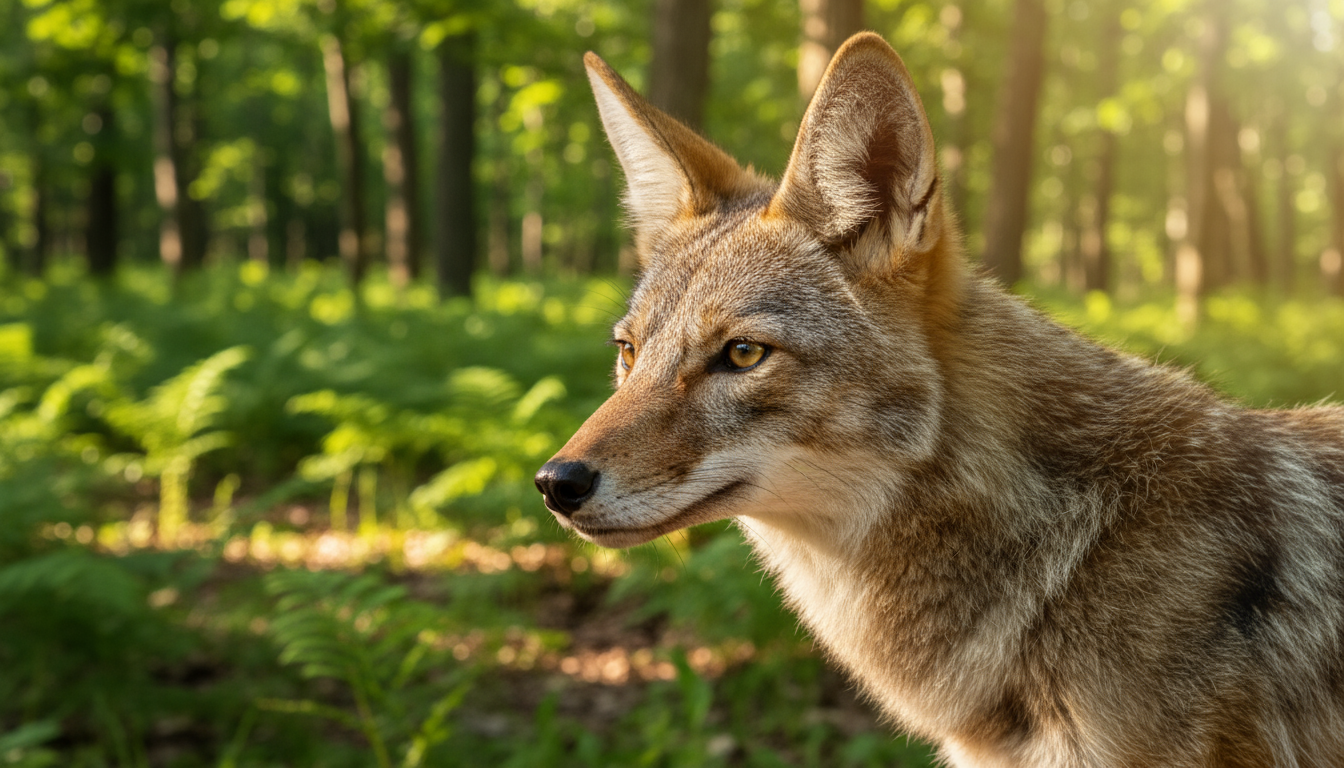
Body shape and movement patterns provide secondary confirmation once eye shine suggests a potential coyote. The distinctive trotting gate with head held roughly level to slightly below back line creates a silhouette profile unmistakable to experienced observers. This movement pattern differs significantly from deer (which typically bounce when moving quickly), foxes (which display more pronounced body undulation), and domestic dogs (which rarely maintain the efficient, ground-covering trot characteristic to coyotes).
Size estimation during night operations requires reference points within the illuminated field of view. Experienced hunters typically establish mental measurement standards based on known objects (fence posts, vegetation of known height, etc.) visible within the same field of view as the animal. This referential sizing allows reasonable estimation of shoulder height and body length essential for species confirmation.
Behavioral responses to calling provide another identification layer, with coyotes demonstrating distinctive approach patterns compared to other potential species. Coyotes typically approach calling locations using an indirect pattern with frequent stops and direction changes, compared to foxes (which often approach more directly) or bobcats (which typically utilize extensive stalking behavior with minimal exposed movement). These behavioral differences become particularly apparent during extended observation periods.
Color assessment during night illumination presents special challenges due to both the limited color rendering of artificial light and the natural color variations within the coyote population. While typical coyotes display a grizzled gray-brown appearance, significant variation exists, with some individuals showing reddish, blond, or nearly black colorations. This variability necessitates reliance on multiple identification factors rather than color alone.
The prohibition on thermal imaging for direct hunting in Illinois eliminates one of the most effective species identification technologies, requiring hunters to develop enhanced skills with permitted equipment. While thermal devices like the Pixfra Vulcan thermal scope can assist with initial location during separate observation activities, the actual hunting identification must occur using only permitted illumination and optical equipment.
Positive target identification requires confirmation of multiple characteristics rather than reliance on any single factor. The Illinois hunting regulation standard of “100% species certainty” necessitates methodical assessment of eye shine, body shape, movement patterns, size, and behavior before determining species identity. This comprehensive approach prevents misidentification of non-target species including domestic dogs, foxes, or other wildlife.
Practical field identification skills develop primarily through experience, with most accomplished night hunters reporting significant learning curves during their first several seasons. The methodical observation of confirmed coyotes during both daylight and nighttime conditions builds the pattern recognition capabilities essential for rapid, accurate identification during actual hunting scenarios.