


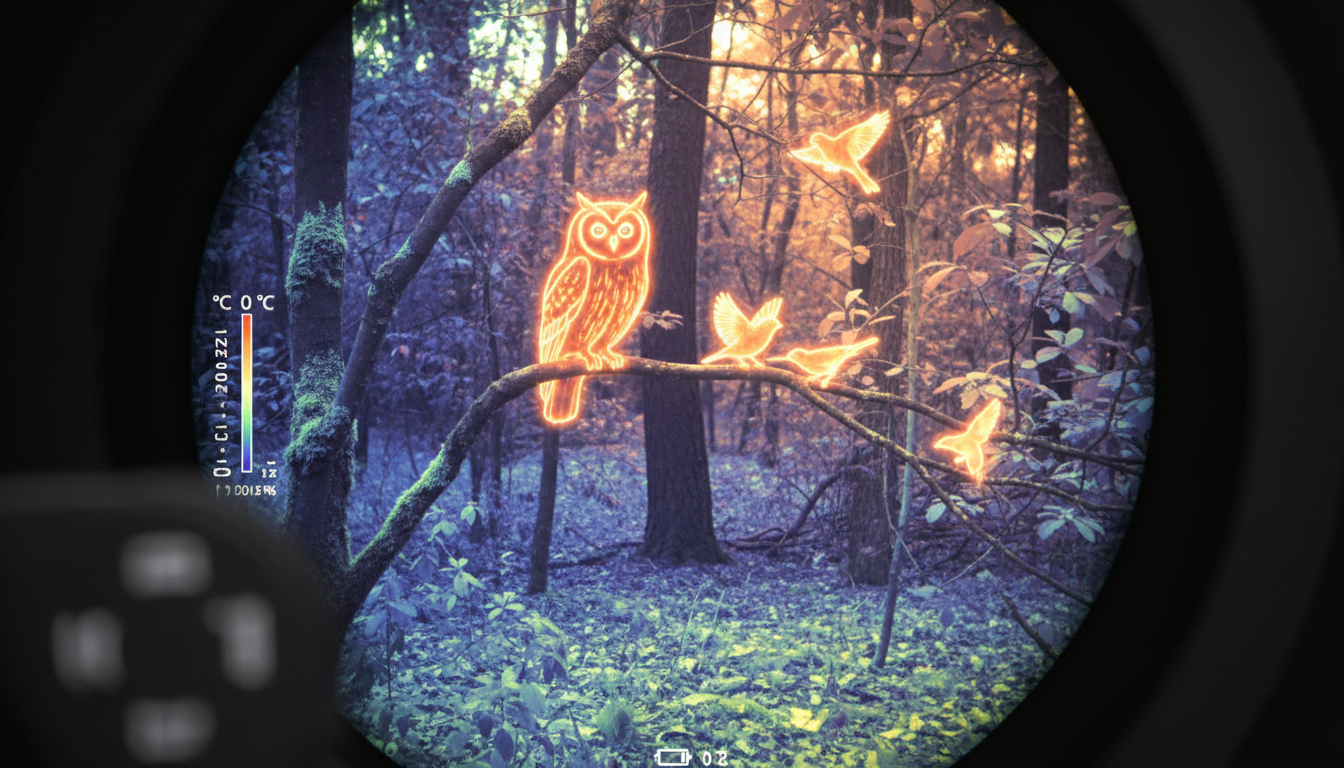
Thermal monoculars have completely changed how we approach birding. Gone are the days when spotting hidden species meant hours of tedious scanning and hoping for a lucky sighting. With thermal imaging, you’ll spot roosting owls deep in foliage, locate skulking species like Jack Snipes, and observe nocturnal birds without disturbing them. We’ve researched the technology and tested what works to help you choose the best thermal monocular for birding.
Why Birders Are Switching to Thermal Technology
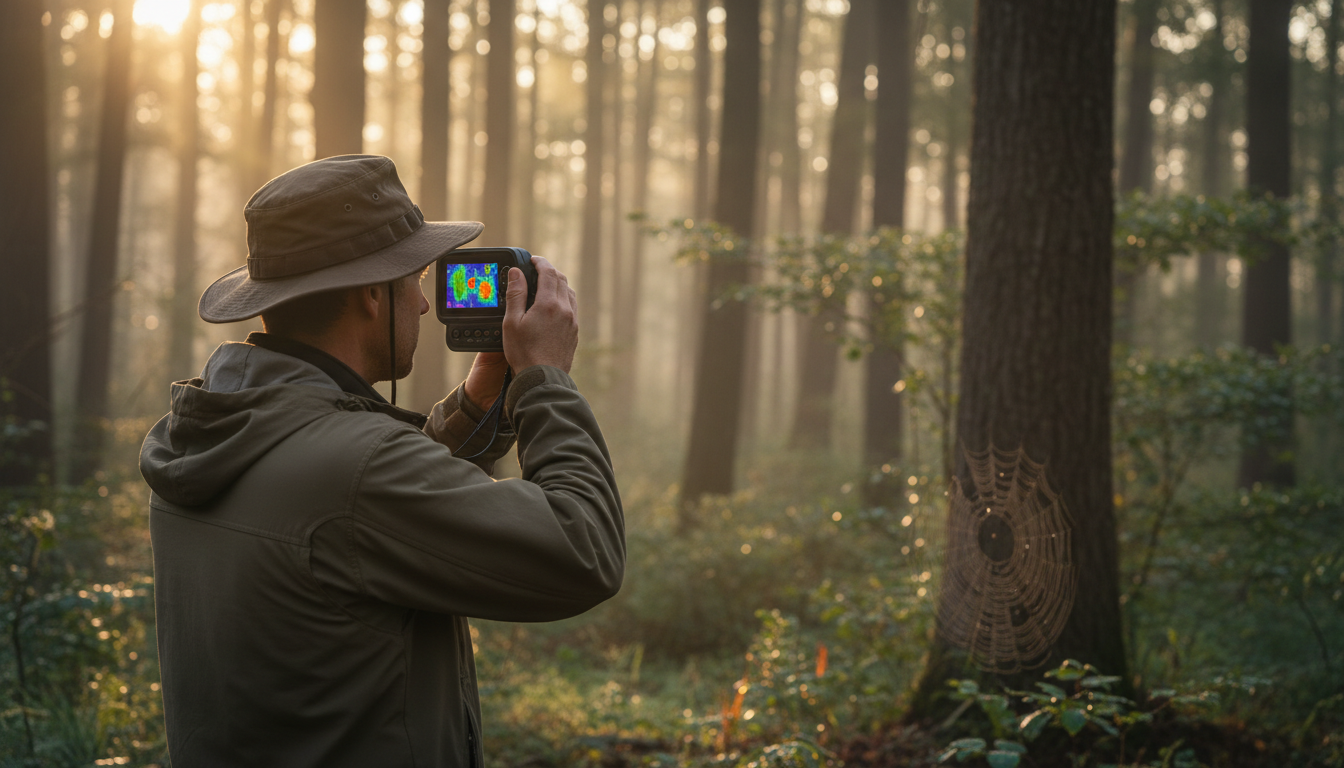
Birds are warm-blooded and radiate heat, which thermal imagers can detect, allowing birds to stand out from their surroundings. This means you can find birds regardless of lighting conditions, camouflage, or dense cover. For most birdwatchers, thermal devices are a simple way to find birds we normally wouldn’t see, in a way that minimizes disturbance.
Because these devices don’t emit any artificial light or infrared illumination, birders can carry out observations or surveys by night without the risk of startling birds or other wildlife. This makes them perfect for studying roosting behavior, locating nest sites, and observing shy species that would otherwise flush at the slightest disturbance.
Thermal monoculars work in fog, rain, and total darkness where traditional binoculars fail. Thermal devices have been incredibly useful in detecting nesting ground birds, revealing uncertain numbers of breeding Sky Larks, which could be crucial in helping implement conservation measures.
Key Features to Look for in a Birding Thermal Monocular
Not all thermal monoculars deliver the same performance. Here’s what actually matters when you’re choosing one for birding.
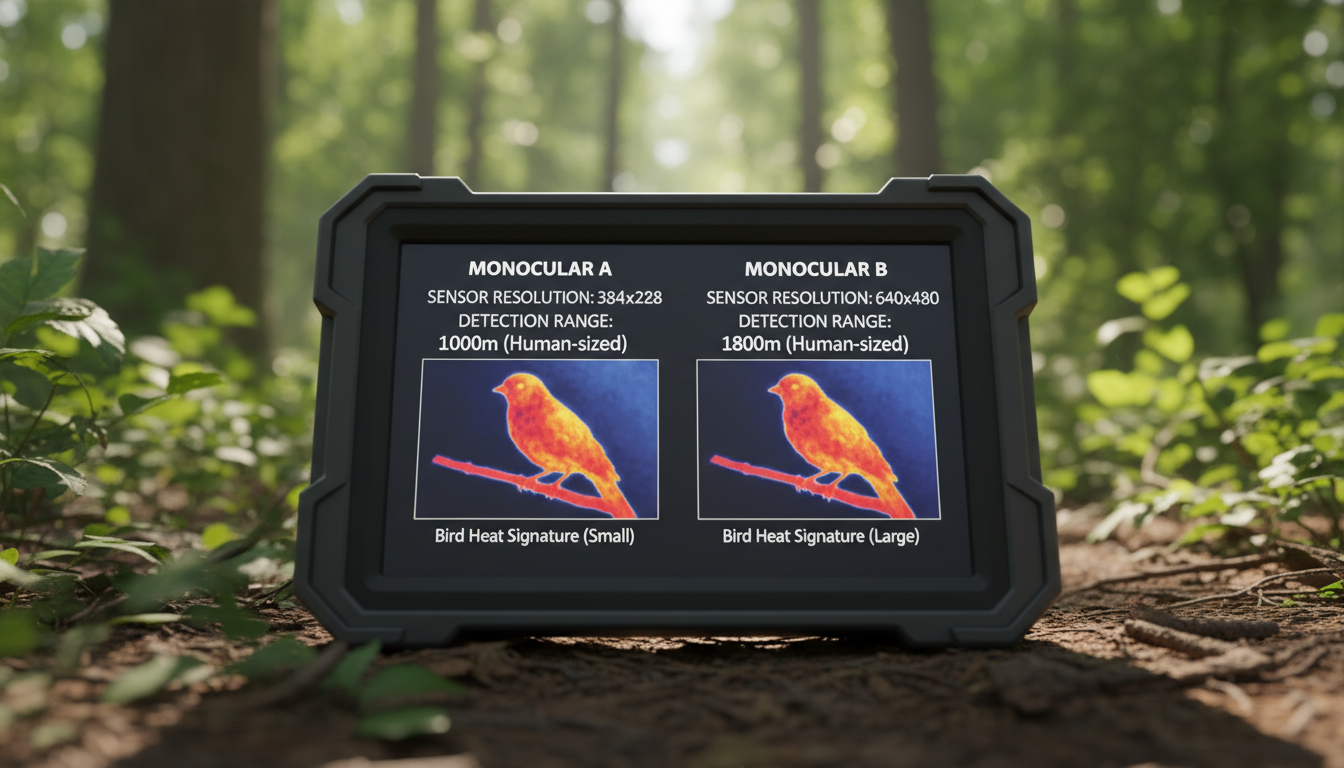
Sensor Resolution: Look for a monocular with higher resolution, as it will provide crisper and more detailed images—particularly crucial if you plan to identify smaller objects or targets at longer distances. Common resolutions include 256×192, 384×288, and 640×480 pixels. Higher numbers mean better detail.
Detection Range: Different thermal monoculars have varying detection ranges—consider the distance at which you need to detect and identify objects, as a longer detection range is essential for hunting, security, or surveillance. For birding, you’ll want something that can detect birds at 300-500 yards minimum.
Field of View: A wide field of view delivers an outstanding 31m FOV at a range of 100m, making it a breeze to find birds, mammals, and people from a distance in all light and weather conditions. Wider fields of view make scanning easier, but you’ll sacrifice some detail at distance.
Refresh Rate: A quick 50 Hz refresh rate ensures smooth and responsive viewing. This matters when tracking moving birds or panning across a landscape.
Display Quality: LCD displays don’t work in temperatures below 15°F—if you’re using a monocular in cooler temperatures, you need an AMOLED or OLED display.
Top Thermal Monocular Options for Different Budgets
Let’s break down the best options based on what you’re willing to spend.
Budget-Friendly (Under $600): The AGM Taipan TM15-256 is a solid budget-friendly option that offers impressive thermal imaging capabilities at a more budget-friendly price point, with a resolution of 256×192 pixels providing clear thermal imagery for various outdoor activities, including hunting and wildlife observation. It won’t give you the sharpest images, but it’ll show you where birds are roosting.
Mid-Range ($1,000-$2,500): This is the sweet spot for serious birders. The HIKMICRO LYNX 2.0 Series Monocular is a high-quality thermal monocular at a great price, highly portable, weighing less than 275g (without the battery) and small enough to slip into a pocket. Models in this range balance portability, image quality, and features.
Premium ($2,500+): The Pulsar Axion 2 XG35 thermal monocular sets a standard in the thermal imaging world with a high-resolution display at 384×288 pixels delivering crystal-clear thermal imagery, and an impressive detection range of up to 1,400 yards. Premium units give you professional-grade sensors and outstanding clarity.
For birders specifically, we recommend checking out the Pixfra Sirius HD, which offers excellent specs tailored for wildlife observation. You can also learn more about professional hunting applications to understand how thermal technology performs in challenging field conditions.
How to Actually Use a Thermal Monocular for Birding
The purpose of a thermal imager is simply to locate birds—get to a spot where you think there might be a bird, maybe where there’s good habitat that’s difficult to see through, or where you heard something you can’t readily see, then use the thermal monocular to methodically pan-and-scan around the scene, usually up-and-down and then left to right.
What you’re looking for is any bright dot—a dot is a heat source, and there’s no reason for there to be a hot spot on a mudflat or high up in a tree, so it’s either a bird, a small mammal, or some other odd thing.
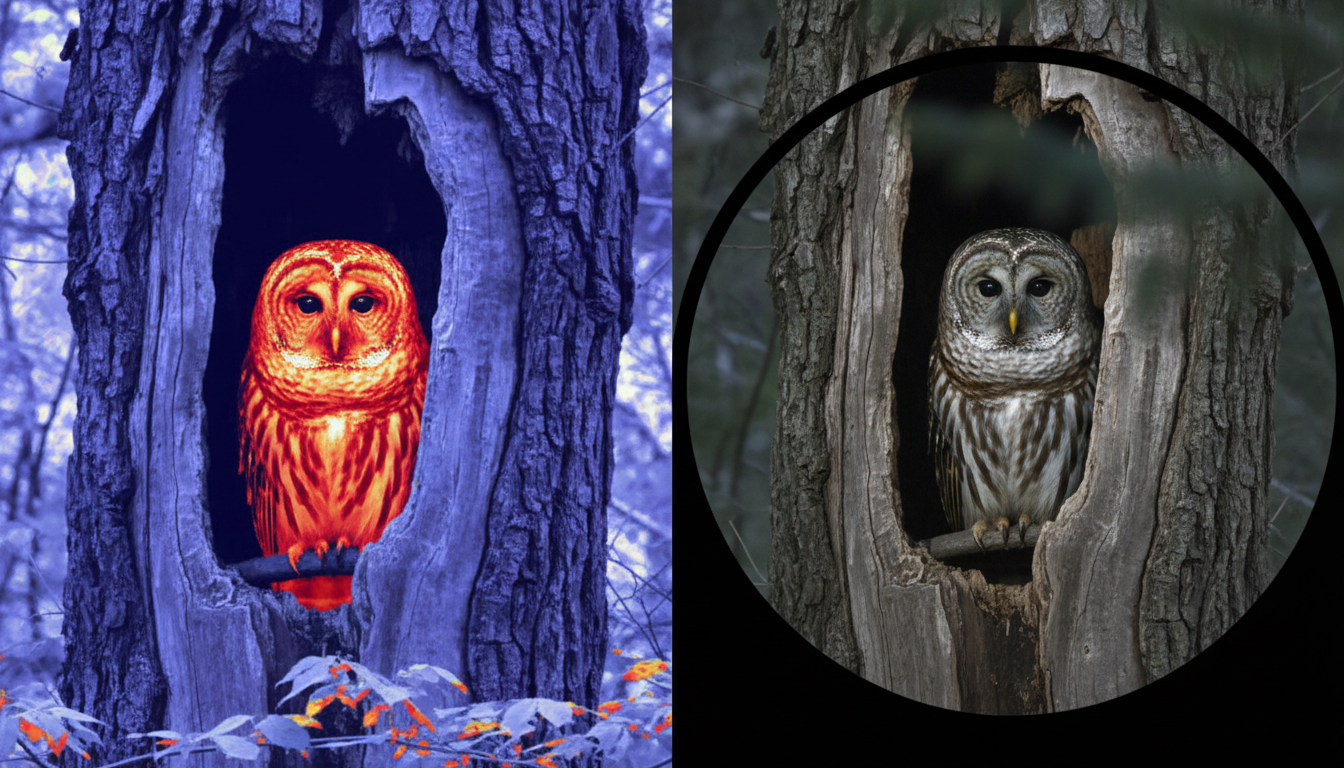
Birders might use a thermal imager in early morning to find where birds are perched (their warmed bodies show up) before switching to binoculars. Once you’ve located a heat signature with your thermal monocular, you can switch to traditional optics for species identification.
Some practical tips: scan slowly and methodically, use the device’s color modes to enhance contrast in different conditions, and remember that thermal performance varies with ambient temperature. On warm days, the contrast between birds and their surroundings decreases slightly, but the technology still works.
Real-World Birding Applications
Thermal monoculars excel in specific birding scenarios where traditional optics struggle.
Nocturnal Species: Thermal optics allow birdwatchers and nature enthusiasts to observe nocturnal or crepuscular species without disturbing their natural behavior, whether it’s the silent flight of owls hunting in the moonlight or the nocturnal foraging habits of other wildlife.
Dense Vegetation: The DTI excels in revealing birds hidden within dense foliage, making it easier to spot species that would otherwise be concealed from view. Think Woodcocks on the forest floor or Bitterns in reedbeds.
Ground-Nesting Birds: Huge strides have been made in non-intrusive surveying breeding ground nesting birds such as Sky Larks, thanks to thermal imaging. You can conduct surveys without walking through nesting areas and flushing birds.
Migration Monitoring: Thermal imaging technology can be used to track bird migration patterns, providing valuable insights into the timing and routes of migratory species—by observing flocks of birds as they pass through a region, birdwatchers can contribute to migration monitoring efforts.
What About Battery Life and Durability?
8 hours of operation on a single charge is typical for mid-range models. Higher-end units often feature quick-change battery systems for extended field sessions. The compact and lightweight design makes it easy to pack in your bag without adding much weight, while its IP67 rating ensures it can withstand the elements, protecting against dust and other debris.
Most quality thermal monoculars are built tough. Magnesium alloy bodyshells protect thermal imaging devices from bumps and scrapes and work effectively as heatsinks—these devices are all IPX7 waterproof rated, ensuring they continue to work efficiently in extreme downpours and will even survive a dip in 1m of water for up to 30 minutes.
Conclusion
The best thermal monocular for birding depends on your budget, the species you’re observing, and your specific field conditions. Budget models around $400-600 will locate birds for you, while mid-range devices ($1,000-2,500) offer the best balance of portability and image quality for serious birders. Premium units above $2,500 deliver professional-grade performance with exceptional detail and range.
Remember that thermal monoculars are tools for location, not identification. You’ll still need your binoculars or spotting scope for detailed observation and species ID. But for finding hidden, camouflaged, or nocturnal birds without disturbance, thermal technology is a game-changer. Visit Pixfra to explore quality thermal monocular options designed for wildlife observation.
FAQs
Can thermal monoculars work during the day for birding?
Yes, thermal monoculars work 24/7 regardless of lighting conditions. During daylight, they’re particularly useful for spotting birds in dense cover, shadows, or vegetation where traditional optics struggle. The heat signature of a bird stands out from its surroundings whether it’s noon or midnight. Performance may decrease slightly on very hot days when ambient temperatures approach body temperature, but the devices remain functional.
What’s the difference between thermal monoculars and night vision for birding?
Thermal imaging detects heat signatures and works in complete darkness, fog, and through light vegetation. Night vision amplifies existing light and requires at least some ambient light to function. For birding, thermal is better for detection and location, while night vision can provide more detail for identification at closer ranges. Most serious birders prefer thermal because it doesn’t require any light source and won’t disturb wildlife.
Do I need a high-resolution sensor for casual birding?
Not necessarily. If you’re using thermal mainly to locate roosting spots or find general bird activity, a 256×192 or 384×288 sensor works fine. Higher resolutions (640×480 or above) matter more when you need to identify specific features at longer distances or want to record detailed footage. For weekend birding trips, mid-range resolution paired with good optics gives you excellent value.
How far can thermal monoculars detect birds?
Detection range varies by sensor quality and bird size. Budget models typically detect larger birds like owls or herons at 200-300 yards, while mid-range devices can spot them at 500-800 yards. Premium models with 640×480 sensors can detect heat signatures beyond 1,000 yards. Smaller passerines are detectable at shorter ranges. Remember that detection (seeing a heat signature) differs from identification (determining species), which requires much closer range.
Are thermal monoculars legal for wildlife observation in the US?
Yes, thermal monoculars are legal for wildlife observation and birding throughout the United States. However, regulations may vary if you’re using them for hunting—some states have restrictions on using electronic optics for hunting certain game species. For pure birding, birdwatching, and wildlife observation, there are no federal restrictions. Always check your state’s wildlife regulations if you plan to use thermal devices while hunting.