


Hunting after dark doesn’t mean you have to swap your optics when the sun sets. Digital day night scopes have changed the game, giving you clear visuals from sunrise to midnight in one device. Whether you’re tracking hogs at dusk or glassing open fields under moonlight, these scopes adapt to your needs without the hassle of re-zeroing or carrying multiple optics.
We’ll walk you through what makes a digital day night scope worth your money, which features actually matter, and how to pick the right one for your style of hunting. No fluff—just the info you need to make a smart choice.
How Digital Day Night Scopes Work
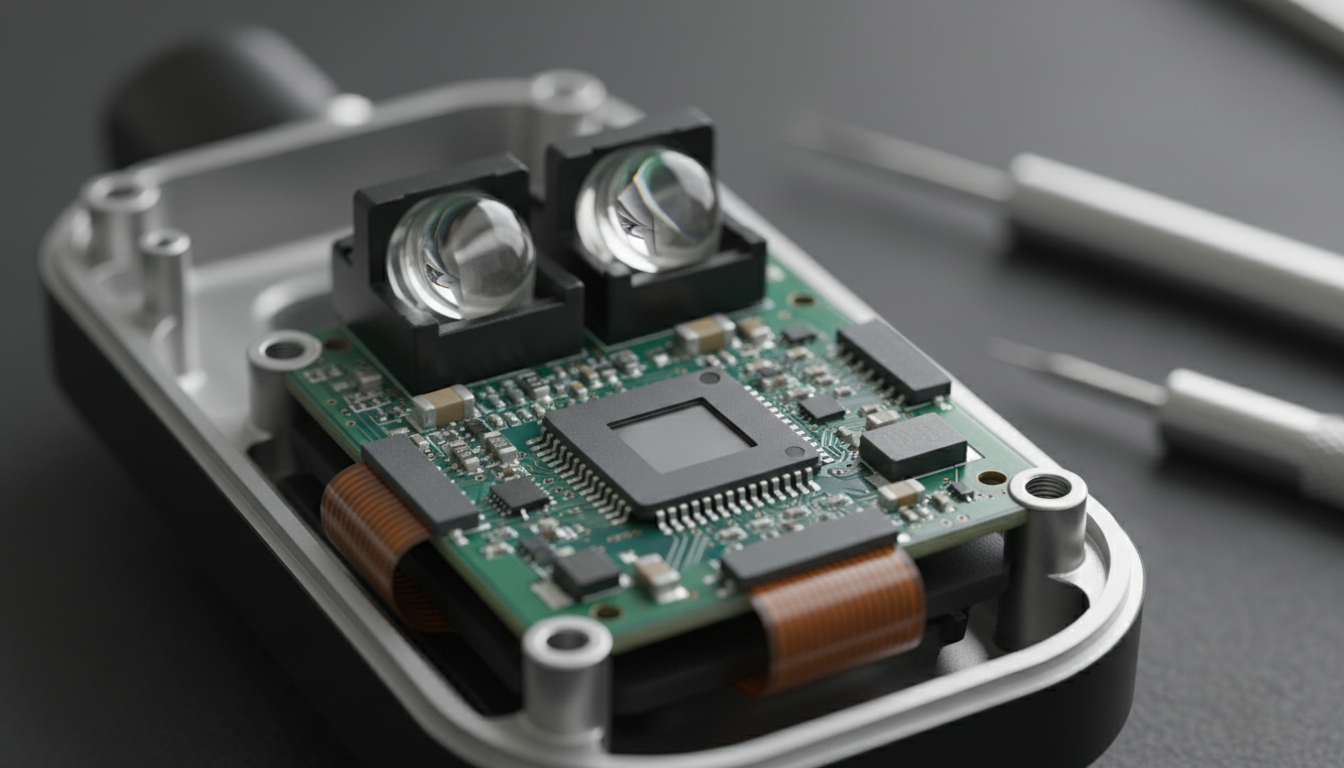
Digital scopes use a highly sensitive CCD sensor to convert collected light into a digital image through a special electronic system. Instead of relying on analog amplification like traditional night vision, these devices use digital light conversion to deliver a clear image in any light condition.
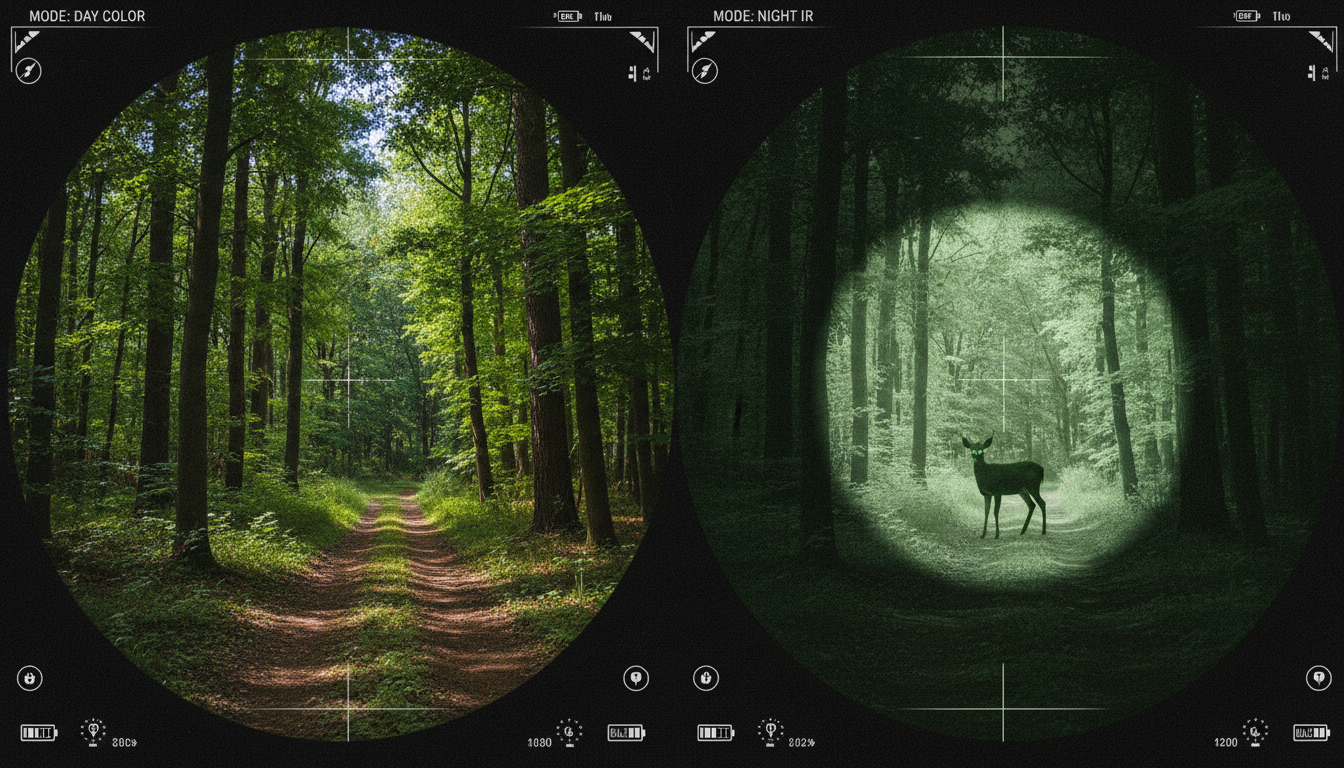
Digital day and night vision optics are designed for round-the-clock operation in any ambient light, with an advanced high-resolution sensor providing full-color clarity during the day and classic black-and-white viewing at night. Unlike traditional night vision devices, digital night vision scopes come equipped with modern technology that safeguards them against harmful sun exposure by converting ambient light into a digital signal and displaying the resultant image on a screen.
Most models include built-in IR illuminators for pitch-black conditions, letting you spot targets even when there’s zero ambient light available.
Top Features to Look For
Sensor Resolution and Display Quality
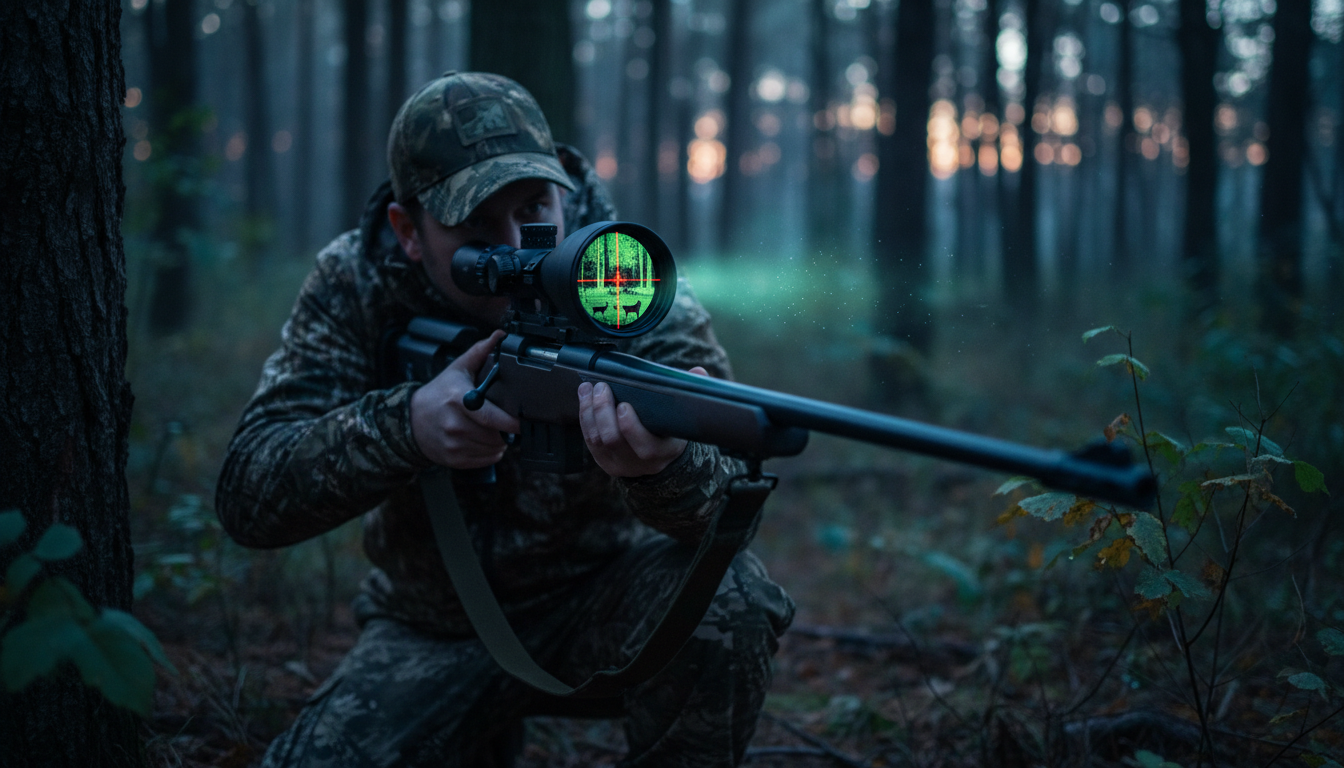
A 4K sensor provides crystal-clear target identification in low-light conditions. Look for scopes with at least 1920×1080 display resolution. A true 4K sensor paired with a 70mm focal lens gives exceptional clarity at medium to long range, with a circular AMOLED display making it feel like a hybrid between a traditional optic and digital device.
Magnification Range
Your ideal magnification depends on your hunting scenario. A 5–20x magnification allows for extended target identification beyond 100m while maintaining clarity, best suited for open field shooting or longer hedgerow lines. For close-quarter work, 3-9x or 3-12x works better.
Battery Life
A dual-battery design combining an internal cell with an external 18650 allows for up to 7.8 hours of runtime, with the ability to hot-swap the external battery for longer outings or extended night hunts. We’d avoid anything under 6 hours—running out of juice mid-hunt kills your night.
IR Illuminator Quality
In total darkness, 850nm or 940nm IR illumination provides a powerful 200-meter detection and observation range. IR illuminators can reflect off brush, dust, or mist and can also affect how animals react in some environments, so adjustable power is a plus.
Benefits of Digital Day Night Scopes
One Scope for All Conditions
Instead of carrying separate optics for day and night, a single device offers high-resolution digital imaging during daylight and thermal detection after dark, streamlining gear, enhancing accuracy, and improving situational awareness in every light condition.
Zero Retention
Once the scope is sighted in, there’s no need to re-zero when switching between digital and thermal modes, saving time and ensuring reliable accuracy—even during sudden changes in light—removing the hassle of swapping optics or recalibrating at night.
Safe for Daytime Use
Digital night vision scopes come equipped with modern technology that safeguards them against harmful sun exposure, converting ambient light into a digital signal and displaying the resultant image on a screen, with the digital image sensor able to handle bright light conditions without suffering damage. You won’t burn out the sensor by accidentally turning it on in daylight.
Recording and Smart Features
Many digital scopes now include tools like ballistics calculators, custom reticles, and on-screen overlays for range, angle, and impact point correction. Record your hunts, review your shot placement, and share footage with your crew.
Digital vs. Thermal: Which One’s Right?
Thermal is best for rapid spotting and tracking, while digital NV can be excellent for positive identification when IR illumination is controlled and you want a more day-scope-like view. If your biggest problem is finding animals at night, thermal is the safer bet, but if your biggest problem is identifying what you’re looking at in an open lane, digital NV can be a better value and often looks more familiar to day-scope users.
Thermal devices work in any lighting condition by detecting heat radiation emitted by objects, making them effective in complete darkness, fog, smoke, and other adverse weather conditions, while night vision devices depend on ambient light. But thermal scopes cost more and lack the color detail that helps with target ID.
For most hunters dealing with open lanes and mixed lighting, digital day night scopes offer better value and versatility.
Popular Models Worth Considering
ATN X-Sight 5 is built around an Ultra HD sensor platform, onboard recording, and smart optic features that many hunters actually use. It’s a solid all-rounder for hunters who want one optic for day and night without breaking the bank.
Pulsar Digex C50 is a strong competitor in digital NV for those who prefer a traditional riflescope form factor with recording and an included IR illuminator. The form factor feels familiar if you’re used to traditional glass.
Sightmark Wraith HD is a known budget digital NV option with day/night modes and an included 850nm IR illuminator. It won’t compete with high-end models, but it gets the job done for hunters on a tighter budget.
If you’re looking for professional-grade performance with cutting-edge sensor technology, check out our thermal monoculars guide or explore Pixfra’s innovative optics lineup.
What to Expect at Different Price Points
Under $1,000
Quality is impressive given a $700 price tag, though not on par with military-grade equipment. Expect decent image quality, basic recording features, and functional IR illuminators. Affordable models showed slightly more noise in low-light scenarios compared to higher-end models.
$1,000-$2,000
Scopes in this range offer exceptional clarity and advanced features like ballistic calculator and video recording capabilities that set them apart from traditional night vision optics. Better sensors, longer battery life, and more durable construction.
Over $2,000
Premium models with thermal clarity heavily influenced by sensor tier and optic/lens configuration, helping you keep definition when conditions aren’t perfect for shots and IDs farther out. Worth it if you hunt frequently or need maximum detection range.
Common Mistakes to Avoid
Don’t chase magnification over sensor quality. Digital zoom is convenient, but it can’t create detail that the sensor didn’t capture—prioritize sensor capability and display clarity first, then treat magnification as a framing tool.
Skip scopes with cheap mounting rings. Scope rings are often sub-par and likely the reason behind complaints of scopes not holding zero, though the device performed well once proper rings were used.
Don’t assume all digital scopes work day and night. Not all digital scopes work 24/7—some are dedicated to day or night only. Read the specs before buying.
Making Your Final Choice
You want a scope that holds zero on your platform and supports your typical shooting tempo—prioritize proven repeatability and warranty support over fringe features you may never use.
Think about where you actually hunt. If you hunt mostly open lanes, want one optic for day and night, and you’re okay using IR illumination, ATN X-Sight 5 is a leading starting point. If you’re dealing with thick brush and need fast target acquisition, thermal might serve you better.
For hunters ready to step up their optics game with professional thermal technology, the Pixfra Sirius HD delivers exceptional image quality and reliability in a compact package.
Conclusion
The best digital day night scope adapts to your hunting style, holds zero reliably, and gives you clear visuals across all lighting conditions. Whether you’re after budget-friendly performance or premium features, the right scope lets you stay in the field longer and make cleaner shots.
Focus on sensor quality over magnification, check battery life matches your hunt duration, and pick a model with IR illumination that suits your terrain. With the right digital day night scope mounted, you’ll wonder how you ever hunted with separate day and night optics.
FAQs
Can I use a digital day night scope in full daylight?
Yes. Digital night vision riflescopes are frequently capable of displaying a full-color daytime mode in addition to nighttime mode, making them viable for use as a regular full-color digital optic, with the ability to switch between daytime and nighttime modes making them versatile tools for various shooting conditions. Unlike traditional night vision tubes that burn out in sunlight, digital sensors handle bright light without damage.
How far can I see with a digital night vision scope?
A combination of best nighttime sensitivity, HD resolution display and sensor, wide selection of brightness and contrast settings, quality fast optics, high magnification and a powerful built-in IR make the digital night vision scope perfect for detecting targets like wild boar, deer or elk at distances ranging from 450 to 550 meters. Range depends on sensor quality, IR illuminator power, and ambient light.
Do digital scopes hold zero as well as traditional optics?
Quality digital scopes feature zero retention, meaning your point of impact remains consistent across modes, though verifying calibration after major temperature shifts or physical effects is still wise to ensure absolute precision. Mount them properly with quality rings and they’ll perform just fine.
What’s the difference between digital night vision and thermal?
A day–night scope relies on a digital imaging sensor with optional IR illumination, while a thermal scope visualizes heat through a microbolometer sensor. Thermal scopes perform best in total darkness, whereas digital systems excel in mixed lighting conditions.
Are digital day night scopes legal for hunting?
Hunting regulations vary by region—always check local laws before using IR or thermal optics, as some areas restrict night hunting or artificial illumination. Many states allow them for predator and hog hunting but restrict use on game animals. Check your state wildlife regulations before heading out.