
















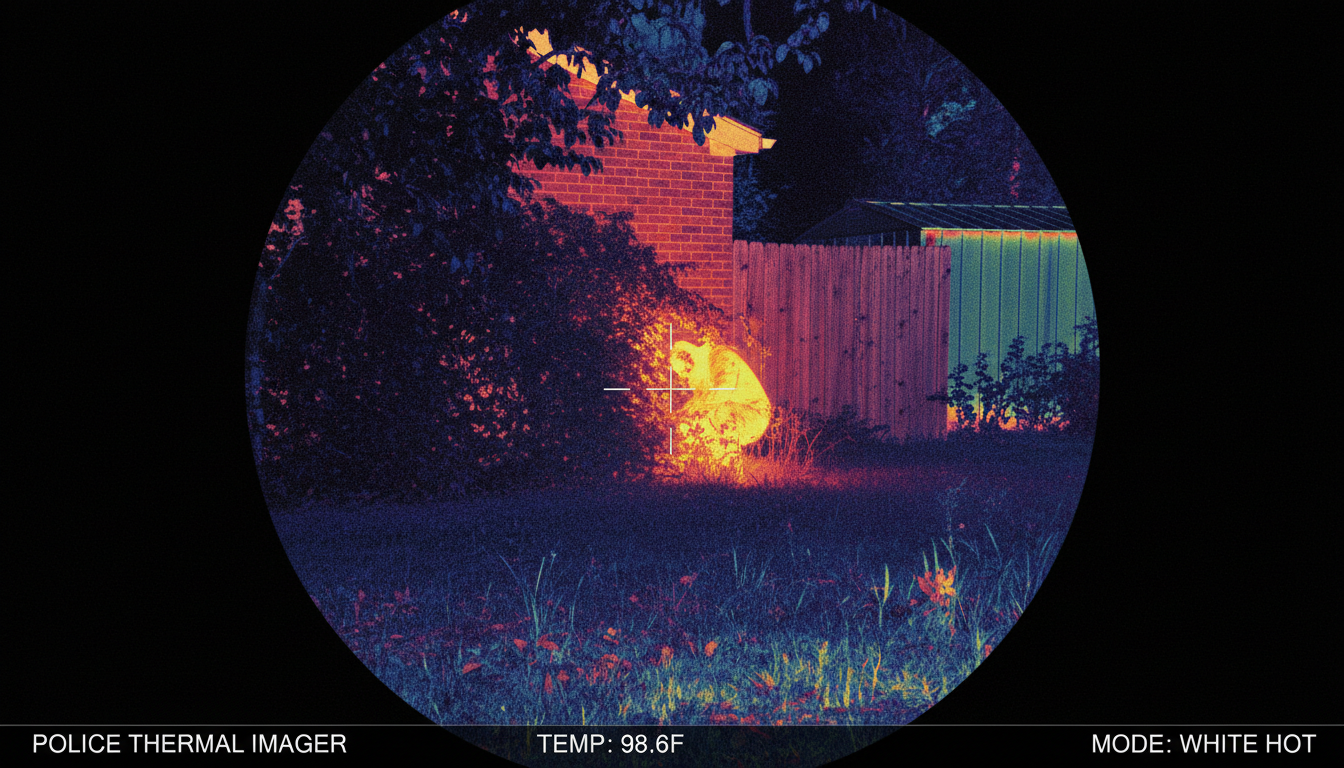
Police departments across the country face challenges that stretch beyond what the human eye can see. Darkness, dense foliage, smoke, and fog can turn routine operations into high-risk situations. That’s where thermal imaging technology steps in. We’ve seen this technology transform from an expensive specialty tool into practical equipment that helps officers work safer and smarter every day.
Tracking Suspects During Foot Pursuits
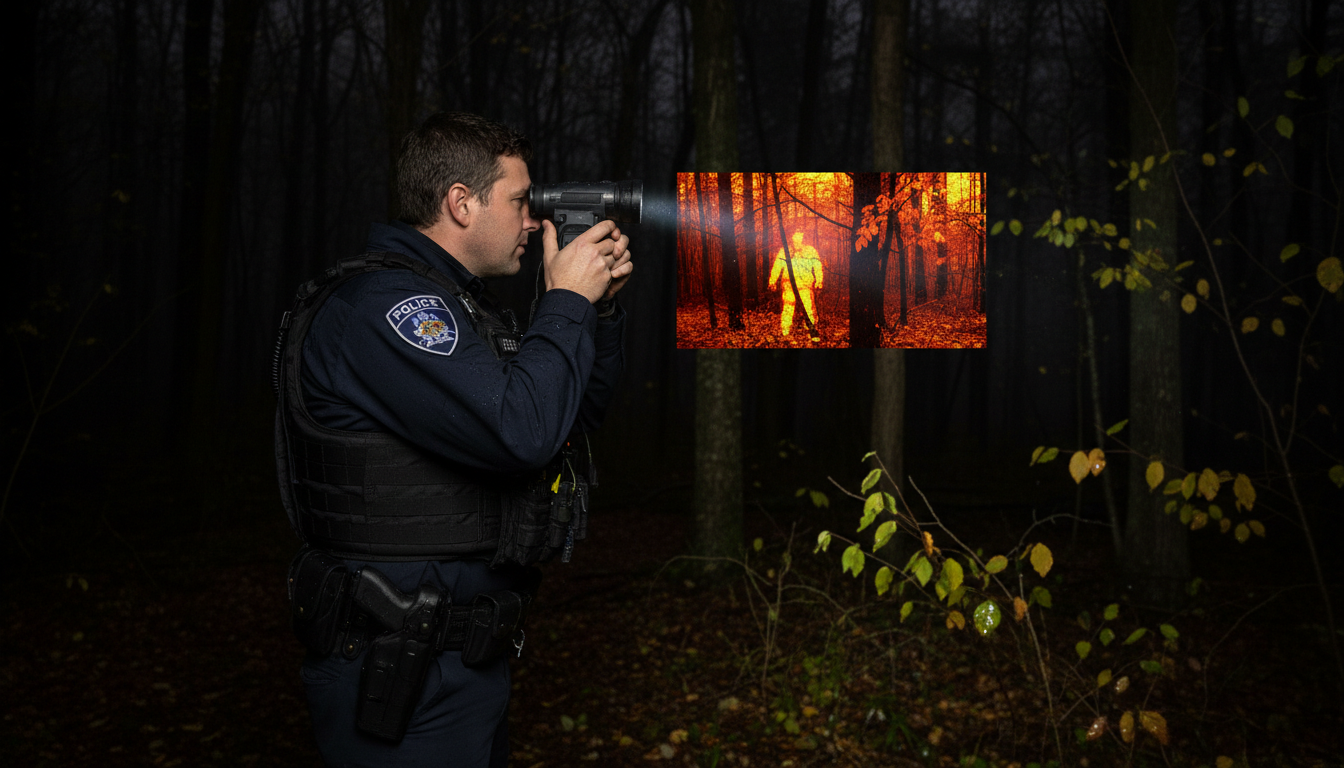
Officers use thermal imaging to locate individuals during foot chases and hidden search scenarios, with one Texas officer noting that suspects were often “just feet away” from colleagues before thermal optics pinpointed their exact location. While most people understand how to hide from sight, they rarely consider hiding their body heat, making detection, tracking and apprehension easier when flashlights fail.
Thermal cameras help officers track, locate and capture criminals in adverse weather conditions, dense foliage, woodland and various other factors that contribute to criminals remaining hidden. One officer located and apprehended around 5-6 suspects over several years, excluding countless instances where the devices aided in smaller investigations. The technology works because suspects focus on visual concealment without realizing their body heat gives away their position.
Search and Rescue Operations
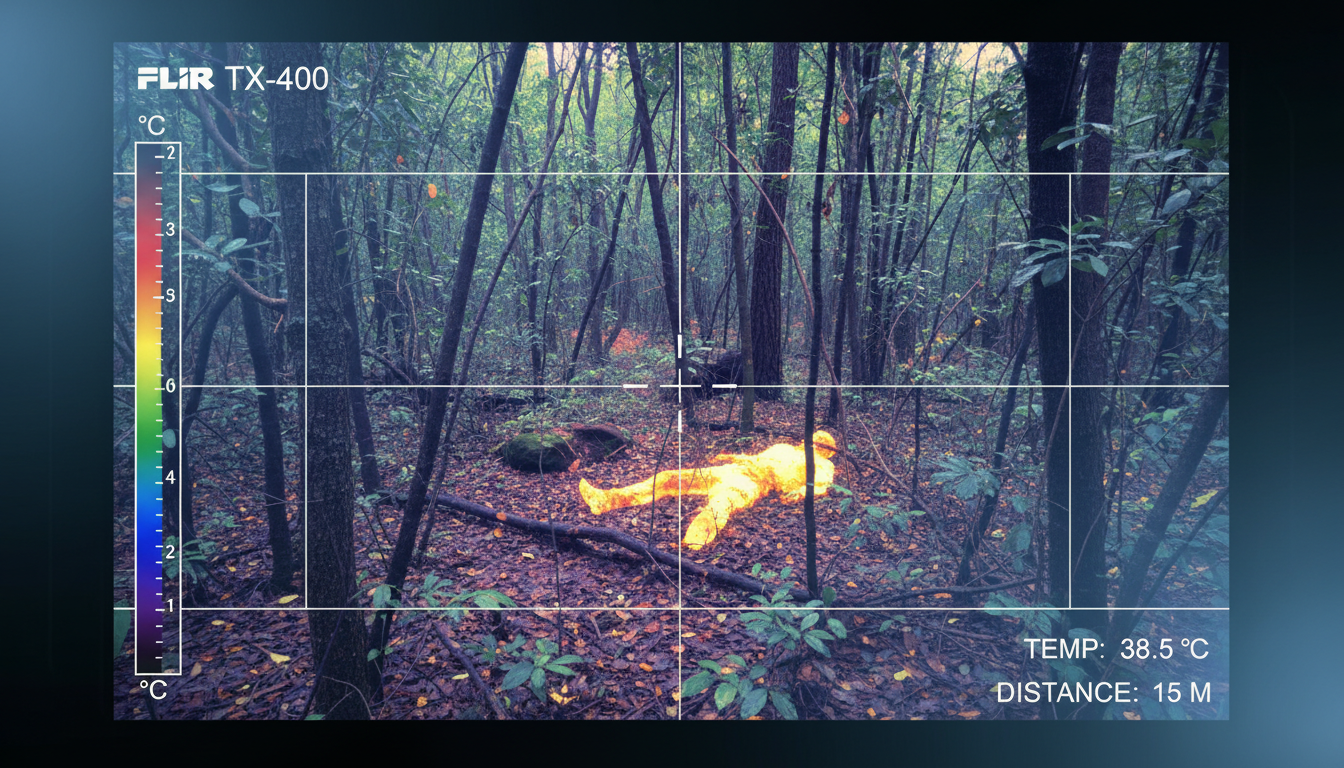
Whether it’s a lost child or a disoriented elderly adult, victims can be located more quickly and at less risk with thermal imagers that overcome challenges of low-light situations and environmental conditions like fog or smoke. Many thermal images will detect a human at 600 yards or more, turning what could be hours of searching into minutes.
Time matters in these situations. When a patient disappeared in grounds the size of a few football pitches, thick with woodland and foliage in pitch black conditions, thermal imaging drastically reduced search time by allowing officers to scan and rule out large areas very quickly. This speed can mean the difference between life and death.
Accident Investigation and Evidence Recovery
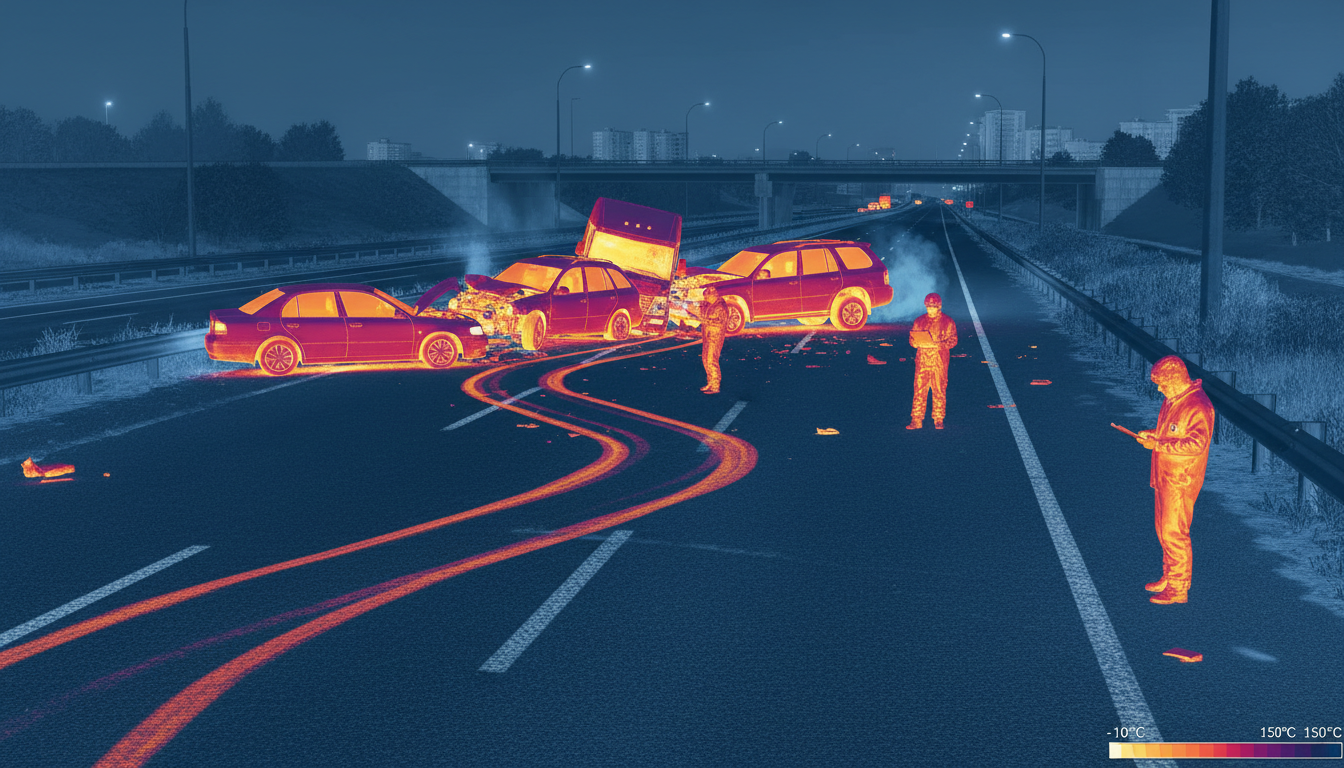
Officers can locate and measure skid marks beyond what’s visible on the pavement, seeing heat signatures left by rubber too thin to see with the naked eye, with marks detectable long after the accident and ABS brakes leaving thermal signatures investigators can use for reconstruction. Investigators use thermal imagers to identify direction of travel, where a vehicle left the roadway, how long it was braking, and to locate victims or belongings that may have been ejected.
When pursuing suspects with intelligence advising a strong chance they may be armed, thermal cameras allow officers to quickly scan the roadside for objects with residual heat after a weapon is discarded, as items held in the hand or on the body stay identifiable for some time. Modern thermal imaging technology has made these applications more accessible to departments of all sizes.
Covert Surveillance Without Detection
Because thermal imagers don’t require light and only receive heat energy, officers can observe potential criminal activity from a distance, watching activity and building reasonable suspicion or probable cause, with imagery recorded for evidence or used to justify specific interaction. Since thermal imagers don’t project any beam, suspects are unaware they’re being monitored, allowing officers to regain the upper hand.
Officers on patrol can quickly scan between homes and buildings, see suspects hiding in dark garages and under vehicles, identify recently driven vehicles, and go undetected in total darkness while searching for prowlers and other criminal activity. The technology lets officers remain undetected as they perform risk assessments and see potential danger before it sees them. Devices like the Pegasus 2 LRF and Sirius HD bring these capabilities to patrol officers.
Aerial Support for Ground Operations
Thermal technology in aircraft like helicopters offers an expanded field of view not limited by buildings, foliage or other land obstacles, accurately tracking criminal movements through an environment and easily keeping pace with fast-moving cars while relaying information to ground officers. A sheriff’s lieutenant flying overhead in an agency helicopter used his monocular to direct deputies to the precise location of suspects.
This aerial perspective changes the game for pursuits and wide-area searches. Ground units can position themselves based on real-time thermal intelligence from above, turning chaotic pursuits into coordinated operations. The coordination between air and ground units means suspects have fewer escape options.
Officer Safety and Hazard Detection
Thermal imagers contribute to officer safety at collision scenes by identifying fluid leaks or downed power lines, and when entering fields or yards, help identify fences, dogs and other hazards lurking beyond flashlight range, plus identify people who may be hiding or observing in obscurity. During ground operations at night, officers using thermal imagers are less exposed to danger, with covert surveillance, area and building sweeps, and fugitive searches all made safer because officers can see better with infrared vision.
Being able to assess a scene before entering changes risk calculations. Officers can identify threats, count suspects, and plan their approach with better information. This advance knowledge helps prevent ambushes and reduces the chance of walking into dangerous situations unprepared.
Conclusion
Thermal imaging has moved from specialty equipment to practical tools that officers use daily. From tracking suspects who think darkness provides cover, to finding missing children in minutes instead of hours, to reconstructing accidents with invisible evidence, the technology delivers results that save lives and solve cases. The ability to quickly assess and scan an area has enhanced officers’ confidence and efficiency, reducing time spent in potentially hazardous situations, with the technology having potential to save lives by preemptively identifying threats. We’re seeing departments of all sizes adopt thermal technology as they recognize its value for routine patrol, not just tactical teams. The real success stories come from officers who can go home safely and communities where missing people are found before tragedy strikes.
FAQs
Can thermal imaging see through walls?
No, thermal imaging cannot see through solid walls or structures. However, it can detect areas where earth has been disturbed or structural changes in walls that create heat signature differences, potentially indicating where evidence may be buried or hidden compartments exist. The technology detects heat signatures on surfaces, not through them.
How does thermal imaging differ from night vision for police work?
Thermal imaging cameras detect heat and enable officers to see in complete darkness, unlike night vision cameras which require ambient light and don’t retain clarity in all lighting conditions. Thermal imagers see temperature differences invisible to human eyes and work perfectly in the absence of visible light, giving them advantages over night vision. Thermal works in fog, smoke, and total darkness where night vision fails.
How long can thermal imaging detect residual heat from suspects or evidence?
Objects or surfaces that have recently been in contact with something hot remain hot enough to clearly stand out when viewed with a thermal imaging camera even when no longer in contact with the heat source. Officers can look for residual heat signatures on seats that were recently vacated or see residual heat left by footprints to hiding places or escape routes. Detection time depends on environmental conditions but can last several minutes to hours.
What types of weather conditions affect thermal imaging performance?
Thermal imaging cameras produce sharp images day or night, need no visible light, and can see in almost all weather conditions, light fog and smoke included, and even through light foliage. Heavy rain, dense fog, or extreme weather can reduce range and clarity, but thermal still outperforms visual observation and standard cameras in these conditions. The technology maintains functionality where other methods fail completely.
Are thermal imaging devices expensive for police departments?
While the technology is not cheap, with handheld or car-mounted systems retailing for $10,000 to $12,000, prices have decreased as the technology matures. Thermal imaging devices are usually associated with special operations like tactical teams, but thermal is both useful and cost-effective, making the technology valuable for uniformed patrol. Many departments find the investment justified by improved outcomes and officer safety.