
















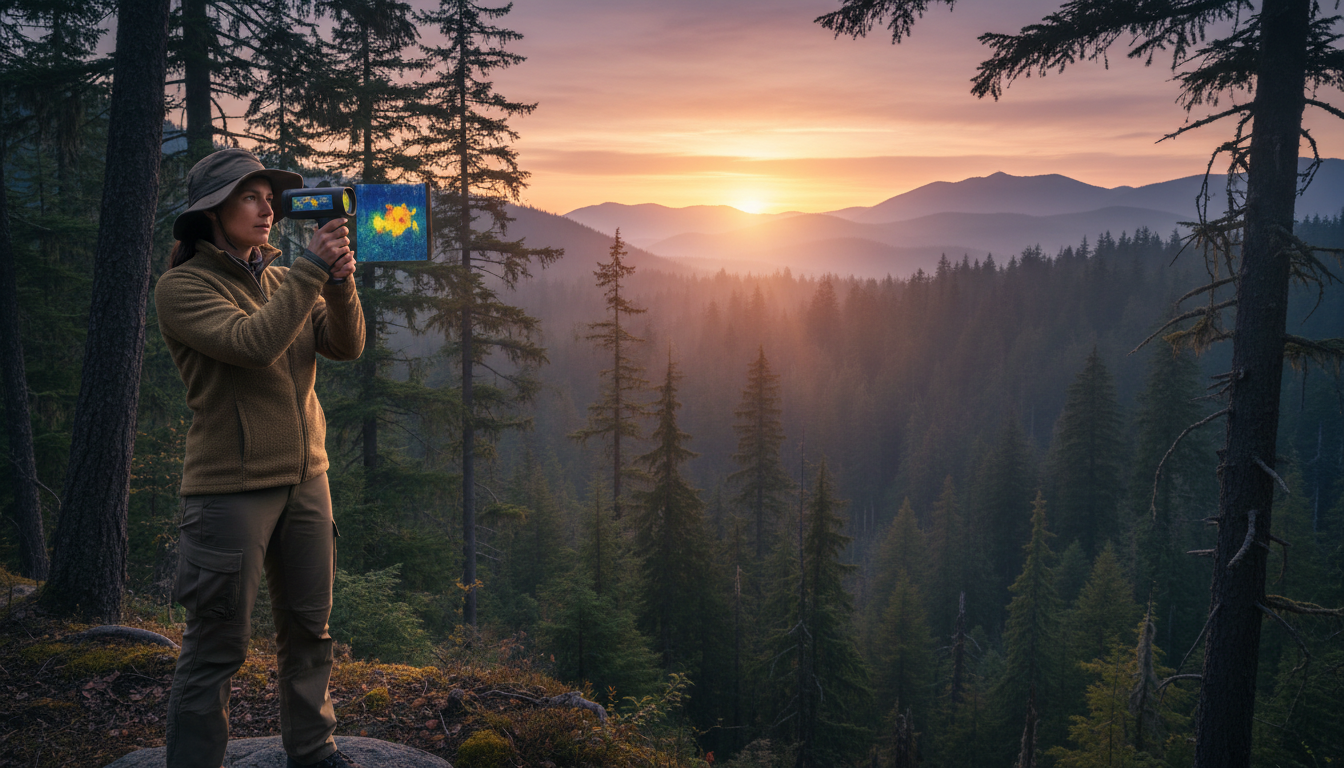
Watching wildlife has changed a lot in recent years. Thanks to thermal imaging cameras, we can now observe animals in complete darkness, through fog, and even when they’re perfectly camouflaged in dense vegetation. These devices detect heat instead of visible light, making them perfect for spotting nocturnal creatures and tracking elusive species without disturbing their natural behaviors.
Whether you’re a wildlife enthusiast, researcher, or photographer, thermal cameras open up a whole new world of observation possibilities. We’ll walk you through everything you need to know about using these cameras for wildlife work—from how they function to choosing the right model for your needs.
How Thermal Imaging Works for Wildlife Detection
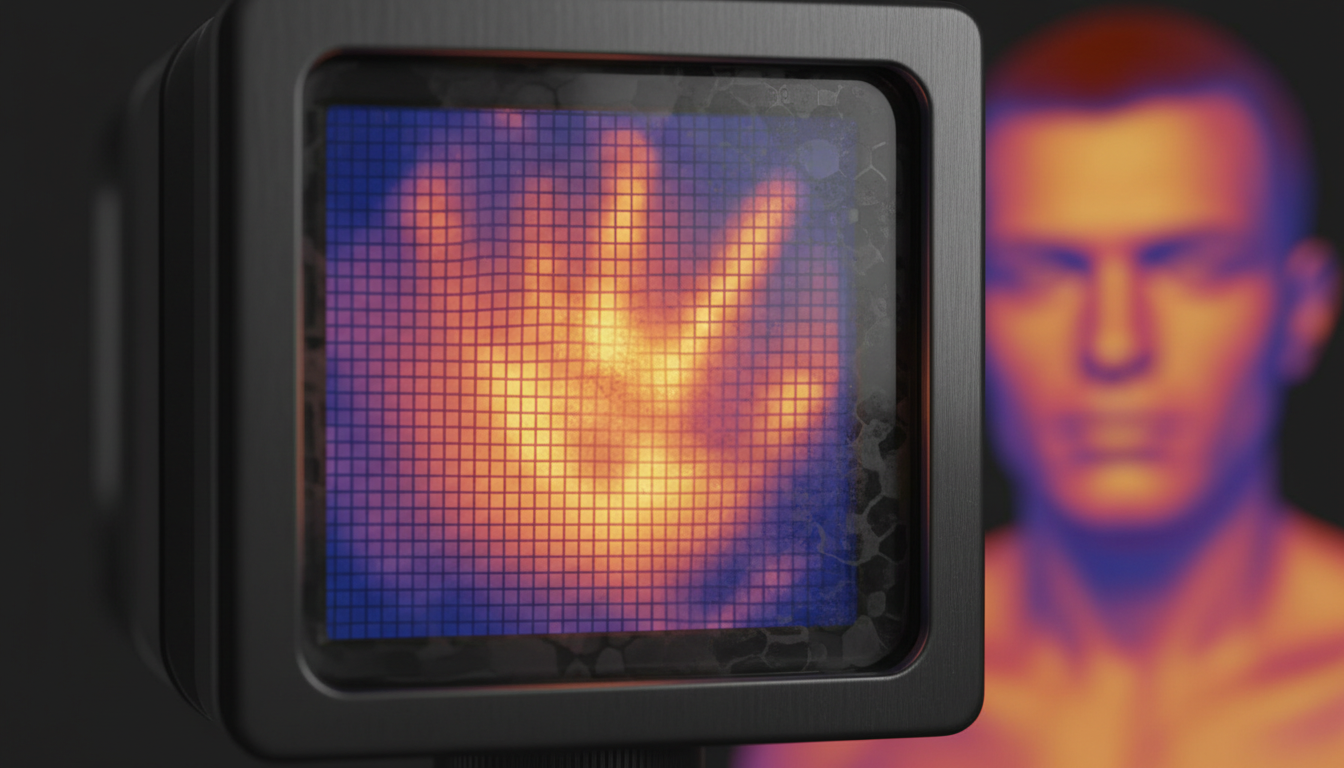
Thermal imaging cameras use infrared sensors to detect heat emitted by objects, animals, or people, converting these heat signatures into a visual image. The thermal imaging detector records minute differences in the heat emission and translates that information into a visible image.
Unlike traditional night vision that amplifies ambient light, thermal devices do not require any light at all—they rely solely on heat, which means you can get a clear picture in complete darkness as well as in daylight. The fact that it relies on thermal contrast instead of visible contrast means that thermal imaging cameras provide perfect vision even when camouflage or darkness render normal eyesight completely useless.
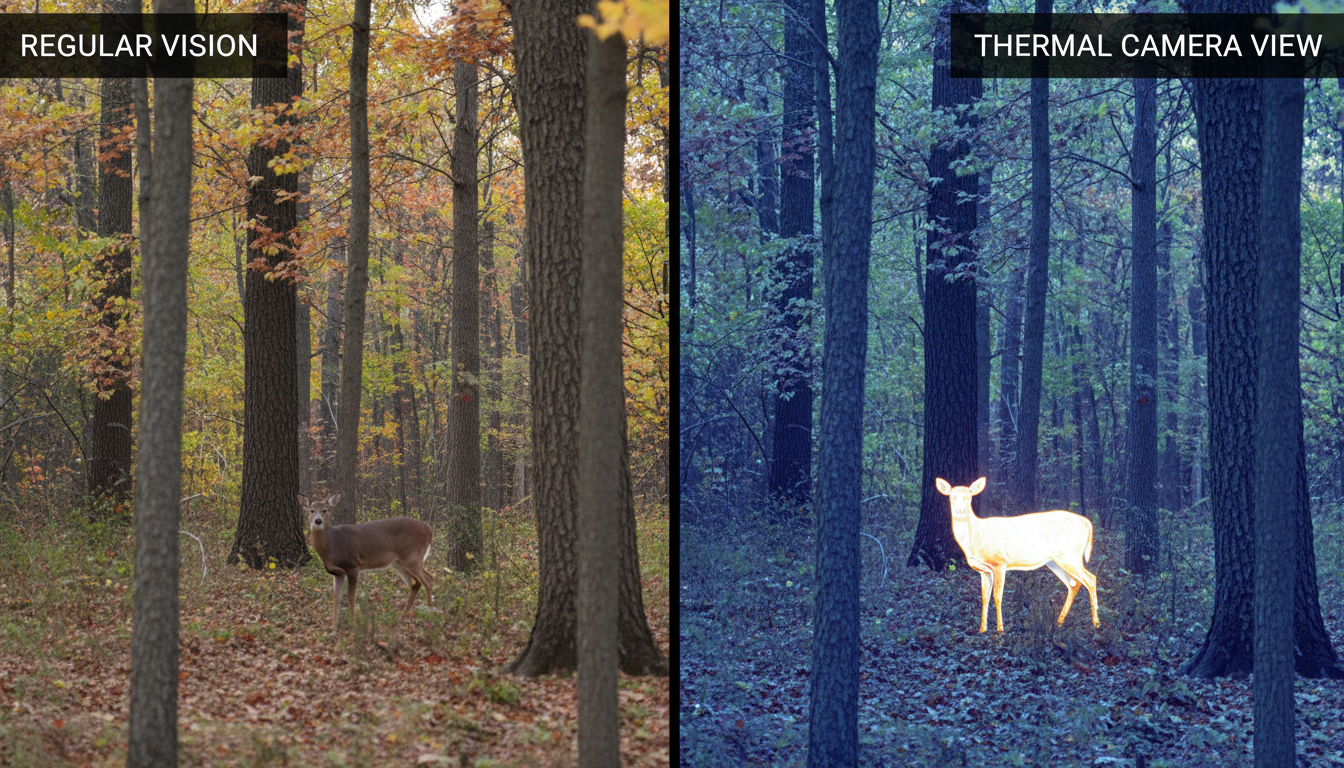
When you look through a thermal camera, warm-blooded animals appear bright (often white or glowing) against cooler backgrounds. Even the most camouflaged animals become visible to the observer. This makes thermal imaging perfect for detecting wildlife that would otherwise remain completely hidden.
Main Benefits for Wildlife Watchers
Spotting Nocturnal Animals
Many animals are nocturnal or crepuscular (active at dawn/dusk), and thermal cameras excel at revealing nocturnal creatures because they don’t need light at all. A hedgehog rustling in the hedgerow or a barn owl perched in a dark tree will light up in your thermal viewer, appearing as a bright silhouette against cooler backgrounds—even tiny bats can be detected by their warmth when they emerge at night.
Seeing Through Camouflage
Thermal imaging cameras are highly effective at spotting concealed animals by differentiating their heat signatures from the surrounding environment and can be used to detect wildlife within complex habitats such as dense vegetation. Because most wildlife has very good camouflage many of them remain undetected if you use traditional means such as binoculars or light amplifying vision systems, but with a thermal imaging camera, even the most camouflaged animals become visible.
Non-Invasive Observation
A huge benefit for wildlife enthusiasts and conservationists is that thermal imaging allows you to observe animals without disturbing them—there’s no need for bright spotlights or intrusive approaches, and animals usually cannot detect thermal cameras since they emit no visible light and minimal noise. Since thermal devices detect heat passively without emitting any light or energy, they are undetectable by animals.
How to Choose the Right Thermal Camera
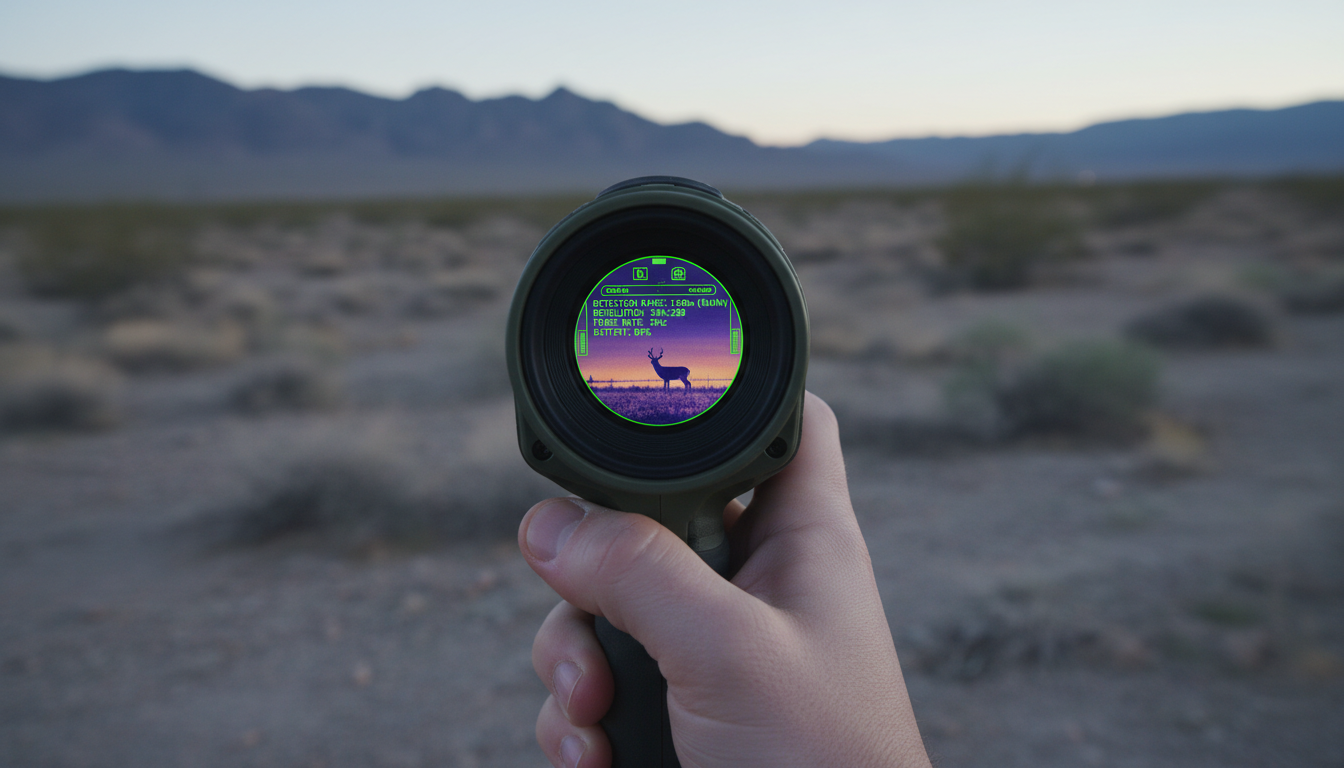
When selecting a thermal camera for wildlife observation, several factors matter:
Resolution and Image Quality
Lower NETD numbers (such as sub-25mK NETD) mean the thermal camera is more sensitive, offering a clearer image, while an imager with a higher NETD value shows less noticeable temperature differences. Higher resolution sensors provide more detail, which helps when you’re trying to identify specific species or observe behaviors.
Detection Range
Many entry-level models now offer detection ranges exceeding 1km, and these cameras can cover wide areas, depending on their specifications, enabling researchers and conservationists to monitor large regions effectively. Think about the distances you’ll typically be observing from—whether you need long-range capabilities or close-up detail.
Battery Life and Durability
It’s worth checking the battery life of a thermal imager before you buy, to ensure it can keep up on your all-night wildlife-watching sprees. A thermal camera for animals should be durable enough to withstand environmental conditions, such as rain, dust, or extreme temperatures—look for a camera that is weatherproof and rugged.
Recording Features
Thermal imaging cameras often have both photo and video recording capabilities, which serve multiple purposes in wildlife conservation—fundamentally creating visual evidence of species and their behavior, and enabling counting of large animal groups, supporting population monitoring efforts.
For those serious about wildlife observation, we offer several models designed for outdoor use. Our Sirius HD and Pegasus 2 LRF provide excellent detection ranges and image clarity for spotting animals at distance. The Draco offers a compact solution for those who prioritize portability. You can explore our full range of thermal imaging applications to find the right fit.
Best Practices for Wildlife Observation
Optimal Timing
Early mornings and dusk are prime times for observing wildlife, as animals are more active. On wet nights with drizzle or after rain everything is more or less the same temperature so you don’t have to get distracted by warm rocks, and you can keep using the imager into the morning hours longer.
Weather Considerations
If you are looking for arboreal mammals, overcast nights are much better because tree branches show up as hot against clear sky. When observing wildlife in rain, fog, mist and so on, devices with a higher NETD value are less effective as the weather may be cold enough to mask the heat source—the lower the NETD value of the sensor, the less “noise” in the image and the more able the camera is to deliver a clear image of the target, even with lots of adverse weather conditions.
Scanning Techniques
Spend time scanning slowly and train yourself to recognize animal shapes in thermal—for example, a rabbit might appear as a small oval hot spot with cooler ears, whereas a fox will have a distinct elongated shape with a hotter core. Move the camera steadily across the landscape rather than rushing, as small movements can easily be missed.
Color Palette Settings
Many thermal imaging systems have movable brightness, contrast, and color pallet settings—that is, white-hot, black-hot, and rainbow—and white-hot and black-hot settings are often more effective for spotting animals at night. Experiment with different palettes to see what works best in your specific environment.
Ethical Observation Guidelines
Maintain Safe Distances
Thermal imaging devices allow you to observe animals without getting too close, reducing stress on the wildlife, and you should always observe quietly and avoid sudden movements or noises that could startle animals. While thermal imaging allows for observation from afar, always maintain a safe distance to avoid disturbing the animals—the range will enable you to stay far enough away for animals to remain undisturbed while still effectively observing them.
Respect Sensitive Areas
Nesting sites and dens are sensitive areas where animals are especially vulnerable, so avoid prolonged observation in these areas to prevent stress or abandonment by the animals. Thermal imaging cameras can detect the heat that permeates through a den or nest due to the warmth of the animal inside, meaning dens, roosts and nests can be observed from a distance to detect the presence of an animal and observe when it enters and exits—this approach minimizes disturbance to animals by replacing invasive approaches such as physically checking a den for the presence of a species.
Know Local Regulations
Some areas restrict the use of thermal imaging devices for wildlife observation, so research local laws and guidelines to ensure your observation practices comply with regulations. Different regions have different rules about wildlife monitoring, especially around protected species.
Common Applications Beyond Hobby Use
Thermal imaging cameras, with their “passive detection” capability, enable long-distance, covert recording of natural animal behavior and provide researchers and conservationists with authentic, objective, and continuous observational data. Thermal cameras are now used in conservation to track endangered species and support anti-poaching efforts, with rangers using thermal imagers to scan large areas for the heat signatures of animals or potential poachers.
Researchers can use thermal cameras for data collection, allowing them to study animal behavior, migration patterns, and population health. Observing animal behavior at night or in dense forests becomes easier with thermal imaging, as researchers can monitor feeding habits, mating behaviors, and predator-prey interactions without disturbing the animals.
Conclusion
Thermal imaging cameras have transformed how we observe and study wildlife. They work in total darkness, see through camouflage, and let us watch animals from safe distances without disturbing their natural behaviors. The technology has become more accessible and affordable, making it available to wildlife enthusiasts and professionals alike.
When choosing a thermal camera, focus on your specific needs—detection range, image quality, battery life, and durability all matter. Practice using your device in different conditions and weather to get the best results. Most importantly, always observe ethically by maintaining safe distances, respecting sensitive areas, and following local regulations.
Whether you’re tracking nocturnal mammals, documenting rare species, or simply enjoying wildlife at night, thermal imaging opens up observation possibilities that were impossible just a few years ago. The heat signatures these cameras reveal tell stories about animal behavior, habitat use, and ecosystem health that we couldn’t access any other way.
Frequently Asked Questions
Can thermal cameras see animals through walls or solid objects?
No, thermal cameras cannot see through solid walls or dense objects. They detect heat signatures on surfaces, not what’s behind them. However, if an animal’s warmth has heated up the surface of a wall or den entrance over time, the camera can detect that temperature difference on the surface itself. This makes thermal imaging useful for locating nests or dens without directly seeing inside.
Do thermal cameras work better at night than during the day?
Thermal cameras work both day and night since they detect heat, not visible light. At night, they often provide clearer images because the environment cools down, creating better thermal contrast between warm-blooded animals and their surroundings. During hot days, everything can be warm, making it harder to distinguish animals from the background.
What’s the difference between thermal imaging and night vision?
Night vision amplifies existing light (like moonlight or starlight) to create a visible image, so it needs at least some light to function. Thermal imaging detects heat signatures and works in complete darkness without any light source. Thermal cameras can also see through fog, light rain, and vegetation better than night vision devices because they’re detecting heat, not reflected light.
How far can a thermal camera detect wildlife?
Detection range varies widely based on the camera’s specifications and the size of the animal. Entry-level models can detect large animals like deer at 300-500 meters, while high-end models can exceed 1 kilometer. Smaller animals like rabbits or foxes have shorter detection ranges. Weather conditions, humidity, and the temperature difference between the animal and environment also affect detection distance.
Will using a thermal camera disturb or scare wildlife?
No, thermal cameras are completely passive devices that don’t emit any light, sound, or energy that animals can detect. They simply receive heat signatures, making them ideal for non-invasive observation. Animals cannot sense when you’re using a thermal camera, though they may still detect you through movement, sound, or scent, so you should still practice quiet observation techniques.