
















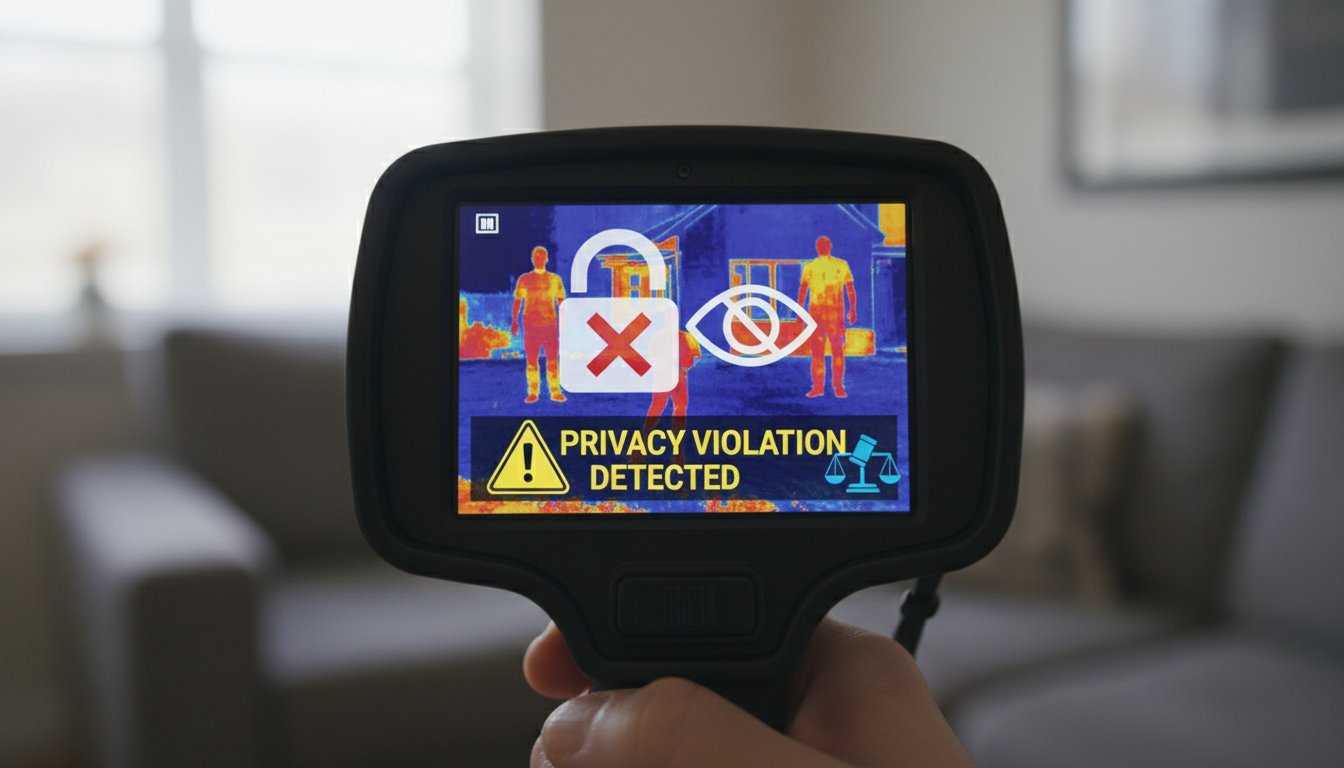
Thermal imaging devices have become more accessible than ever. They’re used for everything from hunting to home inspections. But as these cameras get cheaper and easier to buy, we’re facing a real question: can they be misused?
The short answer is yes. While thermal cameras serve legitimate purposes, they also open the door to privacy violations, neighbor disputes, and questionable surveillance practices. We’ve seen cases of people worried about neighbors watching them through walls, law enforcement pushing legal boundaries, and companies selling fever-detection cameras that don’t actually work as promised.
Let’s look at how thermal imaging can be abused, what the laws say, and what you can do to protect yourself.
Privacy Violations and Neighbor Spying
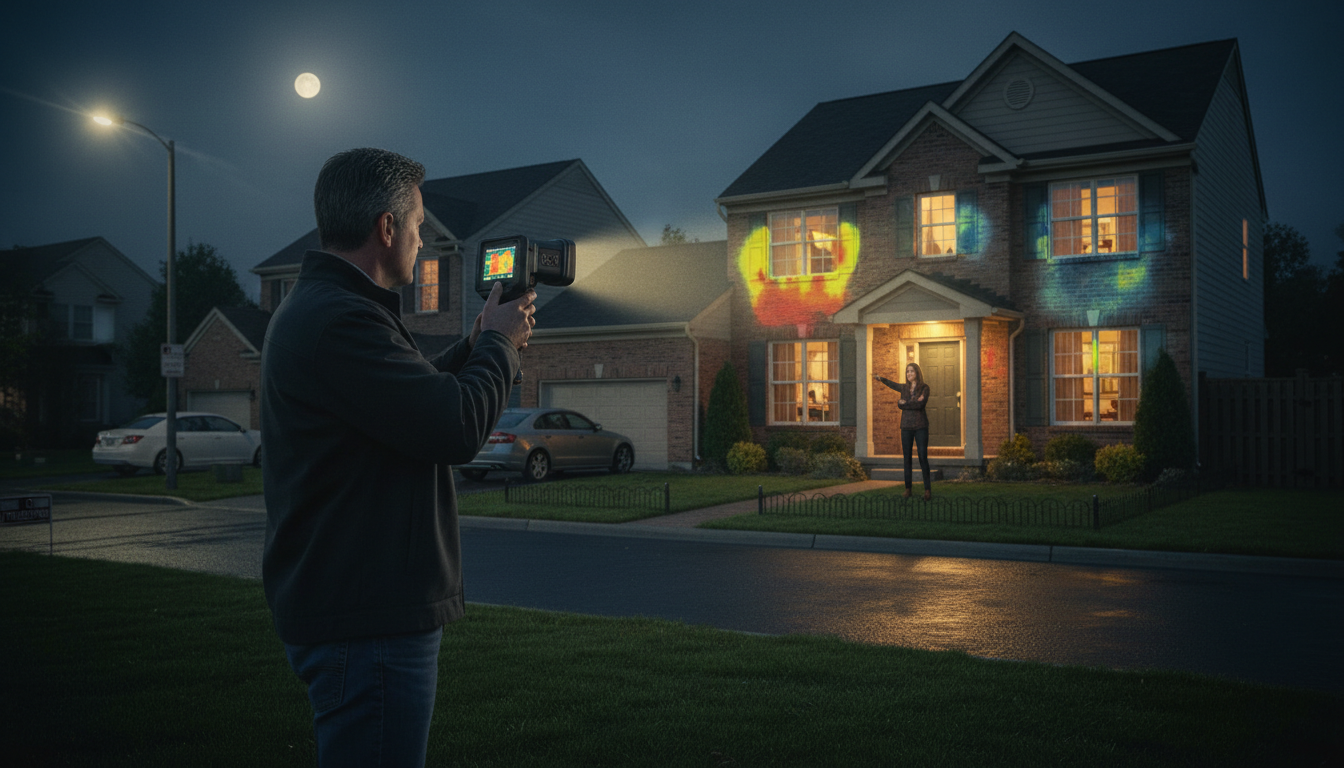
One of the most common concerns involves neighbors using thermal cameras to monitor people inside their homes. While thermal cameras can’t actually see through walls despite what movies show, they detect surface heat—but that hasn’t stopped people from feeling violated when they discover someone pointing a thermal device at their property.
Legal experts recommend documenting incidents and checking local privacy laws if you suspect unauthorized thermal camera use. The reality is that proving someone is using thermal imaging to spy on you can be difficult without clear evidence. But the fact that people are asking these questions shows how the technology creates new privacy concerns.
If you’re interested in legitimate outdoor uses for thermal devices, check out our Sirius HD or Pegasus 2 LRF models designed for hunting and wildlife observation.
Law Enforcement and Warrantless Surveillance
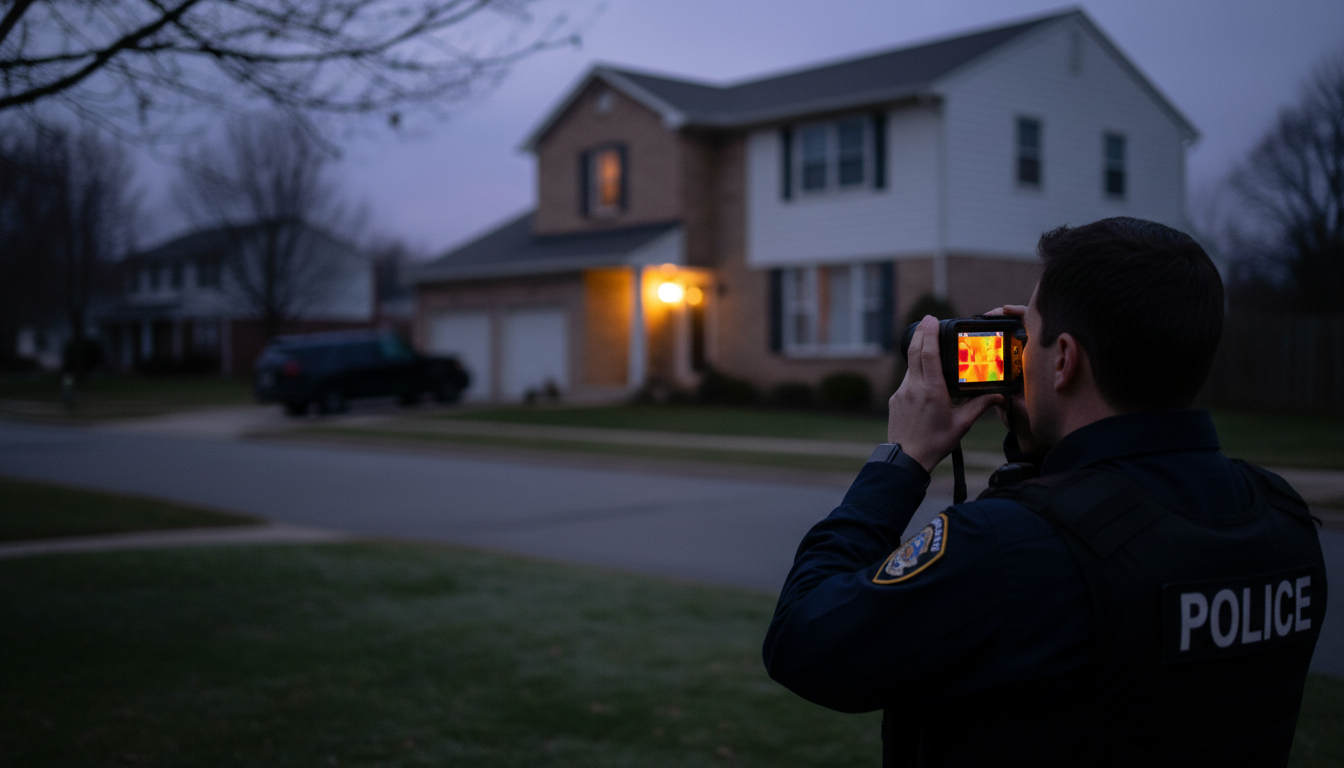
The Supreme Court ruled in Kyllo v. United States that using thermal imaging devices to monitor heat radiation in or around a person’s home without a warrant is unconstitutional, as it explores details that would previously have been unknowable without physical intrusion.
This case set an important precedent. Justice Scalia noted the surveillance powers that could be abused by police with technologies that are “not in general public use”. The ruling recognized that as thermal technology improves, the potential for abuse grows.
The technology aids the fight against drugs, but the potential for abuse is great and may destroy basic Fourth Amendment rights. Some courts had previously ruled that thermal imaging didn’t require a warrant, arguing that people have no reasonable expectation of privacy in heat escaping from their homes. The Supreme Court disagreed.
Surveillance Creep and Mass Monitoring
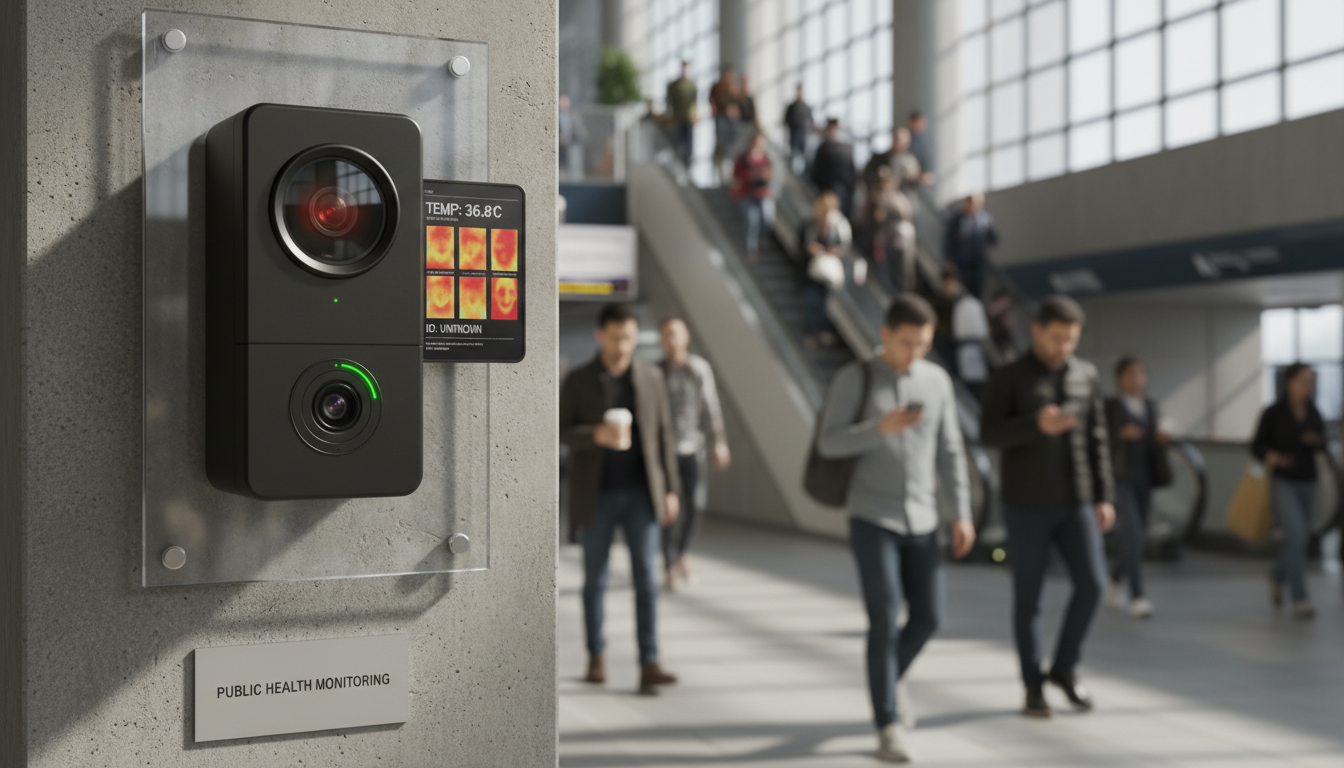
Thermal cameras threaten to build a future where public squares and sidewalks are filled with constant video surveillance, and spending money to install infrastructure like “fever detection” cameras increases the likelihood that the hardware will long outlive its usefulness during public health crises.
During the COVID-19 pandemic, many businesses rushed to install thermal cameras for temperature screening. Many thermal cameras are being combined with facial recognition capabilities, which is particularly problematic as facial recognition technology relies on the capture, extraction, storage, or sharing of people’s biometric facial data—often in absence of explicit consent or prior notice.
This combination creates a perfect storm for privacy invasion. You’re not just having your temperature taken—you’re potentially being identified, tracked, and monitored without your knowledge.
Misuse in Residential Settings
Thermal imaging can disclose privacy information from individuals, as residual thermal radiation transferred from users to objects can disclose gender characteristics. Thermal attacks have been successfully used to steal passwords and PIN codes at ATMs by examining residual thermal radiation in keypads.
These aren’t theoretical concerns. Attackers have actually used thermal imaging to compromise security in real-world scenarios. The heat signature your fingers leave on a keypad can reveal the numbers you just pressed.
Thermal imaging can be beneficial for attackers as it can identify locations where surveillance devices are unlikely to be observed, such as finding spots where a camera can blend with the background near a heating source.
For those looking for legitimate thermal imaging tools, our Draco and Arc LRF models offer reliable performance for outdoor activities.
Inaccurate Health Screening
Using infrared light to take someone’s temperature works well as long as you don’t want it to be particularly precise, but that’s exactly what’s expected of thermal cameras. Experts have concluded that thermal imaging from a distance—including camera systems that claim to detect fevers—may not be effective.
The camera and its environment must be tightly controlled—temperature, humidity, air currents, reflective surfaces, and heat sources all affect readings, and the camera must be warmed up for 30 minutes while the person being scanned must not have washed their face or exercised in the 15-30 minutes before being scanned.
Despite these limitations, businesses installed thousands of these systems and made decisions about who could enter based on potentially inaccurate readings. That’s a form of abuse—selling and using technology that doesn’t actually work as advertised.
What the Law Says
It is unlawful to observe, photograph, or record someone without their knowledge or consent in areas where they expect privacy. It is illegal to use, install, or permit the installation of imaging devices to capture or record visual images of a person’s private areas without their knowledge and consent, especially in situations where individuals have a reasonable expectation of privacy, including intentions of video voyeurism.
State laws vary, but most protect against surveillance in private spaces. State laws often build on Fourth Amendment foundations, providing additional protections against private intrusions and prohibiting surveillance without consent.
If you believe you’re being monitored, reporting to law enforcement is a necessary step—start with the local police department, presenting all documented evidence including recordings, photographs, and logs.
Protecting Yourself
So what can you do? First, understand what thermal cameras actually can and can’t do. They don’t have X-ray vision. They can’t see you undressing through a brick wall. But they can detect heat patterns that reveal where people are in outdoor spaces or detect warm spots on surfaces.
Documenting unauthorized surveillance is essential—gather concrete evidence such as recordings of unusual sounds, photographs of suspicious devices, or detailed logs of suspicious activities to create a timeline that can be critical in legal proceedings.
If you’re using thermal devices yourself—whether for home security, hunting, or professional work—be mindful of where you point them. Just because the technology is legal to own doesn’t mean every use of it is legal or ethical. Our thermal imaging products at Pixfra are designed for legitimate outdoor applications, and we encourage responsible use.
Conclusion
Yes, thermal imaging devices can be abused. From neighbor disputes to law enforcement overreach, from password theft to ineffective health screening, the technology creates real privacy risks. The Supreme Court has provided some protection against government abuse, but private misuse is harder to police. State laws offer some recourse, but proving thermal surveillance is difficult.
The best defense is awareness. Know your rights, understand the technology’s limitations, and document any suspicious activity. As thermal cameras become more common, we’ll need to keep having conversations about where the line is between legitimate use and privacy invasion. The technology itself isn’t good or bad—it’s how people choose to use it that matters.
FAQs
Can my neighbor legally point a thermal camera at my house?
It depends on your state laws and how the camera is being used. While owning a thermal camera is legal, using it to monitor someone in areas where they have a reasonable expectation of privacy—like inside their home—typically violates privacy laws. Document the activity and consult local law enforcement or an attorney about your specific situation.
Can thermal cameras actually see through walls?
No, despite what you see in movies. Thermal cameras only detect surface heat. They can’t see people behind walls or reveal what’s happening in the next room. They might show warm spots on a wall caused by heating ducts or poor insulation behind it, but they’re not seeing through the wall itself—just temperature patterns on the surface.
Do police need a warrant to use thermal imaging on my home?
Yes. The Supreme Court ruled in Kyllo v. United States that law enforcement must obtain a search warrant before using thermal imaging devices to monitor a private residence. Using such technology without a warrant violates the Fourth Amendment’s protection against unreasonable searches.
Are thermal cameras effective for COVID temperature screening?
Not really. Experts have found that thermal imaging from a distance is often inaccurate for fever detection. The cameras require highly controlled environments, proper calibration, and specific protocols to work correctly. Many systems installed during the pandemic didn’t meet these requirements and provided unreliable readings.
What should I do if I suspect thermal surveillance?
Document everything—dates, times, suspicious behavior, and any evidence you can safely gather. Check your state’s privacy and surveillance laws. File a police report with all your documentation. You may also want to consult an attorney about civil remedies like restraining orders or privacy violation lawsuits, depending on the severity of the situation.