


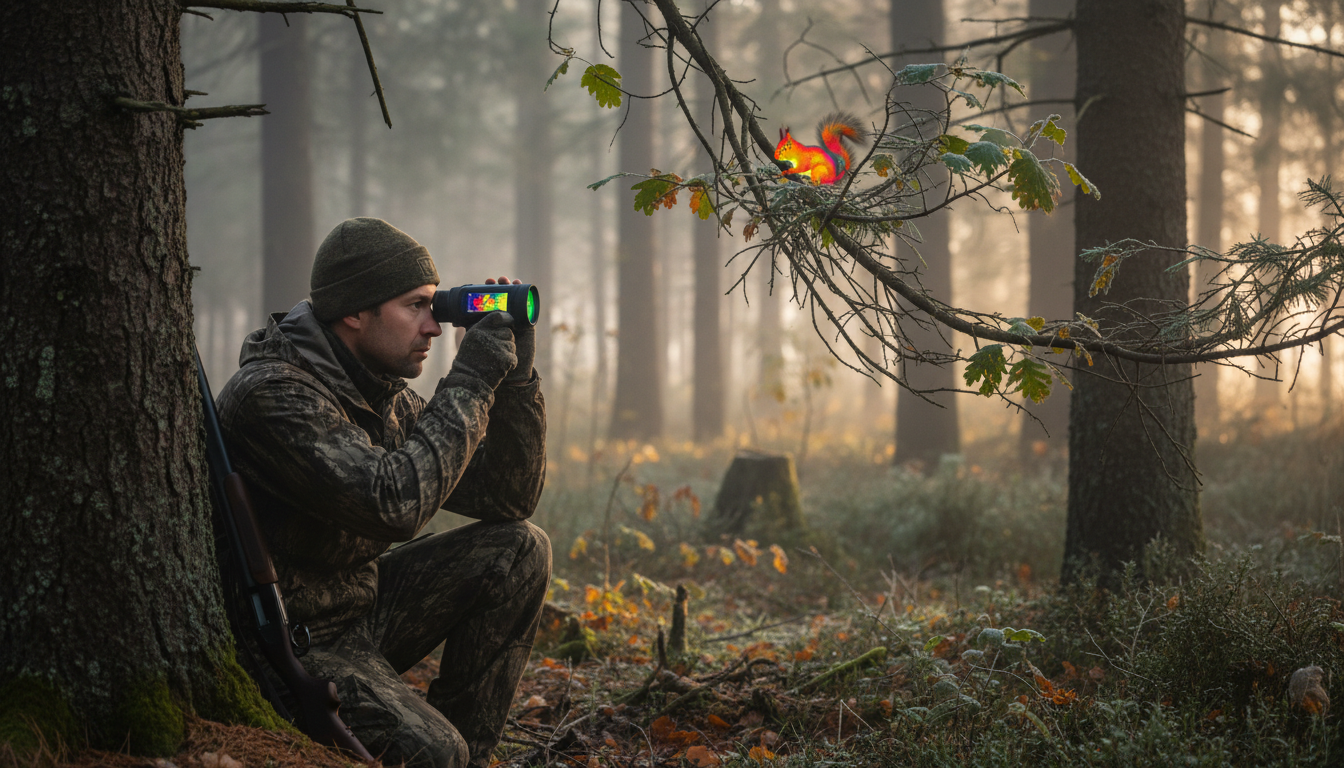
Squirrels are sneaky. They flatten themselves against bark, hide in leaf clusters, and seem to vanish the second you look away. You’ve probably been there—your dog’s treed one, and you’re straining your eyes trying to find the little critter before it slips away. A thermal monocular can change that game, but not in the way you might think. These devices detect heat signatures, not movement or shapes, which means they see what your eyes can’t. But there’s a catch: squirrels are small, trees absorb heat, and timing matters more than you’d expect.
We’ve spent time researching how hunters actually use thermal monoculars for squirrels, and the results are mixed. Some swear by them. Others say they’re hit-or-miss depending on conditions. The truth is somewhere in between. If you’re thinking about adding thermal to your squirrel hunting setup—or you already own one and want to use it better—this guide breaks down what actually works in the field.
Why Thermal Works for Squirrels (Sometimes)
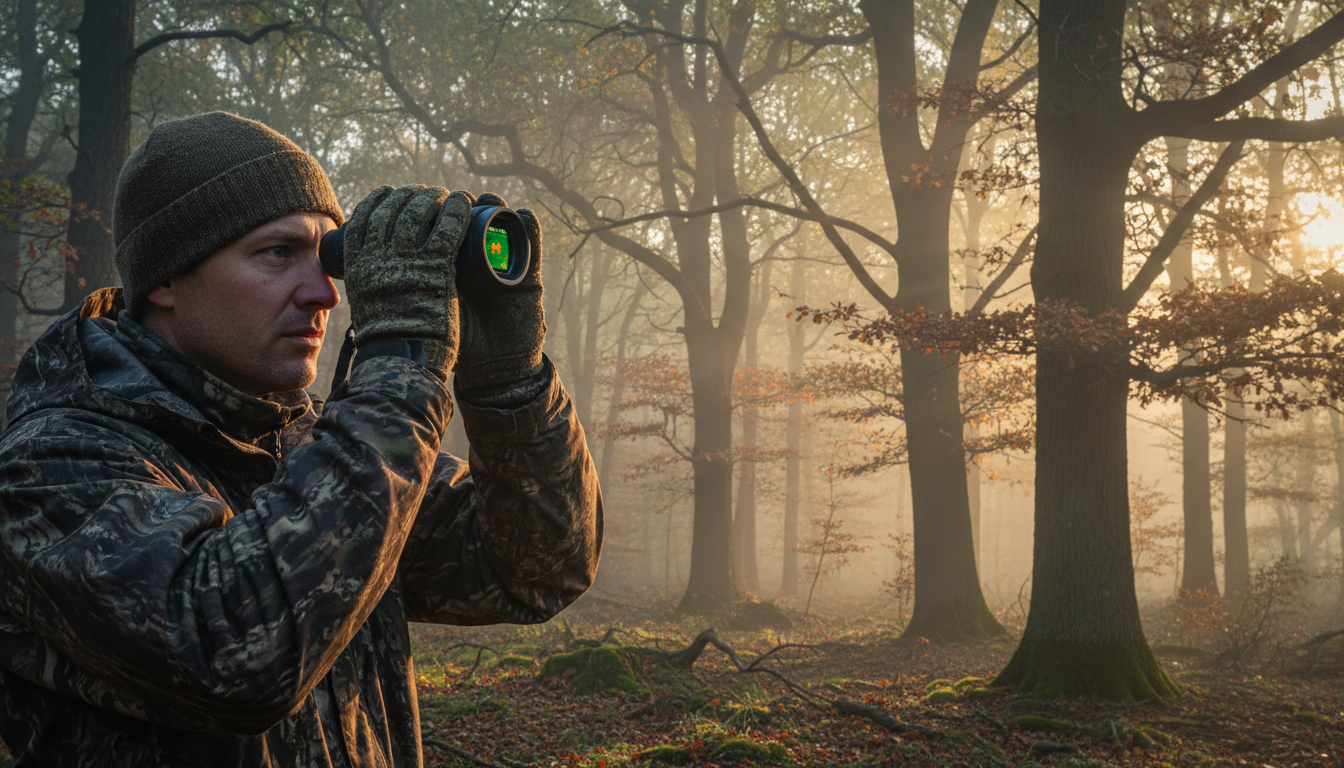
Thermal monoculars with a wide field of view (FOV), low Noise Equivalent Temperature Difference (NETD), and sensible base magnification work best for squirrel hunting and spotting. The reason comes down to physics. Squirrels are warm-blooded, and their body heat creates a signature that shows up against cooler backgrounds—trees, sky, or foliage.
But here’s where it gets tricky. Thermal works best in early morning before the sun heats up the woodland, and becomes almost useless 2 hours after sunrise. When trees and branches warm up, you get white dots everywhere on your thermal display. You can’t tell what’s a squirrel and what’s just sun-baked bark.
Thermal units work best at twilight, dawn and dusk, where you can’t see clearly and make out shapes of animals from the landscape, and it works best in the morning when the temperature difference between the landscape and body heat is widest. That temperature differential is everything. Cool surroundings + warm squirrel = clear detection. Hot day + heated vegetation = visual mess.
The Limitations You Need to Know
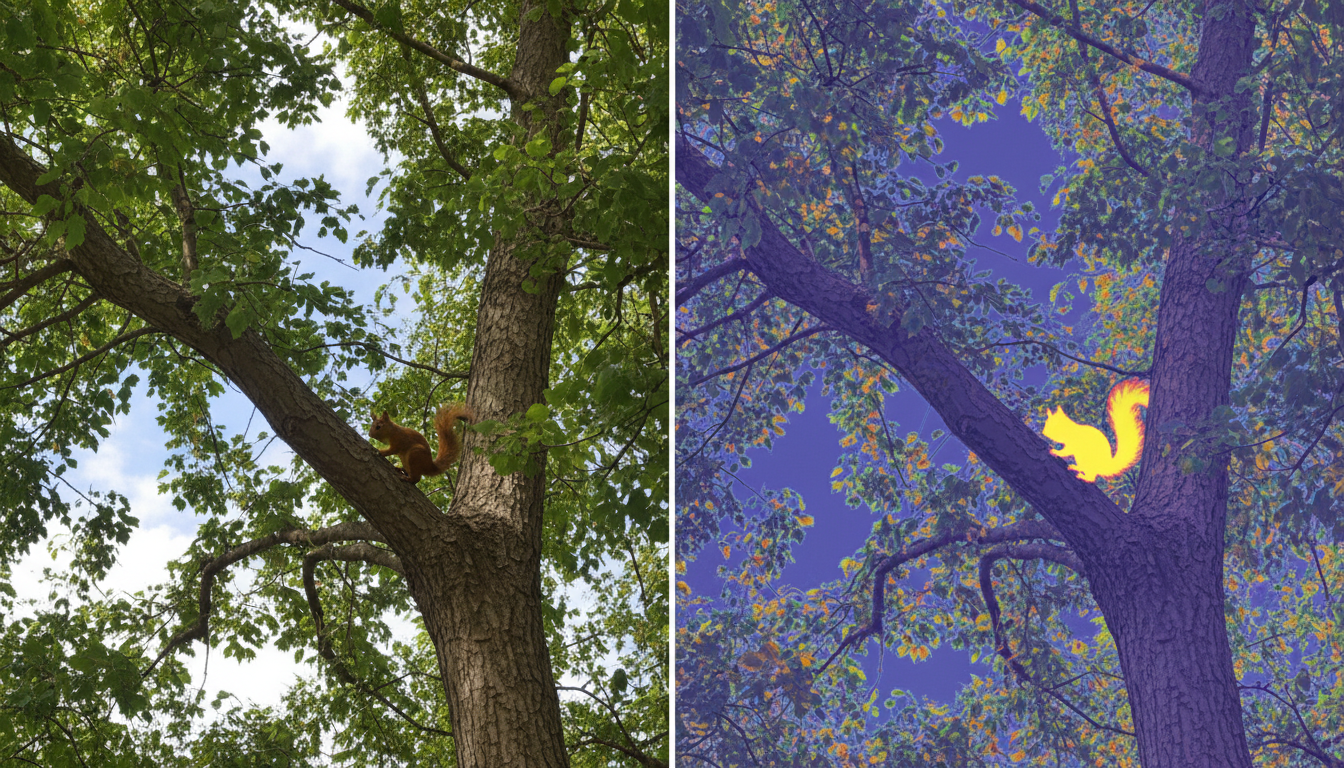
Let’s be honest about what thermal can’t do. If squirrels are just peeking at you, thermal might be difficult, and it won’t work if they are hiding behind a branch or leaves. The device picks up heat, not X-ray vision. A squirrel pressed flat against the back side of a tree trunk? You won’t see it.
Every thermal used in woodland has suffered problems when scanning tree tops, and it’s very weather dependent—early mornings when everything is cooler is better. The clear sky behind treetops can cause whiteout on some thermal models. Type of woodland matters too—how quickly foliage heats up in the sun affects visibility.
Another real issue: For hunting small game such as squirrels, you will need to fork out more money for a high resolution thermal monocular or you will waste your money. Budget models designed for spotting hogs at 200 yards won’t give you the detail needed to confirm a squirrel at 50 yards through branches.
What Specs Actually Matter
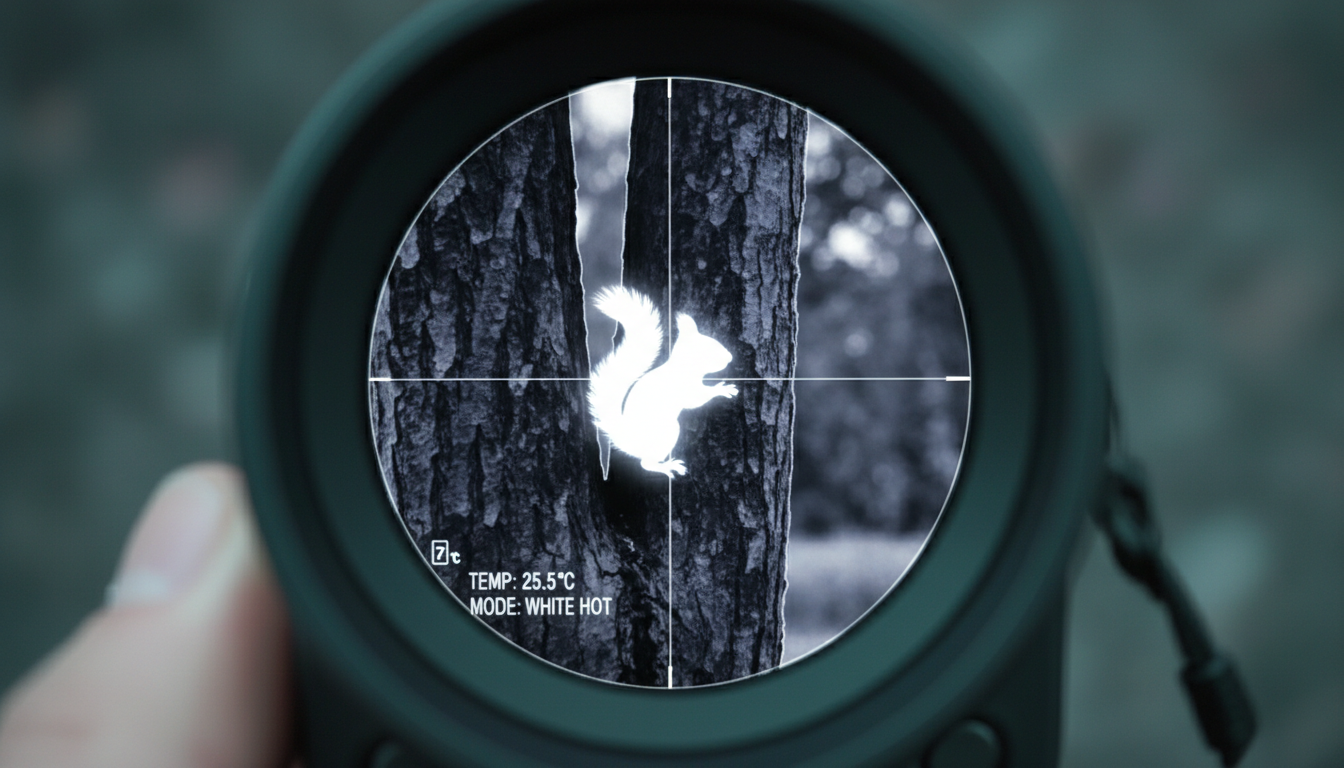
Sensor resolution drives everything. You’ll see options like 160×120, 320×240, 384×288, and 640×512. Handheld thermal monoculars need a wide field of view (FOV), low Noise Equivalent Temperature Difference (NETD), and sensible base magnification. For squirrels specifically, that 384-class or higher resolution makes the difference between “there’s something warm” and “that’s definitely a squirrel.”
Field of view matters more than magnification for scanning. Squirrel spotting favors compact optics with wide FOV, strong sensitivity, and enough resolution to confirm details through branches—these devices excel at fast scanning in dense woods, where small heat signatures demand responsiveness over long-range power. You’re not shooting 500-yard shots. You need to sweep treetops quickly and track movement.
NETD (sensitivity) gets technical, but here’s what it means: lower numbers = better detection of small temperature differences. That’s huge when you’re trying to pick out a squirrel’s faint heat signature from sun-warmed branches. We recommend looking at models from Pixfra’s outdoor thermal lineup that balance these specs for woodland hunting.
Best Times and Conditions for Detection
Timing beats equipment. A thermal monocular changed everything and gave hunters a much higher chance to spot squirrels hiding in thick leaves, especially in early morning before the sun heats up the woodland—within 2 hours after sunrise, thermal becomes almost useless. That’s your window.
Cooler months perform better than summer. Summer and early autumn are less effective, apart from scanning round bare ground or trees where feeders are—late autumn, winter and spring is when thermal devices come into play. The ambient temperature stays lower longer, giving you more hunting time before everything heats up.
Weather plays a role too. Light rain or overcast skies? That can actually help by keeping ambient temperatures down and reducing sun glare on foliage. One hunter spotted 3 white dots in a tree top 80-100 meters away in a drizzle morning, and spent a whole minute identifying the 3 squirrels hiding in thick leaves with binoculars—without thermal, there was no chance to see them.
Real-World Performance Tips
Here’s what works in actual field conditions. Scan at angles, not straight up. Looking straight up at treetops with bright sky behind causes whiteout on many thermal models. Try using thermal at a max of about 45 degrees up, and the more dense vegetation behind the better. That gives you contrast.
Combine thermal with regular glass. Many hunters prefer a compact and light thermal device stored in the harness near standard binoculars, always ready to use—the standard binoculars are very helpful to glass after detecting a target, just to be sure. Use thermal to locate the heat signature, then confirm species and shot placement with your regular optics.
Ground squirrels are easier than tree squirrels. There is no doubt how great a thermal is when trying to find squirrels on the ground. Less vegetation interference, better angles, and usually better contrast. If you’re hunting areas with feeders or field edges, thermal shines.
Check out Pixfra’s range of thermal devices to find options that match your specific hunting conditions and budget. Their Arc LRF and Pegasus 2 LRF models offer features that woodland hunters appreciate.
How to Choose the Right Device
Budget matters, but so does capability. Entry-level thermal monoculars under $600 exist, but you will be able to detect ground squirrel at 200 yards in the right conditions without issue with a $2000 thermal from brands like AGM, PULSAR, IRAY, or Bering Optic. That price jump buys you resolution and sensitivity that makes the difference on small targets.
Some hunters wouldn’t suggest anything lower than the TM-15 level, and note that more expensive thermal units do better with leaves on. Penetrating through foliage and picking up faint signatures requires better sensors. If you hunt during leaf-on season, that matters.
Compact and lightweight wins for squirrel hunting. Squirrels mean lots of scanning and stalking—comfort and battery matter more than extreme range. You’ll be glassing for extended periods, moving through timber, and pulling the device out repeatedly. A bulky unit gets left in the truck.
Features like built-in laser rangefinders help but aren’t critical for squirrels. You’re usually shooting inside 50 yards. Better to spend your budget on sensor quality and FOV. For other thermal applications and understanding how the technology works in different scenarios, check out this article on thermal imaging device privacy concerns.
Conclusion
Thermal monoculars for squirrel hunting aren’t magic, but they’re not gimmicks either. They work best in specific conditions—early morning, cooler months, when temperature differentials are greatest. They struggle in afternoon heat, against bright sky backgrounds, and when squirrels hide behind thick cover.
The key is matching your expectations to reality. A thermal monocular won’t find every squirrel every time, but it will spot ones you’d never see with your naked eye. It’s particularly useful for aging eyes, thick cover, and those frustrating moments when your dog has treed something you just can’t locate.
If you hunt squirrels seriously and can budget for a quality unit (think $1,000+ with at least 384 resolution), you’ll find it pays off on those early morning hunts when everything’s cool and squirrels are moving. Use it as one tool in your kit—not a replacement for field craft, good optics, and understanding squirrel behavior. Time it right, scan smart, and thermal gives you an edge that’s hard to match.
FAQs
Can thermal monoculars see squirrels through leaves?
Thermal can detect heat signatures through light foliage, but thick leaf cover or branches block the view. It works best when part of the squirrel’s body is exposed. Early morning before leaves heat up gives the best results. If a squirrel is completely hidden behind dense foliage or pressed against the back of a tree trunk, thermal won’t help.
What resolution thermal do I need for squirrel hunting?
You’ll want at least 384×288 resolution for reliable squirrel detection and identification. Budget 160×120 models lack the detail needed for small targets in trees. The 640×512 sensors perform better but cost significantly more. Resolution matters more for squirrels than larger game because you need to confirm small heat signatures at woodland distances through visual clutter.
Why does my thermal monocular work better at dawn?
Temperature differential drives thermal performance. At dawn, trees and vegetation are cool from overnight temperatures while squirrels maintain their warm body heat. This creates strong contrast. Once the sun heats up trees and branches, everything shows as warm on thermal, making it nearly impossible to distinguish squirrels from heated bark.
Do thermal monoculars work for squirrels in summer?
Summer is the toughest season for thermal squirrel hunting. Hot ambient temperatures, sun-heated vegetation, and full leaf coverage all reduce effectiveness. Late autumn through spring provides better conditions. If you hunt summer, stick to very early morning before sunrise, or focus on ground squirrels in open areas where you have better angles and less foliage interference.
Should I buy thermal or stick with a good dog for squirrel hunting?
Both have advantages. Dogs find squirrels in any conditions and any season, plus they’re great companions. Thermal works better in specific conditions (early morning, cooler weather) but won’t tree squirrels for you. Some hunters use both—the dog trees the squirrel, then thermal helps locate it in thick cover. If you can only invest in one, a well-trained dog is more versatile for squirrel hunting specifically.