

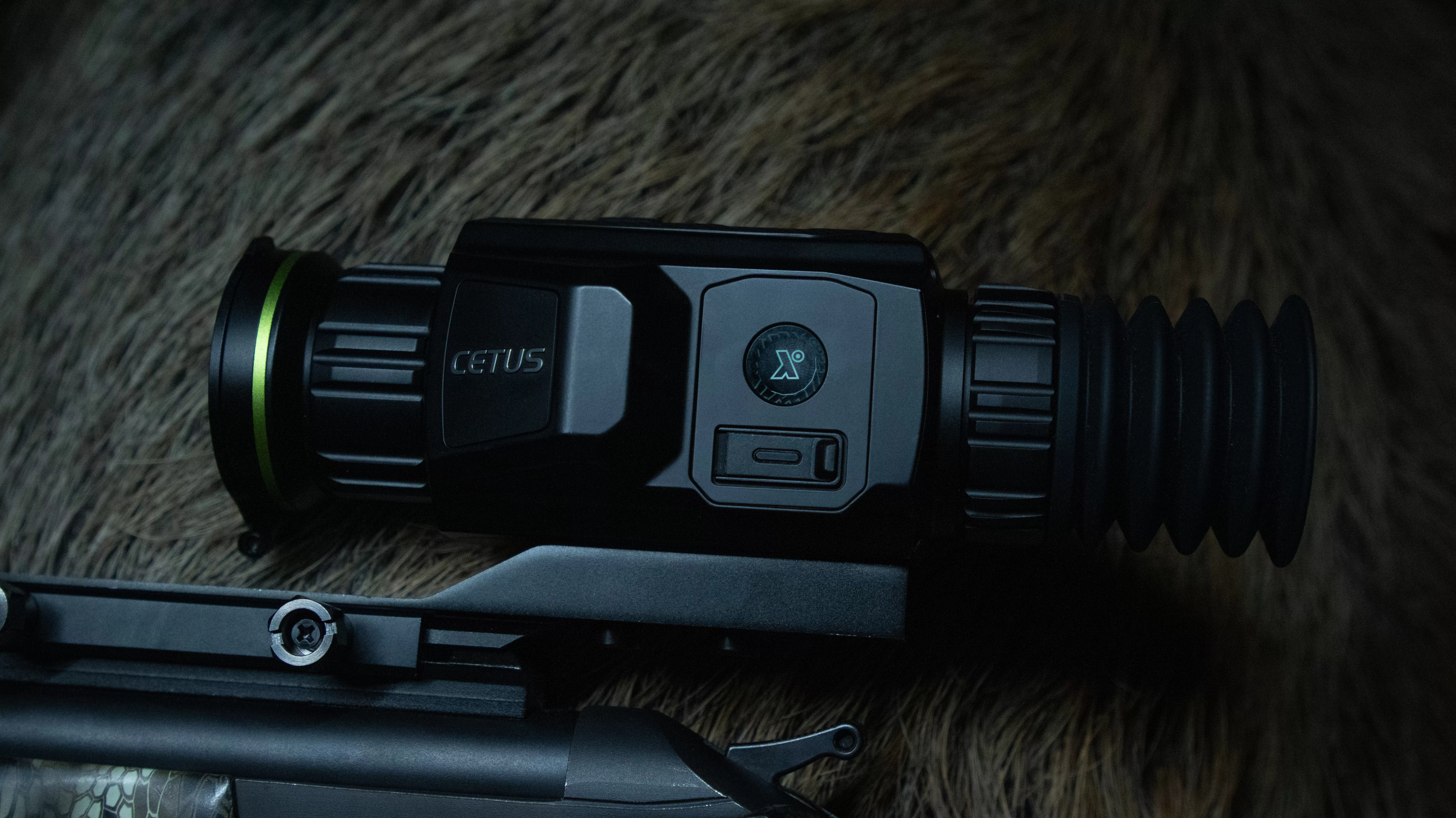
Thermal scopes have gotten more affordable in recent years, but the price gap between budget and high-end models is still massive. You can grab a basic thermal rifle scope for around $1,000 — or spend $5,000 to $8,000 on a flagship. So, is that extra money getting you real performance in the field, or are you just paying for bragging rights? We’ve spent years building and testing thermal optics at Pixfra, and we’re going to lay it all out for you — no fluff, no marketing spin.
What Makes a Thermal Scope “High-End” in 2026?
Before we talk about whether a premium thermal scope is worth your money, we need to define what “high-end” actually means right now. The thermal optics market has changed a lot over the past few years. Features that used to live only on $7,000+ models have trickled down to more affordable price points. But top-tier scopes still pack a clear edge in several areas.

A high-end thermal scope in 2026 typically starts with a 640×512 sensor or higher. Thermal scope sensors come in three main resolution tiers: 256×192 (roughly 49,000 pixels), 384×288 or 400×300 (roughly 110,000–120,000 pixels), and 640×480 or 640×512 (roughly 307,000–327,000 pixels). Premium models now push into 1024×768 and even 1280-class territory, which delivers a drastically sharper picture — especially when you start using digital zoom. You’ll also see NETD ratings at or below 20 mK on top-shelf units, better lens coatings, wider apertures (F/1.0 to F/1.1), AMOLED or micro-OLED displays, integrated laser rangefinders, onboard ballistic calculators, and longer battery life. Build quality steps up too, with IP67 or IPX7 waterproofing, magnesium alloy housings, and recoil resistance rated for heavy magnum calibers.
On our end, the Pixfra Sirius HD series hits detection ranges up to 3,600 meters with NETD values as low as ≤18 mK. Our Pegasus 2 LRF and Chiron LRF models pack integrated laser rangefinders with 1,000-meter ranging and built-in ballistic calculators. These features aren’t gimmicks — they remove steps from your workflow and give you faster, more confident target engagement at night. The Taurus LRF series features ultra-fine zeroing with 0.9cm@100m click values, which gives you the kind of shot-to-shot precision that budget scopes simply can’t match.
High-End vs Budget Thermal Scopes: Real-World Differences
On paper, the specs tell one story. In the field, the gap between a $1,000 scope and a $4,000+ scope shows up fast. This is where most online reviews miss the mark — they compare numbers on a spec sheet but don’t spend enough time behind the glass to see the real difference.
The ATN ThOR LT 160 initially piqued interest with its budget-friendly price tag of $1,199 and the promise of introducing thermal optics to nighttime hunting. While the scope does impress with its lightweight 1.4-pound design and 60Hz high refresh rate, it disappointingly underperforms in key areas. The 160×120 17-micron sensor yielded a muddy and imprecise sight picture, making target identification at distances beyond 100 yards a risky endeavor. That’s the trade-off with budget thermals — they get you into the game, but they limit how far and how clearly you can see. Under $1,000, you’ll find basic 256×192 scopes that work for close-range applications under 100-150 yards.
The biggest real-world differences show up in three areas: target identification at range, performance in bad weather, and usability under pressure. A hunter running a 640-class sensor with sub-20 mK NETD can positively identify a coyote at 400+ yards on a humid night. A budget 256-class scope might detect “something” at that distance, but you won’t know what it is. Beyond 500 yards, the 640-class sensor has a meaningful advantage for positive target identification. Given that the vast majority of thermal hunting shots happen under 400 yards, a 400-class sensor is the better value for most hunters. That’s a fair point — and it’s worth keeping in mind. Not everyone needs max range. But if you hunt open fields, do predator control across large ranches, or need to positively ID targets before pulling the trigger at 300+ yards, those extra pixels and that sensor sensitivity are the difference between an ethical shot and a guess.
Weather performance is the other big separator. Weather rarely aligns with hunting plans. Rain, fog, snow, and high humidity can significantly degrade thermal imaging by creating a “thermal veil” that reduces contrast between targets and their surroundings. Thermal scopes with higher NETD values tend to struggle in these conditions, producing noisy, low-contrast images that make it difficult to distinguish targets. However, a low-NETD thermal scope excels under these challenges. When you’re out on a warm summer night and the ground is radiating heat at nearly the same temperature as the animals, a cheap scope turns everything into a flat gray mess. A high-end sensor with ≤18 mK NETD — like what we build into the Pixfra Sirius HD — still picks out those subtle heat differences and gives you a usable picture.
Sensor Resolution, NETD, and What Actually Matters
Let’s talk about the specs that drive the price difference, because this is where a lot of buyers get confused. Manufacturers throw around numbers, and it’s easy to assume that the highest number always wins. That’s not how thermal imaging works.

We’ve tested thermal optics in just about every condition you can imagine — from foggy mornings to bone-dry desert hunts. And here’s what we’ve learned: image quality isn’t defined by a single number but rather the result of how several specifications work together. You can’t just pick the highest resolution and call it done. Resolution tells you how many pixels are capturing thermal data. NETD tells you how sensitive each pixel is to small temperature differences. Pixel pitch (measured in microns) affects both sharpness and sensitivity. Refresh rate determines how smooth your image tracks a moving target. And lens quality affects how much thermal energy reaches the sensor in the first place.
Here’s a quick breakdown of how these specs stack up across different price tiers:
| Spec | Budget ($800–$1,500) | Mid-Range ($1,500–$3,500) | High-End ($3,500+) |
|---|---|---|---|
| Sensor Resolution | 256×192 | 384×288 or 400×300 | 640×512 or higher |
| NETD | ≤40 mK | ≤25 mK | ≤20 mK (≤18 mK on top models) |
| Refresh Rate | 50 Hz | 50 Hz | 50–60 Hz |
| Detection Range | ~500–800 m | ~1,000–1,800 m | ~2,000–3,600 m |
| Laser Rangefinder | Rarely | Sometimes | Often integrated |
| Ballistic Calculator | Rarely | Basic on some | Advanced, auto-adjusting |
| Battery Life | 3–6 hrs | 5–10 hrs | 6–15 hrs |
| Build Quality | Polymer, basic IP rating | Aluminum, IP67 | Aircraft-grade alloy, IP67+ |
A 384×288 sensor at 17µm with NETD <25 mK can show low-contrast scenes in more detail than a 640×480 sensor at 12µm with NETD <40 mK. That seems backwards, right? More pixels should mean better images. But thermal imaging doesn’t work like regular photography. This is one of the biggest lessons we’ve learned. A high pixel count with poor sensitivity gives you a sharp but flat, noisy image. A lower-resolution sensor with great NETD and a wide-aperture lens can actually outperform it in tough conditions. The best high-end scopes deliver both — high resolution AND excellent sensitivity — and that’s why they cost what they do.
The refresh rate, measured in Hertz (Hz), refers to how many times per second the image updates. A low refresh rate (e.g., 9Hz or 30Hz) can cause the image to lag or stutter when you pan the scope or track a moving target. For a seamless, real-time viewing experience, always look for a device with a 50Hz or 60Hz refresh rate. This ensures smooth tracking, reducing eye strain and improving accuracy. Fortunately, most modern scopes — even budget ones — hit the 50 Hz mark. But the overall image pipeline, from sensor to processing to display, is still smoother and more responsive on premium units.
When a Premium Thermal Scope Pays for Itself
Here’s the real question: does a high-end thermal scope actually pay for itself compared to a cheaper option? The answer depends entirely on how you use it.
If you’re a ranch owner dealing with feral hog damage, the math is pretty straightforward. Feral hogs cause an estimated $2.5 billion in agricultural damage across the U.S. each year. A single sounder tearing through crops can rack up thousands in losses in one night. A premium thermal scope that lets you detect, identify, and take clean shots on multiple hogs during an all-night session directly protects your bottom line. Better sensor clarity means faster target acquisition. Built-in rangefinders and ballistic calculators mean fewer missed shots. And longer battery life means you stay in the fight all night. We’ve documented results like this in our own feral hog eradication work — hunters using Pixfra scopes with the right accessories to upgrade thermal scope performance saw real gains in efficiency and shot placement.

For dedicated predator hunters — especially those running competitive hunts or doing contract predator removal — a high-end thermal scope is a direct tool of the trade. With my thermal scope I don’t care if it’s fog or the darkest night, it’s almost cheating. That’s the kind of confidence top-tier thermal gives you. When you’re calling coyotes in south Texas brush country or tracking bobcats in dense timber, the ability to see through cover and ID targets at range is non-negotiable.
On the other hand, if you hunt casually — maybe 5–10 nights a year over a feeder at distances under 150 yards — a mid-range 384-class scope will do the job. For most hunters, one thermal scope for hunting satisfies 90% of needs. There’s no shame in buying smart. A $2,000 scope with good fundamentals is a great tool. Just understand what you’re trading away when you go down in price.
Durability is another area where premium pays off long-term. Budget scopes tend to use lighter-grade housings and simpler waterproofing. Drop one off an ATV or hunt through weeks of rain, and you might be shopping again sooner than expected. Thermal scopes are built to withstand rough environments and heavy use. Their rugged construction means they can handle rough handling, extreme temperatures, and elements. If you need a reliable and durable optic that can handle tough conditions, the investment can be justified. High-end thermal scopes from reputable manufacturers are built to last for years of hard field use. When you divide the cost over a decade of hunting, the per-hunt price difference between budget and premium shrinks fast.
How to Get the Most Out of Your Thermal Scope Investment
Whether you go budget, mid-range, or high-end, how you set up and maintain your thermal scope matters just as much as the scope itself. We’ve seen hunters buy great optics and then undercut their own performance with bad habits and missing gear.
Start with your mount. A quality quick-detach mount made from aircraft-grade aluminum lets you move your thermal scope between rifles without losing zero. If you run multiple platforms — say, an AR for hog work and a bolt gun for longer-range predator hunts — a QD mount saves serious time and frustration. Pair that with extended battery solutions. Most thermal scopes run 3–6 hours on internal batteries, which is fine for a quick evening sit, but not enough for all-night sessions. An external power bank in the 10,000–20,000 mAh range can keep you running for 10+ hours straight. Our team has been using setups like these for years, and they make a measurable difference in field time.
Protect your glass. Thermal lenses use germanium optics that are softer and more scratch-prone than standard glass. Flip-up lens covers, microfiber cloths designed for coated optics, and proper hard-shell cases for transport are all non-negotiable. A dirty or scratched lens degrades your thermal image quality fast — and a replacement lens costs a lot more than a $15 cleaning kit.
Recording capability is another force multiplier that’s easy to overlook. Many of our Pixfra scopes — including the Sirius HD, Pegasus 2 LRF, and Draco series — have built-in video recording. Reviewing footage after a hunt lets you study animal movement patterns, evaluate shot placement, and plan better strategies for next time. It’s also useful if you need to document property damage for wildlife management purposes. If your scope doesn’t have onboard recording, look for external recorders that connect via video output.
And don’t underestimate the value of pairing your thermal scope with an IR illuminator when conditions get tough. While thermal scopes detect heat and don’t need light, adding infrared illumination can boost target contrast in environments where background and target temperatures are close — like hot summer nights when everything is radiating at similar levels. The Pixfra IR Torch is designed to work alongside thermal setups for exactly this scenario. It’s not something every hunter needs, but it’s a tool that can make a real difference in the right conditions.
Finally, take the time to learn your scope’s menu system, color palettes, and reticle options before you need them in the field. Premium scopes come loaded with features — multiple color palettes, adjustable reticles, recording modes, Wi-Fi streaming, and ballistic settings. Figuring those out in the dark while a sounder of hogs is 200 yards away is not the time to read the manual.
The Bottom Line: Is a High-End Thermal Scope Worth It?
Here’s our honest take after years of designing and using thermal optics. A high-end thermal scope is worth the price if you hunt regularly, hunt in varied or challenging conditions, need to make clean shots at longer ranges, or depend on your thermal scope for work like property management or predator control. The jump from a 256-class budget scope to a 640-class premium model with low NETD, integrated LRF, and rugged construction is a genuine step up in real-world capability — not just better numbers on a spec sheet.
Thermal scopes generally start around $1,500 and can exceed $5,000. The price varies based on features, brand, and the thermal technology used, including sensor resolution. Higher-end models offer better resolution and longer detection ranges, but there are also good options available for tighter budgets.

But if you’re on a tighter budget, don’t let the sticker shock scare you away from thermal entirely. Thermal hunting in 2026 no longer requires a premium price tag. A well-chosen mid-range scope in the $1,500–$2,500 bracket can handle the vast majority of hunting situations within 300 yards. Start there, learn what matters to you in the field, and upgrade when you’re ready.
At Pixfra, we build thermal scopes, monoculars, and front attachments across multiple price points — from lightweight everyday options like the Draco series to premium detection machines like the Sirius HD and Chiron LRF. Our Volans series even offers all-day vision with an adjustable aperture from F1.2 to F3.0 for shooters who want thermal and daylight capability in one unit. Whatever level you enter at, you’re getting proprietary thermal imaging technology with NETD values as low as ≤18 mK and detection ranges that compete with anyone in the market.
The right thermal scope is the one that fits your hunting style, your environment, and your budget. But we’ll say this — once you’ve looked through a truly good high-end thermal, it’s hard to go back.
FAQs
How long do high-end thermal scopes last compared to budget models?
A well-built premium thermal scope can easily last 8–10 years or more with proper care. High-end models use aircraft-grade aluminum or magnesium alloy housings, IP67+ waterproofing, and are tested against heavy recoil. Budget scopes often use lighter-weight materials and less robust sealing, which means they’re more likely to fail after repeated use in harsh field conditions. Investing in quality up front usually means fewer replacements down the road.
Can I use a thermal scope during the day?
Yes. Thermal scopes detect heat, not light, so they work in both day and night conditions. Many hunters zero their thermal scopes during daylight because it’s easier to see targets and make adjustments. Some models, like the Pixfra Volans series, feature adjustable apertures that specifically adapt to different lighting conditions, making them true all-day optics.
What NETD rating should I look for in a thermal scope?
For most hunting situations, look for a scope with NETD at or below 25 mK. NETD is measured in millikelvins (mK), with typical specifications expressed as <25 mK or <20 mK. The guiding principle is straightforward: the lower the NETD value, the higher the sensor sensitivity and the superior the image quality. If you hunt in humid climates, near water, or on warm summer nights where temperature contrast is low, aim for ≤20 mK or lower for the best results.
Is a 384 sensor good enough or do I need 640?
For hunting at typical ranges under 300 yards — think hog work over feeders or calling coyotes in moderate terrain — a 384×288 sensor with good NETD is perfectly capable and offers strong value. If you regularly need to identify targets past 400 yards, hunt open terrain, or want the best possible image quality at any range, a 640×512 sensor gives you a real edge. It’s not that 384 can’t do the job — it absolutely can — but 640 gives you more room and more detail, especially with digital zoom.
Do I need a laser rangefinder built into my thermal scope?
You don’t need one, but it changes your workflow for the better — especially if you shoot past 200 yards. Adding a built-in laser rangefinder to this capability changes the workflow entirely. Press a button while looking through the scope, and you get an instant distance reading overlaid on your thermal image — no need to set down the rifle, pick up a separate rangefinder, and re-acquire your target. The best models feed that range data directly into an onboard ballistic calculator that adjusts your aiming point for bullet drop. If you hunt close range only, you can save the money. But for variable terrain and longer shots, an integrated LRF is a game-changer.