















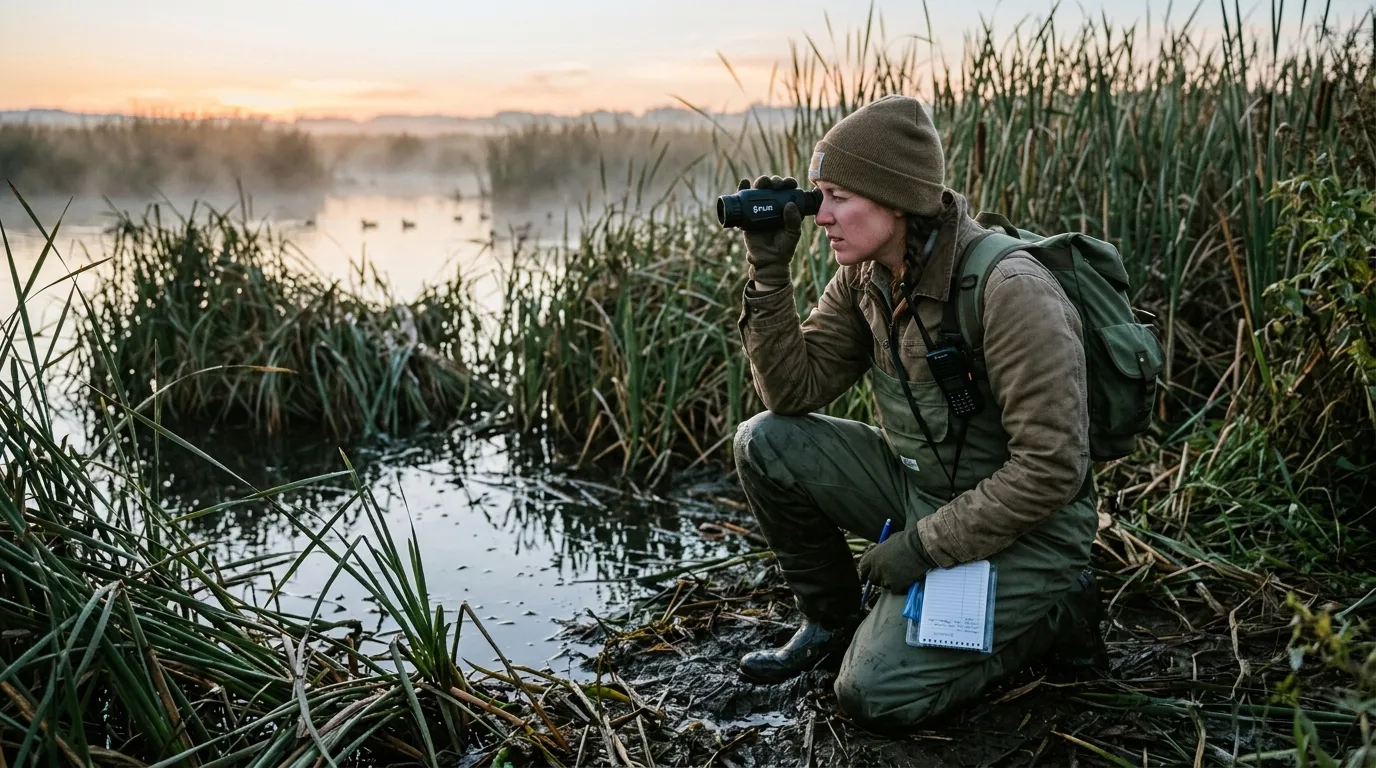
Use invasive species control with thermal imaging when the target animal is active at night, hides in cover, or moves along water where a flashlight gives you away. Thermal helps teams find nutria, feral hogs, green iguanas, and other problem species faster, but it works best as a disciplined workflow: scan first, confirm second, document third, and act only when the species, method, and location are legal.
Thermal Imaging For Nutria Control
Thermal imaging helps invasive species teams find warm-bodied animals before visible-light optics can confirm them. For nutria control, the main gain is night scanning along levees, ditches, ponds, and marsh edges, where a heat signature can flag movement near burrows, slides, and feeding areas.
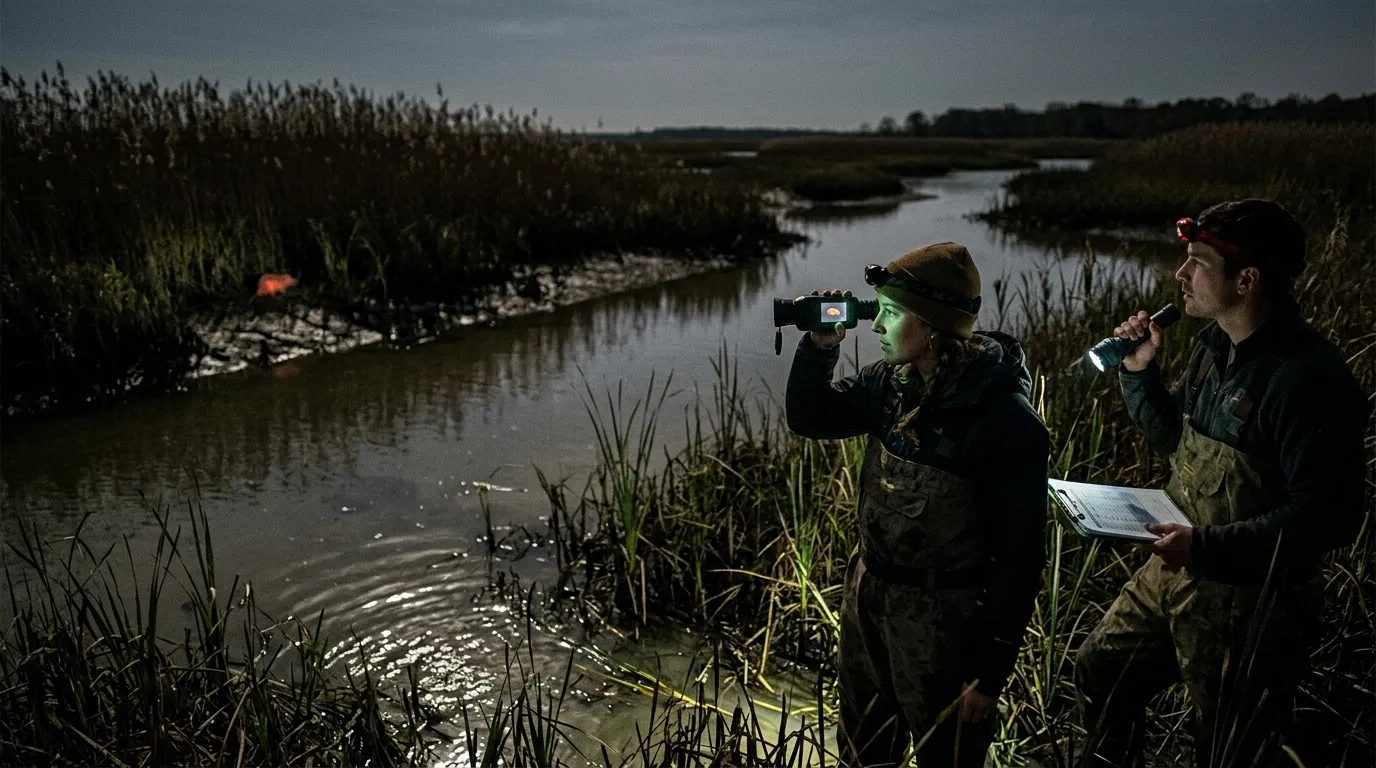
Nutria are a good test case because their damage is physical and easy to map. The problem isn’t just “there’s an animal in the marsh.” The problem is bank failure, crop loss, and wetland conversion. In its nutria management page, USDA APHIS, 2025 lists nutria as invasive in the United States and says their burrows can extend up to 150 feet, damaging stream banks, canals, levees, roadways, and structural foundations.
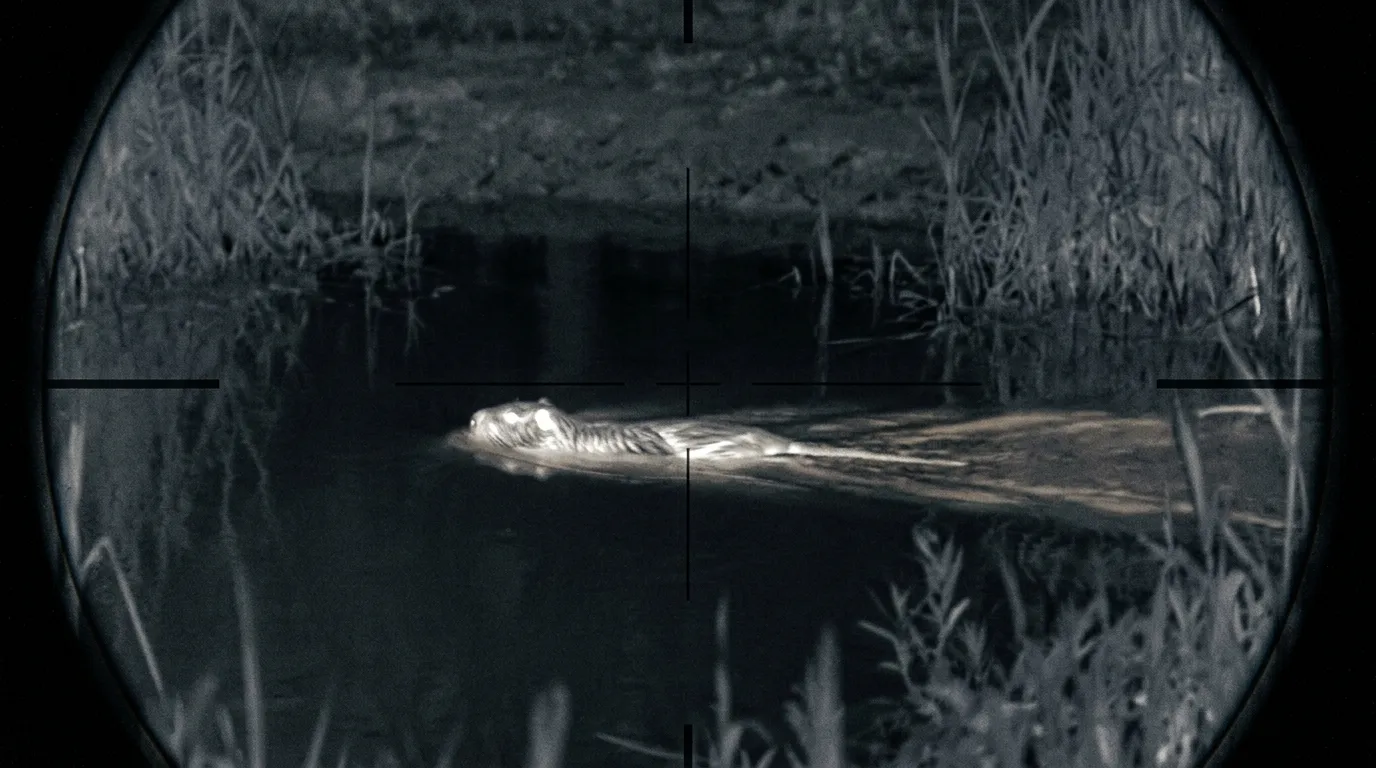
Thermal won’t show white whiskers or orange teeth. It gives you the first lead: a warm body in reeds, a head cutting across a ditch, or a cluster of heat signatures near a burrow entrance. Species confirmation still comes from body shape, travel route, sign, and local knowledge.
| Field situation | Thermal advantage | Watch-out |
|---|---|---|
| Marsh edges at dusk | Finds movement before glassing works | Reeds can hide body shape |
| Levee or canal banks | Spots animals near burrow systems | Muskrat and beaver confusion |
| Crop margins | Covers more ground quietly | Deer, livestock, and people |
| Cold mornings | Stronger heat contrast | Sun-warmed concrete can mislead |
For invasive species control with thermal imaging, the biggest mistake is treating every heat signature as a target. Treat every heat signature as a lead.
Nutria Identification Signs After Dark
A nutria in thermal often looks lower and more stretched than a beaver, especially when it swims. The head and upper back may show as separate hot zones above the waterline. On land, look for a low, arched body moving from vegetation to water, not a tall silhouette crossing open ground.
Then slow down.
Beaver, muskrat, otter, pets, livestock, and people can all show up hot. If the animal is moving along a bank with fresh slides, clipped vegetation, and burrow openings, you have a stronger case. If it’s only a blob in cattails at 90 yards, you have homework.
Good nutria confirmation usually combines:
- Fresh cut vegetation near water, often with feeding platforms or trails
- Bank burrows, slides, and collapsing edges
- Repeated heat signatures at the same access points
- Daylight ID from camera traps, binoculars, or agency confirmation
- Location records with time, weather, and direction of travel
Maryland gives the useful lesson here. The Chesapeake Bay Nutria Eradication Project didn’t rely on one tool. The U.S. Fish and Wildlife Service, 2022 reported that more than 14,000 nutria were removed over a 20-plus-year effort, with private landowners accounting for about half of those removals and over 250,000 acres of Delmarva marsh protected. The project used trapping, surveys, newer detection methods, and trained detector dogs.
Thermal fits that model. It helps you find and pattern the animal; it doesn’t replace the control plan.
Invasive Species Control With Thermal Imaging Workflow
Start in daylight. Walk the bank. Mark burrows, slides, damaged vegetation, trails, culverts, levee weak spots, and safe observation points. A thermal scan after dark is far more useful when you already know where animals should appear.
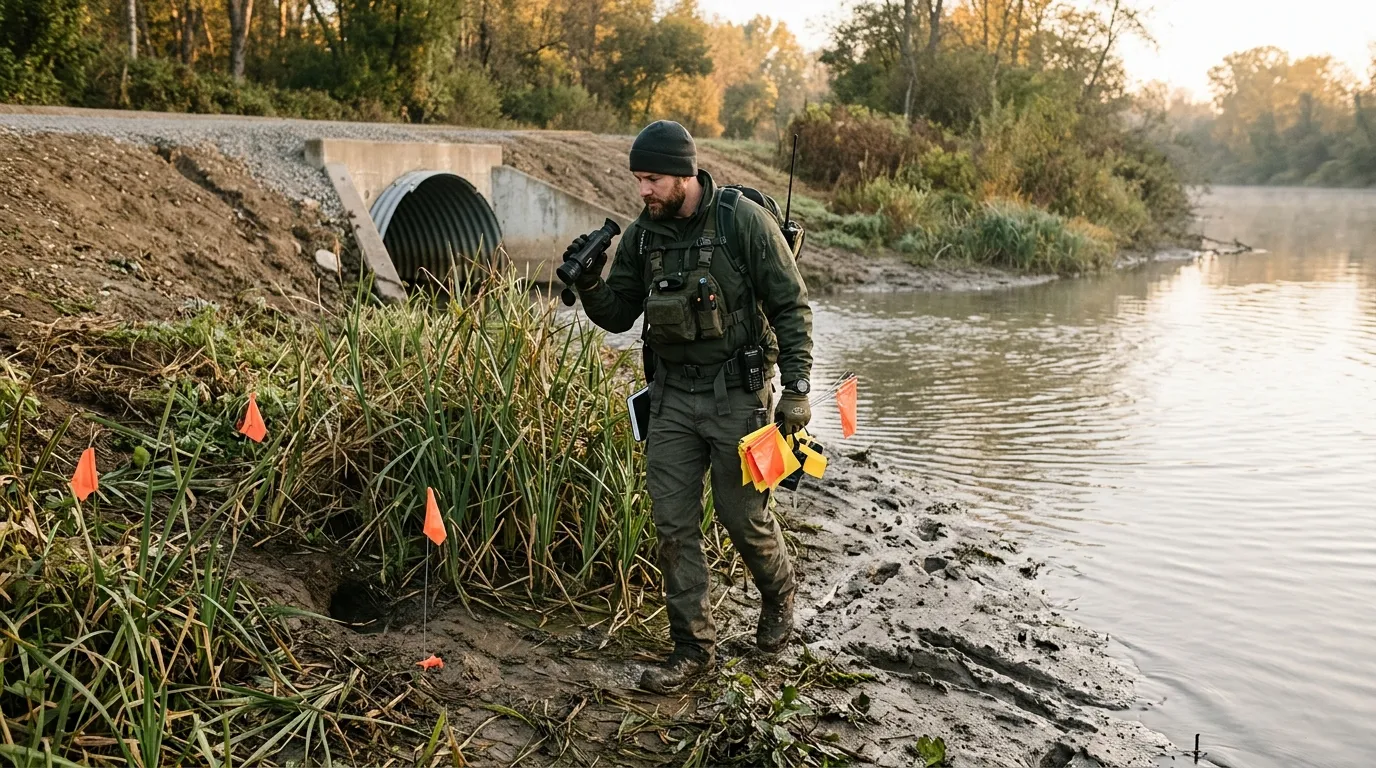
A practical sequence looks like this:
- Map sign during daylight and mark safe lanes of observation.
- Scan during the first hours after dark or before sunrise, when heat contrast is usually better.
- Confirm species with body shape, movement, location, tracks, and follow-up optics.
- Record time, GPS point, wind, weather, number of animals, and direction of travel.
- Choose the correct response: trap, report, agency response, or controlled removal where allowed.
For nutria in wetlands, trapping may beat shooting because animals use repeat routes and burrow systems. Around homes, roads, livestock, or public trails, reporting and agency-led control may be the only responsible path. On large farms or private drainage systems, a trained team may combine thermal scanning, remote cameras, and scheduled removal over several nights.
Pixfra Thermal Optics For Invasive Species Control
A scanning monocular is the right first tool for most invasive-species work. It keeps the muzzle out of the scanning process, reduces fatigue, and lets one person search while another records or handles the follow-up. For canal banks and marsh edges, a handheld scanner from the Pixfra thermal monocular range makes more sense than swinging a rifle-mounted optic across every warm spot in the dark.
Pixfra model choice should follow the job. A compact Mile 2 monocular fits short patrols along ditches, small ponds, and narrow levee roads where portability matters. An Arc LRF or Ranger monocular is better for canal-bank scanning and wider farm fields where distance judgment helps you separate a near muskrat from a farther nutria-sized animal. For longer observation lanes, Sirius HD gives teams more image detail when body shape matters.
Rifle scopes have a narrower job: confirmed, safe, legal removal. If night shooting is allowed for the target species, a Pixfra Pegasus 2 LRF or Chiron LRF thermal scope can suit trained hog-control teams that need ranging and shooting-side workflow after the animal has already been confirmed. For predator-control users and farm teams, the Pixfra thermal rifle scope lineup covers that removal-side role rather than the survey role.
Front attachments sit between those two worlds. A Taurus LRF front attachment can help trained shooters keep a familiar day optic on a verified rifle system while adding thermal capability, but it still does not turn an unidentified heat source into a confirmed target.
Image quality matters more than people admit. Lower NETD helps in damp grass and mild weather. Higher resolution helps when you need to separate a nutria-sized animal from a muskrat or read body shape at longer range. Edge enhancement and noise reduction help when mud, water, and reeds clutter the view. Pixfra’s PIPS image-processing family is built around that practical need: make the heat signature readable enough for the next decision.
Thermal Imaging Limits, Laws, And Safety
Thermal is strongest when the animal and background have a clear temperature gap. Cold nights, shaded banks, and wet animals moving against cooler vegetation can look sharp. Hot afternoons, sun-baked rocks, warm concrete, rain, fog thick enough to wet the lens, and dense reeds all reduce confidence.
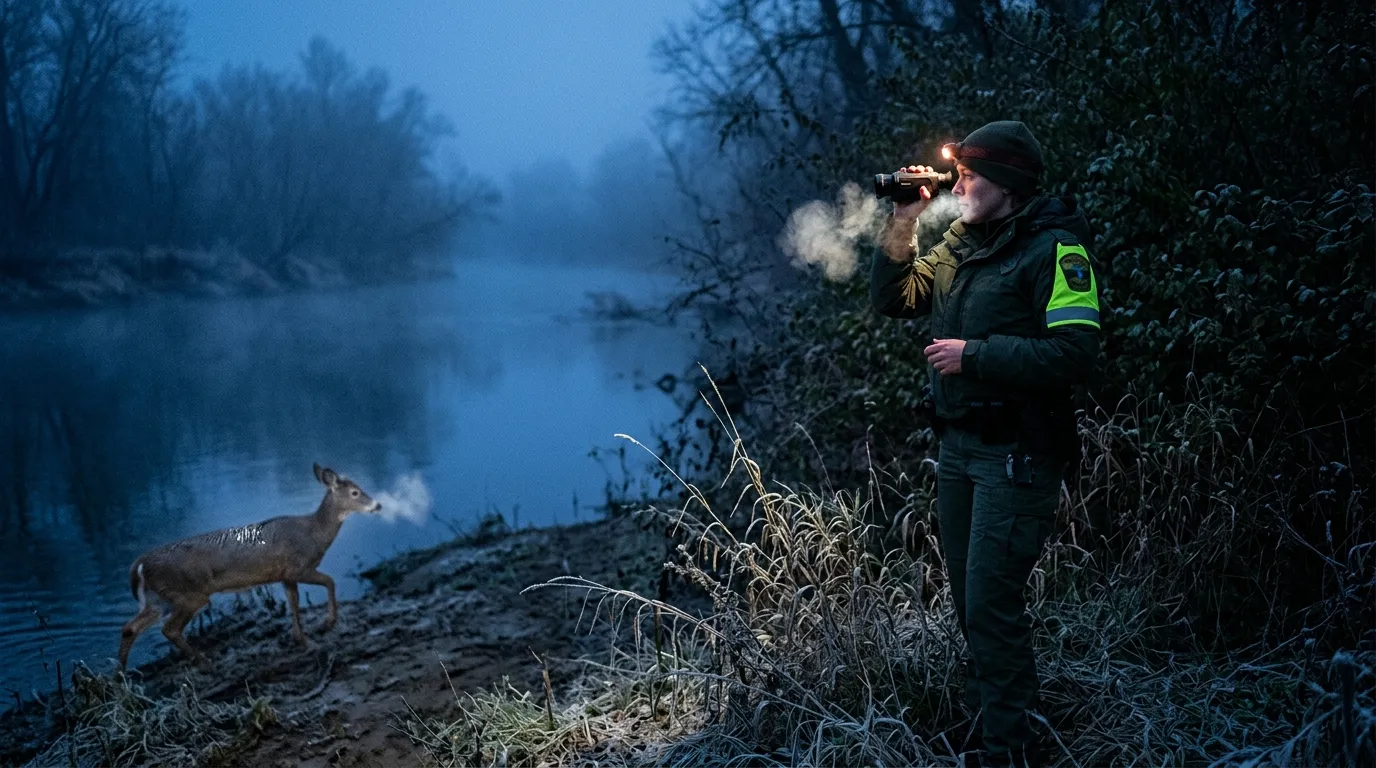
Dense cover is the hard limit. A nutria inside a burrow won’t appear just because the optic is good. A hog behind a berm may show as a partial heat smear. A green iguana on a sun-warmed wall can blend into the wall after several hours of heat soak. Thermal detects temperature differences; it doesn’t see through earth, water, or ethics.
Use this quick go/no-go check before any control action:
| Question | If the answer is no |
|---|---|
| Is the species confirmed? | Observe, record, or report |
| Is the method legal here tonight? | Stop and check regulations |
| Is the backstop safe? | Move or do nothing |
| Is there a record of damage or sign? | Build the case first |
| Is the landowner or agency aligned? | Get written permission |
Don’t chase one animal across a property line. Don’t shoot at a heat source behind grass. Don’t assume open season means every method is legal. Some states treat nutria as furbearers or regulate thermal optics, night shooting, trapping support, and nuisance control differently, so the state wildlife agency and landowner permission decide what tools are allowed.
This advice doesn’t apply to random public-land sightings, protected species, or areas where thermal optics are restricted. It also doesn’t apply when your only evidence is “something hot moved.” That’s useful for scouting. It isn’t enough for removal.
Thermal Imaging For Species Beyond Nutria
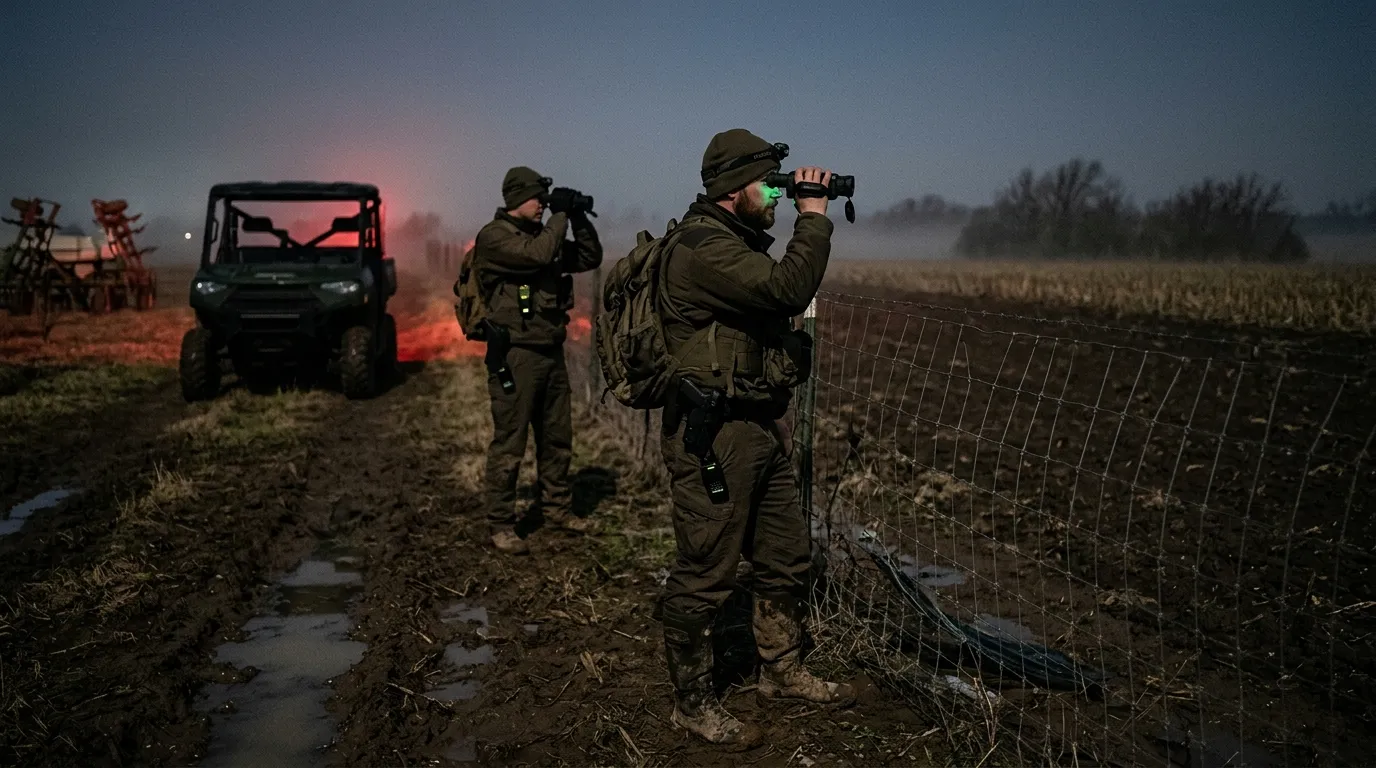
Nutria get the headline because wetland damage is so visible, but thermal also has a place in other invasive or nuisance-species programs. Feral hogs are the obvious example. They move at night, group in sounders, and damage crops, pasture, water sources, and native habitat. Thermal scanning from a fixed point can show where they enter a field before anyone starts guessing.
Green iguanas in Florida canal systems are another fit, especially on cool mornings when reptiles may contrast against concrete, trees, or seawalls. The tradeoff is identification distance. A thermal blob on a branch tells you “animal.” It doesn’t always tell you “legal target.”
Then there are regional cases: rabbits in agricultural control programs, invasive goats in island ecosystems, and predator-control work where coyotes or foxes are legal targets under local rules. A Pixfra monocular is usually the starting point for scanning and patterning; a scope or front attachment belongs later in the workflow, after the target species and removal method are confirmed.
Species status changes by country, state, and even property type, so the equipment choice is only half the answer. The rulebook and the biology drive the plan.
FAQ
Can thermal imaging identify nutria?
Thermal imaging can help locate likely nutria, but it can’t confirm color details such as white whiskers. Use thermal with body shape, swimming behavior, tracks, burrows, feeding sign, and local agency guidance.
Is thermal legal for control?
Thermal rules vary by state, species, land type, season, and method of take. Check your state wildlife agency before using thermal for hunting, trapping support, night shooting, or nuisance control.
What animals show up best?
Warm-bodied animals in cool surroundings show up best. Nutria, feral hogs, foxes, coyotes, deer, pets, livestock, and people can all appear clearly, which is why species confirmation matters.
Do you still need traps?
Often, yes. Traps can work better than shooting around burrows, urban water, levees, and repeated travel routes. Thermal helps you place and check the control plan more intelligently.
Pixfra builds thermal optics for the first hard step in invasive-species work: finding heat signatures when visible light isn’t enough. Start with a scanner that fits the field, document what you see, confirm local rules, and choose the removal method only after species ID, permission, and safety are clear.