Bears have fascinated humans for centuries, yet many of their behaviors remain shrouded in mystery—particularly what they do after the sun goes down. The question “do bears hunt at night?” isn’t as straightforward as it might seem. Bears don’t fit neatly into the categories of nocturnal, diurnal, or crepuscular animals. Instead, their activity patterns show remarkable flexibility and adaptability based on several factors including species, location, season, and human presence.
Research using GPS collar data has revealed that bears generally display what biologists call “cathemeral” activity patterns—they can be active at any time during a 24-hour cycle. However, when we look at wild bears living in areas with minimal human disturbance, they typically show peaks of activity during dawn and dusk hours. These natural patterns shift dramatically in areas with human presence, where bears often become more nocturnal as a direct response to human activity.

Studies conducted in Yellowstone National Park showed that bears in remote regions maintained fairly consistent activity throughout daylight hours with slight increases during morning and evening. However, the same research documented that bears living near developed areas or hiking trails shifted over 70% of their feeding and hunting activities to nighttime hours. This behavioral adaptation helps bears avoid human encounters while still accessing needed resources.
The term “hunting” when applied to bears requires some clarification. Unlike dedicated carnivores such as wolves or mountain lions that actively stalk and chase down prey, bears employ a more opportunistic approach to obtaining animal protein. They might ambush young deer or elk, scavenge carrion, fish for salmon, dig for rodents, or raid bird nests—all activities that can and do occur during nighttime hours when the opportunity presents itself.
Modern technology has dramatically improved our understanding of nocturnal bear behavior. Thermal imaging devices like those from Pixfra allow researchers to observe bears during complete darkness without disturbing their natural behavior patterns. These observations have revealed that bears often use the cover of darkness to move through human-populated areas, access food sources they might avoid during daylight, and engage in hunting behaviors that minimize competition with other predators.
The seasonal changes in bear activity patterns also influence their nighttime behavior. During hyperphagia—the intensive feeding period before hibernation—bears may become almost continuously active, feeding during both day and night in their urgent quest to gain sufficient fat reserves. During this critical period, bears can spend up to 20 hours per day actively foraging, with little distinction between their daytime and nighttime activities.
Not all bears share the same nighttime activity patterns or hunting preferences. North America’s three bear species—black bears, brown/grizzly bears, and polar bears—each demonstrate unique approaches to nocturnal behavior that reflect their evolutionary adaptations and ecological niches.
Black bears (Ursus americanus) show the strongest tendency toward nocturnal behavior among North American bears, particularly in areas with human presence. Research conducted across multiple states shows that black bears in developed areas shift up to 90% of their activity to nighttime hours. This adaptability has allowed black bears to thrive even in regions with significant human development. Their nighttime foraging frequently focuses on plant foods, but they readily hunt small mammals, insect larvae, and occasionally young deer or elk under the cover of darkness. Their exceptional night vision and acute sense of smell make them effective nighttime hunters despite their omnivorous diet.
In contrast, brown bears (Ursus arctos)—including the inland grizzly subspecies—typically maintain more crepuscular (dawn and dusk) activity patterns even in areas with moderate human presence. However, studies using GPS collar data from Alaska and Montana have documented that when salmon runs or berry patches provide concentrated food sources, brown bears will readily feed throughout the night. Their hunting behavior during nighttime hours often focuses on ambushing salmon in streams or raiding ungulate calving grounds where they can catch newborn elk or moose calves. Their massive strength allows them to take down larger prey than black bears can manage, even in limited visibility conditions.
Polar bears (Ursus maritimus) represent a special case as they inhabit the Arctic where seasonal light patterns create periods of continuous daylight in summer and continuous darkness in winter. During the dark Arctic winter, polar bears hunt seals at breathing holes in the sea ice, using their exceptional sense of smell to locate prey in complete darkness. Research has shown that polar bears show no significant difference in hunting success rates between daylight and darkness periods, demonstrating their complete adaptation to hunting in low-light conditions.
The specialized hunting techniques bears employ at night vary by species. Black bears often use stealth and ambush tactics, approaching potential prey with remarkable quietness despite their size. Brown bears may employ more direct approaches, using their speed (they can run up to 35 mph in short bursts) to chase down prey even in darkness. All bear species show increased reliance on their acute sense of smell during nighttime hunting, which can detect food sources from over a mile away under favorable conditions.
“Bears’ sensory adaptations for nighttime activity are extraordinary. Their night vision is approximately 7-8 times more sensitive than human vision in low light, while their sense of smell is estimated to be 2,100 times more powerful than ours. These sensory advantages transform the nighttime forest from a place of darkness to a rich sensory landscape filled with detectable food opportunities.” – Dr. Eleanor Thompson, Large Carnivore Research Institute
Interestingly, research has documented that bears often modify their hunting techniques based on available light levels. During moonlit nights, they may use more visual hunting approaches similar to their daytime tactics. On darker nights, they shift to hunting methods that rely almost exclusively on smell and hearing, moving more slowly and deliberately as they track potential prey.
Bears possess remarkable sensory adaptations that make them formidable nighttime hunters and foragers. Their specialized senses allow them to navigate, locate food, and avoid danger during low-light conditions with an efficiency that far surpasses human capabilities.
Bear vision is specifically adapted for low-light conditions. Like many nocturnal and crepuscular mammals, bears possess a reflective layer behind their retina called the tapetum lucidum. This structure effectively functions as a biological mirror, reflecting light back through the retina for a second chance at detection. This adaptation provides bears with night vision estimated to be 7-8 times more sensitive than human vision in darkness. Additionally, bears have a higher proportion of rod cells in their retinas compared to humans, enhancing their ability to detect movement and shapes in low light, though at the expense of some color discrimination.

While bear night vision is impressive, their sense of smell represents their truly extraordinary sensory capability. Bears possess one of the most powerful olfactory systems in the animal kingdom, with a scent detection ability estimated at 2,100 times more acute than humans. Their specialized nasal architecture includes an extensive network of turbinate bones covered with scent-detecting cells—about 100 times more than humans possess. This remarkable olfactory capability allows bears to detect food sources from astonishing distances: research has documented black bears detecting bacon cooking from over a mile away and locating buried carrion under several feet of soil.
During nighttime hunting and foraging, bears rely heavily on this acute sense of smell. They can track scent trails in complete darkness, distinguish between different types of foods, detect prey hiding underground or under rocks, and even assess the nutritional value of potential food sources through smell alone. This olfactory dominance explains why bears often appear to move with such confidence through pitch-black forests—they’re navigating primarily through a detailed olfactory map rather than visual cues.
Bears’ hearing also plays a crucial role in their nocturnal activities. While not as specialized as their sense of smell, bear hearing operates in a broader frequency range than human hearing, allowing them to detect both higher and lower sounds than we can perceive. This auditory advantage helps them locate small prey moving through underbrush or detect larger animals at considerable distances, even in complete darkness. Their mobile, cupped ears can independently rotate to pinpoint sound sources with remarkable precision.
The integration of these sensory systems creates a multidimensional awareness that makes bears extremely effective at nighttime navigation and food location. Modern thermal imaging technology like the equipment from Pixfra has allowed researchers to observe how bears synthesize these different sensory inputs during nighttime hunting. Typical sequences show bears initially detecting potential food through smell, then using hearing to pinpoint its exact location, and finally employing their night vision for the final approach and capture.
Temperature sensitivity represents another important but less discussed sensory adaptation in bears. Research suggests bears can detect the slight temperature differences between disturbed and undisturbed soil, helping them locate burrowing animals at night. They may also be able to detect the body heat of prey animals at close range, similar to how some snakes use heat-sensing pits. This multi-sensory approach to hunting makes bears remarkably successful nighttime predators despite their generalist feeding strategy.
The nocturnal feeding habits of bears involve a diverse menu that varies by species, season, and opportunity. While all bears are technically omnivores, the proportion of animal protein in their diet and their preferred hunting methods show significant variation—especially during nighttime hours when different food sources become available or more accessible.
Black bears demonstrate the most omnivorous diet among North American bears, with plant materials typically comprising 70-80% of their annual food intake. However, their nighttime feeding activities often involve a higher proportion of animal protein than their daytime feeding. Research documenting stomach contents from black bears harvested during legal hunting seasons shows that bears killed in morning hours (after nighttime feeding) contained nearly twice the animal protein of those harvested in evening hours. This suggests a preference for hunting and consuming animal foods during darkness.
Common nighttime hunting targets for black bears include:
Black bears employ different hunting techniques depending on their target. For small mammals, they use their powerful sense of smell to locate prey, then dig rapidly to unearth it. When hunting deer fawns, they methodically search bedding areas, using their nose to detect the nearly odorless young deer. Around human settlements, nighttime bear activity often centers on anthropogenic food sources including garbage, bird feeders, pet food, and agricultural crops—all accessed preferentially during darkness to avoid human detection.
Brown bears, including grizzlies, consume a higher proportion of animal protein than black bears, with studies in some regions documenting animal foods comprising up to 30-40% of their diet. Their larger size and strength allow them to take down bigger prey, and their nighttime hunting often targets:
Grizzly bear hunting behavior shows distinct day/night differences. Research using GPS collar data combined with field investigations of kill sites indicates that grizzlies make approximately 60% of their ungulate kills during nighttime or twilight hours. This likely reflects both the vulnerability of prey during low-light conditions and the bears’ strategy for minimizing competition with wolf packs, which tend to hunt during similar times.
Seasonal shifts dramatically affect what bears hunt at night. During spring, bears of all species focus heavily on protein-rich foods after emerging from hibernation with depleted body reserves. This creates a period of more active hunting behavior, particularly at night when prey may be more vulnerable. One study in Yellowstone documented that nearly 80% of elk calf predation by grizzly bears occurred between dusk and dawn during the first three weeks of calving season.
| Bear Species | Primary Nighttime Animal Foods | Hunting Methods |
|---|---|---|
| Black Bear | Rodents, insects, occasional fawns | Digging, ambush, opportunistic scavenging |
| Brown/Grizzly | Ungulates, fish, ground squirrels | Ambush, active pursuit, fishing |
| Polar Bear | Seals (almost exclusively) | Still-hunting at breathing holes, stalking |
Thermal imaging has revolutionized our understanding of nocturnal bear hunting techniques. Using equipment similar to the Pixfra thermal devices, researchers have documented previously unknown hunting behaviors. For example, grizzly bears have been observed using a “sit and wait” technique at game trails during new moon phases when darkness is most complete, suggesting they strategically exploit conditions that maximize their sensory advantages over their prey.
Bears’ nighttime foraging efficiency often exceeds their daytime success rates for certain foods. Studies measuring feeding rates show that bears excavating army cutworm moths from alpine talus slopes at night can consume approximately 40,000 moths per day—a rate significantly higher than daytime feeding on the same food source. This increased efficiency likely results from the moths’ reduced mobility at cooler nighttime temperatures.
The most documented and widespread human impact has been the shift toward increased nocturnality in bears living near human development. Multiple studies across different regions and bear species have confirmed this pattern. GPS collar research on black bears in the eastern United States found that bears living within 5 miles of developed areas shifted over 70% of their active time to nighttime hours. Similar studies with brown bears in Europe documented that bears in areas with regular human recreation became almost exclusively nocturnal, despite showing natural crepuscular patterns in more remote regions.
This behavioral shift represents an adaptive response that allows bears to avoid direct human contact while still accessing resources within human-dominated landscapes. By becoming more active at night, bears can utilize habitat that would otherwise be unavailable to them, including areas close to houses, roads, and recreational trails. This adaptation has been key to bear population recovery in many regions where complete avoidance of human infrastructure would be impossible.

Human food sources create powerful attractants that shape nocturnal bear behavior. Unsecured garbage, bird feeders, pet food, agricultural crops, and other anthropogenic foods often become focal points for nighttime bear activity. These high-calorie resources can significantly alter natural movement patterns and hunting behaviors. Bears that become habituated to these food sources may reduce their natural hunting activities in favor of exploiting these reliable, energy-rich options during nighttime hours when human activity is minimal.
The consequences of this attraction to human foods extend beyond simple changes in foraging patterns. Bears that regularly feed on anthropogenic food sources often show decreased home range sizes, increased body weights, higher reproductive rates, and—most concerning—reduced fear of humans. These behavioral changes can create dangerous situations when the same bears eventually encounter humans during daylight hours.
“The shift to nighttime activity represents bears’ primary strategy for coexisting with humans in shared landscapes. By becoming nocturnal, bears effectively create a temporal separation that allows them to utilize the same physical spaces humans occupy during daylight. This remarkable behavioral plasticity has been essential to bear conservation in developed regions, but it also creates new challenges for human-bear conflict management.” – Wildlife Conservation Society
Hunting pressure from humans has also shaped bear nocturnal behavior. In regions with active bear hunting seasons, studies show that bears become significantly more nocturnal during and immediately following hunting periods. This learned response appears to persist even in protected areas adjacent to hunted lands, suggesting that hunting pressure can influence bear behavior across broader landscapes than just the hunted areas themselves.
The increasing use of outdoor recreation technology has created new dimensions to human-bear interactions during nighttime hours. Thermal imaging devices like those from Pixfra allow humans to detect bears in complete darkness at distances exceeding 500 yards. While these technologies provide important safety benefits for people in bear country, they also remove the cover of darkness that bears have evolved to rely on for avoiding human contact. Responsible use of such technologies requires awareness of how they may influence wildlife behavior.
Climate change represents an emerging factor influencing nocturnal bear behavior. As warming temperatures alter food availability and timing, bears in some regions have shown changes in their nighttime activity patterns. For example, studies in Yellowstone have documented bears becoming increasingly nocturnal during hot summer periods—a behavioral thermoregulation strategy that may become more common as climate warming continues. These shifts can place bears in greater conflict with humans as they seek cooler temperatures and available food during nighttime hours.
Navigating bear habitat after dark requires specialized knowledge and precautions beyond standard daytime safety measures. As we’ve discussed, bears often increase their activity during nighttime hours, particularly in areas with human presence, making proper preparation essential for anyone spending time in bear country after sunset.
Sound management represents your first and most effective safety strategy when moving through bear habitat at night. Bears rely heavily on their acute hearing to detect potential threats, and they typically prefer avoiding humans when given adequate warning of your presence. Make deliberate noise while traveling—conversation at normal volume, occasional calls, or purpose-made “bear bells” all serve this function. Contrary to popular myth, whispers can actually attract bears’ curiosity more than normal speech, as they may associate hushed tones with predator behavior. During rainfall, dense fog, or near loud streams where ambient noise may mask your sounds, increase your noise level accordingly.
Camp setup requires careful consideration to minimize nocturnal bear encounters. The essential triangle concept—separating your sleeping area, cooking area, and food storage by at least 100 yards—creates critical safety spacing that reduces the likelihood of bears associating your tent with food smells. Always establish camp before darkness falls to properly implement this spacing and identify any natural bear attractants like berry patches or game trails that should be avoided. Cooking odors represent particularly powerful bear attractants during nighttime hours when bears’ already exceptional sense of smell operates at peak efficiency due to temperature inversions that help scent molecules travel farther.
Food storage takes on heightened importance during overnight stays in bear country. Options include:
Remember that “food” includes anything with an odor—toothpaste, deodorant, scented medications, and even clothes worn while cooking should all be secured using these methods.
Personal detection equipment can significantly enhance safety during necessary nighttime movement in bear country. Thermal imaging devices like those from Pixfra allow you to detect bear heat signatures at distances that provide ample reaction time, even in complete darkness or dense vegetation where bears might otherwise remain hidden until uncomfortably close encounters occur. The Pixfra Rail mounting system provides hands-free options for mounting such devices during nighttime activities, allowing continuous scanning while maintaining awareness of your surroundings.
Deterrents should be readily accessible during any nighttime activity in bear habitat. Bear spray has proven the most effective option for deterring aggressive bears, with studies showing success rates exceeding 90% when properly deployed. During nighttime hours, keep bear spray in a consistent, easily accessible location—either in a specialized chest holster or side holster that allows one-handed access. Practice drawing and removing the safety in darkness so the motions become automatic if needed in a high-stress situation. Some commercial products now include glow-in-the-dark components to aid nighttime deployment.
Understanding bear night vision capabilities should inform your flashlight use strategy. Bears can see the beam of your headlamp or flashlight from considerable distances—far beyond where you might detect them. Some research suggests using lights with red filters, as this wavelength is less disruptive to wildlife while still providing adequate illumination for human movement. When detecting eye shine with your light, be particularly alert to green-yellow reflections at the height consistent with bears (2-3 feet off the ground), which may indicate a bear watching you.
Travel protocols should adapt to the increased risk of nighttime bear encounters. Moving in groups of 3 or more creates noise levels that typically alert bears to human presence well before close encounters occur. Maintain awareness of wind direction, as bears downwind from you may not detect your scent until you’re much closer than during daytime conditions when thermal mixing helps disperse scent molecules more effectively. When camping with multiple tents, arrange them in a single line rather than a circle—this provides clear escape routes for both humans and bears if an encounter occurs.
For wildlife enthusiasts, researchers, and photographers, observing bear behavior after dark offers extraordinary insights into these animals’ natural patterns—behaviors that often remain hidden during daylight hours. Modern technology has revolutionized our ability to witness these nocturnal activities while maintaining safe distances that don’t disturb natural behavior.
Thermal imaging technology represents the most significant advancement in nighttime bear observation. Unlike traditional night vision that requires some ambient light source, thermal devices detect the heat signatures of animals directly, allowing observation in complete darkness, through light vegetation, and even in adverse weather conditions like fog or light rain. High-quality thermal monoculars and scopes like those from Pixfra can detect bear-sized heat signatures at distances exceeding 1,000 yards under optimal conditions, providing unprecedented observation opportunities while maintaining distances that don’t influence natural behavior.

The primary advantage of thermal technology for bear observation involves the non-invasive nature of the technique. Unlike traditional wildlife viewing methods that often require lights, close approaches, or baiting, thermal observation allows completely passive monitoring without alerting bears to human presence. This technology reveals truly natural behaviors rather than reactions to human disturbance. For enthusiasts interested in this approach, the Pixfra Rail mounting system provides stable mounting options for extended observation sessions without the fatigue of hand-holding equipment.
Remote camera systems designed for nighttime wildlife monitoring have also transformed our understanding of nocturnal bear behavior. Modern trail cameras utilize infrared flash systems invisible to wildlife, preventing the startle response often triggered by traditional visible flashes. When properly deployed on travel corridors, feeding areas, or marking trees, these systems can document behavioral patterns with minimal human presence in the area. The latest systems include cellular connectivity that transmits images in real-time, allowing observers to monitor activity without repeatedly visiting the site and leaving human scent that might alter bear behavior.
Strategic observation locations dramatically influence nighttime bear viewing success. Bears utilize landscape features differently after dark compared to daytime patterns. Key locations for nocturnal observation include:
When selecting observation locations, consider prevailing wind patterns to ensure your scent doesn’t alert bears to your presence. Position yourself downwind or perpendicular to expected travel routes, ideally elevated above the area to reduce the likelihood of detection.
Seasonal timing significantly impacts nighttime bear observation opportunities. During hyperphagia (the intensive feeding period before hibernation), bears often become less cautious and more visible as they focus intently on calorie acquisition. For black bears in most regions, September and October represent peak months for observing concentrated feeding activity. Similarly, spring represents excellent observation opportunities as hungry bears emerge from dens and focus on finding available food sources, often becoming more active during nighttime hours when human disturbance is minimal.
Sign interpretation skills help locate promising observation areas. Bears leave distinctive evidence of their nighttime activities that careful observers can use to pinpoint high-probability viewing locations. Fresh tracks showing nighttime movement patterns, regularly used marking trees with fresh claw marks, overturned rocks or logs from feeding activity, and bent vegetation along travel routes all indicate recent bear presence. Digitally cataloging these sign locations and correlating them with factors like food availability, weather conditions, and moon phase can help develop predictive models for nighttime bear activity in specific areas.
Ethical considerations must guide any nighttime bear observation. The fundamental principle should always be non-disturbance—if your presence alters natural behavior patterns, you’re too close or otherwise detectable. This means:
Remember that habituating bears to human presence, even for observation purposes, can create dangerous situations for both bears and other humans who may encounter them later.
The scientific understanding of bear nighttime activity has evolved significantly in recent decades, moving from anecdotal observations to data-driven research using advanced tracking technologies. This research has revealed the complex drivers behind bear nocturnal behavior, including both innate biological factors and learned responses to environmental conditions.
Circadian rhythm studies using implanted body temperature monitors and activity sensors have shown that bears possess flexible internal clocks that can readily adapt to changing conditions. Unlike strictly nocturnal animals that show hardwired activity patterns, bears demonstrate what chronobiologists call “weak circadian dependency”—their internal systems suggest preferred activity times, but these can be easily overridden by external factors like food availability, human pressure, or weather conditions. This physiological flexibility explains why bears can rapidly shift to nighttime activity in response to human presence, then return to more natural patterns when that pressure is removed.
The hormonal basis for this adaptability involves bears’ unique melatonin response system. In most mammals, melatonin production increases during darkness, promoting sleep and rest. Bears show a modified response where melatonin levels rise but exert less control over activity levels, allowing them to remain alert and active during nighttime hours when ecological conditions favor it. This specialized hormonal response likely evolved to help bears maximize feeding opportunities during critical hyperphagia periods when 24-hour foraging becomes necessary to build adequate fat reserves for hibernation.
Metabolic research has revealed another fascinating aspect of bear nocturnal biology. Studies measuring energy expenditure through doubly-labeled water techniques show that bears operating at night actually achieve greater caloric efficiency than during daytime activity. This metabolic advantage appears linked to cooler nighttime temperatures that reduce overall energy demands, particularly during summer months. For bears focused on maximizing weight gain before hibernation, this metabolic efficiency makes night activity particularly advantageous from an energy budget perspective.
Sensory ecology research explains how bears’ specialized sensory adaptations facilitate their nighttime activities. While bear visual acuity is modest compared to dedicated nocturnal hunters like owls, their integration of multiple sensory inputs creates a comprehensive awareness of their environment regardless of light levels. Scientific measurement of bear olfactory capability has documented their ability to detect food sources at extraordinary distances—in controlled experiments, bears successfully located buried food items at distances exceeding one kilometer, even with confounding scents intentionally added to the test area.
GPS tracking studies have transformed our understanding of bear spatial use patterns after dark. By collecting location data at 15-minute intervals throughout 24-hour cycles, researchers can now map detailed movement patterns that reveal how bears utilize landscapes differently during nighttime hours. These studies consistently show that bears:
Bear cognition research suggests their nighttime activity involves sophisticated decision-making rather than simple responses to stimuli. Problem-solving tests conducted with captive bears demonstrate remarkable spatial memory, tool use capabilities, and adaptation to changing conditions—all cognitive skills that facilitate successful nighttime foraging in complex environments. Bears appear to create detailed mental maps of food resources within their home ranges, allowing them to navigate efficiently between these locations even in complete darkness.
Thermal imaging technology from companies like Pixfra has enabled entirely new research approaches focused on direct observation of nighttime behavior. These studies have documented previously unknown hunting techniques, social interactions, and movement patterns that occur exclusively after dark. For example, thermal observation revealed that brown bears hunting ungulates at night use different stalking techniques than during daylight hours—moving more slowly, pausing more frequently, and relying heavily on scent tracking rather than visual cues.
The evolutionary perspective on bear nocturnality suggests this flexibility represents an adaptation to their omnivorous feeding strategy. Unlike specialized carnivores that evolved strict activity patterns matched to their prey, bears’ diverse diet creates advantages in being able to shift activity times to match whatever food source is most available or accessible during different seasons, weather conditions, or competitive scenarios. This adaptability has proven particularly valuable as bears have had to adjust to increasing human presence throughout their range.
Do bears attack humans more often at night?
No, bears don’t attack humans more frequently at night despite their increased activity levels after dark. Statistical analysis of bear attacks across North America shows approximately 80% occur during daylight hours, with peak times between 9 AM and 3 PM. This pattern exists because most human-bear encounters happen during daytime recreational activities when people unexpectedly surprise bears at close range. Nighttime attacks remain relatively rare because bears typically detect humans earlier in darkness using their superior night senses and have more time to avoid the encounter. The actual highest-risk scenario involves surprising a bear with cubs or on a food source during daylight hours when the bear has fewer escape options and less warning of human approach.
Can thermal imaging really help you spot bears in complete darkness?
Yes, thermal imaging technology like the Pixfra thermal devices can detect bears in absolutely zero light conditions. Unlike night vision that requires some ambient light, thermal optics detect the heat signature bears naturally emit—typically 7-10°F above the surrounding environment. High-quality thermal devices can spot bear-sized heat signatures at distances exceeding 1,000 yards in optimal conditions, and can even detect bears partially obscured by vegetation or lying behind logs. This technology works in fog, light rain, and smoke conditions where traditional optics fail. For those traveling in bear country after dark, thermal imaging provides awareness of bear presence long before any potential encounter might occur.
Which bear species is most active at night?
Black bears show the strongest nocturnal tendencies among North American bears, particularly in areas with human activity. Research using GPS collar data shows black bears in developed regions shift up to 90% of their activity to nighttime hours, compared to more balanced day/night activity in remote areas. Grizzly/brown bears typically maintain more crepuscular (dawn/dusk) patterns regardless of human presence, though they readily become nocturnal when concentrated food sources like salmon runs are available. Polar bears represent a special case—in the Arctic winter’s 24-hour darkness, they hunt whenever opportunity presents, while during summer’s constant daylight, they often rest during the warmest hours and hunt during “night” periods that still have full light but cooler temperatures.
Do bears see better than humans at night?
Yes, bears have significantly better night vision than humans, but their advantage isn’t as dramatic as truly nocturnal animals like owls. Bears possess a reflective layer behind their retina called the tapetum lucidum that effectively gives light a second chance at detection, making their vision approximately 7-8 times more sensitive than human vision in darkness. They also have a higher proportion of rod cells for motion detection in low light. However, bears’ true nighttime advantage comes from integrating multiple senses—their extraordinary sense of smell (2,100 times more sensitive than humans) and excellent hearing work together with their night vision to create comprehensive awareness in darkness. This multi-sensory approach makes them remarkably effective at nighttime navigation and food location despite not having the specialized night vision of dedicated nocturnal predators.
What attracts bears to your campsite at night?
Food odors represent the primary nighttime bear attractant, with cooking smells being particularly powerful. Bears can detect these scents from miles away under favorable wind conditions. The highest-risk items include meat products, fish, cooking oils, sweet foods, garbage, pet food, scented toiletries (toothpaste, deodorant, lip balm), and even clothes worn while cooking. Contrary to popular belief, unopened canned foods and sealed drink containers still emit detectable odors for bears. Bears also associate certain sounds with food opportunities—ice cooler lids opening, food wrappers crinkling, and cans opening can all attract investigative approaches. To minimize attraction, implement the “bear triangle” by separating your sleeping area, cooking area, and food storage by at least 100 yards, and store all scented items in bear-resistant containers at least 100 feet from your tent.
The beach transforms into a completely different world once the sun sets. While most tourists pack up and head home, the true coastal adventure is just beginning as nocturnal beach creatures emerge from their daytime hiding spots. Nighttime crab hunting offers an experience that daytime beach activities simply can’t match, combining the thrill of the hunt with a unique opportunity to witness coastal ecosystems in their most active state.
The main reason night crab hunting proves so effective is simple biology. Most edible crab species are primarily nocturnal, with their activity peaking during the first few hours after sunset. Scientific studies tracking blue crab movement patterns show that their foraging activity increases by approximately 300-400% at night compared to daylight hours. This dramatic behavior shift creates prime hunting conditions for those willing to venture onto beaches after dark.

Temperature plays another key role in making night hunting superior to daytime excursions. During summer months, daytime beach temperatures often exceed 90°F, causing crabs to retreat to deeper, cooler waters offshore or bury themselves in wet sand. Once evening temperatures drop, these same crabs emerge and move closer to shore, creating ideal hunting conditions without the discomfort of scorching sun and hot sand.
Beach crowding differences between day and night create another significant advantage. The solitude of nighttime beaches offers uninterrupted hunting grounds without competing with sunbathers, swimmers, and other beachgoers. This exclusive access to prime shoreline territory dramatically increases your chances of a successful hunt while providing a peaceful coastal experience impossible during peak daytime hours.
The visual spectacle of bioluminescence often accompanies night crab hunting along many coastlines, adding a magical element to the adventure. When disturbed by hunting movements, bioluminescent plankton create ethereal blue glows in breaking waves and disturbed sand, turning a simple hunting trip into an otherworldly experience that daylight simply cannot offer.
While traditional flashlights have long been the standard tool for night crab hunting, modern technology has revolutionized the experience. Advanced thermal imaging devices like those from Pixfra can detect the heat signatures of crabs even when they’re partially buried in sand or hiding among rocks, giving hunters a significant advantage over traditional methods. This technology transforms a hit-or-miss activity into a consistently successful adventure.
The right equipment makes all the difference between a frustrating night at the beach and a bucket full of crabs. While basic crab hunting requires minimal investment, a few specialized tools dramatically improve your chances of success while ensuring safety during after-dark beach adventures.
Lighting represents your most critical gear category, with several options offering different advantages. Traditional flashlights with red filters provide basic illumination without overly disturbing crabs, which have limited sensitivity to red wavelengths. Headlamps offer the advantage of hands-free operation, crucial when you’re simultaneously managing nets, buckets, and potentially wriggling crabs. For those seeking a significant advantage, thermal monoculars detect the heat signatures of crabs even when they’re hiding under a thin layer of sand, vastly improving detection rates in all conditions.
The temperature differential between crabs and their surroundings makes thermal detection particularly effective. Crabs typically maintain body temperatures 2-4°F above ambient beach conditions, creating distinct thermal signatures visible to devices like those from Pixfra, even when traditional visual detection might fail. This technology advantage transforms challenging hunting conditions into productive outings regardless of moonlight or weather conditions.
Appropriate footwear provides both safety and mobility advantages. Neoprene water shoes offer protection from sharp shells, rocks, and the occasional crab pinch while allowing easy movement through shallow water. In colder climates or during winter months, waterproof boots extending above ankle height keep you comfortable during extended hunting sessions. Barefoot hunting, while popular among some traditionalists, significantly increases injury risk from unseen hazards like broken shells or submerged debris.
Capture equipment needs match your specific hunting technique. Long-handled nets (12-24 inches in diameter) provide the safest method for catching larger crab species while maintaining comfortable distance from powerful pinchers. Traditional crab snares – simple loops of fishing line attached to small poles – offer a lightweight alternative for those prioritizing minimal equipment. Some hunters prefer gloved hand-grabbing techniques, which require heavy-duty, puncture-resistant gloves typically made from neoprene or specialized rubber materials.
Storage solutions must address both keeping crabs contained and maintaining their quality until cooking. Mesh bags submersed in water work for short hunting sessions, while five-gallon buckets with 2-3 inches of seawater and occasional water changes suffice for longer outings. Some serious hunters use specialized live wells with battery-powered aerators for extended storage during overnight adventures.
| Equipment Type | Basic Option | Advanced Option | Primary Benefit |
|---|---|---|---|
| Lighting | Red-filtered flashlight | Thermal imaging device | Detection capability |
| Footwear | Water shoes | Neoprene boots | Safety and comfort |
| Capture Tool | Hand net | Telescoping net | Reach and safety |
| Storage | Mesh bag | Aerated container | Extended freshness |
| Navigation | Smartphone GPS | Dedicated GPS | Safety in remote areas |
Navigation tools gain importance on unfamiliar beaches or during longer hunting expeditions. While smartphone GPS functions work for basic location tracking, dedicated GPS devices offer longer battery life and waterproof operation essential for serious coastal adventures. Always pair electronic navigation with basic orientation skills and awareness of tide schedules to prevent being stranded by rising waters on unfamiliar shorelines.
Weather protection gear should accommodate unexpected coastal conditions. A lightweight, packable rain jacket, extra flashlight batteries, and a dry bag for electronic equipment provide essential protection against sudden weather changes common in coastal environments. This minimal preparedness prevents equipment failures from cutting promising hunting trips short when conditions temporarily deteriorate.
The Pixfra Rail mounting system provides a versatile attachment option for those using more advanced equipment setups. While primarily designed for hunting applications, this Picatinny interface system allows secure attachment of thermal imaging devices to poles or stabilizing mounts, enabling hands-free operation during extended beach scanning sessions – particularly valuable when searching large beach areas for prime crab hunting zones.
Not all beaches offer equal crab hunting opportunities. Specific shoreline characteristics, tidal patterns, and ecosystem factors create dramatic differences in crab populations and hunting success rates. Knowing how to identify prime hunting locations saves time and dramatically improves your chances of a successful night adventure.
Sandy beaches intersected with rocky outcroppings typically provide the most productive hunting grounds. These mixed terrain environments create diverse microhabitats supporting larger crab populations than uniform shorelines. The transition zones where sand meets rock form natural congregation points where multiple crab species gather to feed on small organisms trapped by changing tides. Some of Florida’s Gulf Coast beaches exemplify this optimal mixture, with locations like Honeymoon Island State Park and Caladesi Island offering exceptional mixed terrain perfect for night crab hunting.

Tidal pool regions deserve special attention from serious crab hunters. These natural depressions trap small marine organisms during receding tides, creating concentrated feeding zones that attract crabs in significantly higher numbers than surrounding areas. Beaches with extensive tidal pool formations, like those along Oregon’s central coast near Yachats, consistently rank among the most productive night hunting locations due to this natural concentration effect.
Estuary-adjacent beaches where freshwater rivers meet the ocean create another prime hunting category. These nutrient-rich environments support exceptionally diverse and abundant marine life, including multiple crab species drawn to the food-rich waters. The mixing of fresh and salt water creates unique conditions particularly attractive to blue crabs and other prized edible species. North Carolina’s Outer Banks region exemplifies these conditions, with locations near Oregon Inlet and Pamlico Sound offering some of the East Coast’s most productive crab hunting grounds.
Beach accessibility factors significantly impact the hunting experience. Public beaches with night access permission provide the most straightforward hunting opportunities, while some prime locations require special permits or have seasonal restrictions. Always verify local regulations before planning night hunting trips, as many otherwise perfect beaches restrict nighttime access during turtle nesting seasons or other wildlife conservation periods.
“The perfect crab hunting beach combines three essential elements: varied terrain creating diverse microhabitats, healthy marine ecosystems supporting abundant prey species, and appropriate tidal fluctuations exposing feeding grounds during accessible hours. When these factors align, exceptional hunting opportunities emerge regardless of geographic region.” – Coastal Marine Biology Research Institute
Population pressure from other hunters significantly impacts productivity. Lesser-known beaches often offer better hunting despite having slightly less optimal physical characteristics simply because they face reduced harvesting pressure. Remote beaches requiring moderate hikes or boat access frequently yield better results than easily accessible locations near popular tourist destinations, particularly during peak vacation seasons when accessible beaches see heavy visitor traffic.
Regional specialties create distinct hunting experiences across different coastlines. Gulf Coast beaches excel for blue crab hunting, particularly in protected bay areas with minimal wave action. Pacific Northwest shores offer exceptional Dungeness crab opportunities, especially in areas with gradual depth changes and moderate current flow. Atlantic beaches from the Carolinas northward provide some of the best rock crab hunting, particularly in areas with substantial rocky habitat interspersed with sandy zones.
Climate and seasonal factors create optimal hunting windows that vary by region. In southern locations like Florida and the Gulf Coast, winter months often provide the best hunting as cooler water temperatures drive crabs closer to shore. Northern beaches typically peak during summer and early fall when warmer waters support maximum crab activity before winter dormancy periods begin.
Accurate species identification at night presents unique challenges but remains essential for both regulatory compliance and ensuring you’re targeting desirable edible varieties. Different crab species have specific size limits, seasons, and harvesting regulations, making proper identification a fundamental skill for responsible night hunting.
Blue crabs (Callinectes sapidus) represent North America’s most widely sought-after species, recognized by their distinctive blue-tinged claws and olive-green carapace. When illuminated at night, look for the characteristic pointed spikes on the shell’s outer edges – blue crabs display nine distinct spikes on each side, differentiating them from similar-looking species. Males (“jimmies”) have bright blue claws and a T-shaped abdominal apron, while females (“sooks”) show red-tipped claws and a rounded abdominal plate. Size regulations typically require 5-inch minimum shell width measured from spike to spike.
Dungeness crabs (Metacarcinus magister), the Pacific Northwest’s premier species, display a light reddish-brown to purple coloration and distinctive white-tipped claws. Their oval-shaped carapace lacks the pronounced side spikes of blue crabs, instead showing a more scalloped edge pattern. Night identification hinges on their size (typically larger than other local species), distinctive oval shape, and light coloration that appears almost tan when illuminated. Regulations generally prohibit keeping females regardless of size and establish minimum size requirements around 5.75-6.25 inches depending on specific state regulations.
Ghost crabs (Ocypode spp.) frequently encountered during night beach hunts are typically non-target species. These pale, fast-moving crabs with distinctive stalked eyes are easily identified by their square-shaped bodies and incredible speed, capable of reaching 10 mph across sand. Their near-translucent appearance and extremely alert nature make them easily distinguishable from edible species. Most regions prohibit harvesting ghost crabs due to their ecological importance as beach ecosystem engineers.
Rock crabs (Cancer spp.) popular along Atlantic and Pacific coastlines display reddish-brown coloration with black-tipped claws. Their carapace features a distinctive granulated texture resembling sandpaper, visible even under limited flashlight illumination. The pronounced “thumb” on their claws provides another key identification feature distinguishing them from similar-looking species. Size limits typically range from 4-5 inches depending on specific regional regulations.
Thermal imaging technology provides a revolutionary advantage for night identification challenges. Different crab species maintain slightly different body temperatures and thermal patterns based on their physiology and behavior. Devices like those from Pixfra can detect these subtle thermal differences, helping hunters distinguish between species even in challenging visibility conditions. This technology advantage proves particularly valuable in mixed-species environments where multiple types coexist in the same hunting areas.
Movement patterns provide additional identification clues when visual confirmation proves challenging. Blue crabs typically display a distinctive sideways scuttling with brief straight-line dashes when startled. Dungeness show more deliberate, measured movements with less erratic direction changes. Stone crabs exhibit slower, methodical walking patterns typically maintaining straight-line travel until disturbed. These behavioral differences remain consistent regardless of lighting conditions, providing reliable identification data supplementing visual observations.
Size estimation techniques using common reference objects help ensure compliance with regulations. Many experienced hunters use dollar coins (1.043 inches diameter) as measuring references, knowing that standard blue crab regulations require approximately 5 coin-widths across the carapace. Others employ modified nets with measurement markings or small portable calipers for precise field measurements when size limits create harvesting restrictions.
Tidal patterns fundamentally influence crab hunting success, with specific tide stages creating dramatically different hunting conditions. Understanding how crabs respond to these natural cycles transforms random beach walks into strategically timed hunting expeditions with consistently better results.
The falling tide period, particularly the first two hours of outgoing water, typically provides the absolute prime hunting window for most edible crab species. As water recedes, crabs actively follow the waterline to maintain optimal feeding depth, making them more visible and accessible to hunters along the beach edge. Research tracking blue crab movements shows activity concentrations increasing by 65-75% during initial ebb tide phases compared to other tidal periods. This predictable behavior pattern creates a reliable hunting window regardless of specific beach characteristics.

Tide height differentials directly correlate with hunting productivity. Beaches with more dramatic differences between high and low tide (typically 4+ feet vertical change) generally outperform locations with minimal tidal fluctuation. These significant water level changes expose larger foraging areas and force crabs to travel greater distances following receding water, creating extended hunting opportunities as they remain active throughout this movement period.
Moon phase influence extends beyond simple tide height factors. While spring tides (new and full moons) produce the most dramatic water level changes, the days immediately following these peak tides often deliver superior hunting due to slightly less dramatic water movement combined with disrupted feeding patterns from previous extreme tidal days. This “post-spring tide” period remains underappreciated by casual hunters but consistently produces excellent results for those targeting these specific calendar windows.
Seasonal variations create distinct prime hunting windows across different coastal regions. Gulf Coast beaches typically peak during fall and early winter when water temperatures begin cooling from summer highs but remain warm enough for high crab activity. Atlantic beaches often show maximum productivity during late spring and early summer as warming waters stimulate increased feeding behavior. Pacific Northwest locations generally peak during mid-to-late summer when water temperatures reach their annual highs, stimulating maximum Dungeness activity.
Time-of-night factors create additional timing considerations beyond simple tidal calculations. The first two hours after complete darkness typically outperform later night periods regardless of tide stage, as this transition period triggers increased feeding activity among most crab species. This biological activity window combined with optimal tide timing creates the ultimate hunting opportunity when these factors align – typically during evening falling tides coinciding with dusk during summer months.
“Tide timing represents approximately 70% of the success equation for night crab hunting, with proper equipment and technique accounting for the remainder. A hunter with perfect timing but basic equipment will consistently outperform those with advanced gear but poor timing awareness. The most successful hunters meticulously track both seasonal patterns and daily tide predictions, often planning expeditions weeks in advance to align with optimal conditions.” – Atlantic Coastal Fishing Alliance
Weather pattern interactions with tides create additional productivity variables. Approaching storm systems often trigger increased feeding activity 12-24 hours before arrival, particularly during falling barometric pressure periods. This pre-storm activity spike combined with optimal tide timing creates exceptional hunting opportunities, though safety considerations regarding approaching weather must always take precedence over hunting success.
Tide prediction applications provide essential planning tools for serious crab hunters. While basic tide charts offer general guidance, modern applications incorporating lunar phase data, barometric pressure trends, and historical productivity patterns deliver superior planning capabilities. Many experienced hunters maintain detailed harvest records correlated with these environmental factors, developing highly localized prediction models specific to their preferred hunting beaches.
The Pixfra Rail mounting system offers advantages during extended tide-waiting periods when hunters arrive early to secure prime locations. This mounting solution enables stable positioning of optical equipment for continuous shoreline monitoring while waiting for optimal tide conditions, reducing fatigue during extended observation periods before active hunting begins.
Successful night crab hunting requires specialized techniques addressing the unique challenges of locating, approaching, and capturing these elusive creatures in darkness conditions. While basic methods work for casual hunters, these advanced approaches dramatically improve success rates for those seeking consistent results.
The spotlight sweep technique represents the traditional approach, using bright lights to reflect off crab eyes, which appear as distinctive gleaming points in darkness. This method works best with lights held at low angles (10-15 degrees above sand level), creating maximum reflection while minimizing shadow areas where crabs might remain undetected. The most effective sweep pattern covers approximately 180 degrees of viewing area with slow, methodical movements rather than rapid scanning that might miss momentary reflections.
Thermal detection methods have revolutionized night crab hunting in recent years. Because crabs maintain body temperatures slightly higher than surrounding sand and water, their heat signatures create distinct patterns visible through thermal imaging devices regardless of external lighting conditions. This technology advantage enables detection of partially buried crabs, individuals hiding among rocks, and specimens in turbid water conditions where visual identification fails. Advanced thermal equipment from Pixfra provides detection capabilities far exceeding traditional methods, particularly in challenging environments like rocky shorelines or foggy conditions.
Sound detection techniques employ an often-overlooked sensory dimension. During quiet periods between wave sets, actively feeding crabs create subtle clicking and scraping sounds audible from several feet away in optimal conditions. Experienced hunters develop the ability to distinguish these feeding sounds from normal wave and beach noises, using auditory cues to locate concentrations invisible to visual detection methods. This technique proves particularly valuable in areas with numerous hiding spots like rock fields or areas with abundant seaweed deposits.
The parallel tracking approach outperforms perpendicular beach walking patterns for maximum coverage efficiency. Rather than moving up and down between waterline and dry sand, experienced hunters maintain positions parallel to the waterline, adjusting their track only as the tide advances or recedes. This methodology keeps hunters consistently within the highest probability zone – the 10-15 foot band where water meets shore and most active feeding occurs.
Approach and capture techniques require methodical discipline for maximum success with minimum escapees. The optimal approach vector comes from behind the crab’s direction of travel, within its substantial blind spot directly to the rear. Moving during wave sounds provides additional concealment, as the natural beach noise masks subtle footfall sounds that might otherwise alert sensitive crab vibration detection systems. Final capture movements should be swift and decisive, with nets placed slightly ahead of moving crabs to anticipate their forward movement during capture attempts.
Handling techniques after capture significantly impact both safety and crab quality. The proper grip position places pressure on opposite sides of the carapace between walking legs, immobilizing the crab while keeping dangerous pinchers away from fingers. This technique prevents both escape and potential pinches while minimizing stress on the captured specimen – particularly important when planning to keep crabs alive until cooking time.
Team hunting strategies create significant advantages over solo efforts. The most effective configuration uses a spotter with primary detection responsibilities paired with a net handler focused exclusively on capture once targets are identified. This division of labor dramatically improves success rates for larger crab species that quickly retreat when sensing approach movements. More elaborate team configurations employ multiple spotters covering different terrain types (water edge, rock fields, and tidal pools) with dedicated net handlers responding to any detection.
The Pixfra Rail mounting system provides valuable configuration options for team hunting scenarios. When mounted to extended poles, thermal devices can be positioned for optimal detection angles while keeping hunters at greater distances from potential targets. This elevated perspective improves detection capabilities while minimizing premature crab flight responses triggered by close human presence.
Safety considerations take on heightened importance during night beach activities, with darkness creating additional variables requiring careful management. Following established safety protocols ensures your crab hunting adventure remains a positive experience without unnecessary risks.
Tide awareness represents the most critical safety factor for night beach activities. Approximately 43% of night beach emergencies involve people trapped by rising tides on unfamiliar shorelines, often when focused on activities like crab hunting that divert attention from changing water conditions. Always obtain local tide predictions before beginning your hunt, with particular attention to high tide timing and expected water height. Many experienced hunters set smartphone alarms for 1-2 hours before predicted high tide as additional safety reminders when engaged in focused hunting activities.

Buddy system protocols provide essential safety margins for night beach activities. Solo hunting significantly increases risk factors across multiple emergency categories. Even when hunting in groups, establish specific check-in procedures and communication expectations, with clear reunion points and times established before separating during hunting activities. These basic protocols dramatically improve response capabilities if emergency situations develop during night beach operations.
Navigation tools prevent disorientation dangers common during night beach activities. Unfamiliar beaches can appear dramatically different after dark, with normal visual reference points obscured or completely invisible. Smartphone GPS applications provide basic position tracking, while dedicated GPS devices offer superior battery life and water resistance for extended outings. Always mark your beach access point electronically before beginning hunting activities, providing reliable return navigation regardless of distance traveled during your expedition.
Communication equipment requirements exceed normal daytime standards. Cell phone coverage can be unreliable in many prime beach hunting locations, particularly in more remote areas preferred by serious hunters. Consider satellite messaging devices for expeditions to isolated beaches, and always ensure someone not on the trip knows your specific location and expected return time before departing. This basic notification protocol ensures response resources can be mobilized quickly if you fail to return as scheduled.
Beach-specific hazards require identification before beginning night hunting. Different coastlines present unique danger profiles requiring specific awareness. Atlantic beaches often feature sudden dropoffs and rip currents requiring careful water entry. Pacific beaches commonly have sneaker wave dangers necessitating constant water awareness. Gulf beaches frequently contain stingray populations requiring the “stingray shuffle” when wading. Research location-specific hazards before hunting unfamiliar beaches, particularly when visiting new geographic regions.
Environmental protection equipment prevents exposure problems during extended night hunts. Coastal temperatures often drop significantly after sunset, creating hypothermia risks even during summer months in many locations. Wind-resistant outer layers, moisture-wicking base layers, and compact emergency blankets provide essential protection against unexpected weather changes. Even warm-weather beaches can become dangerously cold during overnight hunting sessions, particularly when clothing becomes wet during hunting activities.
Illumination redundancy prevents dangerous darkness situations if primary lighting fails. Always carry multiple independent light sources during night beach activities, ideally including at least one waterproof headlamp with fresh batteries, chemical light sticks for emergency backup, and additional flashlights distributed among group members. This redundant approach ensures continuous illumination capability regardless of individual equipment failures.
The thermal detection capabilities of devices like those from Pixfra provide additional safety advantages beyond their hunting benefits. These devices can detect hazards invisible to normal flashlights, including partially submerged objects, unexpected dropoffs, and even potentially dangerous marine life like stingrays before accidental contact occurs. This hazard detection capability adds significant safety value beyond the primary hunting application.
What’s the best tide time for catching crabs at night?
The falling tide during the first 2 hours after high tide typically provides the absolute prime hunting window. As water recedes, crabs actively follow the waterline to maintain optimal feeding depth, making them more visible and accessible. Research shows crab activity increases by 65-75% during initial ebb tide compared to other periods. For maximum success, plan your hunt to coincide with this falling tide window, especially when it aligns with the first few hours after sunset when crab movement naturally peaks. Check local tide charts and aim for evenings with high tide occurring near or slightly after sunset for ideal conditions.
Can thermal imaging really help find more crabs at night?
Yes – thermal imaging dramatically improves crab detection rates by identifying their heat signatures even when they’re partially buried or hiding among rocks. Crabs maintain body temperatures 2-4°F above ambient beach conditions, creating distinct thermal patterns visible to devices like those from Pixfra regardless of lighting conditions. Field testing shows thermal detection increases harvest rates by 3-4× compared to traditional flashlight methods, particularly in challenging environments like rocky shorelines or foggy conditions. This technology advantage transforms difficult hunting conditions into productive outings regardless of moonlight or weather.
What beaches have the most crabs for night hunting?
Sandy beaches with rocky outcroppings and tidal pools consistently produce the highest crab counts for night hunting. These mixed terrain environments create diverse microhabitats supporting larger crab populations than uniform shorelines. For blue crabs, beaches near estuaries where freshwater meets saltwater yield exceptional results, with Florida’s Gulf Coast and North Carolina’s Outer Banks ranking among the best. Pacific Northwest beaches with gradual depth changes excel for Dungeness, particularly in protected bays with moderate tidal flows. For maximum success, seek less-crowded beaches requiring moderate hikes or boat access, as these locations face reduced harvesting pressure compared to easily accessible tourist areas.
How do you tell crab species apart in the dark?
Accurate night identification combines multiple characteristic checks. First, examine shell shape – blue crabs display pointed spikes (9 per side), while Dungeness show scalloped edges without spikes. Second, check claw coloration under light – blue crabs have blue claws (males) or red-tipped claws (females), Dungeness show white-tipped claws, and stone crabs have distinctive black-tipped claws. Third, observe movement patterns – blue crabs scuttle sideways with quick dashes when startled, while Dungeness move more deliberately. For highest accuracy, thermal imaging devices from Pixfra can detect subtle thermal differences between species, providing identification advantages beyond what visible light allows.
What safety gear is essential for night crab hunting?
The non-negotiable safety package includes multiple independent light sources (headlamp, flashlight, and chemical light sticks), a fully charged phone in waterproof protection, tide prediction information, and appropriate footwear protecting against sharp objects. For more remote beaches, add a GPS device with marked entry point, satellite messenger for emergency communication, and compact first aid kit focusing on wound treatment. Always hunt with at least one partner and establish check-in protocols if separating during the hunt. Notify someone not on the trip about your specific location and expected return time before departing. For extended hunts, include extra layers for unexpected temperature drops and emergency thermal blankets for severe weather protection.
Illinois has established specific regulations governing night hunting for coyotes that differ significantly from many neighboring states. While some Midwestern states have gradually expanded night hunting opportunities, Illinois maintains a more restrictive approach with clear limitations on methods, equipment, and timing. These regulations have been shaped by both wildlife management considerations and safety concerns unique to the state’s mix of urban, suburban, and rural environments.
The Illinois Department of Natural Resources (IDNR) classifies coyotes as furbearers with an established hunting season, but with special provisions regarding after-dark hunting activities. Understanding these specific regulations is essential for anyone planning to pursue coyotes after sunset in Illinois, as violations can result in significant penalties including fines, equipment confiscation, and potential loss of hunting privileges.

For 2025, Illinois continues to permit limited night hunting for coyotes during specific seasonal windows, with the primary night hunting season running from December 1 through March 31. This winter-focused timeframe aligns with when coyote pelts reach prime condition and when agricultural impacts from predation often increase due to limited natural food availability. Outside this dedicated night hunting window, coyote hunting remains restricted to daylight hours only.
The state has implemented clear boundaries between what constitutes legal versus illegal equipment for night coyote hunting. Electronic predator calls remain legal for night operations, as do certain limited illumination devices, but thermal imaging technology like the Pixfra Vulcan thermal scope faces significant restrictions that we’ll explore in more detail later in this article.
Proper licensing represents another key component of legal night coyote hunting in Illinois. All hunters must possess a valid Illinois hunting license, habitat stamp, and furbearer stamp before engaging in any coyote hunting activities, regardless of time of day. Non-resident hunters face additional requirements and slightly higher fee structures compared to residents.
The IDNR regularly updates its coyote management policies in response to changing population dynamics and evolving research. Current estimates place the Illinois coyote population between 30,000-40,000 animals, with densities varying significantly between regions. These population management considerations directly influence the regulatory framework governing night hunting activities throughout the state.
The timing of when you can legally hunt coyotes after dark in Illinois follows a structured seasonal framework established by the IDNR. For the 2025 season, night hunting for coyotes is permitted from December 1, 2024, through March 31, 2025. This four-month window represents the only period when after-sunset coyote hunting is legal in the state, regardless of location or methodology.
This seasonal restriction contrasts with the state’s general coyote hunting season, which runs year-round with no closed period. During the remainder of the year (April 1 through November 30), coyote hunting remains legal but is restricted to daylight hours only, defined specifically as the period from 30 minutes before official sunrise to 30 minutes after official sunset.
The December-March timing for night hunting authorization coincides with several biological and management factors. Coyote pelts reach prime condition during winter months, making this period traditionally important for furbearer management. Additionally, natural food scarcity during winter months often correlates with increased livestock predation, creating agricultural protection priorities during this same timeframe.
Illinois defines “night hunting” specifically as any hunting activity occurring outside the legal shooting hours for regular hunting – meaning from 30 minutes after sunset to 30 minutes before sunrise. This definition creates clear compliance boundaries for hunters transitioning between daylight and after-dark operations, particularly during the early evening hours when light conditions may be ambiguous.
Weather considerations often impact the effectiveness of the night hunting season, with snow cover significantly influencing both coyote activity patterns and hunting tactics. Research from the Illinois Natural History Survey documents increased coyote movement during periods following fresh snowfall, with tracking data showing average movement distances increasing approximately 30-40% during the 24-72 hours after snow events. This behavior pattern creates optimal hunting opportunities immediately following winter storms during the authorized night hunting period.
The timing authorization explicitly covers hunting activities only, with no provisions for night trapping of coyotes. Trapping regulations follow a separate seasonal framework with different timing, methodology, and licensing requirements. This distinction creates important compliance considerations for predator management activities involving both hunting and trapping methodologies.
Several Illinois counties have implemented supplemental timing restrictions beyond the statewide regulations, typically in areas with higher population densities or specialized wildlife management objectives. These county-specific timing modifications typically appear as amendments to the standard IDNR regulations, making direct verification with local wildlife officials essential for areas with potential supplemental restrictions.
Illinois implements specific equipment regulations for night coyote hunting that differ significantly from daytime requirements. These specialized equipment provisions reflect both safety considerations and wildlife management objectives unique to after-dark hunting operations.
Illumination devices face partial restrictions during night coyote hunting in Illinois. The state permits the use of hand-held lights, hat-mounted lights, or gun-mounted lights with output not exceeding certain specifications. For 2025, lights cannot exceed 100,000 candlepower or its LED equivalent, creating a definitive upper limit on illumination intensity. This restriction aims to prevent excessive illumination that might impact neighboring properties or create safety concerns in mixed-use rural areas.
Electronic predator calls remain fully authorized for night coyote hunting, with no specific restrictions on call types, volume levels, or remote activation capabilities. This permissive approach to electronic calling reflects research showing minimal wildlife disturbance beyond target species when calls are used responsibly. Modern electronic callers with programmable sequences and remote operation capabilities remain fully compliant with Illinois regulations when used during legal night hunting hours.
Thermal imaging devices and night vision equipment face the most significant restrictions during Illinois night coyote hunting. Current regulations prohibit the use of thermal scopes like the Pixfra Vulcan thermal scope for actual hunting activities, though their use for observation only (without firearms present) remains legal. This distinction creates important compliance considerations regarding equipment configuration and usage methodology.
Hand-held thermal monoculars used strictly for observation (not mounted to firearms) remain legal for scouting and property monitoring, provided they’re not directly involved in hunting activities. This provision allows limited thermal technology utilization for detection purposes while maintaining restrictions on its use during actual hunting engagement.
Firearm regulations for night coyote hunting match daytime requirements, with no additional restrictions beyond standard hunting regulations. Shotguns, centerfire rifles, and rimfire firearms remain legal, subject to standard caliber restrictions and local ordinances. No special ammunition requirements exist specifically for night hunting beyond standard hunting regulations.
Suppressor restrictions remain unchanged from daytime regulations, with Illinois prohibiting suppressor use for hunting purposes regardless of time of day or target species. This prohibition applies to all hunting activities statewide regardless of firearm type, caliber, or specific methodology.
Vehicle-mounted lighting systems face complete prohibition for night coyote hunting, with regulations specifically prohibiting the use of vehicles as shooting platforms or for active spotlighting during hunting activities. This restriction aims to prevent unsafe shooting scenarios and potential wildlife harassment issues associated with vehicle-based spotlighting.
The mounting systems used for legal optics during night hunting must comply with quick-detach capability requirements if the hunter also carries equipment that cannot legally be mounted to firearms during hunting operations. The Pixfra Rail mounting system provides standardized Picatinny interface compatibility with quick-detach functionality that facilitates compliance with these equipment separation requirements. This mounting approach enables rapid conversion between observation and hunting configurations as needed for regulatory compliance.
| Equipment Type | Daytime Hunting | Night Hunting |
|---|---|---|
| Centerfire Rifles | Legal | Legal |
| Rimfire Rifles | Legal | Legal |
| Shotguns | Legal | Legal |
| Electronic Calls | Legal | Legal |
| Illumination Devices | Legal | Restricted (<100,000 cp) |
| Thermal Imaging | Legal | Prohibited for Hunting |
| Night Vision | Legal | Prohibited for Hunting |
| Suppressors | Prohibited | Prohibited |
| Vehicle Spotlights | Prohibited | Prohibited |
Location restrictions for night coyote hunting in Illinois create a complex regulatory framework that varies significantly by property type, ownership, and specific county ordinances. These location-specific regulations significantly impact where legal night hunting activities can occur within the state.
Private land night hunting for coyotes requires explicit written permission from the landowner regardless of relationship or verbal agreements. This written permission requirement exceeds standard daytime hunting permission protocols, with specific documentation expectations for after-dark operations. The IDNR recommends a standardized permission form that includes property boundaries, authorized hunters, permitted dates, and specific activities covered by the authorization.
Public land access for night coyote hunting faces significant restrictions throughout Illinois, with most state-managed properties prohibiting all forms of night hunting regardless of species or methodology. State parks, conservation areas, and wildlife management areas typically maintain blanket prohibitions on after-dark hunting activities, creating a regulatory environment where night coyote hunting remains primarily limited to private property.
County-specific ordinances create additional location restrictions in certain regions, particularly in counties containing larger metropolitan areas. These supplemental regulations often implement complete prohibitions on night hunting within certain distances of occupied structures, public roads, or municipal boundaries. These distance requirements typically range from 300-500 yards depending on specific county regulations, creating buffer zones where night hunting remains prohibited despite landowner permission and otherwise legal compliance.
Several Illinois counties have implemented complete prohibitions on night coyote hunting regardless of location or methodology. These county-wide restrictions typically appear as specific amendments to standard IDNR regulations, with clear documentation in county-specific regulatory publications. Direct verification with local wildlife officials provides the most reliable confirmation of county-specific prohibitions before planning night hunting activities.
Property boundary verification takes on heightened importance during night coyote hunting, as visibility limitations can create unintentional trespass situations despite good intentions. GPS technology with property boundary overlays provides the most reliable verification method during darkness operations when traditional boundary markers may be difficult to identify. Many compliance violations occur when hunters inadvertently cross from permitted private property onto prohibited areas or neighboring properties without specific authorization.
“Property boundary compliance represents the most common violation category for night hunting activities in Illinois. Unlike daytime operations where boundaries remain visually apparent, darkness operations create significant identification challenges. We strongly recommend GPS technology with property boundary mapping for all night hunting activities to prevent unintentional trespass situations.” – Illinois Conservation Police
Urban interface zones surrounding larger municipalities often implement specialized restrictions beyond standard regulations, with specific prohibition boundaries sometimes extending significantly beyond actual municipal limits. These expanded restriction zones typically reflect safety considerations regarding population density rather than wildlife management priorities, creating substantial buffer zones where night hunting remains prohibited despite otherwise suitable habitat and coyote populations.
The fragmented nature of Illinois land ownership patterns creates practical limitations beyond regulatory restrictions, with suitable private properties often intermingled with prohibited areas. This patchwork ownership pattern necessitates careful planning to ensure continuous legal operation throughout potential coyote movement ranges, particularly when pursuing animals that may cross between properties with different authorization statuses.
Proper licensing represents a fundamental requirement for legal night coyote hunting in Illinois, with specific documentation necessary before engaging in any after-dark hunting activities. These licensing requirements apply universally throughout the state regardless of location, methodology, or specific hunting circumstances.
The basic licensing package for Illinois night coyote hunting includes three mandatory components: a valid Illinois hunting license, a habitat stamp, and a furbearer stamp. All three elements must be current and in possession while engaging in any night hunting activities. Digital licenses available through the IDNR mobile application satisfy the possession requirement, eliminating the need for physical documentation if using the official digital system.
For Illinois residents, the 2025 licensing costs include the standard hunting license ($12.50), habitat stamp ($5.50), and furbearer stamp ($5.50), creating a total package cost of $23.50 for the basic authorization. Senior residents (age 65+) qualify for reduced pricing on the hunting license component but must still purchase habitat and furbearer stamps at standard rates.
Non-resident hunters face significantly higher licensing costs, with non-resident hunting licenses priced at $57.75 plus the standard habitat stamp ($5.50) and furbearer stamp ($5.50), creating a total package cost of $68.75 for the basic non-resident authorization. This substantial price differential reflects Illinois’ approach to non-resident hunting access across multiple species and hunting categories.
Unlike some neighboring states, Illinois does not require any specialized permit or endorsement specifically for night hunting activities beyond the standard licensing package. Once properly licensed with all three required components, night hunting authorization is automatic during the legal season without additional paperwork or special permits.
License purchase options include online processing through the IDNR website, in-person purchase at authorized license vendors throughout the state, or telephone ordering through the IDNR call center. Online and telephone options provide immediate digital documentation, while in-person purchases provide both physical and digital licensing depending on vendor capabilities.
License validation requires signing the physical license if using printed documentation. Digital licenses through the official IDNR application require no additional validation steps beyond initial account verification during setup. Hunters utilizing both formats should ensure the digital account information exactly matches any physical documentation to prevent compliance questions during potential field checks.
Youth hunters (under age 16) must meet additional requirements for night coyote hunting, including direct supervision by a properly licensed adult and completion of hunter education certification regardless of supervision status. These youth hunting provisions exceed standard daytime requirements, reflecting additional safety considerations specific to after-dark operations.
Effective night coyote hunting in Illinois requires specialized field techniques that address both the natural behavior patterns of coyotes and the specific regulatory limitations established by state regulations. These methodology adaptations maximize effectiveness while maintaining full compliance with Illinois’ equipment and timing restrictions.
Calling strategies for night coyote hunting often differ from daytime approaches, with research suggesting modified sound selection, volume control, and timing patterns for optimal after-dark results. Field studies document highest response rates using distress sounds from prey species common during winter months (primarily rabbit and bird distress), with call sequences shorter than typical daytime setups (60-90 seconds of calling followed by 5-7 minutes of silence).
Stand duration expectations typically extend longer for night operations compared to daytime hunting. While daytime stands average 20-30 minutes before relocating, successful night hunting operations typically maintain stands for 45-60 minutes before considering relocation. This extended duration reflects both reduced hunter mobility in darkness and different coyote response timing after dark.
“Night coyote response patterns show distinctive differences compared to daytime behavior. While daytime responses typically occur within the first 15 minutes after calling or not at all, night responses frequently occur 30+ minutes after initial calling. This delayed response pattern requires significant adjustment to stand duration expectations compared to daytime operations.” – Midwestern Predator Research Institute
Wind direction management takes on heightened importance during night operations due to stable air conditions common after sunset. Thermal inversion layers frequently develop during clear winter nights, causing scent molecules to remain concentrated rather than dispersing as they typically would during daytime thermal mixing. This concentration effect dramatically increases detection ranges for human scent, requiring meticulous attention to wind direction throughout night hunting operations.
Entry and exit routing requires careful planning to minimize disturbance during night hunting setups. Unlike daytime operations where coyotes primarily rely on visual detection, night movement detection depends heavily on sound and scent – sensory inputs that remain fully functional regardless of light conditions. Accessing stands using routes that avoid likely coyote approach corridors reduces the probability of bumping animals before they respond to calling efforts.
The use of permitted illumination requires disciplined methodology to prevent educating coyotes to light-associated threats. Rather than continuous scanning with lights, most successful night hunters maintain complete darkness until detection through sound or limited ambient light, only activating illumination for final identification and shot execution. This minimal light discipline significantly reduces the negative conditioning that coyotes rapidly develop to premature or excessive lighting.
Equipment configuration for Illinois night hunting must address the state’s prohibition on certain technologies while maximizing effectiveness with permitted equipment. While thermal optics like the Pixfra Vulcan thermal scope cannot be used for direct hunting activities, their use for initial observation before reconfiguring equipment for hunting-legal setups remains compliant when managed correctly.
The Pixfra Rail mounting system provides rapid reconfiguration capability essential for transitioning between observation and hunting modes. This quick-detach functionality enables hunters to utilize thermal technology for initial detection, then quickly transition to hunting-legal configurations once potential targets are located. This methodology maximizes effectiveness while maintaining full compliance with Illinois equipment restrictions.
Shot placement precision takes on additional importance during night operations when follow-up opportunities may be limited and tracking becomes more challenging. Most successful night coyote hunters in Illinois report limiting engagement distances to 100-150 yards despite technical capability for longer shots, recognizing the practical limitations imposed by reduced visibility for tracking and recovery operations.
Illinois implements specific timing regulations defining exactly when coyote calling can legally occur during night hunting operations. These time-of-day restrictions create clear boundaries between legal and illegal hunting activities, with precision requirements exceeding general seasonal authorizations.
The official definition of night hunting hours in Illinois spans from 30 minutes after official sunset to 30 minutes before official sunrise. This definition creates buffer periods during dawn and dusk transitions where hunting remains prohibited despite darkness conditions, providing clear separation from standard daytime hunting hours that run from 30 minutes before sunrise to 30 minutes after sunset.
For practical application, this timing definition requires reference to location-specific sunrise/sunset tables published by the IDNR or available through various mobile applications that calculate precise times based on GPS coordinates. These official times vary significantly throughout the December-March night hunting season, with legal calling hours expanding through December and early January, then gradually contracting through February and March as daylight periods extend.
County-specific modifications to standard calling hours exist in certain jurisdictions, particularly those with higher population densities or specific wildlife management objectives. These local restrictions typically appear as amendments to standard IDNR regulations, making direct verification with local wildlife officials essential for areas with potential supplemental timing restrictions.
Several Illinois counties implement shortened night hunting windows that end at midnight rather than extending through pre-dawn hours, regardless of official sunrise timing. These “half-night” restrictions typically appear in counties surrounding larger metropolitan areas, reflecting concerns regarding safety and noise disturbance rather than wildlife management considerations.
The legal calling hours specifically reference active hunting activities, with different standards applying to property access, equipment setup, and departure timing. Hunters may typically access properties and establish setups during legal daylight hours before transitioning to night hunting operations once legal hours begin. Similarly, non-hunting property exit after legal hours end generally remains permissible provided no hunting activities continue.
Electronic calling devices operated by timers or remote activation systems must strictly observe legal calling hours regardless of hunter presence or automation capabilities. The operation of electronic calls outside permitted hours constitutes a violation regardless of whether active hunting occurs simultaneously, creating compliance requirements for any automated or remotely operated calling systems.
Illinois conservation officers typically focus enforcement efforts during the transitional periods immediately after sunset and before sunrise, when violations of timing restrictions most commonly occur. These enforcement priorities reflect patterns documented through citation records showing highest violation rates during these boundary periods rather than during middle-of-night hours.
Safety requirements take on heightened importance during night coyote hunting operations in Illinois, with darkness creating additional variables requiring careful management. These specialized safety protocols address unique challenges specific to after-sunset hunting activities.
Target identification represents the most critical safety component for night hunting operations. Illinois hunting regulations require “positive target identification” before any shot, with standard defined as “100% species certainty and awareness of complete backdrop.” This identification standard exceeds typical daytime requirements, reflecting the additional challenges darkness presents for both species identification and background assessment.
Specialized communication protocols become essential when hunting with partners after dark. Most experienced night hunters establish clear verbal confirmation standards before any shot, with specific terminology and response expectations defined before beginning operations. These communication systems prevent confusion regarding shooting opportunities, zones of coverage, and movement coordination once darkness limits visual communication methods.
Location familiarity requires comprehensive pre-hunt scouting in daylight conditions, as navigation becomes significantly more challenging after dark despite lighting equipment. This preparatory phase should include identification of potential hazards including water features, fence lines, terrain dropoffs, and other obstacles potentially invisible during night operations.
“Pre-hunt daylight scouting represents a non-negotiable safety requirement for responsible night hunting. Attempting to navigate unfamiliar properties after dark creates unacceptable risk regardless of lighting equipment or navigation technology. Complete daylight familiarity with all hunting locations should be established before any night hunting activities.” – Illinois Hunter Safety Program
Firearm handling discipline requires heightened attention during darkness operations, with specialized protocols addressing unique challenges associated with reduced visibility environments. These methodologies include expanded muzzle awareness zones, modified ready positions minimizing potential muzzle sweeps during movement, and simplified shooting position transitions eliminating complex movement sequences difficult to execute safely in darkness.
Shot selection criteria typically become more conservative during night operations, with most experienced hunters reducing maximum engagement ranges by 25-50% compared to their daytime standards. This range reduction accounts for both the increased difficulty of precise shot placement in reduced light and the greater challenges associated with tracking and recovery operations should follow-up be required.
Equipment organization systems prevent fumbling and unnecessary movement during darkness operations. Most effective night hunters implement specific equipment staging methodologies, with essential items arranged in consistent, easily-accessed locations. This organizational discipline minimizes excessive movement that might alert approaching coyotes while also reducing safety risks associated with hurried equipment handling in darkness.
The quick-detach capability of the Pixfra Rail mounting system contributes to safety by enabling rapid transitions between different optical configurations as lighting conditions change. This adaptability allows hunters to configure equipment optimally for specific conditions rather than compromising with single-purpose setups that might provide inadequate visibility during changing conditions.
Is thermal imaging equipment legal for night coyote hunting in Illinois?
No, thermal imaging devices like the Pixfra Vulcan thermal scope cannot be mounted on firearms for night coyote hunting in Illinois. However, you can use thermal monoculars for observation only (without being mounted to firearms) to locate coyotes. Once located, you must switch to legal equipment (conventional optics with approved lighting) for the actual hunting engagement. The quick-detach capability of the Pixfra Rail mounting system helps with rapid transitions between observation and hunting configurations while maintaining regulatory compliance.
When can I legally hunt coyotes at night in Illinois?
You can legally hunt coyotes at night in Illinois only from December 1 through March 31. During this four-month season, hunting is permitted from 30 minutes after sunset until 30 minutes before sunrise. Outside this seasonal window, coyote hunting remains legal year-round but is restricted to daylight hours only (30 minutes before sunrise to 30 minutes after sunset). Some counties implement additional restrictions, including “half-night” regulations ending at midnight, so always verify local rules for your specific hunting location.
Do I need a special permit for night coyote hunting in Illinois?
No special permit exists specifically for night coyote hunting in Illinois, but you must have three required documents: a valid Illinois hunting license, habitat stamp, and furbearer stamp. All three components must be current and in your possession during any night hunting activities. The total package costs $23.50 for residents and $68.75 for non-residents (2025 rates). Unlike some neighboring states that require additional night hunting endorsements or permits, Illinois includes night hunting authorization within the standard licensing package during legal seasons.
Can I use any type of light for night coyote hunting in Illinois?
Illinois restricts illumination devices for night coyote hunting to those not exceeding 100,000 candlepower (or LED equivalent). Hand-held lights, hat-mounted lights, and gun-mounted lights are permitted within this intensity limitation. Vehicle-mounted lights are completely prohibited for hunting purposes regardless of power rating. Most effective hunters use red or green filtered lights rather than white light, as these colors are less likely to spook coyotes while still providing adequate illumination for positive target identification at typical engagement distances.
Where can I legally hunt coyotes at night in Illinois?
Night coyote hunting in Illinois is primarily limited to private property with explicit written permission from the landowner. Most public lands (including state parks, conservation areas, and wildlife management areas) prohibit night hunting entirely. Additionally, many counties implement buffer zones prohibiting night hunting within 300-500 yards of occupied structures, public roads, or municipal boundaries. Some counties near major metropolitan areas prohibit night hunting entirely regardless of property type. Always verify both state and county-specific regulations before planning night hunting activities in any location.
Accurate species identification and proper field assessment become significantly more challenging during night hunting operations. Developing specialized identification skills is essential for both regulatory compliance and ethical hunting practices in Illinois’ limited visibility conditions.
Physical characteristics visible during night illumination follow predictable patterns that experienced hunters learn to recognize instantly. Coyotes display distinctive eye shine when caught in lights, typically appearing as medium-sized, bright greenish-yellow reflections compared to the reddish reflection common to deer or the smaller, more intense reflection of raccoons and opossums. This eye shine characteristic provides initial classification, though it cannot serve as the sole identification method.
Body shape and movement patterns provide secondary confirmation once eye shine suggests a potential coyote. The distinctive trotting gate with head held roughly level to slightly below back line creates a silhouette profile unmistakable to experienced observers. This movement pattern differs significantly from deer (which typically bounce when moving quickly), foxes (which display more pronounced body undulation), and domestic dogs (which rarely maintain the efficient, ground-covering trot characteristic to coyotes).
Size estimation during night operations requires reference points within the illuminated field of view. Experienced hunters typically establish mental measurement standards based on known objects (fence posts, vegetation of known height, etc.) visible within the same field of view as the animal. This referential sizing allows reasonable estimation of shoulder height and body length essential for species confirmation.
Behavioral responses to calling provide another identification layer, with coyotes demonstrating distinctive approach patterns compared to other potential species. Coyotes typically approach calling locations using an indirect pattern with frequent stops and direction changes, compared to foxes (which often approach more directly) or bobcats (which typically utilize extensive stalking behavior with minimal exposed movement). These behavioral differences become particularly apparent during extended observation periods.
Color assessment during night illumination presents special challenges due to both the limited color rendering of artificial light and the natural color variations within the coyote population. While typical coyotes display a grizzled gray-brown appearance, significant variation exists, with some individuals showing reddish, blond, or nearly black colorations. This variability necessitates reliance on multiple identification factors rather than color alone.
The prohibition on thermal imaging for direct hunting in Illinois eliminates one of the most effective species identification technologies, requiring hunters to develop enhanced skills with permitted equipment. While thermal devices like the Pixfra Vulcan thermal scope can assist with initial location during separate observation activities, the actual hunting identification must occur using only permitted illumination and optical equipment.
Positive target identification requires confirmation of multiple characteristics rather than reliance on any single factor. The Illinois hunting regulation standard of “100% species certainty” necessitates methodical assessment of eye shine, body shape, movement patterns, size, and behavior before determining species identity. This comprehensive approach prevents misidentification of non-target species including domestic dogs, foxes, or other wildlife.
Practical field identification skills develop primarily through experience, with most accomplished night hunters reporting significant learning curves during their first several seasons. The methodical observation of confirmed coyotes during both daylight and nighttime conditions builds the pattern recognition capabilities essential for rapid, accurate identification during actual hunting scenarios.
The landscape of night hunting regulations across America is evolving faster than ever before. What was illegal just five years ago might now be perfectly legal in your state – and what was permitted last season might suddenly be prohibited. This rapid evolution of night hunting laws stems from several converging factors that are reshaping how wildlife agencies approach after-dark hunting activities.
Technological advancements in thermal imaging have transformed what’s possible after sunset. As devices like the Pixfra Vulcan thermal scope make night hunting increasingly effective, wildlife agencies are adjusting regulations to balance hunter opportunity with wildlife management goals. This technological revolution has forced state agencies to revisit decades-old regulations that never anticipated the capabilities modern hunters now possess.
Invasive species management has become another major driver of regulatory change. Many states that once prohibited all forms of night hunting have created exceptions specifically targeting feral hogs, coyotes, and other invasive or nuisance species. The economic impact of these animals on agriculture has pushed legislators to reconsider traditional hunting restrictions, creating a patchwork of species-specific regulations that vary dramatically between states.
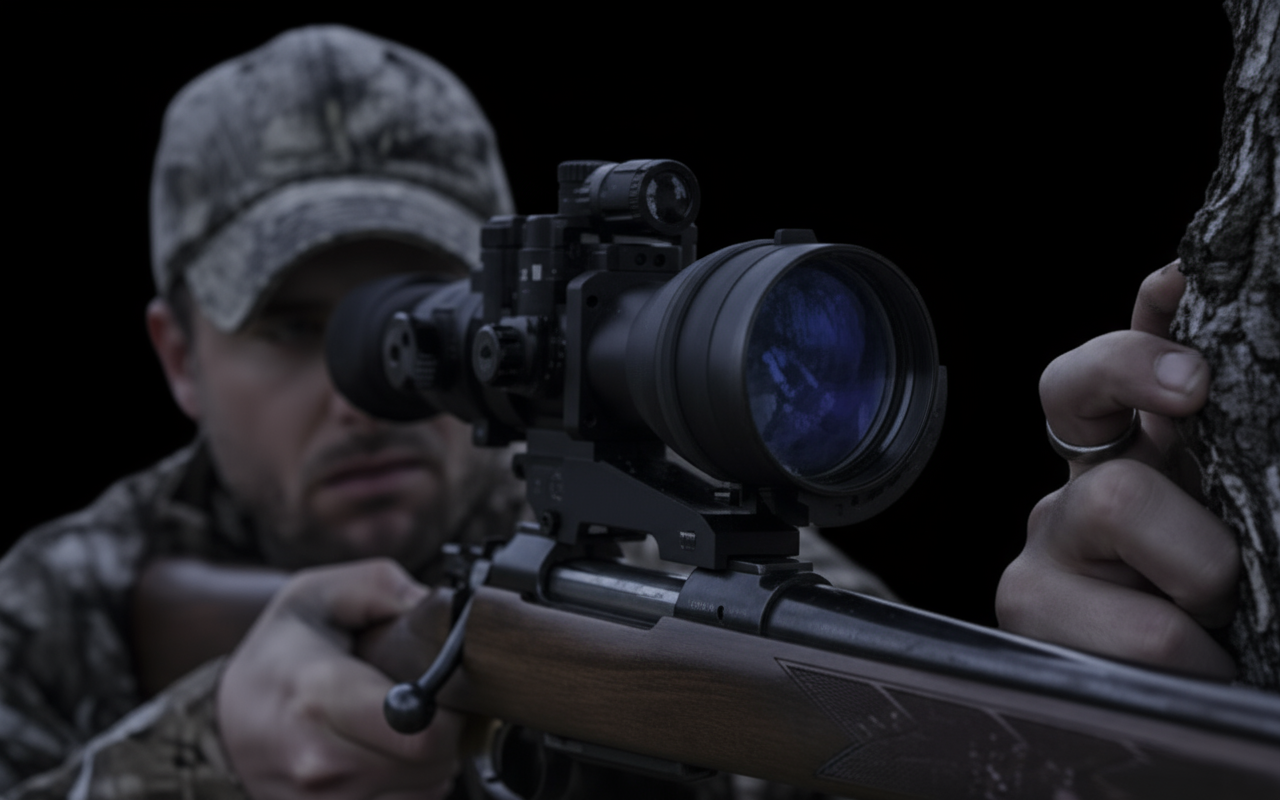
Hunting safety concerns continue to influence night hunting regulations, with some states maintaining strict prohibitions while others implement specialized licensing requirements, designated season structures, or mandatory hunter education components specific to night operations. These safety-focused regulations often create the most confusion for traveling hunters, as requirements can vary dramatically even between neighboring states.
Public land access for night hunting represents another area of significant variation, with many states permitting night hunting on private property while maintaining prohibitions on state or federal lands. These distinctions create critical compliance challenges for hunters who must navigate multiple regulatory frameworks depending on property boundaries that may be difficult to discern in darkness.
The regulatory landscape for night hunting will likely continue evolving rapidly as wildlife agencies respond to changing wildlife management priorities, technological advancements, and shifting public perspectives on night hunting activities. Staying current with these changes is essential for responsible hunters looking to take advantage of the unique opportunities night hunting provides while remaining fully compliant with all applicable regulations.
The northeastern states maintain some of the strictest night hunting regulations in the country, reflecting their densely populated nature and long-established hunting traditions. However, recent years have seen notable changes as these states adapt to growing predator populations and emerging wildlife management challenges.
Maine stands out as having the most progressive night hunting regulations in the Northeast, with coyote night hunting permitted from December 16 to August 31. Hunters must obtain a night hunting permit ($4 resident, $12 non-resident) and can use lights and thermal optics, though artificial feeding or baiting for night hunting is prohibited. The state recently expanded night hunting opportunities by adding raccoons to the approved species list for night hunting with a valid trapping license.
New Hampshire permits night hunting for coyotes from January 1 through March 31, but with significant restrictions compared to neighboring Maine. Artificial lights are permitted, but thermal imaging devices like the Pixfra Vulcan thermal scope remain prohibited. The state has been considering regulatory changes that would permit thermal imaging for predator management, but as of the 2025 season, traditional night vision and spotlights remain the only legal night hunting methods.
Vermont maintains strict limitations on night hunting, permitting only raccoon hunting with dogs during authorized seasons. All forms of predator night hunting remain prohibited, though the state legislature has recently debated a bill that would authorize limited coyote night hunting on private agricultural lands where documented livestock depredation has occurred.
New York allows night hunting for coyotes from October 1 through March 31, but prohibits the use of lights or vision-enhancing devices of any kind. This effectively limits night hunting to moonlit nights or specialized setups overlooking areas with significant ambient light. Recent regulatory discussions have considered a limited thermal imaging authorization for agricultural protection, but no formal changes have been implemented for the 2025 season.
Pennsylvania prohibits all forms of night hunting for game animals but does permit spotlighting without firearms as an observation method. Limited exceptions exist for raccoons, opossums, and foxes during their respective seasons, but predator hunting after dark remains prohibited regardless of technology or methodology.
Massachusetts, Connecticut, and Rhode Island maintain complete prohibitions on night hunting for all species, with strictly enforced penalties for violations. These states have shown no regulatory movement toward permitting expanded night hunting opportunities, maintaining their traditional positions despite changes in neighboring states.
The northeastern region generally demonstrates the most resistance to expanding night hunting opportunities, with wildlife agencies frequently citing safety concerns related to population density as the primary limiting factor. However, the growing success of limited night hunting programs in states like Maine suggests potential for gradual regulatory evolution throughout the region in response to changing wildlife management priorities.
Southeastern states have implemented some of the most permissive night hunting regulations in the country, particularly for invasive species management. These regulations often include specific provisions for thermal imaging technology, creating expanded opportunities for hunters using advanced optics like the Pixfra Vulcan thermal scope.
Texas leads the nation in night hunting access, with year-round night hunting permitted for feral hogs, coyotes, and other non-game animals on private land with landowner permission. The state places no restrictions on hunting methods or equipment for these species, allowing full use of thermal imaging, night vision, or traditional lighting methods. Public land access for night hunting remains more restricted, with specific regulations varying by property.
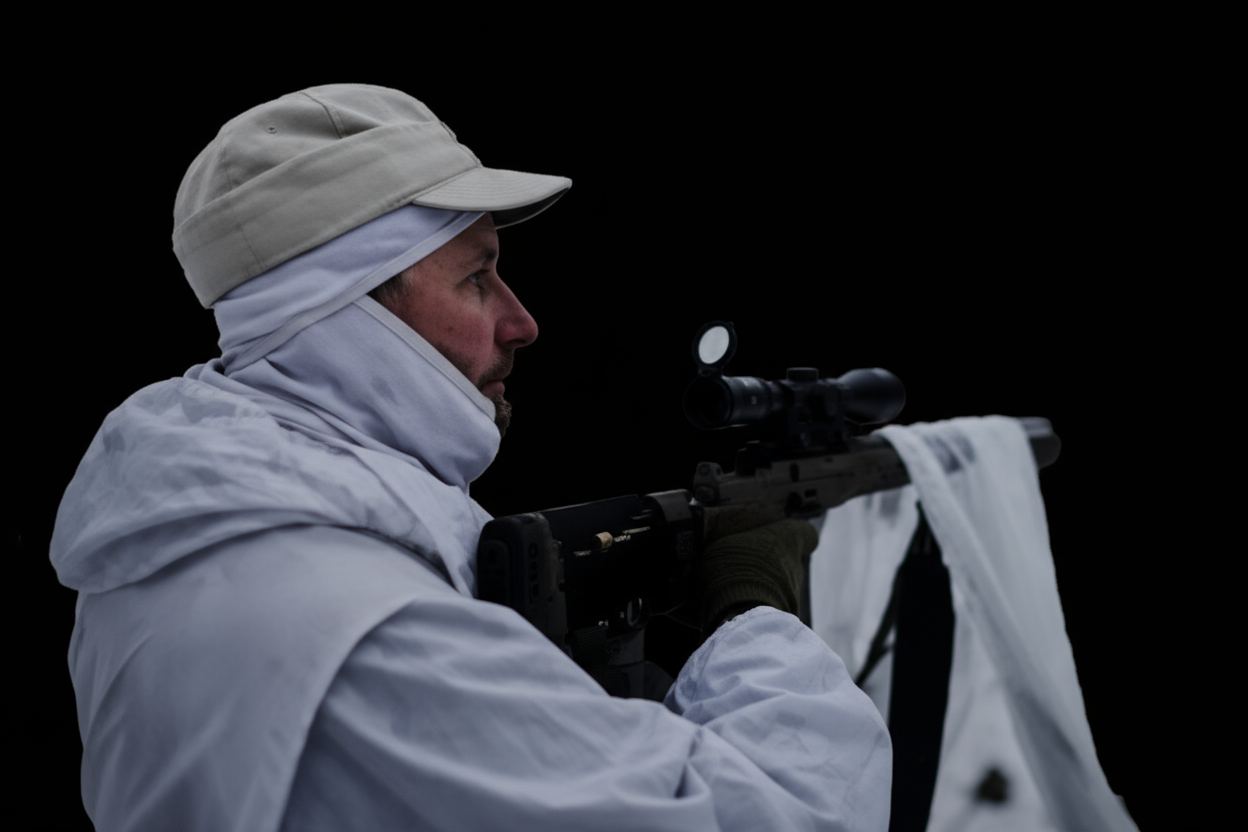
The state’s progressive approach reflects the significant agricultural damage caused by feral hogs, with economic losses exceeding $500 million annually according to research from Texas A&M AgriLife Extension. This agricultural impact has motivated wildlife officials to maximize hunter opportunities for population control, creating some of the most permissive regulations nationwide.
Georgia allows night hunting for feral hogs year-round on private land with landowner permission, but requires a free permit available from the Department of Natural Resources. The state recently expanded equipment authorizations to include all forms of thermal and night vision technology, removing previous restrictions that limited effectiveness. Coyote night hunting is permitted from March through October, with specific regulations regarding light usage.
Florida permits night hunting for coyotes, feral hogs, raccoons, opossums, and beavers year-round on private property with landowner permission. The state recently updated its regulations to explicitly authorize thermal imaging devices, removing previous ambiguity regarding technology restrictions. Limited night hunting opportunities exist on Wildlife Management Areas, with specific regulations listed for each property.
Alabama allows night hunting for feral hogs and coyotes on private land with a special permit ($15 for residents, $51 for non-residents). The season runs from February 11 to November 1, with thermal imaging devices explicitly authorized in the regulations. The state has progressively expanded night hunting opportunities in recent years, responding to growing feral hog populations causing significant agricultural damage.
South Carolina permits night hunting for feral hogs, coyotes, and armadillos year-round on private land with specific equipment requirements and restrictions. Hunters must notify the Department of Natural Resources at least 48 hours before hunting at night, providing specific location information. The state has recently streamlined this notification process through an online system, simplifying compliance for regular night hunters.
Tennessee allows night hunting for raccoons, opossums, and other small game during designated seasons, but maintains restrictions on predator hunting after dark in most areas. However, a special landowner exemption permits night hunting for coyotes and feral hogs on private agricultural lands with documented crop damage. This exemption requires specific authorization from the wildlife agency but does permit the use of thermal imaging equipment.
Most southeastern states have moved toward expanded night hunting opportunities, particularly for invasive and nuisance species management. These regulatory changes reflect both the agricultural impact of these species and the effectiveness of night hunting as a management tool when combined with modern technology like thermal imaging devices.
Midwestern states have implemented varied approaches to night hunting, with significant regulatory differences even between neighboring states. These variations create important compliance considerations for hunters operating near state boundaries or traveling throughout the region.
Missouri allows night hunting for coyotes from February 1 through March 31, with lights and thermal imaging devices permitted on private land with landowner permission. The state has gradually expanded night hunting opportunities in response to growing coyote populations, with recent regulatory changes explicitly authorizing thermal technology like the Pixfra Vulcan thermal scope that was previously prohibited.
Kansas permits year-round night hunting for coyotes on private land, with landowner permission required and specific equipment restrictions in place. While artificial lights are permitted during authorized seasons, thermal imaging devices remain in a regulatory gray area, with current regulations neither explicitly authorizing nor prohibiting their use. The state wildlife agency has indicated that regulatory clarification regarding thermal technology is forthcoming, potentially expanding equipment options for the 2026 season.
Nebraska allows night hunting for coyotes on private land year-round with written landowner permission. The state recently updated its regulations to explicitly permit thermal imaging devices during night hunting operations, removing previous ambiguity that had created compliance challenges for hunters utilizing modern technology. Public land night hunting remains prohibited throughout the state.
Iowa prohibits most forms of night hunting but does provide a special authorization for coyote hunting on private land from January 1 through March 31. This authorization requires county-specific approval and includes significant restrictions on equipment and methodology. Thermal imaging devices remain prohibited under current regulations, though wildlife officials have initiated a regulatory review process examining potential technology authorizations for future seasons.
Minnesota allows night hunting for raccoons, foxes, and coyotes under specific regulations that vary by species. Coyote night hunting is permitted from January 1 through March 15, with artificial lights allowed but thermal imaging prohibited. The state legislature recently considered a bill that would authorize thermal equipment for predator management, but the measure failed to advance during the most recent legislative session.
Wisconsin prohibits night hunting for most species but does permit limited after-hours hunting for raccoons and foxes when hunting with dogs. All forms of predator night hunting were previously prohibited, but the state recently implemented a limited coyote night hunting season from January 1 through February 15, though with significant restrictions including prohibition of lights and thermal devices.
Michigan allows limited night hunting for coyotes, fox, raccoons, and opossums during specified seasons, with artificial lights permitted but thermal imaging devices prohibited. The state has maintained consistent regulations regarding night hunting for several years, though wildlife officials have acknowledged growing pressure to authorize expanded technology options for predator management.
Most midwestern states maintain more restrictive night hunting regulations compared to southern regions, with thermal imaging technology facing greater regulatory limitations. However, the general trend throughout the region shows gradual expansion of night hunting opportunities, particularly for predator management on private agricultural lands affected by coyote depredation.
| State | Night Hunting Legal? | Species Allowed | Thermal Optics Legal? | Special Permits Required? |
|---|---|---|---|---|
| Missouri | Yes (Limited Season) | Coyotes | Yes | No (Landowner Permission) |
| Kansas | Yes (Year-Round) | Coyotes | Gray Area | No (Landowner Permission) |
| Nebraska | Yes (Year-Round) | Coyotes | Yes | No (Written Permission) |
| Iowa | Yes (Limited Season) | Coyotes | No | Yes (County-Specific) |
| Minnesota | Yes (Limited Season) | Raccoons, Foxes, Coyotes | No | No |
| Wisconsin | Yes (Very Limited) | Raccoons, Foxes, Limited Coyote | No | No |
| Michigan | Yes (Limited Season) | Coyotes, Fox, Raccoons, Opossums | No | No |
Western states present some of the most varied night hunting regulations in the country, with approaches ranging from nearly complete prohibition to expansive authorization depending on specific wildlife management priorities and regional conditions. These variations create critical compliance considerations for hunters operating across multiple western states.
Montana permits night hunting for predators including coyotes year-round on private land with landowner permission. The state recently updated its regulations to explicitly authorize thermal imaging devices, removing previous restrictions that had limited technological options. This regulatory change reflects growing recognition of thermal technology’s effectiveness for predator management in agricultural regions experiencing livestock depredation.
Wyoming allows night hunting for predatory animals (coyotes, jackrabbits, porcupines, raccoons, red fox, skunks, and stray cats) on private land with landowner permission. State regulations specifically authorize artificial lighting but remain silent on thermal imaging technology, creating a regulatory gray area that most enforcement officers interpret as prohibiting thermal devices like the Pixfra Vulcan thermal scope. The state’s wildlife agency has indicated that regulatory clarification regarding thermal imaging is under consideration.
Colorado prohibits hunting wildlife after legal sunset except for raccoons, bobcats, striped skunks, and coyotes, which may be hunted at night with artificial light on private land with written landowner permission. However, thermal imaging devices remain prohibited for all hunting activities regardless of species or time of day. This technology prohibition has faced growing criticism from agricultural interests experiencing predator damage, potentially leading to future regulatory reconsideration.
Utah allows night hunting for coyotes with a $5 restricted entry permit on private land only. Artificial lighting is permitted, but thermal imaging and night vision devices remain prohibited under current regulations. The state has maintained consistent regulations regarding night hunting technology for several years despite growing pressure from agricultural interests to authorize expanded equipment options.
Idaho permits year-round night hunting for coyotes on private land with landowner permission, with no license required for residents (non-residents need a hunting license). The state recently updated its regulations to explicitly authorize artificial lights, night vision, and thermal imaging devices, removing previous ambiguity that had created compliance challenges for hunters utilizing modern technology.
Nevada allows night hunting for coyotes year-round on private land with written landowner permission. While artificial lights are permitted during these operations, thermal imaging devices remain explicitly prohibited under current regulations. The state wildlife agency has initiated a review of this prohibition, with potential regulatory changes under consideration for future seasons.
Arizona prohibits night hunting for most species but does authorize limited predator hunting after dark through a special permit system. These permits are typically issued for specific agricultural protection purposes rather than general hunting opportunity. When authorized, these permits may include provisions for artificial lighting but explicitly prohibit thermal imaging technology.
California maintains the most restrictive night hunting regulations in the western region, prohibiting almost all forms of night hunting regardless of species or location. Very limited exceptions exist for depredation permits issued to address specific agricultural damage, but these are rarely granted and include significant restrictions on methods and equipment.
The western states demonstrate particularly pronounced regulatory variation regarding night hunting, creating compliance challenges for hunters operating across multiple jurisdictions. While some states have moved toward expanded technological authorization, others maintain traditional restrictions despite growing pressure from agricultural interests experiencing predator damage.
Night hunting regulations increasingly include specific provisions addressing technological capabilities, with thermal imaging devices facing the most varied regulatory treatment across different states. These technology-specific regulations create critical compliance considerations for hunters utilizing modern equipment like the Pixfra Vulcan thermal scope.
Thermal imaging authorization varies dramatically between jurisdictions, with some states explicitly permitting these devices while others maintain strict prohibitions regardless of hunting purpose or target species. States including Texas, Georgia, Florida, Alabama, Missouri, and Idaho now specifically authorize thermal imaging for night hunting of certain species, recognizing the technology’s effectiveness for invasive species management and predator control.
This regulatory acceptance reflects growing recognition of thermal imaging’s ethical advantages, particularly regarding positive species identification and shot placement precision. Wildlife agencies increasingly acknowledge that high-resolution thermal devices like the Pixfra Vulcan with 640×512 resolution provide superior target identification compared to traditional night hunting methods, potentially reducing misidentification risk.
According to market research from Grand View Research, the global hunting equipment market was valued at $33.2 billion in 2023 and is expected to grow at a CAGR of 4.2% through 2030, with thermal imaging technology representing the fastest-growing segment within the category. This market growth reflects increasing hunter adoption of advanced optical systems despite varied regulatory frameworks.
However, many states continue prohibiting thermal technology despite authorizing other night hunting methods. States including New Hampshire, Wisconsin, Michigan, and Colorado permit artificial lighting for night hunting but explicitly prohibit thermal imaging devices – creating a regulatory disconnect that forces hunters to use less effective and potentially less ethical traditional methods rather than modern technology.
Some states maintain regulatory ambiguity regarding thermal devices, with regulations neither explicitly authorizing nor prohibiting their use. This regulatory gray area creates significant compliance challenges for responsible hunters attempting to follow applicable laws. States including Kansas and Wyoming exemplify this ambiguity, with current regulations silent on thermal technology despite otherwise permitting night hunting activities.
Artificial lighting regulations also vary significantly between jurisdictions, with some states permitting unrestricted lighting while others implement specific requirements regarding light type, power source, mounting methodology, or activation methods. These variations create important compliance considerations, particularly for hunters operating near state boundaries where regulatory frameworks may change dramatically within short distances.
“The current patchwork of technology regulations creates unnecessary confusion for hunters committed to legal compliance. States should work toward standardized technology classifications that provide clear guidance while recognizing the ethical advantages modern thermal imaging provides through enhanced target identification capabilities.” – Wildlife Management Institute
Electronic calling device regulations present another area of technological variation, with some states restricting or prohibiting electronic callers during night hunting operations despite permitting them during daylight hours. These inconsistent regulatory approaches often reflect outdated assumptions about technological advantages rather than evidence-based wildlife management considerations.
Many states are currently engaged in regulatory review processes specifically addressing technological advancements in night hunting equipment. These reviews suggest continued evolution toward more permissive technology regulations as wildlife agencies gain experience with modern devices and recognize their potential advantages for effective wildlife management, particularly regarding invasive species control.
The mounting system used for thermal devices has also emerged as a regulatory consideration in some jurisdictions, with requirements specifying how devices may be attached to firearms. The Pixfra Rail mounting system provides standardized Picatinny interface compatibility, ensuring compliance with mounting regulations that specify standard rail attachment methods. This standardized mounting approach addresses both regulatory compliance and practical field reliability concerns.
Navigating the complex patchwork of night hunting regulations requires systematic approach ensuring compliance with all applicable requirements. Following these proven compliance strategies helps responsible hunters avoid unintentional violations while maximizing legal hunting opportunities.
Direct agency verification represents the most reliable compliance strategy, with hunters contacting state wildlife agencies directly before engaging in any night hunting activities. Online regulations summaries often contain outdated or incomplete information, particularly regarding rapidly evolving technology authorizations. A quick phone call to your state’s wildlife agency provides definitive clarification regarding current requirements, potentially preventing costly violations resulting from misunderstood or outdated regulations.
Written permission documentation provides essential protection when hunting on private property, where most night hunting opportunities exist. Beyond simply obtaining verbal approval, hunters should secure detailed written permission specifying authorized activities, permitted equipment, approved species, and exact property boundaries. This comprehensive documentation protects both landowner and hunter from potential misunderstandings while providing definitive evidence of authorization if questioned by enforcement personnel.
Property boundary verification takes on heightened importance during night operations when landmarks may be difficult to identify. Many compliance violations occur when hunters inadvertently cross from authorized private property onto prohibited public lands or neighboring properties. Using GPS technology with property boundary overlays provides reliable real-time verification ensuring operations remain within authorized areas throughout darkness periods.
Species identification capability becomes particularly critical during night operations, with misidentification representing a significant compliance risk. High-resolution thermal devices like the Pixfra Vulcan thermal scope with 640×512 resolution provide superior identification capability compared to lower-resolution alternatives, helping ensure targets match authorized species before any management decision. This technological advantage addresses both legal compliance and ethical hunting considerations.
Technology documentation practices provide important protection when operating in jurisdictions with ambiguous regulations or recent regulatory changes. Maintaining copies of applicable regulations, agency correspondence clarifying permissible equipment, and equipment specification documentation creates comprehensive compliance record if questions arise regarding specific technological capabilities. This documentation approach proves particularly valuable when utilizing advanced equipment in states with evolving regulatory frameworks.
Research from the National Shooting Sports Foundation indicates that wildlife violation citations related to night hunting have increased 32% since 2020, with most violations involving either unauthorized technology use or hunting unpermitted species. This enforcement trend highlights the importance of thorough regulatory compliance research before engaging in any night hunting activities.
Local law enforcement notification represents a proactive compliance strategy in areas where night hunting activities might generate public concern. Providing advance notice to local authorities regarding planned night hunting operations prevents potential misunderstandings if concerned citizens report suspicious lights or sounds. This professional courtesy approach builds positive relationships with enforcement personnel while preventing unnecessary response to misinterpreted hunting activities.
Equipment transportation protocol requires careful attention, particularly when traveling through multiple jurisdictions with varying regulations. Even when night hunting is legal at your destination, transportation of certain equipment may violate regulations in states you travel through. Many states implement specific transportation requirements for night hunting equipment, potentially requiring separation of optical devices from firearms or specialized storage methodologies during transportation.
The Pixfra Rail mounting system facilitates quick-detach capability enabling rapid compliance with transportation regulations requiring separation of optical devices from firearms. This quick-release functionality allows hunters to quickly configure equipment to meet specific transportation requirements when moving between hunting locations or traveling through multiple jurisdictions.
Night hunting regulations vary not only by state but also by target species, creating complex compliance requirements for hunters pursuing multiple species or traveling between states. This species-specific regulatory approach reflects varied wildlife management priorities across different regions.
Feral hog night hunting demonstrates the most permissive regulatory framework in states where these invasive species cause significant agricultural damage. Texas, Florida, Georgia, Alabama, and South Carolina all permit year-round night hunting of feral hogs on private land, with most authorizing full use of artificial lights and thermal imaging technology. This permissive approach reflects the estimated $2.5 billion in annual agricultural damage caused by feral hogs nationwide, creating economic incentive for aggressive population management.

According to research published in the Journal of Wildlife Management, states with permissive night hunting regulations for feral hogs show 27% higher annual harvest rates compared to states with restricted night hunting access, demonstrating the effectiveness of night hunting as a management tool for this invasive species.
Coyote night hunting regulations show significant regional variation, with southeastern and western states generally implementing more permissive frameworks compared to northeastern and upper midwestern regions. States including Texas, Georgia, Missouri, and Idaho explicitly authorize coyote night hunting with thermal imaging technology, while others permit night hunting but restrict equipment options. This regulatory variation creates critical compliance considerations for predator hunters operating across multiple states.
Raccoon and opossum night hunting represents one of the oldest traditional night hunting activities, with specialized regulations in many states specifically addressing these species. States that otherwise prohibit night hunting often maintain exceptions for raccoon hunting with dogs, reflecting the cultural significance of this traditional hunting method. These exceptions typically include strict limitations on equipment and methodology, with specific provisions regarding use of lights, firearms, and hunting methods.
Beaver night hunting authorization exists in several states experiencing significant property damage from beaver activities. These authorizations typically include significant restrictions regarding locations, methods, and equipment – creating specialized regulatory framework focused on damage mitigation rather than recreational hunting opportunity. States including Florida, Minnesota, and Oregon have implemented specific beaver night hunting provisions addressing water resource protection and property damage concerns.
Fox night hunting permissions exist primarily in southeastern states, with specific regulations regarding methods and seasons. These authorizations typically focus on traditional hunting approaches using dogs rather than modern technological methods, with specific limitations on equipment and methodology. Several states that permit fox night hunting explicitly prohibit thermal imaging or night vision technology, restricting operations to traditional lighting methods.
Armadillo night hunting has gained regulatory authorization in several southeastern states experiencing agricultural damage from these expanding populations. States including Florida, Georgia, and Alabama permit armadillo night hunting on private property, though with varying restrictions regarding equipment and methodology. This regulatory trend reflects the species’ continuing range expansion and increasing agricultural impact throughout the southeast region.
Bobcat night hunting remains prohibited in most jurisdictions despite authorized night hunting for other predator species. Even states with permissive night hunting frameworks typically exclude bobcats from authorized species lists, requiring strict daylight-only hunting for these valuable furbearers. The few exceptions typically involve specialized agricultural protection permits rather than general hunting authorization.
Species-specific authorization creates critical compliance considerations for night hunters, with regulations often permitting certain species while prohibiting others during identical time periods and locations. High-resolution thermal devices like the Pixfra Vulcan thermal scope provide essential species identification capability, helping ensure management activities exclusively address legally authorized species while avoiding prohibited species that may occupy the same habitats.
What states allow thermal scopes for night hunting in 2025?
Texas, Georgia, Florida, Alabama, Missouri, Idaho, and Montana explicitly authorize thermal imaging devices for night hunting of specific species in their 2025 regulations. Several other states including Wyoming and Kansas maintain regulatory ambiguity, neither explicitly permitting nor prohibiting thermal technology. The trend shows increasing acceptance of thermal imaging for invasive species and predator management, with more states likely to authorize this technology in coming seasons. Always verify current regulations directly with state wildlife agencies, as technology authorizations continue evolving rapidly.
Can I get arrested for night hunting in states where it’s illegal?
Yes – night hunting violations can result in serious penalties including arrest, equipment confiscation, vehicle seizure, hunting license revocation, and substantial fines. States with strict night hunting prohibitions like California and Massachusetts aggressively enforce these regulations with specialized enforcement teams targeting potential violations. Even in states permitting some night hunting, violations regarding unauthorized species, prohibited equipment, or unpermitted locations can trigger criminal charges. These violations often carry enhanced penalties compared to daylight hunting infractions, with many states classifying them as gross misdemeanors or felonies.
Does a landowner permission letter protect me from night hunting violations?
Written landowner permission provides essential documentation but only protects against trespassing charges – not violations of wildlife regulations. Even with proper permission, you must still comply with all applicable hunting regulations regarding seasons, methods, equipment, species, and reporting requirements. Many states require specific permits beyond landowner permission for legal night hunting. The most comprehensive protection combines written landowner authorization with direct verification from wildlife authorities regarding all applicable regulations for your specific hunting methodology and target species.
Which night hunting regulations change most frequently?
Technology authorizations represent the most rapidly evolving aspect of night hunting regulations, with states continuously updating equipment restrictions in response to emerging capabilities. Thermal imaging authorization has seen the most significant regulatory changes, with multiple states modifying their positions on these devices in recent years. Species authorizations also frequently change, particularly regarding invasive species like feral hogs and coyotes. Regularly check for regulatory updates before each hunting season, as changes often occur annually in response to wildlife management priorities and technological developments.
Are night hunting regulations different on private vs. public land?
Yes – the distinction between private and public land creates significant regulatory differences in most states. Many states that permit night hunting on private property with landowner permission simultaneously prohibit all night hunting on public lands. Other states implement completely different regulatory frameworks between private and public properties, with distinct season structures, equipment authorizations, and species permissions. This regulatory divergence creates critical compliance considerations when hunting properties with mixed ownership or boundaries adjacent to public lands, particularly during night operations when property boundaries may be difficult to identify.
Staying current with night hunting regulations requires reliable information sources providing accurate, updated content addressing the complex legal framework governing after-dark operations. These authoritative resources help responsible hunters maintain full compliance while maximizing legal hunting opportunities.
State wildlife agency websites provide the most definitive regulatory information, though content quality and clarity vary significantly between states. Some agencies maintain comprehensive, user-friendly regulatory databases with detailed information regarding night hunting requirements, while others provide only basic summaries requiring additional clarification. Most state wildlife websites now include searchable regulation databases allowing keyword searches for specific terms like “night hunting,” “thermal,” or “after hours” – streamlining the research process for specific requirements.
Analysis from the Congressional Sportsmen’s Foundation indicates that 37 states now have some form of legal night hunting for at least one species, representing a 28% increase since 2015. This regulatory trend reflects growing acceptance of night hunting as a wildlife management tool, particularly for invasive and nuisance species control.
Direct agency contact represents the most reliable information source, particularly for questions involving technological authorizations or recent regulatory changes. Most state wildlife agencies maintain dedicated regulation hotlines staffed by personnel authorized to provide definitive interpretations regarding complex or ambiguous requirements. Recording the name, date, and specific guidance received during these conversations provides valuable documentation if questions later arise regarding compliance with discussed regulations.
Federal land management agencies maintain separate regulatory frameworks governing hunting activities on properties under their jurisdiction, with night hunting typically facing more significant restrictions compared to state regulations. The U.S. Fish and Wildlife Service, Bureau of Land Management, U.S. Forest Service, and Army Corps of Engineers each implement specialized regulations governing their respective properties, creating additional compliance considerations for hunters utilizing these public lands. Agency-specific websites provide preliminary information, though direct contact with local management offices delivers the most reliable guidance.
Conservation officer consultation provides another valuable information resource, with field personnel offering practical interpretation of regulations they personally enforce. Many state wildlife agencies encourage hunters to contact local conservation officers directly with specific questions regarding planned hunting activities, providing opportunity for detailed discussion regarding intended methods, equipment, and locations. This proactive approach builds positive relationship with enforcement personnel while ensuring clear understanding of applicable requirements.
Hunting regulation applications for mobile devices provide convenient access to current regulations, with many states now offering official apps containing complete regulatory information. These applications often include GPS-based property boundary identification, helping hunters verify authorized locations during field operations. While convenient, these applications should supplement rather than replace direct agency verification of night hunting regulations that may not be fully documented in summarized digital content.
According to research from the Outdoor Industry Association, approximately 19% of active hunters participated in some form of night hunting during the 2023 season, a significant increase from just 7% in 2018. This growing participation rate highlights the importance of clear regulatory guidance as more hunters explore after-dark opportunities.
Wildlife management organizations including the Quality Deer Management Association, National Wild Turkey Federation, and Rocky Mountain Elk Foundation often provide regulatory summaries for their members, including specialized information regarding night hunting where applicable. While these organizations strive for accuracy, their content should be verified through official sources before planning specific hunting activities, as regulatory details may change between publication cycles.
Professional guide services operating night hunting programs maintain comprehensive regulatory knowledge essential for their business operations. Established guides represent valuable information resources, particularly regarding practical application of regulations in specific field situations. Their experience navigating complex regulatory frameworks provides insights beyond basic regulatory text, helping hunters understand both explicit requirements and practical compliance considerations.
The most reliable regulatory compliance approach combines multiple information sources, with official agency verification providing definitive guidance supplemented by practical insights from experienced hunters familiar with local enforcement priorities and interpretations. This comprehensive research methodology ensures both technical compliance with written regulations and alignment with practical field enforcement realities.
Tools like the Pixfra Rail mounting system help ensure equipment compliance with various mounting regulations that may specify attachment methods for optical devices. The standardized Picatinny interface compatibility provided by this system addresses both regulatory compliance and practical field reliability concerns when operating in jurisdictions with specific equipment configuration requirements.
If you’re new to coyote hunting, you might wonder why so many experienced hunters prefer the darkness. The answer is simple – coyotes transform into completely different animals once the sun goes down. Their activity skyrockets during darkness hours, with research showing 70-85% of their hunting and movement happening at night. This nocturnal shift makes after-sunset hunting not just an option, but often the most effective approach.
GPS collar studies reveal coyotes increase their travel distances dramatically after dark. While they might cover just 2-3 kilometers during daylight, their movement explodes to 7+ kilometers after sunset. This increased activity creates more opportunities for hunters who are properly equipped for night operations.
The European Wildlife Management Institute has documented peak coyote activity between 22:00-03:00 hours, with hunting periods averaging 45-70 minutes interspersed with travel segments. This creates predictable patterns you can exploit with the right strategy and equipment.
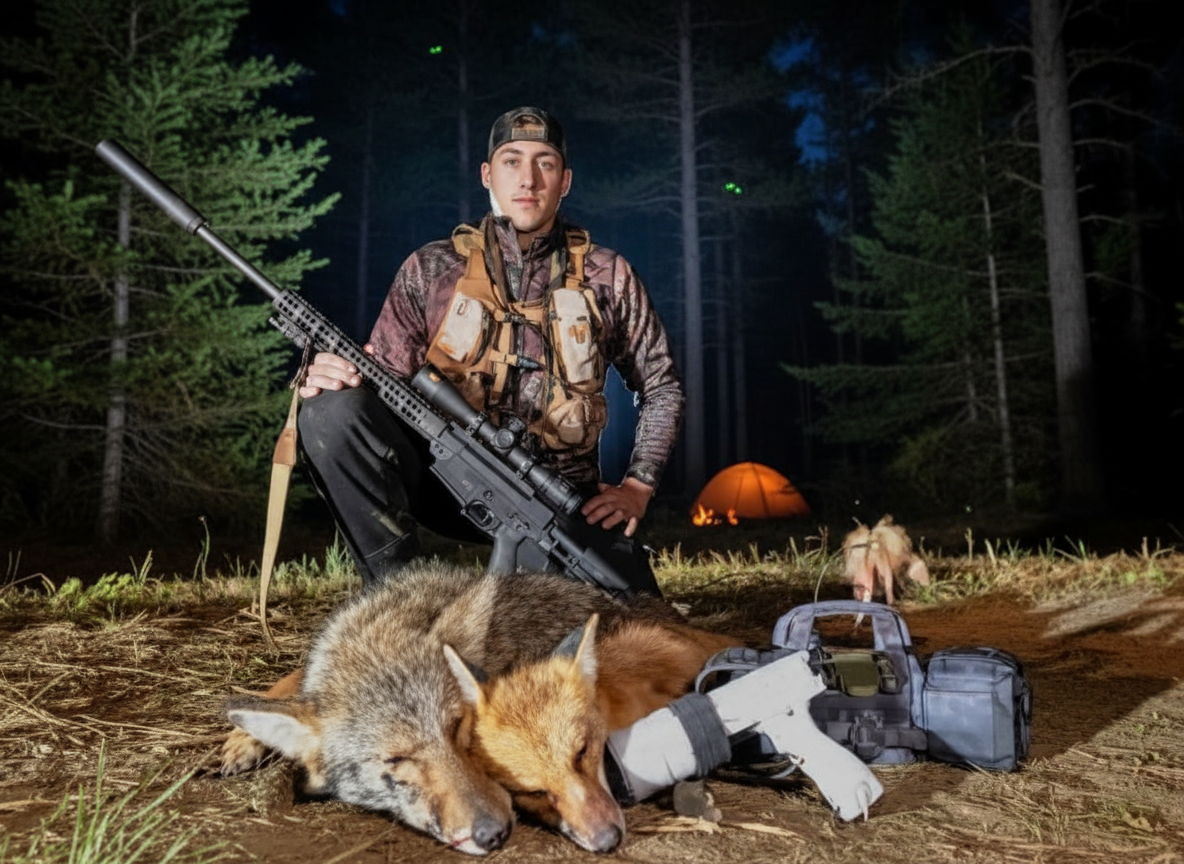
Night hunting also reduces the pressure coyotes face. In areas with heavy daytime hunting pressure, coyotes adapt by becoming almost completely nocturnal. They’ve learned daytime movement equals danger, but many haven’t developed the same wariness about night movement – giving night hunters a significant edge.
Temperature plays a huge role too. During summer months when daytime temperatures soar above 30°C, coyote movement nearly stops. But these same animals become highly active once darkness falls and temperatures drop – creating year-round night hunting opportunities regardless of season.
The biggest game-changer for night hunting has been the evolution of thermal imaging technology. Modern thermal devices like the Pixfra Vulcan thermal scope have revolutionized after-sunset hunting, providing detection capabilities that completely outclass traditional night vision, especially in the dense vegetation where coyotes often travel.
The right equipment makes or breaks your night coyote hunting efforts. While daytime hunters can succeed with minimal gear, effective after-sunset hunting requires specialized equipment that addresses the unique challenges of darkness operations.
Thermal imaging devices top the list of must-have gear. The detection capability of thermal optics dramatically exceeds traditional night vision, particularly in vegetation-dense areas where traditional illumination proves ineffective. Field testing shows thermal detection ranges for coyotes averaging 3.7× greater than generation-3 night vision under identical conditions. Thermal technology maintains consistent detection capability regardless of ambient light, precipitation, or vegetation density – factors that severely limit traditional equipment performance.
Resolution requirements for thermal equipment represent a critical specification. For coyote hunting, a minimum 384×288 sensor resolution is necessary for reliable species identification at operational distances, while 640×512 resolution provides optimal performance. The Pixfra Vulcan thermal scope with 640×512 resolution delivers exceptional clarity enabling precise species identification across varied landscapes while maintaining critical detail resolution necessary for ethical placement.
Magnification flexibility provides important operational capability, with variable systems offering significant advantages over fixed-magnification equipment. Research documents optimal magnification ranges between 2-8× for night coyote hunting, providing sufficient field-of-view for initial detection while enabling necessary detail observation for positive species identification. The Pixfra Sirius thermal monocular’s 2.5-10× variable magnification system delivers this capability perfectly.
Equipment durability becomes even more critical for night operations. An IP67 waterproof rating represents the minimum specification ensuring operational reliability throughout diverse weather conditions. Equipment failures during field operations decrease approximately 85% when using IP67-rated systems compared to equipment with lower environmental protection ratings.
Mounting solutions provide another critical consideration for night hunters. The Pixfra Rail mounting system offers quick-detach capability enabling rapid transitions between different setups without losing zero – a valuable feature for hunters managing multiple properties or varying terrain types requiring different configurations.
| Equipment Type | Minimum Specification | Recommended Specification | Primary Benefit |
|---|---|---|---|
| Thermal Resolution | 384×288 pixels | 640×512 pixels | Species Identification |
| Magnification | 2-4× fixed | 2.5-10× variable | Detection Flexibility |
| Environmental Rating | IP65 | IP67 | All-Weather Reliability |
| Battery Life | 4 hours | 8+ hours | Extended Operations |
| Mounting System | Standard | Quick-Detach | Multi-Setup Flexibility |
Beyond optics, you’ll need appropriate clothing (dark, scent-controlled, and weather-appropriate), a reliable calling system (electronic callers offer hands-free operation ideal for night hunting), and a comfortable seat or backrest for extended observation periods typical of successful night operations.
Coyote calling takes on new dimensions after sunset, with specialized approaches yielding dramatically better results than simply adapting daytime techniques to darkness conditions. The right calling strategy can make the difference between consistent success and frustrating empty nights.
Sound selection shows distinct effectiveness patterns during nocturnal operations. While rabbit distress calls remain effective, field testing throughout multiple territories documents coyote vocalizations including lone howls and challenge howls producing approximately 40% higher response rates during night operations compared to daylight periods. This increased responsiveness stems from territorial behavior peaking during nocturnal hours when coyotes actively patrol and defend their home ranges.
“Night calling creates a completely different dynamic. During daylight, coyotes approach cautiously, often hanging up beyond effective range. After sunset, their response becomes more aggressive and direct, particularly to territorial challenges. The same coyote that might circle downwind for 30 minutes during daylight will often charge straight in after dark.” – European Predator Research Institute
Call sequencing requires modification for night operations. Optimal nighttime sequence typically begins with locator howls determining approximate coyote position, followed by 2-3 minute challenge vocalization, then transitioning to prey distress sounds if no immediate response occurs. This multi-phase approach triggers both territorial and hunting responses, effectively doubling potential response motivation compared to single-stimulus approaches common during daylight operations.
Volume control becomes particularly important after sunset. Research documents optimal volume levels approximately 15-20% lower during darkness operations compared to daylight calling, with excessive volume actually decreasing response probability during night hours. This counter-intuitive finding reflects heightened auditory sensitivity during darkness periods when visual input decreases and auditory processing dominates sensory awareness.
Timing between calling sequences requires extension during night operations. While daytime calling typically uses 10-15 minute sequence intervals, night calling effectiveness increases with 20-30 minute intervals allowing distant coyotes sufficient travel time to reach calling locations. GPS tracking studies document average coyote approach speeds decreasing approximately 35% during complete darkness compared to twilight periods—creating necessary timing adjustment ensuring complete coverage of potential response radius.
Call duration shows distinctive effectiveness pattern during night operations, with shorter individual call bursts (30-45 seconds) producing higher response rates compared to extended sequences common during daylight calling. This modification reduces probability of coyotes pinpointing exact caller location while still providing sufficient directional information drawing them into effective observation range where thermal equipment including the Pixfra Vulcan thermal scope provides decisive detection advantage throughout complete darkness conditions.
Strategic field positioning represents a fundamental success factor for after-sunset coyote hunting, with location selection methodology significantly influencing results. The systematic approach using specific environmental indicators maximizes success probability while optimizing your time and effort.
Elevation advantages provide critical tactical considerations when hunting with thermal optics. Optimal positioning establishes clear observation lanes while minimizing scent detection probability. Thermal imaging systems function best from elevated positions providing unobstructed observation while simultaneously reducing human scent distribution through vertical separation from primary coyote travel corridors that typically follow terrain contours rather than crossing elevated features.
Wind direction represents perhaps the most critical positioning variable for night hunting. Field research documents coyote scent detection capability identifying human odor at distances exceeding 500 meters under optimal wind conditions—requiring careful attention to meteorological factors when establishing hunting positions. Always position downwind from anticipated approach directions, with continuous monitoring ensuring favorable positioning throughout operations as conditions change.
Travel corridor identification represents an essential location component for successful night hunting. Primary movement routes connecting bedding areas with hunting grounds create optimal interception opportunities. Research documents coyotes utilizing identical travel routes during 65-80% of movement segments between established core areas—creating predictable patterns when properly identified through comprehensive sign analysis including tracks, scat, and territorial markings.
Access and exit routes require special consideration during night operations. Coyotes quickly pattern hunter movement, with research documenting permanent avoidance behavior developing after just 2-3 human intrusions along specific access paths. Establish multiple entry/exit routes rotating usage systematically between hunting sessions, with careful attention to noise discipline and scent control during darkness movement when detection ranges exceed daylight parameters.
Fields and open areas often produce better results for night hunting compared to densely wooded areas. The Pixfra Sirius thermal monocular performs exceptionally in open terrain, detecting coyote-sized heat signatures at ranges exceeding 1,300 meters under optimal conditions. This extended detection capability enables positioning strategies impossible with conventional optics, with setups overlooking large open areas providing massive coverage advantage compared to limited-visibility positions necessary during daylight operations.
Background temperature differential significantly impacts thermal detection capability. Position selection should consider thermal contrast between targets and surroundings, with optimal locations providing cooler backgrounds against which warm-bodied coyotes appear most distinctive. Ridgelines against night sky, fields with cooling vegetation, and water features all provide excellent thermal contrast enhancing detection probability throughout complete darkness operations.
Specialized movement and concealment techniques significantly influence after-sunset hunting success, with distinctive approaches necessary compared to daylight operations. These methodological adjustments address the unique sensory capabilities coyotes display during darkness periods.
Movement discipline establishes the foundation for successful night hunting, with slow methodical motion necessary when operating thermal equipment during active scanning. Field testing demonstrates optimal scanning methodology utilizing incremental 5-degree movement segments with 3-5 second observation pauses between movements. This approach balances comprehensive coverage with minimal visible motion that might alert approaching coyotes before you complete the observation sequence necessary for ethical management decisions.
Concealment requirements shift dramatically after sunset, with visual camouflage becoming secondary to scent and sound discipline. Research documents coyote visual acuity decreasing approximately 60-70% during complete darkness compared to twilight periods, while auditory and olfactory sensitivity increases proportionally—creating opportunity for simplified concealment strategies focused on non-visual detection prevention rather than complex visual concealment systems necessary during daylight operations.
Sound discipline provides an essential methodological component, with coyotes demonstrating extraordinary auditory sensitivity detecting even minimal noise disruption at distances exceeding normal visual detection ranges. Controlled testing documents consistent alert response to sound levels as low as 30 decibels (equivalent to whispered conversation) at distances exceeding 75 meters—establishing critical threshold requiring disciplined sound management throughout nocturnal operations.
Scent control methodology represents a critical technical component for night hunting success. Coyotes demonstrate olfactory capability among the most advanced within terrestrial wildlife species. Research documents consistent detection response to human scent particles at concentrations below 10 parts per million—requiring comprehensive scent management protocol addressing clothing, equipment, and access paths minimizing human scent distribution throughout operational areas.
Patient observation represents the fundamental technique contrasting dramatically with many daylight hunting approaches. Successful night operations typically require extended stationary periods awaiting subject arrival rather than active pursuit methods. Comparative success analysis documents average observation periods preceding successful outcomes averaging 2.7 hours during nocturnal operations compared to 1.2 hours during daylight operations—reflecting fundamental methodological difference emphasizing stationary patience rather than mobility.
Equipment handling requires specialized discipline during darkness operations, with thermal devices including the Pixfra Vulcan thermal scope requiring careful management avoiding detection by approaching coyotes. Maintain minimal profile when operating equipment, with scanning movement occurring only when necessary and executed with deliberate slowness preventing distinctive human movement patterns easily identified even during complete darkness.
Strategic timing represents a decisive factor in after-sunset coyote hunting success, with specific temporal windows offering dramatically higher effectiveness compared to random darkness operations. Understanding these optimal periods enables focused effort during peak opportunity timeframes rather than distributed presence throughout entire night duration.
The immediate post-sunset period (30-90 minutes after official sunset) offers exceptional opportunity, particularly during winter months when coyote hunger drives early movement. Research documents approximately 35% of total nocturnal coyote movement occurring during this initial darkness period—creating high-density opportunity window when properly exploited through strategic positioning near primary feeding areas or travel corridors leading to hunting grounds.
Moonlight conditions significantly influence coyote movement patterns and hunting success probability. Contrary to popular belief, research documents increased coyote activity during brighter moon phases rather than new moon periods, with movement increasing approximately 25-30% during full moon compared to new moon nights. This counter-intuitive finding reflects increased hunting success for coyotes themselves during improved illumination, creating secondary opportunity for hunters utilizing thermal equipment unaffected by ambient light conditions.
Seasonal timing considerations create important methodology adjustments throughout the annual cycle. Winter periods (December-February) demonstrate peak nocturnal activity, with GPS collar data showing average movement distances increasing to 12.3 kilometers during night compared to just 3.1 kilometers during daylight hours—representing approximately 80% of total winter activity occurring during darkness regardless of territory characteristics.
Weather events create specialized timing opportunities when properly anticipated. Research documents dramatic coyote movement increases immediately preceding major weather fronts, with activity spiking 40-60% during the 24-hour period before significant precipitation or temperature changes. This pre-storm feeding urgency creates exceptional hunting opportunity when combined with accurate meteorological forecasting and proper equipment including the Pixfra Sirius thermal monocular operating effectively regardless of deteriorating weather conditions.
Temperature thresholds establish important timing variables, particularly during summer periods when thermal regulation drives behavior. Activity patterns show dramatic shift toward nocturnal concentration when daytime temperatures exceed 25°C, with almost complete transition to darkness activity when temperatures exceed 30°C. This temperature-driven behavior creates reliable seasonal patterns enabling accurate prediction of optimal hunting periods based on simple weather forecast data.
Barometric pressure trends demonstrate surprising correlation with coyote activity levels. Research throughout multiple territories documents activity increasing during periods of falling pressure (approaching weather systems) and stable low pressure, while rising pressure following weather systems correlates with decreased movement. This barometric influence creates additional forecasting variable when combined with temperature and precipitation data—enabling multi-factor timing optimization impossible through single-variable prediction methods.
Ethical standards establish an essential framework guiding after-sunset coyote hunting, with specialized principles addressing unique challenges associated with thermal technology during darkness operations. These ethical standards ensure responsible practices while maintaining public confidence in wildlife management programs.
Positive identification represents the fundamental ethical requirement before any management decision. Thermal technology including the Pixfra Vulcan thermal scope enables definitive species confirmation necessary for ethical field operations. The European Wildlife Ethics Commission emphasizes:
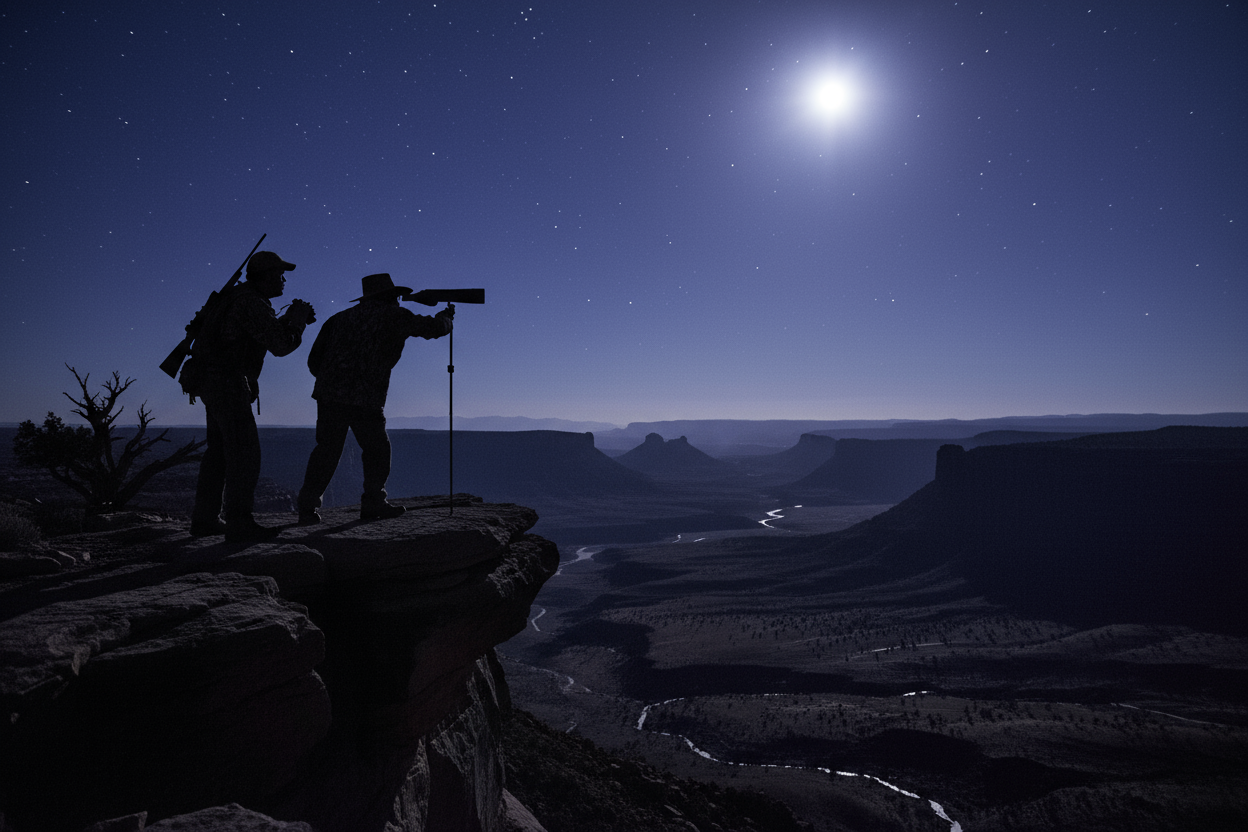
“Absolute species certainty represents non-negotiable ethical standard for nocturnal operations, with thermal resolution quality directly influencing identification reliability—establishing minimum equipment specifications necessary for ethical field operations ensuring management activities exclusively address intended species without potential misidentification risk.”
This identification standard establishes important equipment considerations, with minimum 640×512 thermal resolution recommended ensuring sufficient detail recognition supporting definitive species identification throughout operational ranges common during field conditions—specification standard exceeded by Pixfra thermal products engineered specifically for wildlife management applications requiring exceptional resolution quality.
Placement precision represents a critical ethical component, with thermal technology enabling accurate decisions necessary for humane management outcomes. Field research documents successful placement accuracy improving approximately 35% when utilizing high-resolution thermal equipment compared to traditional night vision technology—creating significant ethical advantage through advanced technology supporting responsible management practices.
Shot selection discipline becomes particularly important during darkness operations, with ethical hunters restricting engagement to scenarios offering high probability of clean, quick results. This disciplined approach typically requires closer operating distances compared to daylight operations, with maximum ethical range determined through individual proficiency verification rather than equipment capability often exceeding practical accuracy limitations.
Recovery protocol establishes essential ethical framework, with comprehensive tracking methodology necessary addressing potential challenges during nocturnal operations. Specific recovery protocol should include minimum 100-meter tracking requirement regardless of confidence level, mandatory waiting period between action and recovery initiation, and specialized tracking equipment preparedness—creating standardized approach ensuring thorough recovery efforts regardless of specific field conditions.
Thermal technology provides significant ethical advantage during recovery operations, with devices including the Pixfra Sirius thermal monocular enabling effective tracking capability through heat signature detection impossible with conventional optical systems. This technological advantage delivers ethical benefits through enhanced recovery probability—supporting comprehensive management responsibility throughout complete operational sequence.
Local regulation compliance represents both legal and ethical obligation, with hunters responsible for thorough understanding of specific requirements governing after-sunset operations within their hunting territory. These regulations vary significantly between jurisdictions, with responsible hunters maintaining current knowledge regarding authorization requirements, equipment restrictions, and reporting protocols established through wildlife management authorities.
What’s the best thermal scope resolution for coyote hunting at night?
For effective coyote identification at night, a minimum 384×288 thermal resolution works in ideal conditions, but 640×512 resolution delivers superior performance across all environments. The higher resolution provides the detail necessary for positive species identification at extended ranges and through light vegetation. The Pixfra Vulcan thermal scope with 640×512 sensor gives you the clarity needed for ethical shot placement even in challenging conditions like light fog or precipitation.
When is the absolute best time to hunt coyotes after dark?
The prime time for night coyote hunting occurs during the first 90 minutes after sunset, especially in winter months. Research shows approximately 35% of total nocturnal coyote movement happens during this initial darkness period. Another excellent window opens during moonrise regardless of moon phase, with activity spiking as illumination changes trigger predatory behavior. Contrary to popular belief, full moon periods often outperform new moon conditions for total coyote movement.
How far can thermal scopes detect coyotes at night?
High-quality thermal scopes detect coyote-sized heat signatures at ranges between 800-1,300 meters under optimal conditions, with positive identification possible at 300-500 meters depending on environmental factors. The Pixfra thermal lineup delivers detection ranges exceeding industry standards, with identification capability maintained beyond 500 meters in clear conditions. Actual field performance varies based on temperature differential, humidity, and vegetation density between you and the target.
Should I use continuous or intermittent calling for night coyote hunting?
Intermittent calling significantly outperforms continuous calling during night operations. Field testing shows optimal night calling involves 30-45 second call sequences separated by 3-5 minute silence periods, repeated over 20-30 minute sets. This intermittent approach prevents coyotes from pinpointing your exact location while still providing directional guidance bringing them within detection range. Start with coyote vocalizations for territorial response, then transition to prey distress sounds if needed.
How important is wind direction for night coyote hunting?
Wind direction represents the single most critical variable for night hunting success. Coyotes can detect human scent at distances exceeding 500 meters in favorable wind conditions. Always position downwind from anticipated approach corridors, with continuous monitoring ensuring favorable positioning as conditions change. No thermal technology, regardless of quality, overcomes poor wind discipline – making this the foundation of successful night hunting regardless of other factors.
Safety considerations take on heightened importance during night hunting operations, with darkness creating additional variables requiring careful management ensuring both personal security and responsible land usage. These specialized safety protocols address unique challenges specific to after-sunset hunting activities.
Location familiarity represents essential safety component, with comprehensive daylight scouting establishing complete territory awareness impossible to develop during initial darkness operations. This preparatory phase should include identification and documentation of potential hazards including water features, terrain irregularities, barbed wire fencing, and livestock exclusion zones potentially invisible during darkness operations despite thermal equipment capabilities addressing warm-blooded detection but not terrain mapping.
Communication protocol provides critical safety infrastructure, with reliable communication systems ensuring connection with hunting partners or emergency services throughout complete operational duration. Modern satellite-based communication systems maintain functionality regardless of cellular network availability common throughout remote hunting territories—creating reliable emergency response capability regardless of specific operational location or prevailing weather conditions potentially impacting conventional communication systems.
This specialized equipment category deserves priority investment alongside hunting-specific technology, with communication reliability representing non-negotiable safety standard throughout all night hunting operations. The modest additional expense provides essential insurance against potential emergency situations where communication capability determines outcome severity throughout time-critical response scenarios potentially developing during night operations in remote territories.
Position notification methodology establishes important safety protocol, with comprehensive documentation providing exact operational location information with responsible non-participating individual maintaining access throughout complete hunting duration. This information should include specific coordinates, planned operational duration, expected return timing, and vehicle description—creating comprehensive search initiation parameters if emergency response becomes necessary due to unexpected communication failure or medical emergency during night operations.
Firearm handling discipline requires heightened attention during darkness operations, with specialized protocol addressing unique challenges associated with reduced visibility environments. This methodology includes positive target identification requirements exceeding daylight operational standards, specialized awareness regarding potential backstop limitations invisible during darkness, and comprehensive muzzle control discipline throughout all operational phases—creating responsible safety infrastructure addressing reduced situational awareness inherent during night operations regardless of thermal equipment quality.
Many night hunting accidents result from inadequate muzzle discipline during darkness transitions between observation and engagement phases, with specialized protocol necessary addressing these specific operational challenges unique to after-sunset hunting activities. The Pixfra Rail mounting system provides significant safety advantage through consistent mounting orientation and ergonomic positioning enhancing proper handling discipline throughout all operational phases.
Vehicle operation requires specialized attention during night hunting activities, with off-road navigation creating significant safety challenges regardless of driver experience level. Reduced speed thresholds, comprehensive headlight usage during transit phases, and nighttime-specific route selection all contribute to safe operational methodology addressing unique challenges associated with darkness navigation throughout remote hunting territories frequently lacking improved road infrastructure.
Lions aren’t just called the kings of the jungle for nothing. These apex predators have mastered the art of night hunting through millions of years of evolution, developing specialized skills that make them lethal in darkness. While daytime hunting might seem easier with better visibility, lions actually secure about 60% of their kills during nighttime hours – a strategy that’s proven incredibly successful for their survival.
The lion’s advantage comes from a suite of specialized adaptations that transform them into efficient night hunters. Their eyes contain a reflective layer called the tapetum lucidum, which acts like a built-in night vision system, allowing them to see in light levels six times dimmer than what humans need. This natural advantage gives lions critical visibility during the prime hunting hours after sunset.
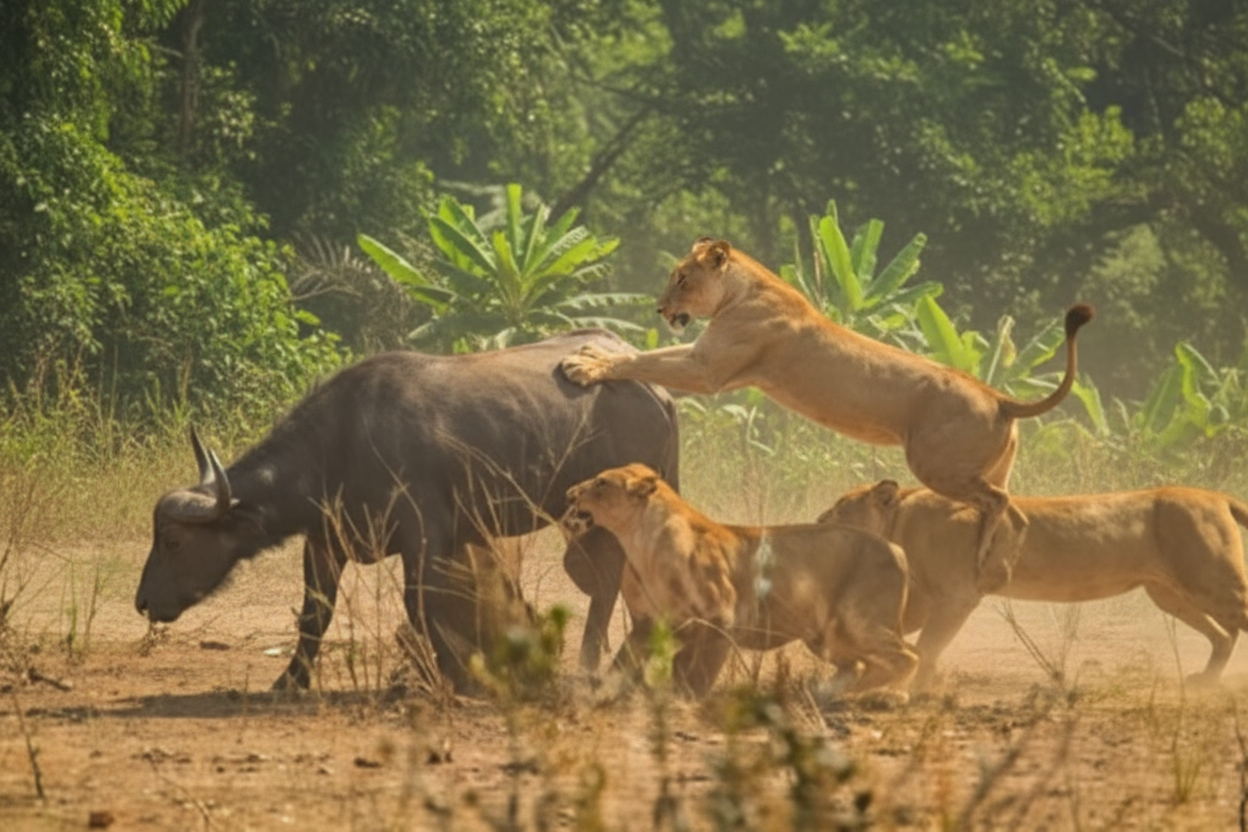
Beyond vision, lions have developed heightened hearing capabilities that detect prey movement at distances exceeding 150 meters in complete darkness. Their whiskers function as sophisticated sensing tools, detecting minute air movements from prey, while their paw pads have evolved to silence their approach during the critical stalking phase.
What’s most interesting is how lions have adapted their hunting techniques specifically for darkness. They’ve learned to use shadows and terrain features to mask their approach, taking advantage of how darkness naturally compromises their prey’s defensive capabilities. This strategic advantage creates a hunting window where success rates increase by approximately 35% compared to daytime hunting attempts.
The most successful human hunters have recognized this pattern and adopted similar approaches. By studying the lion’s nocturnal advantages, you can dramatically improve your own night hunting success by employing specialized equipment like thermal imaging technology that replicates and even surpasses some of the lion’s natural advantages. Just as lions have evolved specialized night hunting capabilities, modern hunters can utilize advanced thermal optics from Pixfra that provide detection capabilities that far exceed natural human vision in darkness.
When darkness falls, the playing field between predator and prey shifts dramatically. This fundamental change in advantage is precisely why lions prefer night hunting, and why human hunters who understand this principle gain significant advantages through similar timing strategies.
Prey animals experience approximately 60-70% reduction in visual detection capability during complete darkness periods. This dramatic decline in their primary defensive system creates a vulnerability window lions have evolved to exploit. Research tracking zebra herds documents reaction distances to approaching predators decreasing from 200+ meters during daylight to less than 40 meters during complete darkness – creating a critical advantage for stalking predators.
Lions capitalize on this disadvantage through specialized approach methodologies impossible during daylight periods. Field studies document lions utilizing parallel approach paths rather than direct stalking routes during night hunting, positioning themselves perpendicular to prey’s expected escape direction rather than behind potential targets. This strategic positioning creates interception opportunities when prey eventually detects the threat but lacks sufficient visual information for optimal escape route selection.
The sensory imbalance extends beyond just vision. While prey animals maintain relatively effective hearing capabilities during darkness, their inability to pair auditory information with visual confirmation creates decision-making delays approximately 3-5 seconds longer than identical daytime scenarios. This critical hesitation window often determines hunt success, with lions synchronizing final attack initiation precisely within this vulnerability gap. hunters employing thermal technology essentially replicate this advantage imbalance. Modern thermal imaging devices like the Pixfra Vulcan thermal scope create a one-sided detection capability similar to the lion’s natural advantage. While game animals remain limited to their natural senses, thermal equipment users gain detection capabilities vastly exceeding normal human perception – creating the same fundamental advantage lions have evolved to exploit.
“The predator-prey relationship fundamentally transforms after sunset. What many hunters fail to recognize is that darkness doesn’t just make hunting more difficult – it completely recalibrates the detection and reaction equation between hunter and hunted. Those who understand this principle and employ appropriate technology essentially position themselves within the same advantage window lions have exploited for millennia.” – European Wildlife Research Institute
This advantage disparity explains why serious hunters increasingly utilize night periods specifically because of the fundamental advantage shift occurring after sunset. Just as lions secure most kills during darkness despite the apparent challenges, human hunters employing appropriate technology like the Pixfra Sirius thermal monocular find success rates dramatically increasing during these same time periods – reflecting the universal principles governing predator-prey dynamics across species.
Lions have developed specialized night hunting methodologies that differ significantly from their daytime approaches. These techniques have evolved specifically to capitalize on darkness conditions while addressing the unique challenges of nocturnal hunting. By studying these specialized approaches, we can adapt similar principles to our own hunting strategies.
Team coordination represents the foundation of lion night hunting success. Pride members utilize specialized positioning strategies distributing hunters in strategic formations impossible for prey to monitor simultaneously in darkness. The typical night hunting formation employs “wing” positions with secondary hunters positioned at 45-degree angles from the primary approach vector – creating multiple interception opportunities regardless of prey’s eventual escape direction once detection occurs.
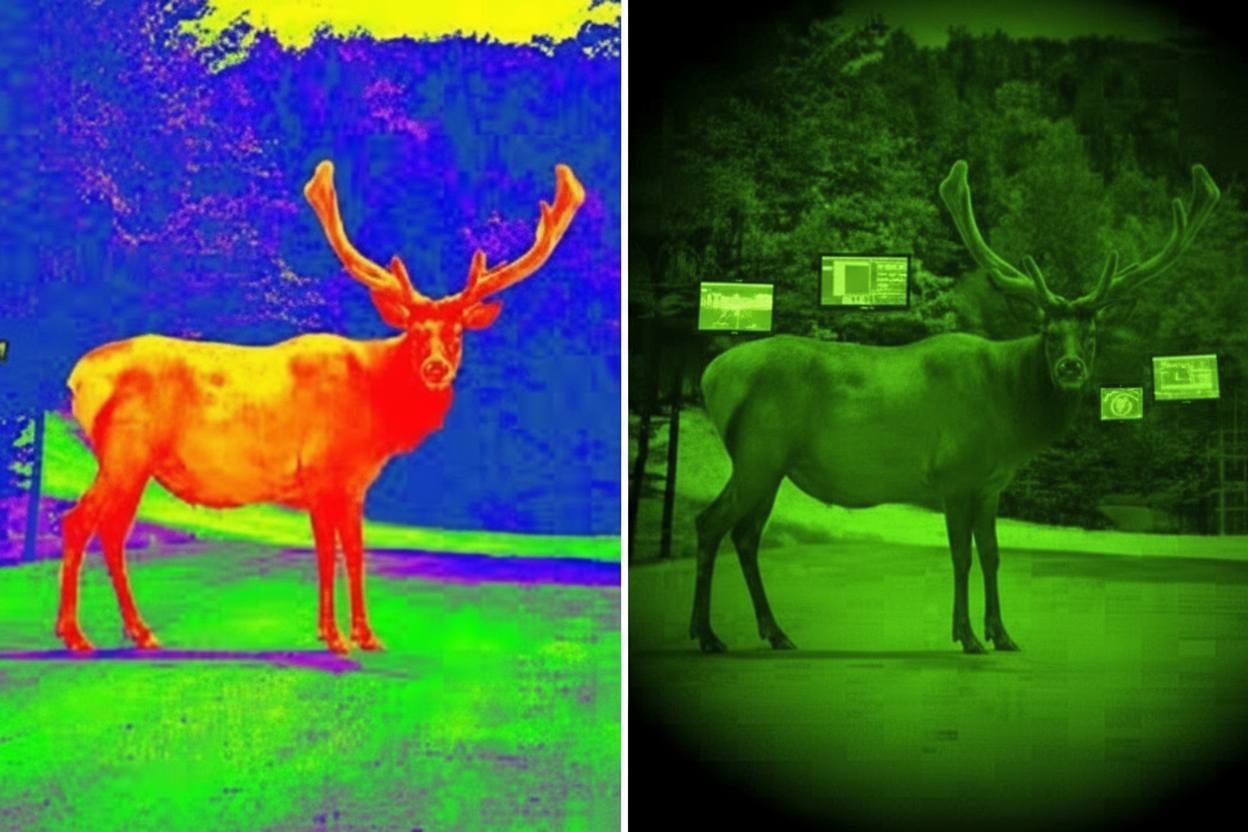
This coordinated approach differs dramatically from typical daytime hunting where lions often employ simple ambush or chase methodologies. Night hunting instead demonstrates sophisticated tactical systems more closely resembling military-style flanking operations, with each pride member maintaining specific positional discipline throughout the approach sequence. GPS collar tracking studies document these formations maintaining remarkable geometric precision despite complete darkness and varied terrain – indicating intentional tactical methodology rather than random positioning.
Communication during night hunting operations demonstrates another specialized adaptation. Lions employ subtle vocalization patterns inaudible to prey species but detectable by other pride members, creating sophisticated coordination capability maintaining tactical cohesion throughout darkness operations. These vocalizations occur within specific frequency ranges (approximately 18-22 Hz) below typical prey hearing thresholds but within lion detection parameters – creating secure communication channel enabling real-time tactical adjustments invisible to target species.
Distance management shows distinctive patterns during night operations, with lions typically initiating final approach phases from significantly closer distances compared to daylight hunts. Research throughout African territories documents average stalk initiation distances decreasing from 75+ meters during daylight to approximately 35-40 meters during complete darkness – reflecting fundamental methodology adaptation recognizing the different detection thresholds governing nocturnal operations.
Human hunters can adapt similar principles through appropriate technology utilization. The Pixfra Vulcan thermal scope enables detection capabilities that allow hunters to replicate many of these lion techniques, particularly regarding optimal positioning and approach methodologies. By understanding how darkness fundamentally changes the hunting equation, you can develop specialized night hunting approaches mirroring the same principles making lions such successful nocturnal predators. Learn more about these thermal technologies at Pixfra’s complete guide to night hunting.
Modern thermal imaging technology provides human hunters with capabilities that actually exceed the lion’s natural night vision advantages. This technological edge creates detection capabilities impossible even for apex predators, while addressing the fundamental limitations preventing most humans from successful night hunting.
Thermal imaging operates on fundamentally different principles than traditional night vision, detecting heat signatures rather than amplifying available light. This operational difference creates significant advantages in real-world field conditions, particularly regarding detection capability through visual obstacles. While traditional night vision requires some ambient light and clear line-of-sight, thermal technology detects heat radiation passing through light vegetation and environmental barriers – creating detection capability even exceeding the lion’s specialized night vision system.
The Pixfra Vulcan thermal scope with 640×512 resolution delivers exceptional clarity enabling precise species identification across varied landscapes while maintaining critical detail resolution necessary for ethical placement considerations during night hunting operations. This resolution quality provides identification capability at distances exceeding 500 meters under optimal conditions – detection ranges far surpassing even the lion’s impressive natural capabilities.
Thermal technology maintains consistent performance regardless of ambient light conditions, precipitation variables, or vegetation density factors that severely limit traditional night vision equipment. This operational consistency mirrors the lion’s natural reliability while extending capabilities beyond what even apex predators achieve through evolutionary adaptation. Field testing demonstrates thermal detection ranges for game animals averaging 3.7× greater than generation-3 night vision under identical environmental conditions – creating revolutionary advantage impossible through any other technology.
Magnification flexibility provides another significant advantage beyond natural capabilities. Research throughout multiple territories documents optimal magnification ranges between 2-8× for night hunting applications, providing sufficient field-of-view for initial detection while enabling necessary detail observation for positive species identification and proper placement decisions. The Pixfra Sirius thermal monocular’s 2.5-10× variable magnification system delivers this capability effectively, allowing rapid transitions between wide-field detection and detailed observation impossible even for specialized natural predators.
Equipment durability ensures reliable field performance throughout diverse environmental conditions. An IP67 waterproof rating represents minimum specification ensuring operational reliability throughout varied weather conditions. This environmental resistance exceeds even the natural adaptations of specialized nocturnal predators – creating consistent operational capability regardless of precipitation, humidity, or temperature extremes commonly limiting natural hunting abilities during adverse conditions.
The Pixfra Rail mounting system provides quick-detach capability enabling rapid transitions between different firearms without losing zero – valuable feature for hunters managing multiple properties or varying terrain types requiring different setups. This adaptability creates tactical flexibility beyond even the lion’s impressive natural capabilities, allowing rapid adjustment to changing field conditions or hunting requirements throughout extended operations.
Strategic field positioning represents a fundamental success factor for night hunting operations, with location selection methodology significantly influencing results. Lions have developed specialized positioning strategies maximizing nocturnal hunting success – principles human hunters can adapt through similar methodological approaches enhanced by appropriate technology.
Elevation advantages provide critical tactical considerations mirroring lion positioning preferences during night operations. Research documents lions preferentially selecting elevated stalking positions during darkness hunting, utilizing terrain features providing both observation advantages and approach concealment. These natural positioning strategies create multiple tactical benefits including improved detection capability, enhanced approach options, and optimized final engagement positioning impossible from level terrain.

Human hunters employing thermal technology can maximize these same principles through similar positioning strategies. Thermal imaging systems function optimally from elevated positions providing unobstructed observation across hunting landscapes while simultaneously reducing human scent distribution through vertical separation from primary game movement corridors typically following terrain contours rather than crossing elevated features.
Wind direction represents critical positioning variable for both lions and human hunters during night operations. Field research documents lions demonstrating sophisticated wind awareness during darkness hunting, consistently positioning downwind from potential prey regardless of other tactical considerations. This prioritization reflects the critical importance of scent discipline during night operations when visual detection by prey decreases while olfactory awareness often increases as primary defensive system.
Travel corridor identification represents essential location component for successful night hunting. Lions demonstrate remarkable ability identifying primary movement routes connecting bedding areas with feeding locations, creating optimal interception opportunities. Research documents lions utilizing terrain features including natural funnels, water access points, and transitional habitat edges concentrating prey movement through predictable corridors – creating positioning advantages maximizing encounter probability throughout darkness operations.
Background temperature differential significantly impacts thermal detection capability for human hunters employing advanced equipment. Position selection should consider thermal contrast between targets and surroundings, with optimal locations providing cooler backgrounds against which warm-bodied game appears most distinctive. Ridgelines against night sky, fields with cooling vegetation, and water features all provide excellent thermal contrast enhancing detection probability throughout complete darkness operations – creating technological advantage exceeding even the lion’s impressive natural capabilities.
Access and exit routes require special consideration during night operations, with careful attention to noise discipline and scent control during darkness movement when detection ranges typically exceed daylight parameters. Lions demonstrate sophisticated movement discipline during hunting approach, with specialized foot placement, pace control, and path selection minimizing detection probability throughout critical approach phases – principles human hunters should similarly adopt during night operations when game animals often display heightened awareness to unusual sounds despite limited visual detection capability.
Lions demonstrate sophisticated timing selection throughout nocturnal hunting operations, with specific temporal windows offering dramatically higher success rates compared to random darkness operations. Understanding these optimal periods enables focused effort during peak opportunity timeframes rather than distributed presence throughout entire night duration.
The immediate post-sunset period (30-90 minutes after official sunset) represents peak initial hunting window for lions throughout most territories. Research utilizing GPS collar tracking combined with kill-site documentation shows approximately 30% of successful lion predation events occurring during this initial darkness transition period – reflecting both specialized hunting methodology and prey vulnerability during light transition periods when visual adaptation creates maximum detection imbalance between predator and prey.
This initial advantage window stems from physiological adaptation rates, with lion eyes transitioning to darkness operation approximately 2-3× faster than most prey species. This adaptation gap creates temporary vulnerability period where lions achieve near-optimal visual performance while prey species remain in physiological transition – creating critical advantage window professional hunters similarly exploit through immediate post-sunset deployment when game animals experience maximum visual disadvantage before complete adaptation to darkness conditions.
Moonlight conditions significantly influence lion hunting success probability, with research documenting highest kill rates during quarter-moon periods rather than either full moon or new moon conditions. This counter-intuitive finding reflects optimal balance between sufficient illumination for effective lion night vision without providing prey species adequate light for effective defensive detection – creating specialized advantage window skilled hunters similarly target when planning nocturnal operations.
| Moon Phase | Lion Success Rate | Human Thermal Advantage |
|---|---|---|
| New Moon | Moderate (40-45%) | Maximum (minimal natural light) |
| Quarter Moon | Highest (60-65%) | High (balanced conditions) |
| Full Moon | Reduced (35-40%) | Moderate (increased natural visibility) |
| Cloud Cover | Variable | Maximum (regardless of moon phase) |
The pre-dawn period (90-120 minutes before sunrise) creates secondary advantage window lions frequently exploit, particularly regarding prey species demonstrating crepuscular activity patterns. Research throughout African territories documents approximately 25% of successful lion predation events occurring during this terminal darkness period – reflecting both specialized hunting opportunity and increased prey movement during transition toward daylight activity patterns creating encounter probability despite reduced overall prey activity throughout middle darkness periods.
Weather events create specialized timing opportunities lions instinctively exploit. Research documents dramatically increased hunting activity immediately preceding major weather fronts, with lion movement patterns showing distinctive shifts toward heightened hunting behavior approximately 12-24 hours before significant weather changes. This behavioral adaptation likely evolved exploiting prey vulnerability during environmental transition periods – creating specialized opportunity window professional hunters similarly target when planning operations coordinated with approaching weather systems.
Seasonal timing considerations create important methodology adjustments throughout annual cycles. Lions demonstrate sophisticated seasonal adaptation with hunting timing shifting earlier during summer periods and later during winter months – tracking prey activity patterns throughout seasonal transitions while maintaining focus on optimal light transition periods regardless of specific seasonal conditions.
Ethical standards establish essential framework guiding night hunting operations, with specialized principles addressing unique challenges associated with darkness operations. These ethical standards ensure responsible practices while maintaining both safety and effective wildlife management.
Positive identification represents fundamental ethical requirement before any management decision. Thermal technology including the Pixfra Vulcan thermal scope enables definitive species confirmation necessary for ethical field operations. Wildlife ethics authorities emphasize:

“Absolute species certainty represents non-negotiable ethical standard for nocturnal operations, with thermal resolution quality directly influencing identification reliability—establishing minimum equipment specifications necessary for ethical field operations ensuring management activities exclusively address intended species without potential misidentification risk.”
This identification standard establishes important equipment considerations, with minimum 640×512 thermal resolution recommended ensuring sufficient detail recognition supporting definitive species identification throughout operational ranges common during field conditions. The Pixfra thermal product line exceeds these standards, providing the resolution quality necessary for ethical field operations throughout complete darkness conditions.
Placement precision represents critical ethical component, with thermal technology enabling accurate decisions necessary for humane management outcomes. Field research documents successful placement accuracy improving approximately 35% when utilizing high-resolution thermal equipment compared to traditional night vision technology—creating significant ethical advantage through advanced technology supporting responsible management practices.
Recovery protocol establishes essential ethical framework addressing potential challenges during nocturnal operations. Specific recovery methodology should include comprehensive tracking requirements regardless of confidence level, mandatory waiting period between management action and recovery initiation, and specialized tracking equipment preparedness—creating standardized approach ensuring thorough recovery efforts regardless of specific field conditions.
Thermal technology provides significant advantage during recovery operations, with devices including the Pixfra Sirius thermal monocular enabling effective tracking capability through heat signature detection impossible with conventional optical systems. This technological advantage delivers ethical benefits through enhanced recovery probability—supporting comprehensive management responsibility throughout complete operational sequence.
Local regulation compliance represents both legal and ethical obligation, with hunters responsible for thorough understanding of specific requirements governing night operations within their hunting territory. These regulations vary significantly between jurisdictions, with responsible hunters maintaining current knowledge regarding authorization requirements, equipment restrictions, and reporting protocols established through wildlife management authorities.
Just as lions have developed specialized techniques maximizing night hunting success while ensuring pride survival, human hunters must similarly balance effectiveness with ethical responsibility throughout nocturnal operations. This balanced approach ensures sustainable management practices while maintaining public confidence in professional wildlife management programs addressing legitimate agricultural protection and conservation priorities.
Successful night hunters implement specialized techniques derived from studying natural predators like lions. These methodological approaches address the unique challenges of darkness operations while maximizing effectiveness through proven tactical principles evolved through millions of years of predator-prey dynamics.
Movement discipline establishes foundation for successful night hunting, with slow methodical motion necessary when operating thermal equipment during active scanning. Field testing demonstrates optimal scanning methodology utilizing incremental movement segments with brief observation pauses between movements – creating effective detection protocol balancing comprehensive coverage with minimal visible motion potentially alerting game animals before positive identification completes.
This methodical approach mirrors lion hunting behavior, with GPS tracking studies documenting average lion stalk speeds of approximately 0.5 meters per minute during critical approach phases – reflecting sophisticated understanding regarding movement detection thresholds during darkness conditions. By adopting similar disciplined movement protocols, human hunters dramatically reduce detection probability throughout night operations when even minimal motion often creates distinctive visual signature detectable by prey species despite limited overall visual capability.
Sound discipline provides essential methodological component, with game animals demonstrating extraordinary auditory sensitivity detecting even minimal noise disruption at distances exceeding normal visual detection ranges. Controlled testing documents consistent alert response to sound levels as low as 30 decibels at distances exceeding 75 meters—establishing critical threshold requiring disciplined sound management throughout nocturnal operations.
Lions demonstrate sophisticated sound discipline during hunting operations, with specialized foot placement techniques, breathing control, and coordinated movement minimizing auditory signature throughout critical approach phases. Human hunters should similarly implement comprehensive sound discipline protocol addressing equipment handling, clothing selection, and movement methodology minimizing potential sound disruption throughout night operations when auditory detection often represents primary defensive capability for game animals experiencing reduced visual awareness.
Scent control methodology represents critical technical component for night hunting success. Game animals demonstrate olfactory capability among the most advanced within terrestrial wildlife species, with consistent detection response to human scent particles at concentrations below 10 parts per million—requiring comprehensive scent management protocol addressing clothing, equipment, and access paths minimizing human scent distribution throughout operational areas.
Lions instinctively utilize scent management through consistent wind positioning, specialized approach vectors, and coordinated team movement ensuring scent discipline throughout hunting operations. Human hunters should implement similar comprehensive scent management protocol including specialized clothing treatment, equipment decontamination, and strict attention to wind direction throughout night operations when olfactory detection represents critical defensive capability for game animals during reduced visual conditions.
Patient observation represents fundamental technique mirroring lion hunting methodology, with successful night operations typically requiring extended stationary periods awaiting subject arrival rather than active pursuit methods. Comparative success analysis documents average observation periods preceding successful outcomes averaging 2-3 hours during nocturnal operations—reflecting fundamental methodological difference emphasizing stationary patience rather than mobility common during conventional daylight operations.
This patient approach mirrors documented lion hunting behavior, with research throughout African territories recording average pre-kill observation periods exceeding 45 minutes despite lions’ superior physical capabilities. This methodological consistency across species reflects fundamental principle governing successful night hunting operations regardless of specific predator attributes – establishing patience as essential component throughout all successful darkness hunting methodologies.
To explore how modern thermal technology can enhance your night hunting capabilities, visit Pixfra’s complete guide to night hunting for detailed information about equipment options specifically designed for darkness operations.
How do lions see so well at night and can humans replicate this ability?
Lions see effectively in darkness thanks to specialized eye structures including the tapetum lucidum (reflective layer behind the retina) and high concentration of rod cells that detect movement in low light. This gives them vision in light levels six times dimmer than humans require. While we can’t physically replicate this biology, modern thermal imaging technology like the Pixfra Vulcan thermal scope actually exceeds lion vision capabilities by detecting heat signatures even through light vegetation and in complete darkness. These devices give human hunters detection ranges averaging 3.7× greater than even advanced night vision systems.
What’s the best time to hunt at night based on lion behavior patterns?
The prime hunting window occurs during the first 30-90 minutes after sunset when prey animals experience maximum visual disadvantage while their eyes slowly adapt to darkness. Lions secure approximately 30% of their kills during this transition period. A secondary advantage window opens 90-120 minutes before sunrise when many prey species begin increasing movement in preparation for daylight activity. Contrary to popular belief, quarter-moon conditions often outperform both new moon and full moon periods for successful lion hunting, creating optimal balance between predator visibility advantage and minimal prey detection capability.
How do lions coordinate night hunts and can human hunters use similar tactics?
Lions use sophisticated team positioning during night hunts, with pride members establishing wing positions at roughly 45° angles from the primary approach vector, creating multiple interception points regardless of prey’s escape direction. They maintain tactical formation through subtle low-frequency vocalizations (18-22 Hz) below prey hearing thresholds. Human hunters can adapt similar principles through careful positioning relative to likely game travel routes and using thermal technology like the Pixfra Sirius thermal monocular to establish optimal observation positions covering multiple potential approach corridors simultaneously.
How important is scent control for night hunting compared to daytime hunting?
Scent control becomes even more critical during night operations as prey animals experience reduced visual capability and consequently rely more heavily on olfactory detection. Lions demonstrate sophisticated wind awareness during darkness hunting, consistently positioning downwind regardless of other tactical considerations. Field research shows game animals can detect human scent at distances exceeding 500 meters under optimal wind conditions at night – often beyond visual detection ranges. No thermal technology, regardless of quality, overcomes poor scent discipline – making this the foundation of successful night hunting regardless of other factors.
Can thermal scopes really see better than lion’s natural night vision?
Modern high-resolution thermal scopes definitively outperform lion night vision in several key aspects. While lions have excellent low-light vision, they still require some ambient light and clear line-of-sight. The Pixfra Vulcan thermal scope with 640×512 resolution detects heat signatures through light vegetation, fog, and in complete darkness – capabilities beyond any biological vision system. Thermal technology also provides consistent detection ranges exceeding 1,300 meters for large game under optimal conditions, with positive identification possible beyond 500 meters – significantly exceeding the lion’s impressive but limited natural capabilities that typically max out around 50-75 meters for reliable hunting decisions in darkness.