
















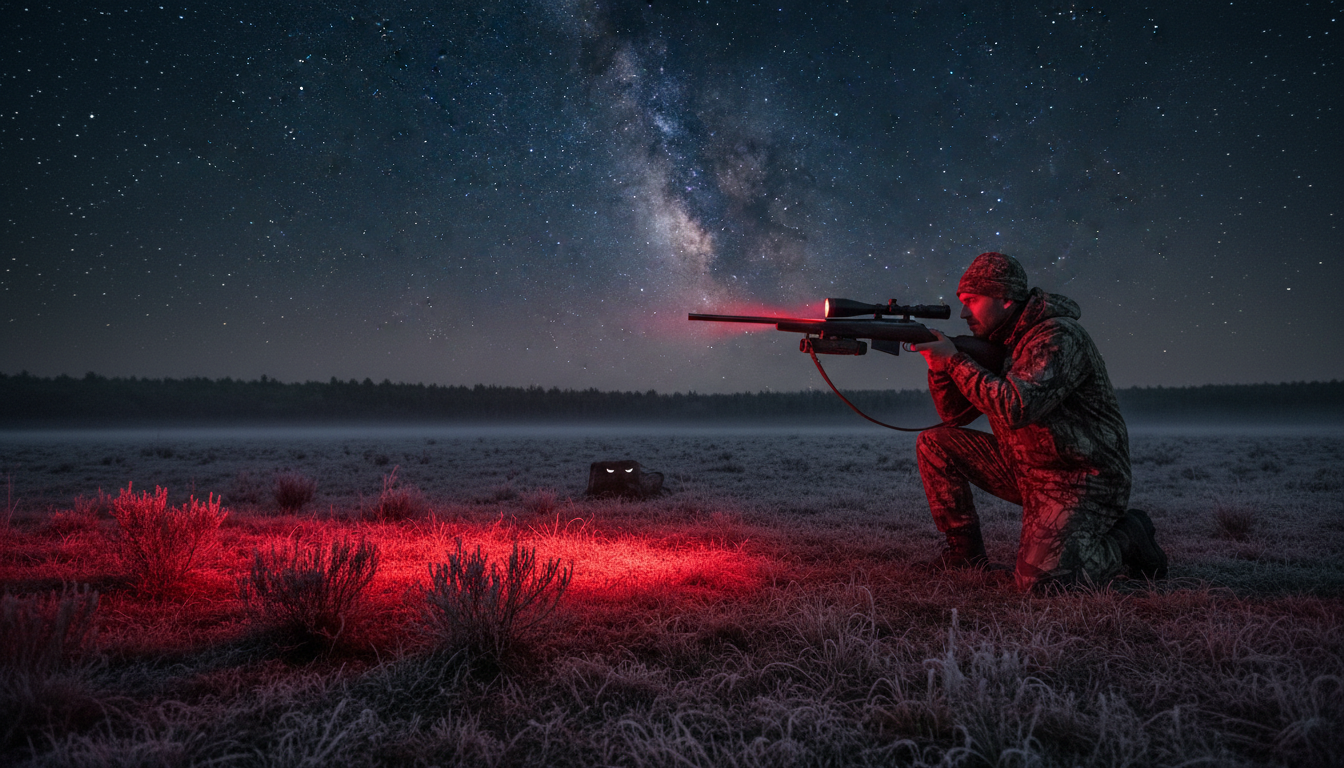
When you’re out hunting coyotes after dark, having the right light can make or break your entire night. We’ve spent countless hours in the field testing different hunting lights, and we know how frustrating it is to spook a coyote because your light wasn’t up to the task. The good news? Today’s hunting lights are better than ever, with advanced LED technology that gives you the brightness you need without sending every predator within a mile running for cover. Whether you’re a seasoned predator hunter or just getting started with nighttime pursuits, choosing the right light involves understanding color options, brightness levels, beam patterns, and mounting systems. Before we dive into specific recommendations, it’s worth noting that modern technology like thermal monoculars has changed the game for many hunters, but traditional hunting lights still play a crucial role in shot placement and ethical hunting practices.
Why Light Color Matters for Coyote Hunting
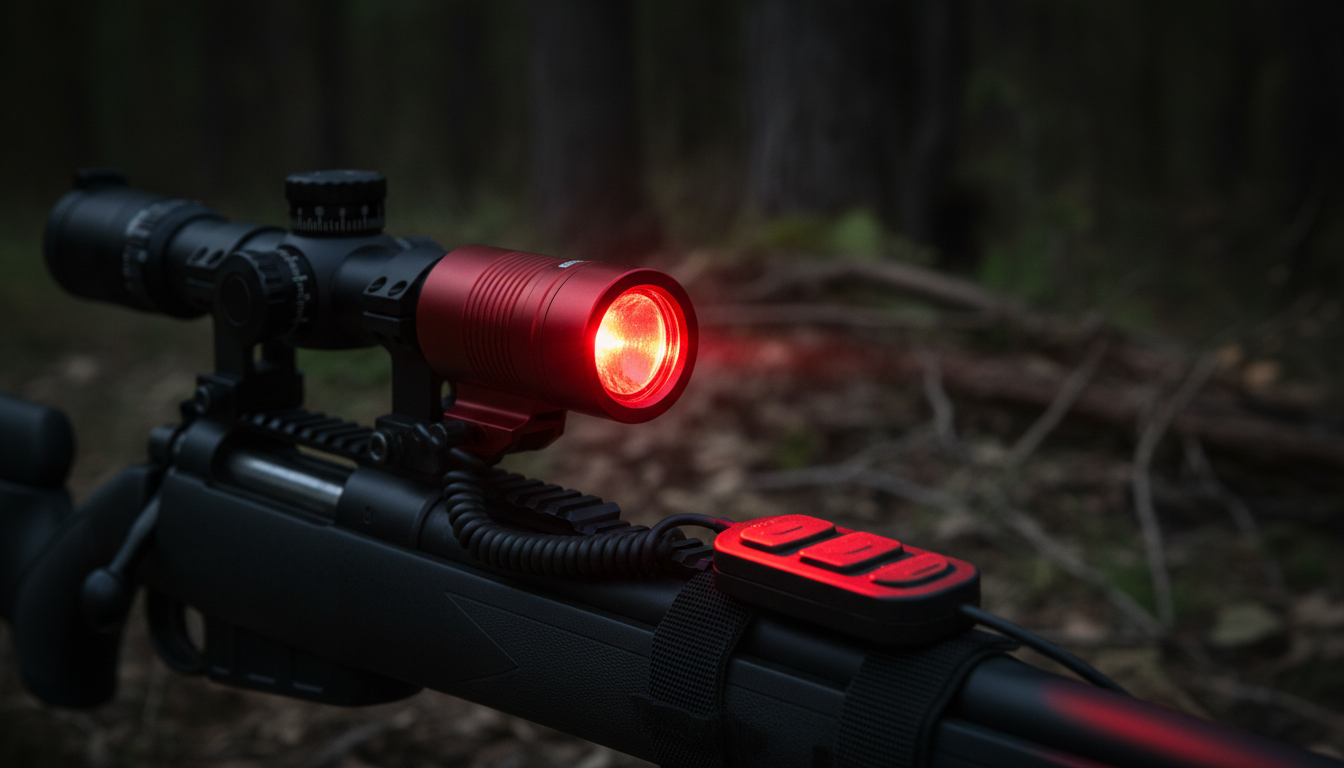
The color of your hunting light isn’t just about personal preference—it directly affects how coyotes react when you illuminate them. Red lights have been the go-to choice for predator hunters for decades, and there’s solid reasoning behind this. Coyotes have dichromatic vision, meaning they see the world primarily in shades of blue and yellow. They’re far less sensitive to red wavelengths, which is why a red light appears much dimmer to them than it does to us. This gives you a significant advantage when scanning fields or making that final shot.
Green lights have gained popularity in recent years because they offer a middle ground between visibility and stealth. While coyotes can see green better than red, green lights provide superior clarity for human eyes, making it easier to identify your target and assess the situation. Many experienced hunters report that green lights work especially well in areas with dense vegetation, where the enhanced contrast helps you pick out movement more easily. White lights are the brightest option and give you the best overall visibility, but they’re also the most likely to spook wary coyotes. Some hunters save white lights for the moment of the shot, using colored lights for scanning and switching to white for maximum clarity when it counts.
Lumens and Beam Distance
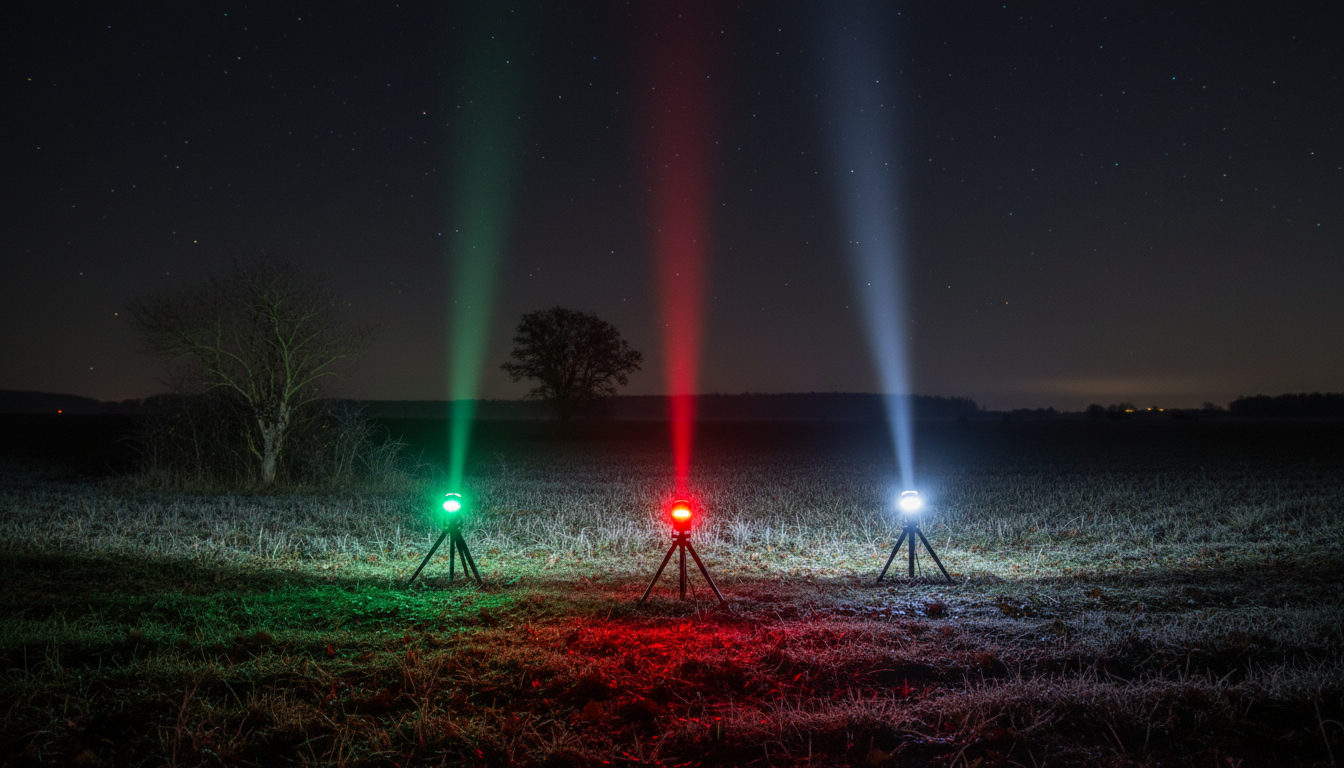
When you’re shopping for a hunting light, you’ll see lumens thrown around as the main specification, but raw lumen count doesn’t tell the whole story. Lumens measure the total amount of light output, but for hunting purposes, you need to pay equal attention to beam distance and beam pattern. A light with 1000 lumens and a focused beam will reach much farther than a 1000-lumen light with a flood pattern. For coyote hunting, you typically want a light that can reach at least 300-500 yards, though your actual shooting distance will likely be considerably less.
Most serious coyote hunters look for lights in the 500-1000 lumen range with a focused or mixed beam pattern. This gives you enough power to identify targets at distance while still maintaining good peripheral vision for scanning. Keep in mind that brighter isn’t always better—an overly powerful light can actually make it harder to see details because of glare and reflection. The sweet spot depends on your hunting environment. In open country with long sight lines, you might want more throw. In timber or broken terrain, a wider beam with moderate power often works better. Battery life also decreases as brightness increases, so you need to find a balance that works for your typical hunting sessions.
Red vs Green vs White: Which Color Should You Choose?
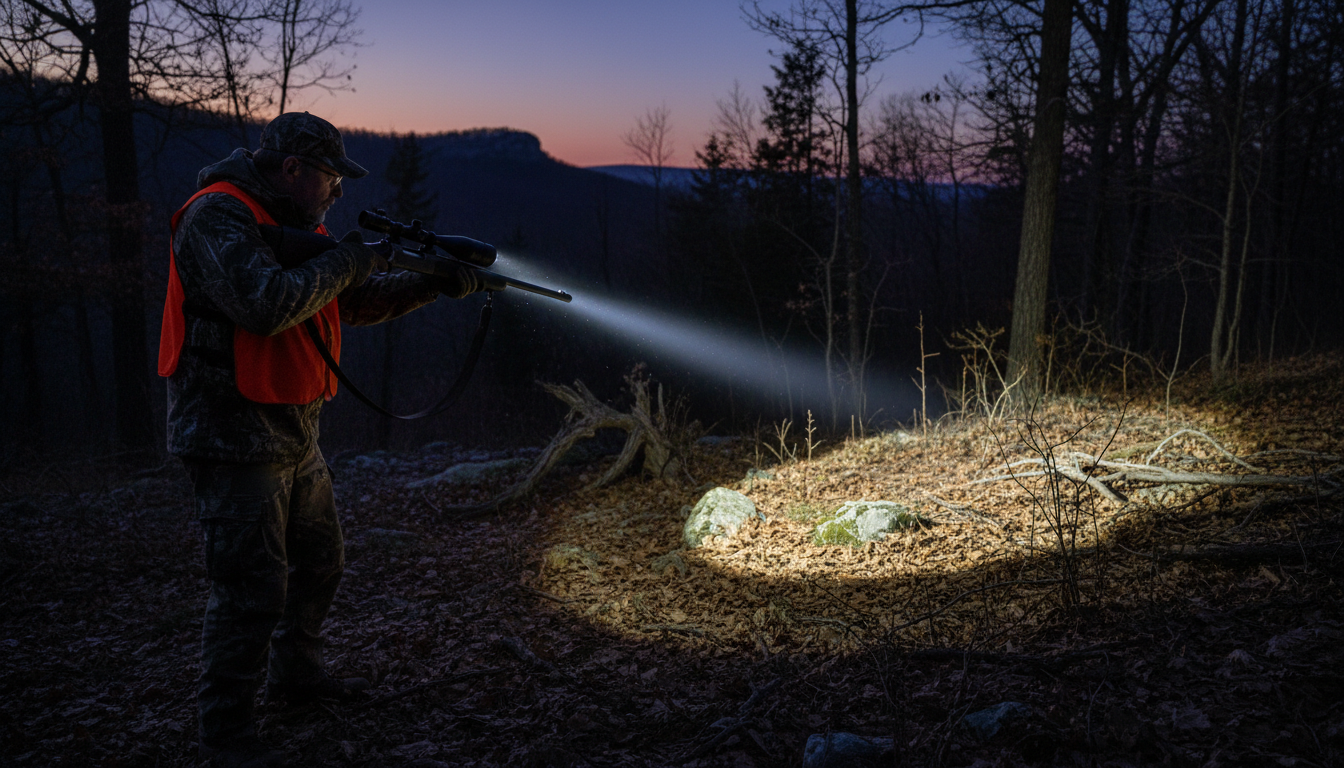
This debate rages on in hunting forums everywhere, and honestly, there’s no single right answer for everyone. Red lights remain the most popular choice among traditional predator hunters because they offer the best stealth factor. When you shine a red light on a coyote, especially from a distance, they often show minimal reaction. They might pause or look around, but they rarely bolt immediately like they would with a white light. This gives you precious seconds to assess the shot and settle your crosshairs. Red lights also preserve your night vision better than other colors, which matters if you’re hunting in areas where you might need to navigate in the dark between setups.
Green lights have carved out a significant following because of their superior performance for human eyes. The human eye is most sensitive to green wavelengths, which means a green light at the same power level as a red light will appear much brighter and clearer to you. This translates to better target identification and easier scanning. While coyotes can theoretically see green better than red, many hunters report excellent results with green lights, especially when calling in thick cover where you need every advantage to spot movement quickly. Some experts believe that coyote reactions have more to do with light intensity and movement than color alone.
White lights deliver unmatched clarity and color rendering, making species identification absolutely certain. This matters in areas where you might encounter non-target animals or where regulations require positive identification before shooting. The downside is that white lights are definitely the most visible to coyotes. Many experienced hunters use a combination approach: they scan with red or green and then switch to white for the final moments before the shot. This strategy gives you the best of both worlds—stealth when you need it and maximum visibility when accuracy matters most.
Best Mounting Options: Gun-Mounted vs Handheld vs Headlamp
How you mount or carry your hunting light significantly impacts your success rate and hunting style. Gun-mounted lights are the most popular choice for serious predator hunters because they keep your hands free and ensure your light is always pointed exactly where your rifle is aimed. This coordination is critical when a coyote comes in fast or when you’re dealing with multiple animals. Quality gun-mounted systems attach to your rifle’s Picatinny rail or scope rings and offer quick-release mechanisms so you can adjust or remove the light as needed. The main downside is added weight on your rifle and the need for remote pressure switches, which add another element to manage.
Handheld spotlights give you maximum flexibility and often deliver the most powerful beam distances. They’re excellent for scanning large areas before a stand or checking out suspicious movement without moving your rifle. However, when it comes time to shoot, you face a dilemma: set the light down (and possibly lose your illumination angle) or try to manage both the light and your rifle simultaneously. Some hunters work with a partner where one person handles the light while the other shoots, which is arguably the most effective setup. Handheld lights also excel as backup options or for use when you’re calling in heavy cover where you might need to react quickly in any direction.
Headlamps offer the ultimate in hands-free convenience and are increasingly popular among mobile hunters who cover lots of ground. Modern hunting headlamps come with red, green, and white LED options, and they keep your hands completely free for carrying your rifle, using calls, or navigating terrain. The challenge with headlamps is that your light always points where your head points, which isn’t necessarily where your rifle points. This can create awkward situations when you need to illuminate a coyote while looking through your scope. Many hunters use headlamps for general tasks and navigation but switch to gun-mounted or handheld options when they’re actually set up and calling.
Top Features to Look for in a Coyote Hunting Light
Durability ranks at the top of the must-have list because hunting lights take a beating in the field. Look for lights with aluminum or reinforced polymer bodies, proper waterproof ratings (IPX7 or better), and impact resistance. You’ll likely drop your light, bang it against equipment, and expose it to rain, snow, and temperature extremes. Cheap lights fail exactly when you need them most. Quality manufacturers back their products with solid warranties, which tells you something about their confidence in durability.
Battery life and power options deserve serious consideration. Nothing’s worse than having your light die in the middle of a productive night. Rechargeable lithium-ion batteries are convenient and cost-effective long-term, but they require planning and access to charging facilities. Lights that run on standard AA or CR123 batteries offer the advantage of field-swappable power—just carry spares and you’re good for days. Many modern lights offer multiple brightness modes, which lets you conserve battery when you don’t need full power. A good hunting light should give you at least 2-3 hours of runtime at the brightness level you’ll actually use in the field.
Beam adjustability and multiple color options in one package add versatility without requiring you to carry multiple lights. Some of the best hunting lights on the market today feature interchangeable lens covers or built-in LED arrays that let you switch between red, green, and white at the press of a button. Zoom or focus functions that let you adjust between spot and flood beams are also valuable. You might want a tight spot for long-range scanning and a wider flood for checking nearby cover. Remote pressure switches are essential for gun-mounted setups, and the quality of these switches varies widely. Look for switches with positive tactile feedback and durable cords that won’t fail after a season of use.
Brightness Levels and Beam Patterns Explained
Understanding how brightness levels and beam patterns work together helps you match a light to your specific hunting situations. Beam patterns generally fall into three categories: spot, flood, and combination. A spot beam concentrates light into a narrow, focused column that reaches maximum distance. This pattern works great for scanning open fields or checking distant treelines, but it can be like looking through a tunnel—you see what’s directly in front of you but miss peripheral movement. Flood beams spread light across a wide area with less distance penetration. They’re excellent for close-range work in timber or when a coyote is working in close and you need to track movement across a broader field of view.
Combination beams, sometimes called mixed or hybrid beams, attempt to give you both distance and width. These patterns typically feature a bright central hotspot for distance work surrounded by a softer corona of spill light that maintains peripheral awareness. Many hunters find this the most versatile pattern for predator hunting because you can scan at distance while still catching movement to the sides. Some lights offer adjustable focus that lets you dial in the exact beam pattern you want, though this adds mechanical complexity that can potentially fail.
The relationship between brightness, distance, and usability isn’t linear. Doubling the lumens doesn’t double your effective range, and at some point, more brightness actually hurts more than it helps. Excessive brightness creates glare, washes out details, and can actually make it harder to see subtle movements or features. Most experienced coyote hunters settle on lights in the 500-800 lumen range for colored lights and 800-1200 lumens for white lights, with multiple brightness modes to adjust based on conditions.
Night Hunting Lights: Setup and Technique Tips
How you use your hunting light matters just as much as which light you choose. One of the biggest mistakes new predator hunters make is leaving their light on constantly while calling. This reduces your battery life and potentially educates wary coyotes that might be hanging up just outside your beam. Instead, use an intermittent scanning technique: call for 30-60 seconds, then scan with your light for 10-15 seconds, then turn the light off and wait. This pattern lets you cover ground without constantly announcing your presence.
When you do illuminate a coyote, avoid the temptation to swing your light around erratically. Sudden, jerky movements with your light beam spook animals far more than steady illumination. If a coyote is approaching and you spot it with your light, keep the beam steady and let the animal continue its approach. If it stops and stares, which is common, keep the light on it and prepare for your shot. Many coyotes will stand still under light for several seconds, giving you time to aim carefully. If you’re using a handheld light, practice your shooting position beforehand so you know exactly how you’ll manage both the light and rifle when the moment comes.
For gun-mounted lights, zero your light beam to match your rifle’s point of impact at a specific distance—typically 100 yards. This ensures that when you’re aimed on target, your light is illuminating exactly where you’re shooting. Some hunters prefer to have their light positioned slightly to the side rather than directly above or below the bore, which can reduce shadows and give better definition. Remote switch placement is also critical. Position the switch where you can activate it naturally without breaking your shooting grip or having to shift your hand position. Practice dry runs in daylight until light activation becomes second nature.
Battery Options: Rechargeable vs Replaceable
The battery debate in hunting lights mirrors the same discussion in the flashlight world, but hunting adds specific considerations. Rechargeable lithium-ion batteries offer the best performance per weight, highest capacity, and lowest long-term cost. Modern Li-ion cells deliver consistent brightness throughout their discharge cycle and can be recharged hundreds of times. If you hunt from a base camp or vehicle where you can charge between outings, rechargeable systems make tremendous sense. They’re also better for the environment since you’re not constantly discarding disposable batteries.
However, rechargeable systems require planning and infrastructure. If you’re on an extended hunting trip far from power sources, or if you simply forget to charge your batteries between hunts, you’re stuck. This is where replaceable batteries shine—you can carry spares and swap them in seconds. CR123A lithium batteries are popular in hunting lights because they offer excellent cold-weather performance and long shelf life. They’re more expensive per use than rechargeables, but the reliability and convenience matter when you’re miles from civilization. AA batteries are even more accessible since you can buy them almost anywhere, though they generally don’t perform as well as CR123s in terms of output and cold tolerance.
Some of the best hunting lights offer hybrid systems that accept both rechargeable and disposable batteries. This flexibility means you can use rechargeables for regular hunting and keep disposable batteries as backup or for extended trips. Whatever system you choose, always carry spare batteries or a backup light. Murphy’s Law applies doubly to hunting equipment—lights fail when you need them most, usually right when a coyote is coming in. Smart hunters carry redundancy.
Our Top Recommendations for Different Hunting Styles
For the mobile hunter who covers lots of ground and sets up frequently, a combination of a good headlamp and a gun-mounted light delivers the best results. Use the headlamp for navigation, setting up equipment, and general tasks, then switch to the gun-mounted light when you’re actively calling and scanning. This setup keeps your hands free for carrying gear, using electronic or hand calls, and managing your rifle. Look for gun-mounted lights in the 600-800 lumen range with both red and green LED options, and choose headlamps with similar color choices plus white for camp tasks.
Static hunters who set up in blinds or use the same stands repeatedly often prefer the power and flexibility of handheld spotlights. These hunters can set up shooting sticks or rests, position their spotlight on a tripod or mount, and create a more controlled shooting environment. In this setup, maximum beam distance becomes more important since you’re covering the same territory repeatedly and might be working longer sight lines. Spotlights in the 1000+ lumen range with focused beams excel here. Having a hunting partner who handles the spotlight while you focus on shooting dramatically increases success rates in this scenario.
For those hunting in pressured areas where coyotes are educated and extremely wary, stealth matters more than raw power. Red lights in the 400-600 lumen range, used sparingly and strategically, work better than blasting high-powered beams across the landscape. These situations call for gun-mounted lights with excellent beam quality that delivers maximum effective illumination with minimum actual light output. Quality optics and LED selection matter more than raw lumens. Some specialized predator hunting lights are specifically designed for this application, with carefully tuned beam patterns that balance distance and discretion.
Accessories That Enhance Your Lighting Setup
Remote pressure switches transform gun-mounted lights from awkward to essential. The switch lets you control your light without breaking your shooting grip or moving your hand. Quality matters enormously here—cheap switches fail regularly, often at the worst possible moment. Look for switches with coiled cords that stay out of the way, durable construction, and positive on/off feedback. Some advanced systems offer multiple activation modes (momentary, constant-on, and strobe) controlled through different press patterns.
Color filters or interchangeable lenses expand a single light’s versatility without requiring multiple complete lights. Many lights come with flip-up filters or screw-on lens covers in red, green, and sometimes amber. This lets you switch colors based on conditions, animal behavior, or personal preference. Some hunters carry multiple filters even if their light has built-in color options, since filters can add another layer of light control and beam modification. Diffusion filters that soften hard beam edges are also worth considering for close-range work.
Mounting solutions beyond basic scope rail mounts include barrel clamps, adjustable offset mounts, and magnetic mounts. Offset mounts position your light to the side of your scope, which some hunters prefer for reducing shadows and improving beam angle. Adjustable mounts let you fine-tune your light position without permanent modification to your rifle. Quick-detach systems are valuable if you use the same light on multiple rifles or if you want to remove the light for other uses. Quality mounts are rigid, hold zero, and survive recoil without loosening.
Legal and Ethical Considerations for Night Hunting
Before you invest in any night hunting equipment, thoroughly research your local regulations. Night hunting laws vary dramatically by state and even by county. Some states prohibit all night hunting, others allow it only for specific species with permits, and some have wide-open seasons for predators. Artificial light regulations can be particularly complex—some jurisdictions allow lights attached to firearms but prohibit handheld spotlights, or vice versa. Some areas restrict certain light colors or brightness levels. Ignorance isn’t a defense, so do your homework before heading out.
Ethical considerations extend beyond legal requirements. Night hunting demands absolute certainty in target identification because visibility is inherently limited. Using adequate lighting is actually an ethical requirement—you need enough light to be completely certain of your target species, to assess whether it’s a legal animal, and to make an accurate, humane shot. This is why many ethical hunters prefer white lights for the final moment before shooting, even if they use colored lights for scanning. Target identification errors are inexcusable and can have serious legal and ecological consequences.
Landowner relations also factor into night hunting ethics. Even in states where night hunting is legal, be considerate of neighbors and other landowners who might be disturbed by lights sweeping across their property or shots in the night. Communicate with adjacent landowners, stay well within your permission boundaries, and hunt responsibly. Building positive relationships with landowners and neighbors ensures continued access and helps maintain the reputation of the hunting community.
Maintenance and Care for Your Hunting Lights
Proper care extends the life of your hunting lights and ensures they work when you need them. After each hunt, inspect your light for damage, clean off any mud or debris, and check that all O-rings and seals are intact. Even waterproof lights can fail if seals are compromised. Dry off your light thoroughly if it got wet, and store it with battery contacts clean and corrosion-free. Many hunters remove batteries during extended storage periods to prevent corrosion from battery leakage, though this is less of an issue with quality lithium cells.
For rechargeable lights, follow proper charging protocols. Lithium-ion batteries perform best when kept between 20-80% charge for storage. Fully discharging them regularly or keeping them at 100% charge for extended periods reduces overall lifespan. Most quality hunting lights have built-in charging protection, but it still pays to unplug them once charged rather than leaving them on the charger indefinitely. Keep spare O-rings and know how to disassemble and maintain your light’s waterproof seals. A small amount of silicone grease on O-rings maintains their flexibility and sealing performance.
Lens care often gets overlooked but matters significantly for beam quality. Scratched or dirty lenses scatter light, reduce effective distance, and create glare. Use proper lens cleaning solutions and soft cloths, never abrasive materials or harsh chemicals. Some hunters apply lens protectors or protective films to expensive lights, though these can slightly affect beam quality. Store your lights in padded cases or dedicated compartments rather than loose in a gear bag where they can get scratched or damaged. With proper care, a quality hunting light will provide years of reliable service.
Frequently Asked Questions
What’s the best color light for coyote hunting at night? Red lights remain the most popular choice because coyotes are less sensitive to red wavelengths, making them harder to spook. However, green lights offer better visibility for human eyes and work well in many situations. Many experienced hunters carry both colors or use lights with multiple color options to adapt to different scenarios.
How many lumens do I need for night coyote hunting? Most hunters find that 500-800 lumens provides the sweet spot for colored lights (red or green), giving enough brightness to identify targets at 200-400 yards without excessive glare. White lights can go higher, up to 1000-1200 lumens, since they’re typically used briefly for final shot confirmation.
Should I use a gun-mounted light or handheld spotlight for coyotes? Gun-mounted lights are generally more effective for solo hunters because they keep your hands free and ensure your light always points where your rifle aims. Handheld spotlights work great if you’re hunting with a partner or if you need maximum beam distance for scanning large areas.
Will a bright hunting light scare away coyotes? It depends on the light color, brightness, and how you use it. Red lights used intermittently tend to spook coyotes less than constant white light. Sudden movements with your light beam alarm coyotes more than steady illumination. In heavily hunted areas, coyotes may be conditioned to avoid lights regardless of color.
Do I need special lights for thermal scope use at night? If you’re using thermal optics like those from Pixfra, you don’t need traditional hunting lights for target detection since thermal imaging works independently of visible light. However, many hunters still carry lights for navigation, safety, and confirming targets before shooting.