


MAP pricing policies in optics set the lowest public advertised price a dealer can show, so a $2,499 thermal scope doesn’t get dragged into a race to the bottom the week it launches. For manufacturers, MAP protects dealer margin, funds product demos, and keeps authorized retailers from being undercut by sellers who don’t carry inventory or support customers. For dealers, the real question is simple: will the brand enforce the policy when another seller breaks it?
MAP Pricing Policies In Optics
MAP policies in optics are manufacturer rules that set the lowest advertised price a dealer may show in public. The policy protects gross margin, keeps authorized dealers from racing each other down, and gives retailers room to fund demos, inventory, warranty support, and trained staff.
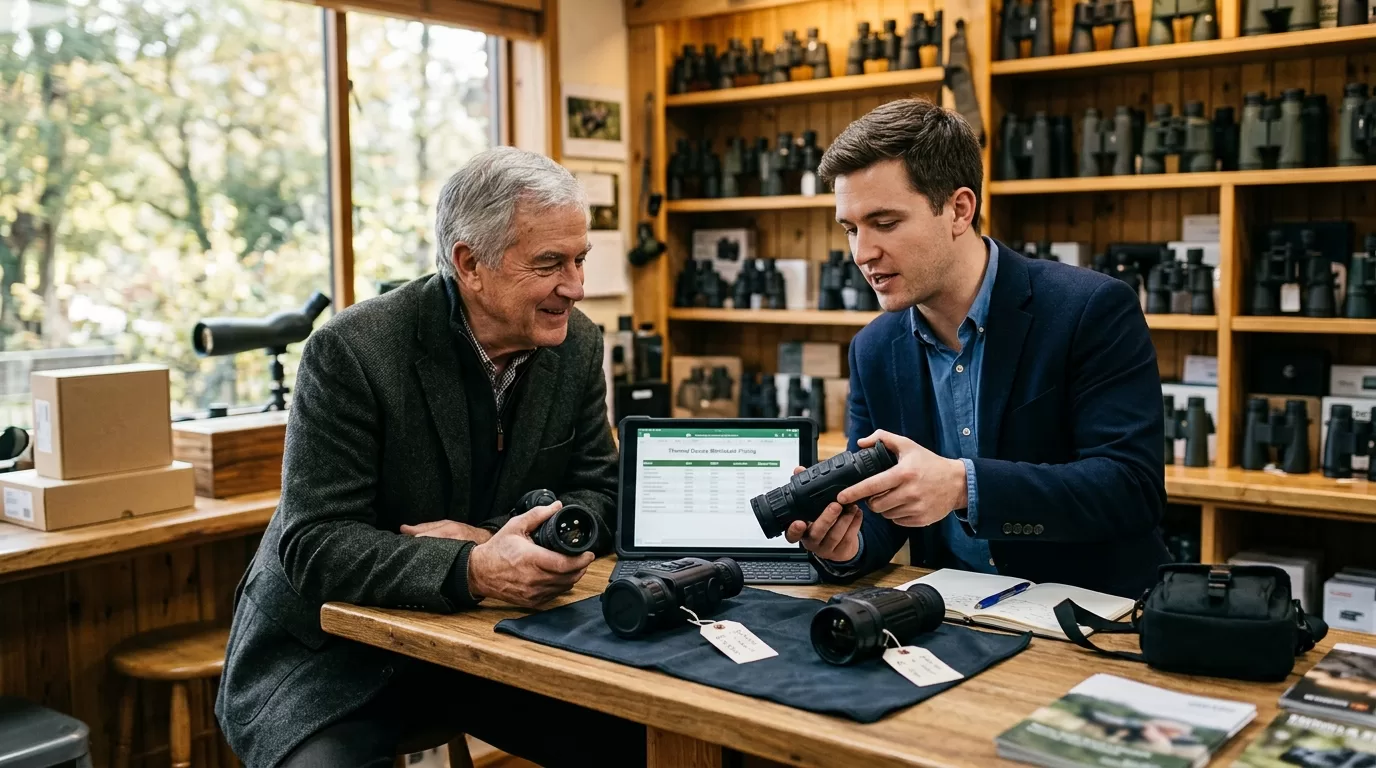
The keyword is “advertised.” A dealer can usually talk privately with a customer about a lower final price, depending on the brand’s policy and local law. A dealer often can’t post that lower number on a product page, Google Shopping feed, print flyer, marketplace listing, paid ad, or broadcast email.
That distinction matters in thermal imaging. A customer buying a Pixfra thermal monocular, Pulsar Thermion 2, AGM Rattler V2, Vortex Razor HD Gen III, or Leupold Mark 5HD often needs more than a checkout button. They may need help comparing sensor resolution, NETD, base magnification, battery runtime, zeroing workflow, firmware updates, and warranty handling. If every dealer has to advertise at zero margin to win the click, the first thing to disappear is service.
| Pricing term | Who sets it | What it controls | Dealer takeaway |
|---|---|---|---|
| Wholesale cost | Manufacturer or distributor | Dealer buy price | Your starting profit math |
| MSRP | Manufacturer | Suggested retail price | A reference point, not a rule |
| MAP | Manufacturer | Lowest advertised price | The number your public ads must respect |
| Street price | Market | Common real-world selling price | May sit at MAP for strict brands |
| Net price | Dealer | Final paid price after private discount | Policy details decide what is allowed |
US federal treatment changed in 2007. The Federal Trade Commission’s guide to manufacturer-imposed requirements says vertical price programs are judged under a rule-of-reason approach, while also warning that state laws and international rules can treat minimum price rules differently. Don’t wing this. A US MAP policy should be reviewed by antitrust counsel before it goes to dealers.
Dealer Margin Protection
Take a $1,499 thermal monocular. If the dealer cost is $1,125, the gross margin is $374 before card fees, freight, returns, staff time, store rent, demo units, and the occasional customer who needs 28 minutes of help finding the right color palette. Advertise it at $1,349 to beat another dealer and the gross margin drops to $224. One public discount just erased about 40% of the dealer’s gross profit.

That is why dealers ask for price protection commitments. They aren’t asking for a favor. They are asking whether the brand will stop an unauthorized seller from turning a technical product into a commodity listing. If you’re modeling profit by SKU, the numbers in our earlier guide to dealer margins on thermal scopes pair well with a MAP review because MAP only matters when the wholesale-to-advertised spread leaves enough room to operate.
A dealer carrying thermal optics has heavier costs than a seller moving phone cases. The unit cost is higher. Return risk is higher. Customer education takes longer. A shop may need a demo monocular for night events, staff training on 384×288 versus 640×512 sensors, and a process for warranty intake. MAP gives that dealer a reason to keep investing.
> Dealer math gets ugly fast: a 10% advertised discount can remove 30% to 50% of the gross profit on a high-ticket optic, depending on the original margin.
Firearm dealer forums say the quiet part out loud. Glock and SIG Sauer are often named as strict MAP enforcers, and that reputation shapes dealer behavior. Even though pistols and thermal optics are different categories, the channel lesson carries over: dealers trust policies that are enforced, not policies that sit in a PDF while marketplace sellers do whatever they want.
MAP Vs MSRP
MSRP is a suggested price. MAP is an advertised-price floor. Wholesale cost is what the dealer pays. Street price is what customers see after the market has had time to push, pull, and test the brand’s enforcement.
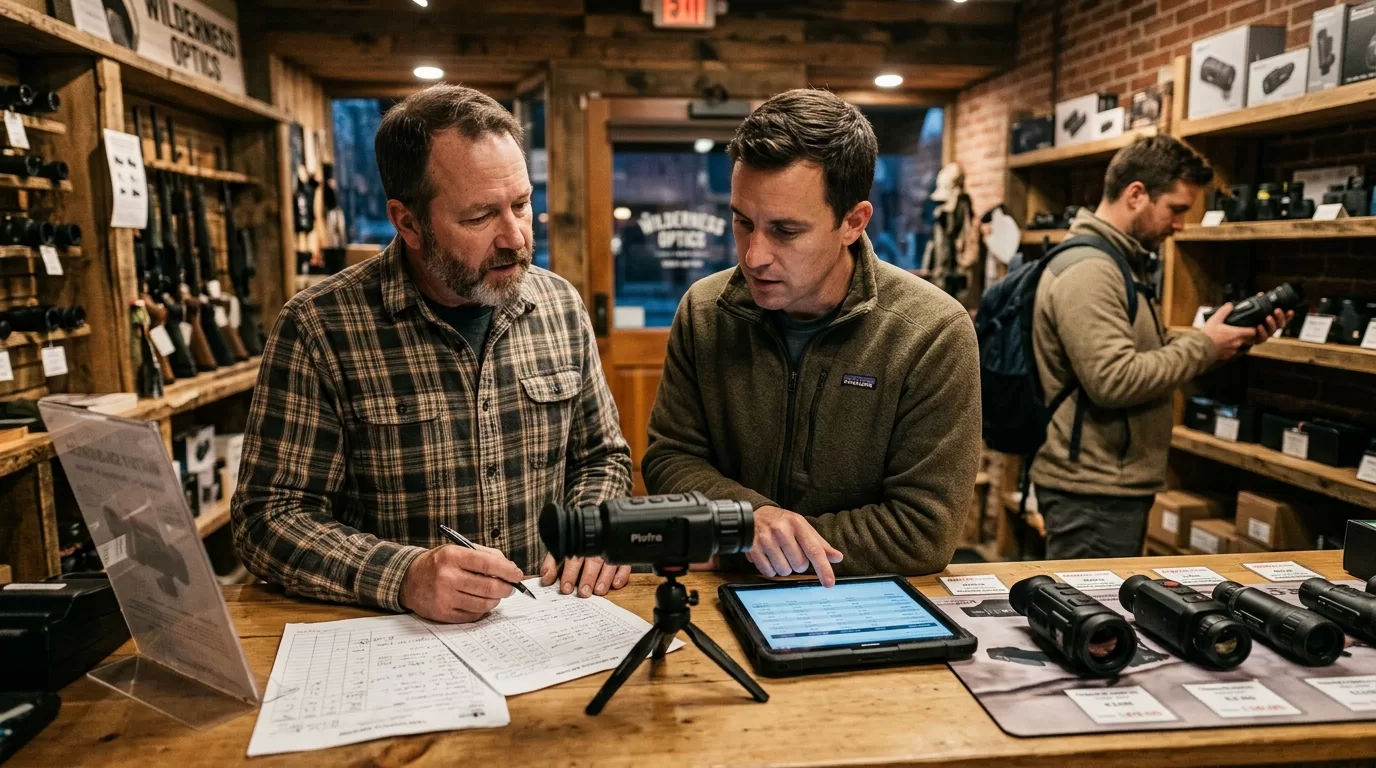
A Pixfra dealer might see a thermal scope with a $2,999 MSRP, a $2,599 MAP, and a wholesale cost that leaves a workable gross margin at MAP. The manufacturer can use MSRP to frame value, MAP to protect public pricing, and dealer cost to reward volume or stocking commitment. Mixing those terms in a dealer agreement creates trouble fast.
| Scenario | MSRP | MAP | Dealer cost | Public ad allowed? |
|---|---|---|---|---|
| Website product page at $2,599 | $2,999 | $2,599 | $1,950 | Yes |
| Google Shopping feed at $2,499 | $2,999 | $2,599 | $1,950 | No |
| Private quote by phone at $2,499 | $2,999 | $2,599 | $1,950 | Depends on policy |
| Bundle ad showing free $250 accessory | $2,999 | $2,599 | $1,950 | Depends on policy |
| Closeout approved by brand | $2,999 | Waived | $1,950 | Yes, if documented |
Be careful with “add to cart for price.” Some brands allow it. Some treat cart pricing as a public advertised price once the customer can reveal it automatically. Optics e-commerce is messy because a product page can be an ad, a catalog entry, and a checkout tool at the same time.
The safest dealer habit is boring: ask the brand for examples. Can you run a sitewide 10% coupon? Can you include a free mount? Can you email a private quote to one customer? Can you advertise “call for best price”? If the policy doesn’t answer those questions, you don’t have a policy you can operate with.
Enforcement That Actually Works
A clean MAP program doesn’t need drama. It needs a written policy, SKU-level MAP sheets, monitoring, and predictable consequences. Dealers will tolerate strict rules when they believe the same rules apply to everyone, including the high-volume account that buys 400 units before deer season.

Vortex Optics gives a public example of how serious optics brands frame the channel. Its dealer requirements include a staffed brick-and-mortar location, agreement to uphold Vortex’s MAP policy, a minimum prepaid order of $5,000 covering at least six optic SKUs, and an annual purchase threshold of $7,500, according to the Vortex prospective dealer page. Those numbers tell dealers the brand wants active retail partners, not random listings.
A practical enforcement path looks like this:
1. Publish a unilateral MAP policy with clear definitions.
2. Send dealers a current SKU-level MAP sheet.
3. Monitor websites, marketplaces, shopping feeds, email promos, and paid ads.
4. Document screenshots with timestamps and URLs.
5. Issue a notice using the process in the policy.
6. Apply the stated consequence if the dealer doesn’t fix the violation.
7. Keep sales teams from negotiating enforcement case by case.
The last point is where brands get sloppy. A rep wants to keep a large account happy. The dealer says the sub-MAP price was a feed error. The brand waits. Other dealers see the violation, screenshot it, and stop trusting the program. Two weeks later, the whole channel is asking for special pricing because the public price floor already cracked.
MAP enforcement also needs clean internal walls. Sales reps shouldn’t invite dealers to agree on resale prices. Dealers shouldn’t pressure the manufacturer as a group to punish a discounter. The FTC warns that competitors must set prices independently, and dealer coordination can turn a normal channel issue into an antitrust problem.
Contract Terms Dealers Need
Dealers should ask for the MAP policy before they place the first stocking order. Not after. A dealer buying $25,000 in thermal monoculars, clip-ons, thermal scopes, and digital day/night optics needs to know whether the brand will protect the advertised price during launch, holiday promos, and distributor closeouts.

The contract should name the sales channels covered. Website listings, Amazon, eBay, GunBroker, Google Shopping, social media ads, SMS campaigns, email blasts, printed flyers, and in-store signage visible from outside the store may all be treated differently. If the policy says “all advertising” and stops there, ask for examples.
Ask these questions in writing:
- What counts as an advertised price?
- Are automatic cart discounts allowed?
- Are coupon codes allowed when the product is in the cart?
- Can a dealer advertise a bundle with batteries, mounts, tripods, or rangefinders?
- How are open-box, demo, refurbished, and discontinued units handled?
- Who receives violation reports?
- How fast does the brand act after a documented violation?
- What happens on first, repeat, and chronic violations?
Price protection is a separate ask. MAP stops the public ad from dropping below a floor. Price protection helps dealers when the brand itself lowers MAP, launches a rebate, changes distributor cost, or clears a discontinued SKU. If a dealer bought ten units at last month’s cost and the brand drops MAP by $300 this month, the dealer needs a credit, rebate, or sell-through window.
This is where serious dealers separate polite brands from dealer-friendly brands. A good policy says what happens when the market changes. A weak policy says “prices subject to change” and leaves the dealer holding inventory that no longer makes sense.
Dealer Pricing Checklist
Before you stock a new optics line, model the gross margin at MAP, not MSRP. MSRP can make a program look healthier than it is. The dealer pays bills from the spread between cost and the price they can actually advertise.

For a thermal category, the margin target should account for demo time and support. A customer comparing a 384 sensor to a 640 sensor may come back twice before buying. A ranch buyer may ask about detection distance, not recognition distance. A night-hunting customer may need help with zero profiles. Those are normal sales costs, and the MAP spread has to pay for them.
Use this checklist before signing:
- Confirm current wholesale cost, MAP, and MSRP by SKU.
- Ask for the policy, not just a rep’s explanation.
- Get launch-period price protection in writing.
- Check whether distributor ads follow the same rules.
- Ask how marketplace sellers are monitored.
- Clarify coupon, bundle, cart, and email rules.
- Review state and international issues with counsel if you sell beyond one US state.
- Recalculate margin after freight, payment fees, returns, and demo-unit cost.
MAP doesn’t apply cleanly to every situation. Commodity accessories, discontinued optics, damaged-box units, trade-ins, and one-off demo products may need different rules. A manufacturer also may waive MAP for a planned promotion, but the waiver should be dated, written, and sent to every eligible dealer at the same time.
For Pixfra dealers, the strongest setup is simple: clear MAP by SKU, stable launch windows, fair handling of approved promotions, and fast action when a seller breaks the rules. That gives dealers the confidence to stock deeper, train staff, and support customers after the sale.
FAQ
Is MAP pricing legal?
MAP pricing can be legal in the United States when structured properly, but the details matter. Federal treatment uses rule-of-reason analysis, and some state or international rules may be stricter, so manufacturers should use antitrust counsel.
Does MAP set selling price?
MAP sets the lowest public advertised price, not always the final selling price. A dealer may be able to sell lower through a private quote or in-store conversation, depending on the written policy and local law.
Why do optics brands enforce MAP?
Optics brands enforce MAP to protect dealer margin, product value, and service quality. Thermal scopes and premium optics need trained sales support, demo inventory, warranty handling, and careful customer education, all of which cost money.
Can dealers discount in cart?
Sometimes. Some brands allow cart-only discounts because the lower price isn’t shown publicly, while other brands treat automated cart pricing as advertising. Dealers should ask for written examples before using coupons or “add to cart” pricing.
What should dealers request?
Dealers should request the MAP policy, current SKU-level MAP sheet, price protection terms, and violation process before placing a stocking order. They should also ask how bundles, closeouts, coupons, marketplace listings, and distributor promotions are handled.
If you’re evaluating a thermal optics line for US distribution, ask Pixfra for written dealer terms that cover MAP, stocking levels, approved promotions, and price protection before you commit inventory. A good next step is to choose three target SKUs, model margin at MAP, and confirm how Pixfra handles violations during the first 90 days of launch.