


Hunting doesn’t have to stop when the sun goes down. We’ve tested thermal attachments extensively, and they’ve changed how we approach low-light hunting situations. These compact devices mount directly to your existing rifle scope, giving you thermal imaging capability without replacing your trusted daytime optics or losing your zero.
A thermal attachment—also called a clip-on—lets you spot game through darkness, fog, and dense brush. You’ll keep using your scope’s familiar reticle and magnification while seeing heat signatures instead of relying on visible light. It’s like having two scopes in one setup, but without the weight, cost, or hassle of carrying separate systems.
What Is a Thermal Attachment for Rifle Scope?
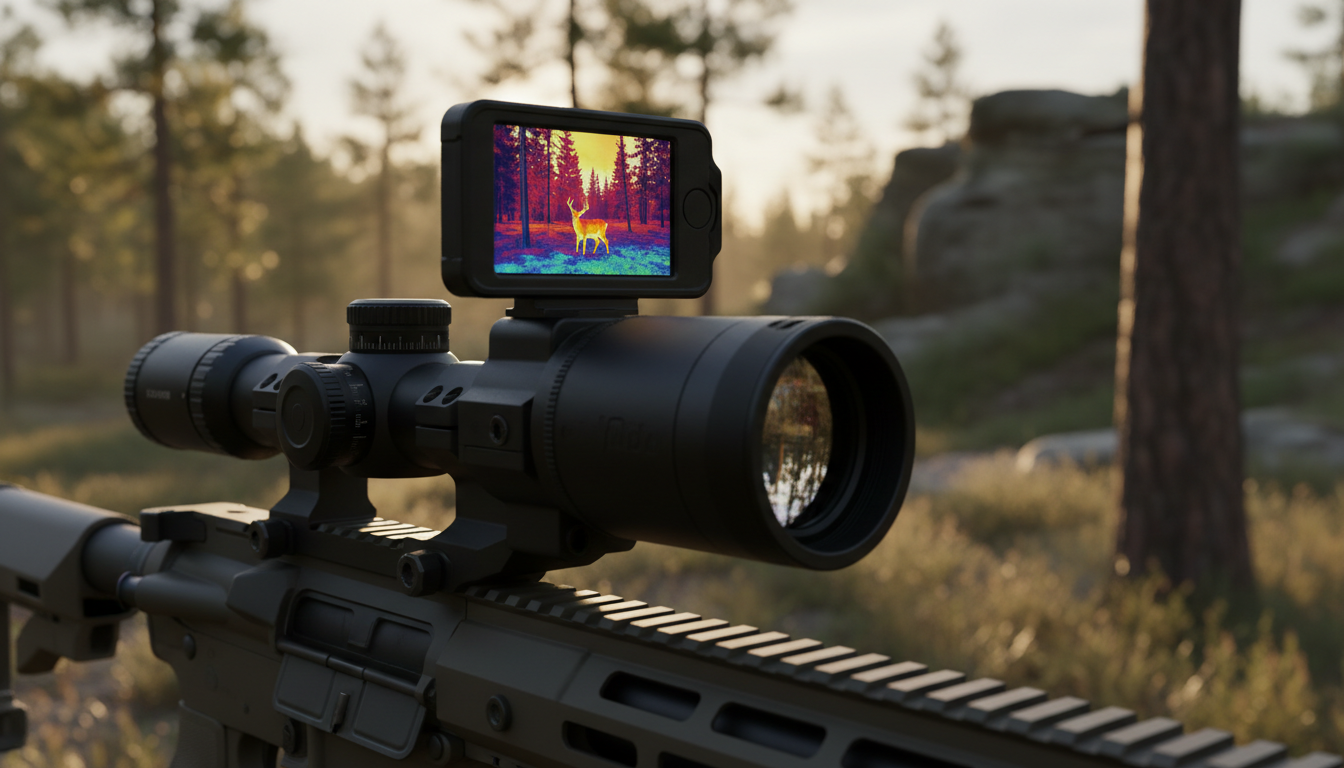
A thermal scope attachment is a compact, front-mounted system designed to instantly transform your existing riflescope into a powerful thermal imaging device. Think of it as adding night vision to the scope you already own.
The device uses a thermal sensor (microbolometer) that detects heat energy and a display screen that converts the signal into a visible thermal image. It mounts to the front of your riflescope to detect heat signatures instead of visible light.
Most thermal attachments work as standalone monoculars too. You can pop the thermal off the rifle, twist on the eyepiece, and start scanning—10 seconds total. That versatility saves you from buying a separate handheld unit.
How Thermal Clip-Ons Work
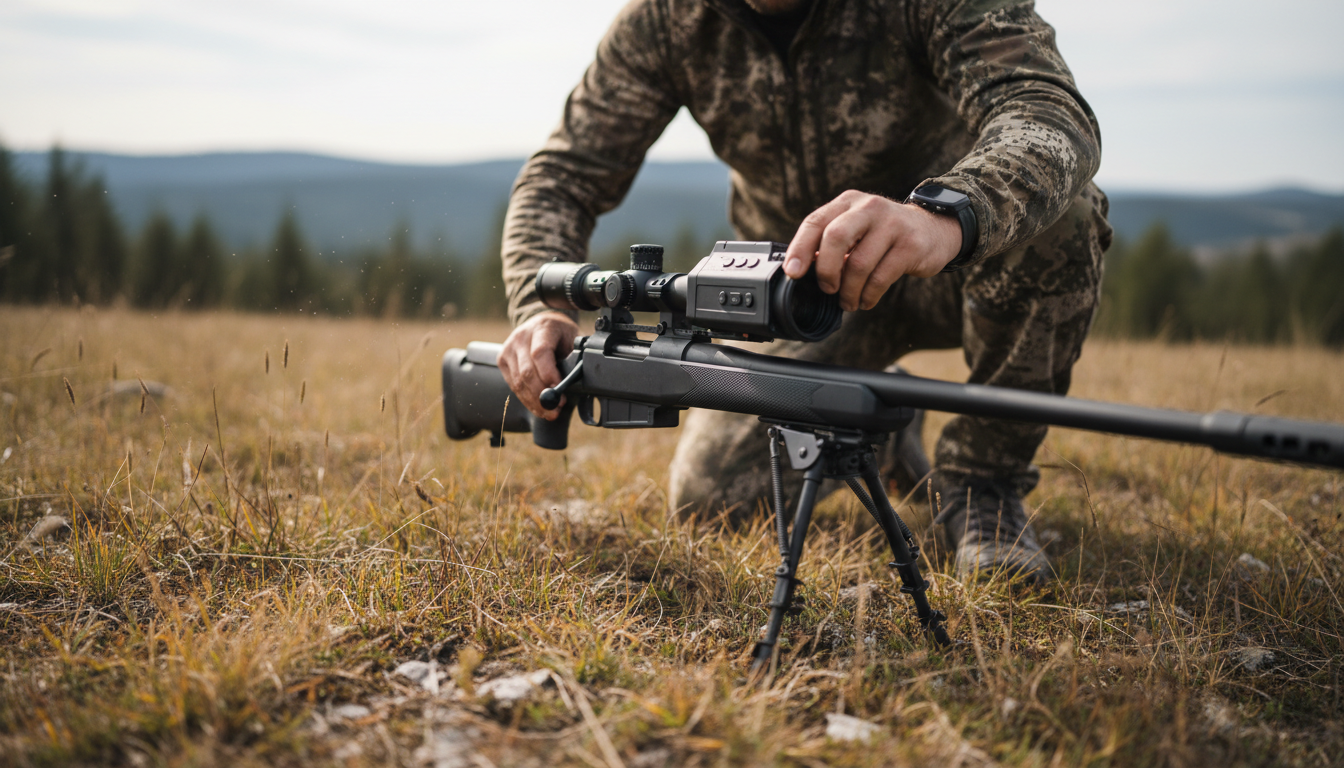
The sensor detects temperature differences between the target and its surroundings, processes those heat signals into a digital thermal image, projects the image through your daytime scope’s optical path, and you see a live thermal feed while maintaining your own reticle and scope magnification.
A clip-on is a system that mounts in front of a daytime scope without the need to resight the daytime scope to work in conjunction with the clip-on. After the initial setup (called collimation), your rifle’s zero stays intact. You can attach and remove the thermal without re-zeroing every time.
These clip-ons are available in three resolutions: 256, 384, and 640. Higher resolution means better image clarity and longer detection ranges, but also higher prices.
Key Benefits of Using a Thermal Attachment
You’ll Save Money
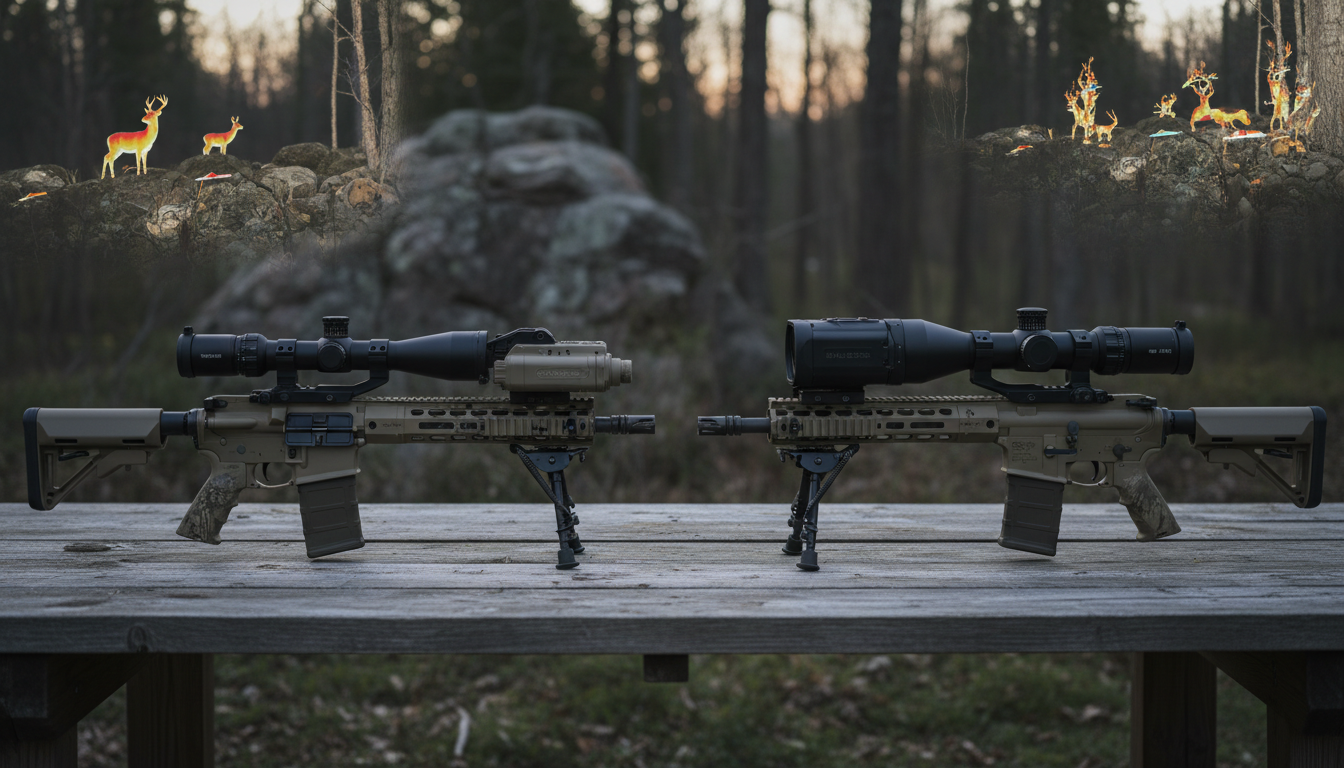
There’s no need to buy a separate thermal riflescope—the clip-on works with the optics you already own. Clip-ons allow users to utilize their existing rifle setups, potentially reducing overall costs. If you’ve invested in quality daytime glass, a thermal attachment extends its usefulness into night hunting.
Quick Day-to-Night Transitions
The device attaches and detaches in seconds using a bayonet or adapter system, perfect for mobile hunters switching between daylight and low-light conditions. We’ve used thermal attachments on early morning hog hunts where conditions shift from dark to daylight within an hour. Being able to quickly remove the thermal and continue with your day scope beats carrying two rifles.
Multiple Rifle Compatibility
Hunters who shoot multiple rifles and calibers can move the thermal between them without re-zeroing every time by buying an extra adapter for each setup. Clip-on systems work with daytime scopes that have a minimum of a 24 mm objective and function seamlessly with scopes up to 56 mm objectives.
Familiar Shooting Experience
You’ll retain your scope’s original reticle, magnification, and feel, keeping your muscle memory intact—you aim and shoot as you always have. There’s no learning curve with new controls or unfamiliar sight pictures.
Scope Compatibility and Setup
Some of the daytime scopes that work best with a clip-on are from brands such as Night Force, Trijicon, Swarovski, Vortex, Kahles, Leupold, Steiner, and many more. Most quality rifle scopes will work, but you’ll want to check magnification limits.
Most clip-ons perform optimally with day scopes in the 1.5-6x range. Using higher magnification can cause image degradation, vignetting, or other optical issues, and if you’re planning to use your clip-on with higher magnification optics like a 3-18x scope, you’ll need a specialized unit designed for this purpose.
A minimum objective lens of 30 mm provides the best image alignment and field of view, with larger objectives capturing more light and improving clarity and thermal overlay accuracy.
Real-World Hunting Scenarios
After shooting a deer from a blind right before sunset, a suppressed .308 bolt-action rifle with a daytime scope was quickly re-equipped with a clip-on for shooting a hog at night—a fast and easy switch that only took one action. That kind of flexibility is tough to match with dedicated thermal scopes.
Hunters gain the ability to detect game through darkness, fog, and brush without giving up the optics they already trust, extending hunting hours and enhancing precision in challenging light.
We’ve found thermal attachments particularly useful for predator hunting and hog control where animals move during low-light hours. You can glass with your day scope, then add the thermal when visibility drops.
Things to Consider Before Buying
Added Weight
The clip-on adds extra mass to the front of your rifle, changing the balance slightly. A thermal clip-on adds considerable weight to your rifle’s front end, potentially affecting balance and handling, with lighter options like the Armasight Jockey (398g) and DNT Hydra (389g) minimizing this impact.
Magnification Limits
Thermal attachments work best between 2×–6×, as higher zoom reduces image clarity. If you’re running a high-power scope, understand that cranking up the magnification just zooms into the thermal screen, creating pixelation rather than clearer images.
Legal Restrictions
Some regions limit thermal use for hunting, and regulations on the use of thermal optics vary widely by region—always verify local laws first to avoid fines or violations. Check your state’s hunting regulations before investing in thermal technology.
Battery Life
Battery life for thermal clip-ons ranges from 4 to 9 hours depending on the model and settings, with the Steiner C35 Gen II offering impressive 9-hour runtime. Cold weather significantly reduces battery performance, often by 30-50% in freezing conditions. Always pack spare batteries for extended hunts.
Thermal Attachment vs. Dedicated Thermal Scope
We’re often asked whether a clip-on or dedicated thermal scope makes more sense. Here’s our take: If you have quality daytime glass scopes and want to keep them for daytime shooting, front thermal add-on devices are a great solution, but if you want to have a dedicated nighttime setup, a pure thermal scope is probably the best solution.
If most of your hunts are at night and you benefit from an integrated laser rangefinder and ballistic solver, then go for a dedicated thermal rifle scope. But if you hunt during varied conditions or use multiple rifles, a thermal attachment offers better flexibility.
You’ll also save rail space with a dedicated scope. The combined space of the daytime scope and clip-on may limit room for additional accessories and add additional weight towards the front of your firearm.
Getting Started with Your Thermal Attachment
Setting up a thermal clip-on scope is designed to be quick and hassle-free, with most devices featuring a user-friendly quick-release mount that attaches securely to the front of your rifle’s daytime optics, delivering a clear and accurate sight picture.
Once mounted, the thermal clip-on device is ready for immediate use—no re-zeroing or complex adjustments required—allowing you to switch between standard and thermal vision in seconds.
The initial collimation process aligns the thermal image with your daytime scope’s zero. It’s a one-time setup per rifle, similar to zeroing a regular scope but with a few extra steps. Check your manufacturer’s manual for specific instructions.
If you’re exploring professional hunting with thermal technology, check out our complete guide to thermal monoculars, which covers everything from choosing the right device to advanced hunting techniques. For those looking at high-performance options, the Sirius HD series offers cutting-edge thermal imaging in a compact package.
Conclusion
A thermal attachment for rifle scope gives you dual-mode capability without buying two complete optic systems. You’ll maintain your familiar daytime scope while gaining thermal detection for low-light hunting. The setup preserves your zero, works across multiple rifles with adapters, and takes seconds to attach or remove.
Before buying, verify your scope’s compatibility (especially magnification and objective size), understand the weight trade-offs, and check your local hunting regulations. With the right thermal attachment, you’ll extend your hunting hours and gain confidence in challenging conditions that would otherwise send you home empty-handed.
Visit Pixfra to explore our full range of thermal imaging solutions designed for serious hunters and outdoor professionals.
Frequently Asked Questions
Can I use a thermal attachment on any rifle scope?
Most thermal attachments work with scopes that have 24-56mm objective lenses and magnification between 1.5-6x. Check your specific attachment’s compatibility specs, as some specialized units handle higher magnification optics better than others. Brands like Night Force, Vortex, Leupold, and Trijicon typically work well with most thermal clip-ons.
Do I need to re-zero my rifle every time I attach the thermal clip-on?
No. After the initial collimation process (a one-time alignment procedure), you can attach and remove your thermal clip-on without re-zeroing. The device is designed to preserve your rifle’s zero, making it perfect for hunters who switch between day and night conditions.
How far can I detect animals with a thermal attachment?
Detection range depends on your thermal attachment’s resolution and sensor quality. Entry-level 256 resolution units typically detect deer-sized animals at 200-300 yards, while high-end 640 resolution models can spot targets beyond 500 yards in good conditions. Temperature differences, weather, and vegetation all affect detection range.
Can thermal attachments also work as handheld monoculars?
Yes. Many thermal clip-ons function as standalone monoculars when removed from the rifle. You’ll typically need to attach an eyepiece adapter, which takes about 10 seconds. This dual functionality eliminates the need for a separate handheld thermal scanner, saving both money and pack space.
What’s the average battery life for thermal rifle attachments?
Battery life ranges from 4-9 hours depending on the model and settings. High-end units like the Steiner C35 Gen II offer up to 9 hours of runtime. Cold weather can reduce battery performance by 30-50%, so always carry spare batteries during winter hunts or extended sessions.