


If you want to launch a branded thermal monocular or scope without building an imaging factory, white-label thermal optics are the practical route: you choose proven hardware, define the brand layer, test samples, and buy in a quantity that matches your channel. The real work is qualifying the manufacturer, locking the packaging and warranty terms, and making sure export, origin, and after-sales details will not surprise you after the purchase order is paid.
Where White-Label Thermal Optics Fit
White-label thermal optics are thermal monoculars, scopes, or attachments manufactured by an optics supplier and sold under your brand name. The right program covers logo placement, packaging, firmware naming, manuals, warranty handling, MOQ, and product compliance before your first purchase order, not after samples arrive.
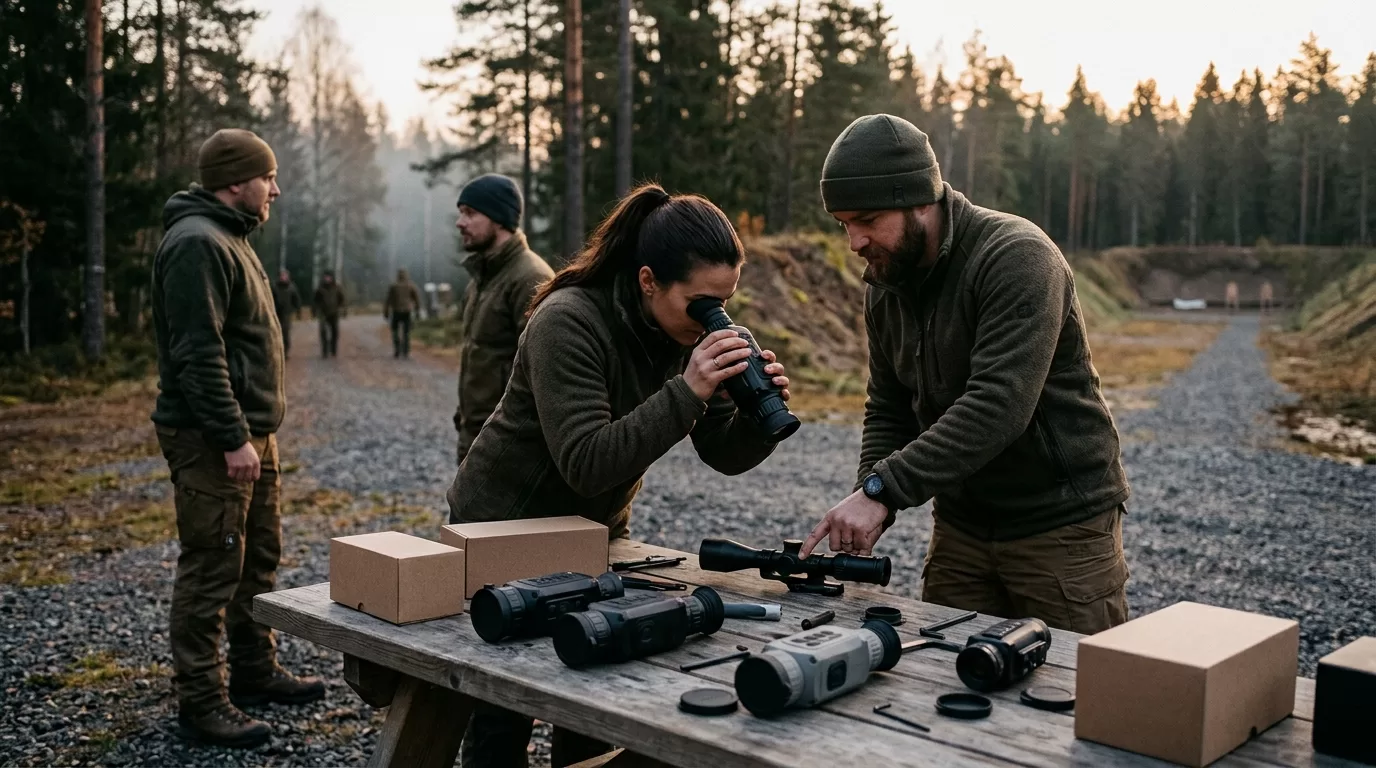
This sourcing route fits U.S. dealers, hunting distributors, regional outdoor brands, and agencies that already know their customers but do not want to fund sensor R&D, optical calibration equipment, firmware teams, and service tooling from scratch. A thermal monocular line can start with a compact 384-class handheld for scouting. A scope line usually needs a tighter fit with reticles, zeroing, recoil rating, rail mounting, and battery placement.
A logo file alone does not create a sellable product. Your customer will ask why your branded unit is worth shelf space next to Pixfra Sirius HD, Mile 2, Arc LRF, Pegasus 2 LRF, Chiron LRF, Taurus LRF, Pulsar Thermion 2, AGM Rattler V2, or ATN Thor 5. That answer comes from product selection, warranty speed, dealer margin, and how confidently your staff can explain NETD, sensor resolution, lens size, refresh rate, detection range, and field of view.
| Buyer Type | Best First SKU | Why It Works | Watchout |
|---|---|---|---|
| Hunting retailer | Thermal scope with LRF option | Higher ticket, clear upgrade path | More warranty questions |
| Outdoor e-commerce brand | Compact monocular | Easier shipping and support | Price competition is fierce |
| Regional distributor | Two-SKU bundle | Covers entry and premium buyers | Inventory planning matters |
| Agency supplier | Rugged monocular or clip-on | Repeat procurement potential | Documentation must be tight |
Start narrower than you want to. One monocular and one scope are enough for a serious first launch. Five similar units with slightly different lenses will slow your team down, confuse dealers, and bury cash in inventory that moves at different speeds.
Factory Proof Beats Promises
The most common sourcing question sounds simple: “Are you a real factory or a trading company?” For thermal devices, that question matters more than it does for basic accessories. A trading company can quote fast and may be useful when you are mixing unrelated products, but a branded thermal line depends on firmware access, calibration, serial tracking, repair parts, and model continuity.
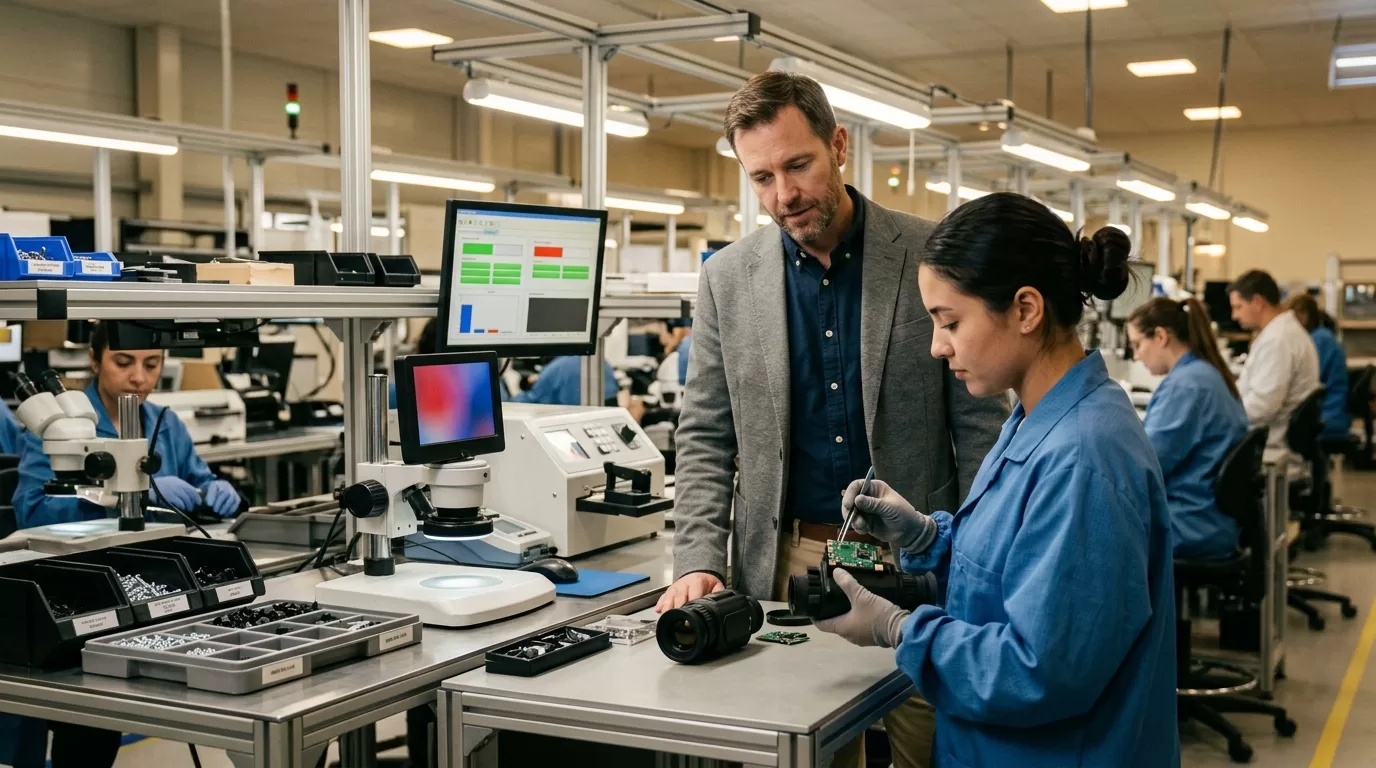
Ask for proof that maps to how thermal products are actually built. A real manufacturer should be able to explain detector sourcing, optical assembly, image tuning, aging tests, dead-pixel correction, waterproof testing, recoil testing for scopes, and how firmware updates are released. If the sales contact can only send a catalog and a WhatsApp price sheet, slow down.
When the first sample passes bench checks, your sales plan should borrow from Pixfra’s demo unit & loaner programs for thermal optics dealers: put units in real hands before you promise a territory forecast. A buyer who scans tree lines at 11 p.m. will find issues a conference-room demo misses in two minutes.
Use this due-diligence checklist before you pay for custom packaging:
- Ask for a serial-number traceability example from sensor to finished unit.
- Request raw sample footage in rain, fog, open field, and mixed-background scenes.
- Confirm who owns firmware wording, startup logo, app naming, and menu translations.
- Get a written spare-parts plan for eyecups, battery caps, mounts, chargers, cables, and lens covers.
- Ask what happens if the detector, OLED screen, battery pack, or lens supplier changes during your reorder cycle.
One detail separates serious suppliers from order takers: how they handle defects. Thermal optics have more failure points than a red dot sight or binocular. You need a clear RMA path, a DOA window, repair pricing outside warranty, and a replacement rule for units that fail during dealer demos.
Brand Control Questions Buyers Ask
The forum pattern is familiar. A buyer asks whether the supplier can print a logo on the shell. Then the thread moves to packaging, MOQ, boot screen branding, manuals, UPC labels, and whether the seller is the actual factory. Those are the right questions, but the order is usually backward.
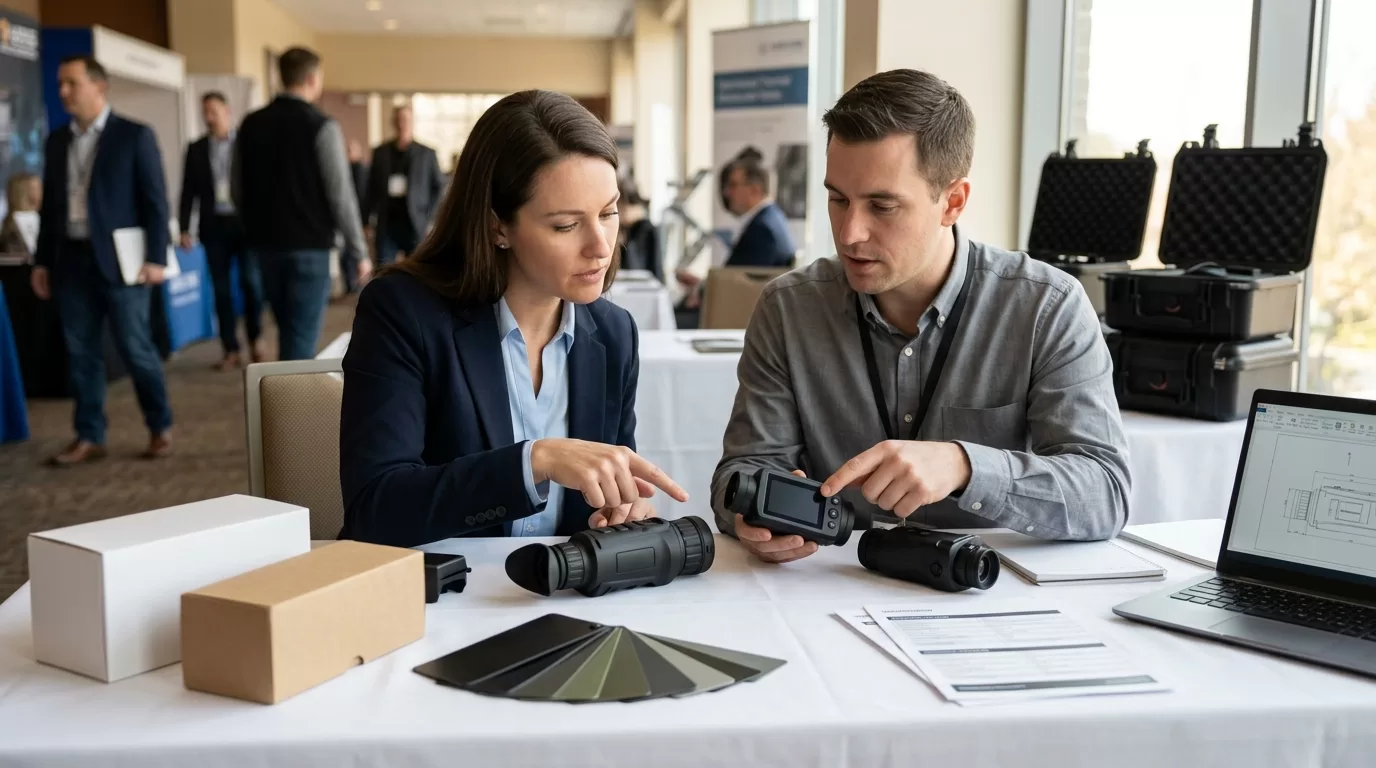
Branding should start with the retail promise. If your brand is built around lightweight predator-hunting gear, a heavy long-range scope may look impressive but sit badly with your audience. If your dealers sell to land managers, ranch owners, and search teams, a monocular with simple controls and replaceable batteries may earn more trust than a feature-heavy scope that needs a long explanation.
Logo options usually fall into four levels:
| Brand Layer | Typical Work | Good For | Risk |
|---|---|---|---|
| Shell logo | Laser mark or print | Small pilot orders | Easy for competitors to copy |
| Retail box | Custom artwork and model name | Dealer shelves | Longer approval cycle |
| Firmware branding | Startup screen and menu naming | Stronger brand feel | MOQ and testing increase |
| Manual and app assets | Branded support materials | Serious channel launch | Translation errors hurt trust |
For a first order, shell logo plus retail box is usually the best balance. Firmware branding feels more complete, but it adds testing work. One wrong model name in a menu, one missing unit setting, one app pairing mismatch, and your support inbox fills up before your launch ads finish spending.
Packaging deserves more attention than buyers give it. Thermal optics are expensive, fragile, and often bought as gifts or dealer-recommended upgrades. The box should protect the device, explain the core specs, show the included accessories, and carry a clean country-of-origin mark. Leave room for a serial sticker and barcode. Your warehouse team will thank you later.
Thermal Scope Specs Matter
A thermal scope buyer is less forgiving than a monocular buyer. A handheld monocular can be “pretty good” and still be useful. A scope has to hold zero, survive recoil, show a usable reticle, and give the shooter enough image detail to identify the target before pressure rises. That last part matters. A fuzzy blob at 180 yards does not help a dealer keep a customer.
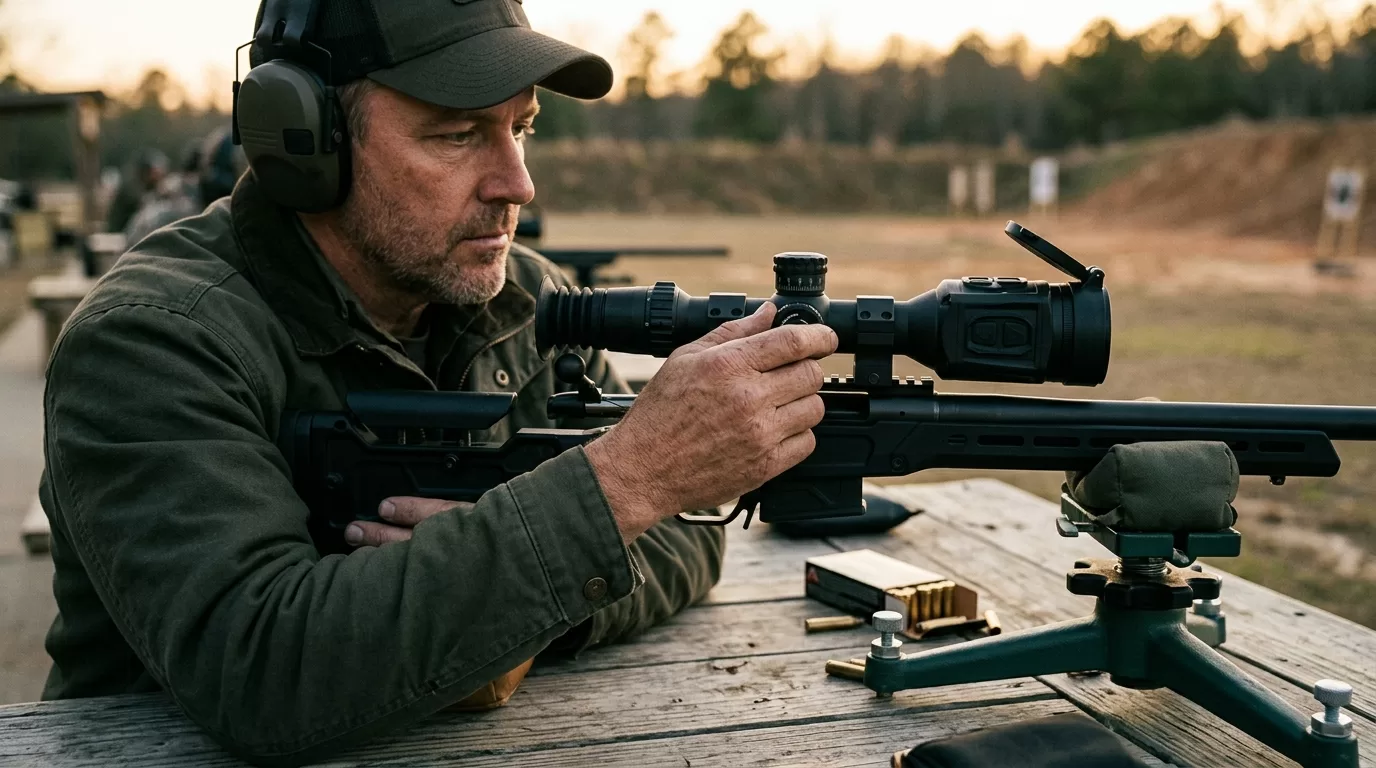
For U.S. outdoor channels, do not build the line around the cheapest sensor you can find. A low-cost 256 sensor can make sense for entry scouting, but it often disappoints buyers who already watch YouTube reviews comparing 384 and 640 devices side by side. A 384 sensor with a sensible lens is a stronger starting point for volume. A 640 unit belongs in the premium slot where your dealer can explain the price.
| Spec | Entry Target | Strong Dealer Target | Premium Target |
|---|---|---|---|
| Sensor resolution | 256 class | 384 class | 640 class |
| NETD | Under 40 mK | Under 30 mK | Under 25 mK |
| Refresh rate | 50 Hz where allowed | 50 Hz where allowed | 50 Hz where allowed |
| Battery runtime | 4+ hours | 6+ hours | Replaceable pack preferred |
| Scope focus | Manual focus | Manual focus | Fine focus plus LRF option |
Specs still need context. A 640 sensor behind the wrong lens can feel less useful than a 384 unit with better image tuning and a field of view that fits the job. For hog hunting under 150 yards, fast target recognition and easy controls matter more than quoting the longest possible detection range. For open-country scouting, lens size and detection distance move higher on the list.
This is where a white-label thermal optics program should include sample footage, not only a spec sheet. Ask for clips from handheld scanning, scope view through digital zoom, cold-weather startup, and high-contrast scenes with trees, fences, buildings, and moving targets. Real footage exposes image processing quality faster than any table.
MOQ, Packaging, Warranty Math
MOQs vary by supplier, customization depth, and season. As a working range, expect 1 to 3 units for paid samples, 10 to 50 units for logo-only orders, 100 to 300 units for custom packaging, and 300 to 500 units when firmware branding or custom color molding enters the deal. Treat those as negotiation bands, not laws.
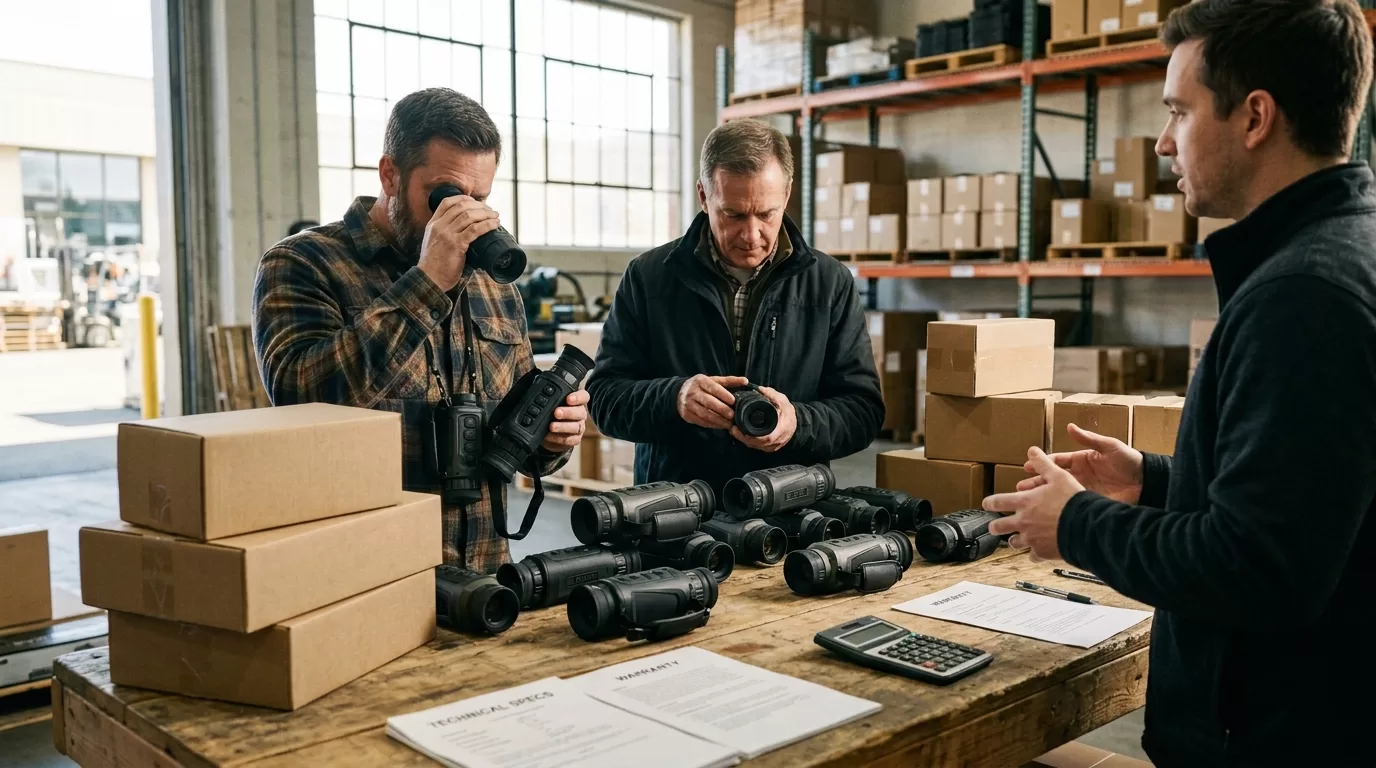
A supplier offering “full custom everything” at MOQ 1 may still be useful for samples, but do not base a launch on that promise. Custom boxes require artwork, dielines, print approval, carton testing, and inventory control. Firmware branding requires version control. A model-name change has to match the box, manual, warranty card, app guide, and dealer price list.
Build your landed-cost sheet before choosing the SKU:
- Unit price, sample fee, tooling fee, and logo fee.
- Retail box, master carton, barcode labels, and insert materials.
- Freight, insurance, duties, customs brokerage, and warehouse handling.
- Warranty reserve, demo-unit discount, replacement accessories, and dealer margin.
That warranty reserve is easy to ignore. Do not skip it. If you sell 200 branded scopes and set aside nothing for returns, one bad batch can erase the margin from the whole launch. For thermal scopes, a 2% to 5% reserve is a practical starting point until you have your own return history.
A better purchase order states the defect rules plainly: DOA window, photo or video proof, who pays return freight, repair turnaround target, replacement threshold, and what happens when a model is discontinued. For premium thermal optics, vague warranty language is a cash risk.
Export Compliance Before Shipment
Thermal products can be sensitive goods. Before you import, re-export, or sell branded thermal monoculars and scopes across borders, verify product classification, end use, destination, and customer type. The Bureau of Industry and Security Export Administration Regulations cover many dual-use export-control questions, and thermal imaging products may need classification review depending on specifications and transaction details.

Country-of-origin claims also deserve care. The Federal Trade Commission Made in USA guidance says an unqualified Made in USA claim requires the product to be “all or virtually all” made in the United States. If your branded thermal scope is manufactured overseas and boxed for your U.S. company, do not imply U.S. manufacturing through flags, slogans, or vague patriotic packaging.
Compliance is not only legal paperwork. It affects artwork, shipping, dealer listings, and marketplace copy. A box may need country-of-origin marking. Lithium batteries may need UN38.3 documentation and shipping paperwork. A laser rangefinder model may require different documents from a basic monocular. Your product data sheet should match the physical unit in the carton.
Use a pre-shipment file for every SKU:
| Document | Why You Need It |
|---|---|
| Final spec sheet | Stops silent substitutions |
| Product photos | Confirms logo, buttons, mounts, and accessories |
| Packaging proof | Catches origin, barcode, and model-name errors |
| Serial list | Supports warranty and dealer allocation |
| Compliance documents | Helps customs, freight, and reseller onboarding |
This is the point where slow is fast. A two-day review before shipment is cheaper than relabeling 300 boxes in a U.S. warehouse while your dealers ask why the launch date moved.
FAQ
What are white-label thermal optics?
White-label thermal optics are manufacturer-built thermal monoculars, scopes, or attachments sold under your brand. You usually choose the model, logo placement, packaging, manuals, warranty terms, and order quantity while the factory keeps the core hardware and production process.
What MOQ is normal?
A practical MOQ is 10 to 50 units for logo-only branding, 100 to 300 units for custom retail packaging, and 300+ units for firmware or color changes. Samples usually start at 1 to 3 paid units.
Can scopes use my logo?
Yes, most thermal scope suppliers can add a shell logo, branded box, model sticker, manual, and startup screen. Start with shell logo and packaging first because firmware branding adds testing time and increases launch risk.
Is a trading company risky?
A trading company is risky when it cannot control firmware, repairs, serial tracking, or replacement parts. For branded thermal scopes and monoculars, a direct factory relationship usually gives better warranty control and clearer model continuity.
Do thermal optics need export checks?
Yes, thermal optics should be checked for export classification, destination limits, end-user risk, and battery shipping documents. Ask for compliance documents before shipment, especially for laser rangefinder scopes, high-spec thermal cores, and cross-border resale.
For a first U.S. dealer launch, ask Pixfra for a focused two-SKU pilot: one compact thermal monocular for scouting and one LRF thermal scope for higher-ticket buyers, each with sample footage, retail box proof, serial tracking, warranty terms, and a reorder plan tied to dealer feedback.