


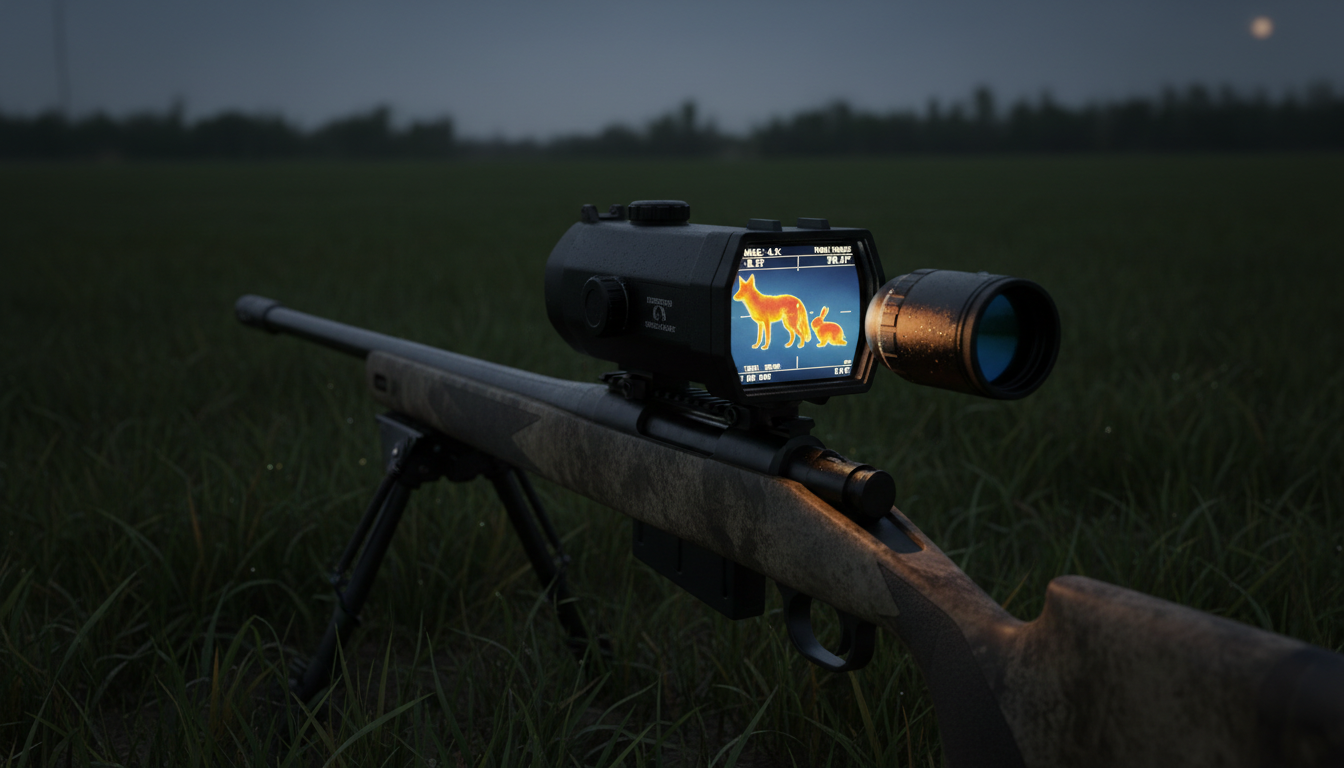
When the sun sets and darkness takes over your hunting grounds, having the right scope can make all the difference between a successful hunt and going home empty-handed. Nighttime predator hunting has exploded in popularity over the past few years, and for good reason—coyotes, hogs, and other predators are most active after dark. We’ve spent countless hours testing and researching the best scopes for nighttime predator hunting to help you pick the perfect setup for your needs.
Whether you’re dealing with coyotes raiding your property or feral hogs tearing up fields, the right optic gives you a massive edge. From professional hunting with thermal monoculars to dedicated rifle scopes, today’s technology has made nighttime hunting more accessible than ever. Let’s dive into what you need to know to dominate after dark.
Why Thermal Scopes Are Game-Changers for Night Hunting
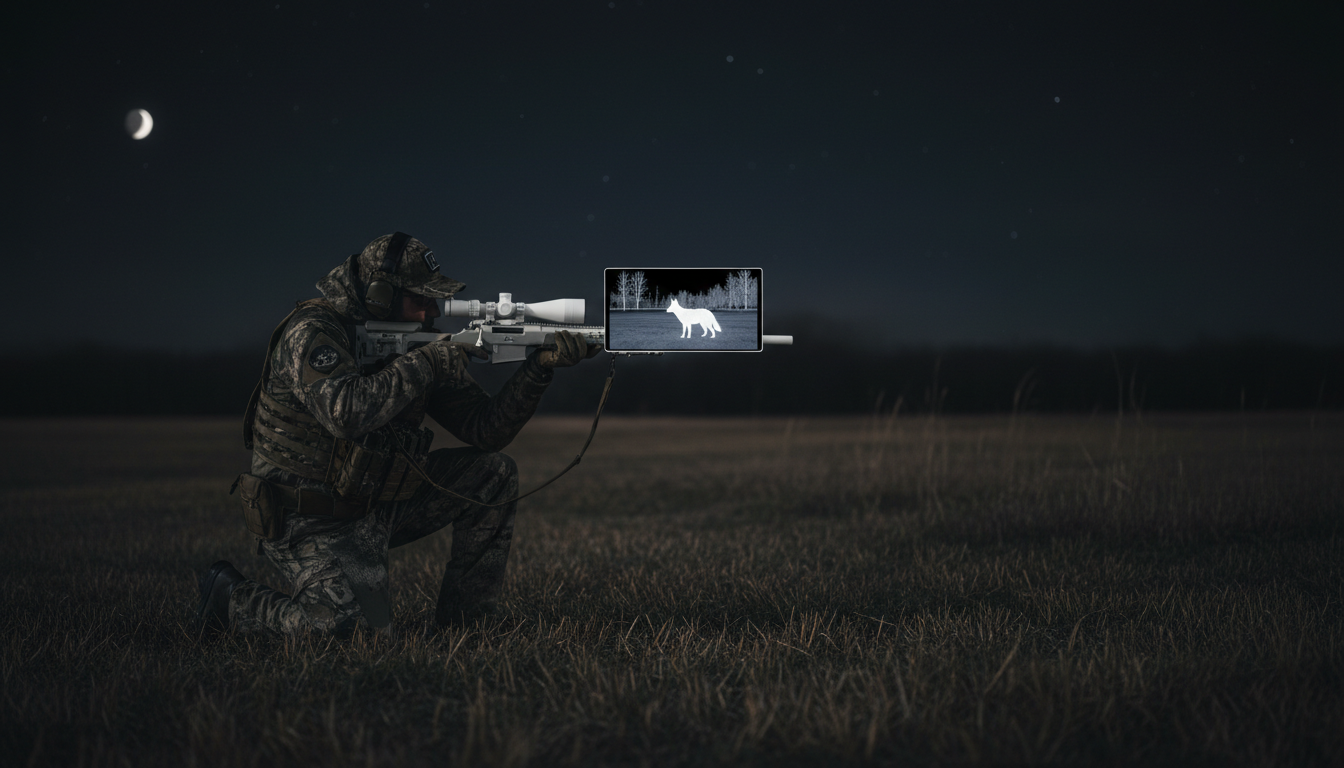
Thermal scopes have completely changed how we hunt predators at night. Unlike traditional optics that need light to work, thermal imaging picks up heat signatures from animals, making them visible even in pitch-black conditions. Coyotes are primarily nocturnal and most active during the night and at dawn and dusk, which is exactly when thermal technology shines brightest.
Here’s why thermal scopes are total game-changers for predator hunting. They work in complete darkness without needing any ambient light—no moon, no problem. Heavy cloud cover, light fog, or even rain won’t stop a thermal scope from detecting that heat signature walking across your field. Plus, thermal scopes can see through light brush and vegetation that would completely hide an animal from night vision devices. You can also use them during the day without damaging the sensor, making them versatile for dawn and dusk hunting when lighting conditions get tricky.
The technology detects infrared radiation that all living things emit based on their body temperature. When you look through a thermal scope, warmer objects like coyotes or hogs show up as bright white or hot colors against the cooler background. This means even a perfectly camouflaged predator lying motionless in the brush lights up like a beacon on your screen. For hunters serious about predator control, thermal imaging is hands-down the most effective tool available.
Thermal vs Night Vision: Which Is Better for Predator Hunting?
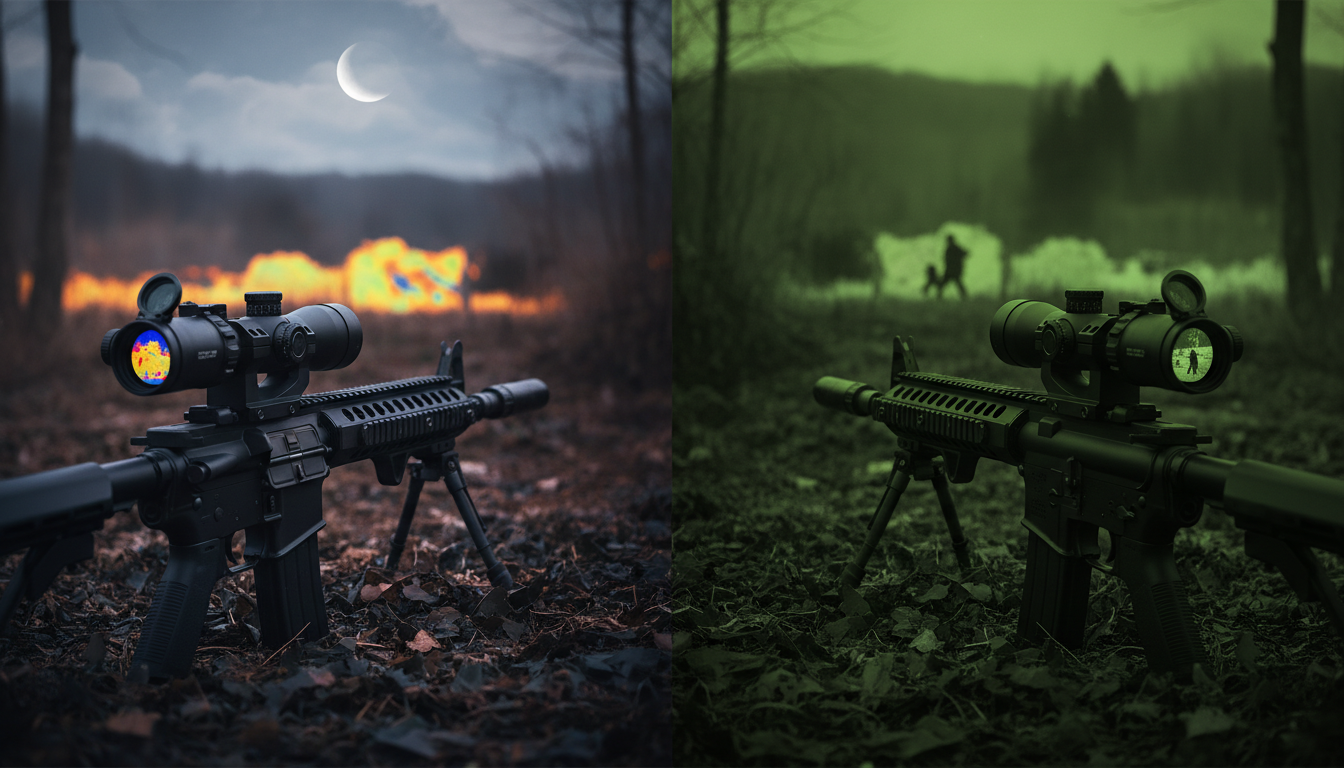
This is probably the most common question we get, and the answer really depends on your hunting situation and budget. Both technologies have their place, but for most predator hunting scenarios, thermal takes the win. Let’s break down the differences so you can make the right call.
Thermal scopes detect heat signatures and work in any lighting condition—total darkness, fog, smoke, or light cover. They’re ideal for open terrain hunts with no moonlight and excel at quick target detection since animals stand out clearly regardless of camouflage. The downside? They’re more expensive, typically starting around $2,500 for decent models, and there’s a learning curve to interpreting thermal images.
Night vision scopes amplify ambient light like starlight or moonlight to create a visible image. Some models use IR illuminators to enhance visibility in low-light conditions. Night vision works best in open areas with some natural light available and generally costs less than thermal, making it more budget-friendly. However, night vision can be limiting in total darkness without an IR illuminator, and performance drops significantly in fog, rain, or heavy brush. Plus, the IR light needed can sometimes spook sensitive animals.
For coyote hunting specifically, thermal is the superior choice. It detects movement and heat where night vision simply can’t. That said, if you’re on a tight budget, a hybrid solution works well—use a thermal monocular for scanning and a digital night vision riflescope for closer-range shots in areas with some ambient light. Many experienced hunters run both systems, using thermal for detection and night vision for positive identification before taking the shot.
What to Look for When Buying a Thermal Scope
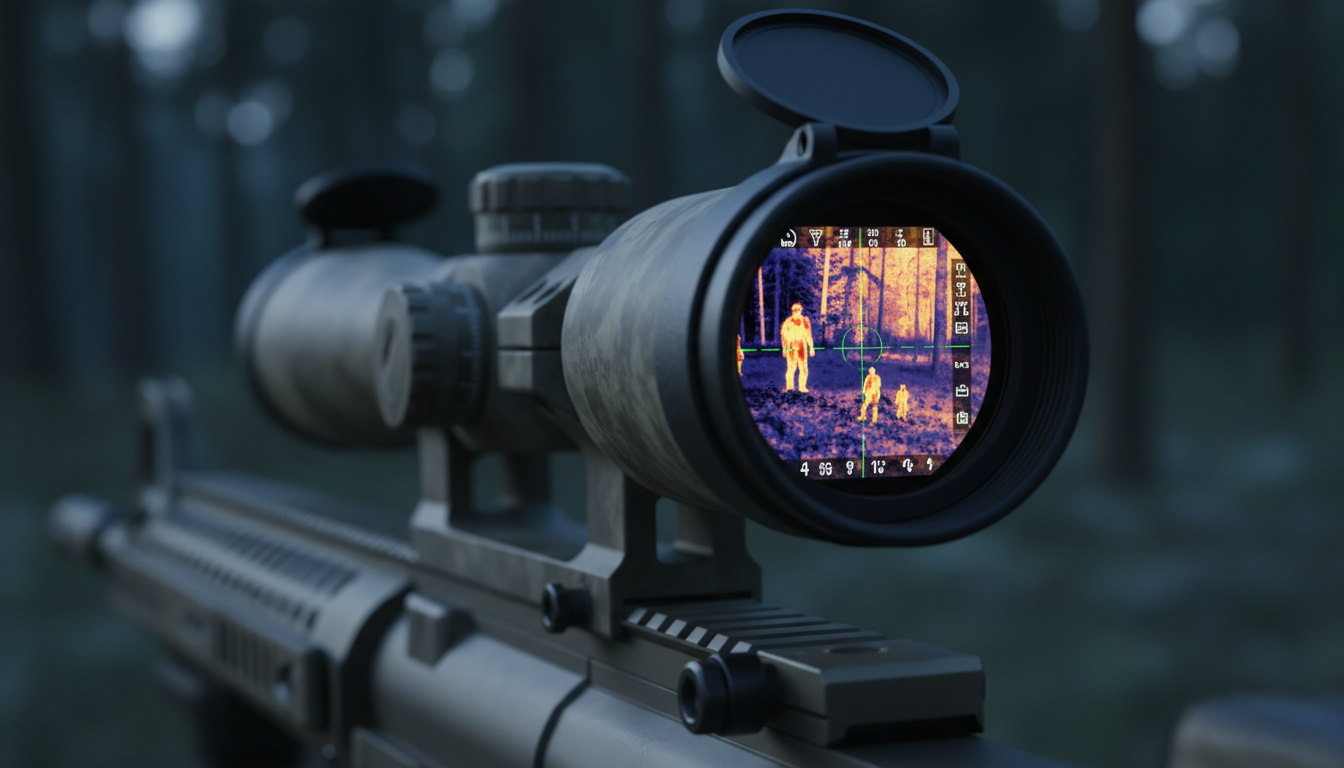
Buying a thermal scope can feel overwhelming with all the specs and features thrown at you. We’ll keep it simple and focus on what actually matters in the field. Here are the key factors to consider before dropping serious cash on a thermal optic.
Resolution and sensor quality are absolutely critical. The thermal sensor is the heart of your scope, and resolution determines image clarity. You’ll see specs like 384×288, 640×480, or even 1280×1024. Higher resolution means clearer images and better target identification at distance. For predator hunting, we recommend at least a 640×480 sensor—anything less and you’ll struggle with positive ID beyond 200 yards. The pixel pitch (measured in microns) also matters; 12-micron sensors are the current sweet spot for performance and price.
Detection range and magnification go hand-in-hand. A scope might claim 2,000-yard detection range, but that doesn’t mean you can identify what you’re looking at at that distance. Base magnification and digital zoom capabilities determine how well you can see targets at various ranges. For coyote hunting where shots typically range from 100 to 400 yards, look for scopes with 2x to 4x base magnification and at least 4x to 8x digital zoom.
Refresh rate affects how smooth the image appears when scanning or tracking moving animals. A 50 Hz refresh rate is now pretty standard and provides smooth imagery. Anything below that can feel choppy, especially when panning across a field. Battery life is another crucial consideration—there’s nothing worse than your scope dying mid-hunt. Most quality thermal scopes offer 4 to 8 hours of continuous use, and many support external battery packs for extended sessions.
Other features to consider include built-in laser rangefinders (LRF), which are incredibly handy for precise shot placement; recording capabilities for documenting hunts or reviewing your technique; multiple reticle options and color palettes to match different environments; and overall durability and weather resistance, because gear gets beat up in the field. Don’t forget to check if the scope has WiFi or Bluetooth connectivity for firmware updates and sharing footage.
Best Thermal Scopes for Coyote Hunting
Coyote hunting demands scopes that can detect, identify, and allow accurate shots at medium to long ranges. Based on field testing and hunter feedback, here are the top thermal scopes specifically for coyote hunting.
The Trijicon REAP-IR consistently ranks as one of the best thermal scopes for serious coyote hunters. It delivers military-grade performance in a civilian package with exceptional image clarity and reliable operation in any condition. The 640×480 sensor with 12-micron pixel pitch produces incredibly detailed thermal images. It features a dual battery system—the internal battery provides about 6 hours of operation while the external APS2 adds another 4 to 5 hours, eliminating battery anxiety during all-night sessions. The downside is the price tag, typically running over $8,000, but if you’re serious about predator control and need equipment that works every single time, it delivers.
The Pulsar Thermion 2 XL50 LRF is another top-tier choice that combines cutting-edge thermal imaging with a built-in laser rangefinder. It features a high-resolution 640×480 sensor with a 1024×768 AMOLED display that provides clear and detailed images essential for confidently identifying targets even in challenging low-light conditions. The built-in laser rangefinder and onboard ballistic calculator make range-adjusted shots much easier. With a detection range over 2,000 yards and multiple zeroing profiles, it’s ideal for long-range coyote hunting. Prices typically run around $6,000 to $7,000.
For hunters looking for excellent value without sacrificing too much performance, the AGM Global Vision Varmint LRF strikes an impressive balance between performance and portability. This lightweight thermal scope has a base magnification of 2.5x and an 8x digital zoom with a 384×288 thermal image resolution and 12-micron pixel pitch. The compact design makes it perfect for those long tracking sessions where every ounce matters. With a 4.5-hour battery life and support for external power banks, plus a built-in laser rangefinder, it’s a solid mid-range option typically priced around $3,500 to $4,500.
The ATN Thor 5 640 brings modern features at a more accessible price point. This scope uses a 640×480 thermal sensor with a 12-micron pixel pitch and includes ATN’s Obsidian V core for processing real-time heat signatures into vivid images. It offers recoil-activated recording, WiFi, Bluetooth, and an integrated ballistic calculator. The ATN Thor 5 has the look and feel of a traditional day optic with great battery life, making it user-friendly for hunters transitioning from conventional scopes. Pricing typically ranges from $4,500 to $6,000 depending on the lens size.
Best Budget-Friendly Options for Night Hunting
Not everyone has $5,000+ to spend on a thermal scope, and that’s totally fine. The thermal market has evolved to offer some decent budget options that’ll get you in the game without breaking the bank. While these won’t match the image quality of top-tier models, they’ll still give you a huge advantage over hunting in the dark with nothing.
The Bering Optics Super Hogster series represents excellent value for hunters on a budget. These scopes feature solid housings, WiFi connectivity, and a 4-year warranty. The Super Hogster uses a 12-micron 384 sensor, which provides better image quality than standard 384 cores. It’s a dual-use unit that can function as both a viewer and a rifle scope, making it versatile for hunters who need both capabilities but can’t afford to buy separate units. Pricing typically ranges from $2,000 to $2,500.
The ATN Thor LT is designed to sit at the intersection of features, quality, and affordability. You can pick one up for a relative bargain compared to higher-end models, and it gives you 3-6x zoom and over 10 hours of battery life. While it lacks the magnification and resolution of more expensive options, it’s lighter weight, which means less fatigue during long hunts. It’s a solid entry point for new night hunters, typically priced around $1,500 to $2,000.
For hunters willing to consider clip-on thermal devices, the AGM Rattler TC35-384 offers a different approach. This clip-on thermal attaches to your existing daytime scope, which means big cost savings compared to dedicated thermal scopes. While the resolution isn’t as high (384×480), it provides good image quality for target identification in most nighttime situations at closer ranges. Multiple reticle options and color palettes give you customization options typically found in higher-end models, all for around $1,800 to $2,500.
Keep in mind that with budget thermal scopes, you’re making some compromises. Image clarity won’t be as sharp, detection ranges will be shorter, and you might deal with more pixelation when using digital zoom. But for hunters just getting into nighttime predator control or those working mostly at closer ranges (under 200 yards), these options can absolutely get the job done.
Night Vision Scopes: Still Relevant for Predator Hunting?
While thermal has taken over as the go-to technology for most serious predator hunters, night vision scopes still have their place. They’re generally more affordable, and in certain situations, they can actually outperform thermal. Let’s talk about when night vision makes sense.
Digital night vision scopes amplify available ambient light or use IR illumination to create a visible image. They work best in open areas with minimal obstruction and under conditions where some natural light is available. The big advantage of night vision is that it often delivers sharper, more detailed images than thermal, which is ideal for confirming target ID at closer ranges. When you can clearly see the animal’s features rather than just a heat blob, you’re more confident in making ethical shots.
The downside is that digital night vision with an IR illuminator can suffer from “white out” in thick vegetation. The IR light reflects back off brush and trees, making it harder to see through cover. This is where thermal dominates—it can see through light brush that completely blocks night vision. Also, night vision scopes will cut out when you shoot because the muzzle flash blinds them for a second or two, which can be a problem if you want to take follow-up shots on multiple predators.
For hunters working in areas with decent moonlight or ambient light and operating mostly at closer ranges (under 150 yards), a quality digital night vision scope can work well and save you money. Popular models include the Sightmark Wraith series and the Pulsar Digex series. These typically run from $500 to $2,000, making them much more budget-friendly than thermal options.
A smart strategy many hunters use is pairing a handheld thermal monocular for scanning with a night vision riflescope for shooting. You use the thermal to locate heat signatures across your property, then switch to night vision for positive ID and precision shots. This hybrid approach gives you the detection power of thermal without the full cost of a thermal rifle scope.
Essential Features and Accessories for Night Hunting
Once you’ve picked your scope, there are some additional features and accessories that’ll make your nighttime hunts more successful. Here’s what we recommend based on real-world experience.
Reticle options and color palettes might seem like minor details, but they matter in the field. Most thermal scopes offer multiple color modes—white hot, black hot, and various color palettes. White hot (where heat shows up bright white) is typically best for detecting animals against cooler backgrounds. Black hot reverses this and can be easier on the eyes during long glassing sessions. Experiment with different modes to find what works best for your eyes and hunting conditions.
Built-in laser rangefinders (LRF) are absolute game-changers for making accurate shots. Being able to instantly range a coyote at 350 yards without fumbling for a separate rangefinder speeds up your shot process and increases success rates. Many higher-end thermal scopes now include LRF, and if your budget allows, it’s a feature worth paying for. Some models even include onboard ballistic calculators that automatically adjust your reticle based on the ranged distance.
Recording capabilities are increasingly common on thermal and night vision scopes. Being able to record your hunts serves multiple purposes—you can review your technique, document predator control efforts for landowners, or just share cool footage with buddies. Most scopes now include WiFi or Bluetooth connectivity, letting you live-stream your view to a phone or tablet. This is especially useful for teaching new hunters or letting others see what you’re seeing without looking through the scope.
External battery packs are a must if you’re doing serious night hunting. Even scopes with great battery life will run out eventually, and there’s nothing more frustrating than having your optic die when predators are active. Most quality thermal scopes support external battery packs that can double or triple your operational time. Keep a spare battery pack charged and in your kit.
Protective cases and mounting systems protect your investment. Thermal scopes are expensive and contain sensitive electronics. A quality hard case prevents damage during transport. For mounting, we recommend using high-quality quick-detach mounts if you plan to move the scope between rifles, or solid one-piece mounts if it’s staying on one gun. Brands like Spuhr, LaRue, and American Defense Manufacturing make excellent mounts.
Legal Considerations and Best Practices
Before you head out for nighttime predator hunting with your new thermal or night vision scope, you need to understand the legal landscape. Regulations vary significantly by state, and violating them can result in serious penalties.
Thermal and night vision regulations vary by state. Most states allow the use of thermal and night vision devices for hunting non-game animals like coyotes, feral hogs, raccoons, and other predators. However, many states prohibit their use for hunting game animals like deer and turkeys. Some states only allow these devices during certain months or for certain species. Always check your state’s hunting regulations before using thermal or night vision equipment, and when in doubt, contact your local game warden for clarification.
Beyond legal requirements, practicing ethical hunting is critical. Just because you can see an animal at 600 yards through your thermal scope doesn’t mean you should take that shot. Know your effective range with your rifle and ammunition, and only take shots you’re confident you can make cleanly. Thermal imaging is incredibly effective for tracking wounded animals after the shot, but the goal is always a clean, ethical harvest on the first shot.
Respect private property and neighbors. Even though thermal scopes and suppressors let you hunt discreetly, always get permission before hunting on private land and be considerate of nearby residences. Nobody wants the cops or game wardens showing up because someone complained about shooting near their house.
Consider your backstop and surroundings carefully. Just because you can see a predator clearly on thermal doesn’t mean it’s safe to shoot. Make sure you have a safe backstop and know what’s beyond your target. Nighttime shooting requires even more attention to safety than daytime hunting.
FAQs
What’s the minimum resolution thermal scope I should buy for coyote hunting? We recommend at least a 640×480 sensor for coyote hunting. While 384×288 scopes work at closer ranges (under 200 yards), a 640 resolution gives you much better target identification at the 200 to 400-yard distances where most coyote shots happen. Don’t cheap out on resolution if you’re serious about predator hunting—the image quality difference is massive.
Can thermal scopes see through walls or thick cover? No, thermal scopes cannot see through solid objects like walls, thick trees, or dense cover. They detect heat signatures, but those signatures need a clear line of sight to be detected. Thermal can see through light fog, rain, and thin brush better than night vision, but they’re not X-ray vision. If there’s a solid barrier between you and the animal, thermal won’t help.
How far can I realistically shoot with a thermal scope at night? Detection range and shooting range are two very different things. A high-end thermal might detect a coyote at 1,000+ yards, but positively identifying it and making an accurate shot is another story. For most hunters with quality 640 thermal scopes, effective shooting range on coyotes is 200 to 400 yards depending on conditions, your rifle setup, and shooting skill. Some experienced shooters stretch that to 500+ yards with top-tier equipment.
Do I need a thermal scope or can I get by with a thermal monocular? It depends on your hunting style and budget. A thermal monocular is excellent for scanning and locating predators but won’t help you make the shot. Many hunters successfully use a thermal monocular for detection paired with a good light system or night vision riflescope for shooting. If you can only afford one thermal device, a monocular gives you more versatility, but a dedicated thermal rifle scope is more effective for actual shooting.
Why are thermal scopes so expensive compared to regular scopes? Thermal scopes contain extremely sophisticated technology—high-resolution thermal sensors, advanced image processing software, high-quality germanium lenses, and precision electronics all packed into a rugged, weatherproof housing. The thermal sensors themselves are expensive to manufacture, especially the higher-resolution 640 and 1280 sensors. You’re basically buying a specialized thermal camera with weapon-grade durability. The good news is prices have dropped significantly over the past few years as the technology has improved.