















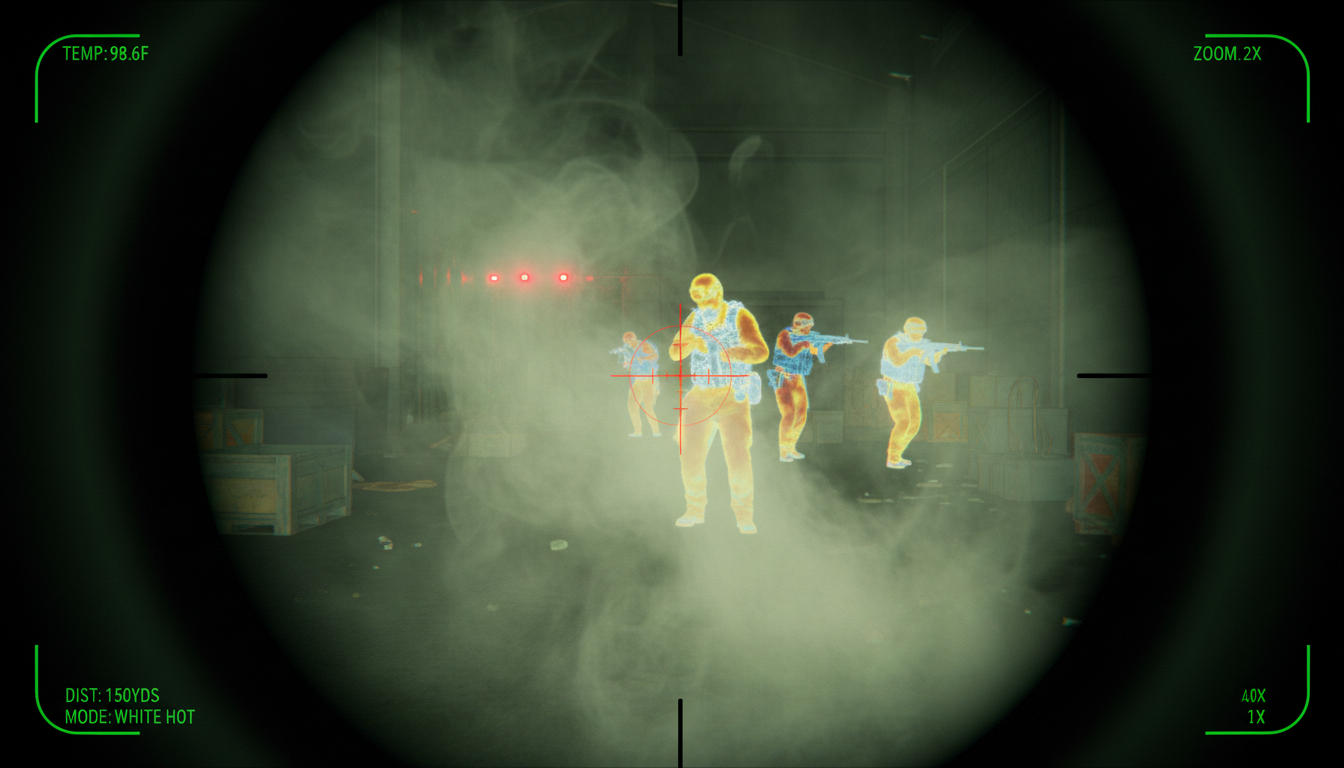
Thermal scopes have changed the game for hunters, tactical professionals, and outdoor enthusiasts. But there’s one question that comes up again and again: can these devices actually see through smoke? The answer isn’t a simple yes or no. We’re going to walk you through how thermal imaging interacts with smoke, what affects performance, and what you can realistically expect in different situations.
How Thermal Imaging Actually Works
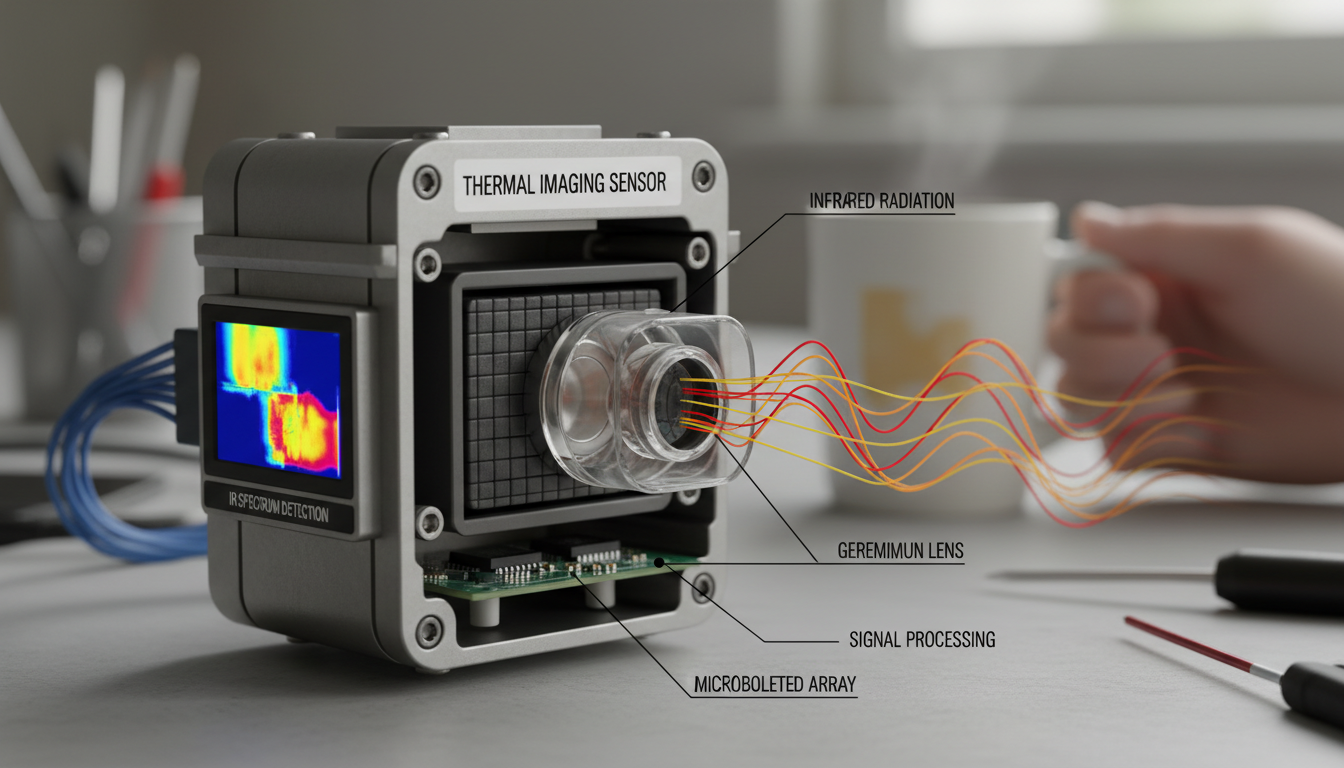
Before we talk about smoke, let’s cover the basics. Thermal imaging detects infrared radiation emitted by objects based on their heat, unlike conventional cameras that capture images based on light reflections. Your thermal scope picks up heat signatures and converts them into a visible image. This is why they work in total darkness—they don’t need light at all.
Every object above absolute zero gives off heat. What you see with a thermal scope are hot and cold spots, as thermal scopes detect the heat coming off objects and living things. The bigger the temperature difference, the clearer the image. This makes thermal devices like the Pixfra Sirius HD and Pixfra Pegasus 2 LRF excellent for spotting game or people against cooler backgrounds.
Can Thermal Scopes See Through Smoke?
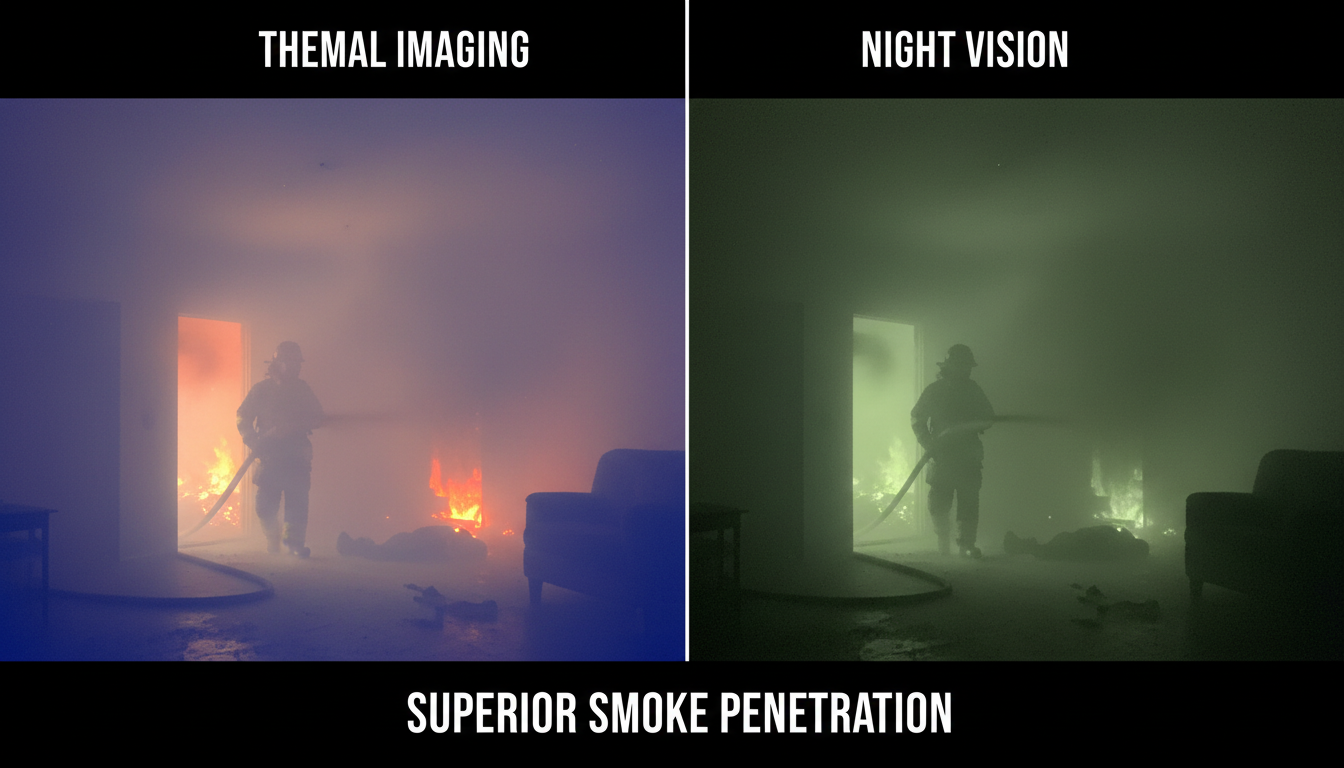
Here’s where it gets interesting. Yes, thermal scopes can see through smoke because particles in the smoke block visible light but allow heat signatures to penetrate. Firefighters use thermal scopes for this very reason. By rendering infrared radiation as visible light, such cameras allow firefighters to see areas of heat through smoke, darkness, or heat-permeable barriers.
But—and this is a big but—performance depends on several factors. You won’t always get a crystal-clear view through every type of smoke.
What Affects Thermal Imaging in Smoke
Smoke Density
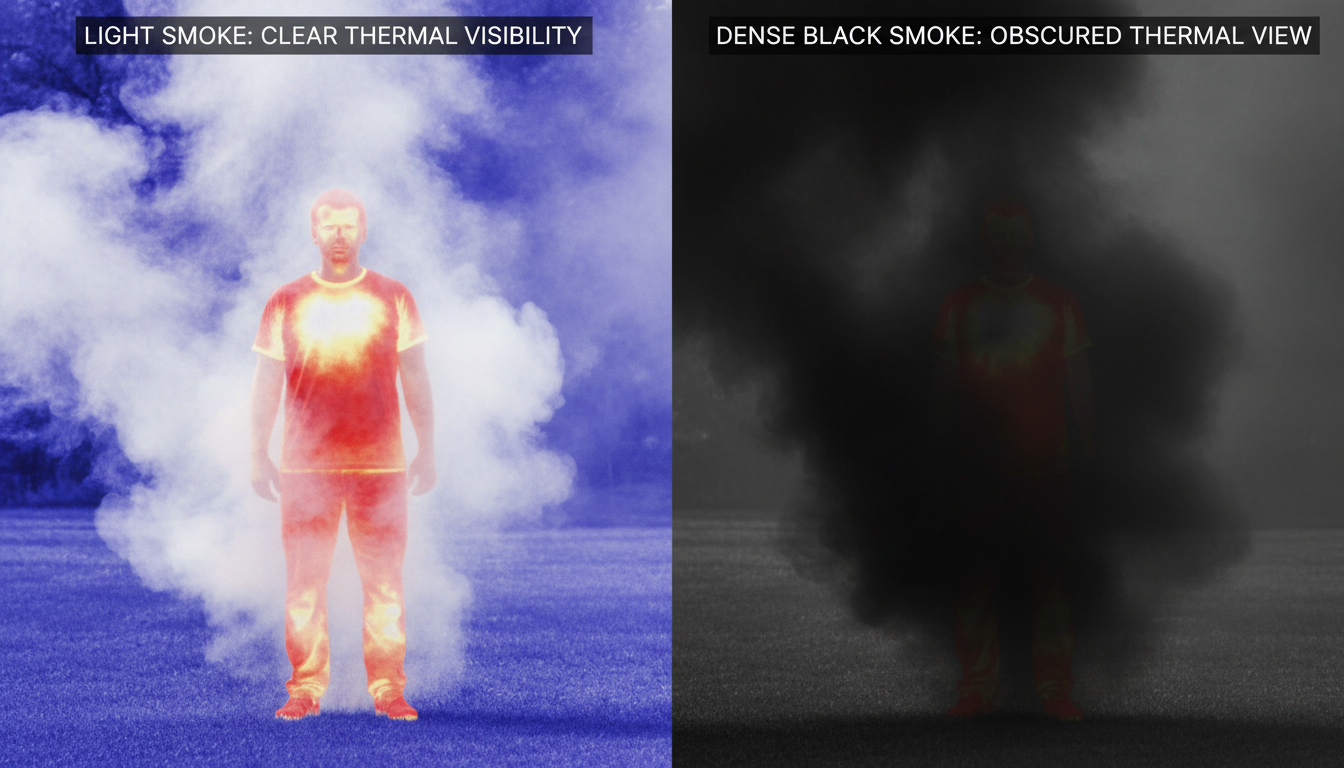
Light smoke may not significantly obstruct thermal imaging, allowing heat signatures to be visible, however dense smoke which contains a higher concentration of particles can absorb and scatter infrared radiation, making it challenging to detect objects behind it. Think of it like this: a thin wisp from a campfire? No problem. Thick black smoke from a structure fire? That’s going to limit what you can see.
Heat Source Proximity
Smoke is made of heated particles and has to be created by something hot, and if the heat source making the smoke is close, the thermal scope may pick up that heat and therefore not see very clearly through the smoke. The smoke itself can emit infrared radiation, which saturates your sensor and washes out the image.
Temperature Contrast
The effectiveness of a thermal scope in smoke depends on the temperature difference between the target and the surrounding environment—a person’s body heat may still be detectable through light smoke if there’s a significant contrast between their temperature and the ambient conditions. On a cold night, you’ll spot heat signatures better than on a warm day.
Smoke Composition
The composition of smoke can vary based on its source—smoke from fires may contain hot gases that emit infrared radiation, potentially interfering with the thermal image, while smoke from smoke grenades may have different thermal properties. Silica particles in smoke can prevent thermals from being able to see through it.
Real-World Applications
We’ve seen thermal imaging prove itself in countless scenarios. In firefighting or search and rescue operations, the ability to see through smoke can mean the difference between life and death, as firefighters rely on thermal imaging to locate victims trapped in smoke-filled environments. Deep learning models trained with thermal cameras can achieve over 95% precision for locating people in low-visibility smoky scenarios, with results reported to control centers to help provide timely rescue.
For hunters using devices like the Pixfra Draco or Arc LRF, smoke is less of an issue than fog or rain. But understanding these limitations helps you make better decisions in the field.
Limitations to Keep in Mind
In severe, thick smoke conditions, thermal imaging effectiveness can be reduced as smoke particles can obscure the infrared radiation emitted by the heat source. Infrared thermal imaging is significantly affected in foggy environments, while its impact is minor in smoky environments.
You also need to consider your equipment’s sensor quality. Thick smoke with intense heat can saturate the sensor, especially if the environment itself emits high thermal signatures, though advanced thermal monoculars use image optimization algorithms to enhance clarity even in dense smoke.
Thermal vs. Night Vision in Smoke
Let’s clear up another common question. Night vision amplifies existing light, so it’s completely useless in smoke. Night vision amplifies existing light while thermal detects heat, with thermal working in total darkness and through obscurants like smoke. That’s why search and rescue teams choose thermal over night vision for smoky environments.
If you’re evaluating different technologies, check out our guide on the best remote visual inspection devices with thermal imaging for more comparisons.
What You Can’t See Through
Thermal scopes have their limits. Thermal imaging cannot see through walls, as walls—especially solid ones like concrete, brick, or wood—block the transmission of heat. Thermal scopes can’t see through glass because it’s a very good insulator, and if you focus a scope on glass, it’ll pick up the heat reflected off it.
So while smoke is generally permeable to infrared radiation, solid objects are not.
Choosing the Right Thermal Scope
When you’re shopping for thermal equipment, look for:
- High sensor resolution for better detail in challenging conditions
- Long-wavelength infrared (LWIR) sensors which perform better in smoke and fog
- Advanced image processing to reduce noise and enhance contrast
- Quality optics with germanium lenses
Brands like Pixfra focus on these features, designing scopes that perform when conditions get tough.
Conclusion
So, can a thermal scope see through smoke? Yes, but with conditions. Light to moderate smoke? You’ll get decent visibility of heat signatures. Dense, hot smoke from an active fire? Your view will be degraded. The technology works by detecting infrared radiation that passes through smoke particles, but density, heat, and composition all play a role.
Thermal imaging gives you a real advantage in low-visibility situations where standard optics fail completely. Whether you’re hunting in foggy conditions, conducting search and rescue, or need reliable inspection devices, understanding how your thermal scope interacts with smoke helps you use it more effectively. Just remember—thermal scopes are powerful tools, but they’re not magic. Know their limits, and you’ll know when to trust what you’re seeing.
FAQs
Does thermal imaging work better in fog or smoke?
Thermal imaging generally works better in smoke than fog. While both can reduce visibility, smoke particles have less impact on infrared radiation than water droplets in fog. Research shows thermal imaging is significantly affected in foggy environments but only minimally impacted in smoky conditions. You’ll still get usable images through moderate smoke, though very dense smoke near a heat source will limit effectiveness.
Can military thermal scopes see through smoke grenades?
It depends on the type of smoke grenade. Standard smoke grenades that produce regular smoke can often be penetrated by thermal imaging. However, specialized thermal-blocking smoke grenades contain particles like silica that specifically obstruct infrared radiation. Military-grade thermal scopes work well against most tactical smoke screens, which is why they’re widely used in combat situations where smoke is deployed as cover.
Why do firefighters use thermal cameras if smoke blocks the view?
Firefighters use thermal cameras because they can detect heat signatures through most smoke conditions, even when visibility is severely reduced. The human body emits enough heat to create a detectable signature against cooler backgrounds, allowing rescuers to locate victims in smoke-filled rooms. While extremely thick, hot smoke can degrade the image, thermal cameras still outperform all other vision technologies in these conditions, making them life-saving tools.
Will a thermal scope help hunters in smoky forest conditions?
Yes, thermal scopes help hunters see through light to moderate smoke from wildfires or controlled burns. The scope will pick up the heat signature of animals even when smoke obscures your normal vision. However, if you’re hunting near an active fire or in very dense smoke, the heat from the smoke itself may interfere with target detection. Temperature contrast matters too—cooler weather gives you better thermal images.
What’s the difference between cheap and expensive thermal scopes in smoke?
Expensive thermal scopes typically have higher resolution sensors, better image processing algorithms, and superior optics that make a real difference in challenging conditions like smoke. Budget models may show washed-out images or struggle with dense smoke, while premium scopes use advanced filtering to enhance heat signatures even when smoke partially obscures the view. The sensor quality and processing power directly impact how well you can see through smoke.