


Demo unit & loaner programs for thermal optics dealers help retailers sell high-ticket thermal devices by letting staff and buyers test detection range, image quality, LRF behavior, battery life, and app setup before they commit inventory dollars. The best program keeps a small tracked fleet, trains dealer staff before field use, and turns every demo into a measured sales conversation instead of a loose “try it and see” favor.
Dealer Loaner Program Basics
Build demo unit & loaner programs for thermal optics dealers this way:
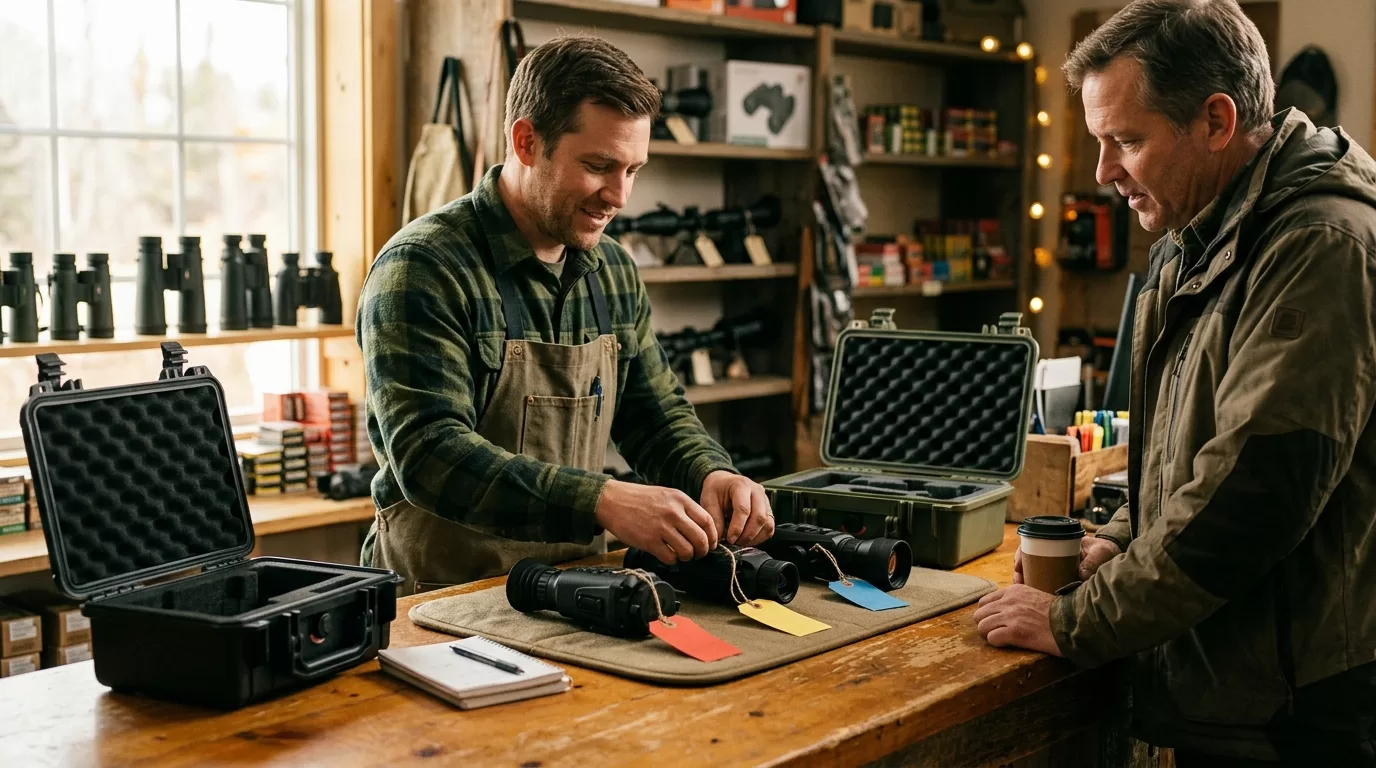
1. Choose 2-4 demo SKUs that match your store’s real buyers.
2. Tag every unit with serial number, condition photos, and firmware version.
3. Train staff before the first field loan.
4. Track demos, close rate, objections, damage, and resale timing for 30 customer trials.
A customer can read NETD, sensor resolution, and detection range specs for an hour and still hesitate. Then they walk outside behind the shop, scan a tree line, and see a heat signature at 250 yards. The mood changes. Thermal optics are four-figure purchases in many U.S. stores, so the buyer wants proof in their own conditions: humidity, brush, pasture edges, or a dark parking lot behind the counter.
A 30-day open loan sounds generous, but it usually creates sloppy follow-up. Seven days works better for most dealers because the unit stays in motion, the customer still remembers the first impression, and the salesperson can schedule a close while the question is fresh. For mounted optics, shorten the loan if the dealer can offer a supervised range session. For handheld monoculars, a weekend field loan is usually enough.
This advice doesn’t apply to low-price accessories, commodity red dots, or online-only drop-ship listings. Demo and loaner programs matter most when the buyer needs to compare real thermal behavior: 384 vs. 640 sensors, 35 mm vs. 50 mm lenses, LRF vs. no LRF, and basic black-hot/white-hot settings vs. more advanced image tuning.
Demo Fleet Selection
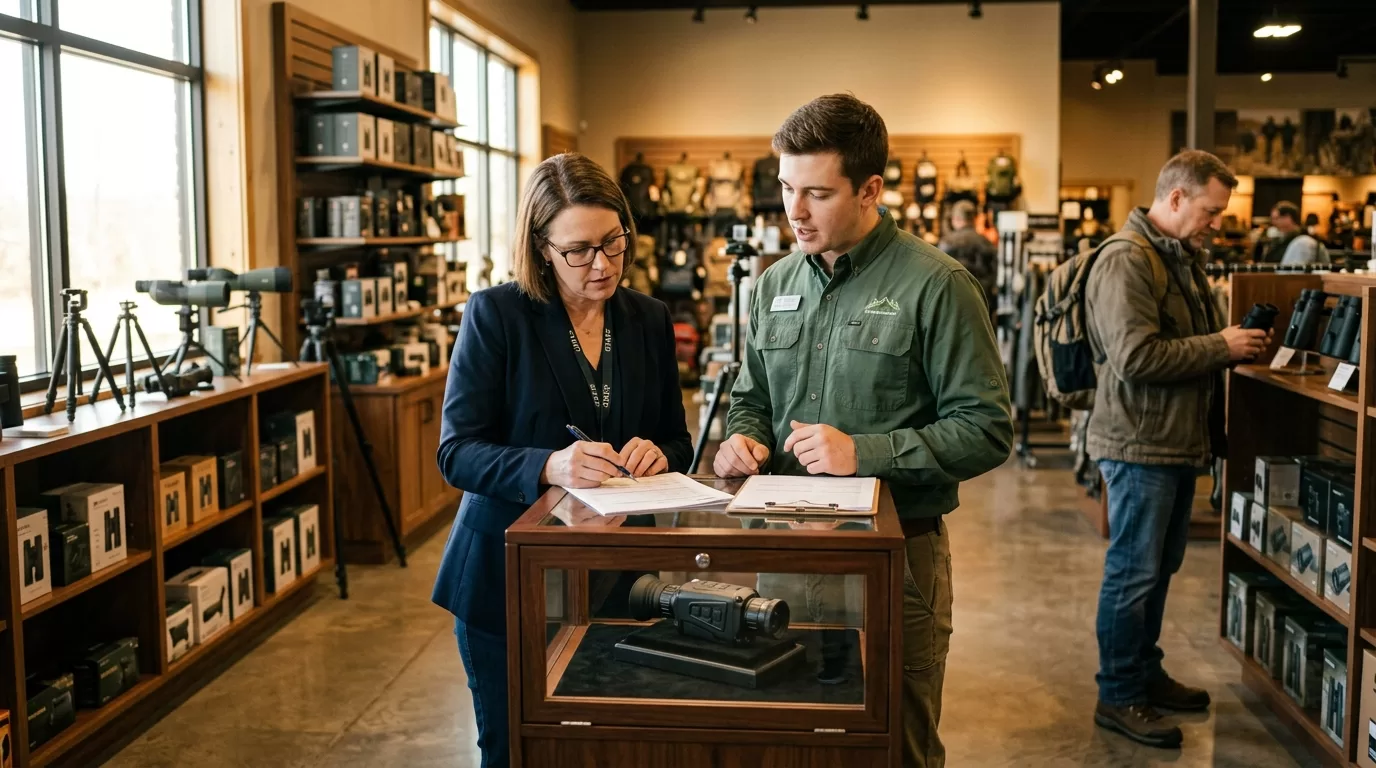
Start narrow. A dealer doesn’t need one of everything; that turns the program into a dusty display case with batteries missing. A good first fleet covers the buying steps a real customer takes: entry handheld, LRF handheld, thermal scope, and one premium unit that makes the “why does this cost more?” answer visible.
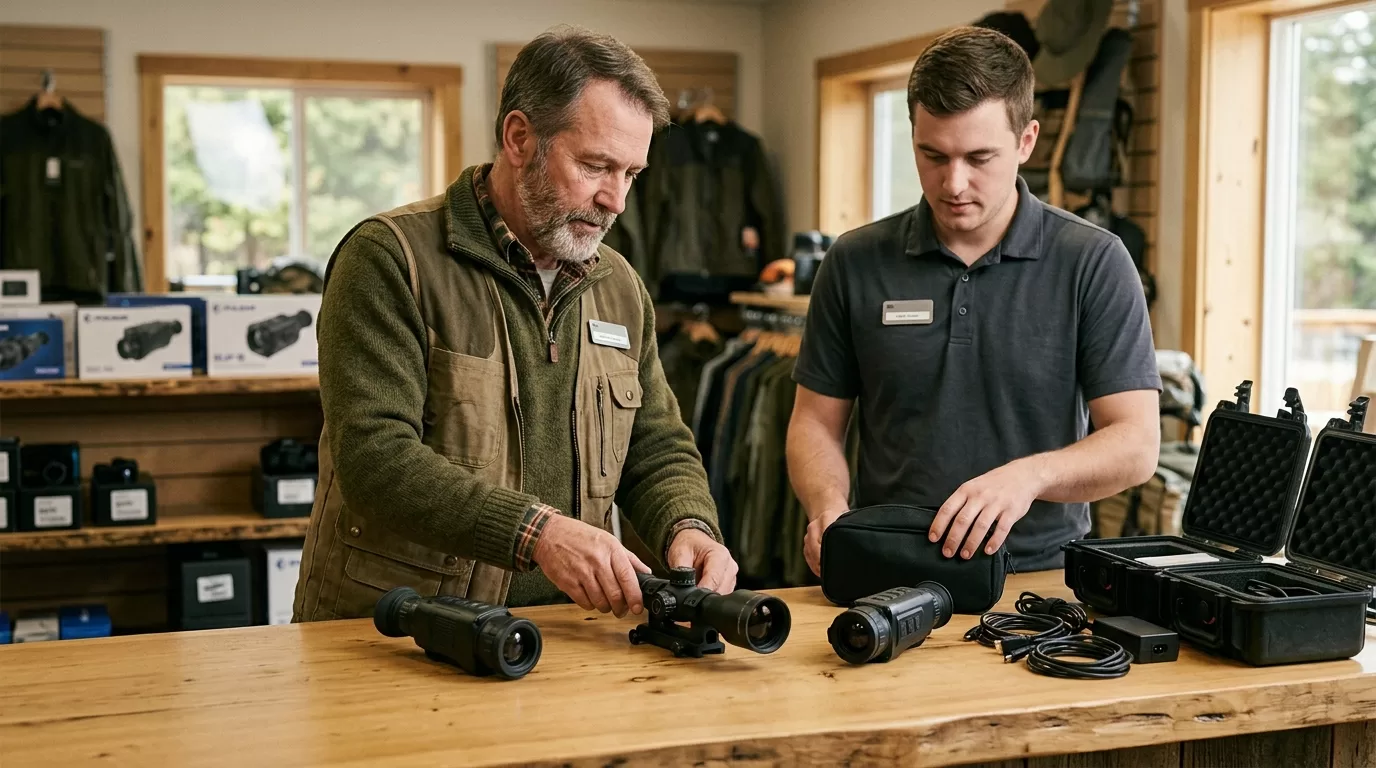
For Pixfra, that might mean a Mile 2 thermal monocular for first-time buyers, an Arc LRF for customers who ask about range, a Chiron LRF or Pegasus Pro thermal scope for hunters comparing mounted options, and a Sirius HD unit for customers who want to see what higher-end detection and image detail look like. Pixfra’s own device FAQ lists thermal sensitivity down to 18 mK or lower on select devices, model-dependent detection ranges from about 500 m to 3600 m, LRF models with 1000 m ranging, and battery life from roughly 4.5 to 15 hours depending on the device. Those numbers are useful. The demo makes them believable.
| Demo role | Best fit | Why it matters at the counter |
|---|---|---|
| Entry handheld | Mile 2-style monocular | Lets a new buyer learn thermal without mounting anything |
| Rangefinding handheld | Arc LRF-style monocular | Answers “how far is that?” during real observation |
| Mounted optic | Chiron LRF or Pegasus Pro-style scope | Shows reticle, zeroing flow, and recoil-ready controls |
| Premium comparison | Sirius HD-style unit | Makes higher resolution and detection range visible |
Competitor comparisons are part of the job. A customer may mention Pulsar Thermion 2, AGM Rattler V2, ATN Thor LTV, iRay RICO, Bering Optics Hogster, or Trijicon REAP-IR. Don’t fight the spec sheet one line at a time. Put two devices in the customer’s hands and ask them to identify a fence post, a warm engine block, and an animal-sized heat source at known distances. Real viewing beats forum arguments.
If you’re choosing suppliers after trade-show meetings, pair the demo policy with the qualification process in Pixfra’s SHOT Show sourcing guide. A supplier who can’t support demo units, firmware questions, staff training, and after-sales handling will create pain after the first shipment lands.
Staff Training Converts Trials
The weak point in most thermal demo programs isn’t the device. It’s the person handing it over.
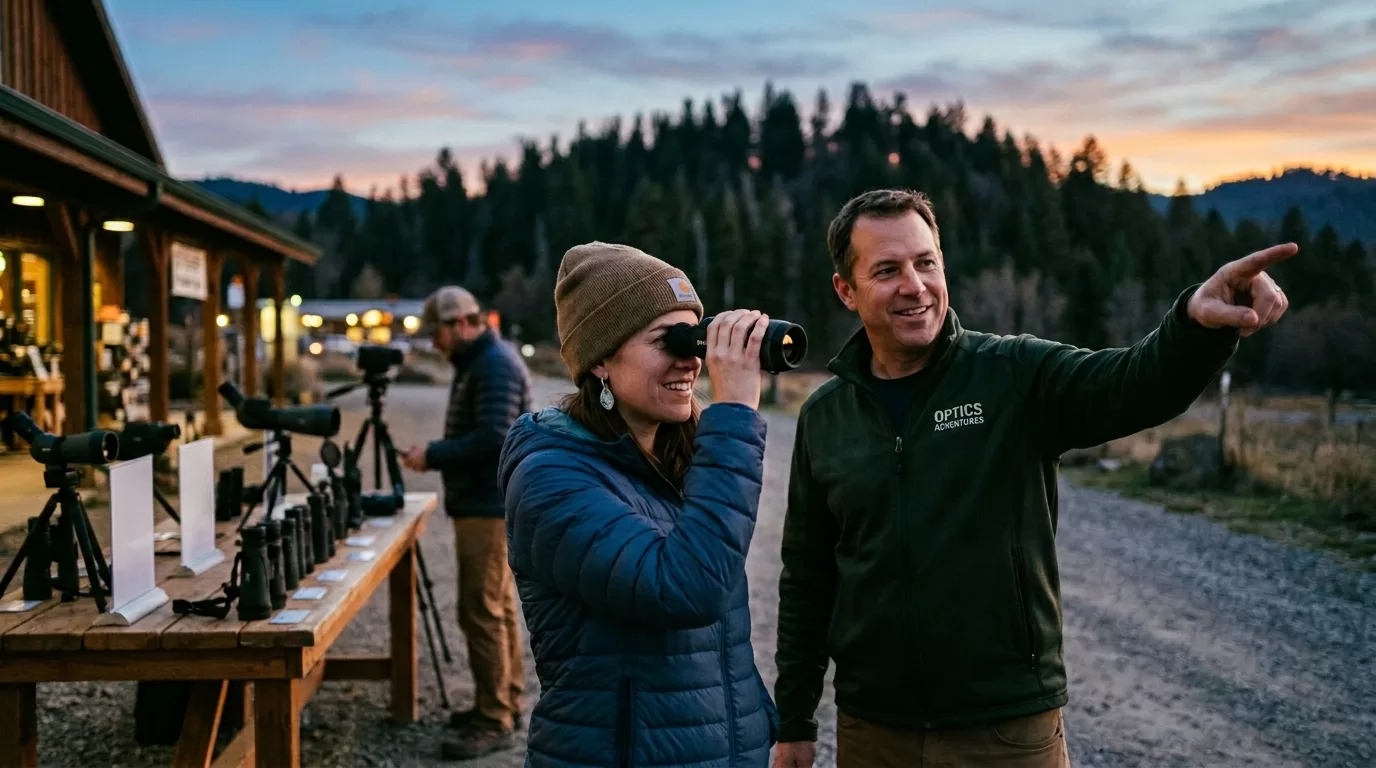
A salesperson who can explain “384 sensor, 35 mm lens, 50 Hz refresh rate, 18 mK NETD, 1000 m LRF” still may not know how to help a rancher decide. The useful question is sharper: “Are you scanning from a truck, walking fields, calling predators, or watching a fixed property line?” Each answer changes the recommendation. Handheld thermal works better for scanning. A thermal scope fits a planned shooting setup. A front attachment suits a customer who already trusts their daytime optic.
Use a short certification path before any dealer staff member can issue a loaner. Keep it practical:
- Set date, time, units, firmware version, and staff member in the demo log.
- Teach black-hot, white-hot, palette choice, brightness, contrast, and focus in under 10 minutes.
- Require the staff member to pair the Pixfra Outdoor App and confirm basic file transfer.
- Run a 50-yard, 150-yard, and 300-yard recognition drill if the location allows it.
- Teach the difference between detection, recognition, and identification. Buyers confuse those constantly.
The best training session includes one controlled failure. Foggy air. Wet grass. A heat-soaked parking lot after sunset. Let the staff see why a thermal image can look flatter in some conditions, because customers will see it too. A dealer who admits the tradeoff earns more trust than one who says every device sees everything, everywhere, every night.
At Pixfra, we’d rather see a dealer loan two units with trained staff than ten units with no script. A confident 12-minute counter demo can move a hesitant buyer faster than a weekend loan with no follow-up. The customer needs a guide, not a box.
Loan Terms Protect Margin
A demo unit is inventory with a job. Treat it that way.
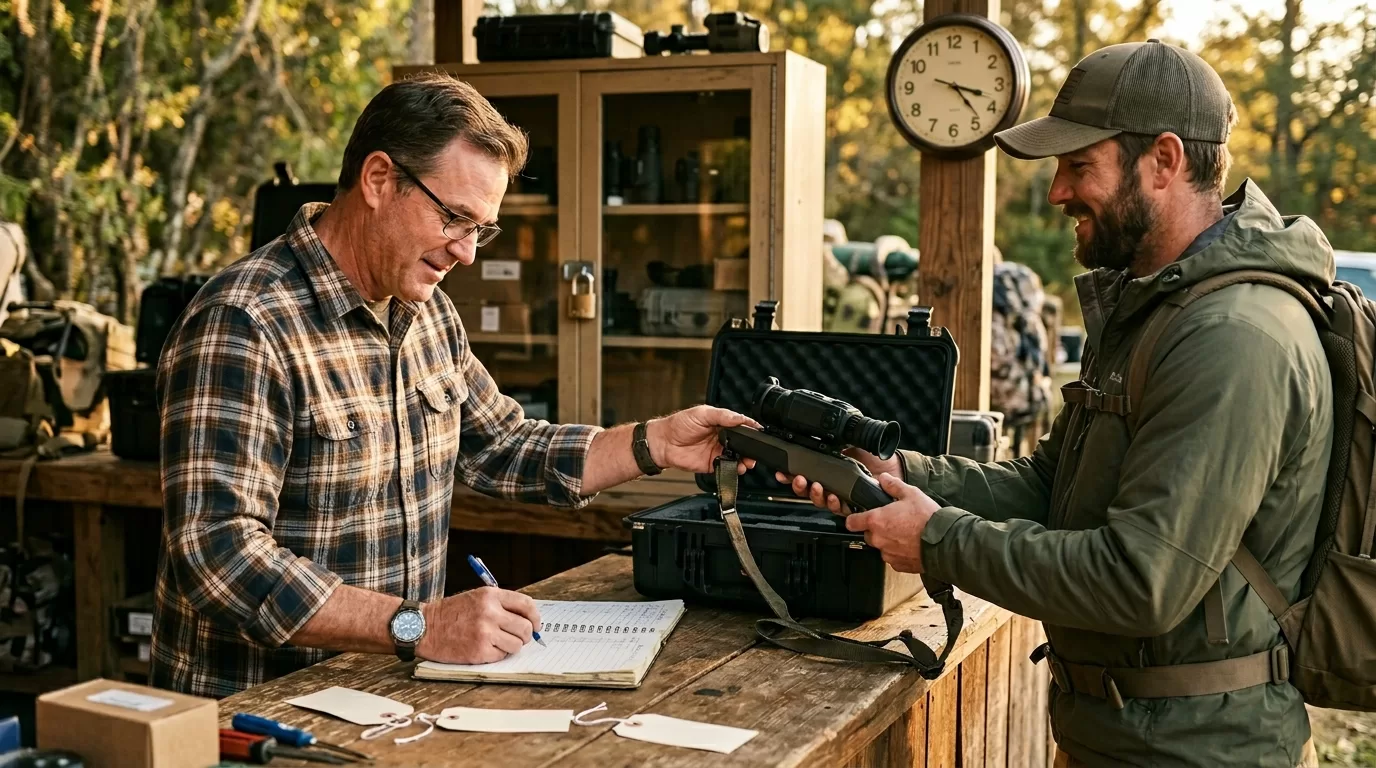
Set the loan term before the customer touches the device: 48 hours for mounted optics, 72 hours for a weekday handheld trial, or Friday-to-Monday for weekend field use. Collect a credit card hold or signed damage authorization. Record the serial number. Photograph the lens, eyepiece, housing, mount interface, battery compartment, and included accessories before checkout. This takes three minutes if the dealer has a phone template ready.
The loan agreement should be plain English. No legal fog. Use short lines:
- Customer receives unit serial number ___ on date ___.
- Customer returns unit by date ___ and time ___.
- Customer is responsible for loss, theft, water damage, lens damage, missing accessories, and unauthorized modification.
- Customer agrees to follow all federal, state, and local rules for use, transport, and hunting.
- Dealer may sell retired demo units as “demo” or “open-box” with condition clearly stated.
For thermal scopes and front attachments, add one extra rule: no mounting without dealer approval unless the customer has the right rings, torque driver, and firearm setup. Cross-threaded screws and over-tightened mounts are boring problems, but boring problems eat margin. If the dealer offers a supervised range demo, that works better than sending a scope home with a customer who has never zeroed a thermal optic.
Retirement timing matters. Sell demo units while they still look clean and still have current firmware support. A common policy is to retire after 20-30 demos, visible cosmetic wear, one model-year change, or before a major product refresh. Don’t wait until the rubber cap is missing and the box smells like truck carpet.
Compliance Keeps Deals Alive
Thermal optics live near regulated categories, so dealer programs need more discipline than a fishing-rod demo rack. Thermal imaging cameras can trigger export-control questions. The eCFR Commerce Control List lists ECCN 6A003 for certain cameras, systems, equipment, and components, including entries tied to focal plane arrays and thermal camera reporting. The same Part 774 lists ECCN 0A504 for optical sighting devices for firearms.
That doesn’t mean every retail demo requires a federal export license. It means the dealer and distributor should know the classification, destination limits, end-user limits, and use case before shipping, re-exporting, or sending units across borders for events. The U.S. Department of Commerce Bureau of Industry and Security says the next step after confirming EAR coverage is knowing the item’s ECCN in its classify your item guidance. That’s the cleanest starting point.
Inside the U.S., also watch state hunting rules. Texas, Pennsylvania, and California don’t treat species, night use, lights, thermal devices, and method of take in the same way. A dealer loan agreement should tell customers to check current state wildlife rules before using thermal optics for hunting. For wildlife observation, ranch work, security checks, and product education, the conversation is different.
Keep channel control tight too. A loaner sent to an authorized dealer for training should stay with that dealer, not drift to a cousin’s weekend trip two counties away. Require return scans, sign-in sheets for group demo nights, and written approval before a demo unit appears at a local predator-hunting seminar or outdoor expo.
Demo Metrics Beat Guesswork
A dealer program without numbers becomes a story contest. One sales rep says the demo fleet is working. Another says customers just borrow units and vanish. Both may be wrong.
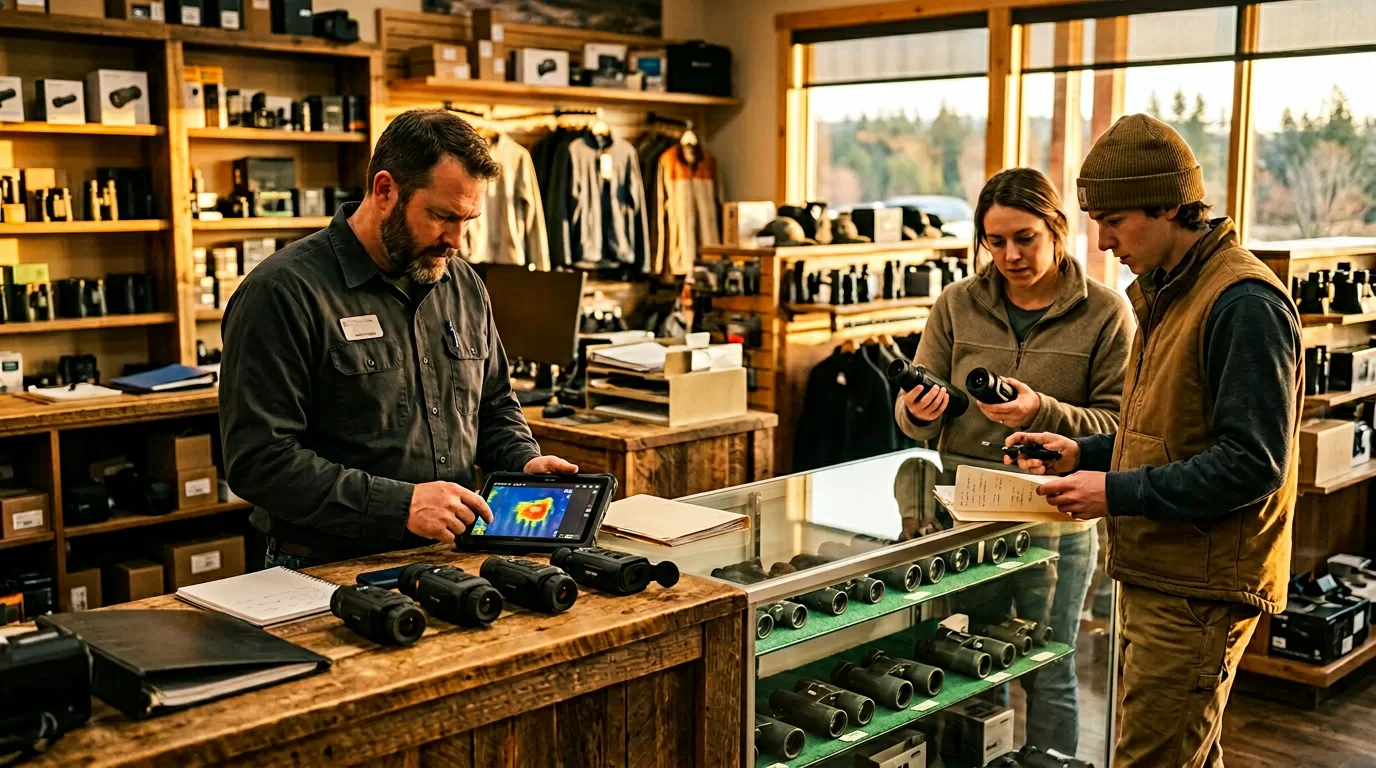
Track five numbers from day one: demo count, loan count, close rate after demo, average days to close, and damage or missing-accessory rate. Add objection notes in fixed categories: price, image quality, range, battery, mount, app, legal/use question, and competitor comparison. After 30 customer trials, patterns show up. Maybe customers love the Arc LRF but ask for longer battery life. Maybe buyers understand a thermal monocular quickly but need a staff-led range session before buying a scope.
| Metric | Target for a healthy program |
|---|---|
| Demo-to-sale close rate | 25-40% after qualified in-store demos |
| Loan return time | 90% returned on schedule |
| Missing accessories | Under 5% of loans |
| Staff follow-up | Same day after return |
| Demo resale timing | Before visible wear hurts price |
Use the numbers to tune inventory. If 18 of 30 demos are handheld monoculars and only 4 are thermal scopes, don’t let the next buy order chase scope inventory just because the margin is higher. If a premium Sirius HD-style demo closes fewer units but raises the average selling price by helping customers understand image quality, keep it in the fleet. One premium demo can lift the whole conversation.
This is where demo unit & loaner programs for thermal optics dealers become a real sales system. The program tells you which product a customer can understand alone, which product needs staff explanation, and which product needs a field night before the buyer trusts it. That’s better than guessing from catalog clicks.
FAQ
Do dealers need demo thermals?
Yes, if the dealer sells four-figure thermal optics or wants repeat business from hunters, ranchers, wildlife observers, and outdoor buyers. Thermal image quality is hard to judge from specs alone, so live viewing shortens the decision.
How long should loans run?
Use 48-72 hours for most loaners and Friday-to-Monday for weekend field trials. Longer loans slow inventory rotation and usually reduce follow-up quality.
Who pays shipping and insurance?
The dealer or distributor should define this before enrollment. For higher-value thermal scopes, use insured shipping, adult signature, serial-number tracking, and a signed damage policy.
Can demo units be resold?
Yes, but sell them clearly as demo or open-box units with condition notes, included accessories, and remaining warranty terms. Retire them before heavy cosmetic wear hurts trust.
What training should dealers require?
Require staff to pass a basic device setup, app pairing, menu control, battery swap, LRF use, and field-viewing drill. A trained salesperson prevents most failed demos.
Pixfra can support dealer programs with product selection, staff training topics, demo fleet planning, and practical field-use guidance. Start with two dealer demo kits: one counter-ready handheld unit and one scheduled field loaner, then review close rate, objections, and returns after the first 30 customer trials.