

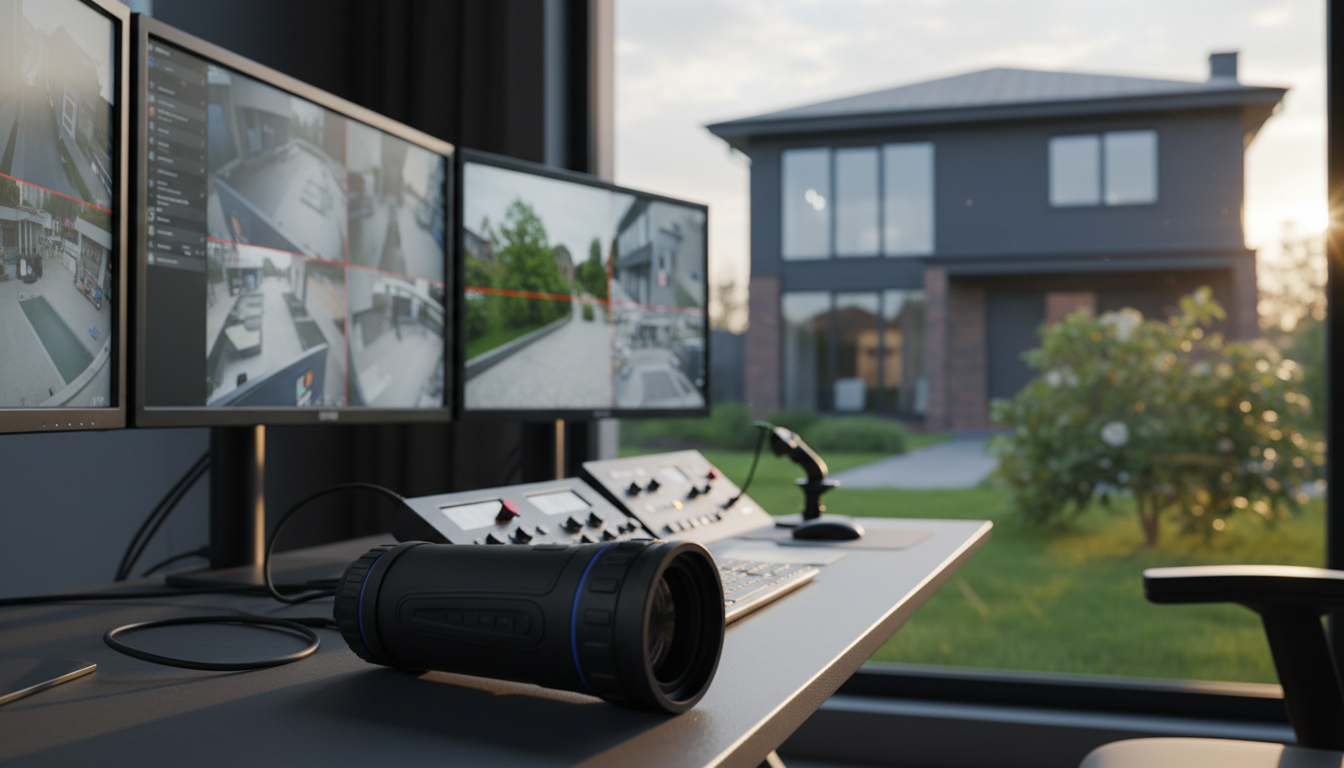
When you’re serious about protecting your property, you need tools that work when visibility drops to zero. That’s where thermal monoculars come in. Unlike traditional security cameras that struggle in darkness or fog, thermal monoculars detect heat signatures, giving you a clear view of what’s happening around your home—day or night, rain or shine.
We’ve spent months researching and analyzing the top thermal monoculars available in 2026, looking at real-world performance, user feedback, and technical specs. Whether you’re monitoring your perimeter at 2 AM or checking for movement in dense fog, these devices offer a level of awareness that standard security equipment simply can’t match.
What Makes Thermal Monoculars Perfect for Home Security
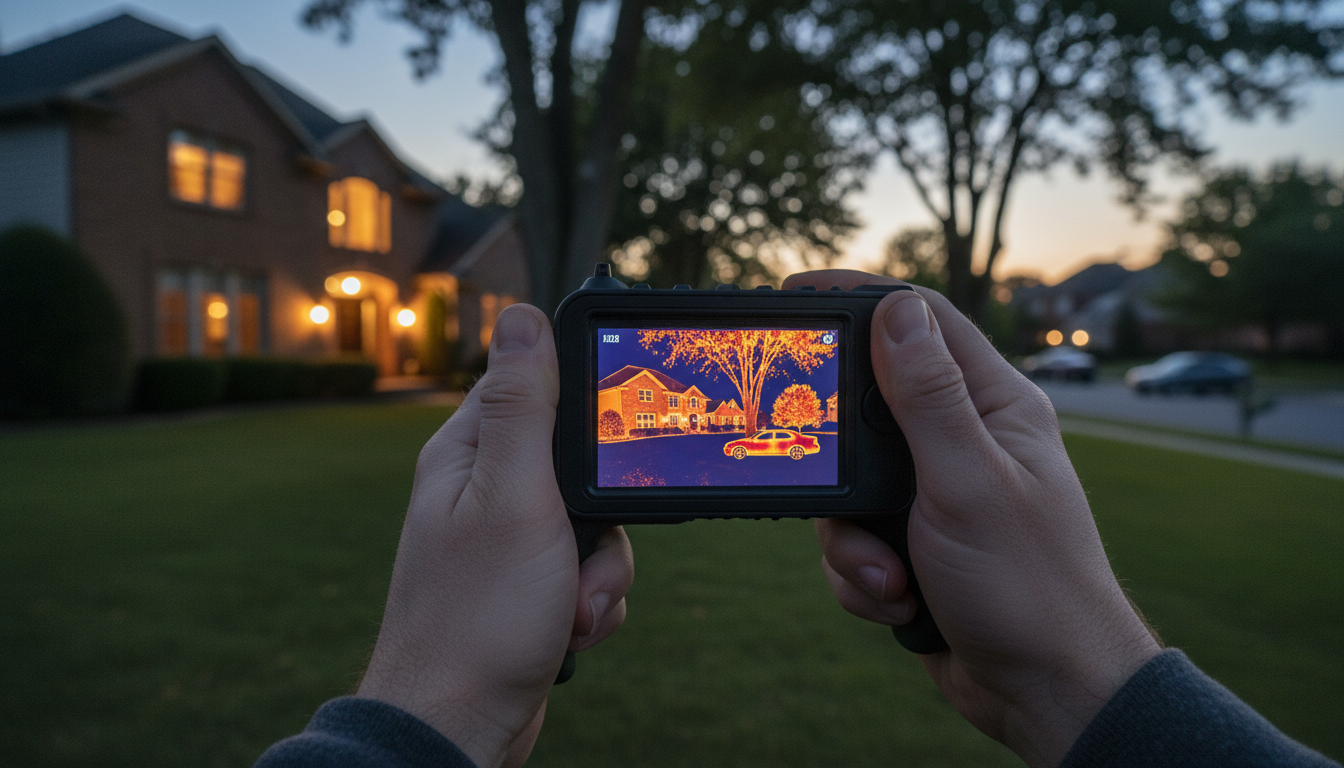
Thermal monoculars detect heat signatures that are invisible to traditional cameras, making them effective in complete darkness and adverse weather conditions. You’re not relying on ambient light or motion sensors that can be triggered by blowing branches.
In security applications, thermal monoculars can detect people and vehicles in total darkness, through fog, and even in densely vegetated areas, making them invaluable tools in these fields. If someone approaches your property from any direction, you’ll spot their heat signature long before they get close.
The handheld design means you can move around freely, checking different angles and areas without being tethered to a fixed camera system. Plus, you can take them with you when you’re away from home—perfect for camping trips or checking your cabin property.
And here’s something worth knowing: while thermal monoculars can’t see through walls, they can detect heat signatures on surfaces like walls, doors, or ceilings if heat is coming through them. This can help you identify areas where people might be standing just outside or spot potential fire hazards.
Top Features to Look for in Security-Focused Thermal Monoculars
Not all thermal monoculars are created equal, especially when it comes to home security. Here’s what actually matters when you’re protecting your property.
Detection Range: For home security, the best thermal monoculars can spot things about 1,800 meters away, while middle-priced units usually see between 600 and 800 meters, and budget models often detect up to 300 meters. For most residential properties, a detection range of 300-600 meters is plenty.
Resolution and Sensitivity: The sensor, also called a microbolometer, reacts to infrared waves or heat emitted by people or objects, and the more pixels the sensor has, the better the image quality. Look for sensors with at least 256×192 resolution for basic security needs. Higher resolutions like 384×288 or 640×480 give you more detail for identification at longer distances.
Battery Life: Some devices offer 3400mAh rechargeable batteries that provide more than 7 hours of battery life even under continuous use, while others can run for up to 11 hours of continuous use. For security monitoring, you’ll want at least 5-6 hours of runtime.
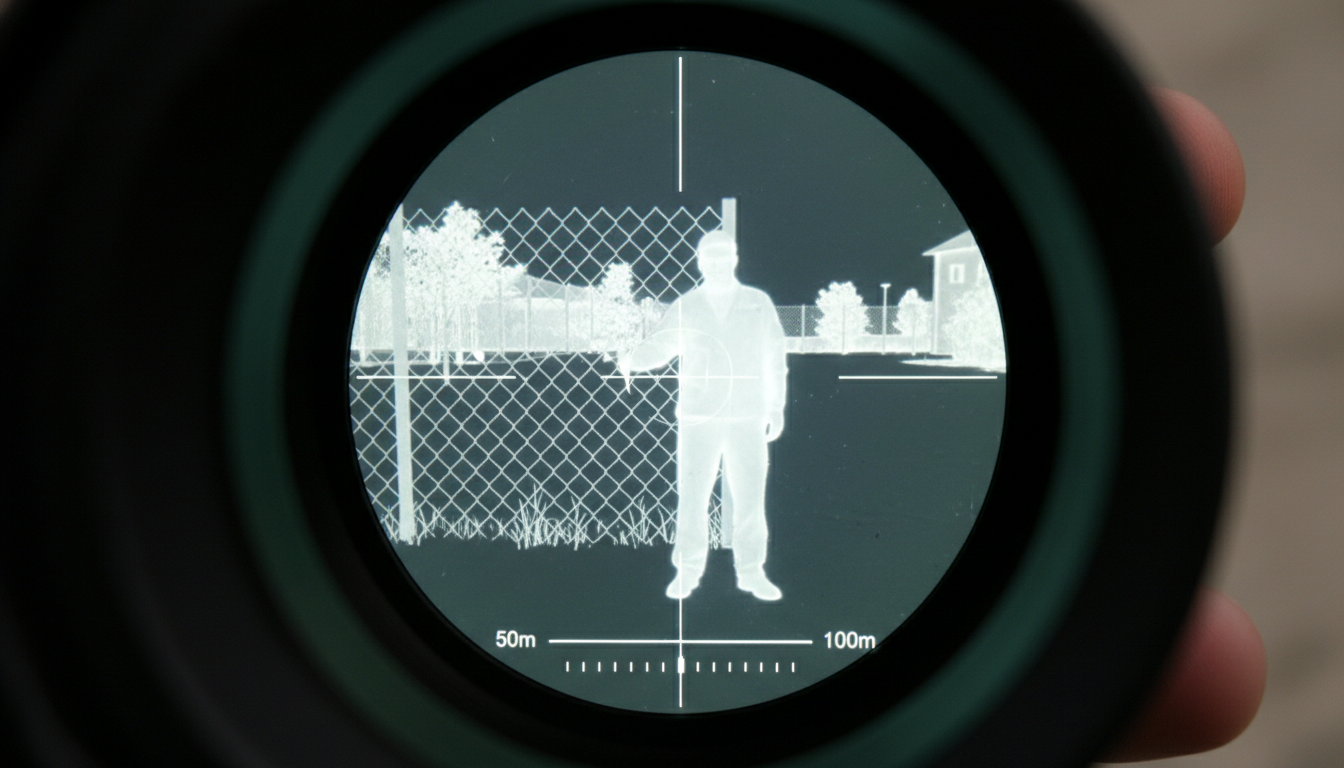
Display Modes: White-hot mode shows warmer objects as bright white while cooler objects appear as darker shades, making it perfect for quickly spotting heat sources in dense areas and suitable for security operations. Most quality units offer multiple color palettes to adapt to different conditions.
Durability and Weather Resistance: Your security tool needs to work in any weather. Look for IP67 waterproofness, compact size, multiple color palette choices, and built-in rechargeable batteries as baseline features.
Our Top Picks for Home Security in 2026
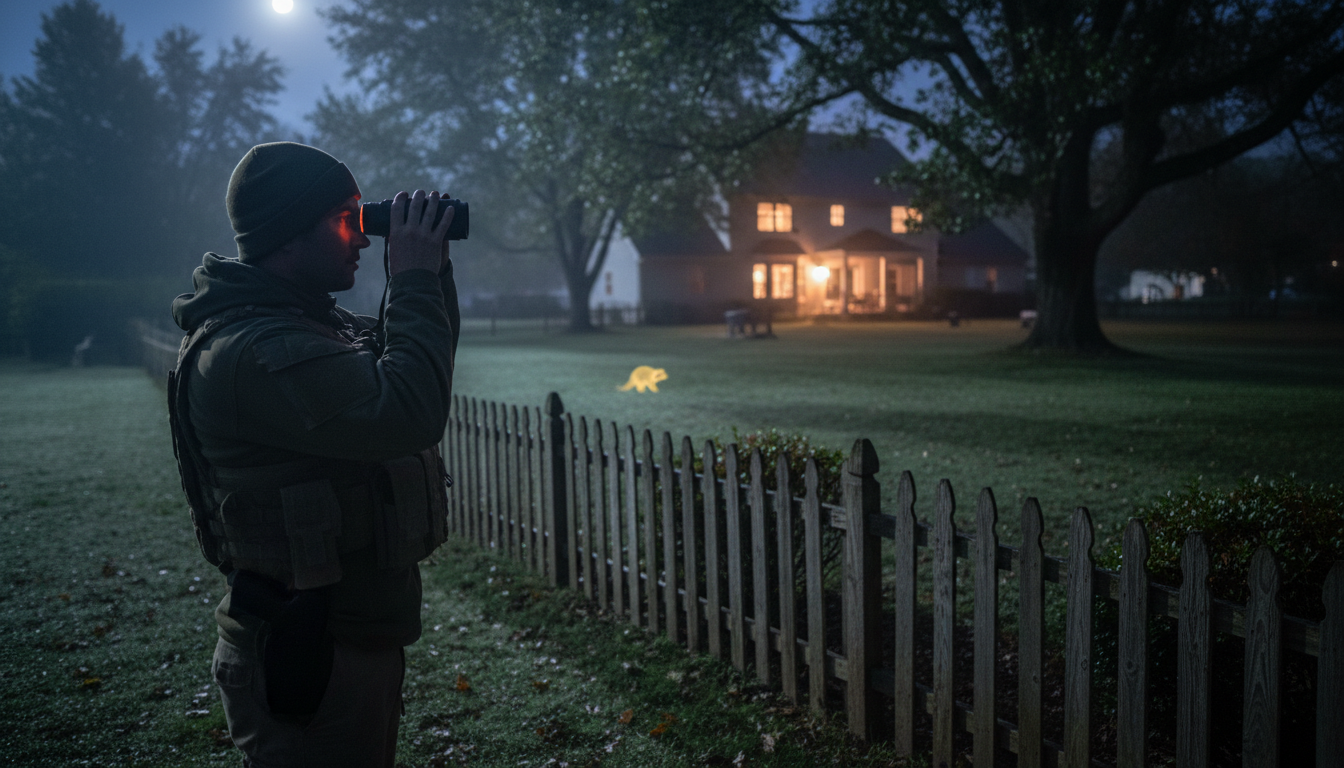
Based on our research and analysis of current market offerings, here are the thermal monoculars that deliver the best value and performance for home security applications.
Budget-Friendly Security Options
If you’re just getting started with thermal imaging for security, several sub-$500 options deliver surprisingly capable performance. Several budget thermal monocular options, particularly models under $500, deliver near-professional performance.
The TOPDON TS004 Thermal Imaging Monocular is an excellent choice, coming with premium features like long battery life, a durable build, and a 50Hz refresh rate while remaining affordable. It’s become a popular choice for homeowners who want reliable detection without breaking the bank.
For those prioritizing portability, the RIX Pocket K2 is attractive because it’s very affordable, and weighing only 0.4lb, it’s lighter than most smartphones and will easily fit in your pocket. You can keep it on your person while doing yard work or checking your property.
The Pixfra range of thermal monoculars offers several models designed specifically for outdoor security applications, with options suitable for various property sizes and security needs.
Mid-Range Performance Leaders
The Nocpix Vista H50R features a useful laser rangefinder and 50mm germanium objective lens powered by a 640×512 thermal sensor, while the flagship Vista S50R contains a powerful 1280×1040 sensor but costs around $5,200. The H50R sits at a price point that makes sense for serious home security without reaching professional-grade costs.
The Vista H50R, with 4x base magnification and 10-times zoom to 40x, excels at precise ranging with its through-the-lens laser rangefinder, easy connectivity to mobile apps, and easy-to-navigate menus. This makes it particularly user-friendly for homeowners who aren’t thermal imaging experts.
Models like the Pixfra Sirius HD and Pixfra Pegasus 2 LRF fall into this category, offering advanced features with rangefinding capabilities that help you accurately assess distances on your property.
Professional-Grade Options
When you need the absolute best detection and image quality, premium models demand a high price, but you get the best thermal sensors plus high-quality laser rangefinders. The average price of a quality thermal viewer is around $3,000, but for large properties or comprehensive security setups, the investment makes sense.
Professional-grade models provide exceptional sensitivity with sub-18mK NETD sensors, detecting even the smallest temperature differences and adapting to any condition with multiple viewing modes and built-in laser rangefinders for precise distance measurements.
For property owners with extensive acreage or who need the highest level of security awareness, devices like the Pixfra Draco and Pixfra Arc LRF offer professional-grade thermal imaging with extended detection ranges and superior image clarity.
How to Use Thermal Monoculars for Maximum Security Coverage
Having the right equipment is only half the battle. Here’s how to actually use thermal monoculars effectively for home security.
Establish Regular Patrol Routes: Walk your property at different times, focusing on entry points, blind spots, and areas with poor lighting from standard fixtures. Thermal imaging works equally well at any time, so you’ll get consistent results whether you patrol at dusk or midnight.
Learn Your Property’s Heat Signature: Spend time familiarizing yourself with the normal thermal appearance of your property. Temperature differential is key—dawn and dusk offer optimal conditions for thermal imaging use. You’ll quickly learn what’s normal and what stands out.
Document Suspicious Activity: Many thermal monoculars offer the ability to record video in high definition, providing a clear and detailed record of what you see, with some offering features like image stabilization or time-lapse recording. This can be valuable evidence if you need to report suspicious activity.
Combine with Other Security Measures: Thermal monoculars work best as part of a layered security approach. Use them alongside traditional cameras, motion-activated lighting, and alarm systems. When your standard cameras pick up movement, your thermal monocular can help you immediately assess whether it’s a person, animal, or false alarm.
Check Vulnerable Areas First: Focus on gates, driveways, property lines, and any areas with dense vegetation where someone could hide. Thermal monoculars can spot animals in dense foliage or during nighttime, making them ideal for nature enthusiasts, researchers, and those monitoring property.
If you’re curious about how thermal technology compares to other night vision options, check out this guide on whether thermal monoculars are considered infrared.
Real-World Applications Beyond Basic Monitoring
Thermal monoculars do more than just spot intruders. Here are some additional security applications that homeowners find valuable.
Thermal monoculars allow homeowners to proactively check for potential risks, such as detecting uneven temperatures along pipes showing where blockages are forming, and pinpointing circuits or outlets causing overloads to help prevent electrical fires. These preventive applications can save you thousands in repairs.
They can help identify areas infested by pests by showing places where they nest because of heat emitted from their bodies or colony formation in walls, attics, or basements, potentially saving money and time in pest control work.
For homeowners with pets, thermal monoculars can help locate animals that have wandered off your property at night. You can keep an eye on your property 24/7, search for missing pets or predators, and scan sidewalks, parking lots, and parks in the dark.
Some homeowners pair their thermal monoculars with IR torch accessories to enhance their overall night vision capabilities, though thermal monoculars don’t require additional illumination to function.
Maintenance Tips and Best Practices
Your thermal monocular is a precision instrument that needs proper care to maintain performance.
Proper Storage: Keep your device in a protective case when not in use. Thermal monoculars are IP67 rated for waterproofness and built for rough outdoor use, but they’re electronics similar to digital cameras or mobile phones, so with some care they should last many years.
Battery Management: Charge batteries according to manufacturer specifications. Keep a backup battery or power bank handy if you plan extended monitoring sessions. Rechargeable batteries offering more than 7 hours of continuous use mean you won’t run out of power during overnight monitoring.
Lens Care: The germanium lenses in thermal monoculars require gentle cleaning. Use only recommended cleaning materials and avoid touching the lens surface with your fingers. Dust and debris should be removed with proper lens brushes.
Regular Testing: Don’t wait for an emergency to discover your thermal monocular isn’t working. Test it weekly, check battery levels, and verify all functions are operating correctly.
Firmware Updates: Many modern thermal monoculars connect to mobile apps and receive firmware updates. Keep your device updated to ensure optimal performance and access to the latest features.
Understanding Thermal Imaging Technology for Security
If you want to get the most from your thermal monocular, it helps to understand how the technology actually works.
Everything with thermal energy emits a certain amount of infrared light, and thermal imaging sensors detect infrared radiation and then express each heat value through a set of corresponding colors that is viewable on a screen. This is why you can see living beings and warm objects even in complete darkness.
Thermal monoculars focus on detecting infrared radiation (heat) rather than light, converting this heat energy into visual images you can see on a screen. This fundamental difference from traditional night vision means they work in conditions where starlight amplification devices fail.
Thermal monoculars use germanium glass, which allows infrared energy to pass through and focus on a sensor called a micrometer. This specialized glass is why thermal optics cost more than standard optical devices.
The refresh rate matters for detecting movement. A 50Hz refresh rate provides smooth imagery, making it easier to track moving subjects across your property. Lower refresh rates can create laggy images that miss quick movements.
Conclusion
Thermal monoculars have become accessible, practical tools for home security in 2026. With options ranging from budget-friendly models under $500 to professional-grade devices with advanced features, there’s a thermal monocular that fits every property size and security need.
The key is matching the device to your specific requirements. Small urban properties might only need basic detection at 200-300 meters, while rural homeowners with large acreage benefit from extended-range models with laser rangefinders and premium sensors.
Thermal monoculars work perfectly for wildlife observation and security applications with all-weather operation, and whether you’re protecting property or exploring the night, choosing the right thermal monocular can transform your experience.
Remember that thermal monoculars work best as part of a complete security strategy. They give you awareness and early warning, but they’re most effective when combined with other security measures like lighting, cameras, and alarm systems.
The technology continues advancing rapidly, with better sensors, longer battery life, and more user-friendly interfaces appearing every year. The models available in 2026 offer capabilities that were only available in military-grade equipment just a few years ago—now accessible to homeowners who take their property security seriously.
Frequently Asked Questions
What’s the minimum detection range I need for home security? For most residential properties, a detection range of 300-500 meters is sufficient. This covers typical lot sizes and allows you to detect people approaching from neighboring properties or streets. Larger rural properties benefit from 800+ meter detection ranges, but you’ll pay more for that capability. Consider your actual property size and sightlines when choosing.
Can thermal monoculars work during the day for security monitoring? Yes, thermal monoculars work 24/7 regardless of lighting conditions. Unlike night vision devices that struggle in daylight, thermal imaging detects heat signatures any time. Some users prefer the black hot color palette during daytime to reduce glare. You can spot someone hiding in bushes or behind structures just as easily at noon as at midnight.
How long do thermal monocular batteries typically last during security patrols? Battery life varies by model and usage intensity. Budget models typically offer 5-7 hours of continuous use, while mid-range options provide 8-10 hours. Professional-grade units can run 10+ hours. For security patrols, you’re likely using the device intermittently, so actual runtime will be longer. Keep a portable power bank handy for extended monitoring sessions.
Do I need special training to use thermal monoculars for home security? No formal training is required, but you’ll benefit from spending a few hours learning your device. Most modern thermal monoculars have intuitive controls and helpful mobile apps. The learning curve involves understanding what different heat signatures look like and recognizing normal versus suspicious thermal patterns on your property. Spend a week doing regular patrols to build familiarity.
Are thermal monoculars legal for residential security use? In the United States, thermal monoculars are legal for civilian use in security applications. You can monitor your own property without restrictions. However, avoid pointing thermal devices at neighbors’ homes or windows, as privacy laws still apply. Use them responsibly and only for monitoring your own property boundaries and approaches.