
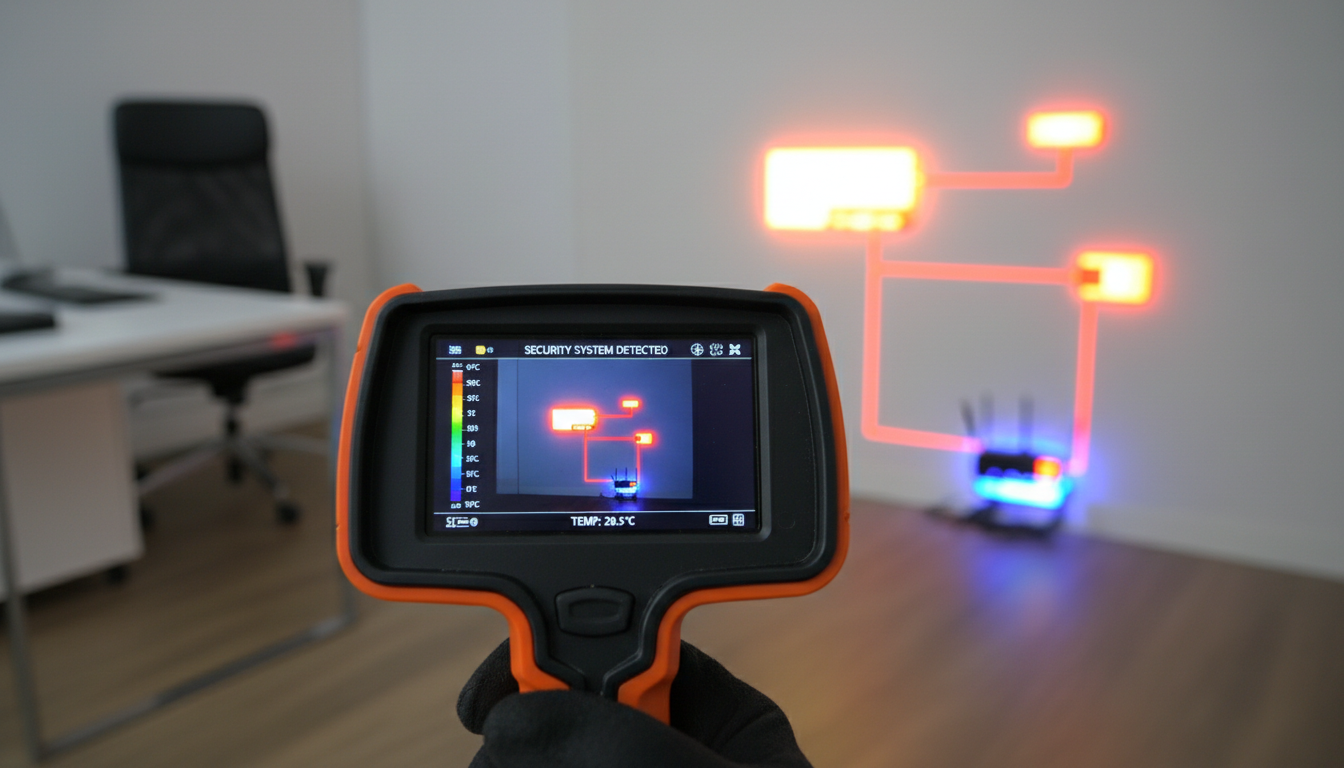
Security professionals and privacy-conscious individuals face a growing challenge: hidden surveillance devices. As these gadgets get smaller and easier to conceal, detection methods need to keep pace. Thermal imaging cameras have emerged as a potential solution, but how well do they actually work?
How Thermal Cameras Detect Heat Signatures
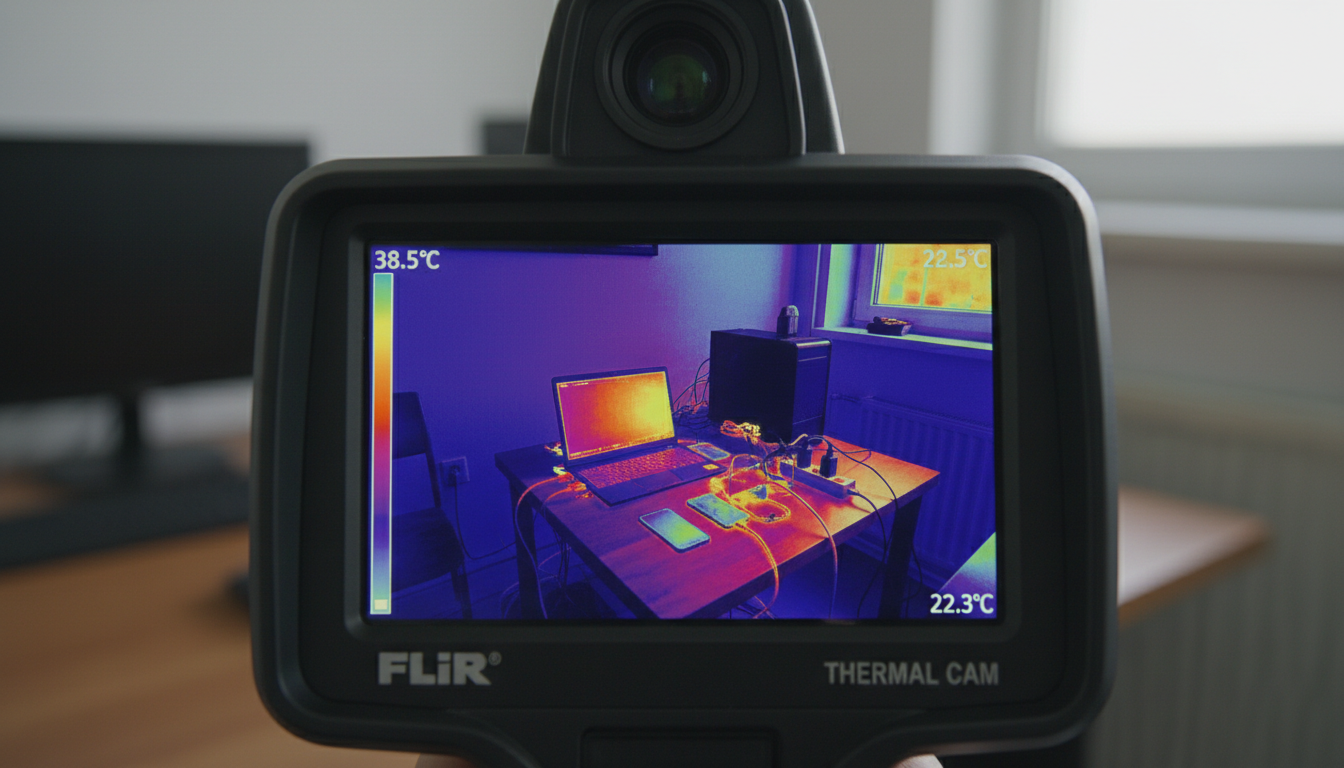
Thermal imaging cameras work differently from standard security cameras. Instead of capturing visible light, they translate thermal energy (heat) into visible light to analyze objects or scenes, displaying temperature profiles as thermal images. Every electronic device generates heat when powered on, which creates a detectable signature.
These cameras can detect surveillance devices the moment they’re powered on, and even if a device has been hidden for an extended period, once activated, it will emit heat that can be detected. This makes them particularly useful for remote visual inspection devices that combine multiple detection capabilities.
The science is straightforward: thermal imaging cameras detect infrared radiation emitted by all objects with a temperature above absolute zero. Security devices like hidden cameras, motion sensors, and recording equipment all produce heat during operation. Digital camera sensors always have an elevated temperature compared to ambient temperatures, making them stand out on thermal scans.
What Security Devices Can Be Detected
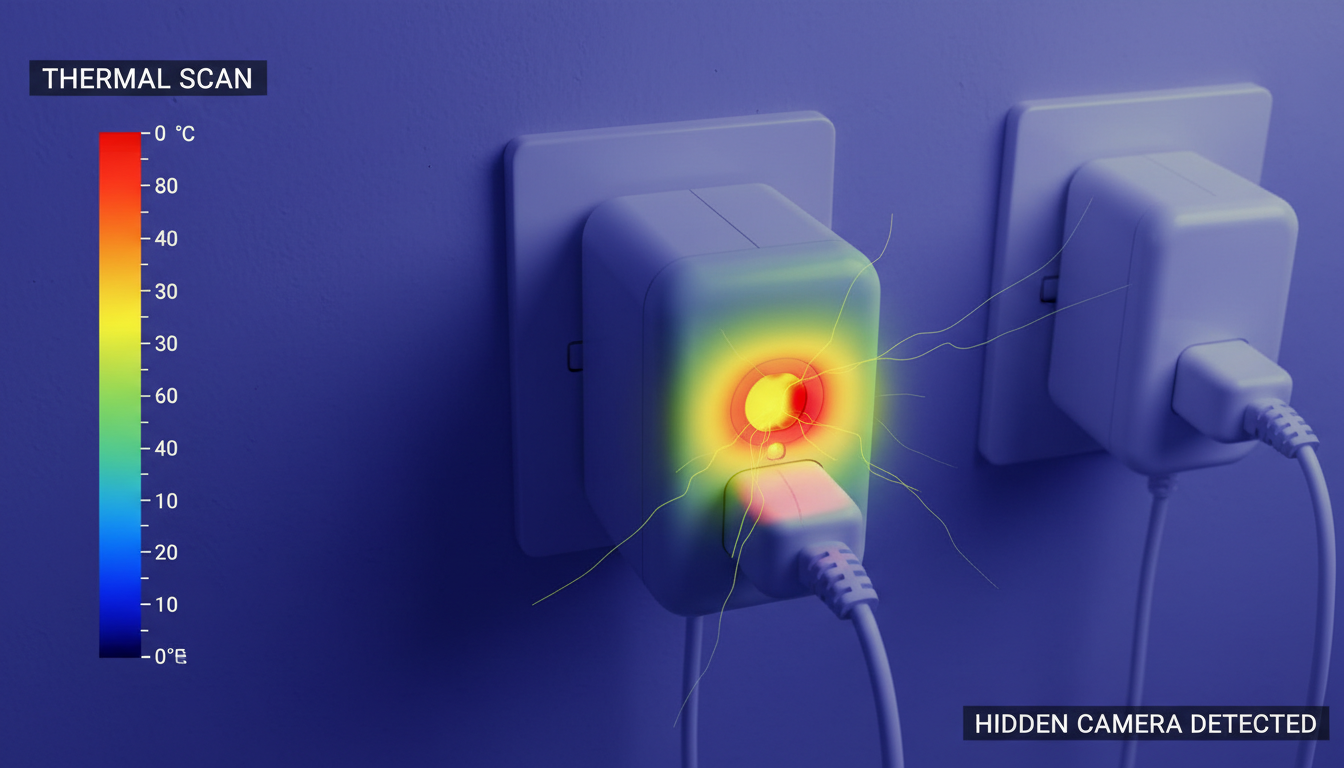
Thermal cameras excel at finding powered electronic equipment. They’re great for locating spy cameras hidden in hotels or short-term rentals, revealing water leaks in houses, and finding overheating electrical components. You’ll likely spot wall plugs, computers, and televisions showing elevated temperatures, which is normal.
The camera’s thermal sensitivity determines its ability to detect small temperature differences, which is critical for spotting low-power electronics like bugs, hidden cameras, or wiring, and the lower the NETD value, the better the camera can detect subtle heat signatures from surveillance equipment.
Research backs this up. HeatDeCam, a thermal-imagery-based detector, achieved over 95% accuracy in detecting hidden cameras. Spy cameras disguised as charger plugs exhibit additional uneven heat distribution compared to regular charger plugs because they have to add unique hardware components like SD cards and image sensors without changing the original form factor.
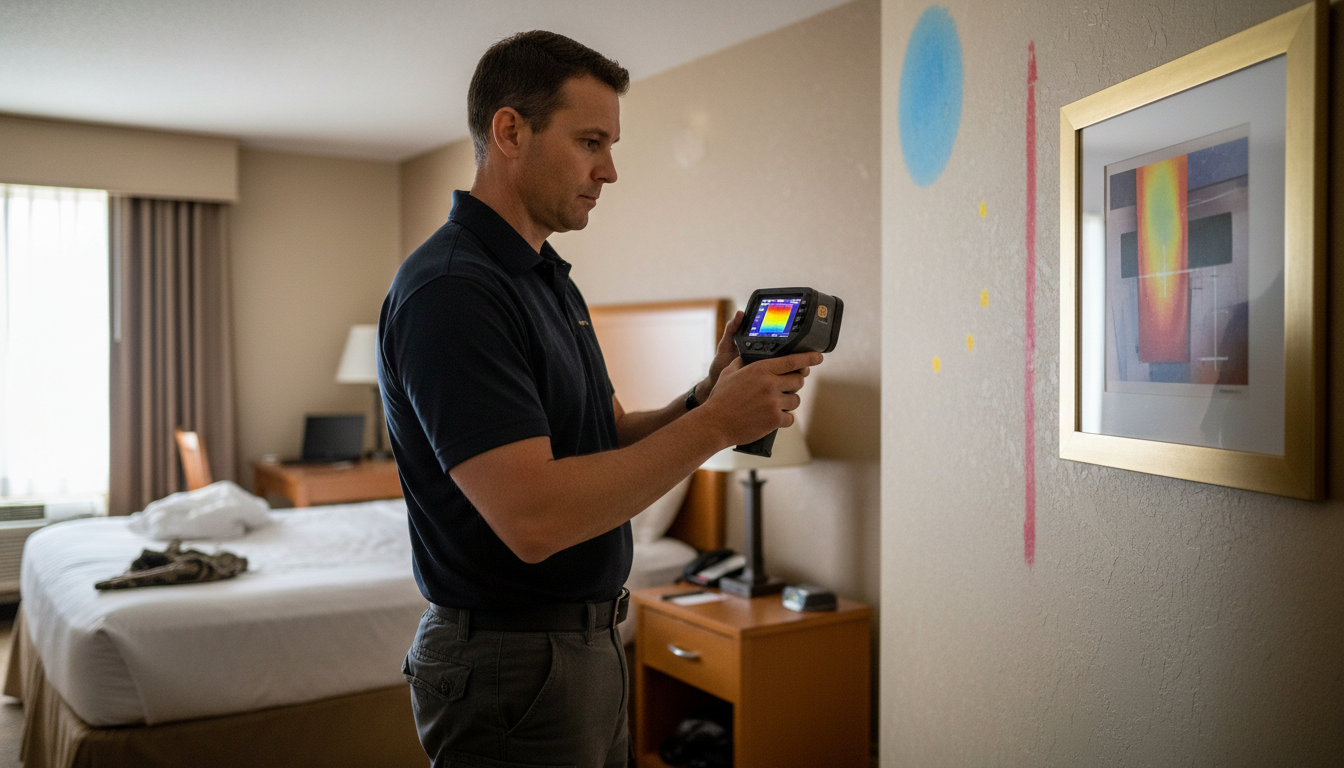
Professionals using thermal imaging devices like the Sirius HD can scan rooms for unusual heat patterns that indicate hidden electronics. Look for small spots of elevated temperature in unexpected places—especially near private areas like bedrooms or bathrooms.
Limitations You Should Know About
Thermal cameras aren’t perfect. In general, a thermal camera can’t detect hidden cameras if those devices aren’t powered on or generating sufficient heat. Devices in standby mode or those designed with heat-dissipating features become harder to spot.
You may encounter problems when the surroundings or backgrounds are the same temperature as an object in the image, and during very hot days, thermal cameras may be unable to distinguish an object from its surroundings. Temperature contrast matters more than absolute heat levels.
Thermal cameras cannot see through walls—they detect the thermal radiation emitted from surfaces, so they can only visualize heat patterns on the surface of objects. Glass and aluminum foil also block infrared rays, making detection impossible through these materials.
Another challenge: thermal cameras do not capture visible light, so details such as faces, license plates, or clothing color are not visible, making identification difficult. They’re better for detecting and tracking than recognition.
Counter-Surveillance Applications
Thermal cameras help identify unusual heat patterns in the environment—a warm spot on a wall may suggest a hidden device, or a cooler area might indicate tampering or a secret compartment, and they provide a quick way to scan large areas. Security professionals can instantly identify potential heat sources by pointing the camera at a wall or room.
For professional security work, advanced thermal cameras like the Pegasus 2 LRF offer the resolution and sensitivity needed for thorough inspections. Higher resolution allows for clearer images and better detection of smaller or more subtle thermal signatures, which is especially important for checking devices hidden behind objects or in complex environments.
Thermal cameras provide a level of discretion that traditional surveillance systems cannot, and since they don’t rely on visible light, intruders are unlikely to see the camera or know they’re being monitored. This makes them valuable for covert operations.
How to Choose the Right Thermal Camera
When selecting a thermal camera for security device detection, specs matter. At least 256×192 pixels resolution is recommended, with 320×240 or higher preferred. Frame rate affects how quickly you can scan an area, with 25Hz or higher being standard.
A narrower FOV (closer to 30°) is ideal for pinpoint accuracy and focused inspections, while a wider FOV (closer to 50°) can help you scan large areas quickly. Depending on your inspection needs, you might need both capabilities.
Advanced thermal cameras offer “fusion” modes that combine thermal and visible light images, making it easier to detect hidden devices when combined with visual inspections. These hybrid systems, like the Draco model, give you the best of both worlds.
Battery life matters for field work. Professional models typically offer 4-6 hours of operation. Look for waterproof ratings (IP65 or higher) if you’ll be working outdoors or in harsh conditions.
Real-World Detection Strategies
To find a spy camera in a room, you just scan the room with a thermal camera, looking for small spots of elevated temperature. If you find something odd, usually with a small glass lens that you don’t think should be receiving an electrical signal and is showing an elevated temperature, it might be a spy camera.
Start your scan methodically. Check common hiding spots: smoke detectors, air vents, electrical outlets, decorative items, and anywhere with a small hole or lens. Move slowly and give the camera time to register temperature differences.
Thermal cameras enable early detection of surveillance devices, allowing countermeasures to be implemented promptly, and even low-power or low-heat devices can be identified early in the process. Time your scans for when you expect devices to be active—most surveillance equipment runs continuously or on motion activation.
For professionals, specialized tools like the IR Torch combine thermal imaging with other detection methods for comprehensive sweeps. Multiple detection vectors increase your chances of finding hidden devices.
Conclusion
Thermal imaging cameras offer a powerful tool for detecting security devices, but they’re not magic. They work best on powered electronics that generate detectable heat signatures. Professional-grade models with high sensitivity, good resolution, and fusion modes provide the most reliable results. While limitations exist—especially with unpowered devices or high-temperature environments—thermal cameras remain one of the most effective counter-surveillance tools available. Whether you’re checking a hotel room or conducting professional security sweeps, understanding what thermal cameras can and can’t detect helps set realistic expectations and develop effective inspection strategies.
FAQs
Can thermal cameras detect hidden cameras that are turned off?
No, thermal cameras can’t reliably detect hidden cameras that are completely powered off. They work by identifying heat signatures from active electronics. If a surveillance device isn’t generating heat, it won’t show up on thermal scans. You’ll need to power on the device or use other detection methods like RF detectors for wireless cameras or physical visual inspections.
What’s the difference between thermal cameras and night vision for finding security devices?
Thermal cameras detect heat signatures and work in total darkness without any light source. Night vision cameras amplify existing light and need at least some ambient light or infrared illuminators to function. For finding hidden security devices, thermal cameras are more effective because electronic components generate heat regardless of lighting conditions. Night vision won’t help you spot a hidden camera inside a clock or smoke detector.
How close do I need to be for a thermal camera to detect a hidden device?
Detection distance depends on your thermal camera’s resolution and sensitivity. Consumer-grade models work best within 10-15 feet for small devices like hidden cameras. Professional models can detect heat signatures from farther away, but for counter-surveillance work, closer is better. Scan slowly from 3-10 feet away for optimal results. Higher resolution cameras (320×240 or better) can spot smaller temperature differences at greater distances.
Will glass block thermal cameras from detecting devices behind it?
Yes, glass blocks infrared radiation, making it impossible for thermal cameras to see through windows or glass barriers. The camera will only show the temperature of the glass surface itself, not objects behind it. This limitation also applies to some plastics and reflective materials like aluminum foil. If you suspect a device is behind glass, you’ll need to use different detection methods or physically access the area.
Are thermal cameras better than RF detectors for finding spy cameras?
Both tools have strengths. Thermal cameras detect any powered electronic device, including wired cameras that don’t emit radio frequencies. RF detectors find wireless cameras and transmitters but miss hardwired devices. For comprehensive counter-surveillance, professionals use both methods together. Thermal cameras excel at spotting disguised devices based on heat patterns, while RF detectors identify wireless transmission signals. The best approach combines multiple detection techniques.