


Co-op marketing & dealer support should help resellers sell through inventory, train staff, protect margin, and answer buyer questions before a return happens. For thermal optics dealers, that means more than a discount sheet: you need demo plans, product training, warranty paths, lead sharing, launch assets, and clear rules for how marketing money gets paid back.
Co-Op That Moves Stock
Co-op marketing & dealer support is a manufacturer-reseller program that funds local promotion and gives dealers the tools to sell confidently. A strong program covers shared ad costs, demo gear, staff training, approved claims, sales leads, warranty help, and field feedback loops so inventory moves from the dealer’s shelf to the right customer.
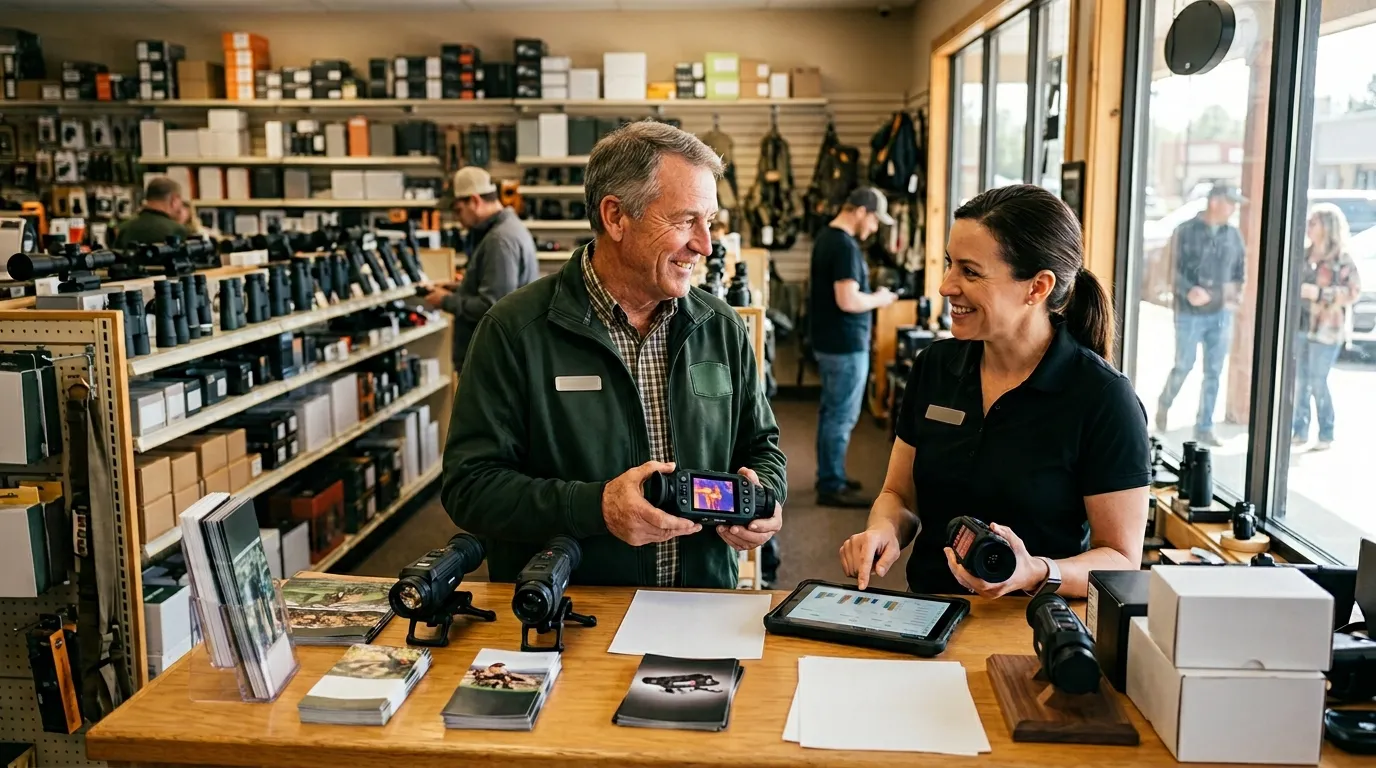
A weak program starts with a PDF brochure and ends with “use our logo.” That doesn’t help the counter salesperson when a buyer asks whether a 640 sensor is worth the jump from a 384 unit for hog hunting at 150 yards. It also doesn’t help an ecommerce reseller explain why one thermal monocular fits wildlife observation while another is better for scanning before a night hunt.
The better test is simple: does the manufacturer help the dealer create demand, close the sale, and keep the customer happy after the box leaves the store?
| Dealer need | Manufacturer should offer | Why it matters |
|---|---|---|
| Local awareness | 50/50 co-op ads, launch posts, event kits | Dealers can promote without carrying the whole ad bill |
| Staff confidence | Short sales training, comparison sheets, objection scripts | Counter teams answer questions without guessing |
| Buyer trust | Demo units, sample footage, spec explainers | Thermal optics buyers want proof before spending $1,000+ |
| Margin protection | MAP guidance, promo calendars, stock rotation rules | Dealers avoid panic discounting after slow weeks |
| After-sales help | RMA steps, firmware notes, parts timing | A warranty issue doesn’t become a public review problem |
For outdoor optics, sell-through support has to match the way people buy. A hunter may watch five YouTube reviews, ask a local dealer about recoil rating, compare a Pixfra Taurus LRF front attachment with a dedicated thermal scope, and then wait for a weekend promo. If the manufacturer only supports the final checkout, the dealer loses the earlier moments where trust gets built.
Dealer Training Converts
Picture a Saturday morning counter sale. A customer walks in after watching videos on Pulsar, AGM, ATN, HIKMICRO, and Pixfra. He asks about NETD, detection range, laser rangefinder accuracy, zeroing, battery runtime, and whether the unit can record footage through an app. If the salesperson says, “Let me check the website,” the sale starts leaking air.
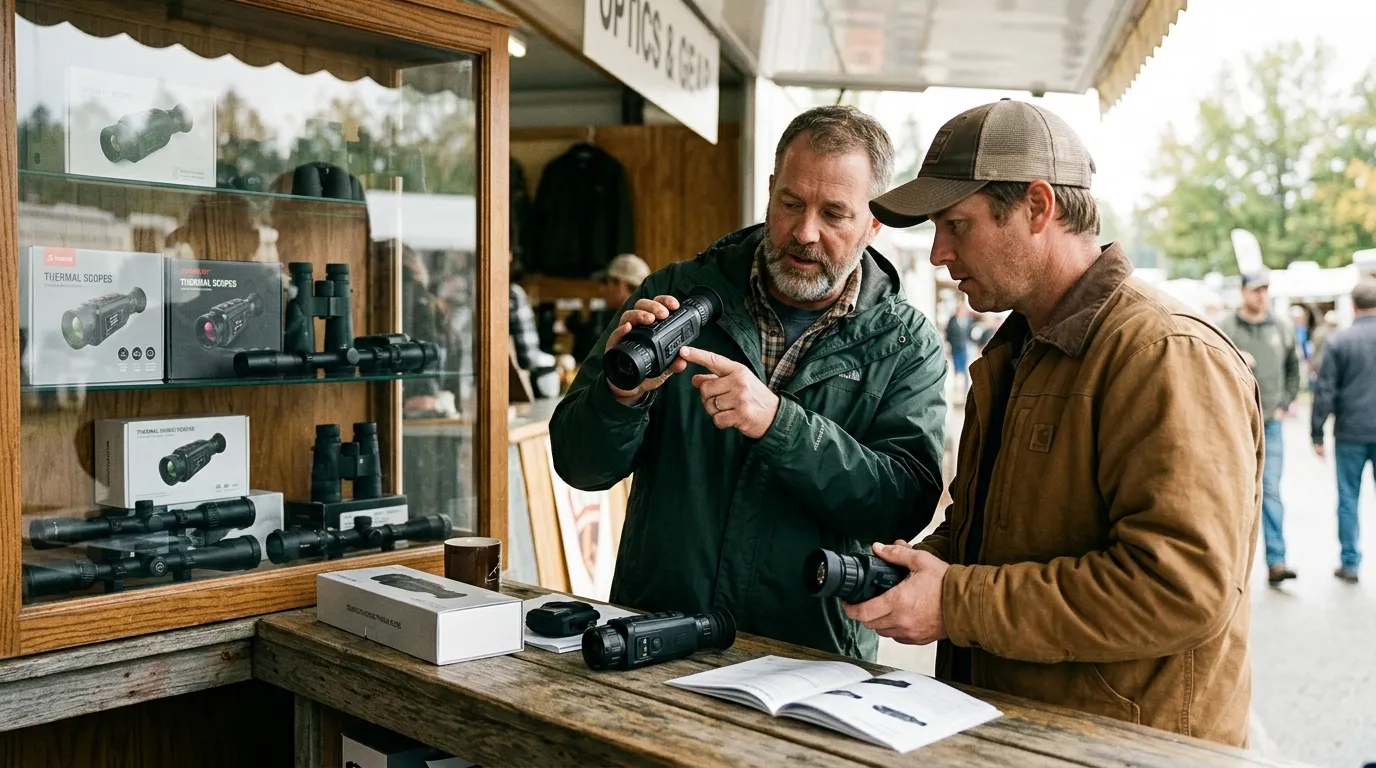
Training should be short, repeated, and tied to real buyer questions. A two-hour webinar once a year sounds tidy on a partner portal, but it won’t stick. Thermal optics dealers need 15-minute modules that a store manager can run before opening: one on thermal sensitivity, one on scope versus monocular use, one on front attachments, one on firmware and app setup, and one on common objections.
Dealer forums often praise programs that combine training, field guidance, launch discounts, and demo support. That tracks with how this category sells. A customer buying a Pixfra Mile 2 monocular for scouting wants a different answer than a customer comparing a Chiron LRF or Pegasus 2 LRF for distance work. The dealer has to know the use case first.
A practical training kit should include:
- A one-page “which model fits which buyer” chart for Sirius HD, Mile 2, Arc LRF, Pegasus 2 LRF, Chiron LRF, Taurus LRF, Draco, and Volans.
- A spec glossary written for retail staff, covering NETD, refresh rate, objective lens size, detection range, base magnification, recoil rating, and IP rating.
- Two-minute phone scripts for common leads: coyote hunting, hog control, ranch monitoring, wildlife observation, and first thermal purchase.
- Demo-night instructions, including safe handling, battery prep, display settings, and local legal reminders.
- A return-reduction checklist that covers app pairing, firmware updates, zeroing, and customer expectations before checkout.
This is where manufacturers should be opinionated. For example, a dealer doesn’t need five ways to explain NETD. They need one clear answer: lower NETD helps the device separate small temperature differences, which can improve image detail in humid or low-contrast conditions. Then show what that looks like through actual footage.
Training also needs a feedback path. If five dealers report that customers keep asking whether a thermal front attachment is easier than buying a dedicated thermal scope, the manufacturer should turn that into a sales sheet within two weeks. Fast answers beat perfect decks.
Co-Op Funds Rules
Money matters, but loose money creates friction. A good co-op program states the accrual rate, eligible activities, approval steps, claim deadline, proof required, and payout timing before the dealer spends a dollar.
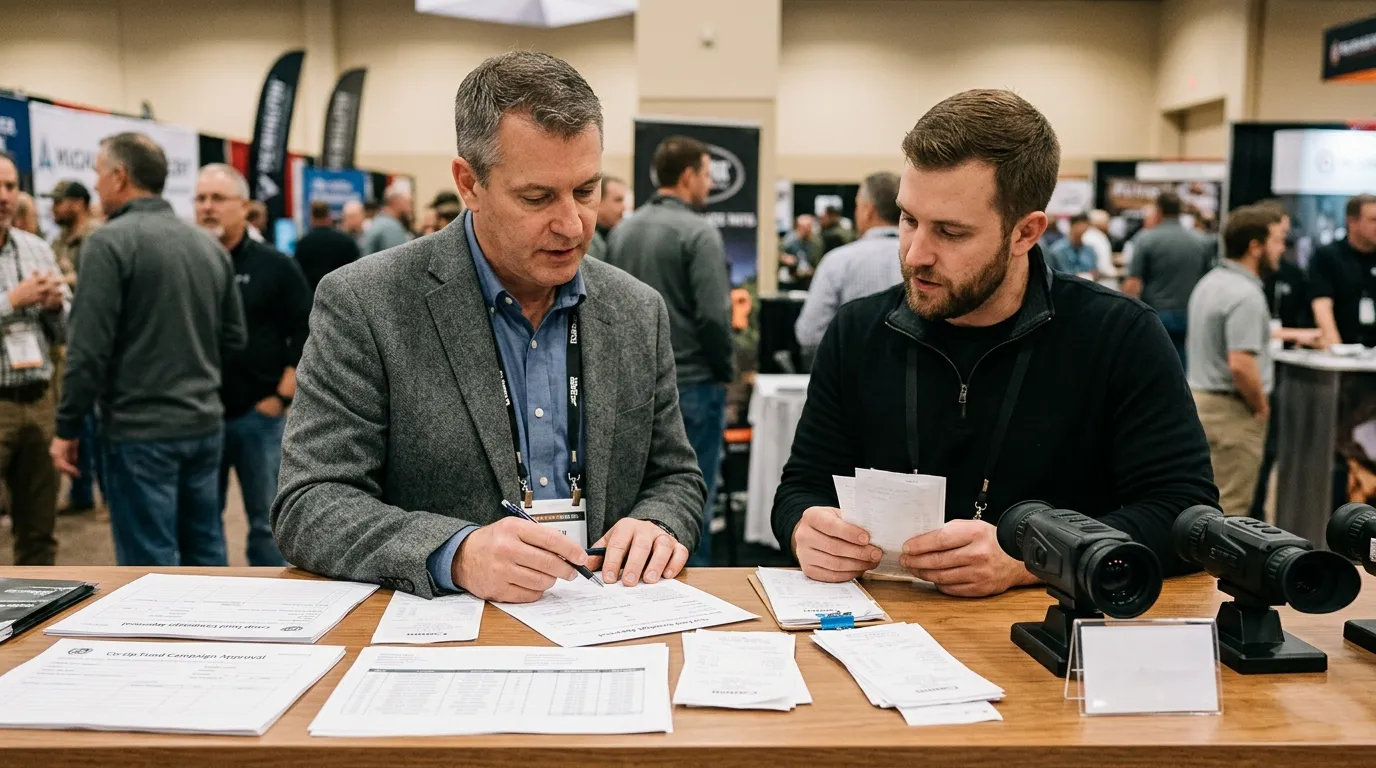
For thermal optics, a fair starting point is often 2% to 5% of net purchases as market development funds, with separate launch support for new accounts. Larger dealers may justify higher pools because they run events, paid search, email campaigns, and video reviews. A small pro shop may need demo gear and local ad reimbursement more than a big annual fund.
| Program rule | Good version | Risky version |
|---|---|---|
| Funding model | 50/50 reimbursement or fixed MDF tied to purchases | “We’ll help case by case” |
| Approval | Written approval before the ad runs | Verbal approval from a sales rep |
| Eligible spend | Paid search, local ads, email, events, signage, demo nights | Anything the dealer calls marketing |
| Claim window | Submit within 30 or 45 days | No clear deadline |
| Payout | Credit memo or payment within 30 days | Open-ended review |
Claims need proof, but don’t bury dealers in paperwork. A paid Meta campaign can be proven with the invoice, screenshot, dates, spend, creative, and destination URL. A store event can be proven with the event flyer, photos of the Pixfra display, attendance count, and receipts. A YouTube review partnership should include the creator agreement, live link, disclosure language, and performance data after 14 or 30 days.
Sponsored reviews and influencer posts need extra care. The Federal Trade Commission’s Endorsement Guides tell advertisers that material connections should be disclosed clearly and close to the endorsement. For dealer programs, that means “Pixfra provided this demo unit” belongs in the review content, not hidden in a footer or buried in a comment.
Co-op funds shouldn’t reward noisy activity alone. A dealer can spend $800 on local ads and still send cold traffic to a product page with no comparison chart, no video, and no buying path. Manufacturers should tie support to a basic plan: target buyer, featured product, offer, channel, landing page, staff owner, dates, and expected sell-through.
One tradeoff: strict rules slow people down. Loose rules waste money. The middle ground is a one-page request form and a 48-hour approval target during launch periods.
Dealer Leads And Inventory
Lead sharing is where many dealer programs quietly fail. The manufacturer collects website inquiries, quiz responses, warranty registrations, event scans, and “where to buy” clicks. Then the dealer hears nothing. Two weeks later, the same customer buys from a marketplace seller with a lower price and weaker service.

Manufacturers should route leads by territory, stock status, product fit, and response speed. If a Texas rancher asks about a thermal scope with rangefinder features, the lead should go to a dealer that has Chiron LRF, Pegasus 2 LRF, or a comparable Pixfra model in stock and can respond the same business day. If the dealer doesn’t respond within 24 or 48 hours, the lead can move to the next qualified reseller.
A reseller evaluating branded distribution next to white-label thermal optics should ask a hard question: who owns the customer relationship after the first sale? Private-label programs may give more control over packaging and brand voice, while a manufacturer-backed dealer program should give faster product education, shared demand, warranty depth, and model-level selling tools.
Inventory support needs the same discipline. Thermal optics aren’t impulse accessories like lens cloths. A dealer can tie up thousands of dollars in slow-moving units if the manufacturer pushes the wrong mix for the region. A hog-control dealer in Texas may need different stock than a wildlife observation reseller in Colorado or a European-style optics shop selling day-and-night digital scope setups.
A strong stocking plan should answer:
- Which 4 to 6 models should a new dealer carry first?
- Which model should be the live demo unit?
- What minimum display stock earns website dealer locator placement?
- What stock rotation terms apply if a model is replaced within 90 or 120 days?
- Which accessories should ship with the opening order?
The U.S. Small Business Administration advises businesses to use market research and competitive analysis to find customers and understand market demand. Dealer support should apply that same thinking at the local level. Don’t send the same launch bundle to every ZIP code. Match the bundle to buyer behavior.
Inventory also affects trust. If a dealer runs a demo night around the Arc LRF and then can’t ship the unit for three weeks, the event trained buyers to shop elsewhere. Co-op campaigns should be tied to available stock, replacement batteries, mounts, display signage, and someone who can answer support calls the next morning.
Warranty And After-Sales
The sale isn’t over when the receipt prints. Thermal optics buyers need help with app setup, firmware updates, image settings, zeroing, mounts, battery choices, and warranty questions. A dealer who can’t get a fast answer from the manufacturer becomes the complaint desk by default.
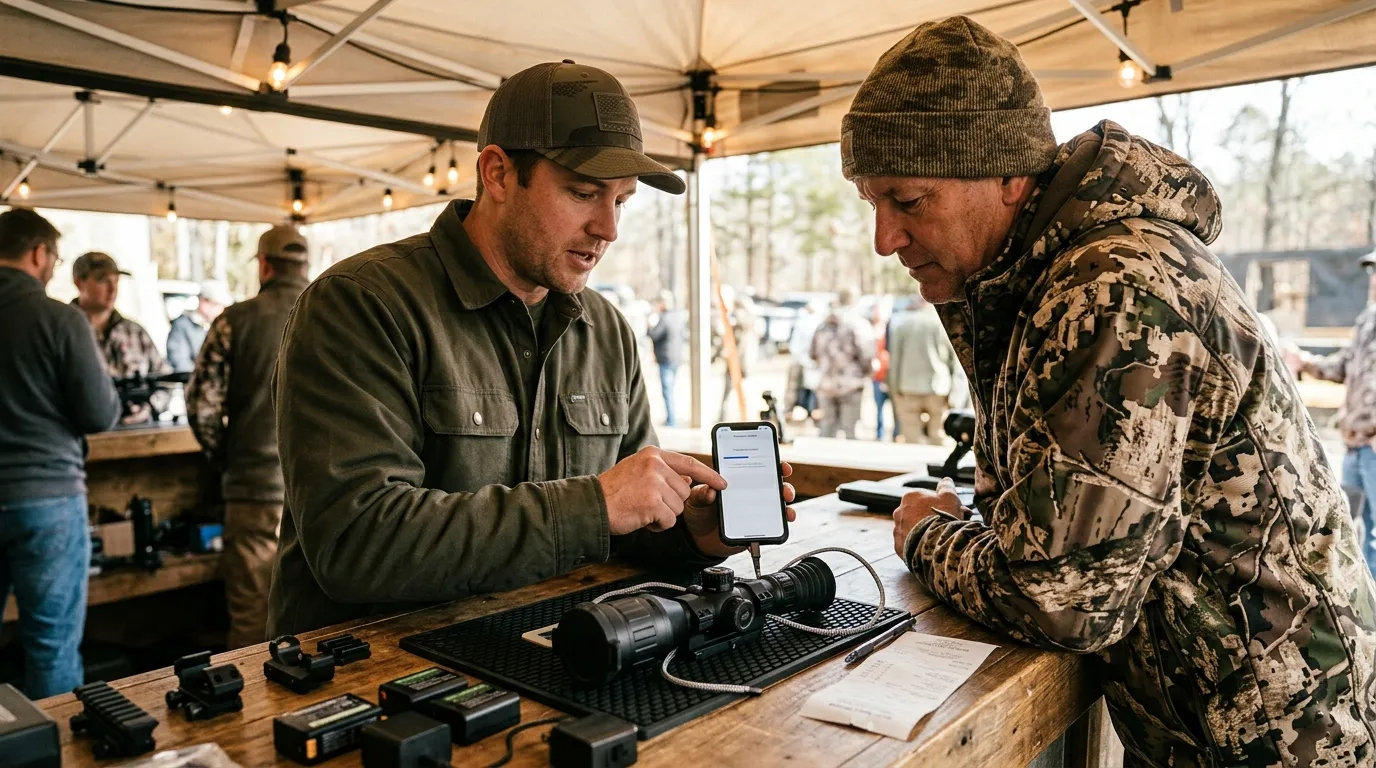
A manufacturer should publish a clear after-sales path for dealers: who handles first-level support, how RMAs are opened, what photos or serial numbers are needed, expected response time, spare-part policy, firmware update notes, and what happens when a product is dead on arrival. For Pixfra devices, dealers should be ready to explain the Pixfra Outdoor App, model-specific firmware steps, and the difference between a setup issue and a hardware issue.
After-sales support is also a marketing asset, though no one talks about it that way. A buyer who gets a same-day answer on app pairing is more likely to trust the brand when upgrading from a Mile 2 handheld to a higher-end scope or LRF model. A buyer who waits six days for a basic warranty reply remembers that delay.
| Support moment | Dealer expectation | Manufacturer role |
|---|---|---|
| Pre-sale question | Same-day spec answer | Give staff quick reference sheets |
| Setup issue | Clear app and firmware steps | Keep current guides easy to find |
| Return request | Defined triage process | Separate user error from defects |
| Warranty claim | Serial-based RMA path | Give status updates without chasing |
| Model change | Advance notice | Help dealers rotate aging stock |
The advice changes for marketplaces. If a reseller is mostly selling through Amazon, Walmart Marketplace, or eBay, dealer support must focus harder on listing control, review response rules, MAP enforcement, and serial tracking. In-store training matters less there. Return prevention matters more because one confused buyer can trigger a refund, a bad review, and a used-open-box unit.
Retail dealers need human support. Marketplace dealers need data hygiene. Both need fast answers.
Dealer Program Scorecard
Before signing a reseller agreement, score the manufacturer like you’d score a product. A thermal device can have excellent specs and still be hard to sell if the dealer program is vague. A program with average discounts but fast support, clean training, and fair lead routing may produce better gross profit over six months.

Use a 100-point scorecard. Make the manufacturer earn the line.
| Dealer program area | Weight | What to ask for |
|---|---|---|
| Co-op rules and MDF | 20 | Written policy, accrual rate, claim examples, payout timing |
| Product training | 20 | Staff modules, comparison charts, launch call, objection handling |
| Demo and launch support | 15 | Demo unit terms, event kit, sample footage, signage |
| Lead sharing | 15 | Routing rules, response expectations, dealer locator criteria |
| Margin protection | 10 | MAP policy, promo calendar, stock rotation terms |
| After-sales support | 20 | RMA flow, firmware notes, app guides, response time targets |
Ask for documents, not promises. A real dealer program can send you the MDF policy, current product training deck, demo unit terms, warranty flow, and sample launch calendar. If the sales rep has to “check internally” on every basic question, expect the same delay when you have a customer standing at the counter.
For thermal optics, I’d weight after-sales support as heavily as training. A bicycle helmet either fits or it doesn’t. A thermal scope has firmware, display palettes, reticles, rangefinding, mounting, zeroing, recoil questions, and user expectations shaped by polished videos. Dealers need backup when reality meets the manual.
Discounts still matter. Just don’t let the headline margin hide weak support. A 5-point higher discount can vanish after one avoidable return, one undertrained staff member, or one campaign that sends customers to a product page with no buying path.
FAQ
What is co-op dealer funding?
Co-op dealer funding is shared marketing money from a manufacturer to help resellers promote approved products. It usually reimburses part of paid ads, local events, email campaigns, signage, or launch activity.
How much MDF should resellers expect?
For outdoor optics, 2% to 5% of net purchases is a common starting range for MDF. New dealers may receive launch support instead of a large open fund.
Should dealers get demo units?
Yes, thermal optics dealers should push for demo units because buyers want to see real image quality before purchasing. Demo terms should state price, ownership, return rules, and replacement timing.
How are leads shared fairly?
Leads should be routed by territory, stock status, product fit, and response speed. A dealer that replies within 24 hours and keeps key Pixfra models in stock should receive priority.
For a Pixfra dealer conversation, bring four numbers: your region, current monthly optics revenue, target thermal unit volume, and the models your customers already ask about. From there, ask for a 90-day launch plan that includes one demo unit, staff training, a co-op campaign calendar, lead-routing rules, and an after-sales contact path before your first purchase order.