


The fastest way to vet thermal monocular manufacturers is to verify imaging performance, compliance paperwork, warranty terms, and dealer support before you place a volume order. Don’t judge by spec sheets alone; ask for production samples, serial-number traceability, FCC documents, battery shipping records, and a written RMA process.
For a US dealer, the supplier you choose affects margin, return rate, customer trust, and whether your first container becomes inventory or a problem. A thermal monocular is a technical product with moving parts behind the scenes: sensor sourcing, image tuning, battery safety, firmware updates, export rules, and after-sales repair. One weak link can erase the profit from 50 good units.
Supplier Vetting Checklist
1. Confirm the company identity and factory role.
2. Test current production samples, not old demo units.
3. Match sensor, lens, display, firmware, and app claims against field use.
4. Check US compliance, export limits, battery paperwork, and labeling.
5. Lock warranty, parts, MOQ, lead time, and dealer pricing in writing.
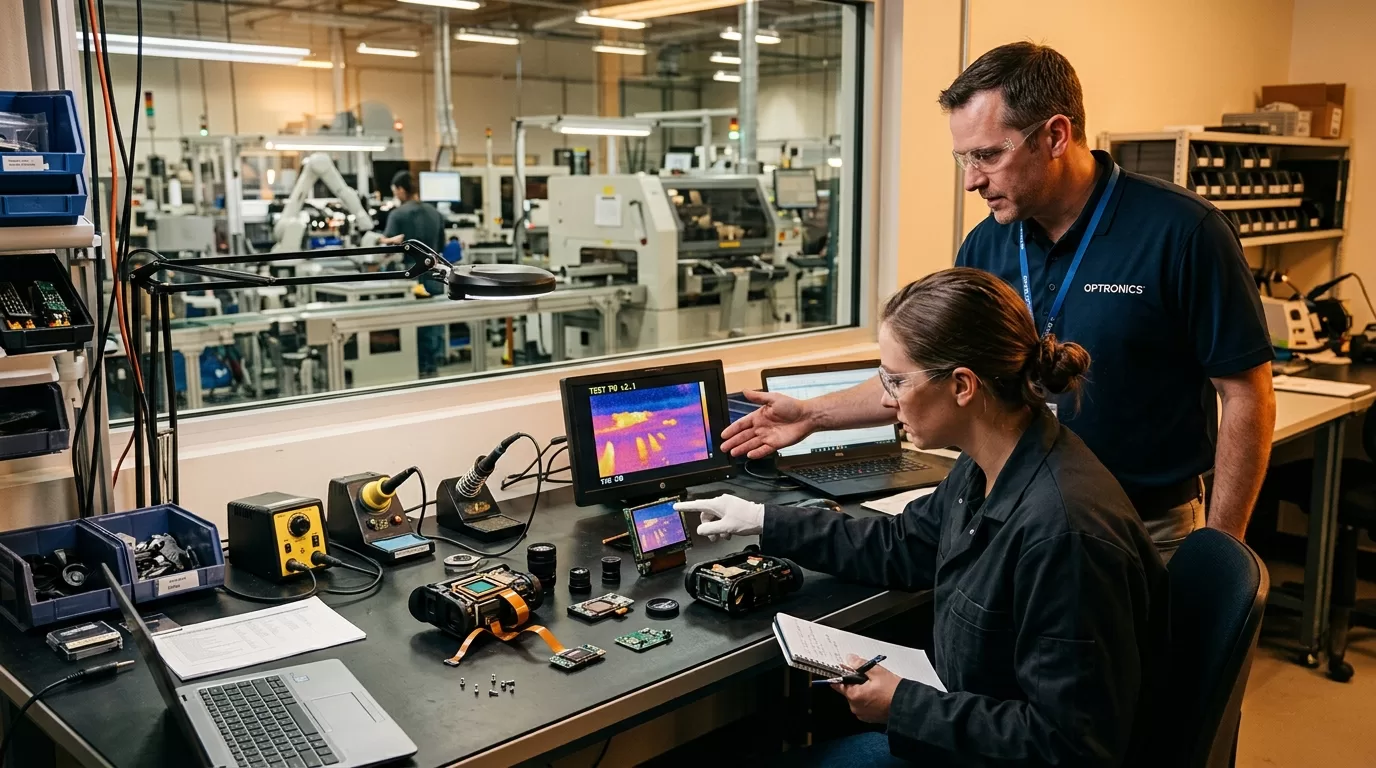
Start with the supplier’s real role. A factory, brand owner, trading company, and OEM sales agent may all call themselves “manufacturer,” but they don’t carry the same risk. If the company controls sensor integration, firmware tuning, optical assembly, final QA, and repair, you’re dealing with a stronger partner. If the company only forwards your questions to another party, pricing may look better in week one and fall apart when customers need repairs.
Ask for business registration, export history, factory address, English product manuals, test reports, and a named technical contact. Then ask one direct question: “Which parts do you make, which parts do you buy, and which tests happen before shipment?” A serious supplier can answer without turning it into a brochure.
| Vetting Area | What To Ask | Red Flag |
|---|---|---|
| Factory role | “Do you assemble, tune, and repair in-house?” | No repair process |
| Sensor source | “Which sensor resolution and pitch are in this SKU?” | Vague “high resolution” wording |
| QA process | “Can I see the outgoing inspection sheet?” | Only beauty photos |
| Dealer terms | “What is the MAP policy and warranty split?” | No written policy |
| Firmware | “How are updates delivered?” | No version history |
When thermal monocular manufacturers compete only on price, the hidden cost usually appears in the return pile. A 384×288 monocular with clean tuning can beat a poorly tuned 640×512 unit in real brush, fog, or cold rain. That sounds annoying until you test both at 200 yards on a warm evening and realize the spec sheet didn’t tell you which one can separate a deer from a fence post.
Thermal Sensor Proof
Sensor claims need proof because this category attracts loose language. You’ll see “4K display,” “HD thermal,” and “long detection range” used next to entry-level sensors. For dealer sourcing, focus on the thermal core first: 256×192, 384×288, and 640×512 are common resolution tiers; 12 micron sensors are common in newer compact optics; NETD below 35 mK is a useful benchmark for image sensitivity, with lower numbers helping in low-contrast scenes.
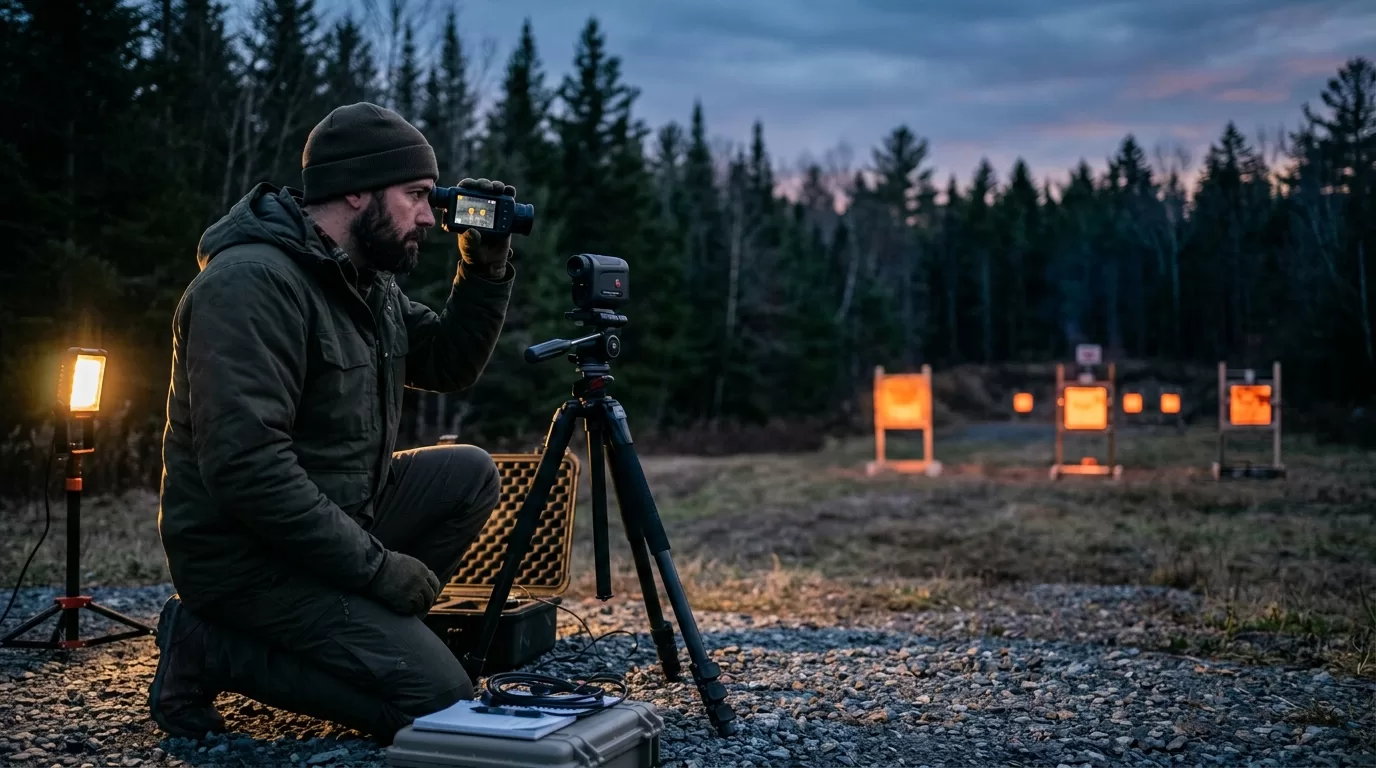
Then look at the lens. A 19 mm lens on a 384 sensor gives a wider field of view and works well for scanning woods, hog fields, and property lines. A 35 mm lens narrows the view but improves distance work. For most US outdoor dealers, a 384×288 sensor with a 19 mm or 25 mm lens is often the safer mid-price SKU than jumping straight to a premium 640 model. You’ll sell more units, your customers will understand the value, and returns are easier to defend when the image matches the promise.
Ask for field footage from current production units, then shoot your own. Put a person, a dog, a parked truck, and a warm engine at 50, 200, and 500 yards. Test in dry heat, after sunset, and after rain if you can. A supplier that only sends perfect rooftop videos is giving you marketing material, not buying evidence.
Sample Test Card For Dealers
| Test | Pass Standard |
|---|---|
| Startup time | Under 6 seconds for common outdoor use |
| Image lag | No obvious drag while scanning |
| Hot object control | No blown-out white blob on a vehicle engine |
| Menu logic | Usable with gloves in 2 minutes |
| Battery runtime | Matches claim within 15 percent |
| Wi-Fi/app | Connects twice after restart |
Brand examples can help you benchmark. Compare any supplier sample against known retail units such as the Pulsar Axion 2 XG35, AGM Taipan TM15-384, HIKMICRO Lynx 2.0 LH19, ATN OTS-XLT 160, or FLIR Scout TK. You don’t need each model to be “better.” You need to know where it sits, what it can honestly replace, and which buyer it fits.
Compliance And Import Risk
Thermal imaging devices can fall under export controls, and US importers should treat that as a real business issue. The US Bureau of Industry and Security lists controls and reporting rules for certain thermal imaging cameras under ECCN 6A003.b.4.b in the Export Administration Regulations, including language that refers to monocular, biocular, and binocular configurations. That doesn’t mean every dealer shipment needs the same license treatment, but it does mean your supplier should know the classification and paperwork path.

FCC rules matter too if the monocular includes Wi-Fi, Bluetooth, or another RF function. The Federal Communications Commission explains that RF devices need proper equipment authorization before they’re marketed or imported in the United States through its equipment authorization procedures. Ask for the FCC ID, test report, user manual, label artwork, and the exact model name covered by the filing. “FCC pending” is not a shipment plan.
Batteries are the quiet risk. A thermal monocular with a built-in lithium battery may need UN38.3 test documentation for transport, plus clear shipping marks and carton labels. If the supplier says “our forwarder handles it,” ask for the document anyway. Your forwarder, warehouse, or marketplace partner may request it later, usually when the shipment is already late.
Documents To Request Before Deposit
- Business license and export registration
- FCC ID or Supplier’s Declaration of Conformity documents for RF models
- CE/UKCA reports if you also sell outside the US
- UN38.3 battery test summary
- Product manual with safety wording
- Packing list format with serial numbers
- Warranty policy and RMA address
- HS code and ECCN classification note
This advice doesn’t apply the same way to every buyer. If you’re buying five units for a private ranch, the paperwork load is lighter. If you’re importing 300 units for resale under your own label, every label, manual, carton, and compliance file needs a second look before money moves.
Dealer Economics And Support
A good supplier protects your margin after the first order. That means stable dealer pricing, clear MOQ tiers, spare parts, firmware support, and a warranty process your staff can explain in one phone call. If you’re still mapping the whole sales channel, Pixfra’s guide on how to become a thermal optics dealer is a useful next step because supplier vetting and dealer setup should happen together.
MOQ tells you a lot. For branded distribution, 10 to 50 units per SKU can be reasonable for a first order. For private label, 100 to 300 units is common because packaging, manuals, labels, and firmware screens need work. A supplier pushing 500 units before you’ve tested one production sample is shifting risk onto you.
Ask for landed-cost math, not just EXW or FOB pricing. A $279 unit can become a bad buy after freight, tariffs, marketplace fees, warranty reserves, and dealer discounts. Build a 5 percent warranty reserve into your spreadsheet until the product has survived one selling season. Thermal buyers are demanding. A hunter who paid $899 expects the device to work in November, with gloves on, in bad weather, after sitting in a truck overnight.
| Cost Item | Why It Matters |
|---|---|
| Unit price | Sets gross margin ceiling |
| Freight and duty | Changes reorder math fast |
| Warranty reserve | Covers DOA, returns, repairs |
| Spare batteries/caps | Keeps small issues from becoming refunds |
| MAP policy | Protects dealers from price crashes |
| Firmware support | Fixes app and menu issues after launch |
Reliable thermal monocular manufacturers should also provide sales assets without turning your site into a clone of every other dealer page. Ask for real specs, comparison tables, lifestyle-safe product photos, field videos, and manual files. Then write your own product copy in US English. Customers can smell copied catalog text.
Contract Terms For Dealers
Put the boring terms in writing because boring terms become expensive when they’re missing. Your purchase order should name the exact model, sensor resolution, lens size, display resolution, battery type, firmware version, packaging version, accessory list, warranty period, lead time, inspection standard, and payment schedule. If the supplier says the 384 and 640 versions “look the same,” write the SKU details anyway.
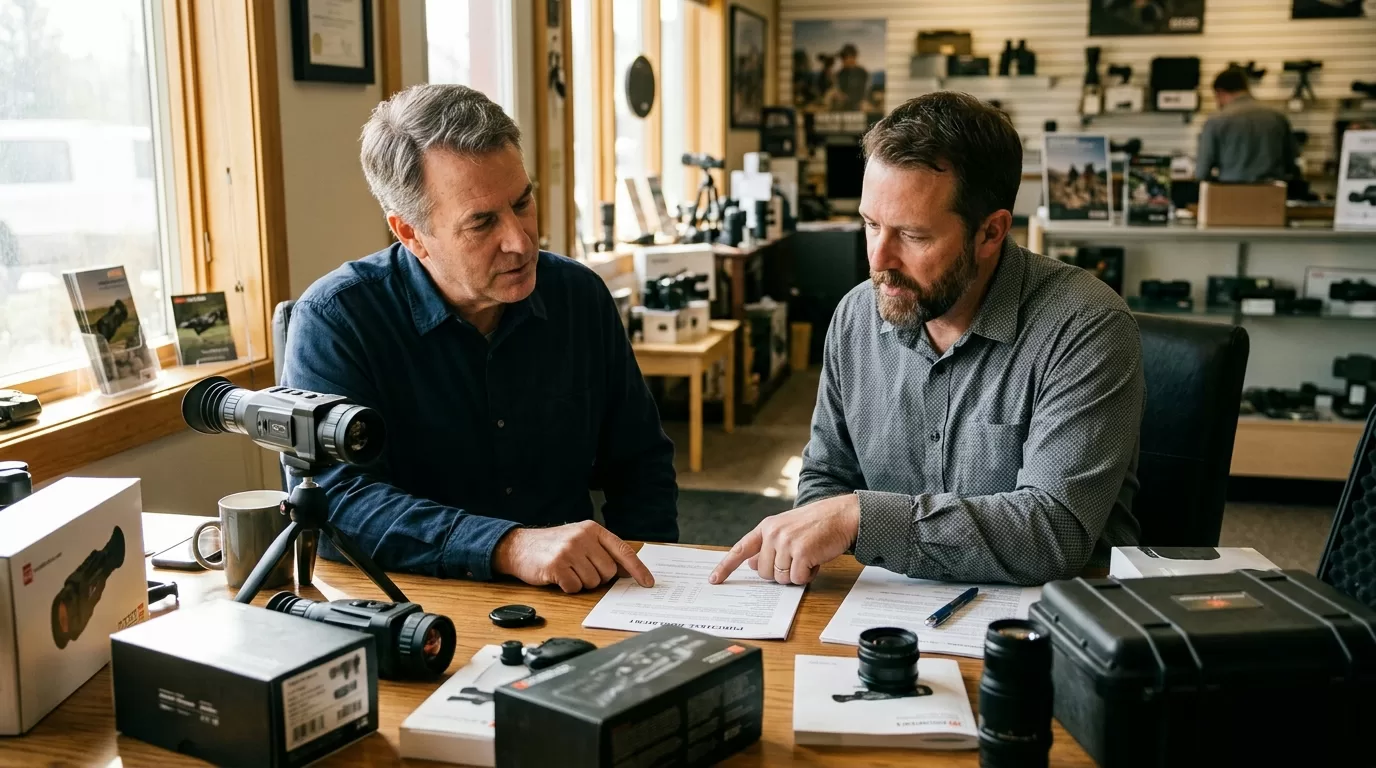
Payment terms should match risk. For a first order, 30 percent deposit and 70 percent after pre-shipment inspection is common. For repeat orders, you may negotiate better terms, but don’t treat a friendly WeChat thread as a contract. Use a pro forma invoice, product specification sheet, and inspection checklist that both sides accept.
AQL inspection is useful for volume orders. For electronics, many importers use General Inspection Level II with AQL targets such as 0 critical defects, 2.5 major defects, and 4.0 minor defects, though your exact standard should fit the order value and risk. Thermal optics deserve function tests beyond cosmetic checks: startup, dead pixels, buttons, Wi-Fi, display, charging, focus ring, image calibration, and serial-number scan.
Dealer Contract Clauses To Include
- Exact SKU and configuration
- Approved packaging and manual version
- Warranty length and who pays return freight
- DOA window, such as 15 or 30 days
- Spare-parts availability for caps, eyecups, batteries, and chargers
- Firmware update method and support contact
- MAP or online channel policy
- Pre-shipment inspection rights
- Replacement terms for failed inspection units
Ask one uncomfortable question: “What happens if 8 out of 100 units fail within 60 days?” If the answer is clear, you can price the product. If the answer is a smile and “don’t worry,” you’re being asked to insure the supplier.
Factory Visit Questions
You don’t always need to visit the factory, but you do need factory-level answers. A live video walk-through is better than a PDF. Ask to see incoming sensor inspection, optical assembly, focus calibration, image test benches, waterproof testing, drop testing, battery aging, final packing, and the repair area. If every room is off camera, slow down.
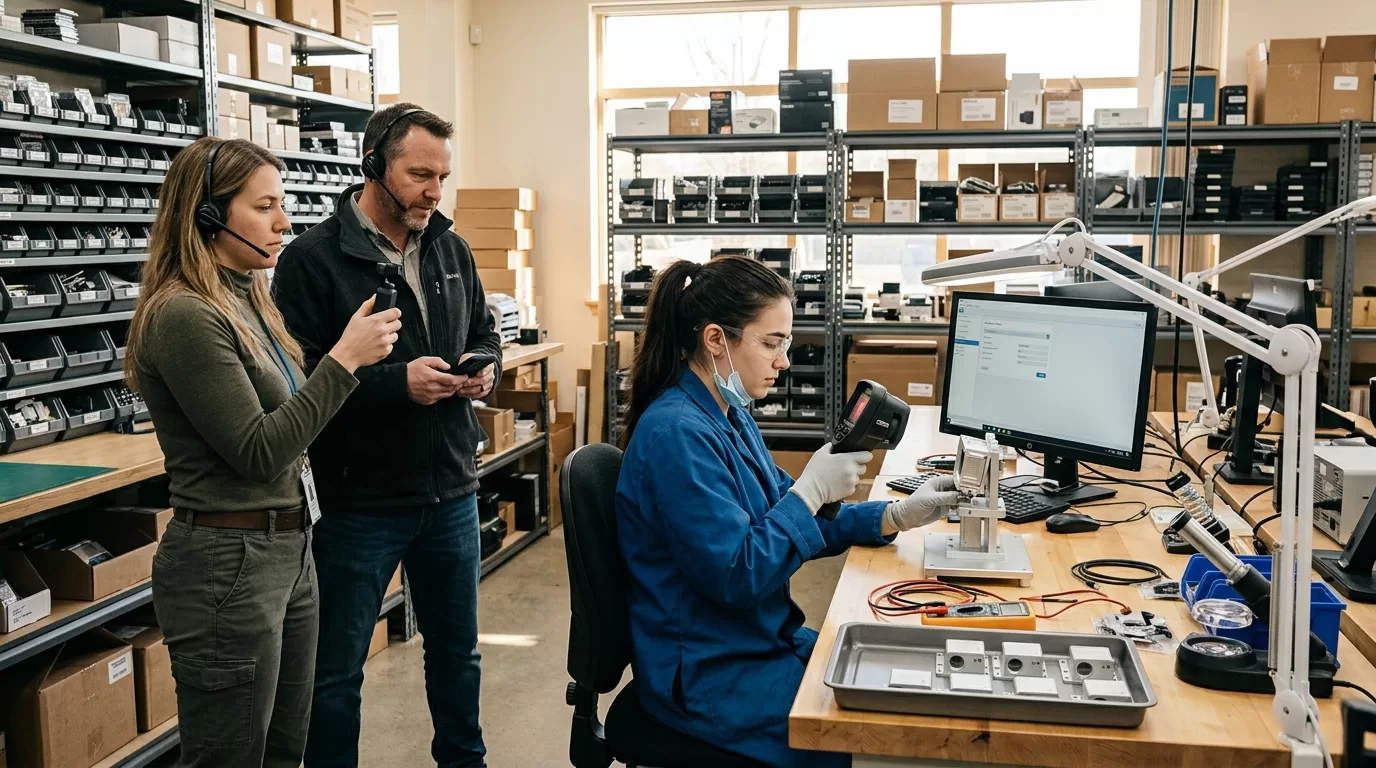
For outdoor optics, assembly discipline matters. Dust inside the lens, inconsistent focus rings, weak USB covers, stiff buttons, and loose battery doors all create returns. These are not rare edge cases. They’re the exact problems customers mention when a device works technically but feels cheap in hand.
Ask the supplier to pull three random boxed units from inventory and open them on camera. Have them power each one, show the menu, switch palettes, connect the app if the model has Wi-Fi, and point at the same heat source. This takes 15 minutes. It tells you more than a polished sample that has been passed around the sales office for six months.
Video Audit Script
- “Show the outside of the factory and the company name.”
- “Open three sealed units from the warehouse.”
- “Show the serial number on each carton and device.”
- “Power each unit and point at the same target.”
- “Cycle through palettes, zoom, calibration, and recording.”
- “Show the charging port, eyecup, lens cap, and accessories.”
- “Show the repair bench and spare-parts bins.”
There’s a tradeoff here. Larger factories may offer stronger QA systems but less flexibility on custom packaging or small dealer runs. Smaller thermal monocular manufacturers may respond faster and help you tune a channel-specific SKU, but you’ll need tighter inspection and clearer warranty terms. For a first US dealer order, speed is useful only after the supplier proves repeatability.
FAQ
Who makes thermal monoculars?
Thermal monoculars are made by optics brands, OEM factories, and sensor-integrator manufacturers. Well-known retail benchmarks include Pulsar, AGM, HIKMICRO, ATN, FLIR, Guide, InfiRay, and Pixfra.
How do I verify a thermal supplier?
Verify the company role, test current production samples, check compliance files, inspect warranty terms, and require serial-number traceability. A supplier that can’t explain sensor source, firmware support, and repair flow is too risky for dealer volume.
What MOQ is normal?
For branded distribution, 10 to 50 units per SKU is common for a first test order. Private-label thermal monocular orders often start around 100 to 300 units because packaging, manuals, and labeling add setup work.
Are thermal monoculars export controlled?
Some thermal imaging cameras may be controlled under US export rules, especially depending on sensor specs, destination, and end use. Check ECCN classification and BIS guidance before importing, exporting, or reselling across borders.
Which sensor size sells best?
A 384×288 sensor often gives the best balance for US outdoor dealers because it keeps retail pricing reachable while offering a clear field image. A 640×512 model fits premium buyers who care more about distance and detail than price.
If you’re sourcing thermal monoculars for a dealer program, Pixfra can help you compare model tiers, field-use requirements, and channel fit before you commit to inventory. Start with one tested SKU, document the buying criteria, and scale only after the product earns repeat orders.