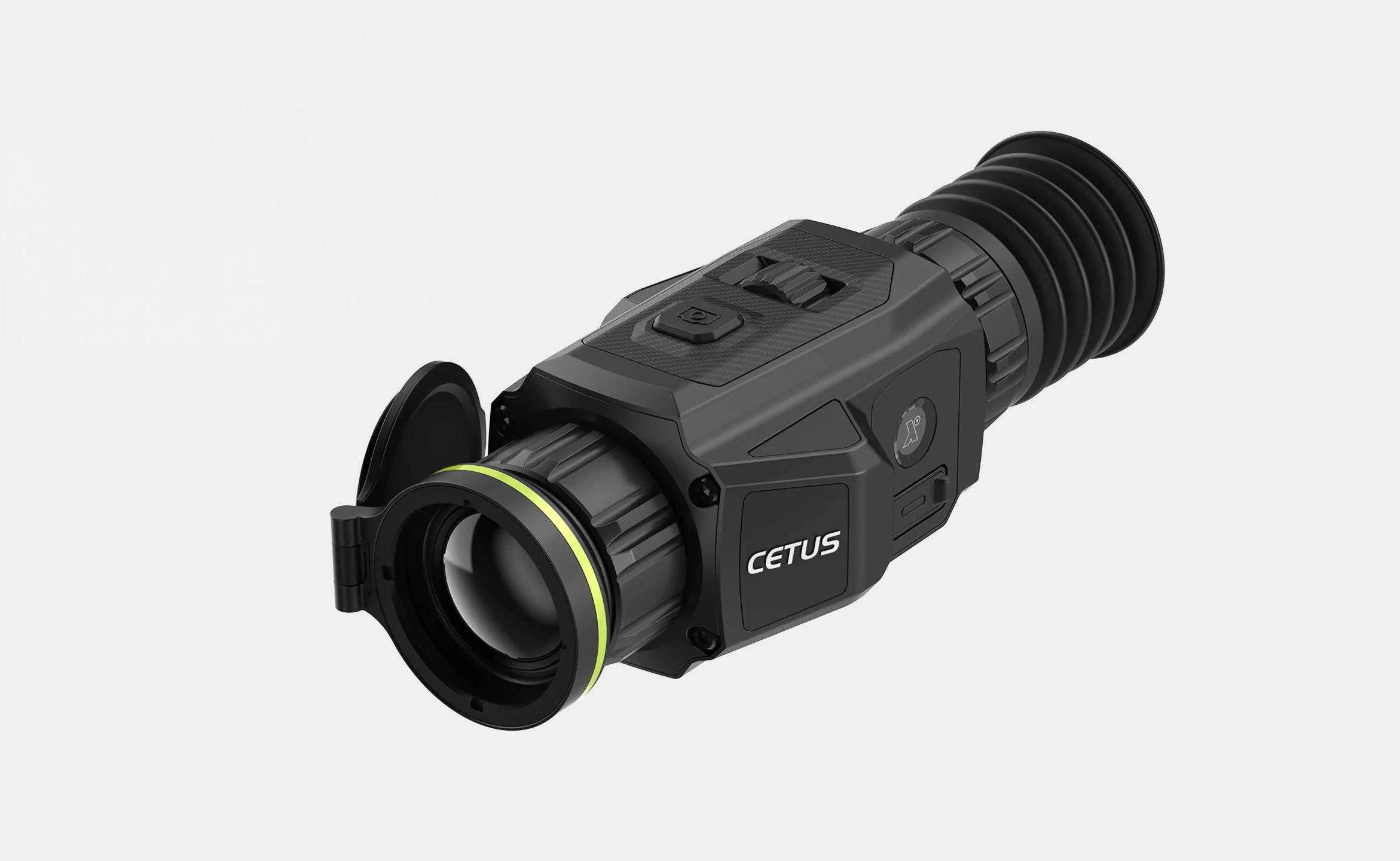








Thermal imaging and conventional daylight optics can both be useful in bright conditions, but they show different information. Binoculars and daytime scopes use reflected visible light to reveal colour and fine detail. Thermal devices display differences in infrared radiation, making some warm objects stand out even when their visible colours blend into the surroundings.
Sunlight changes thermal contrast
Thermal imaging does not require darkness, but it is not unaffected by sunlight. Sun-warmed rocks, soil and vegetation can make a scene more complex and reduce the contrast between an animal and its background. Results depend on the scene and weather; there is no universal percentage advantage or guaranteed identification distance. Never point the lens at the sun or another intense energy source, and follow the model’s handling instructions.
Detail, obstructions and the display
Conventional optics retain colour and natural visual detail, while thermal images depend on detector resolution, lens design, focus and processing. A thermal image does not see through walls, dense vegetation or ordinary glass. Changing a palette or display brightness may improve viewing comfort, but it cannot recover information hidden by an obstruction or create additional detector resolution.
Two complementary views
Daylight optics help interpret appearance and surroundings; thermal imaging adds information about heat patterns. Neither replaces reliable identification or awareness of what lies beyond the observed subject. For a Pixfra device, check the exact model’s current specifications and user manual rather than assuming that every series has the same sensor, palettes or functions. Handheld monoculars, thermal sights and front attachments serve different purposes, and their lawful use depends on local rules.