
















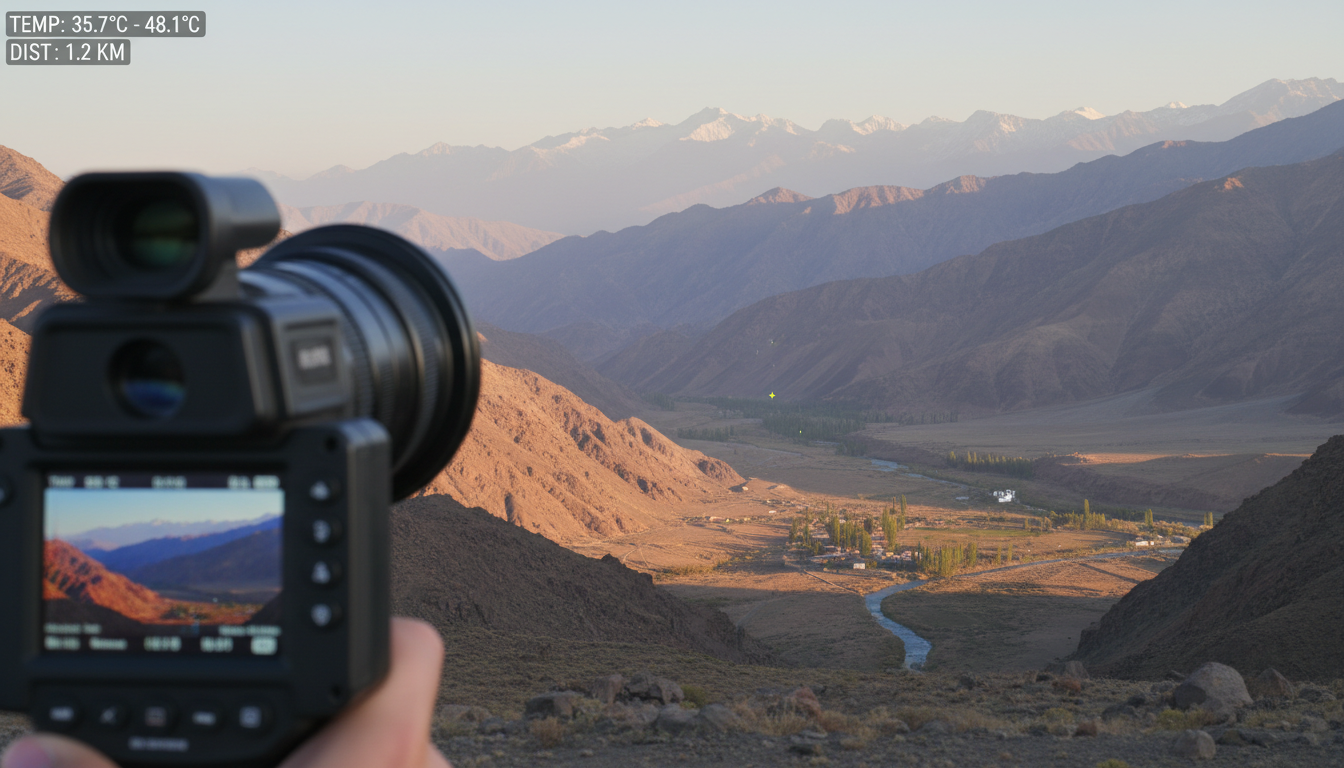
Thermal devices have become game-changers for everything from security to wildlife observation. But here’s what most people want to know: can these devices actually work from far away?
The short answer is yes. High-end thermal cameras can detect vehicles at up to 60 km and humans at up to 30 km. That said, distance performance depends on several factors. We’ll break down how thermal devices work at different ranges and what affects their performance.
How Thermal Devices Detect Heat at a Distance
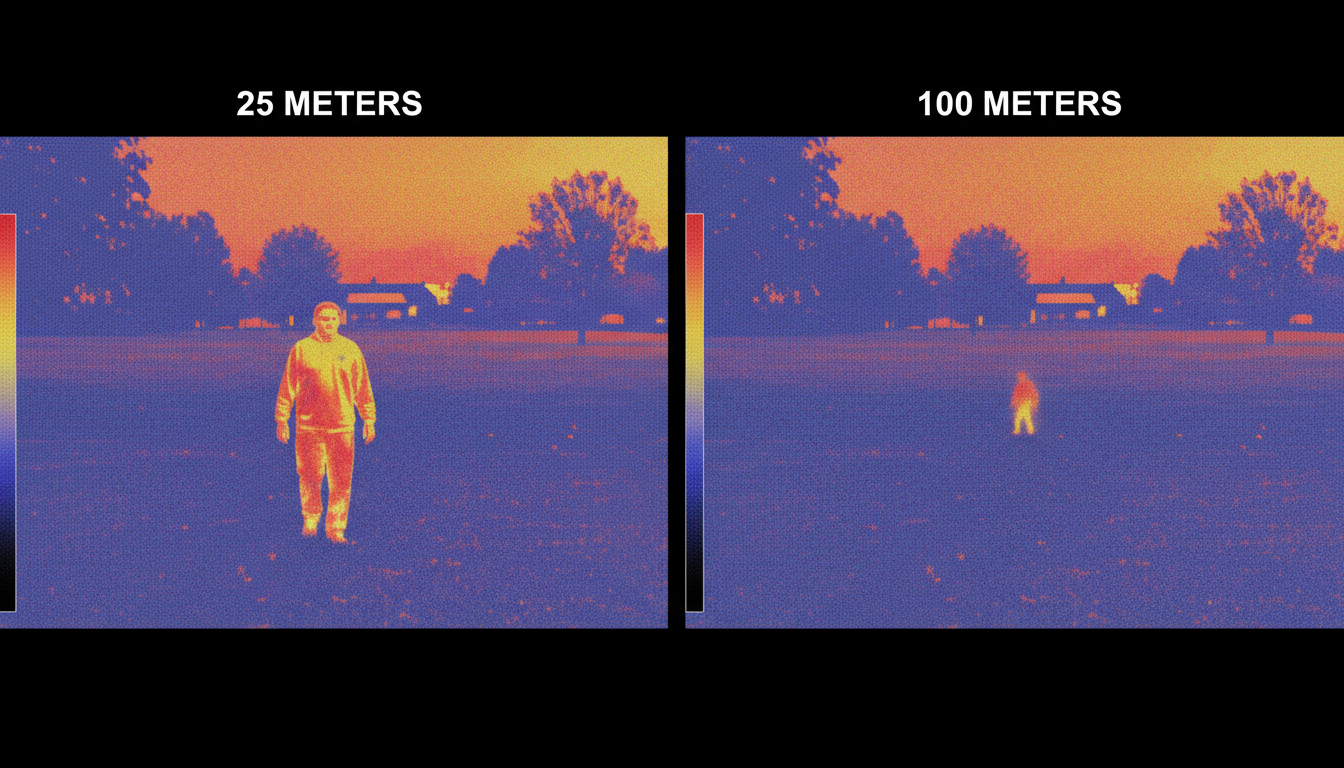
A thermal camera works by detecting the heat emitted by objects and converting it into an electronic signal. Unlike regular cameras that need visible light, thermal devices pick up infrared radiation that all objects emit based on their temperature.
Humans, animals and vehicles are typically warmer than their environment, providing a high contrast that allows for fast wide-angle detection of threats from a much further distance (sometimes up to 50km). This makes thermal imaging particularly effective for long-range surveillance and outdoor applications.
At Pixfra, we’ve designed our thermal imaging devices to maximize detection capabilities across various distances. Our Pegasus 2 LRF and Sirius HD models offer different range options depending on your specific needs.
Detection Range vs. Recognition vs. Identification
Not all “seeing” is the same. There’s a big difference between spotting something and actually identifying what it is.
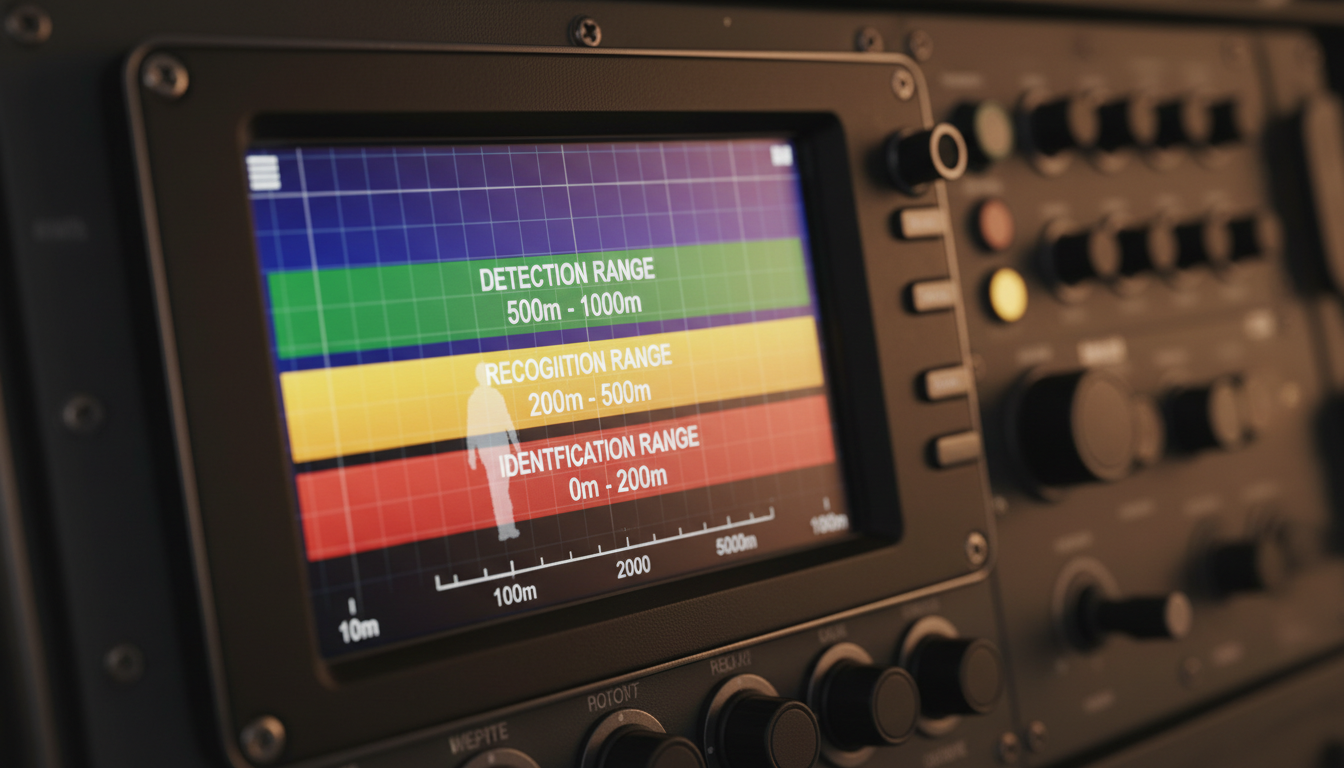
Detection range is the distance at which the critical mass on your subject covers around 2 or more pixels, recognition range is approximately 40% of the detection range where you can discern what type of animal you’re looking at, and identification range is approximately 20% of the detection range where the critical mass covers at least 12 pixels.
For example, you might detect a heat signature at 2 kilometers, but you’ll only be able to tell if it’s a person versus a deer at 800 meters. And you’d need to be within 400 meters to identify specific features. These distances vary based on your device’s specifications.
What Affects How Far Thermal Devices Can See
Resolution and Pixel Count
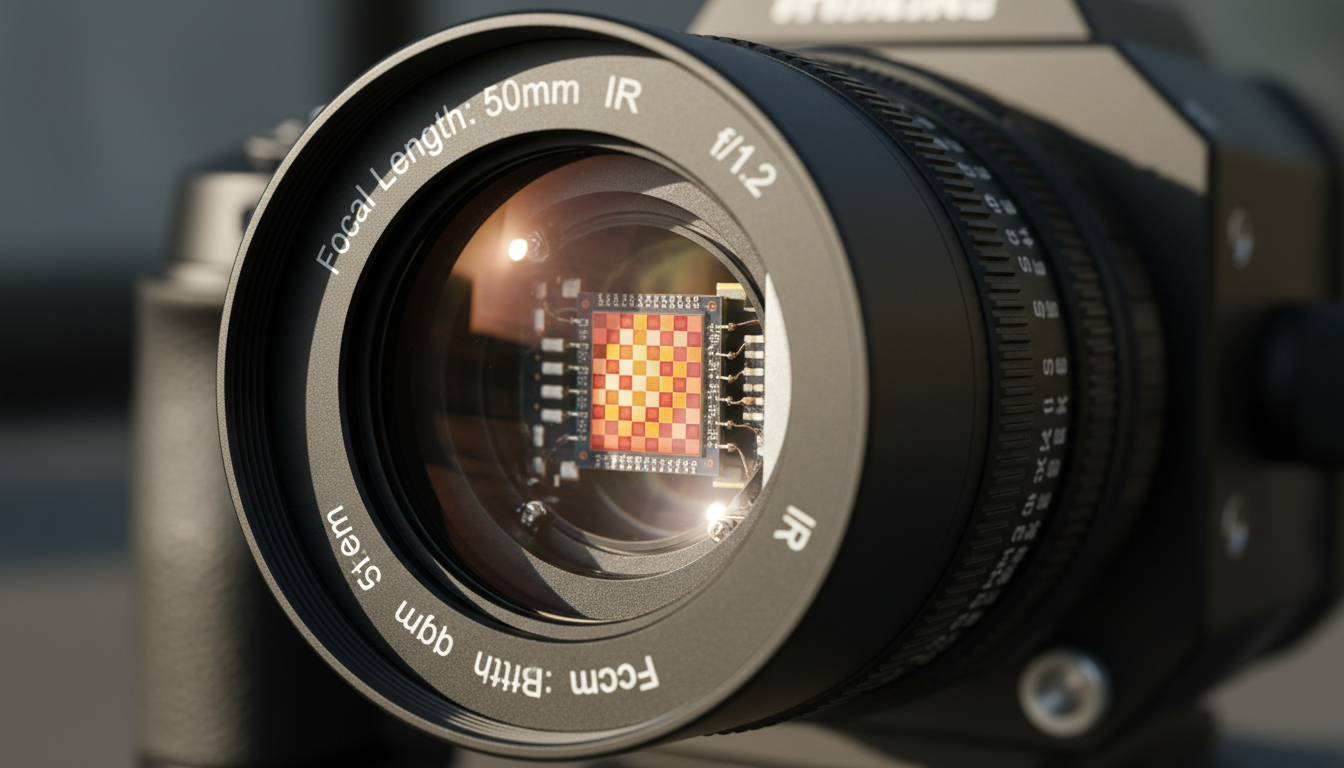
The resolution of a thermal camera significantly impacts its ability to detect distant objects. Higher resolution cameras capture more pixels, providing clearer and more detailed images. A 640×480 camera will outperform a 320×240 camera when it comes to distance work.
Lens Quality and Focal Length
The lens focal length directly affects the image size formed by the target, which corresponds to how many pixels it occupies on the focal plane. Longer focal length lenses let you see farther, but with a narrower field of view. Short focal length lenses give you a wider view but less distance.
Environmental Conditions
Most thermal cameras have a range of several hundred meters. However, the detection range can be significantly reduced in conditions of high humidity, fog, or heavy rain, as these conditions can attenuate the thermal radiation emitted by objects.
Clear, dry conditions give you the best performance. Heavy fog or rain can cut your effective range in half or more.
Target Size and Temperature Difference
The size, distance, and temperature difference of the target significantly affect the camera’s ability to detect and measure it accurately. Larger targets with significant temperature differences are easier to identify and measure from a distance.
A warm vehicle against a cool background? Easy to spot from miles away. A person wearing insulated clothing in moderate weather? Much harder at the same distance.
Real-World Detection Distances
Let’s get specific about what different thermal devices can actually do.
Handheld thermal cameras generally have a range of several hundred yards to about 1,000 yards, depending on the model and specifications. These work well for most home inspection, hunting, and basic security applications.
Specialized models can identify heat signatures from power lines or solar panels at distances of up to 2 kilometers or more. Industrial and professional models go much further.
Some high-end security models can have ranges exceeding several miles, with certain models offering a range of up to 4 miles. Military and border security applications use the longest-range thermal devices available.
Our best remote visual inspection devices with thermal imaging offer various detection ranges suited to different professional applications.
Getting Accurate Temperature Measurements at Distance
Detecting heat and measuring temperature are two different things.
When measuring temperature with a thermal camera, you want at least 3 × 3 pixels on your target to ensure you’re getting an accurate measurement. This means your effective measurement distance is much shorter than your detection distance.
Lower-resolution options should not be used for distance measurements, especially if it’s important for your application to have accurate temperature measurements. Higher-resolution cameras like those in professional series will be better suited to making measurements at a distance.
If you need precise temperature data, plan to get closer or invest in higher resolution equipment.
How to Choose the Right Thermal Device for Distance Work
For long-range detection or detailed inspections, a larger lens size and a narrower FOV may be preferred. On the other hand, for broader scene coverage or close-range applications, a wider FOV may be more suitable.
Think about your actual use case. Security perimeter monitoring? You’ll want long-range detection with a narrow field of view. Wildlife observation in your backyard? A wider view at shorter ranges makes more sense.
Our Draco, IR Torch, and ARC LRF models each serve different distance and field of view requirements.
Conclusion
Thermal devices absolutely work from far away, with detection capabilities ranging from hundreds of yards for consumer models to dozens of kilometers for professional systems. But “working” means different things depending on whether you need to detect, recognize, or identify targets.
Your effective range depends on resolution, lens quality, environmental conditions, and target characteristics. Higher-end devices with better sensors and longer lenses will always outperform budget models when distance matters. And remember: detection distance and measurement accuracy are two separate considerations.
For professional applications requiring reliable long-range thermal imaging, investing in quality equipment with higher resolution and appropriate lens options will give you the performance you need.
FAQs
Can thermal cameras see through walls from a distance?
No. Thermal cameras detect heat radiating from surfaces, not through them. While they can detect temperature differences on wall surfaces that might indicate issues behind the wall, they can’t actually see through solid materials like walls, glass, or dense foliage.
How far can a consumer-grade thermal camera detect a person?
Most consumer and entry-level thermal cameras can detect a person at 300 to 1,000 yards depending on conditions and specifications. Recognition (telling it’s a person rather than an animal) typically happens at about 40% of that distance, while identification of specific features requires getting much closer.
Does zoom improve thermal camera distance performance?
Digital zoom doesn’t improve detection capability—it just enlarges existing pixels. For better distance performance, you need higher resolution sensors or optical telephoto lenses. Digital zoom can help you see detected targets more clearly but won’t let you detect new targets farther away.
What’s the maximum distance thermal cameras can work?
Professional long-range thermal systems can detect vehicles at distances up to 60 kilometers and humans at 30 kilometers under ideal conditions. However, these are specialized military or security systems. Most commercial applications work within a few kilometers at most.
Do thermal devices work better at night for distance detection?
Thermal devices work equally well day or night since they detect heat, not visible light. However, temperature contrasts are often greater at night when ambient temperatures drop, which can improve detection of warm targets. Weather conditions affect performance more than time of day.