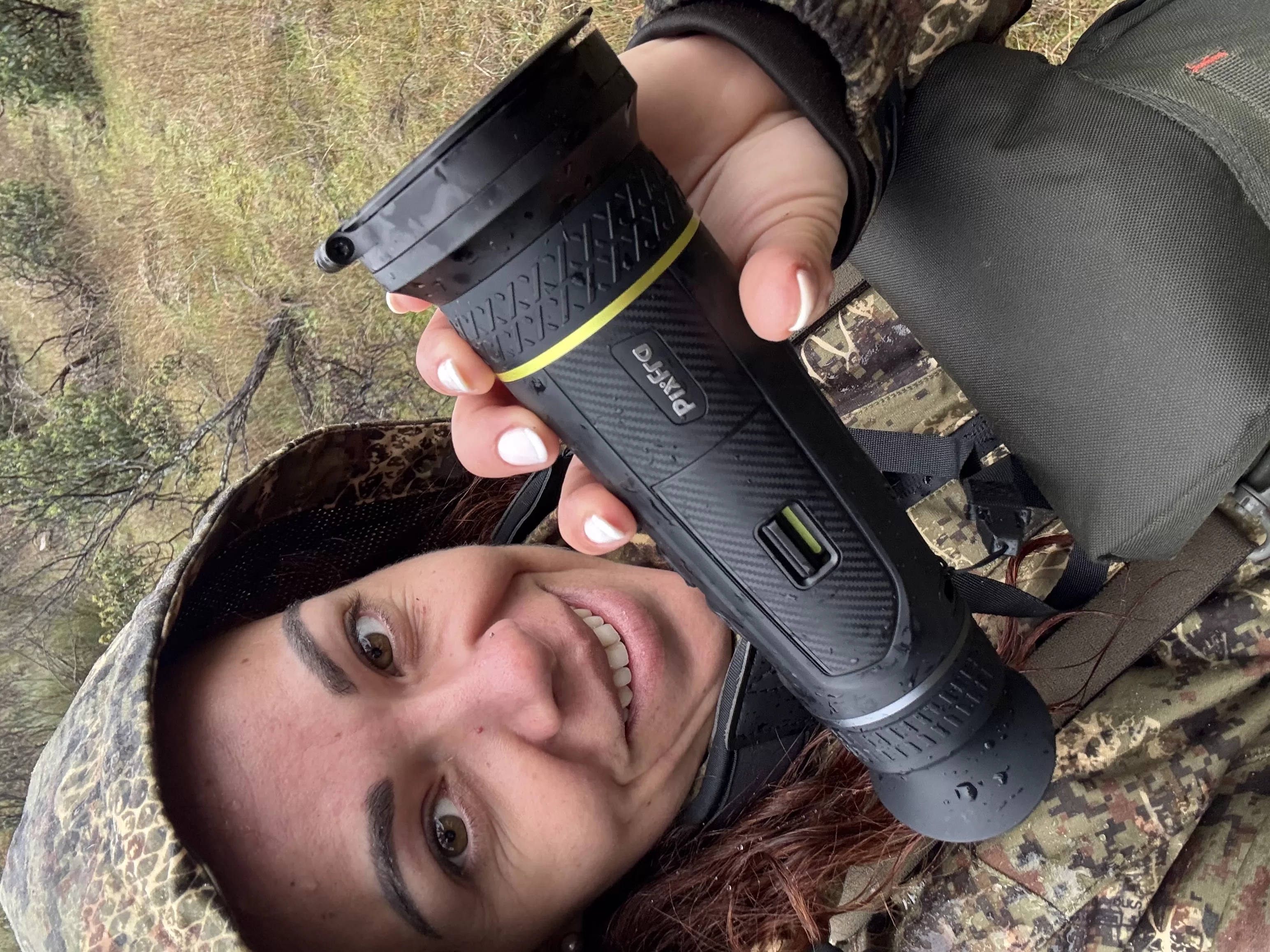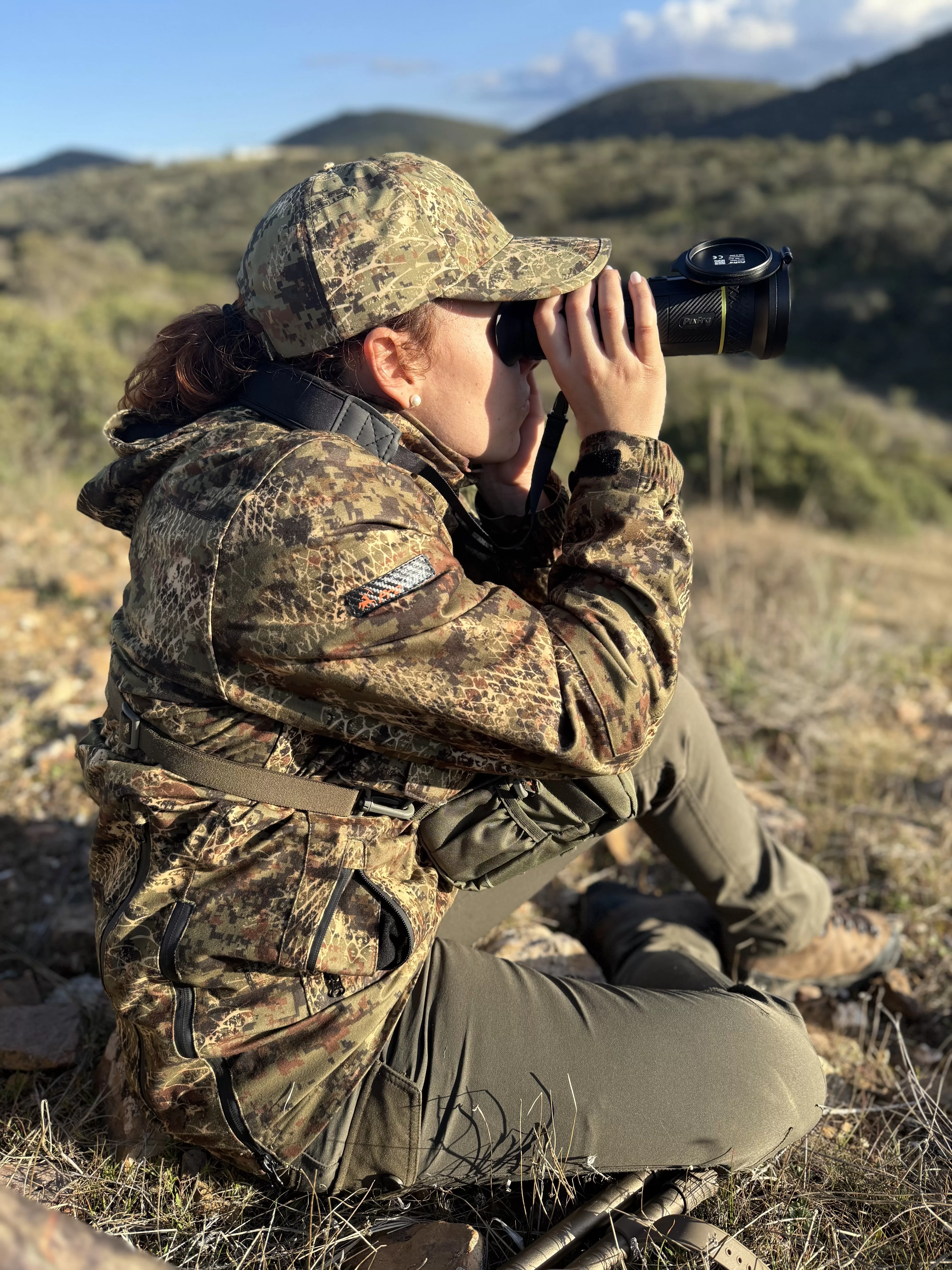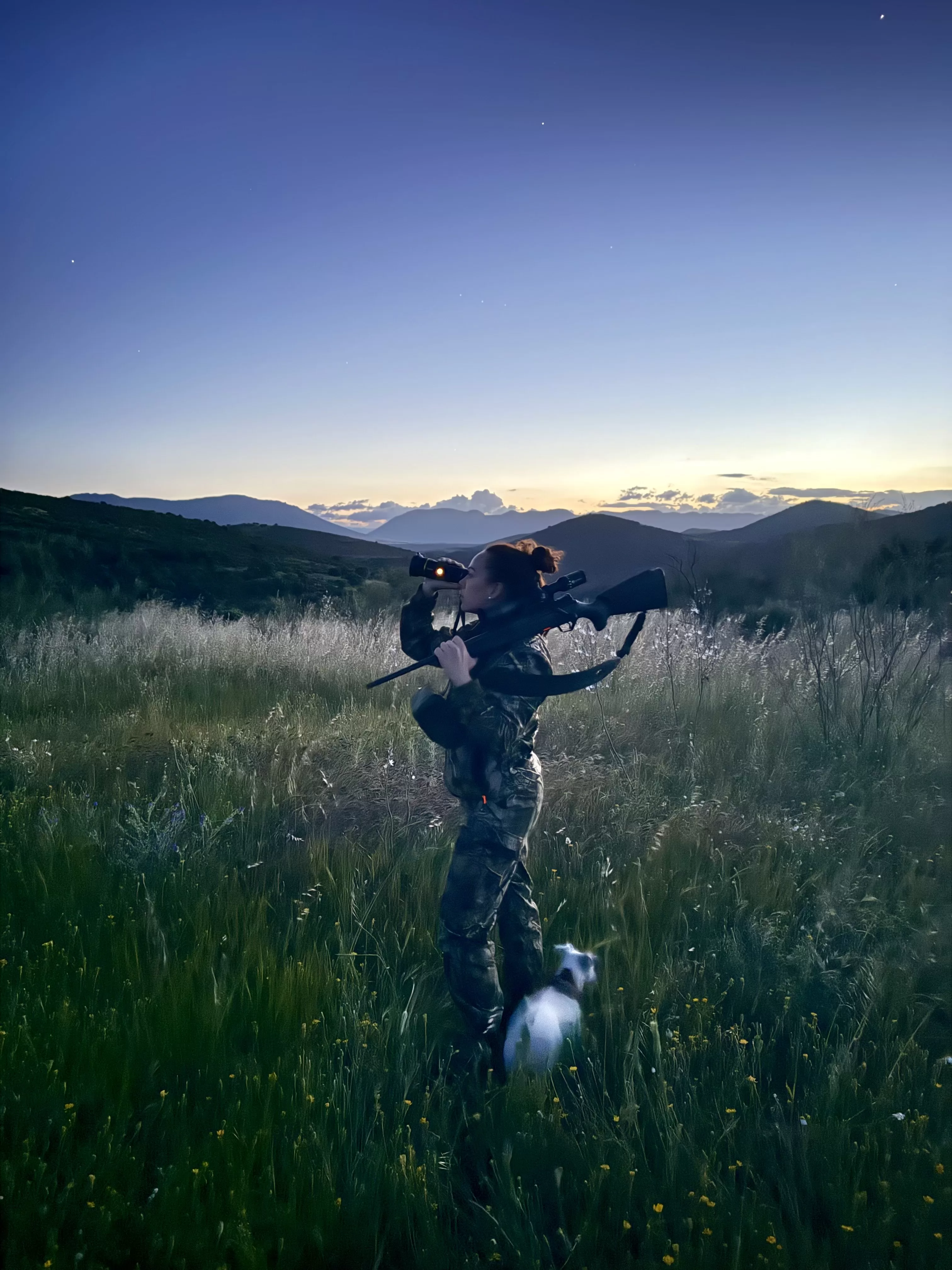

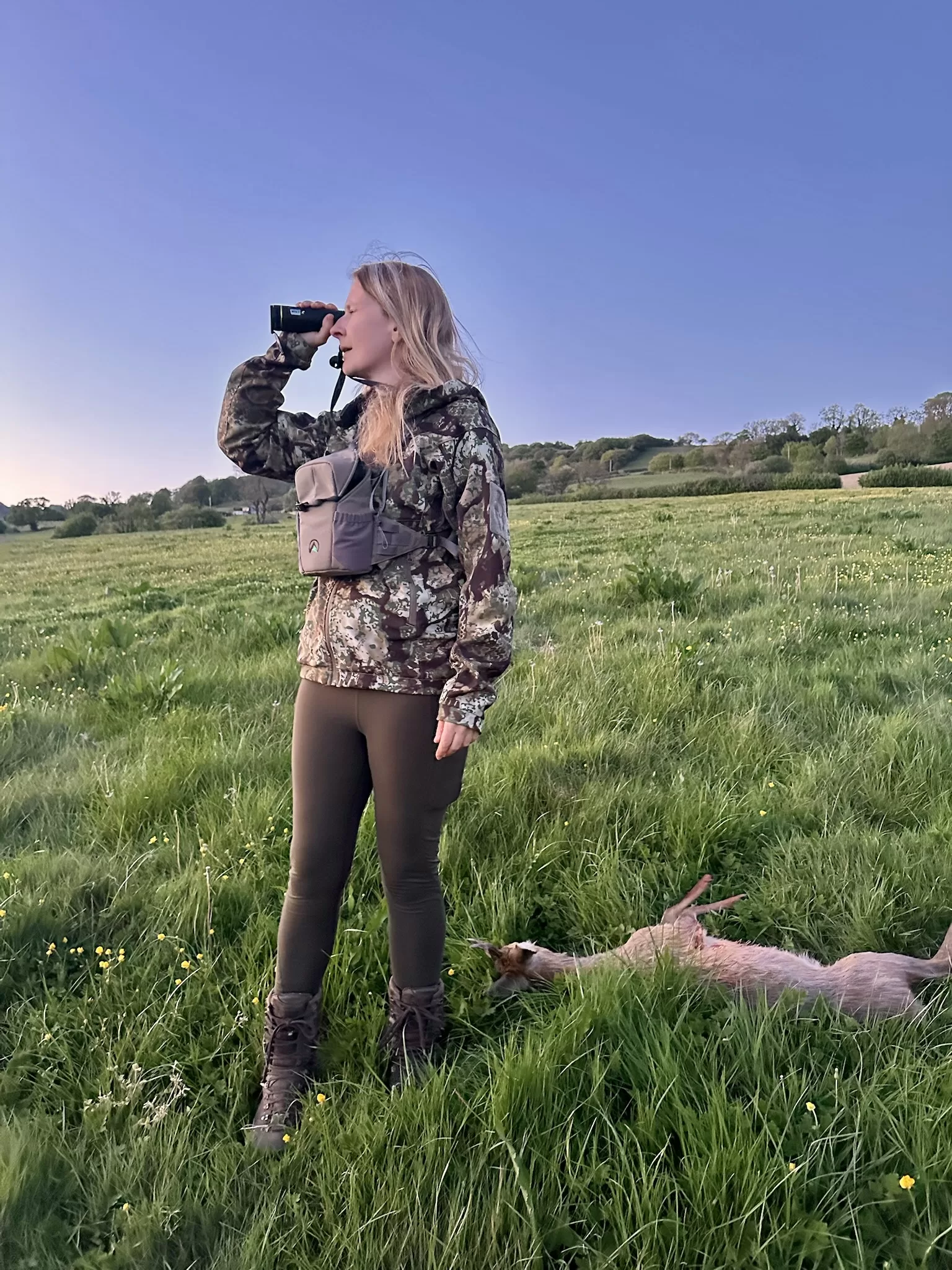
The relationship between hunter and quarry is often one built over time—a dance of observation, anticipation, and respect. For weeks, I had been studying the movements of a particular roe buck across the British countryside. His distinctive pattern of meandering while grazing in a soon-to-be-cropped field had become familiar to me, yet he remained frustratingly elusive when it came to creating the perfect ethical shot opportunity.
As a dedicated huntress in the UK, I understand that successful stalking requires not just skill and patience, but also the right tools to extend our natural capabilities. The modern hunting landscape is evolving, with thermal technology becoming increasingly vital for ethical and effective field craft.
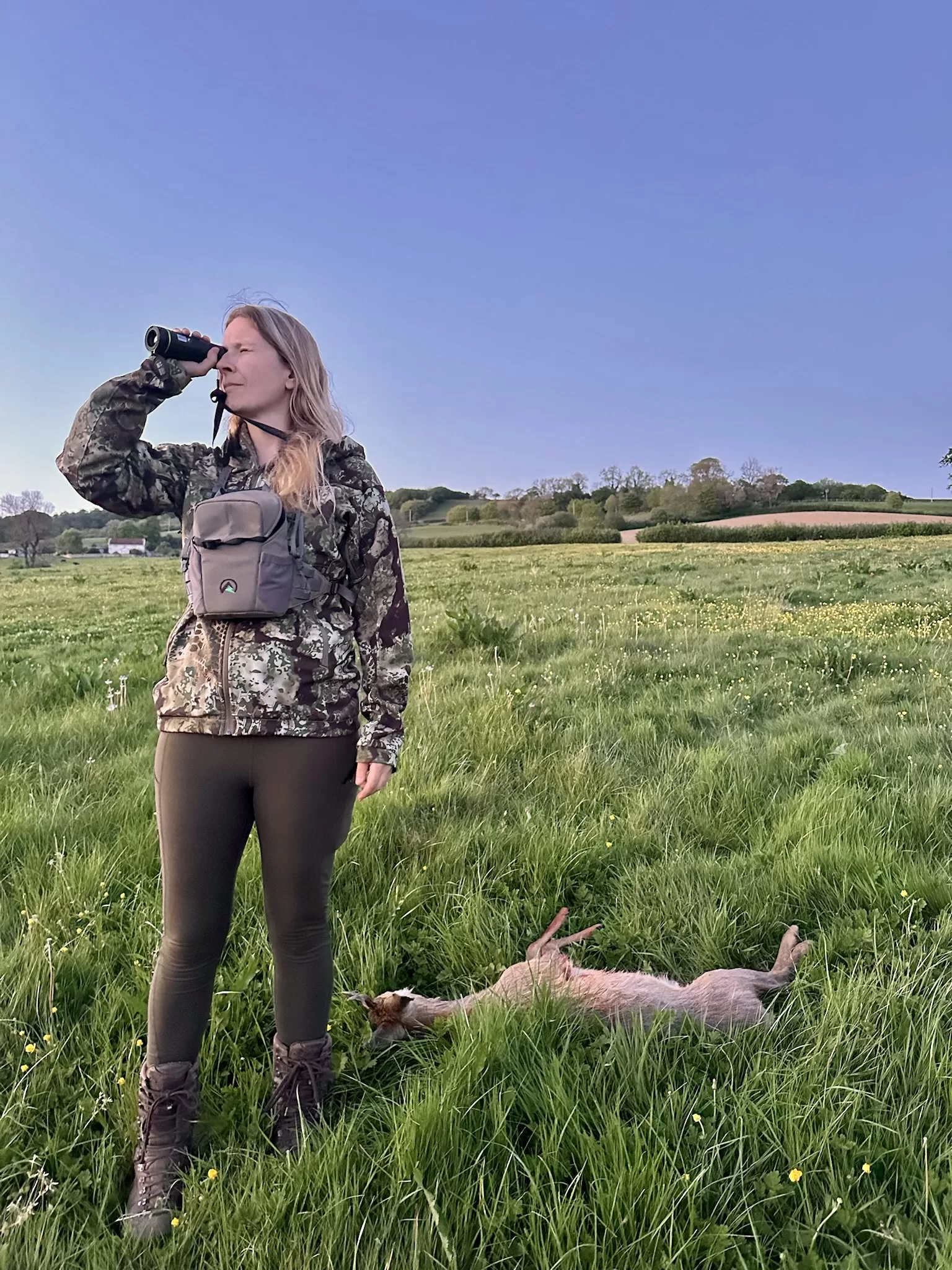
As I carefully approached the hedgerow for a better vantage point, the buck sensed my presence. In an instant, he bolted—racing down into a goyle and across the river in a pattern I had seen before. In previous hunting seasons, this moment would likely have marked the end of the pursuit, with the animal disappearing into terrain and distance beyond human visual capability.
However, through the Mile 2’s thermal imaging technology, I maintained visual contact as he climbed a distant field. The heat signature remained clear and distinct despite the challenging terrain and growing distance—a capability that fundamentally changes the dynamics of stalking.
| Traditional Stalking Limitations | Thermal Technology Advantages |
|---|---|
| Limited visibility in low light conditions | Clear heat signatures regardless of ambient light |
| Lost visual contact across terrain barriers | Maintained observation across valleys and obstacles |
| Difficulty distinguishing animals in vegetation | Heat signatures visible through moderate cover |
| Uncertain animal behavior after being spooked | Ability to observe recovery patterns and new positions |
This technological bridge didn’t eliminate the need for stalking skills—it enhanced their effectiveness, allowing for more informed decisions about how to proceed with the hunt.

„The most valuable aspect of thermal technology isn’t just seeing farther—it’s seeing smarter.“
Armed with the knowledge of exactly where the buck had relocated, I could make tactical decisions that would have been impossible with traditional optics alone. I observed through the thermal spotter that he had chosen to bed down in a small hollow three-quarters of the way up the hill—information that allowed me to plan a deliberate approach rather than conducting a speculative search.
This real-time intelligence transformed what might have been a frustrating end to the evening’s hunt into a strategic opportunity. According to wildlife management studies, this type of informed stalking results in significantly higher success rates while simultaneously reducing unnecessary disturbance to other wildlife—a win for both hunter and conservation efforts.
After crossing the small bridge spanning the goyle, I began a careful stalk up to a pre-identified vantage point that would offer a clear shooting lane. Here, the seamless transition from thermal spotting to precision shooting technology proved invaluable.
Mounting my .243 rifle equipped with the Pixfra Volans scope onto my shooting sticks, I was able to assess the target with exceptional clarity. The scope’s advanced optical system provided the confidence needed for precise shot placement—a critical factor in ethical hunting practice.
With a single, well-placed neck shot, I harvested the buck I had been following for so long. This clean, humane harvest represents the ultimate goal of combining traditional hunting skills with modern technology: improved ethical outcomes.

The successful pursuit of this particular roe buck illustrates a broader principle in modern hunting: responsible technology use supports conservation objectives rather than detracting from them. By enabling:
Thermal technology like the Mile 2 spotter and Volans scope contributes to sustainable wildlife management practices that benefit entire ecosystems. The UK’s deer population management relies heavily on skilled, ethical stalkers making informed decisions—a process now enhanced by appropriate technology.

The practical benefits of thermal technology in British hunting conditions cannot be overstated. The UK’s often challenging weather, varied terrain, and legal requirement for clean, ethical shots make reliable optics essential. My experience with the Pixfra systems revealed several practical advantages particularly suited to UK hunting conditions:
These practical considerations translate directly to field success, as demonstrated in my pursuit of the roe buck. The equipment performed not just as tools, but as reliable partners in the hunting process.
For many traditional hunters, there exists a concern that technology might somehow diminish the authentic hunting experience—replacing woodcraft with gadgetry. My experience suggests precisely the opposite. The thermal technology didn’t replace my stalking skills, field knowledge, or shooting ability; it created opportunities to apply those traditional skills more effectively.
The successful stalk required the same patience, wind awareness, quiet movement, and shooting proficiency that hunters have employed for generations. The technology simply removed some of the environmental limitations that have historically constrained these skills.
The successful harvest of this particular roe buck represents more than just a personal achievement—it symbolizes the thoughtful integration of innovation into Britain’s rich hunting traditions. As the UK’s landscape and wildlife management needs continue to evolve, so too must the approaches we use to conduct ethical, effective hunting.
The ability to maintain visual contact with game across challenging terrain, make informed stalking decisions based on real-time information, and deliver precise, ethical shots represents a positive evolution in hunting practice rather than a departure from tradition.
For those considering incorporating thermal technology into their stalking kit, my experience offers a compelling case for how these tools can enhance both the experience and outcomes of traditional British deer stalking—creating new possibilities while honoring age-old hunting principles.
Are you interested in elevating your stalking success with premium thermal technology designed for UK hunting conditions? Visit pixfra.com to explore the full range of Pixfra thermal products, including the Mile 2 spotter and Volans scope featured in this hunting account. For personalized recommendations based on your specific stalking needs, contact info@pixfra.com.
Before addressing the comparative advantages of different night vision technologies, it’s essential to clarify a common terminological misconception. The question „Which is better, thermal or infrared?“ contains an inherent category error, as thermal imaging is actually a specific type of infrared technology. All thermal imaging devices-including the best monoculars made by brands like Pixfra,FLIR-detect infrared radiation—specifically, the mid-to-long wavelength infrared energy (heat) naturally emitted by objects.
The more accurate technological comparison should be between:
Thermal Imaging: Detects mid-to-long wavelength infrared radiation (heat) naturally emitted by objects without requiring any light source.
Active Infrared (IR) Night Vision: Amplifies available light, including near-infrared wavelengths, and typically employs active infrared illuminators to enhance visibility in low-light conditions.
This distinction forms the foundation for understanding the fundamental operational differences between these technologies. Thermal imaging devices like the Pixfra Mile 2 Series thermal monoculars detect heat signatures directly, requiring no light whatsoever. Active IR night vision devices, by contrast, work by amplifying available light and near-infrared wavelengths, typically using built-in IR illuminators when ambient light is insufficient.
According to the European Thermal Imaging Association:
„Approximately 62% of first-time thermal imaging consumers initially confuse thermal technology with active infrared night vision, highlighting the persistent need for technical clarification in the European market.“
This terminological clarification establishes the framework for a meaningful comparison of these distinct technologies and their relative advantages for European hunting applications.
Detection Principles
The fundamental detection principles of thermal imaging and active IR night vision technologies represent their most significant operational difference, with major implications for hunting applications across European environments and conditions.
Thermal imaging devices detect the mid-to-long wavelength infrared radiation (approximately 7-14μm) naturally emitted by all objects above absolute zero. The temperature differences between objects and their surroundings create distinct thermal signatures that can be visualized without any external light source. The Pixfra Sirius Series thermal monoculars exemplify this technology, utilizing advanced microbolometer sensors with exceptional ≤18mK thermal sensitivity to detect minute temperature variations between game animals and their environments.
Active IR night vision, by contrast, operates by amplifying available visible light and near-infrared wavelengths (approximately 0.7-1.1μm). These devices typically incorporate image intensifier tubes that multiply existing photons to create a visible image. When ambient light is insufficient, active IR devices employ built-in infrared illuminators (essentially invisible flashlights) to provide near-infrared radiation that the device can detect but remains invisible to humans and most animals.
This fundamental operational difference creates distinct performance characteristics in various hunting scenarios common across European territories:
Condition Thermal Imaging Performance Active IR Performance
Complete Darkness Full functionality Requires IR illuminator
Heavy Fog/Rain Moderately degraded Severely degraded
Dense Vegetation Can detect heat through light cover Blocked by visual barriers
Snow Conditions Excellent contrast Reduced contrast from reflections
Detection Range Typically superior (500-2,000+ meters) Limited by illuminator (100-500 meters)
Environmental Performance
European hunting environments present diverse challenges for optical technology, from the dense forests of Germany to the open plains of Spain and the alpine conditions of mountainous regions. The performance of thermal imaging and active IR night vision varies significantly across these environmental conditions.
Thermal imaging technology demonstrates superior performance in adverse weather conditions common to European hunting environments. Light fog, rain, and snow have minimal impact on thermal detection capabilities, as thermal imagers detect heat signatures that penetrate these conditions more effectively than visible or near-infrared light. The Pixfra Mile 2 Series thermal monoculars maintain effective detection capability in precipitation conditions that would severely degrade active IR performance.
Active IR night vision performance degrades substantially in precipitation, as water droplets scatter and reflect the near-infrared light from illuminators, creating a „backscatter“ effect that reduces contrast and visibility. This limitation proves particularly problematic in Northern European hunting regions where precipitation is common during hunting seasons.
Vegetation penetration represents another significant difference between these technologies. Thermal imaging can detect heat signatures through light vegetation and grass, revealing game animals that would remain completely hidden to active IR systems. This capability proves particularly valuable in Central European hunting environments characterized by dense undergrowth and varied terrain.
Temperature extremes affect both technologies differently. Active IR performance degrades in extremely cold conditions common to Alpine hunting environments, as reduced ambient temperature diminishes the effectiveness of IR illuminators. Thermal imaging performance, conversely, often improves in colder conditions, as the temperature differential between warm-blooded game and the environment increases, creating stronger thermal contrast.
The European Wildlife Management Association reports:
„Field testing across diverse European hunting environments demonstrates that thermal imaging technology maintains approximately 85% of optimal performance in adverse weather conditions, compared to just 32% for active IR systems under identical conditions.“
Detection Range
Detection range represents a critical performance metric for European hunting applications, with significant variations between thermal imaging and active IR night vision technologies. The effective range at which game animals can be detected, recognized, and identified directly impacts hunting effectiveness across diverse European hunting environments.
Thermal imaging devices typically deliver substantially greater detection ranges than active IR systems, particularly for larger game animals common to European hunting. Premium thermal monoculars like the Pixfra Sirius Series with 640×512 resolution sensors can detect large animals (e.g., red deer, wild boar) at distances exceeding 1,900 meters under optimal conditions, with recognition possible at 900+ meters and identification at 450+ meters.
Active IR night vision systems face inherent range limitations imposed by their operational principles. The effective range of active IR illuminators typically extends only 100-300 meters for most commercial systems, with detection beyond this range requiring ambient moonlight or starlight. Even premium active IR systems rarely enable detection beyond 500 meters, representing approximately 25-30% of the detection capability offered by comparable thermal systems.
The effective range advantage of thermal imaging proves particularly valuable in several European hunting contexts:
Open terrain hunting common in Spain and Eastern European regions, where early detection at extended ranges provides tactical advantages.
Alpine hunting scenarios where identifying game across valleys and open slopes at extended distances improves hunting efficiency.
Agricultural protection applications throughout Europe, where detecting wild boar and other agricultural pests at maximum range before they enter sensitive areas enhances prevention efforts.
According to field testing by the European Hunting Technology Institute:
„In typical European hunting conditions, thermal imaging technology provides approximately 3.5× greater effective detection range compared to active IR systems of comparable price points, with this advantage increasing to 4.2× in adverse weather conditions.“
Identification
Target identification capability—the ability to positively identify specific game species and determine sex, age, and trophy quality—represents a critical consideration for European hunters, with significant differences between thermal imaging and active IR night vision technologies.
Active IR night vision typically provides more natural-appearing imagery that resembles traditional daylight vision, though with the characteristic green or gray monochrome appearance. This visual familiarity can facilitate species identification and trophy evaluation in ideal conditions at closer ranges. The night vision image shows actual physical features rather than heat signatures, potentially allowing more detailed assessment of antler configuration, body features, and specific markings when subjects are within effective range.
Thermal imaging presents heat signatures rather than visual appearances, with game animals appearing as heat sources against cooler backgrounds. While this provides exceptional detection capability, it requires different interpretation skills for species identification. Premium thermal monoculars like the Pixfra Sirius Series with 640×512 resolution and ≤18mK sensitivity provide sufficient detail for experienced users to identify specific species based on thermal signatures, body size, movement patterns, and heat distribution.
Thermal image interpretation expertise develops with experience, with the European Hunting Education Association noting:
„Professional hunters typically require approximately 20-30 hours of field experience with thermal imaging technology to achieve 90%+ accuracy in species identification based solely on thermal signatures, comparable to their accuracy rates with traditional optics in daylight conditions.“
Several factors influence identification capability:
Resolution: Higher-resolution thermal sensors (640×512) provide substantially better identification capability compared to entry-level (256×192) systems.
Optics: Magnification capability significantly impacts identification at distance, with variable optical zoom systems providing advantages over fixed magnification.
Processing: Advanced image processing like the Pixfra Imaging Processing System (PIPS 2.0) enhances critical details that facilitate species identification.
Practical Advantages
Beyond core performance specifications, several practical factors influence the relative advantages of thermal imaging and active IR night vision for European hunting applications. These practical considerations often prove decisive in technology selection for specific hunting scenarios common across European territories.
Battery efficiency differs significantly between technologies. Thermal imaging devices typically consume more power than active IR systems, resulting in shorter operational durations from comparable battery capacities. However, advanced thermal monoculars like the Pixfra Mile 2 Series implement sophisticated power management systems that extend operational time to 6+ hours, sufficient for most European hunting sessions. Active IR systems can typically operate 20-40% longer from comparable battery capacities, though this advantage diminishes when IR illuminators are actively used.
Detection signature represents another significant practical difference. Active IR illuminators emit radiation that can be detected by other night vision devices, potentially alerting other hunters or wildlife to the user’s presence. Thermal imaging operates completely passively, emitting no detectable radiation whatsoever—a significant tactical advantage in sensitive hunting scenarios or wildlife observation applications.
Weight and size considerations vary across specific models, though thermal monoculars have achieved significant size reductions in recent years. The compact Pixfra Mile 2 Series thermal monoculars demonstrate this advancement, offering full thermal capability in a compact form factor comparable to many active IR devices—an important consideration for mountain hunting scenarios where equipment weight directly impacts mobility and endurance.
Regulatory status varies significantly across European jurisdictions, with many countries implementing different regulatory frameworks for thermal imaging and active IR technologies. Thermal imaging typically faces more restricted regulatory treatment for hunting applications in several European countries, though specific exceptions exist for wildlife management and agricultural protection applications in many jurisdictions.
Conclusion
The comparison between thermal imaging and active IR night vision technologies reveals distinct advantages for each system across different European hunting applications and environments. Rather than one technology being universally „better,“ each offers specific capabilities that may prove advantageous in particular hunting scenarios.
Thermal imaging provides superior detection capability in adverse weather, complete darkness, and at extended ranges—particularly valuable for open terrain hunting, agricultural protection, and scenarios requiring maximum detection distance. The ability to detect heat signatures through light vegetation and in complete darkness without any illumination source represents a significant tactical advantage in many European hunting contexts.
Active IR night vision offers more natural image appearance that may facilitate species identification and trophy evaluation at closer ranges, typically with longer battery life and often at lower cost points for entry-level systems. In jurisdictions with strict regulations on thermal use for hunting, active IR may also present fewer regulatory hurdles for recreational hunting applications.
For European hunters seeking maximum versatility across diverse hunting environments and conditions, thermal imaging technology typically offers the most comprehensive capabilities, particularly when equipped with advanced sensors, optics, and processing systems like those found in the Pixfra thermal monocular lineup. The superior detection capability, weather resistance, and passive operation of thermal imaging provide significant advantages across the diverse environmental conditions encountered in European hunting.
Contact Pixfra
If you’re interested in exploring Pixfra’s premium thermal imaging solutions for European hunting applications, or in discussing distribution opportunities in your region, our technical specialists are available to provide detailed information and personalized recommendations based on your specific requirements.
From the versatile Mile 2 Series thermal monoculars to the premium Sirius Series with its exceptional detection capabilities, Pixfra offers thermal solutions engineered specifically for European hunting conditions and regulatory requirements.
Contact our European market specialists today at info@pixfra.com or visit pixfra.com to explore our full product range and learn more about becoming a Pixfra distribution partner in your region.
The legality of thermal monoculars varies significantly across European jurisdictions, with regulations typically structured around intended use cases rather than the technology itself. This nuanced regulatory approach creates a complex landscape for both users and distributors of the best thermal imaging monoculars. In most European countries, the possession of thermal monoculars as observation devices is generally permitted for civilians, but specific use cases—particularly hunting applications—may be subject to additional regulations or restrictions.
The European regulatory framework typically distinguishes between thermal devices designed primarily for observation (such as handheld thermal monoculars) and those specifically engineered for weapons mounting (thermal riflescopes). The Pixfra Mile 2 Series thermal monocular, for instance, is designed as a dedicated observation platform without weapon mounting interfaces, positioning it differently in regulatory classifications compared to purpose-built thermal weapon sights.
This regulatory distinction is reflected in the European Commission’s dual-use goods framework, which categorizes thermal imaging equipment based on technical specifications and intended applications. According to the European Union Exports Control Regulation (EC) No 428/2009:
„Thermal imaging equipment falls under varying levels of regulatory oversight depending on technical specifications, intended use, and country-specific implementation of EU directives.“
Understanding these distinctions is essential for legal compliance across European markets, particularly for distributors and commercial users of thermal imaging technology.
Thermal monocular regulations vary significantly across major European hunting markets, reflecting different approaches to wildlife management, hunting traditions, and security considerations. This regulatory diversity necessitates country-specific compliance strategies for both users and distributors.
France implements a relatively permissive approach to thermal observation devices, with thermal monoculars like the Pixfra Mile 2 Series generally permitted for civilian ownership and use in observation applications. However, the use of thermal imaging for hunting activities is more strictly regulated, with the French Environmental Code generally prohibiting thermal devices for hunting except under specific pest control authorizations issued by local authorities.
Germany maintains stricter regulations, distinguishing clearly between observation devices and hunting equipment. While thermal monoculars without weapon mounting capabilities are generally legal to own, the German Hunting Law (Bundesjagdgesetz) traditionally prohibited their use during hunting activities. Recent regulatory amendments have created exceptions for specific pest control scenarios, particularly for wild boar management in response to African Swine Fever concerns.
Spain has adopted a regionalized regulatory approach, with autonomous communities establishing varying regulations. Most Spanish regions permit thermal monoculars for observation purposes, while their use in hunting contexts varies by region and specific application. Many autonomous communities have implemented exceptions for nocturnal wild boar control, creating specific legal pathways for thermal use in these limited scenarios.
This regulatory diversity highlights the importance of understanding local regulations when utilizing thermal monoculars across different European jurisdictions.
Hunting applications represent the most heavily regulated use case for thermal monoculars across European jurisdictions, with significant variations in permissibility based on wildlife management objectives, species classifications, and regional hunting traditions. This regulatory complexity requires careful navigation by hunters and wildlife managers utilizing thermal imaging technology.
Many European countries have implemented specific exceptions to general prohibitions on thermal hunting, particularly for invasive or problematic species management. Wild boar control represents the most common exception, with countries including:
| Country | Wild Boar Thermal Exception | Other Species Exceptions | Required Authorizations |
|---|---|---|---|
| France | Limited regional permits | Fox in specific areas | Prefectoral authorization |
| Germany | Expanded since 2020 | Limited predator control | Regional hunting authority permit |
| Spain | Varies by autonomous community | Predator management programs | Regional permits |
| Poland | Generally permitted | Some predator species | Standard hunting license |
These exceptions typically specify whether thermal devices may be used for detection only (favoring observation devices like the Pixfra Mile 2 Series) or for both detection and shooting (requiring weapon-mounted systems). The European Federation of Associations for Hunting and Conservation (FACE) notes:
„The regulatory trend across Europe shows increasing acceptance of thermal imaging technology for specific wildlife management applications, particularly invasive species control, though with careful limitations to preserve traditional hunting ethics and fair chase principles.“
For hunters operating across multiple European jurisdictions, these regulatory variations necessitate careful attention to local regulations, potentially requiring different equipment configurations to maintain compliance in different regions.
Professional and official use cases for thermal monoculars typically enjoy broader regulatory exceptions across European jurisdictions compared to recreational applications. These exceptions recognize the legitimate need for advanced thermal imaging capabilities in various professional contexts.
Law enforcement agencies throughout Europe generally maintain broad exceptions for thermal imaging equipment use, including advanced systems like the Pixfra Sirius Series with its 640×512 resolution and exceptional ≤18mK NETD sensitivity. These capabilities prove particularly valuable for search and rescue operations, suspect tracking, and evidence gathering applications.
Wildlife management professionals, including those working under government authority, typically operate under specific regulatory exemptions that permit thermal imaging use for:
Agricultural protection represents another area where professional exemptions often apply, particularly for damage prevention from wild boar and other agricultural pests. These exceptions typically require formal documentation from agricultural authorities confirming economic damage and necessity.
The European Professional Wildlife Management Association reports:
„Professional users operating under official capacity account for approximately 23% of thermal imaging device utilization across European markets, with these users typically accessing broader regulatory exemptions based on specific wildlife management mandates.“
These professional use exceptions highlight the recognition by European regulatory authorities of thermal imaging’s legitimate applications in wildlife management, conservation, and security contexts, even where recreational use faces greater restrictions.
Beyond use case regulations, European jurisdictions often implement technical specification restrictions that limit certain capabilities of commercially available thermal monoculars. These technical restrictions typically focus on resolution, sensitivity, and advanced features that might have dual-use implications.
The most common technical specification restrictions include:
Resolution Limitations: Some European jurisdictions restrict civilian access to thermal imaging devices exceeding specific resolution thresholds, typically around 640×512 pixels. The Pixfra product lineup accommodates these varying restrictions by offering multiple resolution options, from the Mile 2 Series‘ 256×192 and 384×288 configurations to the premium Sirius Series‘ 640×512 sensor.
Sensitivity Thresholds: Certain high-sensitivity thermal capabilities may face restrictions in specific markets, though most commercial thermal monoculars like the Pixfra lineup fall within commonly permitted sensitivity ranges (≤18-25mK NETD).
Recording Capabilities: Some jurisdictions impose restrictions on recording functionality in thermal devices, particularly when used in specific contexts. The configurable recording options in Pixfra devices allow for compliance with these varying requirements.
Export Restrictions: The European Union maintains export control regulations on certain thermal imaging technologies under the Wassenaar Arrangement, potentially limiting transfer of specific high-performance thermal devices to non-EU countries.
According to the European Security Technology Organization:
„Technical specification restrictions aim to balance legitimate civilian access to thermal imaging technology while preventing potential misuse, with approximately 94% of commercially marketed thermal monoculars falling within generally permitted technical parameters across most European markets.“
Understanding these technical specification restrictions is particularly important for distributors and commercial importers of thermal imaging equipment to ensure regulatory compliance across different European markets.
Navigating the complex regulatory landscape for thermal monoculars across European jurisdictions requires a structured compliance approach. Implementing these best practices helps ensure legal operation while maximizing the utility of thermal imaging technology within applicable regulatory frameworks.
Documentation Maintenance: Maintaining proper documentation proves essential for both users and distributors of thermal monoculars. This includes purchase receipts, technical specifications, and any applicable permits or authorizations. For specialized applications like pest control or agricultural protection, documentation of purpose and authorization should be readily available during field use.
Use Case Clarity: Clearly distinguishing between observation and targeting applications helps navigate use-specific regulations. The Pixfra Mile 2 Series, designed specifically as observation devices without weapon mounting interfaces, provides clear use case definition that simplifies compliance in many regulatory contexts.
Professional Affiliation Documentation: Users operating under professional exemptions should maintain formal documentation of their official capacity and specific authorizations, particularly when operating high-performance systems like the Pixfra Sirius Series in regulated contexts.
Regular Regulatory Monitoring: Given the evolving nature of thermal imaging regulations across Europe, regular monitoring of regulatory changes is essential. The European Hunting Technology Association notes:
„Thermal imaging regulations across EU member states have undergone revisions in approximately 63% of jurisdictions over the past five years, largely trending toward greater permissions for specific wildlife management applications.“
Distributor Due Diligence: For commercial distributors of thermal monoculars, implementing robust customer verification procedures helps ensure products are sold in compliance with local regulations. This includes verification of professional credentials for purchasers seeking access to models under professional use exceptions.
European regulations regarding thermal monoculars continue to evolve, with several identifiable trends shaping the future regulatory landscape. Understanding these trends helps users and distributors anticipate regulatory developments and adapt compliance strategies accordingly.
A significant trend toward expanded permissions for invasive species management is evident across multiple European jurisdictions. As challenges like African Swine Fever drive wild boar population control priorities, many countries have implemented or expanded exceptions for thermal imaging use in these specific management contexts. The European Wildlife Disease Association reports:
„Regulatory amendments permitting thermal imaging for wild boar management have been implemented in 76% of EU member states since 2019, reflecting the growing recognition of technology’s role in addressing wildlife disease management challenges.“
Simultaneously, a trend toward technical capability-based regulation rather than categorical prohibition is emerging. This approach focuses regulatory restrictions on specific high-end capabilities while permitting general-purpose thermal observation devices like the Pixfra Mile 2 Series for civilian use.
Harmonization efforts across EU member states represent another significant trend, with initiatives to standardize certain aspects of thermal imaging regulations to reduce cross-border compliance complications for users and manufacturers. While complete regulatory uniformity remains distant, these harmonization efforts target specific aspects like technical classification standards and professional use exceptions.
The trend toward performance-based exceptions—where regulatory permissions are tied to demonstrated wildlife management outcomes rather than blanket prohibitions—represents another evolution in European thermal imaging regulation, potentially expanding legal use cases where effective management results can be documented.
The legality of thermal monoculars across European jurisdictions presents a complex regulatory landscape that varies significantly based on jurisdiction, intended use, technical specifications, and user classification. While thermal observation devices like the Pixfra Mile 2 Series are generally legal for civilian ownership in most European countries, specific applications—particularly hunting use—face more variable regulations requiring careful compliance attention.
The general regulatory framework distinguishes between observation and targeting applications, with observation-specific devices typically facing fewer restrictions. Professional and official users generally enjoy broader exceptions, reflecting the legitimate applications of thermal imaging technology in wildlife management, conservation, and security contexts.
The regulatory trend across Europe shows movement toward more nuanced, use-case specific regulations rather than blanket prohibitions, particularly as thermal imaging technology demonstrates its value in wildlife management applications like invasive species control. This evolving regulatory landscape requires ongoing attention to compliance requirements across different jurisdictions.
For both users and distributors of thermal monoculars in European markets, maintaining current regulatory knowledge, proper documentation, and clear use case differentiation represents the foundation of a sound compliance strategy in this dynamic regulatory environment.
If you’re interested in exploring Pixfra’s thermal monocular solutions for European markets or require guidance on specific regulatory compliance across different jurisdictions, our regulatory specialists can provide market-specific information to support your distribution or usage requirements.
From the observation-focused Mile 2 Series to the professional-grade Sirius Series, Pixfra offers thermal solutions designed with European regulatory frameworks in mind, supported by comprehensive compliance documentation for distributors and end-users.
Contact our European regulatory team at info@pixfra.com or visit pixfra.com to discuss your specific market requirements and learn more about our compliant thermal imaging solutions for European applications.
To address the question of whether thermal scopes can see infrared, we must first understand the relationship between thermal imaging and the infrared spectrum. The electromagnetic spectrum encompasses radiation of varying wavelengths, from gamma rays (shortest) to radio waves (longest). Infrared radiation sits between visible light and microwave radiation on this spectrum, covering wavelengths from approximately 700 nanometers to 1 millimeter.
It’s crucial to recognize that infrared (IR) is a broad category that includes multiple sub-bands. Near-infrared (NIR) ranges from 0.7-1.4 μm, short-wavelength infrared (SWIR) from 1.4-3 μm, mid-wavelength infrared (MWIR) from 3-8 μm, and long-wavelength infrared (LWIR) from 8-15 μm. What we commonly call „thermal imaging“ primarily operates in the MWIR and LWIR bands, detecting the heat signatures naturally emitted by objects,and this feature is a major advantage for hunters.
According to the International Commission on Illumination:
„All objects with temperatures above absolute zero emit infrared radiation. The wavelength distribution and intensity of this radiation are directly related to the object’s temperature.“
This scientific principle forms the foundation of thermal imaging technology. Modern thermal scopes like the Pixfra Pegasus Pro Series and Chiron LRF Series are specifically designed to detect and visualize MWIR or LWIR radiation, which corresponds to the heat signatures emitted by animals, humans, and objects in the environment. Therefore, thermal scopes do indeed „see“ infrared radiation—specifically, the mid to long-wavelength infrared emissions that correspond to heat signatures.
An important technical distinction exists between the different technologies used to detect infrared radiation. This distinction helps clarify what exactly thermal scopes can and cannot detect in terms of infrared light.
Passive Infrared Detection (Thermal Imaging): Devices like the Pixfra Sirius Series Thermal Monocular use uncooled microbolometer sensors to detect naturally emitted infrared radiation (heat) without requiring any external light source. These operate primarily in the LWIR spectrum (8-14 μm) and create images based solely on temperature differences.
Active Infrared Technologies: These include night vision devices that actively project near-infrared light (NIR, 0.7-1.4 μm) to illuminate an area, similar to a flashlight that human eyes cannot see. This projected light is then detected by specialized cameras.
Near-Infrared Illuminators: These devices project NIR light that standard thermal scopes cannot detect, as they are tuned to detect MWIR and LWIR radiation instead.
| Technology Type | Wavelength | Requires Light Source | What It Detects | Pixfra Example |
|---|---|---|---|---|
| Thermal Imaging | 8-14 μm (LWIR) | No | Heat signatures | Pegasus Pro Series |
| Night Vision | 0.7-1.4 μm (NIR) | Yes (either ambient or IR illuminator) | Reflected NIR light | Volans Series (supports day/night use) |
| Daytime Optics | 0.4-0.7 μm (Visible) | Yes (natural light) | Reflected visible light | N/A |
This distinction explains why thermal imaging devices like the Pixfra Taurus Series Thermal Front Attachment can function in complete darkness without any external illumination—they detect the LWIR radiation naturally emitted by all objects with temperatures above absolute zero, rather than requiring reflected light of any kind.
At the core of a modern thermal scope’s ability to detect infrared radiation is the microbolometer sensor technology. Understanding this component helps clarify what specific types of infrared radiation thermal scopes can detect and visualize.
Microbolometer sensors consist of arrays of microscopic detector elements made from materials (typically vanadium oxide or amorphous silicon) that change electrical resistance when exposed to infrared radiation. These minute resistance changes are measured, processed, and converted into a visible thermal image.
The sensitivity of these sensors is measured by Noise Equivalent Temperature Difference (NETD), expressed in millikelvin (mK). Premium thermal devices like the Pixfra Sirius HD Series feature sensors with NETD values of ≤18mK, indicating exceptional sensitivity to minute temperature differences—critical for detecting subtle thermal signatures at extended ranges.
Resolution also plays a vital role in a thermal scope’s capability to detect and display infrared radiation clearly. Higher resolution sensors like the 640×512 detector in the Pixfra Arc LRF Series provide more detailed visualization of thermal patterns compared to lower resolution alternatives.
According to thermal imaging expert Dr. Heinrich Müller from the European Institute of Thermal Science:
„Advancements in microbolometer technology have reduced NETD values from approximately 100mK in early commercial devices to below 20mK in current premium systems, representing a five-fold improvement in temperature sensitivity over the past decade.“
This technological advancement directly translates to improved detection capabilities for hunters and wildlife observers using thermal imaging equipment in challenging environmental conditions.
While the physical sensor detects infrared radiation, the processing of this thermal data is equally crucial in determining what a thermal scope can effectively „see.“ Modern thermal imaging systems incorporate sophisticated signal processing to enhance detection capabilities beyond what raw sensor data might provide.
Pixfra’s proprietary PIPS 2.0 (Pixfra Imaging Processing System) exemplifies how advanced processing algorithms can significantly improve the visualization of infrared data. This system enhances image clarity through multiple processing stages:
These processing enhancements effectively expand the range of infrared radiation that can be meaningfully detected and interpreted by the user. For instance, in challenging conditions like light fog or rain, which can partially attenuate LWIR radiation, processing algorithms can amplify subtle signals that might otherwise be lost.
The real-world impact of these processing capabilities is particularly evident in the field, where environmental conditions constantly change. A European Hunting Association field test found that:
„Thermal devices with advanced processing capabilities demonstrated up to 40% greater effective detection range in challenging environmental conditions compared to systems with similar sensors but less sophisticated signal processing.“
The ability of thermal scopes to detect infrared radiation at distance is influenced by multiple factors beyond just the sensor specifications. Understanding these factors helps users develop realistic expectations about detection capabilities in various scenarios.
Sensor Resolution: Higher resolution sensors (e.g., 640×512 vs. 384×288) provide more detailed infrared information at greater distances. The Pixfra Mile 2 Series offers options ranging from 256×192 to 640×512 resolution to address different detection range requirements.
Lens Specifications: Focal length and aperture significantly impact detection range. Longer focal length optics like the 50mm lens on the Pixfra Sirius S650 model provide greater magnification and detection range compared to shorter focal length alternatives.
Atmospheric Conditions: Water vapor, dust, and precipitation can attenuate LWIR radiation. High humidity, rain, and fog reduce effective detection ranges.
Target Size and Thermal Contrast: Larger targets with greater temperature differential from the background are detectable at greater distances. A typical detection range matrix might look like:
| Target Size | Thermal Contrast | Detection Range with 640×512 Sensor | Recognition Range |
|---|---|---|---|
| Large (Human/Deer) | High (>10°C) | 1,800-2,600m | 500-900m |
| Medium (Fox) | Medium (5-10°C) | 900-1,400m | 300-500m |
| Small (Rabbit) | Low (<5°C) | 400-700m | 150-250m |
These ranges represent optimal conditions and will decrease with adverse weather or when targets have minimal thermal contrast with their surroundings.
While thermal scopes excel at detecting emitted infrared radiation (heat), they cannot detect certain infrared phenomena related to reflectivity rather than emission. This limitation is important for users to understand when considering the capabilities and constraints of thermal imaging equipment.
Thermal scopes cannot detect:
According to Dr. Anna Kowalski of the European Optical Systems Institute:
„The common misconception that thermal imagers can detect all infrared frequencies leads to unrealistic expectations. These devices are specifically tuned to detect emitted thermal radiation in the 8-14 μm range, making them blind to near-infrared illumination and laser systems operating in shorter wavelengths.“
This distinction is particularly important for professional users who might be operating in environments where multiple infrared technologies are in use simultaneously, such as in wildlife management or security applications.
Understanding the specific infrared detection capabilities of thermal scopes helps users identify the optimal applications for this technology. Thermal imaging devices like the Pixfra Taurus LRF Series excel in scenarios that leverage their ability to detect mid and long-wave infrared radiation:
Wildlife Detection in Dense Vegetation: The LWIR radiation emitted by animals penetrates light vegetation more effectively than visible light, making thermal scopes superior for detecting wildlife in moderately dense cover.
Tracking After Shot: The residual heat signature left by game animals provides a distinct thermal trail that can be followed even when visible blood trails are difficult to detect.
Nocturnal Wildlife Management: For species active primarily during nighttime hours, such as wild boar, thermal detection capabilities enable effective population management without disturbing natural behavior patterns.
Environmental Hazard Identification: Thermal scopes can identify potential environmental dangers like forest fire hotspots that emit distinctive infrared signatures before they become visible to the naked eye.
The European Wildlife Management Consortium reports:
„In controlled field tests, experienced hunters using thermal imaging equipment demonstrated 78% higher detection rates of camouflaged wildlife compared to traditional optics, with the advantage increasing to 94% in low-light conditions.“
These practical advantages stem directly from the thermal scope’s ability to detect specific infrared wavelengths associated with heat signatures rather than relying on reflected visible light.
To directly answer the original question: Yes, thermal scopes do see infrared radiation—specifically, they detect mid and long-wavelength infrared radiation (MWIR and LWIR) that corresponds to heat signatures emitted by objects in the environment. However, they cannot detect near-infrared (NIR) illumination used by night vision devices or IR laser systems.
This specific infrared detection capability makes thermal imaging technology uniquely valuable for applications requiring the visualization of heat signatures regardless of lighting conditions. Modern thermal scopes like those in the Pixfra lineup combine sensitive microbolometer technology with sophisticated image processing to provide exceptional thermal infrared detection capability across diverse environmental conditions.
Understanding these technical capabilities and limitations allows users to make informed decisions about when thermal imaging technology represents the optimal solution for their specific requirements, whether for wildlife observation, hunting, or security applications.
If you’re interested in exploring how thermal imaging technology can enhance your hunting or observation capabilities, Pixfra offers a comprehensive range of products designed to meet diverse requirements and budgets. From the compact Mile 2 Series to the premium Pegasus Pro Series, our thermal imaging lineup delivers exceptional infrared detection capabilities backed by PIPS 2.0 processing technology.
For more information about our thermal imaging solutions or to discuss distribution opportunities in European markets, contact our specialists at info@pixfra.com or visit pixfra.com to explore our full product range and technical specifications. Our team can provide expert guidance on selecting the optimal thermal system for your specific application requirements, ensuring you maximize the benefits of this advanced technology.