
















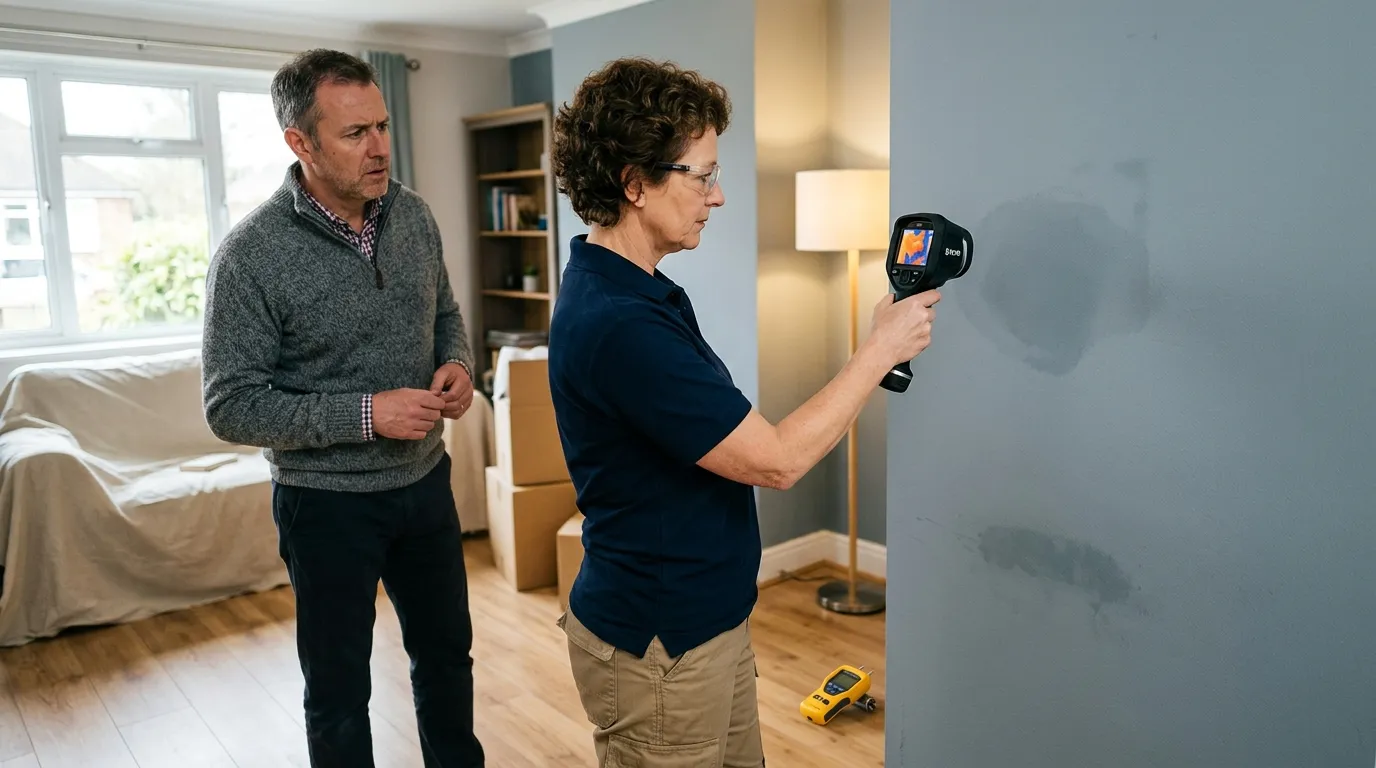
Thermal imaging can help detect hidden moisture behind drywall because wet materials often appear cooler during evaporation or warmer when fed by an active hot-water leak. For detecting hidden moisture & mold risk behind drywall with thermal, treat the camera as a fast screening tool: it finds suspect areas, then a moisture meter confirms whether the wall is actually wet.
Thermal Moisture Detection
- Scan drywall from several angles.
- Look for cool, irregular patches below plumbing, windows, roofs, or HVAC lines.
- Compare the pattern with nearby dry wall.
- Confirm suspect spots with a moisture meter.
- Fix the water source, then dry within 24-48 hours.
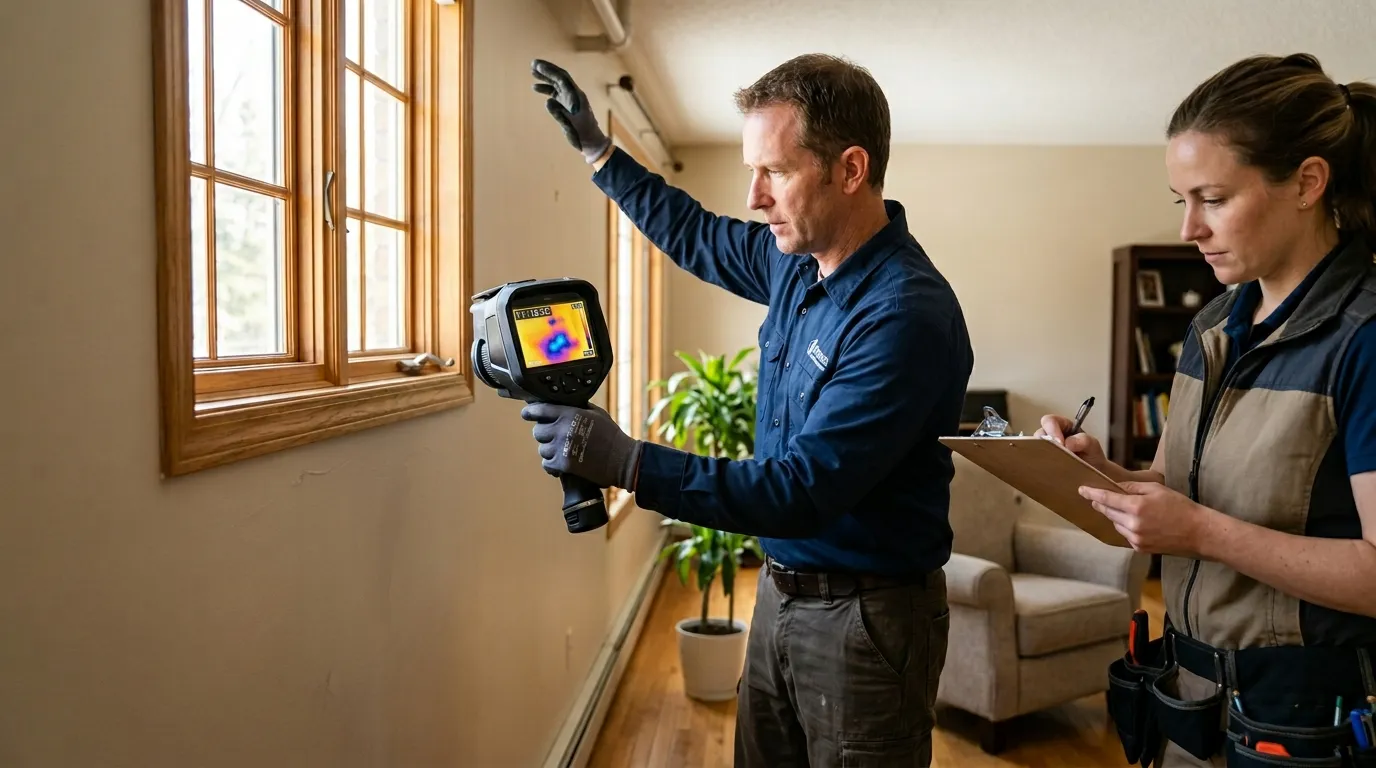
A thermal camera doesn’t see mold spores. It reads surface temperature. That distinction matters because a wet cavity can produce a clean thermal clue hours or days before staining, bubbling paint, or a musty odor becomes obvious. The camera gives you a map of where to test, not a lab result.
The mold part comes from moisture, time, and a food source. Drywall paper is food. A slow supply-line drip, roof leak, window flashing failure, AC condensate problem, or shower valve leak provides the water. The U.S. Environmental Protection Agency’s mold guide says moisture control is the core of mold control and recommends drying water-damaged areas within 24-48 hours to help prevent growth. That time window is why thermal scanning is useful: it can speed up the decision to open, meter, dry, or call a remediation pro.
Can Thermal Cameras See Mold?
No. Thermal cameras can’t identify mold species or confirm mold growth behind drywall. They can reveal temperature patterns that often come from wet gypsum, damp insulation, leaking pipes, or evaporation. If the pattern lines up with a water source, confirm it with a moisture meter before calling it mold risk.
The blunt answer to the Reddit version of this question is simple: thermal imaging sees the wet conditions that let mold grow. If someone points a camera at a wall and says, “that’s mold,” they’re skipping the proof step.
Drywall Cooling Patterns
Wet drywall often looks cooler than surrounding drywall because evaporation pulls heat from the surface. Picture a bathroom wall behind a shower valve. The tile side looks fine. The hallway side has one soft blue-gray patch on the thermal display, starting at the valve height and feathering downward between studs. You touch it. It feels normal. The pinless meter says 28 percent wood moisture equivalent at the center and 10 percent two feet away. Now you have a target.
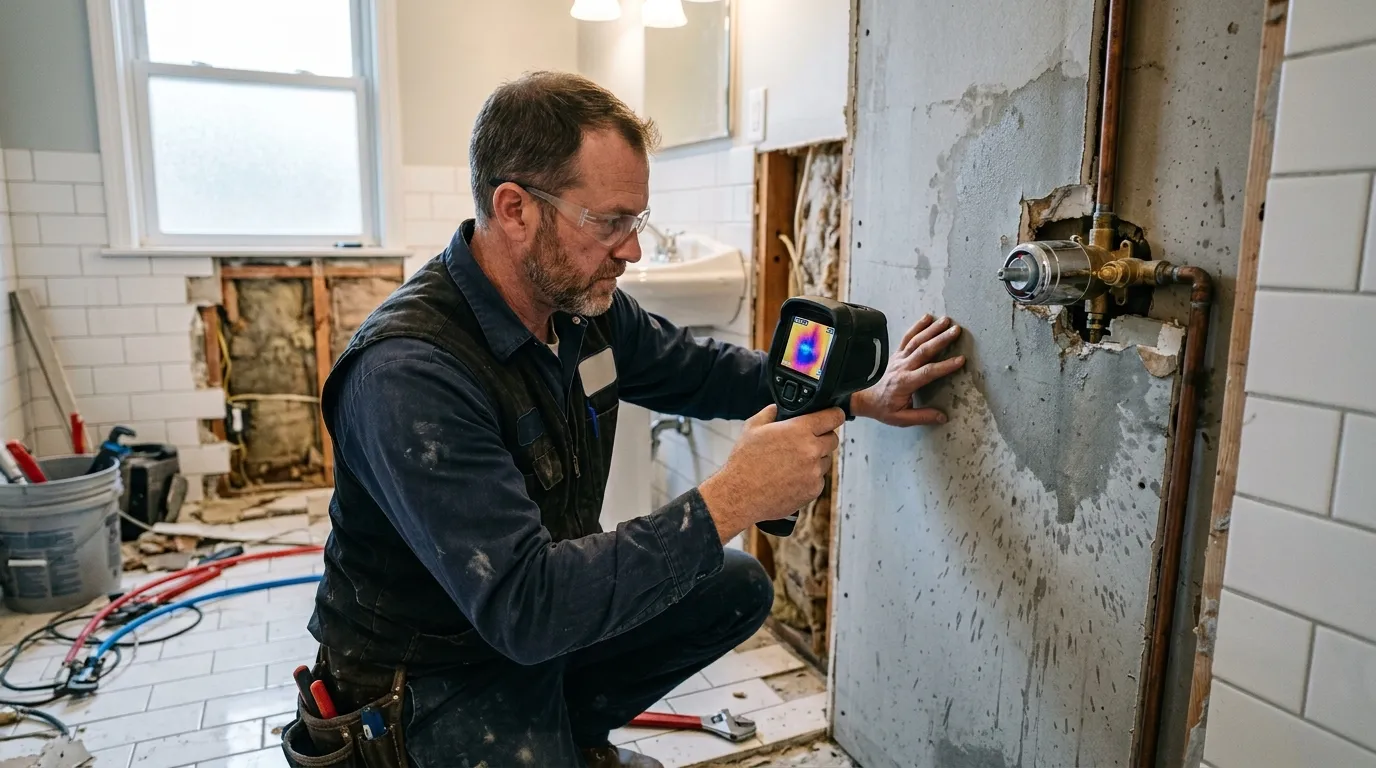
Hot-water leaks can flip the pattern. A leaking copper line behind 1/2-inch gypsum may show as a warm vertical stripe for 10 minutes after someone runs the shower. Once the flow stops, the same area can cool as damp materials evaporate. This is why one scan at 2 p.m. rarely tells the whole story. Run the suspected fixture, wait, scan, meter, then scan again.
| Thermal pattern | Common cause | Better next check |
|---|---|---|
| Cool blotch with soft edges | Evaporating wet drywall | Pinless meter grid |
| Warm line near floor | Hot-water pipe or radiant heat | Re-scan after fixture use |
| Cool vertical bay between studs | Wet insulation touching drywall | Pin probe or small inspection opening |
| Sharp straight stripe | Stud, corner bead, duct, or pipe | Compare with framing layout |
| Cool area at exterior corner | Air leak or missing insulation | Smoke pencil and humidity reading |
Why Does Wet Drywall Look Cold?
Wet drywall often looks cold because evaporation absorbs heat from the wall surface. The stronger the evaporation, the stronger the cooling pattern. High indoor humidity, vinyl wallpaper, low airflow, or a wall cavity packed with insulation can weaken that pattern, so thermal scans work best with meter confirmation.
The best readings usually happen when the room is stable and the wall has a temperature difference from its surroundings. In a U.S. home with air conditioning running, damp drywall near a plumbing leak may stand out by 2°F to 5°F. That isn’t a universal pass-fail number. A 2°F patch that repeats from three angles and matches a meter reading matters more than a 10°F reflection from a shiny picture frame.
Thermal Scan Workflow
Start with the story of the building. A one-story ranch in Phoenix with a flat roof fails differently from a 1998 Colonial in Ohio with upstairs bathrooms over a finished basement. Ask what changed: a new roof penetration, a frozen pipe last winter, a shower remodel, a dishwasher overflow, a musty closet after a humid week. Thermal imaging gets sharper when you already have a short suspect list.
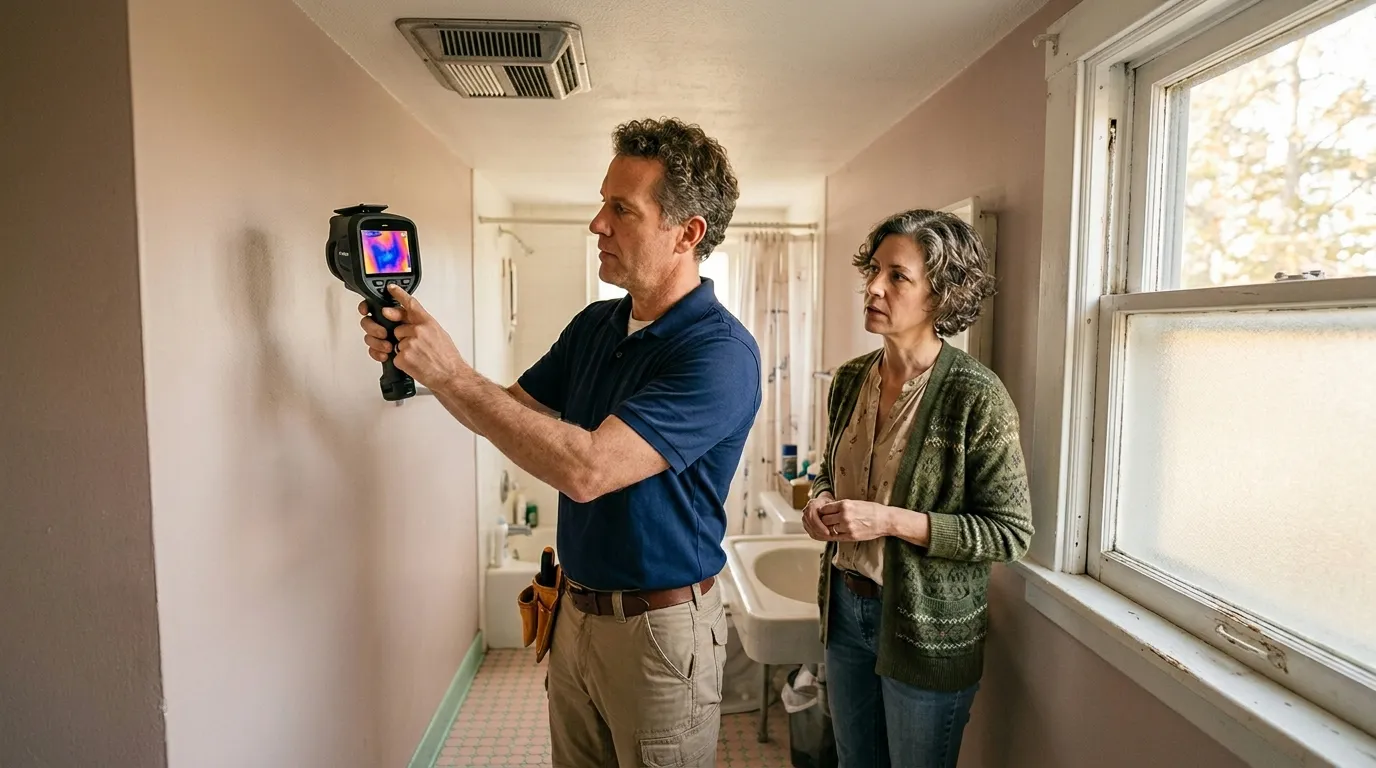
A practical scan works in passes. Stand back first, about 6 to 10 feet from the wall, so you can see the whole pattern. Then move closer for detail. Keep the camera perpendicular to the wall when possible. Avoid scanning across glossy tile, mirrors, stainless appliances, and glass because they reflect heat from your body, lights, and windows. If you’re using a Pixfra thermal device for a quick check, hold the view steady for a few seconds before calling the pattern real.
Use a simple field sequence:
- Record room temperature and relative humidity.
- Scan the suspect wall, ceiling, baseboard, and adjacent room.
- Mark thermal anomalies with painter’s tape.
- Meter each marked spot and a dry control spot.
- Re-scan after running the suspected fixture for 5 to 15 minutes.
- Photograph the visible wall and the thermal screen from the same angle.
If the cold pattern starts at the floor line or repeats along a hot-water run, the same logic used when plumbers locate slab leaks & radiant heating pipes with thermal applies: trace the heat path, confirm the wet zone, and avoid opening drywall until the pattern and meter reading agree.
Can Thermal Find Water Pipes?
Thermal can help trace active hot-water lines, radiant loops, and sometimes cold-water lines when the pipe temperature differs from the wall. It won’t map every pipe through drywall. Plastic PEX, deep cavities, insulation, and equalized wall temperatures can hide the line until water flow changes the temperature.
A moisture meter is still the closer. Pinless meters are faster and cleaner for painted drywall. Pin meters are better when you need depth clues or when the surface material is confusing the reading. For restoration work, a common pairing is a thermal scan plus a Protimeter Surveymaster, Tramex Moisture Encounter ME5, or Delmhorst BD-2100. The brand matters less than repeatable readings and a dry baseline.
False Moisture Signals
False positives are common. Sun on an exterior wall can leave a warm rectangle that looks like a leak path. A supply register can chill a wall bay. A missing insulation batt can look like wet drywall because both create cold areas. Metal corner bead, screws, studs, and ductwork can create crisp thermal lines that don’t behave like moisture.
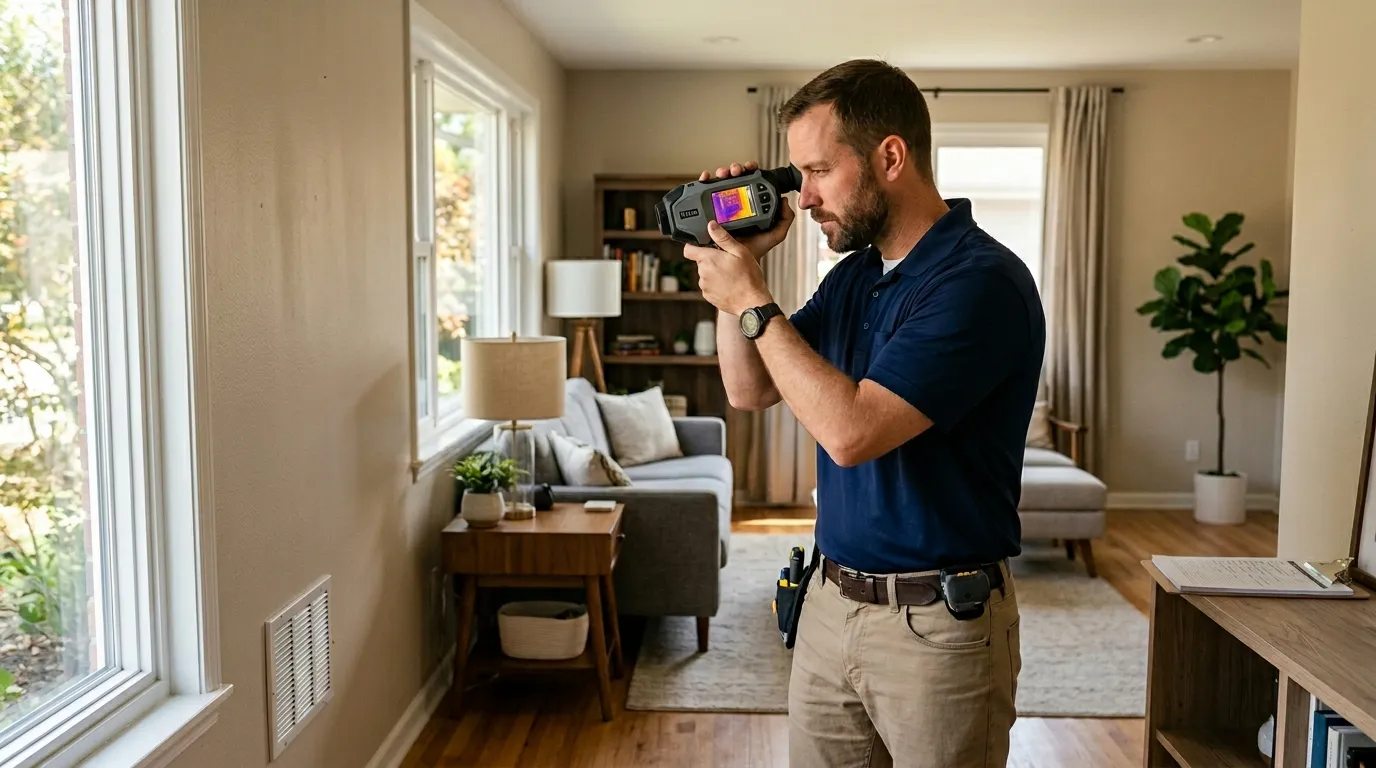
Reflections fool people fastest. A glossy painted wall can bounce the heat signature of your hand, a recessed light, or a sunny window behind you. Move left. Move right. If the “wet spot” moves with you, it’s reflection. Real wet drywall stays fixed to the wall geometry.
Field rule: a suspect moisture pattern should pass at least four checks before you treat it as real.
- It stays in the same place from different angles.
- It has soft, irregular edges instead of a perfect straight line.
- It makes sense with a roof, window, plumbing, HVAC, or appliance source.
- It reads higher than a dry control area on a moisture meter.
- It changes logically after water use, drying, or dehumidification.
Thermal work also overlaps with pest inspections; when a warm wall patch moves, contains nesting material, or follows an attic entry point, this is closer to thermal imaging for pest control pros than a moisture call. Moisture patterns spread, wick downward, and follow absorbent materials. Animal heat behaves differently. So does a live electrical load.
Mold Risk Decisions
Once you confirm moisture, the next question is risk. The Centers for Disease Control and Prevention’s mold page says mold can grow where moisture is present and notes that people with asthma, mold allergies, immune compromise, or chronic lung disease can have stronger health reactions. That doesn’t mean every cold patch is an emergency. It means you should match the response to the size, water source, occupant risk, and time wet.
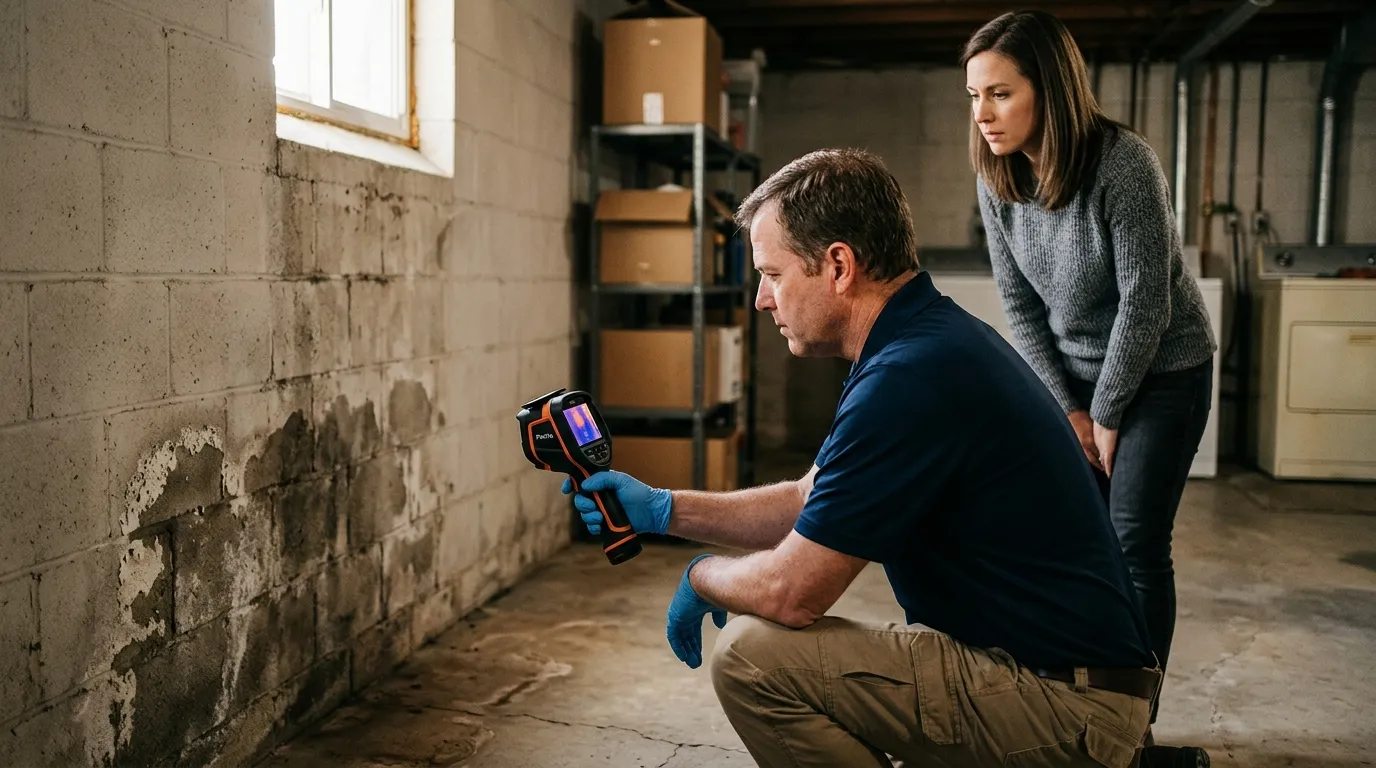
Small, clean-water leaks caught early are usually a drying problem. A toilet overflow from a clean tank is one thing. Sewage, floodwater, long-term wall cavity moisture, or a musty odor with occupant symptoms is a different call. Don’t let a pretty thermal image soften that distinction.
| Situation | Thermal value | Best decision |
|---|---|---|
| Leak less than 24 hours old | Finds wet perimeter fast | Stop water and dry aggressively |
| Leak 2-7 days old | Maps likely mold-risk zone | Meter, open if readings stay high |
| Musty odor, no visible stain | Finds hidden suspect areas | Inspect cavities with care |
| Sewage or floodwater | Limited screening value | Call a qualified remediation pro |
| Mold over about 10 sq. ft. | Helps define spread | Follow professional cleanup guidance |
When Should Drywall Be Opened?
Open drywall when moisture readings stay high, the water source is confirmed, the wall smells musty, paint is soft, or the cavity contains contaminated water. Don’t open a wall just because a thermal image looks odd. Meter it, compare it, and document why that exact spot is the right cut.
Behind drywall, mold risk climbs when drying can’t reach the wet material. Closed cavities, vinyl wallpaper, wet fiberglass insulation, double drywall, and baseboards with trapped water slow evaporation. A dehumidifier in the room may make the surface look better while the paper backing stays wet. That’s one of the sneaky parts.
For homeowners, the line is usually safety and scale. A 12-inch patch under a small supply leak may be manageable if you stop the water fast and dry the wall. A 6-foot run behind kitchen cabinets with swelling baseboard is contractor territory. If anyone in the home has asthma or immune compromise, move sooner.
Drywall Documentation
Good documentation turns thermal imaging from “I saw something weird” into a defensible moisture map. Take a normal photo and a thermal photo from the same position. Mark the wall. Note the date, room, fixture tested, indoor temperature, relative humidity, and meter readings. Use the same color palette for the job so the photos don’t exaggerate the change from room to room.
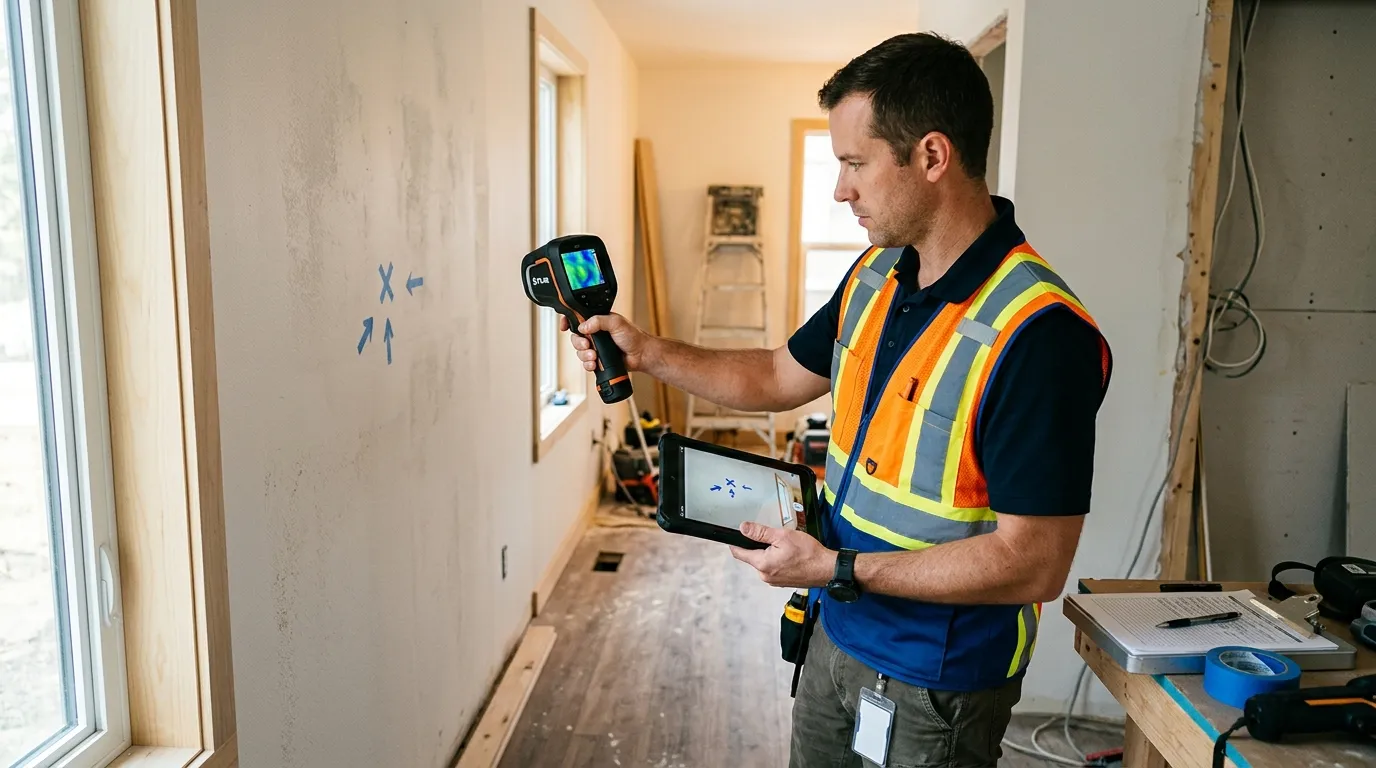
Don’t chase perfect images. Chase repeatable evidence. A slightly blurry thermal photo with a clear tape mark, meter number, and dry control reading beats a dramatic rainbow image with no context. Insurance adjusters, landlords, tenants, and restoration crews all need the same thing: where is wet, how wet is it, and what caused it?
For detecting hidden moisture & mold risk behind drywall with thermal, use this job note format:
- Location: “Hall bath, north wall, 18 inches below shower valve.”
- Thermal pattern: “Cool irregular patch, about 14 by 22 inches.”
- Meter readings: “Suspect area 25-30 WME; dry control 8-10 WME.”
- Source test: “Pattern expanded after 10-minute shower run.”
- Action: “Opened wall below valve; dried cavity; rechecked after 24 hours.”
Then come back. A drying job without follow-up is a guess. Re-scan after 24 hours and again when the meter reads close to the dry control area. If the thermal pattern shrinks and the meter drops, you’re moving in the right direction. If the surface looks dry but the meter stays high, the wall is still holding water.
FAQ
Is Thermal Imaging Enough?
No. Thermal imaging marks suspicious surface temperature patterns; a moisture meter, probe, or controlled inspection opening confirms wet drywall.
What Temperature Difference Matters?
A 2°F to 5°F difference can matter when it follows a leak-shaped pattern and repeats from several angles. Single pixels or sharp stripes near studs are weak evidence.
Can I Scan Painted Drywall?
Yes, flat or eggshell paint is usually fine. Gloss paint, foil wallpaper, tile, glass, and mirrors can reflect heat and distort results.
Should I Test Air?
Usually no. CDC says if you see or smell mold, remove it and fix the moisture source; testing isn’t needed for most homes.
How Fast Can Mold Start?
EPA recommends drying water-damaged areas within 24-48 hours to help prevent mold growth. Wet drywall left closed for days deserves a closer inspection.
Pixfra builds thermal devices for people who need to read heat patterns clearly, whether they’re outdoors at night or checking a suspicious wall inside a property. For detecting hidden moisture & mold risk behind drywall with thermal, the win is disciplined scanning: find the pattern, confirm the moisture, stop the water, and document the dry-out.