














How to use our product

Our Local Partner Program (LPP) has been meticulously designed to provide robust support to our most esteemed partners in the local market.

Blogs

Stay informed with Pixfra’s latest updates, product stories, and insights into the world of thermal imaging.

编组 26备份

What is the Best Thermal Scope?

Determining the “best” thermal scope requires establishing objective evaluation criteria rather than relying on marketing claims or brand reputation alone. For European hunters, several technical and practical factors-like the ability to use a thermal scope during the day– significantly influence thermal riflescope performance across the diverse hunting environments and regulatory frameworks found throughout the continent. Sensor specifications form the foundation of thermal riflescope performance, with resolution, thermal sensitivity, and pixel pitch representing the most critical parameters. Resolution (typically 256×192, 384×288, or 640×512) determines image detail and recognition capability, while thermal sensitivity measured as Noise Equivalent Temperature Difference (NETD) in millikelvin (mK) indicates the minimum temperature difference the sensor can detect. Superior thermal scopes achieve sensitivities of ≤25mK, with premium systems reaching ≤18mK. Optical performance represents another essential evaluation category, with magnification capabilities, field of view, and objective lens quality directly affecting hunting effectiveness. Premium thermal riflescopes incorporate germanium lens elements with specialized coatings optimized for thermal wavelengths, producing sharper images with better contrast compared to basic lens systems. The European Hunting Technology Association emphasizes additional critical evaluation criteria: “Professional European hunters consistently identify detection range, image processing quality, battery life, and durability as the most significant factors determining thermal riflescope field performance, with these practical considerations often outweighing marketing specifications.” Rather than seeking a universal “best” thermal scope, European hunters should evaluate thermal riflescopes against their specific hunting requirements, environmental conditions, and budget parameters. This assessment framework enables identification of the optimal thermal riflescope for particular European hunting applications rather than pursuing maximum specifications regardless of practical utility or cost considerations. Sensors Sensor technology forms the foundation of thermal riflescope performance, with several critical specifications determining image quality, detection capability, and overall system effectiveness for European hunting applications. These specifications vary significantly across price points, with substantial performance differences between

Can You Use a Thermal Scope During the Day?

Thermal imaging technology operates on fundamentally different principles than conventional daylight optics, with important implications for daytime performance. Unlike traditional scopes that rely on ambient light, thermal imaging devices detect heat energy (mid-to-long-wavelength infrared radiation) naturally emitted by all objects above absolute zero. This detection principle functions independently of visible light conditions, allowing thermal scopes to operate effectively during both day and night. Modern thermal riflescopes utilize microbolometer sensors to detect temperature differences as small as 0.05°C, converting these thermal signatures into visible images. This technology enables thermal scopes to create clear images based solely on heat differentials, regardless of lighting conditions. The Pixfra Mile 2 Series thermal riflescopes exemplify this capability, employing advanced 384×288 resolution sensors with 40mK thermal sensitivity that functions continuously across the full 24-hour cycle without performance degradation during daylight hours. The European Thermal Optics Association explains: “Thermal imaging fundamentally detects heat signatures rather than light, creating a common misconception that these devices function only at night. In reality, modern thermal riflescopes operate with identical detection capabilities throughout the 24-hour cycle, with 93% of surveyed European professional hunters reporting equivalent detection performance during daylight and nighttime operations.” This operational principle creates distinct advantages for European hunters facing challenging environmental conditions even during daylight hours, including fog, rain, light brush, and situations where animals blend with background vegetation. Unlike conventional optics that require light contrast for target detection, thermal scopes require only temperature differential, allowing detection of heat-producing game animals even when visually camouflaged against similar-colored backgrounds. Daytime Performance Thermal riflescope performance during daylight hours remains fully functional, though certain environmental and technical factors influence optimal usage scenarios for European hunting applications. Understanding these performance characteristics helps European hunters determine when thermal technology offers advantages over conventional daylight optics even in full sunlight conditions. Detection capability—the ability

How to Sight in a Thermal Scope

Proper preparation forms the foundation for successful thermal scope zeroing that won’t break the bank,with key considerations differing significantly from conventional daylight optics. Before beginning the zeroing process, ensure all equipment is properly configured and environmental conditions are suitable for accurate results. Thermal scope battery charge should be confirmed at 100% before starting, as some thermal systems may exhibit slight zero shifts at different battery charge levels due to voltage variations affecting internal electronics. The Pixfra Mile 2 Series thermal riflescopes feature battery status indicators that should read full charge before zeroing begins. Allow appropriate warm-up time after powering on the thermal scope. Most thermal imaging systems require 5-10 minutes to reach thermal equilibrium and deliver stable imaging. Premium systems like the Pixfra Sirius Series incorporate temperature stabilization technology that reduces this requirement, but allowing complete sensor and electronics warm-up remains best practice for all thermal systems. Select appropriate ambient conditions for thermal scope zeroing. Ideal conditions include: Moderate ambient temperatures (10-20°C) Low humidity Minimal wind Overcast skies or morning/evening hours (to reduce solar heating effects) Thermal contrast on targets proves particularly important for precise zeroing. Standard paper targets provide minimal thermal contrast, making specialized thermal zeroing targets essential. These targets typically utilize materials with different thermal emissivity to create distinct temperature differentials that appear clearly in thermal imaging. The European Thermal Hunting Association notes: “Proper thermal targets with clear contrast are essential for precision zeroing, with 78% of European hunters reporting significantly improved zeroing accuracy when using specialized thermal targets versus improvised solutions.” Targets Target selection represents a critical element in thermal scope zeroing, as conventional paper targets visible to the naked eye often produce minimal thermal contrast through thermal imaging systems. Several specialized target options exist for thermal scope zeroing, each with specific advantages for European hunting applications.

What Thermal Scope Won’t Break the Bank?

The thermal scope market presents a wide range of options across diverse price points, making it essential to establish meaningful value criteria beyond mere cost consideration. For European hunters,selecting infrared or thermal riflescopes that offer genuine value without excessive expense, the analysis must balance initial acquisition cost against performance capabilities, durability, warranty protection, and long-term utility. Value assessment in thermal optics diverges significantly from conventional daylight optics, where optical clarity forms the primary performance metric. In thermal riflescopes, sensor specifications, processing capability, detection range, and other technical parameters determine field performance—with substantial variation across price points. The European Hunting Technology Institute defines value-oriented thermal riflescopes as those delivering acceptable performance for specific hunting applications without unnecessary premium features that drive costs upward. According to the European Hunting Economics Association: “Approximately 68% of European hunters report that thermal riflescope value represents their primary purchasing consideration, with the majority seeking products in the €1,500-2,500 price range that deliver essential capabilities without premium pricing.” This value segment has seen significant recent expansion, with manufacturers including Pixfra developing specialized product lines like the Mile 2 Series that deliver core thermal performance at more accessible price points. These products prioritize essential capabilities while strategically limiting features that drive costs upward without proportional performance benefits for typical European hunting applications. Sensors The sensor forms the foundation of any thermal riflescope, serving as the primary determinant of image quality, detection capability, and overall system performance. When evaluating value-oriented thermal riflescopes for European hunting applications, sensor specifications require careful consideration against specific performance requirements and budget constraints. Resolution represents the most immediately apparent sensor specification, with current market offerings ranging from entry-level 256×192 arrays to premium 640×512 sensors. While higher resolutions deliver enhanced detail, the 384×288 resolution segment often represents the optimal value point for European hunting applications,

ethical hunting with my thermal monucular

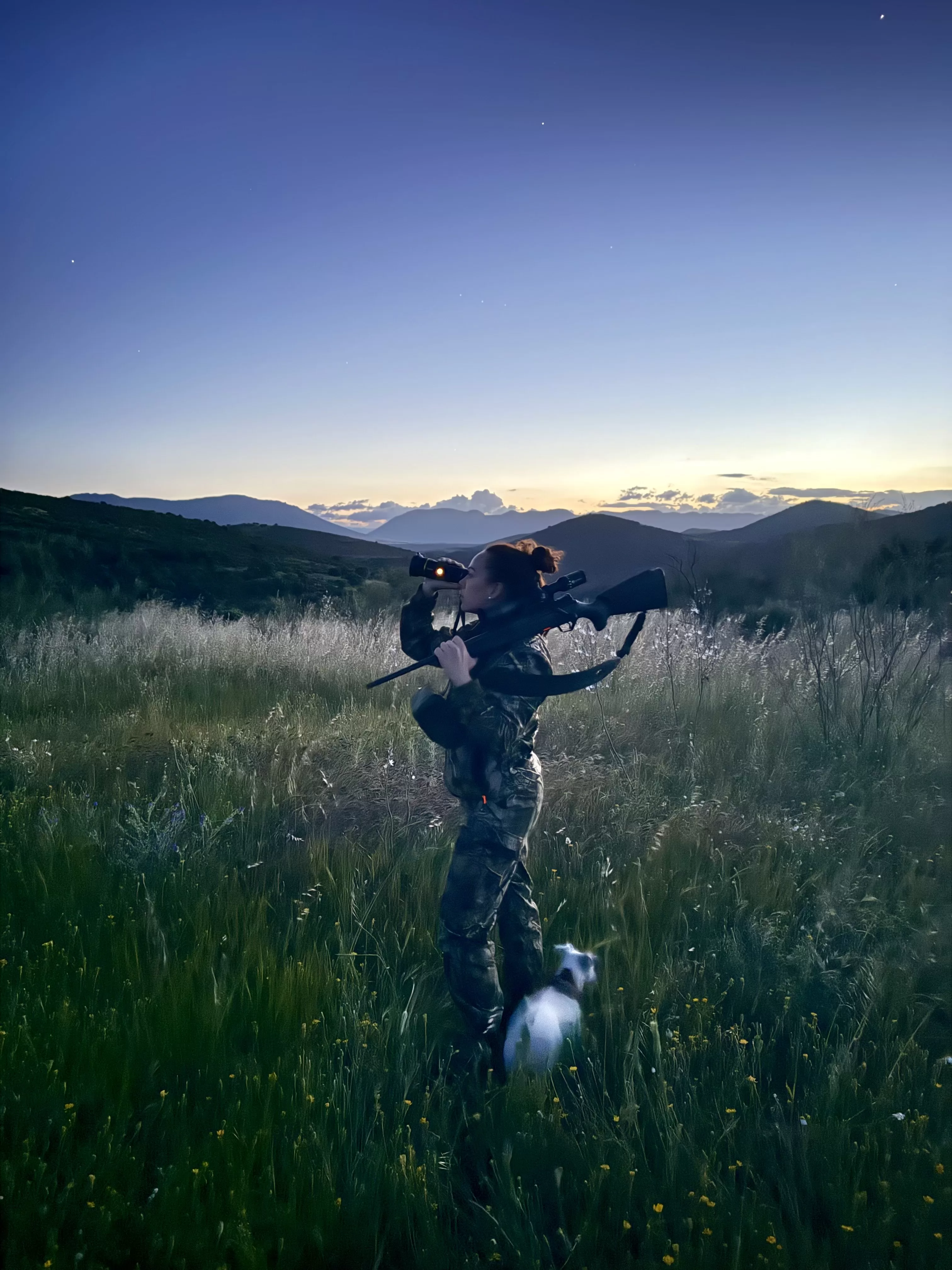
How Pixfra Thermal Monocular Transformed My Hunting Experience in Spain

There’s something magical about the stillness of a hunting night—the anticipation, the connection with nature, and the heightened senses that come with waiting patiently in the darkness. As an avid huntress specializing in big game hunting across Spain’s diverse terrains, I’ve experienced countless memorable moments in the wild. However, one particular evening stands out from all others, forever changing my perspective on modern hunting technology. After several uneventful hours during a wild boar wait, the forest seemed empty and silent. The cool night air carried no sounds of movement, and I began to wonder if my patience would go unrewarded. Almost as an afterthought, I raised my Pixfra Sirius thermal monocular to scan the surroundings—and what I discovered sent a jolt of adrenaline through my entire body. The thermal screen revealed what my human senses had completely missed: a group of wild boars had silently positioned themselves directly behind me. They had approached with such stealth that not a single twig snap or rustling leaf had betrayed their presence. Without the thermal technology, I would have remained completely unaware of their remarkable infiltration. Bridging Traditional Skills with Modern Thermal Technology For generations, hunting has been about honing natural instincts and traditional skills passed down through families and communities. While these fundamentals remain irreplaceable, today’s hunting landscape is evolving with technology that complements rather than replaces these ancestral abilities. The thermal monocular has become an extension of my senses rather than a substitute for them. It respects the tradition while acknowledging that even the most experienced hunters face limitations in what human perception can detect—especially in challenging environments or low-light conditions. According to a 2024 European Hunting Association survey, more than 78% of professional hunters now incorporate some form of thermal technology into their hunting practices, with most reporting significant improvements

What to Look for in a Thermal Monocular

The sensor represents the heart of any thermal monocular or night vision goggles,directly determining image quality, detection capability, and overall system performance. When evaluating thermal monoculars for European hunting applications, two primary sensor specifications demand particular attention: resolution and thermal sensitivity. Resolution, measured in pixels, defines the detail level in thermal images. Current market offerings range from entry-level 256×192 sensors to premium 640×512 arrays. This resolution difference becomes particularly significant at extended ranges, where higher resolution sensors provide substantially more detail for positive identification of game animals. The Pixfra product line reflects this range, with the Mile 2 Series offering 256×192 and 384×288 options, while the premium Sirius Series provides 640×512 resolution for maximum detail recognition. Thermal sensitivity, measured as Noise Equivalent Temperature Difference (NETD) in millikelvin (mK), indicates the minimum temperature difference the sensor can detect—with lower values representing superior performance. Premium European-market thermal monoculars achieve sensitivities of ≤25mK, with top-tier models like the Pixfra Sirius Series reaching exceptional ≤18mK NETD. This superior sensitivity proves particularly valuable in humid European conditions, where subtle temperature differences between game animals and surrounding vegetation can be difficult to detect with less sensitive systems. According to research by the European Hunting Technology Institute: “Sensor resolution improvements from 384×288 to 640×512 deliver approximately 40% greater effective identification ranges under typical European hunting conditions, while sensitivity improvements from 50mK to 25mK extend detection capability by approximately 35% in challenging thermal environments.” Optics The optical system works in conjunction with the sensor to determine overall image quality and practical utility. Several optical specifications deserve careful consideration when selecting thermal monoculars for European hunting applications. Magnification capabilities vary significantly across the thermal monocular market, with implications for both detection range and field awareness. Most thermal monoculars offer base optical magnification between 2-4×, typically supplemented by digital zoom.

Application Scenarios
outdoor exploration
Hunting
Animal Observation

Designed to increase situational awareness at any time of day, the camera can detect humans, animals, and objects in complete darkness, haze, or through glaring light, equipping law enforcement professionals,  and outdoor enthusiasts with reliable thermal imaging in tough conditions.

Hope to Receive More Information

Please enable JavaScript in your browser to complete this form.
=
privacy terms