














How to use our product

Paikallinen kumppaniohjelmamme (LPP) on suunniteltu huolellisesti tarjoamaan vankkaa tukea arvostetuimmille kumppaneillemme paikallisilla markkinoilla.

Blogit

Stay informed with Pixfra’s latest updates, product stories, and insights into the world of thermal imaging.

Ryhmä 26, varajärjestelmä

How to Sight in a Thermal Scope

Proper preparation forms the foundation for successful thermal scope zeroing that won’t break the bank,with key considerations differing significantly from conventional daylight optics. Before beginning the zeroing process, ensure all equipment is properly configured and environmental conditions are suitable for accurate results. Thermal scope battery charge should be confirmed at 100% before starting, as some thermal systems may exhibit slight zero shifts at different battery charge levels due to voltage variations affecting internal electronics. The Pixfra Mile 2 Series thermal riflescopes feature battery status indicators that should read full charge before zeroing begins. Allow appropriate warm-up time after powering on the thermal scope. Most thermal imaging systems require 5-10 minutes to reach thermal equilibrium and deliver stable imaging. Premium systems like the Pixfra Sirius Series incorporate temperature stabilization technology that reduces this requirement, but allowing complete sensor and electronics warm-up remains best practice for all thermal systems. Select appropriate ambient conditions for thermal scope zeroing. Ideal conditions include: Moderate ambient temperatures (10-20°C) Low humidity Minimal wind Overcast skies or morning/evening hours (to reduce solar heating effects) Thermal contrast on targets proves particularly important for precise zeroing. Standard paper targets provide minimal thermal contrast, making specialized thermal zeroing targets essential. These targets typically utilize materials with different thermal emissivity to create distinct temperature differentials that appear clearly in thermal imaging. The European Thermal Hunting Association notes: “Proper thermal targets with clear contrast are essential for precision zeroing, with 78% of European hunters reporting significantly improved zeroing accuracy when using specialized thermal targets versus improvised solutions.” Targets Target selection represents a critical element in thermal scope zeroing, as conventional paper targets visible to the naked eye often produce minimal thermal contrast through thermal imaging systems. Several specialized target options exist for thermal scope zeroing, each with specific advantages for European hunting applications.

What Thermal Scope Won’t Break the Bank?

The thermal scope market presents a wide range of options across diverse price points, making it essential to establish meaningful value criteria beyond mere cost consideration. For European hunters,selecting infrared or thermal riflescopes that offer genuine value without excessive expense, the analysis must balance initial acquisition cost against performance capabilities, durability, warranty protection, and long-term utility. Value assessment in thermal optics diverges significantly from conventional daylight optics, where optical clarity forms the primary performance metric. In thermal riflescopes, sensor specifications, processing capability, detection range, and other technical parameters determine field performance—with substantial variation across price points. The European Hunting Technology Institute defines value-oriented thermal riflescopes as those delivering acceptable performance for specific hunting applications without unnecessary premium features that drive costs upward. According to the European Hunting Economics Association: “Approximately 68% of European hunters report that thermal riflescope value represents their primary purchasing consideration, with the majority seeking products in the €1,500-2,500 price range that deliver essential capabilities without premium pricing.” This value segment has seen significant recent expansion, with manufacturers including Pixfra developing specialized product lines like the Mile 2 Series that deliver core thermal performance at more accessible price points. These products prioritize essential capabilities while strategically limiting features that drive costs upward without proportional performance benefits for typical European hunting applications. Sensors The sensor forms the foundation of any thermal riflescope, serving as the primary determinant of image quality, detection capability, and overall system performance. When evaluating value-oriented thermal riflescopes for European hunting applications, sensor specifications require careful consideration against specific performance requirements and budget constraints. Resolution represents the most immediately apparent sensor specification, with current market offerings ranging from entry-level 256×192 arrays to premium 640×512 sensors. While higher resolutions deliver enhanced detail, the 384×288 resolution segment often represents the optimal value point for European hunting applications,

ethical hunting with my thermal monucular

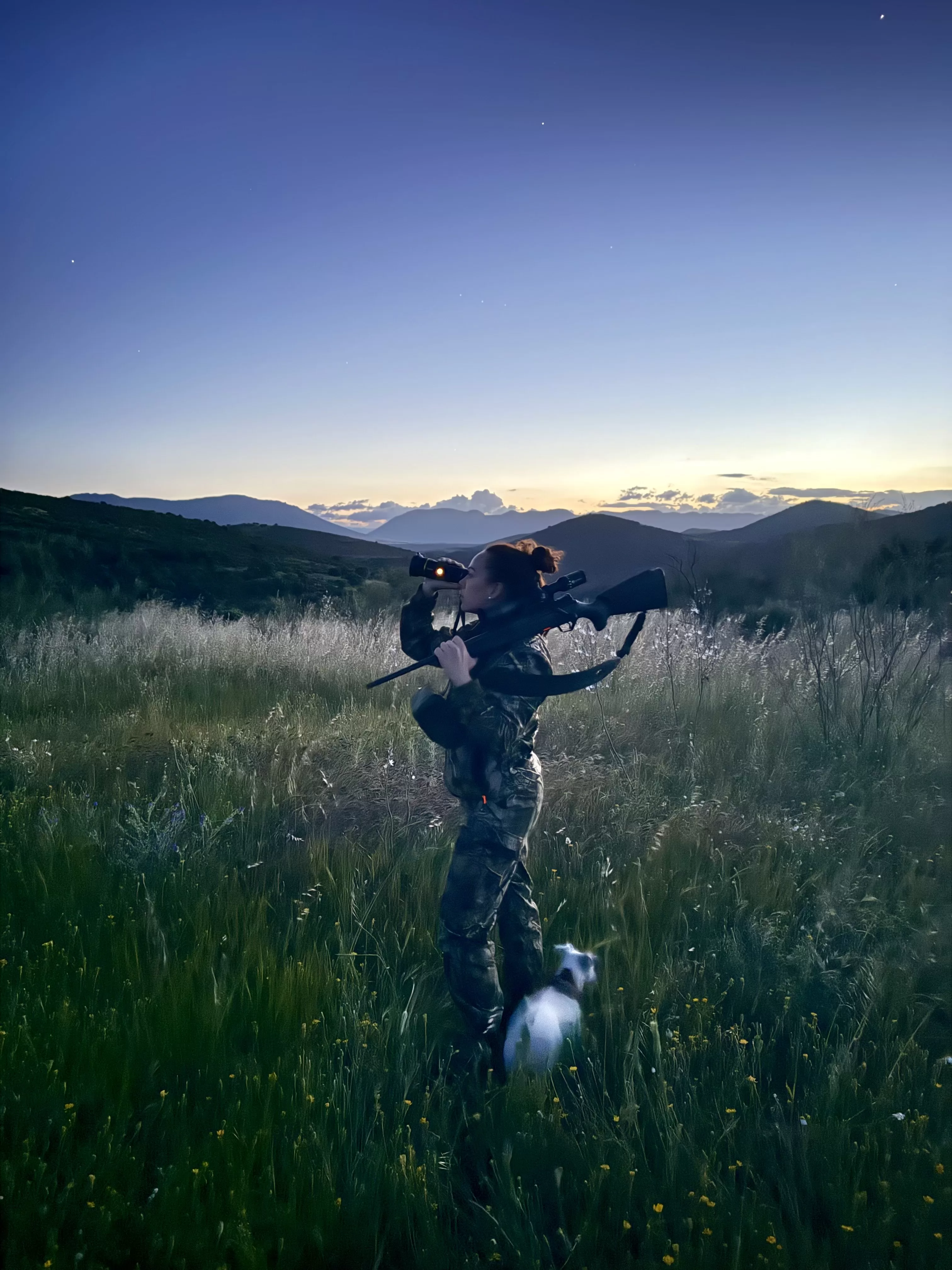
How Pixfra Thermal Monocular Transformed My Hunting Experience in Spain

There’s something magical about the stillness of a hunting night—the anticipation, the connection with nature, and the heightened senses that come with waiting patiently in the darkness. As an avid huntress specializing in big game hunting across Spain’s diverse terrains, I’ve experienced countless memorable moments in the wild. However, one particular evening stands out from all others, forever changing my perspective on modern hunting technology. After several uneventful hours during a wild boar wait, the forest seemed empty and silent. The cool night air carried no sounds of movement, and I began to wonder if my patience would go unrewarded. Almost as an afterthought, I raised my Pixfra Sirius thermal monocular to scan the surroundings—and what I discovered sent a jolt of adrenaline through my entire body. The thermal screen revealed what my human senses had completely missed: a group of wild boars had silently positioned themselves directly behind me. They had approached with such stealth that not a single twig snap or rustling leaf had betrayed their presence. Without the thermal technology, I would have remained completely unaware of their remarkable infiltration. Bridging Traditional Skills with Modern Thermal Technology For generations, hunting has been about honing natural instincts and traditional skills passed down through families and communities. While these fundamentals remain irreplaceable, today’s hunting landscape is evolving with technology that complements rather than replaces these ancestral abilities. The thermal monocular has become an extension of my senses rather than a substitute for them. It respects the tradition while acknowledging that even the most experienced hunters face limitations in what human perception can detect—especially in challenging environments or low-light conditions. According to a 2024 European Hunting Association survey, more than 78% of professional hunters now incorporate some form of thermal technology into their hunting practices, with most reporting significant improvements

What to Look for in a Thermal Monocular

The sensor represents the heart of any thermal monocular or night vision goggles,directly determining image quality, detection capability, and overall system performance. When evaluating thermal monoculars for European hunting applications, two primary sensor specifications demand particular attention: resolution and thermal sensitivity. Resolution, measured in pixels, defines the detail level in thermal images. Current market offerings range from entry-level 256×192 sensors to premium 640×512 arrays. This resolution difference becomes particularly significant at extended ranges, where higher resolution sensors provide substantially more detail for positive identification of game animals. The Pixfra product line reflects this range, with the Mile 2 Series offering 256×192 and 384×288 options, while the premium Sirius Series provides 640×512 resolution for maximum detail recognition. Thermal sensitivity, measured as Noise Equivalent Temperature Difference (NETD) in millikelvin (mK), indicates the minimum temperature difference the sensor can detect—with lower values representing superior performance. Premium European-market thermal monoculars achieve sensitivities of ≤25mK, with top-tier models like the Pixfra Sirius Series reaching exceptional ≤18mK NETD. This superior sensitivity proves particularly valuable in humid European conditions, where subtle temperature differences between game animals and surrounding vegetation can be difficult to detect with less sensitive systems. According to research by the European Hunting Technology Institute: “Sensor resolution improvements from 384×288 to 640×512 deliver approximately 40% greater effective identification ranges under typical European hunting conditions, while sensitivity improvements from 50mK to 25mK extend detection capability by approximately 35% in challenging thermal environments.” Optics The optical system works in conjunction with the sensor to determine overall image quality and practical utility. Several optical specifications deserve careful consideration when selecting thermal monoculars for European hunting applications. Magnification capabilities vary significantly across the thermal monocular market, with implications for both detection range and field awareness. Most thermal monoculars offer base optical magnification between 2-4×, typically supplemented by digital zoom.

Are Thermal Monoculars Legal?

The legality of thermal monoculars varies significantly across European jurisdictions, with regulations typically structured around intended use cases rather than the technology itself. This nuanced regulatory approach creates a complex landscape for both users and distributors of the best thermal imaging monoculars. In most European countries, the possession of thermal monoculars as observation devices is generally permitted for civilians, but specific use cases—particularly hunting applications—may be subject to additional regulations or restrictions. The European regulatory framework typically distinguishes between thermal devices designed primarily for observation (such as handheld thermal monoculars) and those specifically engineered for weapons mounting (thermal riflescopes). The Pixfra Mile 2 Series thermal monocular, for instance, is designed as a dedicated observation platform without weapon mounting interfaces, positioning it differently in regulatory classifications compared to purpose-built thermal weapon sights. This regulatory distinction is reflected in the European Commission’s dual-use goods framework, which categorizes thermal imaging equipment based on technical specifications and intended applications. According to the European Union Exports Control Regulation (EC) No 428/2009: “Thermal imaging equipment falls under varying levels of regulatory oversight depending on technical specifications, intended use, and country-specific implementation of EU directives.” Understanding these distinctions is essential for legal compliance across European markets, particularly for distributors and commercial users of thermal imaging technology. Country Regulations Thermal monocular regulations vary significantly across major European hunting markets, reflecting different approaches to wildlife management, hunting traditions, and security considerations. This regulatory diversity necessitates country-specific compliance strategies for both users and distributors. France implements a relatively permissive approach to thermal observation devices, with thermal monoculars like the Pixfra Mile 2 Series generally permitted for civilian ownership and use in observation applications. However, the use of thermal imaging for hunting activities is more strictly regulated, with the French Environmental Code generally prohibiting thermal devices for hunting except under specific

Best Thermal Imaging Monoculars for European Hunting

The foundation of any premium thermal imaging monocular lies in its sensor technology, which directly determines detection capability, image quality, and overall performance. Modern thermal monoculars utilize uncooled microbolometer arrays, with significant performance differences emerging based on resolution, pixel pitch, and thermal sensitivity.Unlike tranditional night vision,which relies on amplifying ambient light,thermal imaging detects infrared radiation emitted by objects themselves. Resolution represents the most immediately apparent specification, with current market offerings ranging from entry-level 256×192 sensors to premium 640×512 arrays. The difference between these resolutions becomes particularly significant at extended distances, where higher resolution sensors provide substantially more detail for positive identification of game animals. The Pixfra Mile 2 Series offers both 256×192 and 384×288 configurations, while the more advanced Sirius Series delivers exceptional detail with its 640×512 sensor array. Equally important but often overlooked is thermal sensitivity, measured as Noise Equivalent Temperature Difference (NETD) in millikelvin (mK). This specification indicates the minimum temperature difference the sensor can detect, with lower values representing superior performance. Premium European-market thermal monoculars achieve sensitivities of ≤25mK, with top-tier models like the Pixfra Sirius S650D reaching exceptional ≤18mK NETD. This superior sensitivity enables detection of subtle temperature differentials that would remain invisible to less sensitive systems, particularly critical for identifying partially obscured game in complex thermal environments. According to research from the European Hunting Technology Institute: “Sensor resolution and thermal sensitivity represent the two most significant predictors of field performance in thermal monoculars, with high-resolution/high-sensitivity combinations delivering 76% greater effective detection ranges compared to entry-level specifications.” Optical System While sensor technology provides the foundation for thermal performance, the optical system plays an equally crucial role in determining the practical utility of thermal monoculars in field conditions. Premium optical designs must balance multiple competing priorities including magnification, field of view, and form factor. Objective lens diameter

Käyttötapaukset
ulkoilma-seikkailut
Metsästys
Eläinten havainnointi

Designed to increase situational awareness at any time of day, the camera can detect humans, animals, and objects in complete darkness, haze, or through glaring light, equipping law enforcement professionals,  and outdoor enthusiasts with reliable thermal imaging in tough conditions.

Toivon saavani lisätietoja

Ota JavaScript käyttöön selaimessasi, jotta voit täyttää tämän lomakkeen.
=
tietosuojaehdot

Tilaa Pixfran tuoreimmat uutiset

Tilaa Pixfran uutiskirje ja pysy ajan tasalla tuotteisiin liittyvistä uutisista, ulkoiluun liittyvistä vinkkeistä ja eksklusiivisista päivityksistä.

Ota JavaScript käyttöön selaimessasi, jotta voit täyttää tämän lomakkeen.