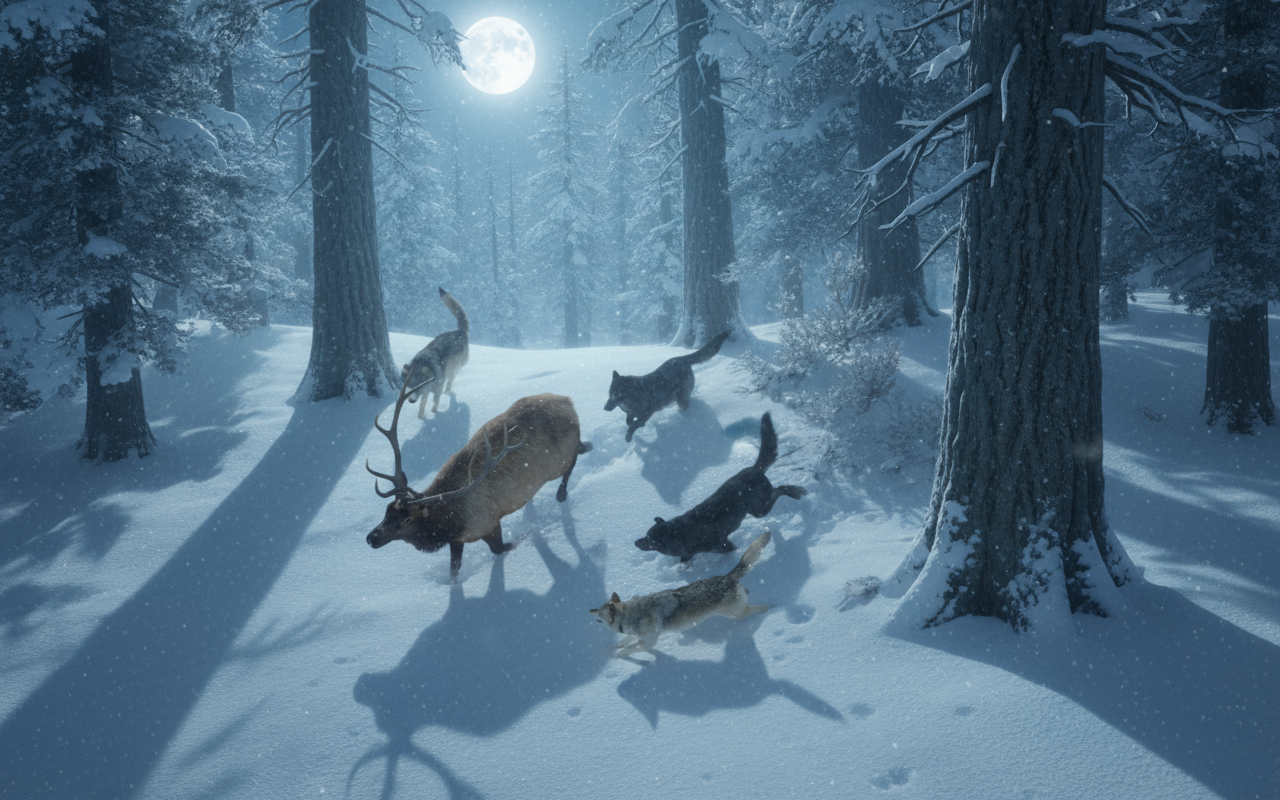
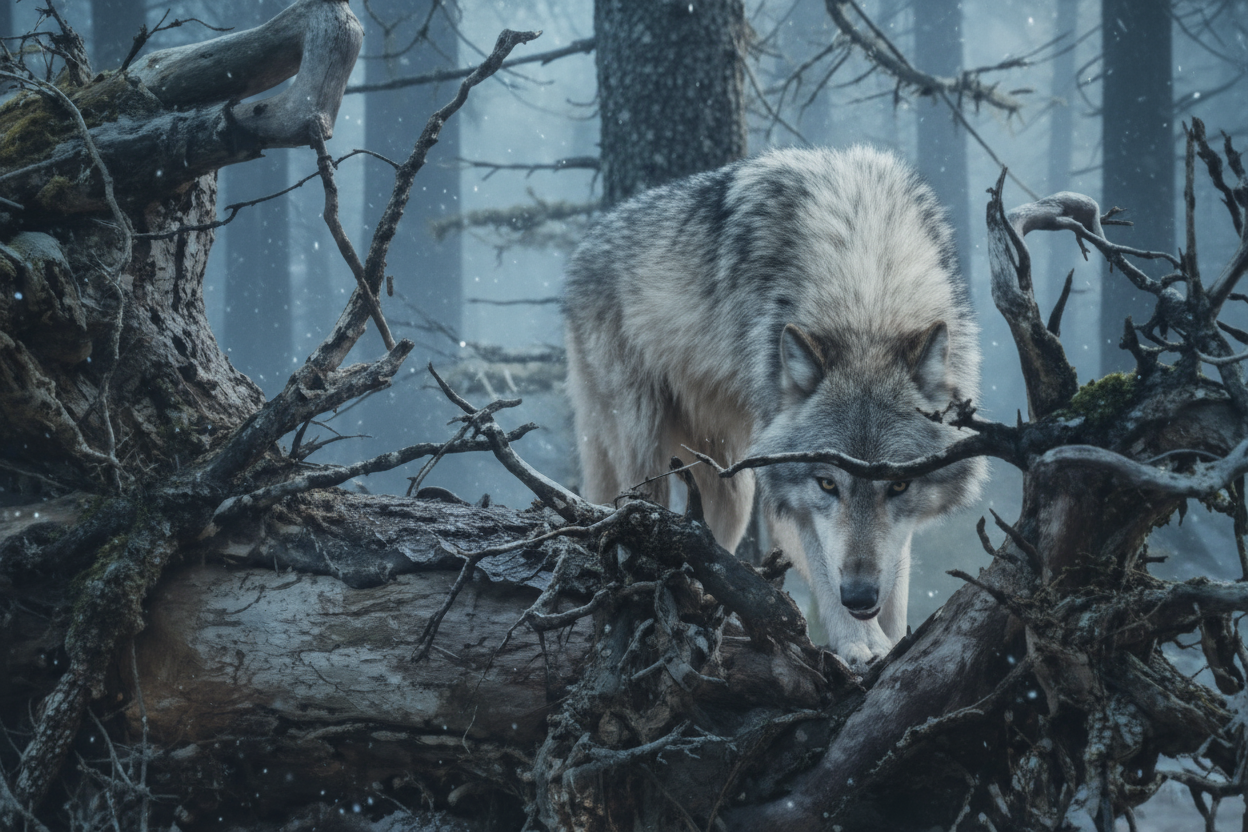
Spesso immaginiamo i puma come ombre silenziose che si muovono nella natura selvaggia, ma le loro abitudini di caccia rivelano molto di più della semplice furtività. Questi potenti predatori hanno adattato il loro comportamento nel corso di migliaia di anni, e le loro abitudini di caccia notturna rappresentano uno degli aspetti più affascinanti della loro strategia di sopravvivenza. Se vi capita di fare escursioni al tramonto o di esplorare aree naturali, capire quando e come questi grandi felini cacciano può fare un’enorme differenza sia per la vostra sicurezza che per il vostro apprezzamento di questi straordinari animali.

I puma — noti anche come cougar, puma o pantere — sono tra i cacciatori più abili del Nord America. Le loro strategie di caccia non sono casuali; seguono schemi specifici che tengono conto del comportamento delle prede, dell’ora del giorno e persino dell’attività umana nel loro territorio. Proprio come abbiamo visto Caccia alla volpe notturna: comportamento e tecniche, i puma hanno strategie tutte loro che li aiutano a sopravvivere in natura.
I puma sono animali prevalentemente crepuscolari, il che significa che sono più attivi all’alba e al tramonto. Ma è qui che la cosa si fa interessante: questi ragazzi sono incredibilmente flessibili con i loro orari. Tuttavia, i puma possono anche essere animali notturni, soprattutto nelle zone caratterizzate da un’intensa attività umana.
Immaginali come persone che hanno un programma preferito, ma che sono disposte a modificarlo in base a ciò che accade intorno a loro. Il loro modello di attività varia dalla diurnità e dalla catemerialità alla crepuscolarietà e alla nottività a seconda che si tratti di aree protette o non protette, ed è apparentemente correlato alla presenza di altri predatori e prede disponibilità e interferenze antropiche.
In molte zone del Nord America, i cervi — la loro principale fonte di cibo — sono più attivi durante le ore del crepuscolo, quindi i puma adattano i propri orari di caccia a questi momenti. Questa sincronizzazione tra predatore e preda crea un ritmo naturale nell’ecosistema. Questi felini hanno un’eccellente visione notturna che permette loro di cacciare con successo in condizioni di scarsa illuminazione, garantendo loro un notevole vantaggio quando il sole tramonta.
Quando si parla di caccia, i puma seguono schemi piuttosto precisi. Le ricerche ci hanno fornito informazioni incredibili su come questi felini trascorrono le loro notti. Durante la caccia, i puma sembravano seguire la preda o tendere agguati per periodi medi di 0,7 ore, per poi spostarsi di una distanza media di 1,4 km (in poco più di 1,2 ore) verso un’altra zona; questo schema si ripeteva circa sei volte nelle notti in cui non veniva uccisa alcuna preda.

Immaginate di passare 45 minuti completamente immobili, osservando, aspettando, per poi spostarvi di quasi un miglio e riprovare — e di farlo sei volte in una sola notte se non riuscite a catturare nulla. Questa è la realtà della caccia al puma. Non è tutta azione e inseguimento; è soprattutto pazienza e precisione.
Le madri dei neonati andavano a caccia dal tramonto a mezzanotte, per poi tornare alla tana; nelle prime otto settimane dopo il parto, le madri trascorrevano sempre più tempo a distanze sempre maggiori dalla tana. Le puma femmine con i cuccioli devono conciliare la caccia con la cura dei piccoli, quindi adattano i propri ritmi di conseguenza. Ciò dimostra quanto questi animali siano capaci di adattarsi: sono in grado di modificare completamente la propria routine in base alla fase della vita in cui si trovano e alle responsabilità che devono assumersi.
Anche il tasso di successo è importante. In media, un puma adulto uccideva circa 48 mammiferi di grossa taglia e 58 di piccola taglia all’anno e si nutriva per una media di 2,9 giorni (SD = 1,1) con un singolo mammifero di grossa taglia. Quindi, dopo una battuta di caccia riuscita, non tornano subito a caccia: si nutrono della preda per diversi giorni, riducendo così la necessità di cacciare continuamente.
Ecco una scoperta sorprendente fatta dai ricercatori: i puma che vivono nelle aree urbane stanno modificando i propri ritmi per evitarci. I puma dell’area metropolitana di Los Angeles che vivevano in zone con un numero maggiore di escursionisti, ciclisti e jogger sono diventati più notturni rispetto a quelli che vivono in aree meno frequentate.
Gli autori dello studio hanno monitorato gli spostamenti di 22 puma che vivono nelle montagne di Santa Monica e nella regione circostante tra il 2011 e il 2018. Quello che hanno scoperto è stato davvero sorprendente. In generale, i puma che vivono in zone molto frequentate dai turisti — ad esempio il Griffith Park o i monti Verdugo — tendono a essere meno attivi all’alba o al tramonto e più attivi durante le ore notturne.
I felini più notturni emersi dallo studio erano due maschi: Il P41 e il famoso “Hollywood Cat”, il P22. I maschi P41 e “Hollywood Cat” P22 sono i due leoni più notturni dello studio. Entrambi questi maschi possedevano territori di piccole dimensioni caratterizzati da un’elevata attività ricreativa ed erano circondati da insediamenti umani.. Questi gatti hanno praticamente fatto il turno di notte per evitare di imbattersi in persone durante il giorno.
Le puma femmine, invece, hanno reagito in modo diverso. Le puma femmine hanno tuttavia mostrato una reazione diversa all’attività umana, in quanto erano meno inclini a rafforzare le loro abitudini notturne rispetto ai maschi. Perché? I puma maschi rappresentano una causa di mortalità per le femmine e i cuccioli a loro carico, e le femmine in questo ecosistema mostrano segni evidenti di evitare gli habitat frequentati dai maschi. L’attività diurna delle femmine di puma potrebbe essere limitata dal fatto che evitano i maschi, per cui non mostrano una reazione altrettanto forte nei confronti degli esseri umani. Le femmine devono quindi trovare un equilibrio tra evitare sia gli esseri umani che i puma maschi, il che limita la loro capacità di modificare i propri orari.
La caccia al puma si basa tutta sulla furtività e sull’imboscata. Questi animali non sono corridori di resistenza come i lupi, che inseguono le prede per miglia. Al contrario, puntano ad avvicinarsi senza essere individuati, per poi sferrare un attacco breve ed esplosivo.
Il loro stile di caccia è perfettamente adatto alle condizioni di scarsa illuminazione. Sfruttano i ripari disponibili — rocce, alberi, vegetazione fitta — per avvicinarsi alla preda fino a distanza di attacco. Questi felini si muovono nel loro territorio seguendo un percorso a zigzag, scrutando costantemente alla ricerca di movimenti, odori o rumori che possano indicare la presenza di una preda nelle vicinanze.
Una volta individuata la preda, inizia l’attesa. Possono rimanere completamente immobili anche per 45 minuti, osservando la preda e calcolando il momento perfetto per attaccare. Quando attaccano, lo fanno in modo rapido e potente: possono raggiungere una velocità di 50 mph in brevi scatti e compiere un balzo di oltre 40 piedi in un solo salto.
Dopo aver ucciso con successo una preda, i puma spesso la trascinano in un luogo appartato e la ricoprono di foglie e detriti. Questo comportamento di nascondimento protegge la carcassa dagli animali spazzini e permette loro di tornare a nutrirsi nel corso di diversi giorni. È come avere un frigorifero in natura: nascondono il cibo e tornano a mangiarlo.
I modelli di comportamento dei puma non sono immutabili: variano a seconda di come si comportano le loro prede. È stato ipotizzato che i puma (Puma concolor) seguano i modelli di attività giornaliera delle loro principali specie preda. Dal punto di vista della sopravvivenza, questo ha perfettamente senso: perché andare a caccia se il cibo non è nelle vicinanze?
Nel deserto di Sonora, i ricercatori hanno scoperto qualcosa di interessante riguardo a questa danza tra preda e predatore. Durante i mesi invernali, i javelina passano da un regime di attività diurno a uno notturno in estate. Ma i puma si adattano a questi cambiamenti? La ricerca dimostra che sì, si adattano, ma passano anche ad altre specie di prede attive durante i loro orari di caccia preferiti.
I cervi rimangono la principale fonte di cibo per la maggior parte dei puma in tutto il Nord America. Poiché i cervi sono generalmente crepuscolari o notturni, i puma si attengono a quelle stesse fasce orarie. Tuttavia, quando le abitudini delle prede cambiano a seconda della stagione o della regione, questi felini dimostrano una notevole flessibilità nell’adattare i propri orari di caccia.
| Comportamento venatorio | Durata/Distanza | Modello di successo |
|---|---|---|
| Periodo di agguato/inseguimento | 0,7 ore (42 minuti) | 6 tentativi per ogni notte in cui non si è riusciti |
| Spostamento tra i punti | 1,4 km in 1,2 ore | Copertura sistematica del territorio |
| Durata dell'alimentazione | 2,9 giorni in media | Dopo aver ucciso una preda di grandi dimensioni |
| Mamma con i gattini | Dal tramonto a mezzanotte | Torna regolarmente alla tana |
La buona notizia è che, quando si tratta di convivenza, sono i puma a fare la parte del leone. È proprio questa flessibilità che osserviamo nel comportamento dei puma a permetterci di condividere questi spazi naturali. Sono i puma a fare la parte loro affinché la convivenza possa realizzarsi.

Ma questo adattamento ha un costo. Anche un’attività apparentemente innocua come il tempo libero può aggiungersi agli altri fattori di stress che stiamo introducendo nelle loro vite, potenzialmente alterando la quantità di energia che devono impiegare per la caccia e altre necessità. Quando i puma sono costretti a cacciare in orari non ottimali solo per evitare gli esseri umani, consumano più energia e rischiano di procurarsi meno cibo.
Per chi ama la vita all’aria aperta, comprendere questi comportamenti ci aiuta a convivere meglio con la fauna selvatica. L’alba e il tramonto rimangono i momenti di maggiore attività dei puma nella maggior parte delle zone, quindi è opportuno prestare particolare attenzione in quei momenti. Nelle aree urbane, dove i puma hanno adottato un comportamento notturno, diventa ancora più importante prestare attenzione durante la guida notturna e tenere gli animali domestici in casa dopo il tramonto.
Se ti interessa la fotografia naturalistica o l'osservazione della fauna selvatica, dai un'occhiata ad altre risorse su Pixfra oppure esplora il sezione all'aperto per alcuni consigli su come vivere la natura in tutta sicurezza.
Cosa rende i puma dei cacciatori notturni così efficaci? Il segreto sta in alcuni importanti vantaggi biologici. I loro occhi presentano un’elevata concentrazione di cellule a bastoncello e uno strato riflettente situato dietro la retina, chiamato tapetum lucidum. Ciò conferisce loro una visione notturna eccezionale: in condizioni di scarsa illuminazione, riescono a vedere circa sei volte meglio degli esseri umani.
Anche gli altri sensi sono particolarmente sviluppati. Sebbene l’olfatto non sia il loro strumento principale per la caccia, il loro udito è incredibilmente acuto. Sono in grado di percepire il minimo fruscio della preda che si muove tra la vegetazione, anche nell’oscurità più totale. I loro baffi sono sensibili alle vibrazioni dell’aria, aiutandoli a orientarsi e a rilevare i movimenti intorno a loro.
Gli artigli retrattili consentono loro di muoversi in silenzio, senza che il rumore delle zampe sulle rocce ne tradisca la posizione. Le loro grandi zampe fungono da racchette da neve, distribuendo il peso in modo uniforme e permettendo loro di muoversi silenziosamente su diversi tipi di terreno. Ogni caratteristica fisica è ottimizzata per la caccia da agguato in condizioni di scarsa illuminazione.
D: A che ora della notte i puma cacciano con maggiore intensità? I puma sono più attivi nelle ore del crepuscolo — subito dopo il tramonto e prima dell’alba — anche se possono cacciare per tutta la notte. Nelle zone caratterizzate da un’intensa attività umana, hanno iniziato a essere più attivi nel cuore della notte, in genere tra le 20:00 e le 4:00.
D: I puma cacciano ogni singola notte? No, i puma non cacciano tutte le notti. Dopo aver abbattuto una preda di grandi dimensioni, come un cervo, si nutrono di quella carcassa in media per 2-3 giorni prima di cacciare di nuovo. Ciò significa che potrebbero cacciare attivamente solo 2-3 volte alla settimana, a seconda delle dimensioni della preda.
D: È più probabile avvistare un puma all’alba o al tramonto? Tradizionalmente, sì: l’alba e il tramonto sono i momenti di massima attività dei puma nelle zone remote. Tuttavia, nelle regioni caratterizzate da un’elevata attività ricreativa umana, i puma sono diventati più notturni e sono in realtà più attivi nel cuore della notte, proprio per evitare le persone durante le ore del crepuscolo.
D: I puma riescono a vedere gli esseri umani di notte prima che noi li vediamo? Assolutamente sì. I puma hanno una visione notturna circa sei volte superiore a quella degli esseri umani. Riescono a vederti molto prima che tu li veda, il che è in realtà uno dei motivi per cui gli attacchi dei puma sono così rari: sanno che sei lì e di solito preferiscono evitarti del tutto.
D: Quanta strada percorrono i puma in una notte mentre cacciano? Le ricerche dimostrano che i puma percorrono in media 2,3 miglia al giorno, e gran parte di questo spostamento avviene di notte. Quando cacciano attivamente senza successo, possono percorrere 8-9 chilometri (circa 5-6 miglia) in una sola notte, spostandosi tra diversi punti di agguato.
When darkness falls and most hunters head home, the real action with foxes is just beginning. Night hunting offers some of the most exciting opportunities to target these clever predators when they’re most active and vulnerable. We’ve put together everything you need to know about fox behavior after sunset and the techniques that’ll help you fill your tag when the sun goes down.

Foxes are naturally wired for the night shift. While you might spot one during the day, these animals truly come alive when darkness settles in. Both red and gray foxes spend their nights patrolling territories, searching for food, and staying alert to every sound and smell in their environment. Understanding what makes them tick after hours is your first step toward consistent success in the field. Similar to alligator hunting behaviors after sunset, foxes have adapted remarkably well to nocturnal activities.
Red foxes are predominantly nocturnal and prefer to hunt late in the evening through until the early hours of the morning, with more food in their stomachs at night than during the daytime. This isn’t just random behavior – there are solid biological reasons behind their nighttime activity. Most foxes patrol at least part of their territory each night, becoming acutely aware of where the best feeding sites are and when new food sources appear in the area.
The cover of darkness gives foxes a major advantage over their prey. Small mammals like mice, voles, and rabbits are active at night, making them easier targets. Plus, foxes feel safer moving through open areas when they can’t be spotted as easily by larger predators or humans. Varmints are very susceptible to being killed at night because they are more active, which means there will be more opportunities if you target the right areas.
Gray foxes show slightly different patterns than their red cousins. Gray foxes are mostly nocturnal, sticking closer to thick cover and wooded areas even after dark. Red foxes, on the other hand, will venture into open fields and edges more readily once the sun sets.
Foxes don’t just wander randomly through the night. They follow specific patterns based on food availability, weather conditions, and territorial boundaries. They have a keen sense of smell and this can lead them to carrion, even buried under several centimeters of snow or soil. Their noses are constantly working, picking up scents that guide them to their next meal.
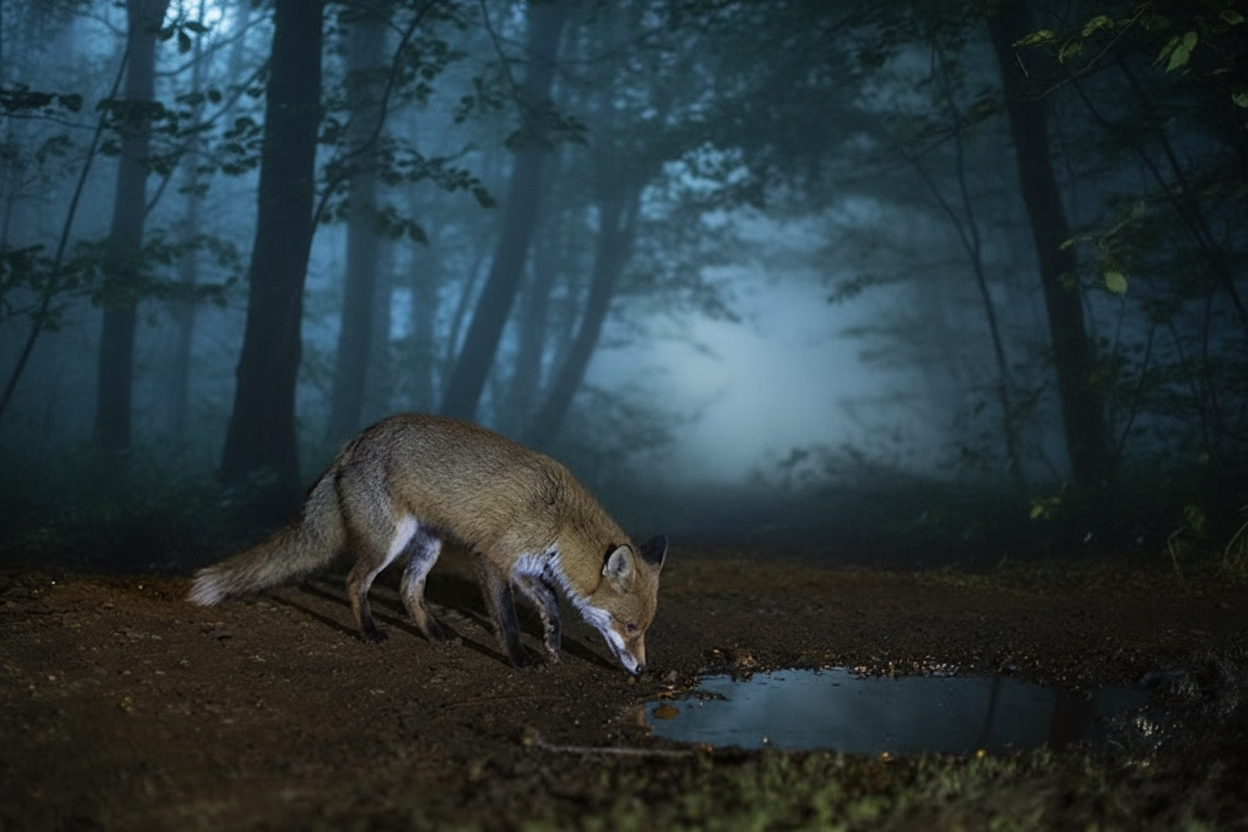
During nighttime hunts, foxes rely heavily on three senses: smell first, hearing second, and sight third. They’ll trot through their territory at a steady pace, sampling the air for fresh scents. When something catches their attention, they slow down, listen carefully, and use their excellent hearing to pinpoint exactly where prey is hiding. This is when you’ll see that classic “mousing pounce” – the fox jumps high and comes down with its front paws to trap whatever’s moving under the snow or grass.
Wind direction plays a massive role in fox behavior at night. Foxes almost always attempt to circle downwind of the sound source before approaching. They want to smell what’s making that noise before they commit to coming closer. This natural caution has kept foxes alive for thousands of years, and it’s something you absolutely need to account for when setting up your stand.
Moon phases affect fox activity too. Overall, rabbits and small mammals were eaten less often on nights when there was a full moon than during other moon phases, and in spring, foxes tended to eat rabbits more often on new moon nights. Some hunters find that full moons make foxes hunt earlier in the night when they have better visibility, while darker nights push activity into the pre-dawn hours.
You can’t hunt what you can’t see, and nighttime fox hunting demands specific equipment that works in low-light conditions. Here’s what you need in your kit:
Lighting Systems: This is where most hunters start. Red lights are preferred because they’re softer and less apt to spook a coyote or fox. White lights work but they need to be dimmed way down or you’ll send every fox running for cover. Green lights fall somewhere in the middle and can be effective depending on how much calling pressure the foxes in your area have experienced.
You should keep that light on no matter what, scanning the field or woods quickly, turning it on at the truck and not turning it off until you get back. This might seem counterintuitive, but keeping the light steady actually helps more than turning it on and off. Remember to leave the halo on the fox – the same thing that makes him a night hunter gives him the ability to see your vehicle unless the light is on him.
Night Vision and Thermal Optics: Technology has changed the game for predator hunting. Night hunting has gained popularity in recent years thanks to advancements in technology, and using night vision goggles and thermal imaging optics, hunters can track and hunt foxes under the cover of darkness, which not only increases the chances of a successful hunt but also adds an element of excitement. Thermal scopes let you spot heat signatures from foxes before they even enter your light range, giving you precious extra seconds to prepare.
Rifles and Shotguns: Many experienced hunters use the same rifle and cartridge for red fox, grey fox, coyotes, raccoons, and bobcats, such as a Ruger .204 rifle. A good all-around caliber gives you flexibility. Always take a shotgun too, because if you don’t, odds are that’s when a coyote or fox is going to come in too close for the rifle and you’ll need to make a quick shot.
Setting up with the wind in your face and the call positioned crosswind increases the odds of a fox stepping into your shooting lane. This setup accounts for that natural circling behavior foxes use to scent-check whatever’s making noise.
Location matters just as much at night as during the day. Gray foxes in Texas thrive in dense brush, rocky ridges, and thickets near water. Red foxes prefer field edges, fence lines, and areas where crops meet cover. Scout these spots during daylight and look for tracks, droppings, and feeding sign. Look for sign like tracks, scat, and feather piles, especially in areas where small game is plentiful, as travel corridors that connect food, cover, and den sites are prime places to intercept moving foxes. 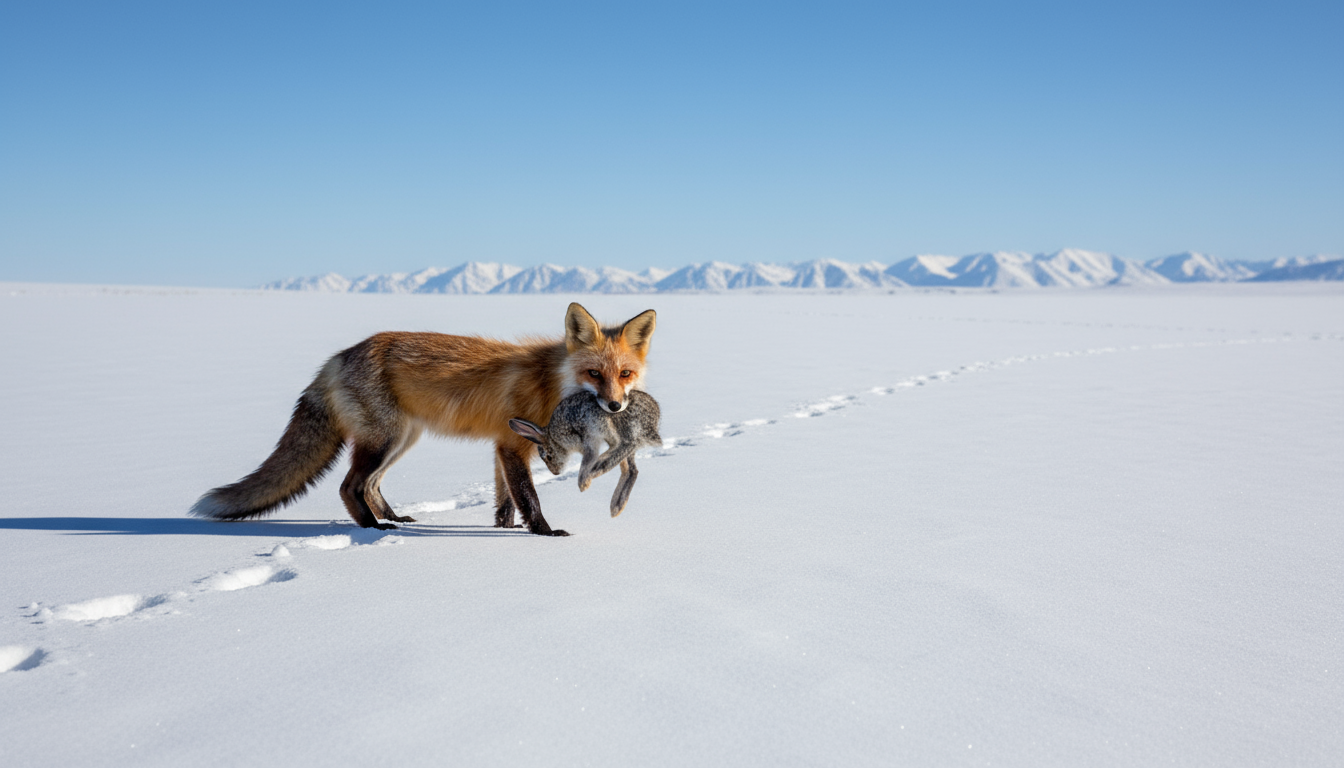
Elevation helps. Putting hunters in optimal locations, such as elevated ground, open pockets in the brush, or wide senderos, can significantly increase their chances of encountering gray foxes, as these spots offer improved visibility. You want to see as much area as possible when scanning with your light or thermal unit.
Calling foxes at night follows different rules than daytime stands. Keep call sequences short and focused, with brief pauses. Foxes can come racing in fast or sneak along the edge, so you need to be ready for both scenarios.
Best Call Sounds: Distressed rabbit, rodent, and bird calls are most effective, and electronic calls provide hands-free consistency and are preferred at night. Adding a few vocalizations like gray fox pup distress can trigger aggressive behavior during mating or territorial times. Don’t be afraid to switch things up if one sound isn’t producing.
Bringing along a hand call in addition to electronic calls is smart, because sometimes the cadence from a hand call can make all the difference in terms of getting a response from a predator. The biggest rule to follow is if they respond to a certain call, keep rolling with it until they stop responding.
Call Volume and Duration: Keep volume moderate in thick brush to avoid pushing animals too far. In wide open country, you can crank it up a bit to reach distant foxes. Most successful sequences run 10-20 minutes per stand. Space your sequences with pauses to listen for approach sounds, as night foxes often move in fast but may also hang up if they don’t see a target.
Foxes respond differently than coyotes when they come to a call. Gray foxes especially can be aggressive and bold, sometimes racing straight to the call without hesitation. Red foxes tend to be more cautious, hanging up at 50-100 yards to look things over before committing.
Once the critter is in your range or close enough that you want to take him, squeak, smooch, bark or do whatever necessary to stop him for the shot. A stopped fox gives you a much better target than one that’s moving, especially at night when precision matters even more.
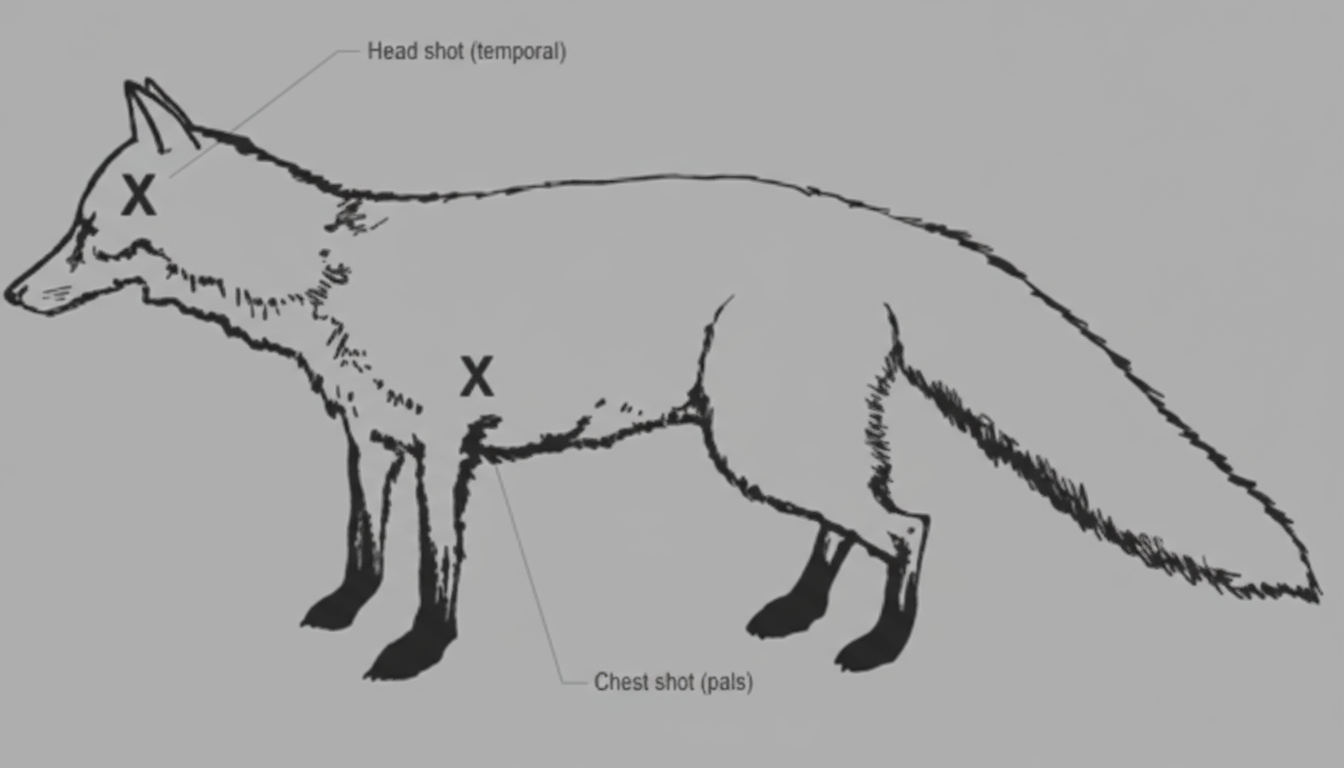
The downside of night calling is that if they turn away and bug out, you usually don’t get a shot like you sometimes do in the day. Once a fox decides something’s not right and turns to leave, they’re gone in seconds. This is why staying still and keeping your light technique smooth is so critical.
Remember to positively identify your target before shooting. Just because you are blowing or playing a call that attracts predators doesn’t mean that only predators could come in – many deer, dogs, house cats, pigs, and even a few calves come to the call. Take that extra second to make sure you’re looking at a fox before you pull the trigger.
Early mornings and late afternoons are ideal during legal shooting hours, and night hunting—where allowed—offers the most consistent action. The first few hours after dark and the last couple hours before dawn typically produce the most fox sightings.
Clear, calm nights with some moonlight offer excellent visibility, but foxes can be active in a variety of weather conditions, and nights following a cold front or light rain tend to increase activity. Cold weather makes foxes move more to find food and stay warm. Wind can work against you by carrying your scent, but it can also concentrate foxes in sheltered areas where they’re easier to pattern.
Late fall through winter brings the best conditions, as cold air helps sound travel farther and encourages daytime movement. The peak of breeding season, typically in January and February, can make foxes more responsive to vocalizations and bolder in their approach. This is prime time to be in the field if your state allows winter hunting.
Even experienced hunters make errors that cost them foxes. Here are the biggest ones to watch out for:
Moving the light too much: Constant scanning and jerky movements with your spotlight will alert foxes to your presence. Keep light movement slow and deliberate.
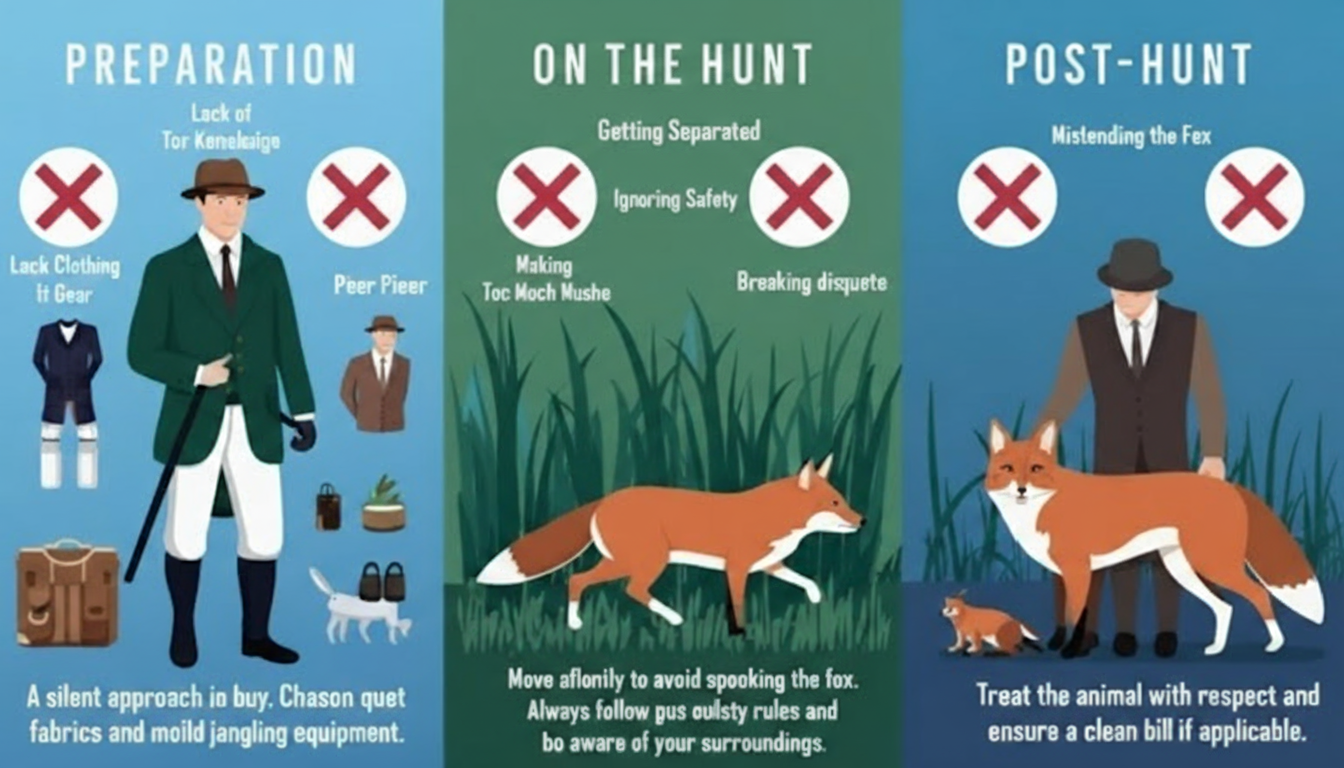
Wrong wind setup: This cannot be stressed enough. Set up with the wind wrong and you’ll educate foxes instead of harvesting them.
Overcalling: Just because you’re not seeing foxes doesn’t mean you should blast the call continuously. Give them time to respond and approach.
Ignoring the approach: Avoid walking through the area where you expect the animal to approach, and choose elevated or slightly open spots that give you a wide field of view while staying concealed. Your entry to the stand is almost as vital as the stand itself.
Being impatient: Foxes don’t always come running in the first five minutes. Sometimes they circle, sometimes they hang up, sometimes they take their sweet time. Patience pays off more often than not.
Before you head out for a night hunt, check your local regulations. Night hunting laws vary widely by state and even by county. Night hunting is legal in many Texas counties with the proper licenses and gear, including lights and thermal optics, but other states have strict prohibitions or require special permits.
Always confirm your backstop and know what’s beyond your target. Night hunting demands extra caution because visibility is limited. Practice ethical shot placement and only take shots you’re confident you can make cleanly. Recovery of animals is harder in the dark, so make good shots count.
What’s the best color light for hunting foxes at night?
Red lights are generally the best choice for hunting foxes at night because they’re less likely to spook incoming animals compared to white lights. Green lights can also work well, especially in areas with heavy hunting pressure. The key is keeping the light steady on the fox rather than switching it on and off, which can alert them to danger.
Do foxes respond better to calls at night than during the day?
Yes, foxes typically respond much better to calls at night when they’re naturally more active and hunting for food. They’re bolder under the cover of darkness and more willing to investigate sounds. Night hunting generally produces more consistent results than daytime calling, though early morning and late evening can also be productive.
Can you use thermal scopes for fox hunting at night?
Absolutely – thermal scopes and optics have become incredibly popular for night fox hunting. They let you spot foxes by their heat signature before they enter your light range, giving you advance warning and more time to prepare for the shot. Just make sure thermals are legal in your hunting area, as some states have restrictions on their use.
How long should you call on each stand when hunting foxes at night?
Most successful night stands run between 15-30 minutes. Foxes can respond quickly at night, sometimes showing up within the first few minutes, but they may also circle and take their time approaching. Keep call sequences short with pauses in between, and be patient enough to give distant foxes time to reach you.
What’s the biggest difference between hunting red fox and gray fox at night?
Gray foxes tend to stay in thicker cover and often respond more aggressively to calls, sometimes racing straight in without much caution. Red foxes prefer more open areas and edges, and they’re generally warier, often hanging up at a distance to assess the situation before committing. Gray foxes are also more nocturnal overall, while red foxes show more crepuscular (dawn/dusk) activity patterns.
Quando il sole scende sotto l’orizzonte e l’oscurità avvolge le zone umide della Florida, qualcosa cambia nelle acque. Di notte gli alligatori sono più attivi e si dedicano alla caccia e all’alimentazione dal tramonto all’alba. Questi predatori preistorici si trasformano da pigri amanti del sole in efficienti macchine da caccia, pattugliando i propri territori con estrema concentrazione. Se vi siete mai chiesti cosa renda la notte così speciale per questi predatori al vertice della catena alimentare, state per scoprire perché le ore dopo il tramonto rivelano la loro vera natura.

Comprendere i comportamenti di caccia degli alligatori dopo il tramonto non è importante solo per i cacciatori e gli appassionati di fauna selvatica: si tratta di una conoscenza essenziale per chiunque viva nelle vicinanze o visiti le zone popolate dagli alligatori. Che tu stia pianificando la tua prima avventura notturna o sia semplicemente curioso di conoscere questi affascinanti rettili, ti spiegheremo tutto ciò che devi sapere su ciò che accade quando gli alligatori si animano al buio.
Sebbene sia comune vedere gli alligatori che si crogiolano al sole, il che induce a pensare che siano animali diurni, in realtà sono notturni. Ma è qui che la cosa si fa interessante: il loro comportamento non è proprio tutto bianco o tutto nero. Secondo alcune ricerche scientifiche, gli alligatori sono animali notturni, con un'interessante tendenza a comportarsi come animali diurni. Sono più attivi di notte, ma possono essere attivi anche durante il giorno.
Gli alligatori sono animali crepuscolari, il che significa che sono più attivi all’alba e al tramonto. Ciò significa che i livelli di attività raggiungono il picco durante quei momenti crepuscolari in cui il sole sta sorgendo o tramontando. Durante il giorno, gli alligatori trascorrono la maggior parte del tempo a crogiolarsi al sole per regolare la loro temperatura corporea — un comportamento chiamato termoregolazione. Ma non appena cala l’oscurità, passano alla modalità di caccia.
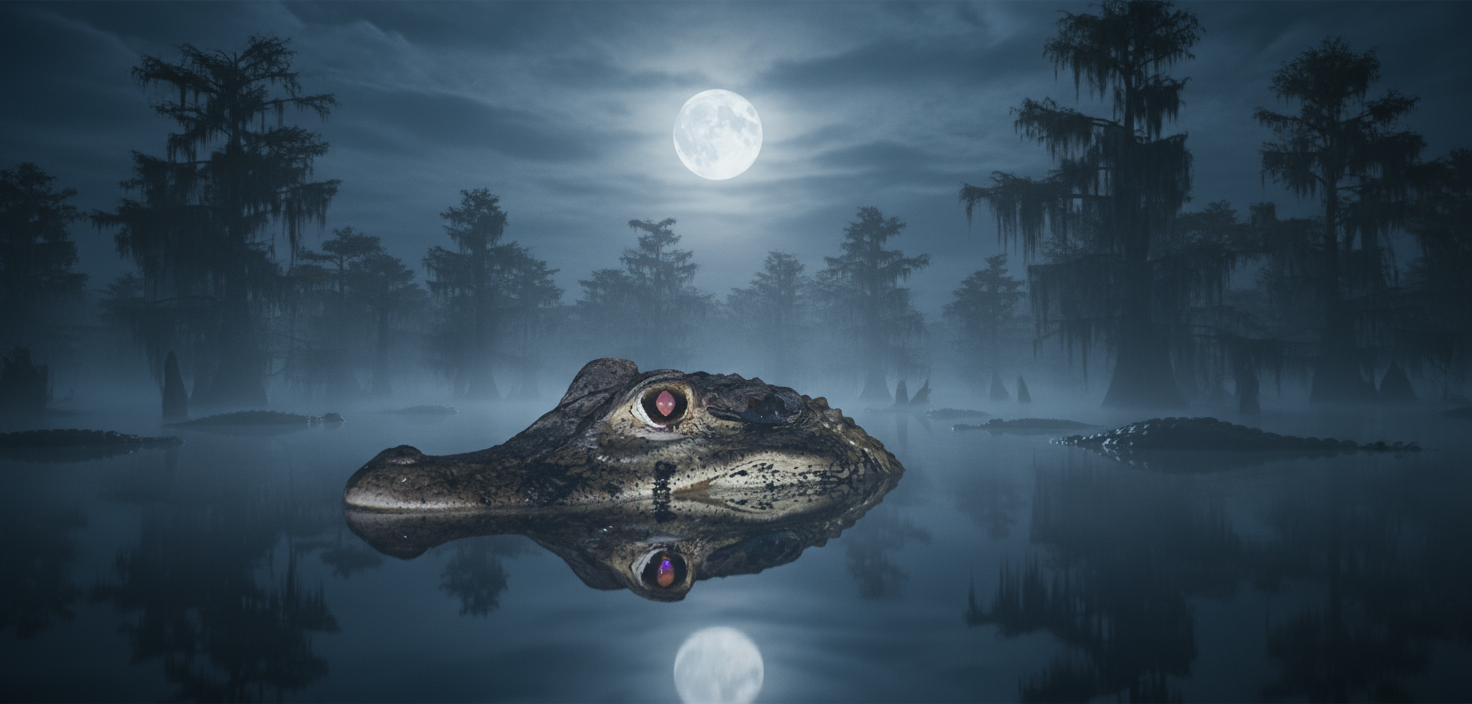
Durante la notte, l'organismo dell'alligatore si adatta e diventa così attivo da consumare più energia rispetto al giorno. Questo cambiamento metabolico permette loro di diventare i temibili cacciatori per cui sono noti. Ma il punto è che gli alligatori sono più attivi di notte, il che li rende più notturni che diurni. Considera il giorno come il loro momento di riposo e ricarica, mentre la notte è quando si mettono al lavoro.
Di notte, gli alligatori diventano cacciatori più attivi. Pattugliano il loro territorio, alla ricerca di prede lungo le rive e nelle zone paludose. La loro maggiore attività notturna è dovuta alle temperature più fresche e alla minore presenza umana. Ma la vera magia sta proprio nei loro adattamenti specifici, che trasformano l’oscurità nel loro più grande vantaggio.
Le temperature notturne più fresche giocano un ruolo fondamentale. Le temperature più fresche del tramonto stimolano quindi una maggiore attività e una maggiore attività di caccia. Limitando l’attività e regolando la propria temperatura corporea, gli alligatori risparmiano energia per cacciare di notte. Durante le ore più calde della giornata, gli alligatori rischierebbero il surriscaldamento se fossero costantemente attivi. La notte offre un po’ di sollievo dal caldo, consentendo loro di muoversi liberamente senza il rischio di surriscaldarsi.
Un altro fattore è la disponibilità di prede. Molte specie potenzialmente preda sono attive anche di notte, rendendo questo momento particolarmente favorevole per la caccia degli alligatori. Pesci, rane, piccoli mammiferi e uccelli diventano tutti più attivi durante il crepuscolo e le ore notturne, offrendo agli alligatori un vero e proprio buffet di prede. L'oscurità offre inoltre un riparo, rendendo più facile per questi predatori da agguato cogliere di sorpresa le loro prede.
Se ti è mai capitato di uscire in acqua dopo il tramonto con una torcia, potresti aver visto decine di occhi rossi luminosi che ti fissavano. Si tratta del bagliore negli occhi degli alligatori, ed è uno degli adattamenti più straordinari di questi rettili. Il “riflesso oculare” o tapetum lucidum è una struttura unica presente nell’occhio dell’alligatore che fornisce alle cellule retiniche fotosensibili una stimolazione aggiuntiva dei fotorecettori da parte dei fotoni.
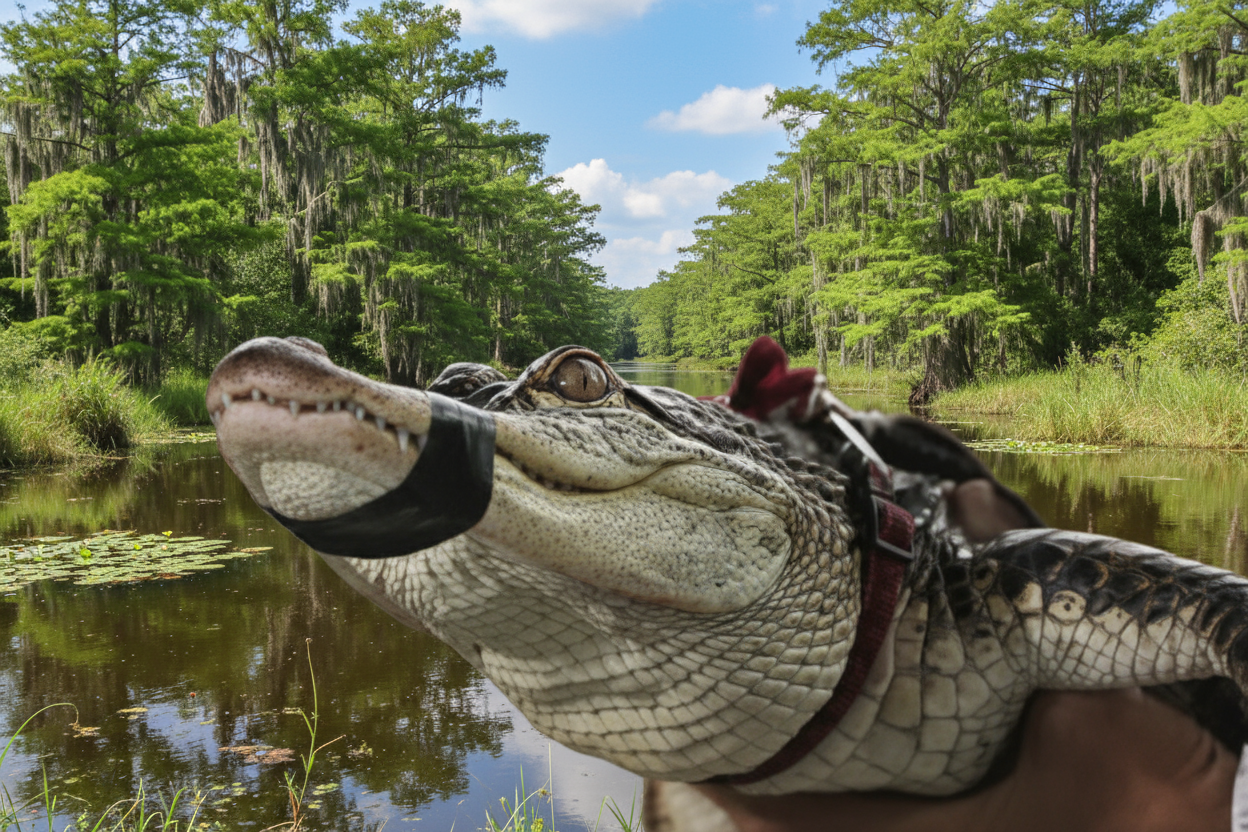
Questo strato riflettente agisce come uno specchio, riflettendo la luce attraverso la retina una seconda volta. Questo strato si trova dietro le cellule fotorecettrici della retina e riflette la luce all’indietro, aumentando così la quantità di luce che l’occhio dell’alligatore è in grado di percepire. Ciò migliora notevolmente la vista dell’alligatore in condizioni di scarsa illuminazione, motivo per cui questi animali sono più attivi di notte. In sostanza, al buio vedono molto meglio di noi: è come se avessero degli occhiali per la visione notturna integrati.
Gli occhi di un alligatore brillano di un rosso intenso quando la luce vi si riflette sopra. Questo bagliore negli occhi è talmente caratteristico che cacciatori e ricercatori lo utilizzano per individuare gli alligatori di notte. Negli alligatori, questa parte emette una luce rossa: è un ottimo modo per individuare gli alligatori nelle notti buie. Maggiore è la distanza tra i suoi occhi, più lungo è il rettile; in questo caso, è molto lungo. Quindi, se vedi due puntini rossi ben distanziati tra loro, significa che hai davanti un grosso alligatore.
Per chiunque sia interessato all’osservazione della fauna selvatica dopo il tramonto, disporre dell’attrezzatura giusta fa davvero la differenza. Un’attrezzatura di qualità monoculare termico per la caccia può aiutarti a individuare questi predatori notturni da una distanza di sicurezza, offrendoti una prospettiva completamente nuova sui loro comportamenti notturni.
Gli alligatori sono predatori notturni che cacciano di agguato, il che significa che cacciano principalmente di notte e fanno affidamento sulla furtività e sull'effetto sorpresa. Di solito restano in agguato in paludi, acquitrini o rive fluviali torbidi e ricchi di vegetazione, mimetizzandosi perfettamente con l'ambiente circostante. La loro strategia di caccia si basa interamente sulla pazienza e sulla precisione.
Gli alligatori cacciano soprattutto al crepuscolo o di notte. Rimangono immobili in attesa della preda. Questo approccio “aspetta e osserva” è incredibilmente efficace. Un alligatore può rimanere perfettamente immobile per ore, sembrando nient’altro che un tronco che galleggia sull’acqua. Poi, quando la preda si avvicina abbastanza — BAM — attacca alla velocità della luce.
Ma la vista non è la loro unica arma. Quando gli alligatori sono sott'acqua, “si affidano principalmente ai loro organi sensoriali meccanici”, ha spiegato. Questi animali hanno sensori di pressione molto sensibili nel muso, che utilizzano per rilevare le vibrazioni nell'ambiente circostante. Questi sensori, chiamati organi di senso tegumentari (ISO), sono in grado di rilevare i movimenti più impercettibili nell’acqua. Anche nell’oscurità più totale o in acque torbide, un alligatore è in grado di percepire un pesce che nuota nelle vicinanze o una rana che salta in acqua.
Curiosità: Gli alligatori cercavano di catturare le prede soprattutto durante la notte. Tuttavia, le ricerche dimostrano che, sebbene caccino più spesso di notte, gli alligatori hanno avuto maggior successo quandoCaccia dalle 4:00 alle 9:00 del mattino. Ciò suggerisce che le prime ore del mattino, proprio prima e dopo l’alba, potrebbero effettivamente rappresentare il momento ideale per le loro prede.
Durante le ore diurne, gli alligatori spesso si crogiolano al sole per regolare la loro temperatura corporea. Questo comportamento di termoregolazione rende più prevedibile la loro posizione, poiché cercano luoghi soleggiati lungo le rive, sui tronchi o nelle acque poco profonde. Se esci durante il giorno, vedrai gli alligatori che se ne stanno lì a oziare, a prendere il sole e, in generale, a fare i pigri.
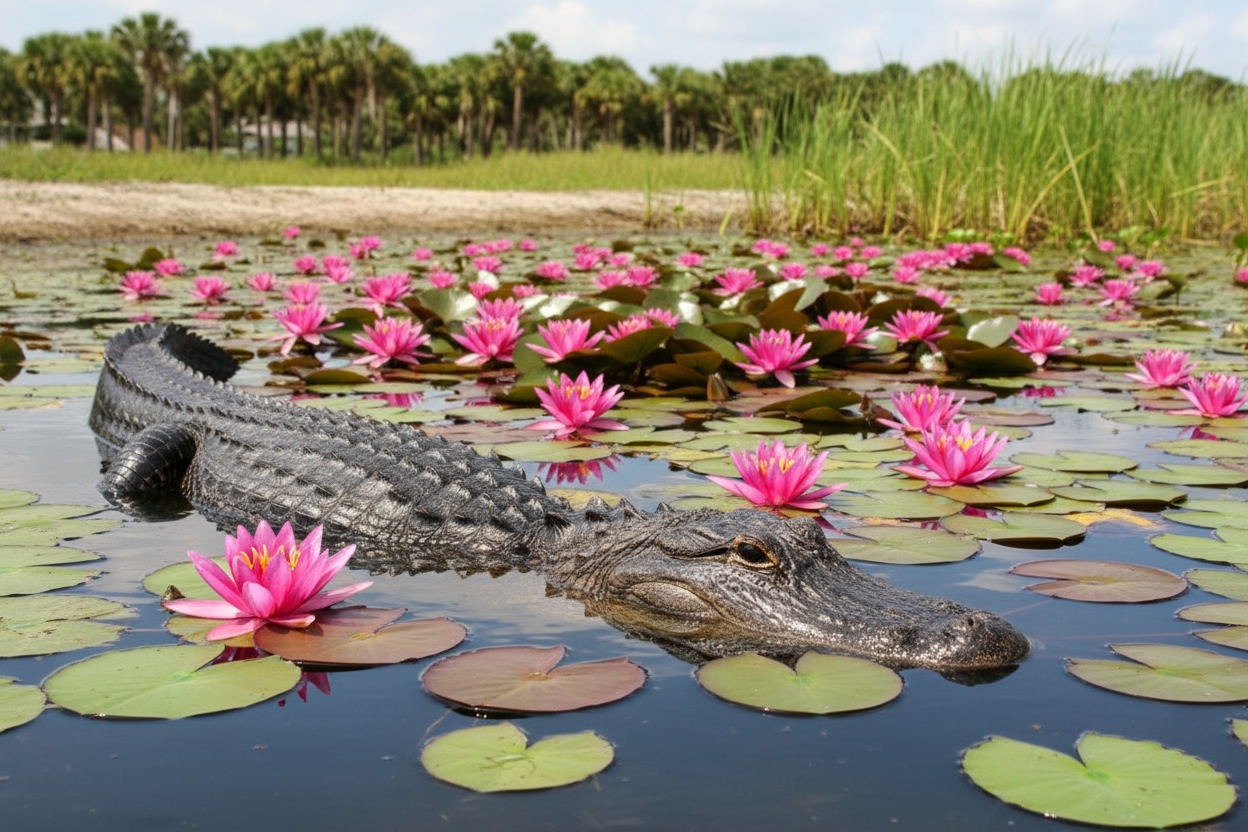
La caccia diurna offre l’ovvio vantaggio di una visibilità ottimale. È possibile individuare facilmente gli alligatori che prendono il sole sulle rive, sui tronchi o che galleggiano in superficie. Questa nitidezza visiva consente di mirare con maggiore precisione e riduce il rischio di scambiare dei detriti per un alligatore. Per i principianti, la caccia diurna offre un’esperienza più sicura e confortevole.
Ma è di notte che le cose si fanno davvero interessanti. Durante la notte si registra un aumento dei movimenti degli alligatori e della loro attività alimentare. In questi periodi di maggiore attività, gli alligatori diventano più sensibili ai richiami e alle esche. Il loro istinto di caccia è più acuto, il che li rende più propensi a indagare su rumori o potenziali fonti di cibo. Il buio della notte riduce inoltre l'attività umana sui corsi d'acqua, creando un ambiente più naturale in cui gli alligatori si sentono al sicuro mentre si muovono nel loro territorio.
Gli alligatori sono animali notturni per natura, il che significa che sono più attivi dopo il tramonto. L'uso di luci artificiali e di tecniche di esca adeguate aumenta le probabilità di successo nella caccia. La caccia notturna richiede attrezzature e tecniche diverse, ma offre il vantaggio di poter cacciare gli alligatori nel momento in cui sono più attivi e vigili.
La scelta delle prede sembra essere determinata principalmente dalle dimensioni. La dieta di un alligatore dipende da ciò che ha a disposizione, il che significa che mangia praticamente di tutto, inclusi pesci, rane, uccelli, tartarughe, insetti, serpenti, piccoli mammiferi, altri alligatori, cervi dalla coda bianca, cinghiali selvatici e, a volte, animali domestici. Questi predatori opportunisti non sono schizzinosi: se si muove e ci sta in bocca, è nel loro menu.
I risultati delle Crittercam rivelano che gli alligatori sono cacciatori prolifici: “Attaccano qualcosa una volta ogni due ore”, ha affermato il responsabile dello studio James Nifong, dottorando in ecologia degli alligatori presso l’Università della Florida a Gainesville. È stata una notte davvero intensa dal punto di vista della caccia. Tuttavia, dopo un pasto abbondante, Un alligatore può stare a oziare per settimane prima di dover mangiare di nuovo!
I loro metodi di caccia sono brutali ed efficaci. Una volta catturata la preda, questa viene solitamente inghiottita intera. Gli alligatori hanno mascelle incredibilmente potenti, in grado di frantumare i gusci delle tartarughe e le ossa dei piccoli mammiferi. Per le prede più grandi che non possono essere inghiottite intere, L'alligatore nasconde la sua preda sott'acqua, bloccandola sotto un tronco sommerso o in qualsiasi altro punto in cui possa incastrarla per tenerla al sicuro.
Non dare mai da mangiare agli alligatori né nuotare o camminare nell'acqua in luoghi in cui è nota o probabile la presenza di alligatori di grandi dimensioni, specialmente al tramonto o di notte (quando si nutrono naturalmente). Questo è davvero il consiglio di sicurezza più importante. Quando gli alligatori sono in modalità caccia, cercano qualsiasi cosa assomigli a una preda.
Gli alligatori sono cacciatori notturni. Quella pozza d’acqua cristallina che vedete di giorno potrebbe rivelarsi un terreno di caccia privilegiato per gli alligatori al calar del sole. Rispettate questi predatori ed evitate di nuotare tra il tramonto e l’alba. Anche se durante il giorno hai nuotato in un determinato punto senza vedere alcun alligatore, ciò non significa che di notte non ci saranno.

Se ti capita di avventurarti nel territorio degli alligatori dopo il tramonto, che sia per motivi di ricerca, per scattare foto o semplicemente per vivere un'avventura, dai un'occhiata a I prodotti Pixfra per binari da esterno per il montaggio delle vostre apparecchiature di termografia. Disporre dell’attrezzatura giusta può rendere l’osservazione notturna della fauna selvatica più sicura e più proficua. Potete inoltre approfondire l’argomento predatori notturni e animali che cacciano al buio per capire quale ruolo ricoprano gli alligatori nel più ampio ecosistema dei predatori notturni.
È illegale dare da mangiare agli alligatori. Quando gli esseri umani danno da mangiare agli alligatori, questi perdono il loro naturale timore nei confronti degli esseri umani e finiscono per associarli al cibo. Gli alligatori abituati a essere nutriti diventano pericolosi e, di solito, finiscono per essere abbattuti dai funzionari della fauna selvatica. Quindi, se vedete un alligatore, godetevi lo spettacolo da una distanza di sicurezza, ma non datelo mai e poi mai da mangiare.
I ritmi stagionali hanno un ruolo importante nel comportamento degli alligatori. Gli alligatori della Florida raggiungono solitamente il massimo livello di attività quando le temperature si attestano tra gli 82 e i 92 gradi Fahrenheit. In genere smettono di nutrirsi quando la temperatura scende sotto i 70 gradi Fahrenheit e diventano molto pigri quando la temperatura è inferiore ai 55 gradi Fahrenheit, cosa che può verificarsi durante alcuni fronti freddi nei mesi invernali.
Durante i mesi più caldi — all’incirca da aprile a ottobre — gli alligatori raggiungono il massimo della loro attività. Questo periodo coincide con la loro stagione degli amori, che va da aprile a giugno. In questi mesi si nota un’aumentata attività notturna, poiché i maschi pattugliano i propri territori e competono per conquistare le femmine. Al termine della stagione degli amori, le femmine costruiscono i nidi e custodiscono le uova, il che le rende particolarmente aggressive e territoriali.
Con l'abbassarsi delle temperature nel tardo autunno e in inverno, l'attività degli alligatori diminuisce notevolmente. Essi entrano in uno stato chiamato "brumazione" (simile al letargo), durante il quale rimangono inattivi e si nascondono nelle loro tane o scavano nelle rive fangose. Durante questi mesi più freddi, l'attività di caccia notturna è minima o inesistente.
A che ora escono gli alligatori per cacciare di notte?
Gli alligatori raggiungono solitamente il massimo livello di attività subito dopo il tramonto e rimangono attivi per tutta la notte fino all’alba. Il picco dell’attività venatoria si registra durante le ore crepuscolari del tramonto e nelle prime ore del mattino, poco prima dell’alba, quando anche le prede sono più attive.
Gli alligatori riescono a vederti al buio?
Sì, gli alligatori hanno un'eccellente visione notturna grazie a uno speciale strato riflettente presente nei loro occhi, chiamato tapetum lucidum. Questo adattamento permette loro di vedere molto meglio degli esseri umani in condizioni di scarsa illuminazione, rendendoli cacciatori notturni estremamente efficaci.
Perché gli occhi degli alligatori brillano di rosso di notte?
Gli occhi degli alligatori brillano di rosso quando vengono colpiti dalla luce grazie al tapetum lucidum, uno strato riflettente situato dietro la retina. Questo strato riflette la luce all’interno dell’occhio, migliorando la loro visione al buio e creando quel caratteristico bagliore rosso negli occhi che cacciatori e osservatori della fauna selvatica utilizzano per individuarli.
Gli alligatori sono più pericolosi di notte che di giorno?
Sì, gli alligatori sono generalmente più pericolosi di notte, perché è in quel momento che cacciano e si nutrono attivamente. Dopo il tramonto sono più vigili, più mobili e più aggressivi. Nuotare o trovarsi in prossimità della riva durante le ore notturne aumenta notevolmente il rischio di imbattersi in un alligatore a caccia.
Da che distanza si riesce a vedere il bagliore negli occhi di un alligatore di notte?
Con un potente riflettore o una torcia elettrica, in condizioni ottimali è possibile individuare il bagliore negli occhi di un alligatore da diverse centinaia di iarde di distanza. La distanza tra i due occhi rossi luminosi può aiutare a stimare le dimensioni dell’alligatore: più gli occhi sono distanziati, più grande è l’alligatore.
When the sun sets and darkness blankets the landscape, a whole different world comes alive. While most of us are winding down for the evening, nocturnal predators are just getting started with their nightly hunt. These remarkable creatures have spent millions of years perfecting the art of hunting in darkness, developing extraordinary senses and abilities that make them some of nature’s most efficient killers. Whether you’re a wildlife enthusiast, a night hunter looking to understand your quarry better, or simply curious about the creatures that roam after dark, understanding these animals gives us a deeper appreciation for the complex ecosystem that thrives when we’re asleep.
Nocturnal animals aren’t just creatures that happen to stay up late—they’ve evolved specific biological adaptations that make nighttime their optimal hunting period. These animals have internal circadian rhythms that are essentially the opposite of ours, making them naturally alert and active when darkness falls. The advantages of being nocturnal are significant: less competition for food, cooler temperatures in hot climates, and most importantly, the cover of darkness to ambush unsuspecting prey. For predators specifically, the night offers a tactical advantage that diurnal hunters simply don’t have. Their prey might be sleeping, less alert, or struggling to see danger approaching. Evolution has shaped these hunters into perfectly designed nighttime killing machines, each species developing unique adaptations that suit their specific hunting style and environment. From the thermal-sensing abilities of some snakes to the incredible hearing of owls, nocturnal predators prove that you don’t need sunlight to be an apex predator. For those interested in observing these creatures, modern technology like thermal scopes has revolutionized our ability to witness their nocturnal activities without disturbing their natural behavior.

The most striking feature of nocturnal predators is their sensory adaptations that allow them to navigate and hunt in near-total darkness. Vision is the most obvious adaptation—many nocturnal animals have significantly larger eyes relative to their body size compared to diurnal species. These enlarged eyes contain a higher concentration of rod cells, which are photoreceptors specialized for low-light conditions. Additionally, many nocturnal predators possess a reflective layer behind their retina called the tapetum lucidum, which acts like a mirror to bounce light back through the retina a second time, effectively doubling their ability to capture available light. This is what causes the characteristic “eyeshine” when you spot animals at night with a flashlight.
But vision is just one piece of the puzzle. Nocturnal predators often rely on a combination of enhanced senses working together to create a complete picture of their environment. Owls, for instance, have asymmetrical ear placement that allows them to pinpoint the exact location of a mouse rustling in grass with terrifying accuracy. Bats use echolocation, emitting high-frequency sounds and interpreting the echoes to create a “sound map” of their surroundings. Some snakes have heat-sensing pit organs that detect the infrared radiation emitted by warm-blooded prey, allowing them to “see” heat signatures in complete darkness. Cats and other feline predators have extremely sensitive whiskers that detect air currents and vibrations, helping them navigate tight spaces and sense nearby movement. These combined sensory superpowers make nocturnal predators incredibly effective hunters that we’re only beginning to fully understand.
When we talk about nocturnal predators, owls are often the first creatures that come to mind, and for good reason. These birds of prey are perhaps the most perfectly adapted aerial hunters of the night. With over 200 species worldwide, owls have diversified to fill various ecological niches, but they all share common adaptations that make them formidable predators. Their large, forward-facing eyes give them excellent binocular vision and depth perception, crucial for accurately judging distances when swooping down on prey. Some owl species can see in light levels 100 times dimmer than what humans need to see clearly.

What truly sets owls apart is their ability to fly in complete silence. Their flight feathers have specialized structures with soft fringes on the leading edges and a velvety surface that dampens sound, allowing them to approach prey without any warning whistle of wings. This silent flight, combined with their exceptional hearing, makes them devastating hunters. A barn owl, for example, can catch a mouse in complete darkness using hearing alone, pinpointing the location with such precision that it rarely misses. Great horned owls are powerful enough to take down prey much larger than themselves, including skunks, rabbits, and even other raptors. The great grey owl can hear a vole moving under two feet of snow and punch through the snow to grab it. These adaptations have made owls successful predators across diverse habitats, from Arctic tundra to tropical rainforests, cementing their reputation as one of nature’s most efficient nocturnal hunters.
While some big cats like lions and cheetahs are known for daytime hunting, many feline predators are actually most active during twilight hours and nighttime. Leopards, jaguars, tigers, and even smaller wild cats like bobcats and ocelots are predominantly nocturnal or crepuscular hunters. These cats possess the physical prowess, stealth, and sensory adaptations that make them among the most dangerous nocturnal predators on the planet. Their eyes contain a high concentration of rods and a well-developed tapetum lucidum, giving them vision that’s six to eight times better than humans in low light conditions. This means they can hunt effectively in conditions that would leave their prey essentially blind.
Beyond vision, big cats are masters of stealth and patience. Their retractable claws remain sharp because they’re kept sheathed when not in use, and their padded paws allow them to move in near silence. Leopards are particularly impressive nocturnal hunters, capable of dragging prey twice their weight up into trees to keep it safe from scavengers. They’re ambush predators that rely on getting as close as possible before launching a lightning-fast attack. Jaguars have the strongest bite force relative to size of any big cat, allowing them to pierce turtle shells and caiman skulls with ease—hunting tactics often employed during their nocturnal riverside patrols. In North America, bobcats and mountain lions (also called cougars or pumas) are skilled nocturnal hunters that can take down prey much larger than themselves. These solitary hunters exemplify the efficiency of nocturnal predation, using darkness as their ally to become nearly invisible until the moment they strike.
Bats represent one of the most diverse groups of nocturnal predators, with over 1,400 species found across the globe. While many people think of bats as simply flying rodents, they’re actually more closely related to primates and have evolved one of the most sophisticated hunting systems in the animal kingdom. Most insectivorous bats use echolocation—a biological sonar system where they emit high-frequency calls and listen for the echoes bouncing back from objects and prey. This allows them to build a three-dimensional sound picture of their environment with astonishing detail, detecting insects as small as mosquitoes in complete darkness.

The sophistication of bat echolocation is truly remarkable. Different species have evolved specialized calls optimized for their specific hunting environments and prey types. Bats hunting in open spaces use lower frequency calls that travel farther, while those navigating dense forest use higher frequency calls that provide more detail at shorter ranges. Some bats can adjust their call frequency in real-time to avoid interference from other bats hunting nearby. Certain species like the greater bulldog bat can even detect tiny ripples on water surfaces, allowing them to catch fish swimming just below the surface in complete darkness. Beyond echolocation, some bat species are formidable predators in other ways. The spectral bat and false vampire bat are carnivorous species that hunt other vertebrates including birds, rodents, and even other bats, using both echolocation and acute hearing to locate prey. Their role as nocturnal insect controllers is also ecologically vital, with some bat colonies consuming tons of insects nightly, making them valuable allies for farmers and reducing pest populations naturally.
When darkness falls, various snake species emerge as highly effective predators, particularly in warmer climates where nighttime activity helps them avoid overheating. Pit vipers, including rattlesnakes, copperheads, and cottonmouths, are among the most sophisticated nocturnal reptilian hunters. Their namesake “pits” are heat-sensing organs located between their eyes and nostrils that detect infrared radiation. These specialized organs are so sensitive they can detect temperature differences as small as 0.003 degrees Celsius, allowing them to create a thermal image of their surroundings and locate warm-blooded prey with deadly accuracy even in pitch-black conditions.
Pythons and boas, though lacking the specialized pit organs of pit vipers, are still effective nocturnal hunters with heat-sensitive scales around their lips that serve a similar function. These constrictors combine thermal sensing with other adaptations like excellent chemoreception through their flickering tongues, which collect scent particles from the air and transfer them to the Jacobson’s organ in the roof of their mouth. This gives them a detailed chemical map of their environment. Nocturnal hunting allows these snakes to target prey like rodents and birds that are resting and less vigilant after dark. Crocodilians, while not snakes, are also formidable nocturnal reptilian predators. Species like the American alligator and Nile crocodile are most active at night, using their excellent night vision, pressure-sensitive scales that detect water disturbances, and patient ambush tactics to catch prey coming to the water’s edge to drink. These ancient predators have remained virtually unchanged for millions of years, proving that their nocturnal hunting strategies are tremendously effective.
North America hosts a impressive variety of nocturnal predators that range from relatively harmless to genuinely dangerous. Understanding which predators are active in your area is important for anyone spending time outdoors after dark, whether you’re camping, hiking, or night hunting. The most dangerous nocturnal predator in most of the United States is arguably the American alligator, found throughout the southeastern states. These prehistoric predators are most active between dusk and dawn, particularly during warmer months, and are responsible for occasional attacks on humans and pets, especially near bodies of water.
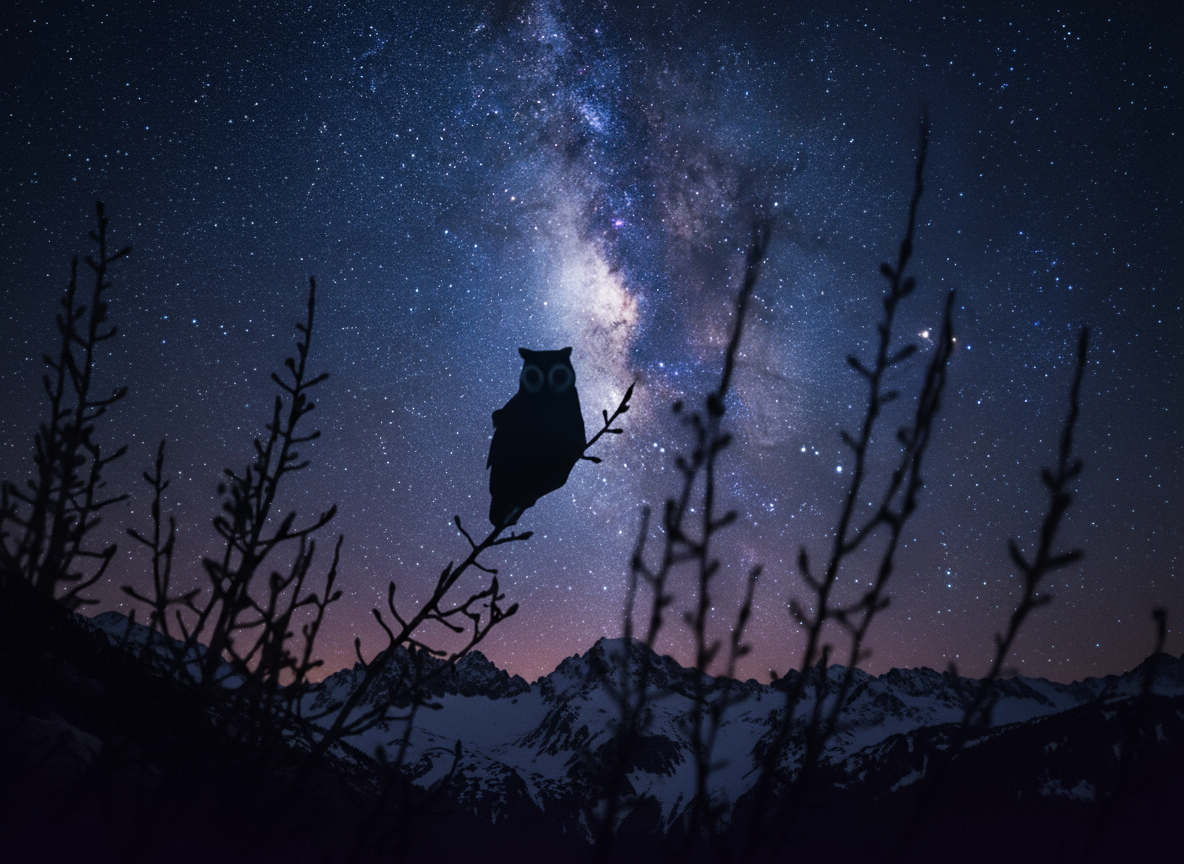
Mountain lions (cougars) are another significant nocturnal threat across the western United States and increasingly in some eastern regions. While attacks on humans are rare, they do occur, particularly during dawn and dusk when these big cats are most active. Coyotes have expanded their range dramatically and are now found in all 49 continental states, becoming increasingly bold in urban and suburban areas where they hunt primarily at night. While typically not dangerous to adult humans, they pose a serious threat to pets and small children. Black bears, though omnivorous, are powerful predators that are often most active at night, especially in areas with human activity during the day. Bears searching for food can be dangerous if surprised or if they’ve become habituated to human food sources. Bobcats, while generally avoiding humans, are skilled nocturnal hunters throughout much of the country. Venomous snakes like rattlesnakes and copperheads are also active nocturnal hunters in many regions, and accidental encounters can result in dangerous bites. Understanding the nocturnal predators in your specific area and taking appropriate precautions—like making noise while hiking, securing food properly, and keeping pets indoors at night—significantly reduces the already small risk these animals pose.
The evolutionary adaptations that allow animals to thrive as nocturnal predators go far beyond just good night vision. These creatures have developed an entire suite of specialized characteristics that work together to make them supremely effective in darkness. Physiologically, many nocturnal predators have adapted their body temperatures and metabolic rates to function optimally during cooler nighttime hours. Some have evolved darker coloration that provides better camouflage in low-light conditions, while others have coloring that breaks up their outline, making them harder to spot.
Behavioral adaptations are equally important. Nocturnal predators often exhibit patience and energy conservation strategies, remaining motionless for extended periods before striking with explosive speed and precision. Many species have developed enhanced memory and spatial awareness, creating mental maps of their territories that allow them to navigate effectively even when visual cues are minimal. Some nocturnal hunters have also adapted their reproductive and social behaviors around nighttime activity, with many species communicating through sounds, scents, and other non-visual cues that work well in darkness. The hunting strategies themselves are often adapted for nighttime success—ambush predation becomes more effective when prey can’t see the attack coming, and persistence hunting works well when predators can track prey through the night without overheating. These combined adaptations demonstrate that becoming nocturnal isn’t just about staying awake at night; it’s about fundamentally restructuring biology, behavior, and hunting strategy to exploit a temporal niche that offers significant advantages to those adapted for it.
Not all nocturnal predators hunt in the dark for the same reasons, and the specific advantages vary considerably based on species, habitat, and prey type. For some predators, nighttime activity is primarily about temperature regulation. Desert-dwelling hunters like fennec foxes, many snake species, and certain cats avoid the brutal daytime heat that could lead to dangerous dehydration or heat exhaustion. The cooler nighttime temperatures allow them to be active and hunt without the physiological stress of extreme heat. In tropical regions, the temperature difference between day and night may be less dramatic, but reduced sun exposure still offers comfort advantages.
For other species, the darkness itself is the weapon. Predators that rely heavily on stealth and ambush tactics benefit enormously from reduced visibility that makes it harder for prey to detect their approach. The cover of night allows certain prey species to be more active as well, creating opportunities that don’t exist during daylight hours—essentially, some predators are nocturnal because their prey is nocturnal. Competition avoidance is another significant advantage. In ecosystems with multiple predator species, temporal partitioning—where different species are active at different times—reduces direct competition for the same resources. A hawk and an owl might hunt the same prey species in the same area, but because one hunts by day and the other by night, they’re not competing directly. Finally, for prey species that have become nocturnal, predators must follow or miss out on food sources. This predator-prey arms race has driven the evolution of increasingly sophisticated adaptations on both sides, creating the remarkable diversity of nocturnal life we see today.
What is the deadliest nocturnal predator in the world?
While “deadliest” can be measured in different ways, saltwater crocodiles and Nile crocodiles are among the most dangerous nocturnal predators to humans, responsible for hundreds of deaths annually. For sheer hunting efficiency within their ecosystems, owls, big cats like leopards and jaguars, and various snake species are all apex nocturnal predators. The answer really depends on whether you’re measuring danger to humans, hunting success rate, or ecological impact.
Why do predators hunt at night instead of during the day?
Predators hunt at night for several key advantages: darkness provides cover for stealthy approaches, many prey species are less alert or sleeping at night, nighttime temperatures are cooler which prevents overheating during physical exertion, there’s less competition from diurnal predators, and some prey species are only active at night. Many nocturnal predators have evolved specialized sensory adaptations that give them a significant advantage over their prey in low-light conditions.
Can nocturnal predators see in complete darkness?
No animal can see in truly complete darkness—vision requires at least some light. However, nocturnal predators have eyes adapted to function in extremely low light conditions that would appear pitch black to humans. Many species supplement vision with other senses: bats use echolocation, snakes use heat-sensing organs, and owls rely heavily on hearing. These combined sensory abilities allow them to hunt effectively in conditions humans would consider complete darkness.
What time are nocturnal predators most active?
Most nocturnal predators are most active during twilight hours—dusk and dawn—when there’s still some ambient light but prey animals are transitioning between day and night activities. These crepuscular periods offer optimal hunting conditions. However, many species remain active throughout the night, with activity levels often peaking around midnight and again before dawn. Activity patterns also vary by season, moon phase, weather conditions, and prey availability.
How do I stay safe from nocturnal predators when camping or hiking?
To stay safe around nocturnal predators, make noise while moving to avoid surprising animals, never approach or feed wildlife, store food properly in bear-proof containers or hung from trees, keep pets on leashes and indoors at night, carry a flashlight or headlamp, stay on established trails, camp in designated areas away from animal trails leading to water sources, and research which predators are common in your specific area so you can take appropriate precautions. Most nocturnal predators naturally avoid humans and attacks are extremely rare when proper precautions are followed.
When darkness falls across the landscape, most predators face significant limitations. But for owls, nighttime is prime hunting time. These extraordinary birds have evolved into what might be the most perfectly designed nocturnal hunters on our planet, capable of locating and capturing prey in conditions that would render most predators effectively blind and helpless.
Owls represent nature’s pinnacle of specialized night hunting adaptations. Unlike other predators that might compromise between daytime and nighttime capabilities, owls have evolved almost exclusively for after-dark hunting efficiency. Their entire physical structure – from specialized feathers to asymmetrical ears – serves a single purpose: to detect and capture prey in minimal light conditions with maximum effectiveness.

The true mastery of owl hunting becomes apparent when you consider their success rates. Studies tracking hunting efficiency across different predator species show that some owl species achieve success rates approaching 80% under ideal conditions – far exceeding the 10-20% success rates typical for most mammalian predators. This extraordinary efficiency stems from multiple specialized adaptations working in perfect concert rather than relying on a single hunting advantage.
Most impressive about owl hunting behavior is the near-complete silence with which they operate. While we often associate predators with dramatic chases or fierce struggles, owls represent the opposite end of the hunting spectrum – deploying stealth, precision, and surprise to such a degree that prey animals often remain unaware of the owl’s presence until the moment of capture. This hunting approach requires remarkable sensory capabilities combined with specialized physical adaptations that we’ll explore in depth.
The role of owls as nocturnal apex predators shapes entire ecosystems. Their hunting prowess helps control rodent populations, influencing everything from disease transmission to seed dispersal patterns in forest ecosystems. A single barn owl family can consume over 3,000 rodents annually, creating ripple effects throughout the food web. This ecological impact makes understanding owl hunting behavior relevant beyond mere fascination with their abilities.
Advances in night observation technology have revolutionized our understanding of owl hunting. Traditional research methods using visible light inevitably disturbed natural hunting behaviors, creating observation artifacts that misrepresented true patterns. Modern thermal imaging equipment like that from Pixfra allows researchers to document complete hunting sequences without detection by either owls or their prey, providing unprecedented insights into their true hunting behaviors.
The seasonal changes in owl hunting activity reveal another layer of sophistication. Most owl species adjust their hunting patterns throughout the annual cycle, with particularly intense activity during breeding seasons when they must provide for growing chicks. GPS tracking studies show some species like Great Horned Owls can expand their hunting territories by 30-40% during these high-demand periods, demonstrating remarkable behavioral flexibility despite their specialized hunting adaptations.
The visual capabilities of hunting owls represent one of the animal kingdom’s most remarkable sensory adaptations. While we often say someone has “eagle eyes” to denote exceptional vision, owls possess visual adaptations specifically evolved for the unique challenges of locating prey in extremely low-light conditions where even eagles would struggle to function.
The physical structure of the owl eye differs dramatically from human vision. While our eyes account for approximately 2% of our head weight, owl eyes can represent up to 5% of their total head weight – a disproportionate allocation that indicates their evolutionary priority. These oversized eyes feature significantly larger corneas and pupils relative to the eye size, allowing maximum light capture. The tubular shape of owl eyes, rather than the spherical structure of human eyes, creates greater distance between lens and retina, effectively functioning as a built-in telephoto lens that magnifies images.
Perhaps the most critical aspect of owl night vision involves their exceptional rod cell concentration. These specialized photoreceptor cells detect light and motion but not color, making them ideal for low-light conditions. While human retinas contain approximately 200,000 rods per square millimeter, owl retinas feature up to 1,000,000 rods per square millimeter. This five-fold density increase dramatically enhances their ability to detect even minimal light reflected from prey animals at night. This adaptation comes at the expense of cone cells (responsible for color vision), which explains why owls sacrifice color perception for superior night vision.
The position of owl eyes differentiates them from most birds. Their forward-facing placement creates binocular vision with approximately 70-degree overlap between the visual fields of both eyes. This arrangement provides exceptional depth perception – crucial for precisely judging striking distance when hunting. However, this frontal orientation limits peripheral vision, which owls compensate for with their extraordinary neck rotation capabilities. They can rotate their heads up to 270 degrees, allowing them to effectively see behind themselves without moving their bodies and potentially alerting prey.
“Owl visual systems represent one of evolution’s most remarkable sensory specializations. They don’t just see better than humans at night – they operate in a completely different visual realm, detecting and processing light information at levels that would appear as complete darkness to us. When combined with their other sensory adaptations, this creates a hunting system operating at the theoretical limits of biological possibility.” – Dr. Amanda Chen, Raptor Research Institute
The fovea structure within owl eyes – the region of highest visual acuity – shows interesting variations between species that reflect different hunting strategies. Unlike eagles that possess two foveal regions (one for forward vision, one for peripheral), most owl species have a single, highly concentrated fovea optimized exclusively for forward vision and striking accuracy. This represents another evolutionary trade-off, sacrificing wide-field scanning capabilities for unsurpassed precision in the area directly relevant to prey capture.
Light amplification capabilities within owl eyes far exceed human abilities. Research measuring minimum light thresholds shows that owls can effectively hunt in light conditions approximately 10-100 times dimmer than what humans require for basic functional vision. This extraordinary sensitivity comes partly from specialized enzymes that regenerate light-detecting molecules in rod cells much faster than in human eyes, allowing continuous function in extremely low light. This regeneration speed means owls can maintain visual function under sustained low-light conditions where human night vision would gradually deteriorate.
Despite these remarkable adaptations, owls don’t rely exclusively on vision when hunting in complete darkness. When light levels fall below even their exceptional detection thresholds, they seamlessly transition to their backup sensory system – their extraordinary hearing capabilities. Modern thermal imaging equipment from companies like Pixfra mimics these capabilities, detecting prey heat signatures that would be invisible to both human eyes and traditional night vision systems that require some ambient light.
Il Sistema di montaggio su binario Pixfra provides a stable platform for thermal imaging equipment that allows researchers and wildlife enthusiasts to observe these remarkable visual capabilities without disrupting the owls’ natural behavior. The standardized Picatinny interface ensures compatible mounting with various observation devices, facilitating detailed documentation of how owls use their extraordinary vision during complete darkness.
The auditory capabilities of hunting owls represent perhaps their most extraordinary adaptation for nocturnal hunting. While their vision excels in low light, their hearing allows them to locate prey with pinpoint accuracy in complete darkness or when prey is hidden under vegetation, snow, or leaf litter – conditions where visual detection becomes impossible regardless of light sensitivity.
The most distinctive feature of owl hearing involves the asymmetrical placement of their ear openings. Unlike humans and most animals with ears positioned symmetrically on both sides of the head, many owl species have one ear opening positioned higher on the skull than the other. This vertical offset creates minute differences in sound arrival time and intensity between the ears. These differences allow owls to triangulate sound sources with remarkable precision in three-dimensional space – not just direction but also exact distance and depth. Studies measuring this accuracy have documented Great Grey Owls precisely locating mice under 18 inches of snow with no visual cues whatsoever.
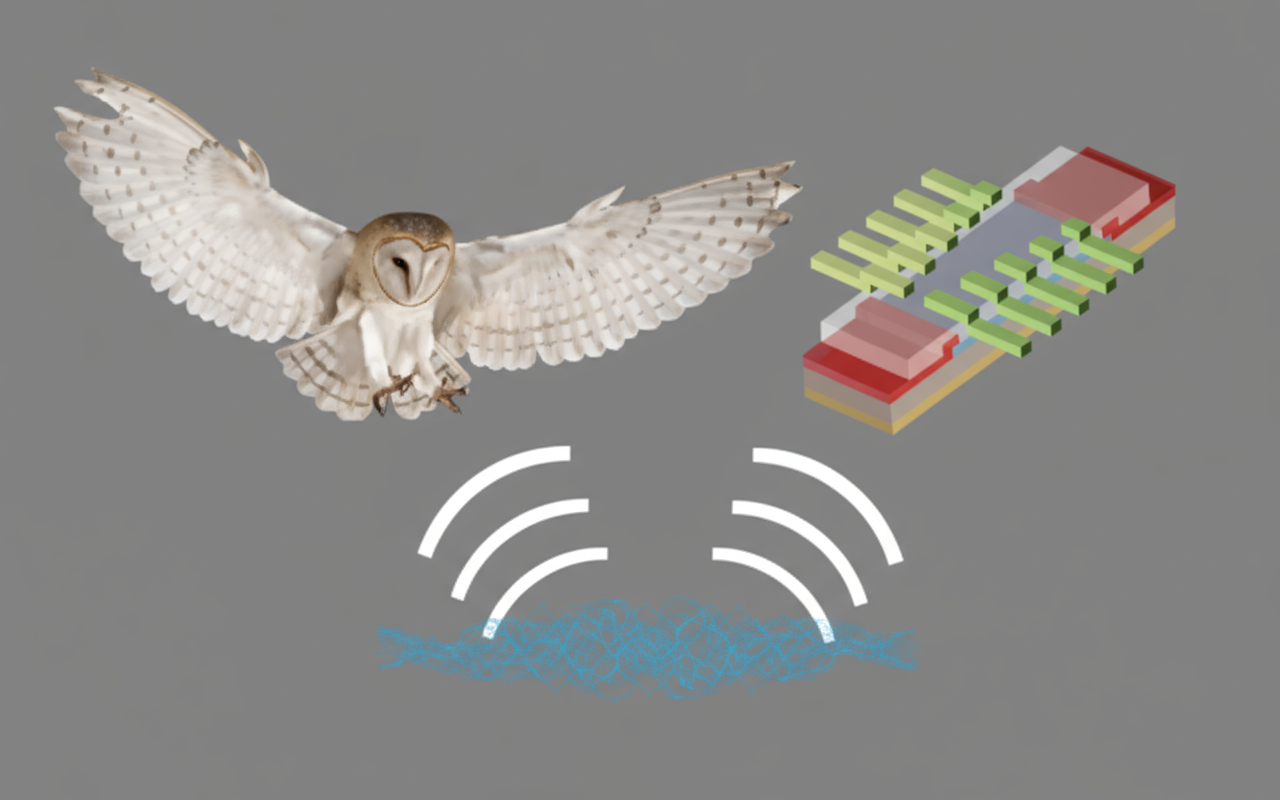
The facial disc structure that gives owls their distinctive appearance serves a critical acoustic function. This concave arrangement of specialized feathers acts as a parabolic sound collector, gathering and focusing sound waves toward the ear openings. High-speed video analysis shows owls can subtly adjust the shape of this facial disc, effectively “aiming” their acoustic reception toward specific sound sources – similar to how a satellite dish can be repositioned to capture different signals. This adjustable sound collection system significantly enhances their ability to isolate prey sounds from background noise.
The extreme sensitivity of owl hearing exceeds human capabilities by orders of magnitude. Scientific measurements demonstrate that some owl species can detect sound intensities approximately 10-100 times fainter than the quietest sounds detectable by human ears. This sensitivity allows them to hear the minuscule sounds produced by prey animals at considerable distances – a mouse’s heartbeat from several meters away or the sound of rodent teeth gnawing on seeds through substantial ground cover.
The frequency range of owl hearing shows interesting specialization for prey detection. While humans hear frequencies between approximately 20 Hz and 20,000 Hz, barn owls can detect sounds between 200 Hz and 12,000 Hz – a narrower overall range but with dramatically enhanced sensitivity within the specific frequencies produced by their prey animals. This specialized frequency detection represents another evolutionary trade-off, sacrificing broader hearing range for extraordinary sensitivity within the most relevant sound spectrum for hunting success.
Brain processing of auditory information represents another remarkable aspect of owl hearing. Approximately 25% of an owl’s midbrain is dedicated to auditory processing, compared to about 4% in humans. This disproportionate allocation demonstrates the evolutionary priority placed on sound processing. The specialized auditory neurons in this enlarged region create detailed acoustic maps allowing owls to maintain continuous spatial awareness of sound sources even when those sounds are brief or intermittent. This neural architecture explains how owls can strike with remarkable accuracy at the exact location where they last heard prey movement, even after complete silence for several seconds.
Laboratory studies measuring owl response to artificial sound sources demonstrate their extraordinary acoustic precision. Barn owls consistently locate sound sources within 1-2 degrees of the actual direction in complete darkness – the equivalent of pinpointing a sound within a circle the size of a quarter from 8 feet away. This precision exceeds what humans can achieve even under ideal conditions and with conscious effort. For owls, this level of acoustic accuracy happens automatically and instantaneously during high-speed hunting approaches.
The combination of these auditory adaptations creates what researchers call “acoustical gaze” – the ability to maintain precise awareness of prey location using sound alone. This capability means owls can successfully hunt in conditions that defeat most other predators: complete darkness, dense fog, heavy vegetation cover, or even prey hidden under snow. When combined with their specialized flight adaptations that we’ll explore next, this creates a hunting system with remarkably few environmental limitations.
Perhaps the most extraordinary aspect of owl hunting involves their specialized feather adaptations that create nearly silent flight. This acoustic stealth represents a remarkable evolutionary achievement, essentially eliminating the sound of air movement over their wings and body that would otherwise alert prey to their approach. The resulting silent flight capability allows owls to maintain their acoustic advantage throughout the final approach and strike phases of hunting.
The leading edge of owl wings features unique serrated feathers unlike those found in any other bird group. These comb-like serrations, called fimbriae, break up the smooth airflow over the wing surface, eliminating the whistling sound typically produced by air passing over a smooth edge. High-speed photography reveals these serrations creating thousands of tiny micro-turbulences that effectively silence the airflow across the entire wing surface. This adaptation represents nature’s solution to the same aerodynamic challenge that military stealth aircraft designers struggle with – how to move through air without creating detectable acoustic signatures.
The trailing edge of owl wings contains another specialized feature: a flexible fringe of soft feathers that further reduces flight noise. This fringe essentially muffles the sound of air flowing off the back of the wing, preventing the formation of noisy vortices that occur in other birds. Aerodynamic testing of owl feathers versus other birds of similar size shows this trailing edge adaptation reduces flight noise by approximately 10-18 decibels – the difference between a normal conversation and a whisper. This noise reduction proves particularly critical during the final moments of an attack when the owl is closest to prey with acute hearing.
The overall surface of owl feathers differs significantly from other birds. Microscopic examination reveals a velvety texture with specialised barbules (small hook-like structures) that dampen sound by absorbing acoustic energy rather than reflecting it. This soft surface effectively absorbs most of the minimal sound created by feathers moving against each other during flight. The acoustic benefit comes with a cost – these specialized feathers require more maintenance and are less water-resistant than the smoother feathers of other birds, demonstrating the evolutionary priority placed on silent flight over other potential advantages.
Flight patterns during hunting approaches show another layer of acoustic strategy. Unlike many birds that maintain constant wingbeat patterns, owls frequently adjust their flight cadence when approaching prey – often shifting to a gliding approach for the final meters before striking. This variable flight pattern minimizes repetitive sounds that might otherwise alert prey to their approach. GPS tracking studies show owls consistently selecting flight paths that take advantage of ambient sounds (like wind through trees) to further mask their approach, suggesting they actively consider the acoustic environment when hunting.
Foot structure complements the silent flight adaptations with specialized features for silent prey capture. Owls possess unusually long legs for their body size, covered with specially adapted feathers that both silence movement and provide insulation during cold weather hunting. Their feet feature reversible outer toes that can rotate forward or backward, allowing different grip configurations depending on prey size and type. This adaptability enables secure capture with minimal struggle, reducing sounds that might alert other nearby prey animals.
The combined result of these adaptations is truly remarkable. Laboratory measurements using highly sensitive microphones have documented owl flight producing sound levels below 20 decibels (comparable to human breathing) at distances where other birds of similar size produce sounds exceeding 40-50 decibels. This 30+ decibel reduction represents an enormous acoustic advantage, essentially making owls acoustically invisible to prey until the moment of contact. For context, each 10-decibel reduction represents a halving of perceived loudness, meaning owl flight registers approximately 1/8th as loud as comparable birds.
Thermal imaging equipment from Pixfra has enabled unprecedented documentation of these silent hunting approaches without disrupting natural behavior. By detecting the heat signatures of both owl and prey, researchers can now observe complete hunting sequences that would be virtually impossible to witness using traditional observation methods, particularly in complete darkness when owls are most active.
Owl hunting techniques show remarkable diversity across different species, reflecting specialized adaptations to particular prey types and habitat conditions. While all owls share core adaptations for nocturnal hunting, their specific tactical approaches reveal fascinating variations that maximize hunting success in their particular ecological niches.
Perch-and-pounce hunting represents the most common owl hunting strategy, employed primarily by woodland and field-edge species like Barred Owls and Great Horned Owls. This method involves selecting elevated observation points with good acoustic and visual coverage of hunting grounds, then waiting patiently until prey is detected. GPS tracking studies show these owls typically maintain a network of 8-15 preferred perches distributed throughout their territory, rotating between them strategically based on prey activity patterns, wind direction (for scent detection), and recent hunting success. The perches typically provide both concealment and clear flight paths to likely prey locations. Once prey is detected, these owls launch with remarkable acceleration – reaching speeds of 20-30 mph within just 2-3 wingbeats.
Quartering flight patterns characterize the hunting approach of open-country specialists like Barn Owls and Short-eared Owls. Rather than hunting from static perches, these species fly continuously along systematic search paths, typically 3-6 feet above ground level. This methodical coverage allows them to bring their exceptional hearing to bear across large open areas where suitable perches might be limited. Thermal imaging studies show these flight patterns aren’t random but highly structured, with owls maintaining precise spacing between search lines to ensure complete acoustic coverage of hunting territories. This active hunting approach requires greater energy expenditure than perch hunting but allows exploitation of prey-rich open habitats where the perch-and-pounce method would be impractical.
Specialized fishing techniques appear in species like Fishing Owls (Ketupa spp.) and occasionally Great Grey Owls. These remarkable adaptations involve detecting fish near water surfaces using a combination of visual identification and subtle surface movement detection. Unlike other owl prey that can be located acoustically, fish require specialized hunting approaches involving precisely timed strikes that penetrate water surfaces with minimal splash. These owl species possess modified talons with specialized scales and spicules that improve grip on slippery prey. Some fishing specialists even have reduced facial discs compared to other owls – a modification that suggests reduced reliance on acoustic hunting in favor of visual detection when targeting aquatic prey.
| Owl Species | Primary Hunting Technique | Peak Activity Hours | Main Prey Types |
|---|---|---|---|
| Barn Owl | Quartering Flight | 10 PM – 2 AM | Small rodents, shrews |
| Great Horned Owl | Perch-and-Pounce | Dusk and Dawn | Medium mammals, birds |
| Northern Saw-whet | Systematic Forest Search | All Night | Mice, small birds |
| Burrowing Owl | Mixed (Ground ambush) | Crepuscular | Insects, small rodents |
| Great Gray Owl | Perch-Pounce + Dive | Variable | Voles, pocket gophers |
Dive techniques used by several northern species like Great Gray and Boreal Owls show remarkable physical capabilities. When hunting prey beneath snow cover, these owls can strike with sufficient force to break through crusted snow surfaces that would support animals weighing 10-15 times more than their prey. High-speed video analysis reveals they achieve this through a combination of precise targeting (hitting with focused force rather than distributed weight) and specialized plunging techniques that maximize impact energy. The dive force generated can exceed 3-4 times their body weight, allowing them to punch through surfaces that would otherwise protect prey from most predators. This specialized technique enables winter hunting success when many other predators struggle to access food sources.
The striking accuracy of hunting owls demonstrates the extraordinary precision of their sensory systems. Research measuring strike precision shows Barn Owls consistently capturing prey within 1-2 centimeters of their intended target point, even in complete darkness. This accuracy reflects the perfect integration of their sensory adaptations with the neural mapping systems that coordinate their physical movements. Perhaps most impressive, this precision occurs during extremely high-speed attacks – with final approaches often exceeding 20-25 mph, requiring calculations that account for both the owl’s movement and potential prey responses.
Seasonal and weather-based variations in hunting techniques demonstrate considerable behavioral flexibility. During heavy rainfall that might dampen their specialized feathers and reduce acoustic efficiency, many owl species shift toward more visually-based hunting methods and target different prey types. Similarly, deep winter snow conditions trigger technique adaptations in northern species, with modifications to striking force and foot placement that maintain hunting success despite challenging environmental conditions. This tactical flexibility extends their hunting capabilities across seasonal extremes that might otherwise limit their effectiveness.
Modern observation technologies have revealed previously unknown hunting behaviors. Thermal equipment from Pixfra has documented cooperative hunting behaviors between mated owl pairs – behaviors rarely observed using traditional methods. These coordinated tactics typically involve one owl deliberately flushing prey toward areas where the partner waits in ambush. While not as complex as the pack hunting strategies seen in some mammals, these cooperative behaviors show more sophisticated coordination than previously attributed to typically solitary owls.
The stable mounting capabilities provided by the Pixfra Rail system have proven invaluable for documenting these varied hunting techniques. The standardized Picatinny interface ensures compatible mounting with various observation devices, allowing extended monitoring sessions that capture the full range of hunting behaviors across different conditions and seasons.
The dietary patterns of hunting owls reveal fascinating ecological relationships and hunting specializations. While popular imagination often associates owls primarily with mice, their actual prey selection shows remarkable diversity across species, with dietary compositions that reflect both evolutionary adaptations and tactical hunting opportunities.
Small mammal specialization represents the core dietary focus for most temperate zone owls, with rodents constituting 60-90% of prey items for species like Barn Owls, Great Gray Owls, and Long-eared Owls. This specialization makes ecological sense – small mammals represent the most abundant and reliable nocturnal prey base in most terrestrial ecosystems. The high reproductive rates and year-round activity patterns of many rodent species provide consistent food sources even when other prey might be seasonally limited. Analysis of owl pellets (regurgitated indigestible remains) shows remarkable diversity within this category, with some specialists like Barn Owls documented consuming over 30 different rodent species across their range.
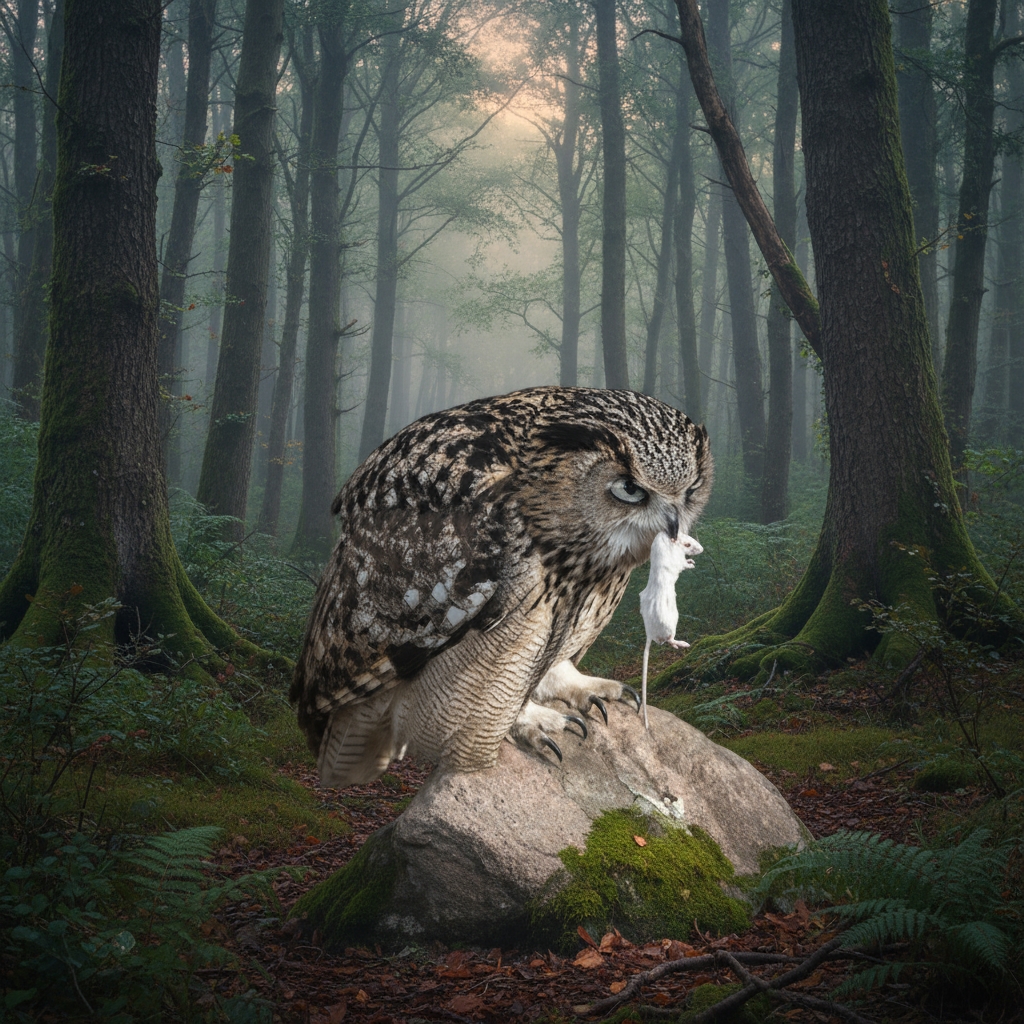
Bird predation features prominently in the diets of several larger owl species, particularly Great Horned Owls and Eurasian Eagle Owls. These powerful hunters regularly target sleeping birds, with hunting patterns that specifically exploit the vulnerability of roosting prey. Research using GPS tracking collars shows these owls systematically checking known bird roosting sites during their nightly hunting circuits, with particular focus on communal roosts that concentrate potential prey. Their powerful talons allow them to capture birds up to their own body weight, including other raptors like hawks and smaller owl species. This bird predation capability significantly expands their potential prey base beyond what’s available to strict mammal specialists.
Insect consumption plays a surprisingly important role for many owl species, particularly during summer months when insects reach peak abundance. Small owl specialists like Elf Owls and Screech Owls may derive 70-80% of their summer diet from large insects like moths, beetles, and grasshoppers. Even larger species that primarily target vertebrates often opportunistically consume substantial insect biomass when available. This dietary flexibility allows exploitation of seasonally abundant food sources while maintaining hunting skills for larger prey. The smallest owl species may consume hundreds of individual insects nightly during peak abundance periods.
Amphibian and reptile predation becomes significant in the diets of many tropical and subtropical owl species, with frogs, lizards, and snakes featuring prominently in dietary analyses. Species like the Spectacled Owl of Central and South America show specific hunting adaptations for capturing tree frogs and arboreal lizards from vegetation surfaces. The Australian Powerful Owl includes a high percentage of arboreal reptiles in its diet. These prey types provide important protein sources in ecosystems where mammal diversity or abundance might be lower than in temperate regions.
Specialized diet components appear in several owl species with unique hunting adaptations. The cave-dwelling Oilbird (technically not a true owl but a nightbird with convergent adaptations) specializes in fruit consumption despite hunting nocturnally. Several fishing owl species target aquatic prey almost exclusively. The Pel’s Fishing Owl of Africa shows extreme specialization, with fish constituting over 90% of its diet, while the Blakiston’s Fish Owl of Asia includes significant percentages of aquatic invertebrates like crabs alongside fish prey. These specialized diets reflect both habitat adaptations and reduced competition by exploiting prey types that most other owls ignore.
Seasonal dietary shifts demonstrate remarkable flexibility across many owl species. Great Horned Owls show substantial seasonal variation, with mammal consumption peaking during winter months when other prey is limited, then diversifying to include more birds, reptiles, and even insects during spring and summer. These shifts reflect both changing prey availability and the energetic demands of breeding seasons when provisioning nestlings requires maximizing overall food acquisition rather than specializing on preferred prey that might be limited in availability.
“Owl dietary analysis reveals not just what they eat, but how ecosystems function at night. Their pellets provide snapshots of nocturnal biodiversity otherwise invisible to researchers. When we study what owls hunt, we’re essentially using them as ecological sampling tools that reveal entire communities of nocturnal animals that would be extraordinarily difficult to document using traditional survey methods.” – Dr. Marcus Rodriguez, Nocturnal Ecology Research Center
Unusual prey items documented in owl diets demonstrate their opportunistic hunting capabilities. Great Horned Owls have been recorded taking prey as diverse as skunks, domestic cats, and even young foxes – animals that themselves are typically predators rather than prey. Barn Owls occasionally capture bats in flight, demonstrating remarkable interception capabilities against extremely agile prey. These unusual items rarely constitute significant dietary percentages but highlight the adaptability and hunting prowess that allows owls to exploit situational opportunities despite their specializations.
Geographic variations in owl diets reflect local prey availability and ecological conditions. The same owl species often shows dramatically different dietary compositions across different portions of its range. For example, Barn Owl diets in coastal regions may include up to 15-20% shorebirds and waterfowl, while individuals just 50 miles inland might consume 95%+ rodents. These regional adaptations demonstrate considerable behavioral flexibility that maximizes hunting success across diverse habitat conditions despite consistent hunting method specializations.
Witnessing owl hunting in its full nocturnal glory represents one of wildlife observation’s greatest challenges. The combination of darkness, owl stealth, and the brief, explosive nature of their attacks means that traditional observation methods capture only fragments of their true hunting behavior. Modern technology has revolutionized this field, creating unprecedented opportunities to witness and document complete owl hunting sequences without disturbing natural behaviors.
Thermal imaging technology represents the single most significant advancement for nocturnal owl observation. Unlike traditional night vision that requires some ambient light source, thermal devices detect the heat signatures of animals directly, allowing observation in complete darkness, through light vegetation, and even in adverse weather conditions like fog or light rain. High-quality thermal imaging equipment like that from Pixfra can detect owl-sized heat signatures at distances exceeding 500 yards under optimal conditions, providing unprecedented observation opportunities while maintaining distances that don’t influence natural behavior.
The non-invasive nature of thermal observation represents its greatest advantage for owl research. Unlike traditional wildlife viewing methods that often require lights or close approaches, thermal observation allows completely passive monitoring without alerting owls to human presence. This technology reveals truly natural behaviors rather than reactions to human disturbance. For enthusiasts interested in this approach, the Sistema di montaggio su binario Pixfra provides stable mounting options for extended observation sessions without the fatigue of hand-holding equipment.
Location selection dramatically influences successful owl observation. Studies of owl movement patterns identify several high-probability locations for witnessing natural hunting sequences:
When selecting observation positions, maintaining awareness of wind direction proves essential, as owls’ excellent sense of smell can detect human scent if positioned downwind. Situating yourself with wind carrying your scent away from likely owl approach directions significantly improves observation opportunities without influencing natural behavior.
Equipment stabilization represents another critical factor for successful observation, particularly when using high-magnification thermal devices at extended distances. Hand-holding thermal optics becomes impractical during extended observation sessions, leading to missed opportunities during crucial hunting moments. The Sistema di montaggio su binario Pixfra provides a stable platform compatible with various observation devices through its standardized Picatinny interface, enabling hours of comfortable observation without the fatigue that would otherwise limit viewing sessions.
Seasonal timing significantly impacts observation success rates. Owl hunting activity doesn’t distribute evenly throughout the year but concentrates during specific seasonal windows. For most temperate zone species, late winter represents the peak period for observing hunting behavior, as breeding season approaches and territories are actively defended. This period combines increased hunting activity with slightly longer daylight that helps locate likely observation areas before complete darkness. Spring brings another excellent observation window when adults must hunt intensively to feed growing nestlings, often making more hunting attempts within smaller geographic areas around nest sites.
The ethical considerations for owl observation deserve careful attention. The fundamental principle should always be non-disturbance – if your presence alters natural behavior patterns, you’re too close or otherwise detectable. Responsible observation practices include:
Remember that habituating owls to human presence, even for observation purposes, can create dangerous situations for both owls and other humans who may encounter them later. Thermal technology’s greatest advantage may be allowing observation without habituation risks that come with repeated detection.
Audio recording technology provides another valuable dimension for owl observation, documenting vocalizations and hunting sounds typically inaudible at normal observation distances. Specialized parabolic microphones or wildlife-specific recording systems can capture the subtle sounds of owl movements and prey capture events that would otherwise remain undetected. When synchronized with thermal video documentation, these recordings create comprehensive records of hunting behaviors that span multiple sensory dimensions.
Remote camera technologies offer another approach to owl observation, particularly for monitoring regular perching or nesting locations. Modern trail cameras with no-glow infrared flash systems can document owl activities without visible light that might disturb natural behavior. The latest systems include cellular connectivity that transmits images in real-time, allowing observers to monitor activity without repeatedly visiting sites and leaving human scent that might alter owl behavior patterns.
The specialized adaptations that make owls such extraordinary night hunters also create unique vulnerabilities to environmental changes and human activities. Understanding these conservation challenges helps ensure these remarkable predators can continue their ecological roles and provides context for appreciating their specialized hunting adaptations.
Habitat loss represents the most significant threat to owl populations globally. The specialized hunting requirements of many owl species mean they cannot simply relocate to any available woodland or field when their preferred habitats disappear. Species like the Spotted Owl require large contiguous tracts of old-growth forest with specific structural characteristics that support both their hunting techniques and prey base. Research tracking owl territory abandonment shows direct correlations with habitat fragmentation thresholds – many species cannot maintain viable populations when their habitat becomes fragmented below certain patch sizes, even if the total habitat area remains substantial.
Light pollution creates a growing threat specifically targeting nocturnal hunters. Artificial lighting disrupts natural darkness in expanding areas worldwide, interfering with owl hunting in multiple ways. Direct illumination of hunting areas can eliminate the sensory advantages owls depend on, while diffuse sky glow affects prey behavior and activity patterns. Studies measuring hunting success rates under different artificial lighting conditions show some owl species experience 35-50% reductions in prey capture rates in areas with significant light pollution. Unlike habitat loss that creates obvious population impacts, light pollution often produces subtle sub-lethal effects that gradually reduce reproductive success and population viability.
Rodenticide poisoning has emerged as a particularly insidious threat to owls worldwide. As specialized predators of rodents, owls consume prey that has ingested poison, creating secondary poisoning effects that have decimated populations in some regions. Research analyzing tissues from dead owls in suburban and agricultural areas shows alarming prevalence of anticoagulant rodenticide compounds, with studies in California documenting these compounds in 70-90% of owls tested. These poisons cause internal hemorrhaging, reduced hunting efficiency through impaired coordination, and ultimately death. The compounds persist in owl tissues for months, gradually accumulating with each poisoned prey item consumed.
Vehicle collisions cause significant owl mortality, particularly among species that hunt along roadside verges where small mammal populations often concentrate. Road design features like vegetated medians create artificial hunting corridors that attract owls while simultaneously exposing them to traffic hazards. Species with hunting styles involving low quartering flight, like Barn Owls and Short-eared Owls, suffer particularly high mortality rates. GPS tracking studies in the UK documented 40-55% of tracked Barn Owls dying from vehicle collisions within their first year, highlighting the magnitude of this threat in developed landscapes.
Climate change affects owl populations through multiple mechanisms, many specifically impacting their specialized hunting capabilities. Changing precipitation patterns alter prey abundance and activity, while temperature shifts affect both prey distribution and the timing of owl breeding relative to peak prey availability. Species with highly specialized prey relationships face particular challenges as climate disruptions cascade through food webs. Northern species that hunt through snow, like Great Gray Owls, face additional challenges as snow conditions become less predictable, affecting both their hunting success and the insulative properties of snow that their prey depend on for winter survival.
Conservation solutions specific to owl hunting needs have shown promising results when properly implemented. These include:
These targeted conservation approaches recognize the specialized nature of owl hunting adaptations and seek to preserve the conditions they require rather than simply protecting generic habitat area.
Public education about owl ecology plays a crucial role in conservation efforts. While many people appreciate owls aesthetically, fewer understand their ecological importance and specific conservation needs. Thermal imaging technology from companies like Pixfra has created new opportunities for public engagement, allowing people to witness the extraordinary hunting capabilities of owls without disturbing natural behaviors. These education opportunities build broader support for conservation initiatives that might otherwise lack public understanding or support.
The ecological consequences of owl population declines extend far beyond the birds themselves. As top nocturnal predators, owls exert controlling influences on numerous prey species, creating ripple effects throughout ecosystems when their populations decline. Research in areas where owl populations have been experimentally removed shows significant changes in rodent behavior, plant community composition, and disease prevalence – demonstrating the keystone role these predators play in maintaining ecological balance.
How can owls see in complete darkness?
They can’t actually see in complete darkness – but they don’t need to! While owls have incredible night vision (5-10 times better than humans in low light), their true superpower is their asymmetrical ears. One ear sits higher on their skull than the other, allowing them to triangulate prey location with astonishing precision using sound alone. This 3D acoustic mapping is so accurate that Great Gray Owls can locate and catch mice running beneath 18 inches of snow without seeing them at all. Their specialized facial disc feathers function like a satellite dish, collecting and focusing sound waves toward their ear openings. When combined with their exceptional night vision that can function in moonlight or starlight, this multi-sensory hunting system works in conditions that would leave most predators completely helpless. Modern thermal imaging equipment from Pixfra works similarly, detecting prey heat signatures that would be invisible to both human eyes and traditional night vision systems.
Why is owl flight completely silent?
Owl flight represents nature’s perfect stealth technology through three specialized feather adaptations. First, their leading wing edges have unique comb-like serrations (called fimbriae) that break up airflow and eliminate the whistling sound other birds create. Second, their trailing wing edges have soft flexible fringes that prevent noisy vortices as air flows off their wings. Finally, their overall feather surface has a velvet-like microstructure that absorbs rather than reflects sound. Laboratory measurements show owl flight produces sounds below 20 decibels (quieter than human breathing) compared to 40-50 decibels for similar-sized birds – a difference that makes them effectively acoustically invisible to prey with sensitive hearing. This silent flight capability provides their critical final approach advantage, allowing them to maintain their hearing advantage throughout the entire hunting sequence. The specialized feathers require more maintenance and provide less water resistance than other birds’ feathers, showing the evolutionary priority placed on silent hunting over other potential advantages.
What makes owls more efficient night hunters than other predators?
Owls achieve night hunting success rates up to 80% in ideal conditions – dramatically higher than most mammalian predators’ 10-20% success rates – through the perfect integration of specialized adaptations. Their exceptional hearing can detect a mouse heartbeat from several meters away, while their silent flight prevents prey from detecting their approach. Unlike many predators that must chase prey, owls employ precision strike hunting – capturing prey with a single deadly accurate attack rather than energy-intensive pursuits. Their specialized foot structure, with two toes pointing forward and two backward (unique among birds), creates a remarkably effective gripping mechanism that immediately immobilizes prey upon impact. Most impressively, these adaptations work in concert rather than independently – creating a hunting system that functions across varied conditions from moonlit nights (where vision dominates) to complete darkness under dense canopy (where hearing becomes primary). This multi-sensory flexibility allows successful hunting in conditions that would defeat most other predators.
How far can owls detect prey at night?
Owl prey detection distances vary dramatically depending on conditions and sensory methods used. Their visual system can detect small rodent movement up to 150-300 feet away under moderate moonlight, while their acoustic system can pinpoint prey sounds at distances of 75-100 feet in quiet conditions. Most impressively, their olfactory capabilities (often overlooked) can detect concentrations of rodent scent from distances exceeding 150 feet when wind conditions are favorable. Research using controlled sound sources shows Barn Owls consistently locate penny-sized sound sources in complete darkness with 1-2 degree accuracy – equivalent to targeting a mouse-sized object within a quarter-sized area from 25 feet away. This multi-sensory detection capability explains how owls maintain hunting effectiveness across dramatically different environmental conditions. For wildlife observers, thermal imaging equipment from Pixfra provides similar detection capabilities, allowing observation of complete hunting sequences without disrupting natural behaviors with visible light that would alter both owl and prey behavior.
Do all owls hunt using the same methods at night?
No – owl hunting techniques vary dramatically between species, reflecting specialized adaptations to particular habitats and prey types. Woodland specialists like Barred Owls typically employ perch-and-pounce techniques, systematically moving between elevated hunting posts until they detect prey below. Open-country specialists like Barn Owls use quartering flight patterns, flying methodically back and forth across fields while using their exceptional hearing to detect prey. Northern specialists like Great Gray Owls employ plunge-diving techniques that allow them to break through snow crust to capture hidden prey. Small owl specialists like Screech Owls often use systematic searching behaviors in dense vegetation, moving deliberately through complex habitats while listening intently for prey movements. These specialized techniques allow different owl species to partition hunting resources within the same general areas, reducing direct competition. The specialized mounting systems from Pixfra Rail allow wildlife observers to document these varied hunting techniques through stable positioning of thermal equipment during extended observation periods, revealing behavioral details previously invisible to researchers.