














Detecting Hidden Moisture & Mold Risk Behind Drywall with Thermal
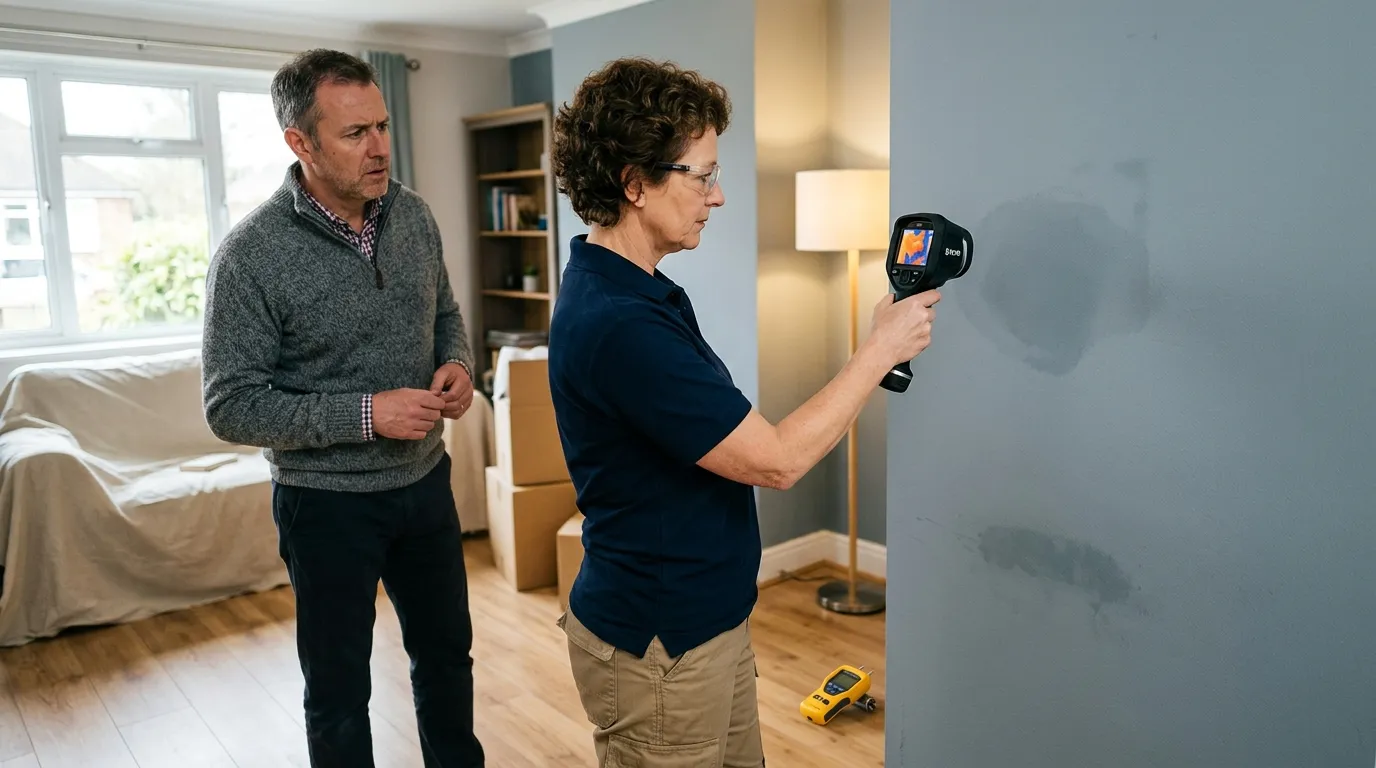
Detecting hidden moisture & mold risk behind drywall with thermal helps spot evaporative cooling patterns so you can target wet studs before opening walls.
Detecting hidden moisture & mold risk behind drywall with thermal helps spot evaporative cooling patterns so you can target wet studs before opening walls.

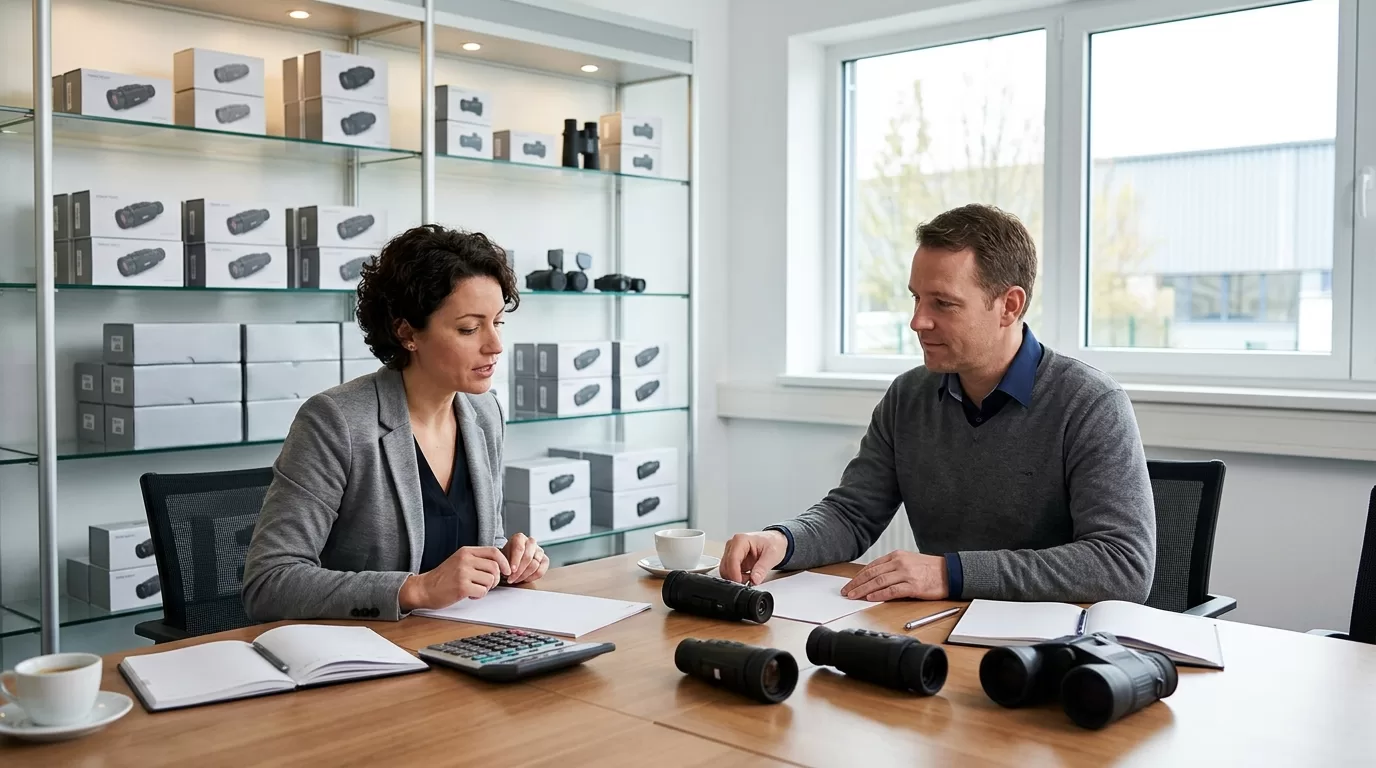
Net 30, deposits & payment terms in the optics trade usually mean one thing: established dealers may receive 30-day invoice terms, while new buyers often pay a deposit or full prepayment until trust, order history, and credit references are proven. In thermal imaging, night vision, riflescopes, binoculars, and rangefinding optics, payment terms are really a cash-flow agreement between two businesses that both carry expensive inventory. Optics Trade Payment Terms Benchmarks Net 30 means the buyer pays the invoice within 30 calendar days after the invoice date; deposits reduce supplier risk before production or shipment. In the optics trade, new dealers commonly start with 30% to 50% deposits, prepaid first orders, or credit-card payment before graduating to Net 30 after several clean transactions. Pixfra thermal optics dealer reviewing Net 30 deposits and payment terms benchmarks A new retailer wants twelve thermal monoculars before deer season. The supplier wants to protect inventory that may cost hundreds or thousands of dollars per unit. Both sides are being reasonable. The tension starts when the retailer expects Net 30 on the first order and the supplier sees an untested account with no payment history. Here’s a practical baseline: Buyer situation Common payment term Why suppliers use it First order, small dealer Prepay or 50% deposit No trade history yet Repeat dealer, clean record Net 15 or Net 30 Lower collection risk Large distributor Net 30 to Net 60 Volume offsets risk Custom OEM optics 30% deposit, 70% before shipment Production cash is tied up early Private-label thermal device Milestone payments Tooling, firmware, packaging, and certification add risk Net 60 and Net 90 do exist, especially with large retailers and government-linked purchasing. Smaller optics dealers shouldn’t treat them as normal starting terms. A two-store outdoor retailer asking for Net 90 on a first $18,000 thermal order
If you run a farm or ranch in the U.S., you already know that losses don’t just happen during the day. Predators, sick livestock, broken fences, and trespassers do their worst after dark. A thermal monocular puts eyes on your entire operation at night — and the return on that one purchase can be staggering. We built this case study at Pixfra to show you the actual numbers. What Farmers Lose Without Thermal Imaging Let’s start with what’s eating into your bottom line right now. Feral hogs alone are a persistent and costly threat to U.S. crop and livestock production, inflicting over $1.6 billion in damages annually. That’s not some abstract government number — it’s real money disappearing from farms across the South and West every single year. In Texas alone, the cost of feral hog-related agricultural damage exceeded $871 million in a single year. And hogs are just part of the picture. Collectively, predator attacks — led by coyotes — cost ranchers about $232 million per year in lost animals, with coyotes responsible for well over half of all livestock losses to predators nationwide. If you’re running cattle, sheep, or goats, something out there is costing you money every night you can’t see what’s happening on your land. The damage goes beyond dead animals. Feral hogs caused an estimated $375 million in property damage in 2020 alone across 13 states, including damage to fencing, waterers, feed and hay storage, pasture roads, erosion infrastructure, and working facilities. In 2021, producers spent $474 million and over 17 million labor hours on hog control. That’s time you’re not spending on production, breeding, or anything else that actually grows your revenue. And here’s the kicker: it’s estimated that a single feral hog can cause $500 worth of damage to fields and pastures. Multiply
Shooting past 300 yards in total darkness is a different game. You need a thermal scope that can detect, identify, and help you hit targets at distance — not just show you a glowing blob. At Pixfra, we build thermal imaging devices used by hunters across 30+ countries, and we know what separates a real long-range thermal scope from a spec-sheet wonder. What Makes a Thermal Scope Good for Long-Range Shooting Not every thermal scope can handle long-range work. A scope that performs well at 100 yards might turn into a blurry mess at 400. If you plan to reach out past 300 yards at night — whether you’re hunting coyotes across open fields, running hog eradication on ranch land, or just want confidence at distance — you need to pay attention to a few specific things before you spend a dime. The first thing to look at is sensor resolution. This is the number of pixels your thermal sensor uses to build the image you see through the eyepiece. If your shots stay within 100–150 meters, a 384×288 sensor will often suffice. If you’re shooting 250+ meters, go for a higher-resolution sensor (640×480 or 1024×768) and better thermal sensitivity (<20 mK NETD). A higher pixel count means the animal you’re looking at is rendered by more pixels on the screen, which lets you see ears, legs, body posture, and movement — all details you need for positive target ID before pulling the trigger. If you look at a coyote at 400 yards through a 256-resolution sensor, the animal might only be rendered by 4 or 5 pixels — it will look like a blurry Lego brick. With a 640×512 sensor, that same coyote is rendered by dozens of pixels. That’s a night-and-day difference when it comes to making an
If you need to negotiate MOQ with a thermal optics manufacturer, start by reducing the manufacturer’s production risk, then trade something concrete: deposit, forecast, standard packaging, or a dated reorder. MOQ changes when you ask for a 640×512 detector, a 35 mm lens, app changes, reticle presets, private-label packaging, or compliance paperwork for a U.S. sales channel. The first job is to find which part of your request is setting the floor. A new buyer often asks the wrong question: “Can you do 20 units?” A stronger question is: “Which requirement makes the MOQ 300, and what changes would make a 50-unit pilot workable?” MOQ Negotiation Steps 1. Ask which cost sets the MOQ: sensor, lens, tooling, packaging, or compliance. 2. Keep first order on standard hardware, firmware, and carton. 3. Pay for samples, engineering, and inspection instead of asking the factory to absorb them. 4. Split commitment into pilot order plus dated reorder. 5. Trade lower MOQ for deposit, shared packaging, simple SKU mix, and clear forecast. negotiate moq with a thermal optics manu — moq negotiation steps Thermal optics MOQs are built from setup costs. Detector purchasing, lens assembly, waterproof housing checks, firmware loading, image calibration, and packaging print runs all create small minimums inside the bigger MOQ. A 384×288 thermal monocular in a standard housing might hit one factory threshold; the same unit with a branded startup screen, U.S. carton, custom manual, and changed Wi-Fi app can hit four. The best way to negotiate MOQ with a thermal optics manufacturer is to turn “small order” into a low-risk production plan. Say what you’ll keep standard. Say what you’ll pay for. Give the supplier a real reorder window, such as “80 units now, 220 units within 90 days if field testing passes.” Factory answer Better buyer question Possible

Zertifizierungen für thermische Optiken, die Käufer einfordern sollten, sind die FCC-Zertifizierung für die Einhaltung der US-amerikanischen Funkfrequenzvorschriften, die CE-Kennzeichnung für den Zugang zum EWR-Markt und die RoHS-Konformität zur Kontrolle gefährlicher Stoffe in elektronischen Bauteilen. Fragen Sie vor der Bestellung nach modellspezifischen Zertifikaten, Konformitätserklärungen, Prüfberichten, Etikettenvorlagen und dem Text des Handbuchs, denn ein Logo auf einer Katalogseite schützt einen Händler nicht, wenn der Zoll, Amazon, ein Distributor oder ein Einzelhändler Nachweise verlangt. Zertifizierungen, die Käufer verlangen sollten Die Zertifizierungen für thermische Optik, die Käufer verlangen sollten, sind der FCC-Zulassungsnachweis für den Verkauf in den Vereinigten Staaten, eine CE-Konformitätserklärung für den Verkauf im EWR und der RoHS-Nachweis zur Kontrolle gefährlicher Stoffe in elektronischen Bauteilen. Gleichen Sie jedes Dokument vor der Anzahlung genau mit der SKU, der Firmware-/Funkkonfiguration, dem Etikett und der Bedienungsanleitung ab. Zertifizierungen für Wärmebildgeräte, die Käufer einfordern sollten – Zertifizierungen, die Käufer einfordern sollten: Beginnen Sie mit dem Absatzmarkt und arbeiten Sie sich dann rückwärts vor. Ein US-Händler, der ein Pixfra Mile 2 PFI-M625 an Jäger verkauft, benötigt einen FCC-Nachweis. Ein deutscher Distributor wird CE- und RoHS-Unterlagen verlangen. Ein Marktplatzverkäufer könnte beide Unterlagen verlangen, da ein einziges Angebot letztendlich Käufer in mehreren Ländern bedienen kann. Hier werden preisgünstige Wärmebildgeräte teuer. Ein Rabatt von $60 pro Einheit sieht gut aus – bis 200 Einheiten im Lager liegen bleiben, weil die FCC-ID nicht mit dem Produktetikett übereinstimmt oder die CE-Konformitätserklärung eine generische “Wärmebildkamera” ohne Modellcodes aufführt. Käufer bemerken das. Händler bemerken es noch schneller. Nachweis Fordern Sie dies an, wenn Sie nach einer FCC-Zulassung fragen – ein Warnsignal. Verkauf oder Vermarktung in den Vereinigten Staaten: FCC-ID oder Konformitätserklärung des Lieferanten, Teil-15-Bericht, Erklärung im Handbuch “FCC ausstehend” oder ein Bericht für eine andere Kamera CE-Konformitätserklärung Verkauf im Europäischen Wirtschaftsraum EU-Konformitätserklärung, geltende Richtlinien, Normen, Modellliste Nur CE-Logo, keine unterzeichnete Erklärung RoHS-Nachweis Verkauf von Elektronik über EU-gebundene Kanäle RoHS-Erklärung, Materialnachweis, Abdeckung des Zubehörs Der Bericht deckt nur ein Kabel ab
Detecting hidden moisture & mold risk behind drywall with thermal helps spot evaporative cooling patterns so you can target wet studs before opening walls.
Net 30, deposits & payment terms in the optics trade usually mean one thing: established dealers may receive 30-day invoice terms, while new buyers often pay a deposit or full prepayment until trust, order history, and credit references are proven. In thermal imaging, night vision, riflescopes, binoculars, and rangefinding optics, payment terms are really a cash-flow agreement between two businesses that both carry expensive inventory. Optics Trade Payment Terms Benchmarks Net 30 means the buyer pays the invoice within 30 calendar days after the invoice date; deposits reduce supplier risk before production or shipment. In the optics trade, new dealers commonly start with 30% to 50% deposits, prepaid first orders, or credit-card payment before graduating to Net 30 after several clean transactions. Pixfra thermal optics dealer reviewing Net 30 deposits and payment terms benchmarks A new retailer wants twelve thermal monoculars before deer season. The supplier wants to protect inventory that may cost hundreds or thousands of dollars per unit. Both sides are being reasonable. The tension starts when the retailer expects Net 30 on the first order and the supplier sees an untested account with no payment history. Here’s a practical baseline: Buyer situation Common payment term Why suppliers use it First order, small dealer Prepay or 50% deposit No trade history yet Repeat dealer, clean record Net 15 or Net 30 Lower collection risk Large distributor Net 30 to Net 60 Volume offsets risk Custom OEM optics 30% deposit, 70% before shipment Production cash is tied up early Private-label thermal device Milestone payments Tooling, firmware, packaging, and certification add risk Net 60 and Net 90 do exist, especially with large retailers and government-linked purchasing. Smaller optics dealers shouldn’t treat them as normal starting terms. A two-store outdoor retailer asking for Net 90 on a first $18,000 thermal order
If you run a farm or ranch in the U.S., you already know that losses don’t just happen during the day. Predators, sick livestock, broken fences, and trespassers do their worst after dark. A thermal monocular puts eyes on your entire operation at night — and the return on that one purchase can be staggering. We built this case study at Pixfra to show you the actual numbers. What Farmers Lose Without Thermal Imaging Let’s start with what’s eating into your bottom line right now. Feral hogs alone are a persistent and costly threat to U.S. crop and livestock production, inflicting over $1.6 billion in damages annually. That’s not some abstract government number — it’s real money disappearing from farms across the South and West every single year. In Texas alone, the cost of feral hog-related agricultural damage exceeded $871 million in a single year. And hogs are just part of the picture. Collectively, predator attacks — led by coyotes — cost ranchers about $232 million per year in lost animals, with coyotes responsible for well over half of all livestock losses to predators nationwide. If you’re running cattle, sheep, or goats, something out there is costing you money every night you can’t see what’s happening on your land. The damage goes beyond dead animals. Feral hogs caused an estimated $375 million in property damage in 2020 alone across 13 states, including damage to fencing, waterers, feed and hay storage, pasture roads, erosion infrastructure, and working facilities. In 2021, producers spent $474 million and over 17 million labor hours on hog control. That’s time you’re not spending on production, breeding, or anything else that actually grows your revenue. And here’s the kicker: it’s estimated that a single feral hog can cause $500 worth of damage to fields and pastures. Multiply
Shooting past 300 yards in total darkness is a different game. You need a thermal scope that can detect, identify, and help you hit targets at distance — not just show you a glowing blob. At Pixfra, we build thermal imaging devices used by hunters across 30+ countries, and we know what separates a real long-range thermal scope from a spec-sheet wonder. What Makes a Thermal Scope Good for Long-Range Shooting Not every thermal scope can handle long-range work. A scope that performs well at 100 yards might turn into a blurry mess at 400. If you plan to reach out past 300 yards at night — whether you’re hunting coyotes across open fields, running hog eradication on ranch land, or just want confidence at distance — you need to pay attention to a few specific things before you spend a dime. The first thing to look at is sensor resolution. This is the number of pixels your thermal sensor uses to build the image you see through the eyepiece. If your shots stay within 100–150 meters, a 384×288 sensor will often suffice. If you’re shooting 250+ meters, go for a higher-resolution sensor (640×480 or 1024×768) and better thermal sensitivity (<20 mK NETD). A higher pixel count means the animal you’re looking at is rendered by more pixels on the screen, which lets you see ears, legs, body posture, and movement — all details you need for positive target ID before pulling the trigger. If you look at a coyote at 400 yards through a 256-resolution sensor, the animal might only be rendered by 4 or 5 pixels — it will look like a blurry Lego brick. With a 640×512 sensor, that same coyote is rendered by dozens of pixels. That’s a night-and-day difference when it comes to making an
If you need to negotiate MOQ with a thermal optics manufacturer, start by reducing the manufacturer’s production risk, then trade something concrete: deposit, forecast, standard packaging, or a dated reorder. MOQ changes when you ask for a 640×512 detector, a 35 mm lens, app changes, reticle presets, private-label packaging, or compliance paperwork for a U.S. sales channel. The first job is to find which part of your request is setting the floor. A new buyer often asks the wrong question: “Can you do 20 units?” A stronger question is: “Which requirement makes the MOQ 300, and what changes would make a 50-unit pilot workable?” MOQ Negotiation Steps 1. Ask which cost sets the MOQ: sensor, lens, tooling, packaging, or compliance. 2. Keep first order on standard hardware, firmware, and carton. 3. Pay for samples, engineering, and inspection instead of asking the factory to absorb them. 4. Split commitment into pilot order plus dated reorder. 5. Trade lower MOQ for deposit, shared packaging, simple SKU mix, and clear forecast. negotiate moq with a thermal optics manu — moq negotiation steps Thermal optics MOQs are built from setup costs. Detector purchasing, lens assembly, waterproof housing checks, firmware loading, image calibration, and packaging print runs all create small minimums inside the bigger MOQ. A 384×288 thermal monocular in a standard housing might hit one factory threshold; the same unit with a branded startup screen, U.S. carton, custom manual, and changed Wi-Fi app can hit four. The best way to negotiate MOQ with a thermal optics manufacturer is to turn “small order” into a low-risk production plan. Say what you’ll keep standard. Say what you’ll pay for. Give the supplier a real reorder window, such as “80 units now, 220 units within 90 days if field testing passes.” Factory answer Better buyer question Possible
Zertifizierungen für thermische Optiken, die Käufer einfordern sollten, sind die FCC-Zertifizierung für die Einhaltung der US-amerikanischen Funkfrequenzvorschriften, die CE-Kennzeichnung für den Zugang zum EWR-Markt und die RoHS-Konformität zur Kontrolle gefährlicher Stoffe in elektronischen Bauteilen. Fragen Sie vor der Bestellung nach modellspezifischen Zertifikaten, Konformitätserklärungen, Prüfberichten, Etikettenvorlagen und dem Text des Handbuchs, denn ein Logo auf einer Katalogseite schützt einen Händler nicht, wenn der Zoll, Amazon, ein Distributor oder ein Einzelhändler Nachweise verlangt. Zertifizierungen, die Käufer verlangen sollten Die Zertifizierungen für thermische Optik, die Käufer verlangen sollten, sind der FCC-Zulassungsnachweis für den Verkauf in den Vereinigten Staaten, eine CE-Konformitätserklärung für den Verkauf im EWR und der RoHS-Nachweis zur Kontrolle gefährlicher Stoffe in elektronischen Bauteilen. Gleichen Sie jedes Dokument vor der Anzahlung genau mit der SKU, der Firmware-/Funkkonfiguration, dem Etikett und der Bedienungsanleitung ab. Zertifizierungen für Wärmebildgeräte, die Käufer einfordern sollten – Zertifizierungen, die Käufer einfordern sollten: Beginnen Sie mit dem Absatzmarkt und arbeiten Sie sich dann rückwärts vor. Ein US-Händler, der ein Pixfra Mile 2 PFI-M625 an Jäger verkauft, benötigt einen FCC-Nachweis. Ein deutscher Distributor wird CE- und RoHS-Unterlagen verlangen. Ein Marktplatzverkäufer könnte beide Unterlagen verlangen, da ein einziges Angebot letztendlich Käufer in mehreren Ländern bedienen kann. Hier werden preisgünstige Wärmebildgeräte teuer. Ein Rabatt von $60 pro Einheit sieht gut aus – bis 200 Einheiten im Lager liegen bleiben, weil die FCC-ID nicht mit dem Produktetikett übereinstimmt oder die CE-Konformitätserklärung eine generische “Wärmebildkamera” ohne Modellcodes aufführt. Käufer bemerken das. Händler bemerken es noch schneller. Nachweis Fordern Sie dies an, wenn Sie nach einer FCC-Zulassung fragen – ein Warnsignal. Verkauf oder Vermarktung in den Vereinigten Staaten: FCC-ID oder Konformitätserklärung des Lieferanten, Teil-15-Bericht, Erklärung im Handbuch “FCC ausstehend” oder ein Bericht für eine andere Kamera CE-Konformitätserklärung Verkauf im Europäischen Wirtschaftsraum EU-Konformitätserklärung, geltende Richtlinien, Normen, Modellliste Nur CE-Logo, keine unterzeichnete Erklärung RoHS-Nachweis Verkauf von Elektronik über EU-gebundene Kanäle RoHS-Erklärung, Materialnachweis, Abdeckung des Zubehörs Der Bericht deckt nur ein Kabel ab