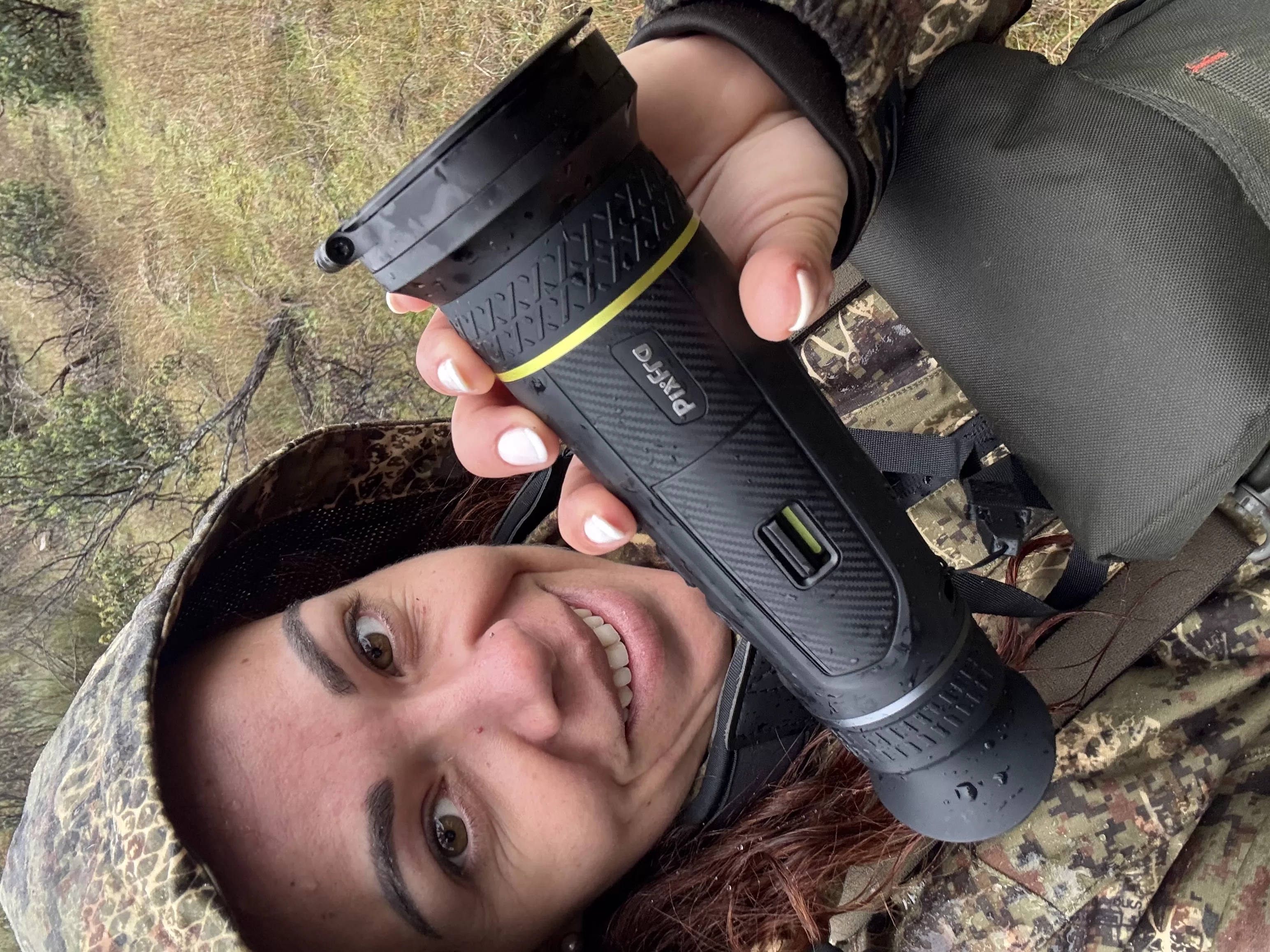
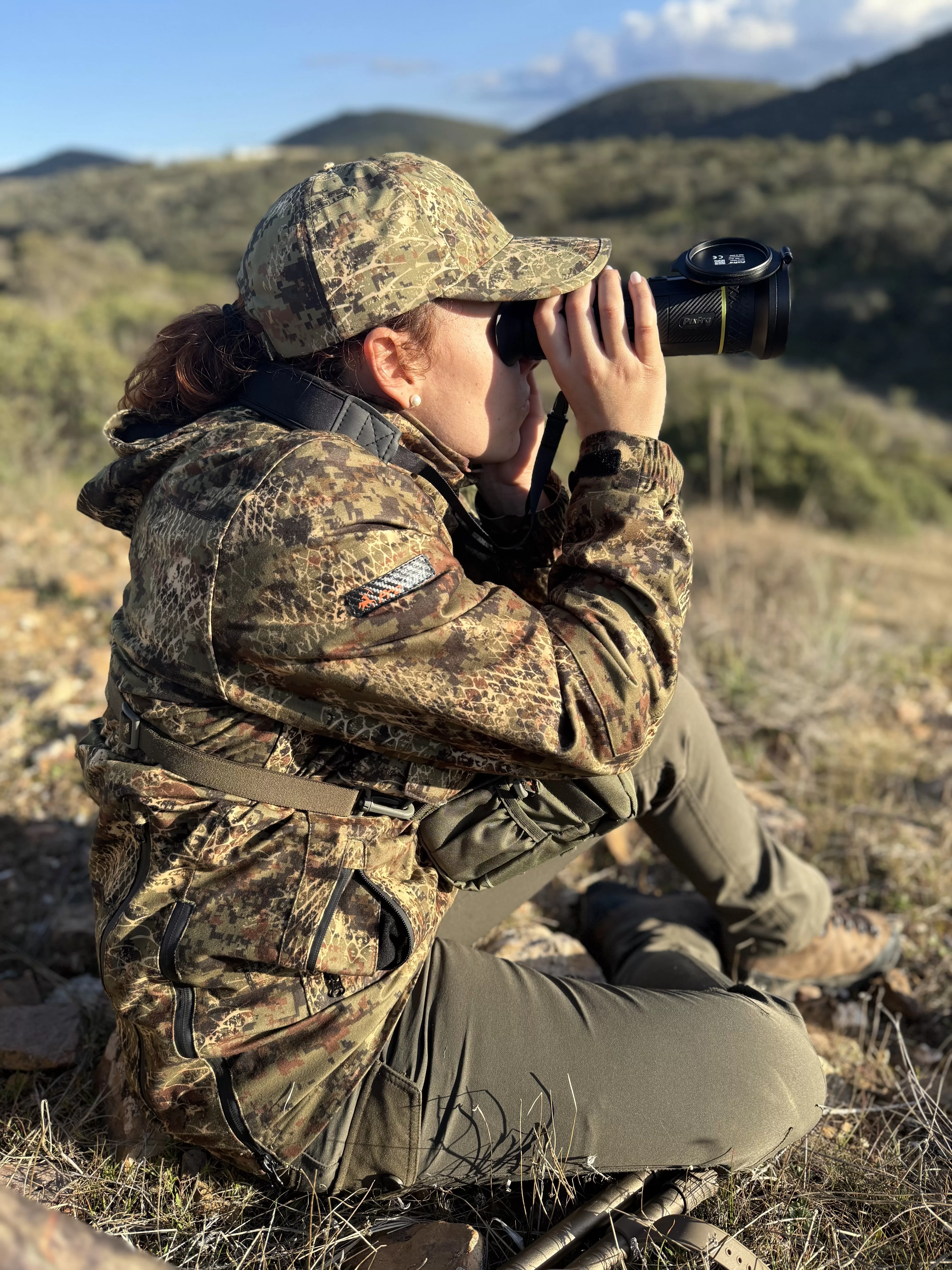
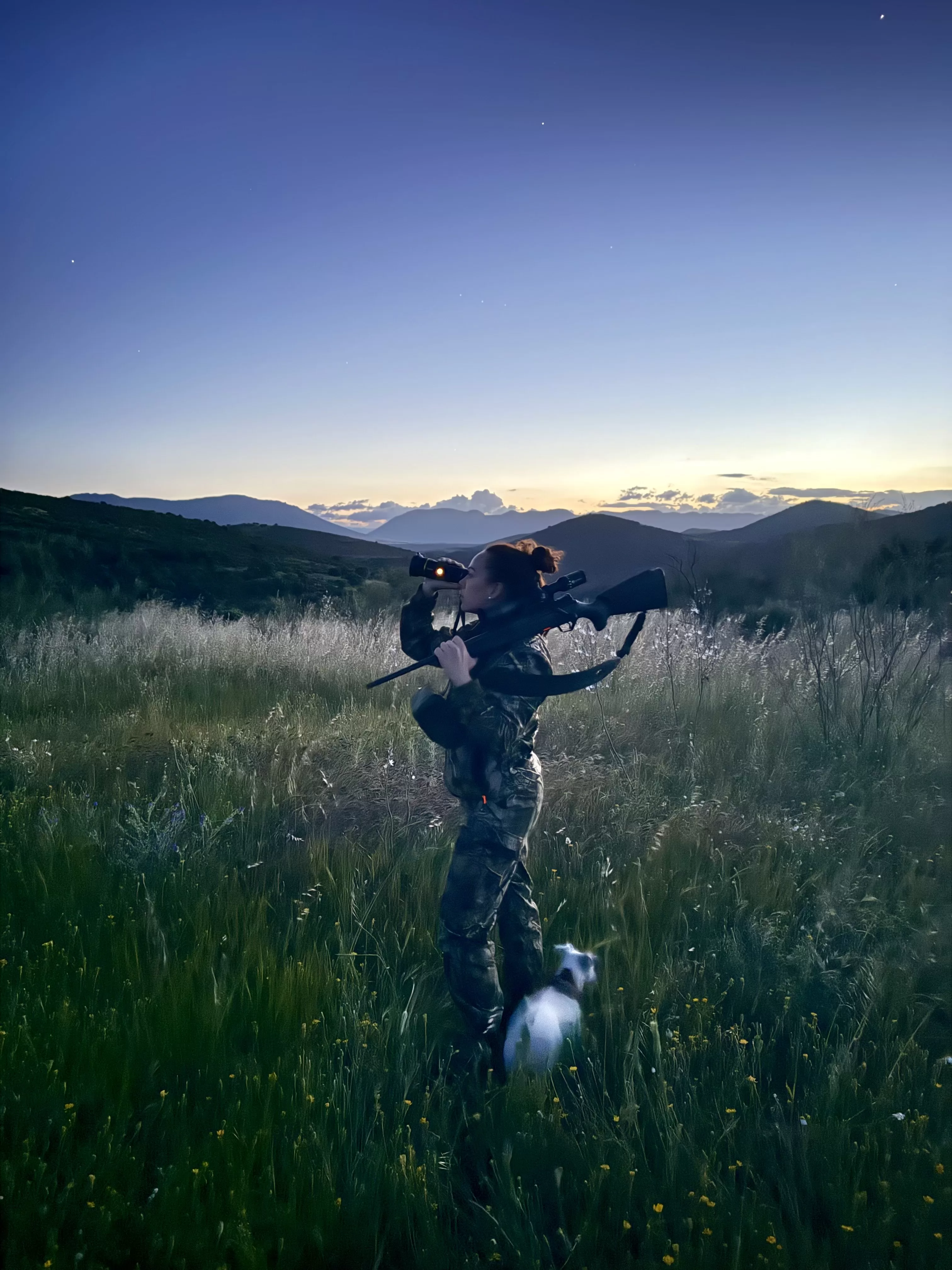
Sensorn utgör hjärtat i varje termisk monokulär eller mörkerseendeglasögon,vilket direkt påverkar bildkvaliteten, detekteringsförmågan och systemets totala prestanda. Vid utvärdering av termiska monokular för jaktändamål i Europa bör man särskilt beakta två viktiga sensorspecifikationer: upplösning och termisk känslighet.
Upplösningen, som mäts i pixlar, avgör detaljnivån i värmebilder. Det nuvarande utbudet på marknaden sträcker sig från instegsmodeller med 256×192 sensorer till premiummodeller med 640×512 matriser. Denna skillnad i upplösning blir särskilt betydelsefull vid längre avstånd, där sensorer med högre upplösning ger avsevärt fler detaljer för säker identifiering av vilt. Pixfras produktsortiment speglar detta utbud, där Mile 2-serien erbjuder alternativ med 256×192 och 384×288, medan den högklassiga Sirius-serien har en upplösning på 640×512 för maximal detaljåtergivning.
Termisk känslighet, mätt som Noise Equivalent Temperature Difference (NETD) i millikelvin (mK), anger den minsta temperaturskillnad som sensorn kan upptäcka – där lägre värden står för bättre prestanda. Högkvalitativa termiska monokularer för den europeiska marknaden uppnår känsligheter på ≤25 mK, och toppmodeller som Pixfra Sirius-serien når en exceptionell NETD-värde på ≤18 mK. Denna överlägsna känslighet är särskilt värdefull i fuktiga europeiska förhållanden, där subtila temperaturskillnader mellan vilt och omgivande vegetation kan vara svåra att upptäcka med mindre känsliga system.
Enligt en undersökning från European Hunting Technology Institute:
“Förbättringar av sensorns upplösning från 384×288 till 640×512 ger ett cirka 40% större effektivt identifieringsavstånd under typiska europeiska jaktförhållanden, medan förbättringar av känsligheten från 50 mK till 25 mK utökar detekteringsförmågan med cirka 35% i krävande termiska miljöer.”
Det optiska systemet samverkar med sensorn för att avgöra den övergripande bildkvaliteten och den praktiska användbarheten. Flera optiska specifikationer bör beaktas noggrant vid val av termiska monokularer för jaktändamål i Europa.
Förstoringsförmågan varierar avsevärt på marknaden för termiska monokularer, vilket påverkar både detekteringsräckvidden och överblicken över omgivningen. De flesta termiska monokularer har en optisk basförstoring på mellan 2–4×, vanligtvis kompletterad med digital zoom. Pixfra Mile 2-serien har en grundförstoring på 2,5× med digital zoom, medan Sirius-serien erbjuder en mer avancerad optik med steglös zoom mellan 2,5 och 5× som bibehåller full sensorupplösning över hela zoomområdet – en betydande fördel jämfört med digital zoom, som minskar den effektiva upplösningen.
Synfältet (FOV) är en annan viktig optisk faktor, där kraven varierar beroende på jaktmiljö och jaktteknik. Vid drivjakt, som är vanligt i Tyskland och Frankrike, är det vanligtvis en fördel med bredare synfält (12–15°) för snabb målsökning i dynamiska situationer, medan bergsjakt i alpina områden kan gynnas av smalare synfält (6–9°) som är optimerade för upptäckt på längre avstånd.
Linsens kvalitet har stor inverkan på bildskärpan och detekteringsräckvidden. Högkvalitativa termiska monokularer använder objektiv av högkvalitativt germanium med specialbeläggningar som maximerar infrarödgenomsläppligheten. Objektivets specifika diameter innebär en avvägning mellan ljusinsamlingsförmåga och systemets storlek/vikt – en viktig faktor att beakta vid jakt i bergsmiljöer där utrustningens vikt blir särskilt betydelsefull.
| Jakt scenario | Optimalt synfält | Rekommenderad förstoring | Användningsanvisningar |
|---|---|---|---|
| Alpgem | 6-8° | 4-5× | Prioritering av detektering på långt avstånd |
| Driven vildsvinjakt | 12-15° | 2-3× | Prioritet för snabb anskaffning |
| Skogsjakt | 9-12° | 3-4× | En balanserad strategi |
| Jordbruksskydd | 7-10° | 3-5× | Prioritering av detekteringsområde |
Detektionsräckvidden är kanske det viktigaste praktiska prestandamåttet för termiska monokularer vid jakt i Europa. Denna specifikation anger det maximala avståndet på vilket enheten kan upptäcka, känna igen och identifiera mål av intresse under olika förhållanden.
Detektionsräckvidden beror på flera faktorer, däribland sensorns upplösning, linsens kvalitet, skärmtekniken och målets storlek. Professionella värmebildsmonokular anger detektionsräckvidder för standardiserade målstorlekar, vanligtvis motiv i människostorlek (1,8 × 0,5 m) och stora djur (2,0 × 0,75 m). När man utvärderar tillverkarens specifikationer är det viktigt att förstå vilket standardiserat mål som avses, eftersom detekteringsavstånden för mindre viltdjur blir proportionellt kortare.
Högkvalitativa termiska monokularer avsedda för den europeiska marknaden har detekteringsavstånd som varierar avsevärt mellan olika produktklasser:
Pixfra Sirius-serien uppvisar enastående prestanda i detta avseende, med en detekteringsräckvidd på över 1 900 meter för stora objekt under optimala förhållanden. Denna utökade detekteringsförmåga ger europeiska jägare betydande taktiska fördelar, eftersom den gör det möjligt att upptäcka vilt långt innan djuren märker av människors närvaro.
Det är viktigt att notera att igenkänningsavståndet (det avstånd vid vilket djurarten kan fastställas) och identifieringsavståndet (det avstånd vid vilket specifika kännetecken kan urskiljas) är betydligt kortare än detekteringsavståndet. Vanligtvis sker igenkänning på cirka 50–60% av det maximala detekteringsavståndet, medan identifiering kräver närmare avstånd, ungefär 30–40% av detekteringsavståndet.
Bildbehandlingsfunktionerna utgör en ofta förbisedd men ändå avgörande komponent i en termisk monokulärs prestanda. Råa termiska data kräver avancerad bearbetning för att omvandla temperaturvärden till användbar visuell information, och det finns betydande prestandaskillnader mellan enkla och avancerade bearbetningssystem.
Moderna högkvalitativa termiska monokularer använder flerstegsbehandlingsprocesser som förbättrar bildskärpan, minskar bruset och optimerar kontrasten för specifika detekteringsscenarier. Pixfra Imaging Processing System (PIPS 2.0) är ett exempel på denna avancerade metod med funktioner som adaptiv brusreducering, optimering av dynamiskt omfång, kantförstärkning och algoritmer för bevarande av detaljer som bibehåller viktiga termiska detaljer samtidigt som sensorbrus elimineras.
Dessa bearbetningsfunktioner har en avgörande inverkan på prestandan i fält, särskilt i svåra detekteringssituationer där den termiska kontrasten mellan målet och bakgrunden är minimal. Enligt tester utförda av European Wildlife Management Association:
“Avancerade algoritmer för bildbearbetning kan utöka det effektiva detekteringsområdet med 35–40% jämfört med grundläggande bildbearbetning, även när man använder identisk sensorhårdvara.”
De praktiska fördelarna blir särskilt tydliga vid jakt tidigt på morgonen eller sent på kvällen – situationer som är vanliga inom europeiska jakttraditioner – då temperaturskillnaderna i omgivningen är minimala och viltet kan uppvisa endast svaga termiska skillnader jämfört med omgivningen. Avancerade bearbetningssystem kan utvinna användbar detekteringsinformation ur dessa minimala skillnader, medan enklare system inte skulle kunna upptäcka viltets närvaro.
Leta efter värmekameror med flera färgpaletter (vit, svart, röd osv.) som gör det möjligt att anpassa inställningarna efter olika observationssituationer. De mest avancerade systemen har situationsanpassade bearbetningslägen som automatiskt optimerar parametrarna utifrån den aktuella miljön – skog, fält, stadsmiljö osv. – vilket maximerar observationsförmågan i olika europeiska jaktlandskap.
De europeiska jaktförhållandena ställer höga krav på hållbarheten hos värmekameramonokular, och dessa krav varierar avsevärt mellan olika jaktområden och jakttraditioner. Från de fuktiga förhållandena i de nordeuropeiska skogarna till den extrema kylan vid jakt i Alperna och dammet i Medelhavsområdet måste värmekameramonokularna bibehålla sin prestanda under en rad olika miljöutmaningar.
IP-klassificeringar (Ingress Protection) anger standardiserade mått på miljöskydd. Termiska monokularer av professionell kvalitet bör ha minst IP66-skydd (fullständigt dammskydd och motståndskraft mot högtrycksvattenstrålar), medan system i premiumklassen uppnår IP67 (tillfällig motståndskraft mot nedsänkning i vatten). Pixfra Mile 2- och Sirius-serierna är exempel på detta med sitt omfattande IP67-skydd, vilket garanterar tillförlitlig drift i alla europeiska jaktmiljöer.
Driftstemperaturområdet är en annan viktig specifikation, särskilt vid jakt i Alperna och i Nordeuropa, där extrem kyla kan påverka batteriets prestanda och elektronikens tillförlitlighet negativt. Högkvalitativa termiska monokulärer upprätthåller den angivna prestandan inom temperaturintervall som vanligtvis sträcker sig från -20 °C till +50 °C, tack vare robusta interna värmehanteringssystem som skyddar känsliga komponenter mot extrema temperaturer.
Den fysiska konstruktionskvaliteten har stor inverkan på hållbarheten i fält. Högkvalitativa system använder chassikonstruktioner av förstärkt polymer eller lättviktsmetalllegeringar som tål stötar samtidigt som de minimerar vikten. Se efter ytor med gummibeklädnad som ger extra stötskydd och bättre grepp under de våta förhållanden som ofta förekommer i europeiska jaktmiljöer.
Det europeiska testinstitutet för jaktutrustning rapporterar:
“Hållbarhetsproblem är den främsta orsaken till fel i termiska optiska fält, där cirka 68% av de rapporterade problemen beror på brister i miljöskyddet snarare än på fel i elektroniska komponenter.”
Batteriets prestanda är en avgörande faktor för termiska monokularer som används vid jakt i Europa, där långvariga insatser i fält och krävande miljöförhållanden ställer höga krav på tillförlitlig energihantering. Flera viktiga specifikationer avgör batteriets faktiska prestanda i jaktmiljöer.
Driftstiden är det mest direkta måttet på batteriets prestanda, och det finns stora skillnader på marknaden. Enklare termiska monokularer erbjuder vanligtvis 4–5 timmars kontinuerlig drift, medan premiummodeller förlänger denna tid till 6–8+ timmar tack vare effektivare elektronik och batterilösningar med högre kapacitet. Vid europeiska drivjakter som varar i flera timmar eller långa smygjaktsutflykter i Alperna blir dessa skillnader särskilt betydelsefulla.
Batteritypen är en annan viktig faktor att beakta, och de flesta system av professionell kvalitet använder uppladdningsbar litiumjonteknik. Mer avancerade system har utformningar med utbytbara batterier, vilket gör det möjligt att omedelbart återuppta driften med förladdade reservbatterier istället för att behöva ladda batterierna ute i fält. Pixfra Sirius-serien är ett typexempel på detta tillvägagångssätt med sitt system för snabbt batteribyte, vilket säkerställer kontinuerlig drift under långa jaktutflykter.
Prestandan vid kalla temperaturer varierar avsevärt mellan olika batteritekniker, vilket är särskilt viktigt vid jakt i Alperna och i Nordeuropa. Högkvalitativa termiska monokulärer är utrustade med batteriisolering och temperaturregleringsfunktioner som upprätthåller prestandan vid temperaturer under noll, när standardbatterier snabbt kan tappa sin kapacitet.
Tack vare energihanteringsfunktionerna kan den effektiva drifttiden förlängas utöver batteriets nominella kapacitet. Avancerade system är utrustade med vilolägen, automatiska avstängningsfunktioner och alternativ för extern strömförsörjning som maximerar drifttiden – vilket är särskilt värdefullt för tillämpningar inom viltvård som är vanliga i europeiska sammanhang, där långa observationsperioder kan krävas för beståndsövervakning eller forskningsändamål.
Utformningen av manövergränssnittet på termiska monokularer har stor inverkan på användbarheten i fält, särskilt under de krävande förhållanden som ofta råder vid jakt i Europa. Intuitiva reglage, logiska menystrukturer och genomtänkt placering av knappar kan avgöra skillnaden mellan lyckad hantering och missade tillfällen i avgörande ögonblick.
Antalet knappar och deras placering är en viktig faktor, och i väl genomtänkta konstruktioner uppnås en balans mellan funktionalitet och komplexitet. Högkvalitativa termiska monokularer, såsom Pixfra Mile 2-serien, har 4–5 strategiskt placerade knappar med tydlig taktil åtskillnad, vilket gör det möjligt att manövrera dem på känsla utan att ta ögat från okularet – något som är särskilt värdefullt vid jakt i Europa under svaga ljusförhållanden.
Menystrukturens utformning har stor inverkan på driftseffektiviteten. Intuitiva, hierarkiska menysystem med direkt åtkomst till ofta använda funktioner minimerar den tid som krävs för att justera inställningarna under fältförhållanden. De mest effektiva utformningarna använder kontextberoende menyer som endast visar relevanta alternativ utifrån det aktuella driftsläget.
Skärmkvaliteten har direkt inverkan på förmågan att tolka bilder. Högkvalitativa termiska monokularer är utrustade med OLED- eller AMOLED-skärmar med en upplösning på 1024×768 eller högre, vilket ger överlägsen kontrast och detaljrikedom jämfört med vanliga LCD-skärmar. Se till att enheten har justerbara ljusstyrkeinställningar som gör det möjligt att anpassa skärmen efter olika ljusförhållanden, från totalt mörker till användning i dagsljus.
Den europeiska branschorganisationen för jaktutrustning rapporterar:
“Utformningen av användargränssnittet rankas bland de tre viktigaste köpfaktorerna för professionella jägare och jaktguider, och 87% anger att intuitiva reglage är ‘extremt viktiga’ för värmeoptik som används under varierande ljusförhållanden, vilket är typiskt för europeiska jaktförhållanden.”
För att välja den bästa värmekameramonokularen för jakt i Europa krävs noggranna överväganden av flera tekniska och praktiska faktorer. Samspelet mellan sensorkvalitet, optisk prestanda, bildbehandling, hållbarhet, batteriprestanda och utformningen av användargränssnittet avgör hur väl utrustningen fungerar i praktiken under de varierande miljöförhållanden som råder vid jakt i Europa.
För de jaktformer på nära håll som är vanliga i Tyskland och Frankrike kan värmekameror med monokulär som prioriterar bredare synfält och snabb målsökning visa sig vara det bästa valet. För jakt i alpina miljöer på långa avstånd ger system som prioriterar upptäcktsräckvidd och bilddetaljrikedom överlägsen prestanda. För mångsidiga tillämpningar inom flera europeiska jakttraditioner erbjuder system som balanserar dessa egenskaper med praktiska fältaspekter, såsom hållbarhet och batteriprestanda, den mest heltäckande lösningen.
Genom att systematiskt utvärdera dessa faktorer utifrån specifika jaktkrav kan europeiska jägare välja värmekameror som är optimerade för just deras användningsområden, vilket förbättrar både jaktens effektivitet och den övergripande upplevelsen ute i fält i kontinentens mångsidiga jaktlandskap.
Om du är intresserad av att ta del av Pixfras högkvalitativa termiska monokulära lösningar för jakt i Europa, eller av att diskutera distributionsmöjligheter i din region, står våra tekniska specialister till förfogande för att ge dig detaljerad information och skräddarsydda rekommendationer utifrån just dina behov.
Från de mångsidiga värmekameramonokulärerna i Mile 2-serien till den högpresterande Sirius-serien med sina enastående detekteringsförmågor – Pixfra erbjuder värmekameralösningar som är särskilt utformade för europeiska jaktförhållanden och lagkrav.
Kontakta våra specialister på den europeiska marknaden redan idag på info@pixfra.com eller besök pixfra.com för att utforska vårt hela produktsortiment och läsa mer om hur du kan bli en Pixfra-distributionspartner i din region.
The legality of termiska monokularer varies significantly across European jurisdictions, with regulations typically structured around intended use cases rather than the technology itself. This nuanced regulatory approach creates a complex landscape for both users and distributors of the best thermal imaging monoculars. In most European countries, the possession of thermal monoculars as observation devices is generally permitted for civilians, but specific use cases—particularly hunting applications—may be subject to additional regulations or restrictions.
The European regulatory framework typically distinguishes between thermal devices designed primarily for observation (such as handheld thermal monoculars) and those specifically engineered for weapons mounting (thermal riflescopes). The Pixfra Mile 2 Series thermal monocular, for instance, is designed as a dedicated observation platform without weapon mounting interfaces, positioning it differently in regulatory classifications compared to purpose-built thermal weapon sights.
This regulatory distinction is reflected in the European Commission’s dual-use goods framework, which categorizes thermal imaging equipment based on technical specifications and intended applications. According to the European Union Exports Control Regulation (EC) No 428/2009:
“Thermal imaging equipment falls under varying levels of regulatory oversight depending on technical specifications, intended use, and country-specific implementation of EU directives.”
Understanding these distinctions is essential for legal compliance across European markets, particularly for distributors and commercial users of thermal imaging technology.
Thermal monocular regulations vary significantly across major European hunting markets, reflecting different approaches to wildlife management, hunting traditions, and security considerations. This regulatory diversity necessitates country-specific compliance strategies for both users and distributors.
Frankrike implements a relatively permissive approach to thermal observation devices, with thermal monoculars like the Pixfra Mile 2 Series generally permitted for civilian ownership and use in observation applications. However, the use of thermal imaging for hunting activities is more strictly regulated, with the French Environmental Code generally prohibiting thermal devices for hunting except under specific pest control authorizations issued by local authorities.
Tyskland maintains stricter regulations, distinguishing clearly between observation devices and hunting equipment. While thermal monoculars without weapon mounting capabilities are generally legal to own, the German Hunting Law (Bundesjagdgesetz) traditionally prohibited their use during hunting activities. Recent regulatory amendments have created exceptions for specific pest control scenarios, particularly for wild boar management in response to African Swine Fever concerns.
Spanien has adopted a regionalized regulatory approach, with autonomous communities establishing varying regulations. Most Spanish regions permit thermal monoculars for observation purposes, while their use in hunting contexts varies by region and specific application. Many autonomous communities have implemented exceptions for nocturnal wild boar control, creating specific legal pathways for thermal use in these limited scenarios.
This regulatory diversity highlights the importance of understanding local regulations when utilizing thermal monoculars across different European jurisdictions.
Hunting applications represent the most heavily regulated use case for thermal monoculars across European jurisdictions, with significant variations in permissibility based on wildlife management objectives, species classifications, and regional hunting traditions. This regulatory complexity requires careful navigation by hunters and wildlife managers utilizing thermal imaging technology.
Many European countries have implemented specific exceptions to general prohibitions on thermal hunting, particularly for invasive or problematic species management. Wild boar control represents the most common exception, with countries including:
| Land | Wild Boar Thermal Exception | Other Species Exceptions | Required Authorizations |
|---|---|---|---|
| Frankrike | Limited regional permits | Fox in specific areas | Prefectoral authorization |
| Tyskland | Expanded since 2020 | Limited predator control | Regional hunting authority permit |
| Spanien | Varies by autonomous community | Predator management programs | Regional permits |
| Polen | Generally permitted | Some predator species | Standard hunting license |
These exceptions typically specify whether thermal devices may be used for detection only (favoring observation devices like the Pixfra Mile 2 Series) or for both detection and shooting (requiring weapon-mounted systems). The European Federation of Associations for Hunting and Conservation (FACE) notes:
“The regulatory trend across Europe shows increasing acceptance of thermal imaging technology for specific wildlife management applications, particularly invasive species control, though with careful limitations to preserve traditional hunting ethics and fair chase principles.”
For hunters operating across multiple European jurisdictions, these regulatory variations necessitate careful attention to local regulations, potentially requiring different equipment configurations to maintain compliance in different regions.
Professional and official use cases for thermal monoculars typically enjoy broader regulatory exceptions across European jurisdictions compared to recreational applications. These exceptions recognize the legitimate need for advanced thermal imaging capabilities in various professional contexts.
Law enforcement agencies throughout Europe generally maintain broad exceptions for thermal imaging equipment use, including advanced systems like the Pixfra Sirius Series with its 640×512 resolution and exceptional ≤18mK NETD sensitivity. These capabilities prove particularly valuable for search and rescue operations, suspect tracking, and evidence gathering applications.
Wildlife management professionals, including those working under government authority, typically operate under specific regulatory exemptions that permit thermal imaging use for:
Agricultural protection represents another area where professional exemptions often apply, particularly for damage prevention from wild boar and other agricultural pests. These exceptions typically require formal documentation from agricultural authorities confirming economic damage and necessity.
The European Professional Wildlife Management Association reports:
“Professional users operating under official capacity account for approximately 23% of thermal imaging device utilization across European markets, with these users typically accessing broader regulatory exemptions based on specific wildlife management mandates.”
These professional use exceptions highlight the recognition by European regulatory authorities of thermal imaging’s legitimate applications in wildlife management, conservation, and security contexts, even where recreational use faces greater restrictions.
Beyond use case regulations, European jurisdictions often implement technical specification restrictions that limit certain capabilities of commercially available thermal monoculars. These technical restrictions typically focus on resolution, sensitivity, and advanced features that might have dual-use implications.
The most common technical specification restrictions include:
Resolution Limitations: Some European jurisdictions restrict civilian access to thermal imaging devices exceeding specific resolution thresholds, typically around 640×512 pixels. The Pixfra product lineup accommodates these varying restrictions by offering multiple resolution options, from the Mile 2 Series’ 256×192 and 384×288 configurations to the premium Sirius Series’ 640×512 sensor.
Sensitivity Thresholds: Certain high-sensitivity thermal capabilities may face restrictions in specific markets, though most commercial thermal monoculars like the Pixfra lineup fall within commonly permitted sensitivity ranges (≤18-25mK NETD).
Recording Capabilities: Some jurisdictions impose restrictions on recording functionality in thermal devices, particularly when used in specific contexts. The configurable recording options in Pixfra devices allow for compliance with these varying requirements.
Export Restrictions: The European Union maintains export control regulations on certain thermal imaging technologies under the Wassenaar Arrangement, potentially limiting transfer of specific high-performance thermal devices to non-EU countries.
According to the European Security Technology Organization:
“Technical specification restrictions aim to balance legitimate civilian access to thermal imaging technology while preventing potential misuse, with approximately 94% of commercially marketed thermal monoculars falling within generally permitted technical parameters across most European markets.”
Understanding these technical specification restrictions is particularly important for distributors and commercial importers of thermal imaging equipment to ensure regulatory compliance across different European markets.
Navigating the complex regulatory landscape for thermal monoculars across European jurisdictions requires a structured compliance approach. Implementing these best practices helps ensure legal operation while maximizing the utility of thermal imaging technology within applicable regulatory frameworks.
Documentation Maintenance: Maintaining proper documentation proves essential for both users and distributors of thermal monoculars. This includes purchase receipts, technical specifications, and any applicable permits or authorizations. For specialized applications like pest control or agricultural protection, documentation of purpose and authorization should be readily available during field use.
Use Case Clarity: Clearly distinguishing between observation and targeting applications helps navigate use-specific regulations. The Pixfra Mile 2 Series, designed specifically as observation devices without weapon mounting interfaces, provides clear use case definition that simplifies compliance in many regulatory contexts.
Professional Affiliation Documentation: Users operating under professional exemptions should maintain formal documentation of their official capacity and specific authorizations, particularly when operating high-performance systems like the Pixfra Sirius Series in regulated contexts.
Regular Regulatory Monitoring: Given the evolving nature of thermal imaging regulations across Europe, regular monitoring of regulatory changes is essential. The European Hunting Technology Association notes:
“Thermal imaging regulations across EU member states have undergone revisions in approximately 63% of jurisdictions over the past five years, largely trending toward greater permissions for specific wildlife management applications.”
Distributor Due Diligence: For commercial distributors of thermal monoculars, implementing robust customer verification procedures helps ensure products are sold in compliance with local regulations. This includes verification of professional credentials for purchasers seeking access to models under professional use exceptions.
European regulations regarding thermal monoculars continue to evolve, with several identifiable trends shaping the future regulatory landscape. Understanding these trends helps users and distributors anticipate regulatory developments and adapt compliance strategies accordingly.
A significant trend toward expanded permissions for invasive species management is evident across multiple European jurisdictions. As challenges like African Swine Fever drive wild boar population control priorities, many countries have implemented or expanded exceptions for thermal imaging use in these specific management contexts. The European Wildlife Disease Association reports:
“Regulatory amendments permitting thermal imaging for wild boar management have been implemented in 76% of EU member states since 2019, reflecting the growing recognition of technology’s role in addressing wildlife disease management challenges.”
Simultaneously, a trend toward technical capability-based regulation rather than categorical prohibition is emerging. This approach focuses regulatory restrictions on specific high-end capabilities while permitting general-purpose thermal observation devices like the Pixfra Mile 2 Series for civilian use.
Harmonization efforts across EU member states represent another significant trend, with initiatives to standardize certain aspects of thermal imaging regulations to reduce cross-border compliance complications for users and manufacturers. While complete regulatory uniformity remains distant, these harmonization efforts target specific aspects like technical classification standards and professional use exceptions.
The trend toward performance-based exceptions—where regulatory permissions are tied to demonstrated wildlife management outcomes rather than blanket prohibitions—represents another evolution in European thermal imaging regulation, potentially expanding legal use cases where effective management results can be documented.
The legality of thermal monoculars across European jurisdictions presents a complex regulatory landscape that varies significantly based on jurisdiction, intended use, technical specifications, and user classification. While thermal observation devices like the Pixfra Mile 2 Series are generally legal for civilian ownership in most European countries, specific applications—particularly hunting use—face more variable regulations requiring careful compliance attention.
The general regulatory framework distinguishes between observation and targeting applications, with observation-specific devices typically facing fewer restrictions. Professional and official users generally enjoy broader exceptions, reflecting the legitimate applications of thermal imaging technology in wildlife management, conservation, and security contexts.
The regulatory trend across Europe shows movement toward more nuanced, use-case specific regulations rather than blanket prohibitions, particularly as thermal imaging technology demonstrates its value in wildlife management applications like invasive species control. This evolving regulatory landscape requires ongoing attention to compliance requirements across different jurisdictions.
For both users and distributors of thermal monoculars in European markets, maintaining current regulatory knowledge, proper documentation, and clear use case differentiation represents the foundation of a sound compliance strategy in this dynamic regulatory environment.
If you’re interested in exploring Pixfra’s thermal monocular solutions for European markets or require guidance on specific regulatory compliance across different jurisdictions, our regulatory specialists can provide market-specific information to support your distribution or usage requirements.
From the observation-focused Mile 2 Series to the professional-grade Sirius Series, Pixfra offers thermal solutions designed with European regulatory frameworks in mind, supported by comprehensive compliance documentation for distributors and end-users.
Contact our European regulatory team at info@pixfra.com or visit pixfra.com to discuss your specific market requirements and learn more about our compliant thermal imaging solutions for European applications.
The foundation of any premium thermal imaging monocular lies in its sensor technology, which directly determines detection capability, image quality, and overall performance. Modern thermal monoculars utilize uncooled microbolometer arrays, with significant performance differences emerging based on resolution, pixel pitch, and thermal sensitivity.Unlike tranditional night vision,which relies on amplifying ambient light,thermal imaging detects infrared radiation emitted by objects themselves.
Resolution represents the most immediately apparent specification, with current market offerings ranging from entry-level 256×192 sensors to premium 640×512 arrays. The difference between these resolutions becomes particularly significant at extended distances, where higher resolution sensors provide substantially more detail for positive identification of game animals. The Pixfra Mile 2 Series offers both 256×192 and 384×288 configurations, while the more advanced Sirius Series delivers exceptional detail with its 640×512 sensor array.
Equally important but often overlooked is thermal sensitivity, measured as Noise Equivalent Temperature Difference (NETD) in millikelvin (mK). This specification indicates the minimum temperature difference the sensor can detect, with lower values representing superior performance. Premium European-market thermal monoculars achieve sensitivities of ≤25mK, with top-tier models like the Pixfra Sirius S650D reaching exceptional ≤18mK NETD. This superior sensitivity enables detection of subtle temperature differentials that would remain invisible to less sensitive systems, particularly critical for identifying partially obscured game in complex thermal environments.
According to research from the European Hunting Technology Institute:
“Sensor resolution and thermal sensitivity represent the two most significant predictors of field performance in thermal monoculars, with high-resolution/high-sensitivity combinations delivering 76% greater effective detection ranges compared to entry-level specifications.”
While sensor technology provides the foundation for thermal performance, the optical system plays an equally crucial role in determining the practical utility of thermal monoculars in field conditions. Premium optical designs must balance multiple competing priorities including magnification, field of view, and form factor.
Objective lens diameter significantly impacts both light-gathering capability and overall system size, with most premium thermal monoculars utilizing objectives between 25mm and 50mm. Larger objectives generally provide better image quality but at the cost of increased size and weight. The Pixfra Sirius Series strikes an optimal balance with its 40mm germanium objective lens, delivering exceptional image quality while maintaining practical field portability.
Magnification capabilities vary widely across the thermal monocular market, with fixed magnification systems typically offering 2-4x optical magnification supplemented by digital zoom. More advanced systems now feature variable magnification optics, such as the innovative Pixfra Sirius S650D with its 25-50mm continuous zoom capability, providing 2.5-5x optical magnification. This optical zoom capability represents a significant advancement over digital zoom, maintaining full sensor resolution and image quality throughout the zoom range.
Field of view (FOV) represents another critical optical specification, particularly for hunting applications where situational awareness must be balanced with magnification. Premium thermal monoculars typically offer horizontal FOV between 6° and 15°, with the specific requirements varying based on hunting environments:
| Hunting Environment | Optimal Field of View | Recommended Pixfra Model |
|---|---|---|
| Dense Forest/Close Range | 12-15° | Mile 2 M256M |
| Mixed Woodland | 9-12° | Mile 2 M384L |
| Open Field/Long Range | 6-9° | Sirius S650D |
The quality of image processing algorithms represents a critical yet often overlooked component in thermal monocular performance. Raw thermal data requires sophisticated processing to transform temperature readings into useful visual information, with significant performance differences emerging between basic and advanced processing systems.
Modern premium thermal monoculars employ multi-stage processing pipelines that enhance image clarity, reduce noise, and optimize contrast for specific detection scenarios. The Pixfra Imaging Processing System (PIPS 2.0) exemplifies this advanced approach, incorporating multiple enhancement layers:
Dessa bearbetningsfunktioner har en avgörande inverkan på prestandan i fält, särskilt i svåra detekteringssituationer där den termiska kontrasten mellan målet och bakgrunden är minimal. Enligt tester utförda av European Wildlife Management Association:
“Avancerade algoritmer för bildbearbetning kan utöka det effektiva detekteringsområdet med 35–40% jämfört med grundläggande bildbearbetning, även när man använder identisk sensorhårdvara.”
The practical impact becomes particularly evident in early morning or late evening hunting scenarios, when environmental temperature gradients are minimal and game animals may present only subtle thermal differences from their surroundings. Premium processing systems like PIPS 2.0 can extract usable detection information from these minimal differentials when basic systems would fail to reveal the presence of game.
Detection range represents perhaps the most critical real-world performance metric for thermal monoculars in hunting applications. This specification quantifies the maximum distance at which the device can detect, recognize, and identify targets of interest under various conditions.
Detection range depends on multiple factors including sensor resolution, lens quality, and target size, with larger targets naturally detectable at greater distances. Professional-grade thermal monoculars specify detection ranges for standardized target sizes, typically human-sized subjects (1.8×0.5m) and large animals (2.0×0.75m).
Högkvalitativa termiska monokularer avsedda för den europeiska marknaden har detekteringsavstånd som varierar avsevärt mellan olika produktklasser:
Pixfra Sirius-serien uppvisar enastående prestanda i detta avseende, med en detekteringsräckvidd på över 1 900 meter för stora objekt under optimala förhållanden. Denna utökade detekteringsförmåga ger europeiska jägare betydande taktiska fördelar, eftersom den gör det möjligt att upptäcka vilt långt innan djuren märker av människors närvaro.
Det är viktigt att notera att igenkänningsavståndet (det avstånd vid vilket djurarten kan fastställas) och identifieringsavståndet (det avstånd vid vilket specifika kännetecken kan urskiljas) är betydligt kortare än detekteringsavståndet. Vanligtvis sker igenkänning på cirka 50–60% av det maximala detekteringsavståndet, medan identifiering kräver närmare avstånd, ungefär 30–40% av detekteringsavståndet.
The practical utility of thermal monoculars in European hunting scenarios depends not only on technical specifications but also on ergonomic design and field usability. The finest sensor becomes worthless if the device proves unwieldy or unreliable in challenging field conditions.
Weight represents a primary consideration, particularly for mountain hunting in Alpine regions where every gram matters during extended stalks. Premium thermal monoculars balance capability with weight, typically ranging from 350g for compact models to 700g for full-featured systems. The Pixfra Mile 2 Series exemplifies this balance, delivering essential thermal capabilities in a compact 350g package ideal for weight-sensitive applications.
Battery life presents another critical field consideration, with significant performance differences across the market. Entry-level thermal monoculars typically offer 4-5 hours of operation, while premium systems extend this to 6-8 hours through more efficient electronics and larger battery capacities. For extended hunting expeditions, removable battery systems provide significant advantages, allowing immediate return to operation with pre-charged spares rather than forcing field charging.
Environmental durability specifications also vary significantly, with premium European-market thermal monoculars offering IP67 protection (complete dust protection and temporary water immersion resistance). This level of environmental sealing ensures reliable operation in the diverse weather conditions encountered across European hunting regions, from the wet conditions of Northern Europe to the dusty environments of Mediterranean countries.
Control interfaces represent another ergonomic consideration, with intuitive operation being particularly important for thermal devices often used in low-light conditions. Premium thermal monoculars feature simplified control layouts with tactile differentiation between buttons, allowing operation by feel without removing eye from eyepiece.
Modern premium thermal monoculars have evolved beyond simple observation devices to incorporate advanced connectivity and documentation capabilities that enhance their utility for both hunting and wildlife management applications.
Wireless connectivity, typically via WiFi or Bluetooth, enables integration with smartphones and tablets through dedicated applications. This connectivity serves multiple practical purposes, including:
The Pixfra Outdoor App exemplifies this capability, providing comprehensive control over connected thermal devices while enabling video recording and still image capture for documentation purposes. This recording capability proves particularly valuable for wildlife management applications, where thermal observation data may inform conservation decisions or hunting quota determinations.
Storage capabilities vary across the market, with premium thermal monoculars typically offering 16-64GB of internal storage sufficient for several hours of video recording or thousands of still images. More advanced systems include external storage options via microSD cards, allowing virtually unlimited documentation capability for extended field applications.
According to a survey by the European Wildlife Management Federation:
“87% of professional wildlife managers now consider documentation capabilities essential in thermal observation equipment, with recorded thermal imagery being utilized for species population surveys, behavior analysis, and habitat utilization studies.”
The selection of a thermal imaging monocular for European hunting applications requires careful consideration of multiple technical and practical factors. While no single device represents the universal “best” option, understanding the relationship between specifications and field performance enables informed selection based on specific requirements and conditions.
For dense forest hunting at closer ranges, compact models with wider fields of view like the Pixfra Mile 2 Series offer optimal performance, balancing detection capability with portability and rapid target acquisition. For open terrain hunting where maximum detection range proves paramount, premium models with higher resolution sensors and advanced optics like the Pixfra Sirius Series deliver superior performance.
Budget considerations naturally influence selection, with higher investments generally delivering enhanced capabilities and extended usable lifespan. When evaluating cost-effectiveness, consideration should extend beyond initial acquisition to include long-term reliability, warranty coverage, and manufacturer support infrastructure.
For European hunters seeking the optimal balance of performance, reliability, and value, the comprehensive Pixfra thermal monocular lineup offers solutions tailored to diverse hunting environments and requirements, supported by European-based technical assistance and warranty service.
Om du är intresserad av att ta del av Pixfras högkvalitativa termiska monokulära lösningar för jakt i Europa, eller av att diskutera distributionsmöjligheter i din region, står våra tekniska specialister till förfogande för att ge dig detaljerad information och skräddarsydda rekommendationer utifrån just dina behov.
From the compact and versatile Mile 2 Series to the exceptional performance of the Sirius Series, Pixfra offers thermal monocular solutions engineered specifically for European hunting conditions and regulatory requirements.
Kontakta våra specialister på den europeiska marknaden redan idag på info@pixfra.com eller besök pixfra.com för att utforska vårt hela produktsortiment och läsa mer om hur du kan bli en Pixfra-distributionspartner i din region.
Night vision and thermal imaging operate on fundamentally different principles, despite often being confused in discussions about low-light observation capabilities. These core technological differences determine which system best serves specific hunting applications.
Night vision technology uses image intensifier tubes that amplify existing ambient light, particularly near-infrared light invisible to the human eye. These systems collect available photons through an objective lens, convert them to electrons at a photocathode, multiply these electrons through a microchannel plate, and convert them back to visible light on a phosphor screen. Modern generation 3+ and 4 tubes can amplify light approximately 20,000-50,000 times, enabling vision in environments with minimal ambient light.
Thermal imaging detects mid- to long-wave infrared radiation (heat) naturally emitted by all objects with temperatures above absolute zero. Systems like the Pixfra Sirius Series utilize microbolometer sensors that detect minute temperature differences—as sensitive as ≤18mK NETD (Noise Equivalent Temperature Difference)—creating visual representations based on these temperature variations. Thermal imaging requires no light source whatsoever, as it visualizes heat rather than light.
According to research published by the European Optical Technology Institute:
“The selection between night vision and thermal imaging represents not merely a choice between competing products but a decision between fundamentally different sensing methodologies with distinct operational capabilities and limitations.”
The operational effectiveness of night vision and thermal imaging varies dramatically across different environmental conditions, representing one of the most significant practical distinctions when applied to hunting scenarios.
Night vision technology, dependent on ambient light amplification, faces several environmental limitations:
Thermal imaging, detecting heat signatures rather than light, offers different environmental performance characteristics:
This comparative performance can be quantified as follows:
| Environmental Condition | Mörkerseende | Värmekamera |
|---|---|---|
| Full Moonlight | Excellent (100-400m) | Excellent (500-2,000m+) |
| Starlight Only | Good (50-200m) | Excellent (500-2,000m+) |
| Overcast Night | Fair (30-100m) | Excellent (500-2,000m+) |
| Fullständigt mörker | Poor (10-30m) | Excellent (500-2,000m+) |
| Light Fog/Dust | Poor (10-30m) | Good (300-1,000m) |
| Dense Fog | Very Poor (5-15m) | Fair (100-300m) |
These environmental performance differences explain why the Pixfra Pegasus Pro Series thermal scopes, with detection ranges exceeding 2,000 meters for large subjects under optimal conditions, maintain consistent performance across most environmental variables that would severely limit night vision capabilities.
Detection range—the maximum distance at which a system can identify the presence of a subject—and recognition range—the distance at which the subject can be positively identified—represent critical performance metrics for both technologies, though they differ substantially in their capabilities.
Night vision technology typically offers:
The detection capability of night vision remains fundamentally limited by available light levels and atmospheric conditions, with performance degrading substantially as ambient light decreases or atmospheric obscurants increase.
Thermal imaging systems like the Pixfra Chiron LRF Series offer substantially different capabilities:
The European Hunting Federation’s technical committee notes:
“In comparative field tests across various European hunting environments, thermal imaging systems demonstrated average detection ranges 3.7 times greater than equivalent-generation night vision systems across all tested lighting conditions.”
This detection advantage becomes particularly pronounced in challenging lighting conditions, where the Pixfra Arc LRF Series, with its 640×512 sensor and ≤20mK NETD, maintains full detection capability while night vision performance decreases dramatically.
Both technologies offer distinct tactical advantages for hunting applications, with their respective strengths making them suitable for different hunting scenarios across European hunting contexts.
Night Vision Tactical Advantages:
Thermal Imaging Tactical Advantages:
For specific European hunting applications, these differences create distinct use case recommendations:
The Pixfra Taurus Series Thermal Front Attachment offers a compelling solution by converting existing day optics to thermal capability, providing the flexibility to adapt to different hunting scenarios while leveraging existing optical investments.
Both night vision and thermal imaging technologies have evolved substantially over recent decades, with current state-of-the-art systems offering capabilities dramatically superior to earlier generations. This evolution provides context for evaluating modern systems and anticipating future developments.
Night Vision Evolution:
Night vision has progressed through multiple generations:
Current premium night vision systems offer resolution up to 64-72 lp/mm (line pairs per millimeter), signal-to-noise ratios exceeding 25, and photocathode sensitivity above 2,200 μA/lm.
Thermal Imaging Evolution:
Thermal technology has similarly advanced through several generations:
Modern thermal systems like the Pixfra Sirius HD Series represent the current state-of-the-art with 1280×1024 HD sensors, sensitivity below 18mK NETD, and advanced processing systems like PIPS 2.0 (Pixfra Imaging Processing System) that enhance image clarity and detail recognition.
According to the International Thermal Imaging Technology Association:
“The thermal imaging performance advancement curve has outpaced Moore’s Law over the past decade, with a 15x improvement in price-performance ratio driven primarily by sensor resolution increases and processing algorithm sophistication.”
The decision between night vision and thermal imaging technology represents a significant investment consideration, with both initial acquisition costs and long-term value requiring careful analysis.
Night Vision Cost Structure:
Thermal Imaging Cost Structure:
The Pixfra Mile 2 Series represents an accessible entry point for thermal technology, offering excellent performance at the lower end of the price spectrum while maintaining core thermal advantages.
The long-term value proposition differs significantly between technologies:
Night Vision Value Factors:
Thermal Imaging Value Factors:
European hunting equipment analysts estimate:
“While thermal imaging systems typically represent a 30-40% higher initial investment than comparable night vision equipment, their superior environmental versatility translates to approximately 60% more usable field time across average European hunting conditions.”
While night vision and thermal imaging are often presented as competing alternatives, sophisticated users increasingly recognize the value of hybrid approaches that leverage the complementary strengths of both technologies.
Strategic hybrid approaches include:
Sequential Deployment:
Using thermal imaging for initial wide-area detection followed by night vision for detailed identification once targets are located. This approach leverages thermal’s superior detection range and night vision’s better detail recognition at closer distances.
Parallel Operation:
Operating both systems simultaneously to provide complementary information streams. For instance, the Pixfra Sirius Series for thermal detection alongside a night vision monocular for detailed observation once targets are located.
Convertible Systems:
Employing day optics with modular thermal attachments like the Pixfra Taurus Series Thermal Front Attachment, which converts existing day optics to thermal capability while maintaining the option for traditional optical use in daylight conditions.
Digital Fusion Systems:
Emerging technologies that digitally combine thermal and light-amplification imagery into a single fused display, providing the advantages of both technologies simultaneously.
According to the European Association of Professional Hunters:
“Approximately 43% of professional guides and wildlife managers now employ hybrid thermal/night vision approaches, reporting a 67% increase in operational effectiveness compared to single-technology approaches.”
The complementary nature of these technologies explains why many professional users maintain both capabilities in their equipment inventory, selecting the appropriate technology—or combination—based on specific operational requirements.
The choice between night vision and thermal imaging technology should be driven by specific application requirements rather than general preference. Both technologies offer distinct advantages that make them suitable for different scenarios encountered in European hunting contexts.
Night vision technology excels in:
Thermal imaging technology proves superior for:
For many serious European hunters and wildlife managers, the ideal approach often involves access to both technologies—either as separate systems or through hybrid solutions like the Pixfra Taurus Series that convert existing day optics to thermal capability while maintaining optical versatility.
If you’re interested in exploring how night vision and thermal imaging technologies can enhance your hunting or observation capabilities, Pixfra offers a comprehensive range of solutions designed for European hunting conditions. From the versatile Mile 2 Series Thermal Monocular to the premium Pegasus Pro Series Thermal Scope and innovative Taurus Series Thermal Front Attachment, our product lineup addresses diverse application requirements with industry-leading performance.
For more information about our night vision and thermal imaging solutions or to discuss distribution opportunities in European markets, contact our specialists at info@pixfra.com or visit pixfra.com to explore our full product range. Our team can provide expert guidance on selecting the optimal technology—or combination of technologies—for your specific hunting and observation requirements.
Tennessee’s approach to coyote management represents an instructive case study for European wildlife managers and hunters dealing with predator populations. The southeastern U.S. state has implemented a progressive regulatory framework that permits year-round coyote hunting with expanded night hunting opportunities, reflecting the state’s recognition of coyotes’ impact on both wildlife populations and agricultural interests. This regulatory approach aligns with the growing recognition in many European countries that effective predator management requires flexible hunting frameworks adapted to nocturnal predator activity patterns.
The Tennessee Wildlife Resources Agency (TWRA) permits night hunting for coyotes with specific equipment regulations, including the use of värmekameror, calculating suitable spot size during designated seasons. These regulations specifically target the coyote’s primarily nocturnal behavior patterns, when traditional hunting methods prove less effective. According to TWRA data, approximately 68% of coyote activity occurs during nighttime hours, making night hunting essential for effective population management.
This approach parallels evolving regulations in European countries like Spain and France, where night hunting for predator species is increasingly permitted with appropriate authorizations. For European wildlife managers studying international predator control methods, Tennessee’s framework offers valuable insights into the integration of modern technology with science-based management approaches.
The ecological context driving Tennessee’s coyote management strategy has significant parallels to predator management challenges facing European regions. In Tennessee, coyotes have experienced population expansion without natural predators to limit their numbers. Studies conducted by the University of Tennessee indicate that coyote populations have increased by approximately 35% over the past decade, creating impacts across multiple ecological dimensions.
Key ecological impacts documented in Tennessee include:
These ecological challenges mirror similar situations emerging across European landscapes with expanding predator populations. In regions of Spain and France, for instance, red fox populations create comparable management challenges requiring similar intervention approaches. The Tennessee model demonstrates how targeted night hunting with appropriate technology can address these ecological concerns while maintaining sustainable wildlife populations.
Night hunting techniques for coyotes in Tennessee have evolved significantly, providing valuable insights for European hunters dealing with nocturnal predators. The progression from traditional methods to advanced technological approaches demonstrates the effectiveness of adapting hunting strategies to match predator behavior patterns.
Traditional Methods:
Traditional techniques included spotlight hunting (using red or white lights) and calling with basic predator calls. These methods typically achieved success rates under 25% according to TWRA hunter surveys, primarily due to the coyote’s acute vision and wariness around artificial light.
Modern Approaches:
Contemporary night hunting in Tennessee increasingly utilizes:
The integration of thermal imaging technology, in particular, has transformed success rates. Hunters using systems comparable to the Pixfra Pegasus Pro Series Thermal Scope report 67-82% higher detection rates compared to traditional methods, allowing for ethical shot placement and positive target identification before taking shots.
For European hunters facing similar challenges with nocturnal predators like foxes, these technique progressions offer valuable methodological guidance that can be adapted to local conditions and species behavior patterns.
The evolution of night hunting equipment in Tennessee provides a compelling case study in how technological advancement can enhance wildlife management effectiveness. The shift toward thermal imaging has been particularly transformative, providing capabilities that address the specific challenges of ethical and effective nocturnal predator management.
The Tennessee Wildlife Resources Agency now explicitly permits thermal imaging equipment for night hunting of predators, recognizing its contributions to:
| Hunting Aspect | Traditional Equipment | Thermal Imaging Advantage |
|---|---|---|
| Target Identification | Limited to visible light conditions | Positive species ID regardless of lighting |
| Detektionsräckvidd | Typically <100 meters with spotlights | 500-2,000+ meters depending on terrain |
| Shot Placement | Challenging in low light | Precise visualization of vital zones |
| Environmental Impact | Light disturbance affects non-target wildlife | No light signature or disturbance |
The Pixfra Chiron LRF Series, with its integrated laser rangefinder and ballistic calculator, exemplifies the type of advanced equipment that has proven particularly effective for night coyote hunting in Tennessee terrain. The ability to precisely range targets and calculate ballistic solutions becomes especially valuable in the rolling terrain typical of Tennessee hunting areas, where accurate distance estimation is challenging in darkness.
According to a survey of Tennessee predator hunters conducted by the Southeastern Wildlife Management Association:
“83% of respondents who transitioned to thermal imaging technology reported significant improvements in their ethical hunting practices, including near-elimination of misidentified targets and improved recovery rates of harvested animals.”
This equipment evolution mirrors transitions occurring in European hunting communities, where similar technologies are increasingly employed for nocturnal predator management under appropriate regulatory frameworks.
Tennessee’s regulatory approach to night coyote hunting demonstrates a balanced framework that could inform evolving European regulations for predator management. The state’s wildlife agency has implemented a tiered system that permits advanced technology while maintaining appropriate controls and ethical standards.
Key regulatory elements include:
These regulatory elements are complemented by a strong emphasis on hunter ethics. The Tennessee Wildlife Federation’s hunter education programs specifically address night hunting ethics, emphasizing:
For European regulatory bodies evaluating frameworks for predator management, the Tennessee model offers a blueprint for integrating advanced technology like the Pixfra Taurus LRF Series with appropriate regulatory controls that ensure both effectiveness and ethical standards.
The Tennessee approach to night coyote hunting offers interesting contrasts and parallels to European predator management strategies, highlighting both cultural differences and shared wildlife management challenges. These comparisons provide valuable context for European hunters and wildlife managers considering technological adoption and regulatory frameworks.
Regulatory Philosophy:
European predator management typically operates under more centralized regulatory frameworks compared to the state-based U.S. approach. While Tennessee permits year-round coyote hunting with expanded night hunting seasons, European countries often implement more restricted seasonal windows, particularly for night hunting activities.
Technology Adoption:
Both regions are experiencing rapid adoption of thermal imaging technology, though regulatory approaches differ. The Pixfra Arc LRF Series, with its compact design and 1000m laser rangefinder, represents the type of equipment increasingly utilized in both markets, though under different regulatory frameworks.
Management Objectives:
A key similarity lies in management objectives. Both Tennessee and many European regions emphasize:
These shared objectives explain why equipment requirements converge despite different regulatory traditions. For instance, the precision offered by devices like the Pixfra Sirius HD Series, with its 1280×1024 HD sensor, addresses the universal need for positive target identification before harvest—a requirement emphasized in both American and European ethical frameworks.
The technological progression of night coyote hunting in Tennessee offers instructive insights into the practical application of advanced optical systems throughout the hunting sequence. This progression demonstrates how different technologies serve specific roles in the detection-to-harvest process.
Detection Phase:
Initial detection of coyotes often occurs at extended ranges, where wide-field thermal scanning proves most effective. The Pixfra Sirius Series, with its exceptional ≤18mK NETD sensitivity, exemplifies the type of equipment that excels in this initial detection phase, capable of revealing heat signatures at distances exceeding 1,800 meters in optimal conditions.
Identification Phase:
Once detected, positive species identification becomes critical. Higher magnification thermal optics with enhanced detail resolution become essential. The PIPS 2.0 (Pixfra Imaging Processing System) found in premium Pixfra devices delivers the image enhancement necessary for confident species identification before any harvest decision.
Targeting Phase:
The final phase requires precision ranging and ballistic calculation. Integrated laser rangefinder systems like those found in the Pixfra Chiron LRF Series provide the distance measurement necessary for accurate ballistic solutions, particularly important in the varied terrain of Tennessee where distance estimation proves challenging in darkness.
Tennessee hunters report that this technological progression has transformed success rates while simultaneously improving ethical standards. According to survey data from the Tennessee Predator Hunters Association:
“Hunters utilizing the full technological sequence from thermal detection through precision targeting report 76% higher success rates coupled with a 94% reduction in lost or wounded animals compared to traditional methods.”
Tennessee’s approach to night coyote hunting represents a valuable case study in the integration of advanced technology with wildlife management objectives. The state’s regulatory framework, technological adoption, and ethical standards offer insights applicable to European predator management challenges despite different cultural and regulatory traditions.
Key transferable lessons include:
As European wildlife managers and hunters address similar predator management challenges, the Tennessee experience demonstrates how technological solutions like those offered by Pixfra can enhance both management effectiveness and ethical standards when properly integrated into appropriate regulatory frameworks.
The continued evolution of thermal imaging technology, exemplified by innovations like Pixfra’s PIPS 2.0 imaging processing system, promises further improvements in the precision and effectiveness of nocturnal predator management both in Tennessee and across European hunting regions.
If you’re interested in exploring how thermal imaging technology can enhance predator management effectiveness in European contexts, Pixfra offers a comprehensive range of products designed for diverse hunting applications. From the compact Mile 2 Series for mobile hunting to the premium Pegasus Pro Series for demanding applications, our product lineup addresses the full spectrum of predator hunting scenarios.
For more information about distribution opportunities or technical specifications for European markets, contact our specialists at info@pixfra.com or visit pixfra.com to explore our full product range. Our team can provide expert guidance on selecting the optimal thermal solution for specific predator management applications while ensuring compliance with local regulatory requirements.