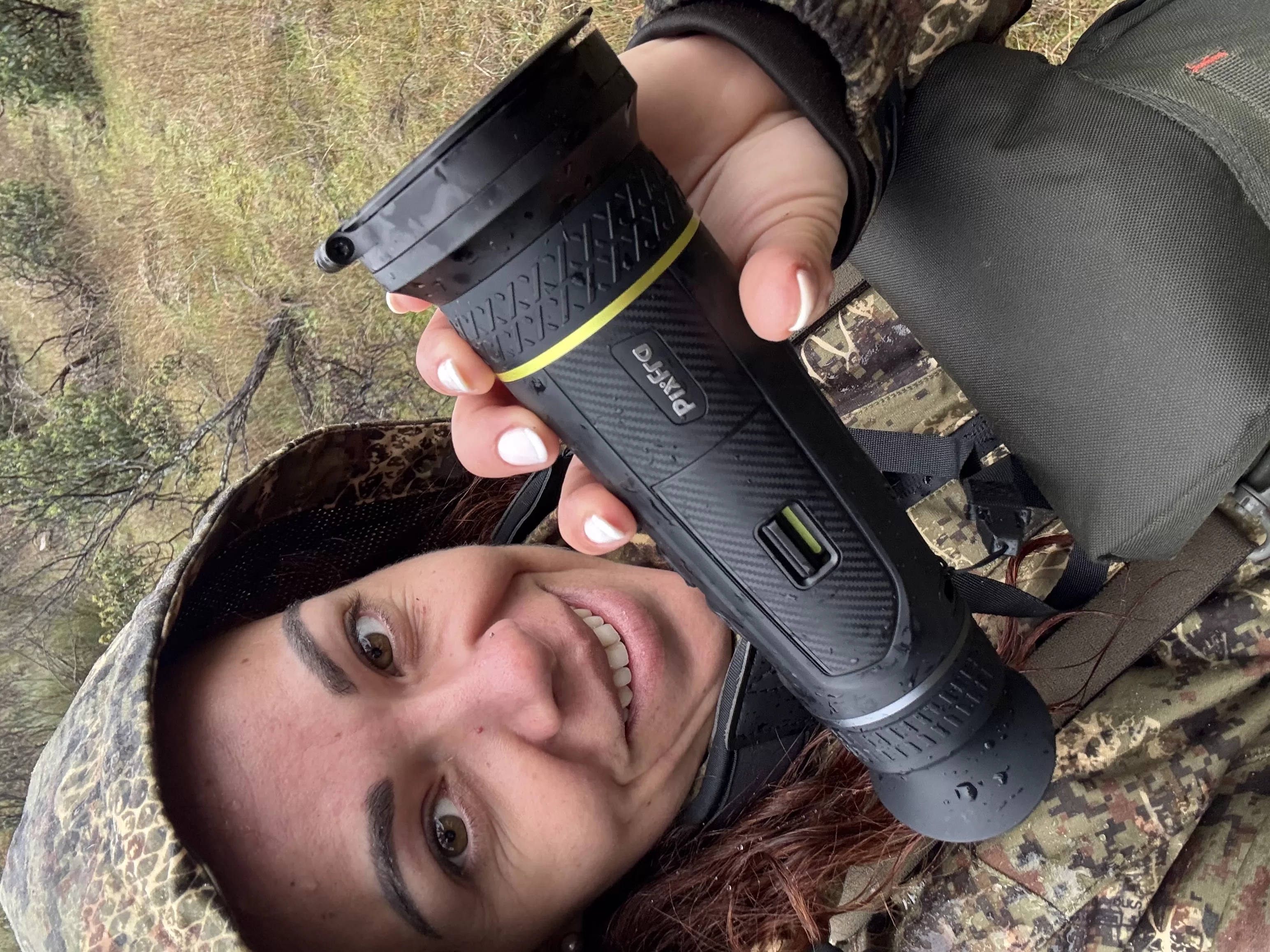
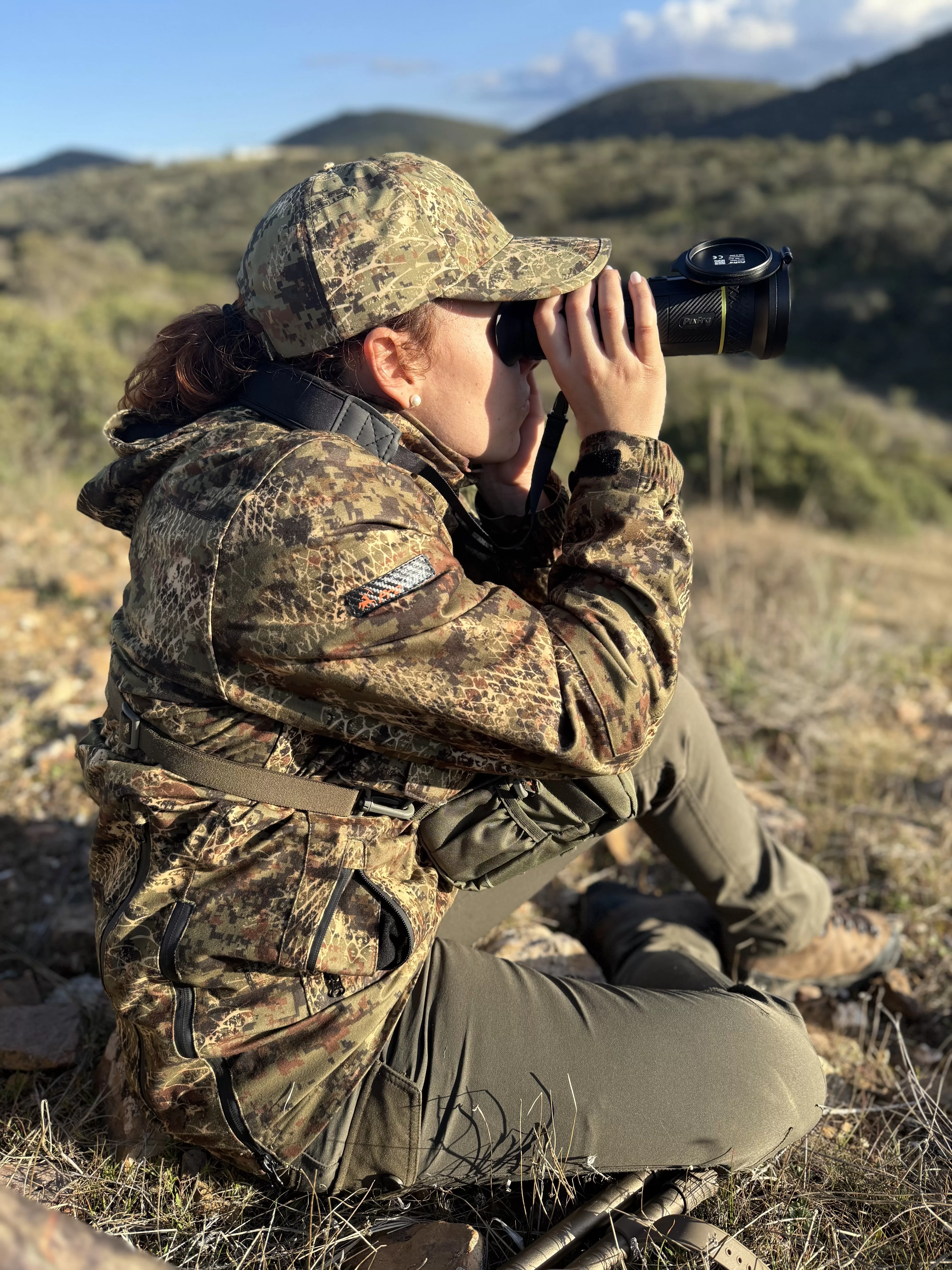
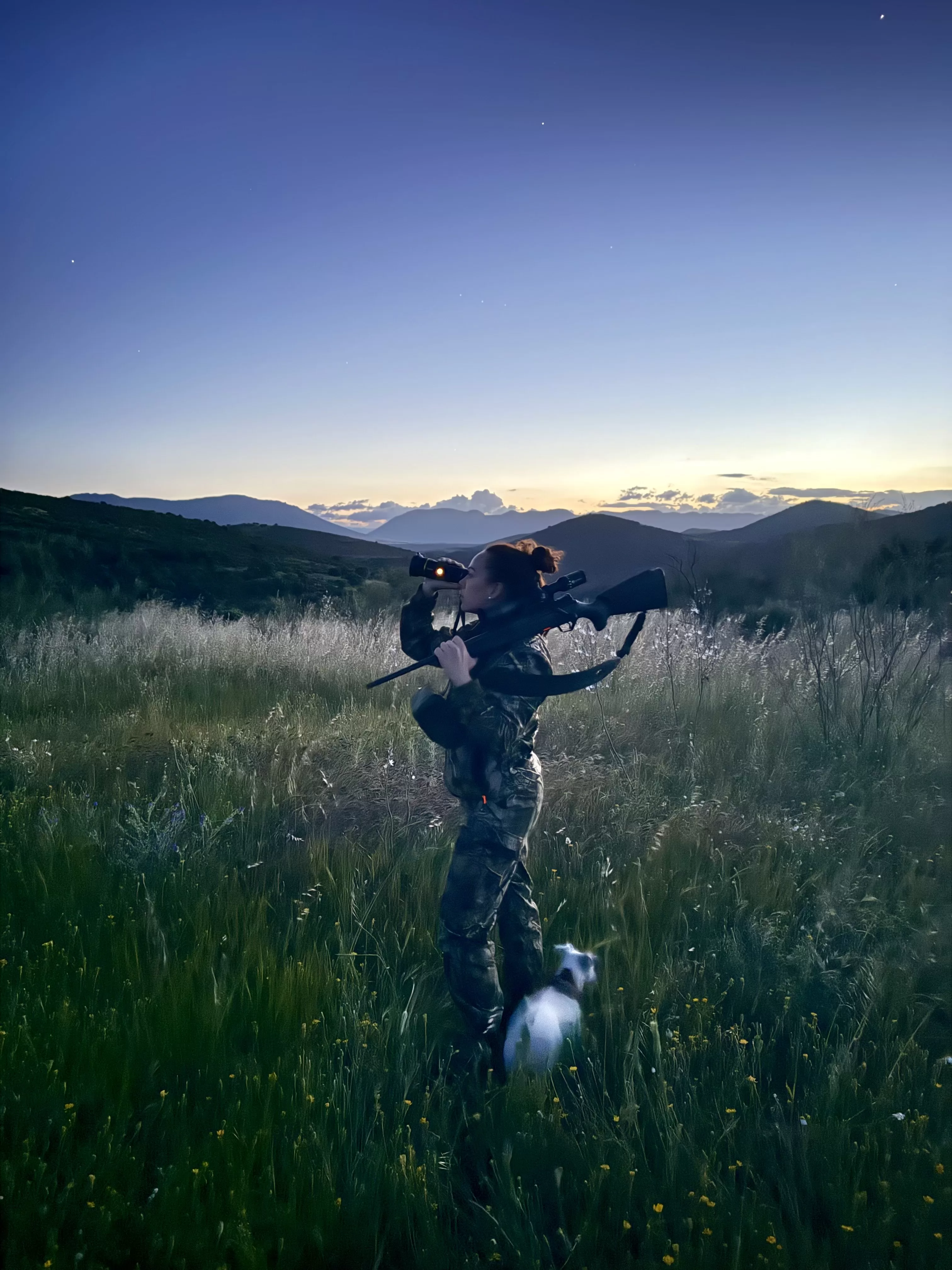
Jutiklis yra bet kurio įrenginio širdis terminis monokuliaras arba naktinio matymo akiniai,kurios tiesiogiai lemia vaizdo kokybę, aptikimo galimybes ir bendrą sistemos našumą. Vertinant šiluminius monokuliarus, skirtus medžioklei Europoje, ypatingą dėmesį reikia skirti dviem pagrindinėms jutiklio charakteristikoms: skiriamajai gebai ir šiluminiam jautrumui.
Skiriamoji geba, matuojama pikseliais, apibrėžia šiluminių vaizdų detalumo lygį. Šiuo metu rinkoje siūlomi produktai svyruoja nuo pradinio lygio 256×192 jutiklių iki aukščiausios klasės 640×512 jutiklių masyvų. Šis skiriamosios gebos skirtumas tampa ypač reikšmingas didesniu atstumu, kur aukštesnės skiriamosios gebos jutikliai užtikrina žymiai daugiau detalių, leidžiančių tiksliai identifikuoti medžiojamus gyvūnus. „Pixfra“ produktų linija atspindi šį asortimentą: „Mile 2“ serija siūlo 256×192 ir 384×288 variantus, o aukščiausios klasės „Sirius“ serija užtikrina 640×512 skiriamąją gebą, leidžiančią atpažinti maksimaliai daug detalių.
Terminis jautrumas, matuojamas kaip triukšmo ekvivalentinis temperatūrų skirtumas (NETD) milikelvinais (mK), rodo mažiausią temperatūrų skirtumą, kurį jutiklis gali užfiksuoti – kuo mažesnės vertės, tuo geresnės charakteristikos. Aukščiausios klasės Europos rinkai skirti terminiai monokuliarai pasiekia jautrumą ≤25 mK, o aukščiausios klasės modeliai, tokie kaip „Pixfra Sirius“ serija, pasiekia išskirtinį ≤18 mK NETD. Šis puikus jautrumas ypač vertingas drėgnomis Europos sąlygomis, kur mažesnio jautrumo sistemomis gali būti sunku aptikti nežymius temperatūrų skirtumus tarp medžiojamų gyvūnų ir aplinkinės augmenijos.
Remiantis Europos medžioklės technologijų instituto tyrimais:
“Padidinus jutiklio skiriamąją gebą nuo 384×288 iki 640×512, tipinėmis Europos medžioklės sąlygomis užtikrinamas maždaug 40% didesnis efektyvus atpažinimo nuotolis, o padidinus jautrumą nuo 50 mK iki 25 mK, sudėtingomis terminėmis sąlygomis aptikimo galimybės išplečiamos maždaug 35%.”
Optinė sistema, veikdama kartu su jutikliu, lemia bendrą vaizdo kokybę ir praktinį naudingumą. Renkantis šiluminius monokuliarus, skirtus medžioklei Europoje, reikėtų atidžiai įvertinti keletą optinių parametrų.
Padidinimo galimybės termovizinių monokuliarų rinkoje labai skiriasi, o tai turi įtakos tiek aptikimo nuotoliui, tiek matymo laukui. Dauguma termovizinių monokuliarų siūlo 2–4× bazinį optinį padidinimą, paprastai papildomą skaitmeniniu priartinimu. „Pixfra Mile 2“ serijos prietaisai užtikrina 2,5× bazinį didinimą su skaitmeninio priartinimo funkcija, o „Sirius“ serijos prietaisai siūlo pažangesnę 2,5–5× optiką su tolydžiu priartinimu, kuri išlaiko visą jutiklio skiriamąją gebą visame priartinimo diapazone – tai reikšmingas pranašumas, palyginti su skaitmeniniu priartinimu, kuris sumažina faktinę skiriamąją gebą.
Regėjimo laukas (FOV) yra dar vienas svarbus optinis veiksnys, kurio reikalavimai priklauso nuo medžioklės aplinkos ir technikos. Vokietijoje ir Prancūzijoje paplitusiuose variniuose medžioklės būduose paprastai naudingas platesnis regos laukas (12–15°), leidžiantis greitai aptikti taikinį dinamiškose situacijose, o medžioklė kalnuose Alpių regionuose gali būti palankesnė siauresniam regos laukui (6–9°), optimizuotam aptikti taikinį iš didesnio atstumo.
Objektyvo kokybė turi didelę įtaką vaizdo ryškumui ir aptikimo nuotoliui. Aukščiausios klasės šiluminiai monokuliarai turi aukštos kokybės germanio objektyvus su specialiais padengimais, kurie maksimaliai padidina infraraudonųjų spindulių pralaidumą. Konkretus objektyvo skersmuo lemia kompromisą tarp šviesos surinkimo gebos ir sistemos dydžio bei svorio – tai svarbus veiksnys medžioklės kalnuose sąlygomis, kai įrangos svoris tampa ypač svarbus.
| Medžioklės scenarijus | Optimalus matymo laukas | Rekomenduojamas didinimas | Naudojimo rekomendacijos |
|---|---|---|---|
| Alpių gemzė | 6-8° | 4-5× | Prioritetas aptikti tolimus objektus |
| Medžioklė ant šernų | 12-15° | 2-3× | Pirmenybė greitam įsigijimui |
| Medžioklė miške | 9-12° | 3-4× | Subalansuotas požiūris |
| Žemės ūkio apsauga | 7-10° | 3-5× | Aptikimo nuotolio prioritetas |
Aptikimo nuotolis yra bene svarbiausias praktinis šiluminių monokuliarų veikimo rodiklis, vertinant jų naudojimą Europos medžioklėje. Ši specifikacija nurodo didžiausią atstumą, iš kurio prietaisas gali aptikti, atpažinti ir identifikuoti tikslus įvairiomis sąlygomis.
Aptikimo nuotolis priklauso nuo daugelio veiksnių, įskaitant jutiklio skiriamąją gebą, objektyvo kokybę, ekrano technologiją ir objekto dydį. Profesionaliose šiluminiuose monokuliaruose nurodomi aptikimo nuotoliai standartizuotų dydžių objektams, paprastai žmogaus dydžio objektams (1,8 × 0,5 m) ir dideliems gyvūnams (2,0 × 0,75 m). Vertinant gamintojo technines charakteristikas, svarbu suprasti, į kokį standartizuotą taikinį daroma nuoroda, nes mažesnių medžiojamų gyvūnų aptikimo nuotoliai bus proporcingai mažesni.
Aukščiausios klasės Europos rinkai skirti šiluminiai monokuliarai užtikrina aptikimo nuotolius, kurie labai skiriasi priklausomai nuo produkto klasės:
„Pixfra Sirius“ serijos prietaisai šiuo atžvilgiu pasižymi išskirtinėmis galimybėmis – optimaliomis sąlygomis didelių objektų aptikimo nuotolis viršija 1 900 metrų. Šios išplėstos aptikimo galimybės suteikia Europos medžiotojams reikšmingų taktinių pranašumų, leidžiančių aptikti medžiojamus gyvūnus gerokai anksčiau, nei jie pastebi žmogaus buvimą.
Svarbu atkreipti dėmesį, kad atpažinimo atstumas (atstumas, iš kurio galima nustatyti gyvūno rūšį) ir identifikavimo atstumas (atstumas, iš kurio galima įžvelgti konkrečius bruožus) yra žymiai mažesni nei aptikimo atstumas. Paprastai atpažinimas įvyksta maždaug 50–60% nuo maksimalaus aptikimo atstumo, o identifikavimui reikalingas mažesnis atstumas – maždaug 30–40% nuo aptikimo atstumo.
Vaizdo apdorojimo galimybės yra dažnai nepakankamai įvertinamas, tačiau itin svarbus terminio monokuliaro veikimo aspektas. Neapdoroti terminiai duomenys reikalauja sudėtingo apdorojimo, kad temperatūros rodmenys būtų paversti naudinga vaizdine informacija, o tarp paprastų ir pažangių apdorojimo sistemų pastebimi žymūs veikimo skirtumai.
Šiuolaikiniai aukščiausios klasės terminiai monokuliarai naudoja daugiapakopius apdorojimo procesus, kurie pagerina vaizdo ryškumą, sumažina triukšmą ir optimizuoja kontrastą, atsižvelgiant į konkrečius aptikimo scenarijus. „Pixfra“ vaizdo apdorojimo sistema (PIPS 2.0) iliustruoja šį pažangų metodą, siūlydama tokias funkcijas kaip prisitaikantis triukšmo mažinimas, dinaminio diapazono optimizavimas, kontūrų išryškinimas ir detalių išsaugojimo algoritmai, kurie išlaiko svarbiausias terminio vaizdo detales, tuo pačiu pašalindami jutiklio triukšmą.
Šios apdorojimo galimybės daro didžiulį poveikį veikimui lauke, ypač sudėtingose aptikimo situacijose, kai tarp objekto ir fono yra minimalus šiluminis kontrastas. Remiantis Europos laukinės gamtos valdymo asociacijos atliktais bandymais:
“Pažangūs vaizdo apdorojimo algoritmai gali padidinti efektyvų aptikimo nuotolį 35–40%, palyginti su paprastu apdorojimu, net ir naudojant tą pačią jutiklio aparatūrą.”
Praktinis poveikis ypač aiškiai pasireiškia anksti ryte arba vėlyvą vakarą vykstančių medžioklių metu – tai įprasta Europos medžioklės tradicijose, kai aplinkos temperatūros skirtumai yra minimalūs, o medžiojami gyvūnai nuo aplinkos gali skirtis tik nežymiais šiluminiais skirtumais. Aukščiausios klasės apdorojimo sistemos gali išgauti naudingą aptikimo informaciją iš šių minimalių skirtumų, tuo tarpu paprastos sistemos nesugebėtų nustatyti medžiojamo gyvūno buvimo.
Ieškokite šiluminių monokulių, siūlančių įvairias spalvų paletes (baltas karštas, juodas karštas, raudonas karštas ir pan.), kurios leidžia pritaikyti įrenginį skirtingiems aptikimo scenarijams. Pažangiausios sistemos siūlo konkrečioms aplinkoms pritaikytus apdorojimo režimus, kurie automatiškai optimizuoja parametrus atsižvelgiant į veikimo aplinką – mišką, lauką, miestą ir pan. – taip užtikrinant maksimalų aptikimo efektyvumą įvairiose Europos medžioklės vietovėse.
Europos medžioklės sąlygos kelia griežtus ilgaamžiškumo reikalavimus šiluminiams monokuliarams, o šie reikalavimai skirtinguose medžioklės regionuose ir pagal skirtingas tradicijas labai skiriasi. Nuo drėgnų Šiaurės Europos miškų sąlygų iki ekstremalaus šalčio Alpių medžioklės vietovėse ir dulkių Viduržemio jūros regione – šiluminiai monokuliarai turi išlaikyti savo veikimą įvairiomis aplinkos sąlygomis.
IP (Ingress Protection) klasifikacija nustato standartizuotus aplinkos apsaugos rodiklius. Profesionalaus lygio šiluminiai monokuliarai turėtų užtikrinti ne mažesnę kaip IP66 apsaugą (visišką apsaugą nuo dulkių ir atsparumą aukšto slėgio vandens srovei), o aukščiausios klasės sistemos – IP67 (atsparumą laikinam panardinimui į vandenį). „Pixfra Mile 2“ ir „Sirius“ serijos puikiai iliustruoja šį požiūrį, nes turi visapusišką IP67 apsaugą, užtikrinančią patikimą veikimą visose Europos medžioklės aplinkose.
Darbo temperatūros diapazonas yra dar viena itin svarbi techninė charakteristika, ypač medžioklės sąlygomis Alpėse ir Šiaurės Europoje, kur ekstremalus šaltis gali pakenkti akumuliatoriaus veikimui ir elektronikos patikimumui. Aukščiausios klasės terminiai monokuliarai išlaiko nurodytą našumą temperatūrų diapazone, paprastai svyruojančiame nuo -20 °C iki +50 °C, o patikimos vidinės šilumos valdymo sistemos apsaugo jautrius komponentus nuo ekstremalių temperatūrų.
Fizinė konstrukcijos kokybė turi didelę įtaką ilgaamžiškumui lauke – aukščiausios klasės sistemose naudojami sustiprinti polimerų arba lengvųjų metalų lydinių korpusai, kurie atlaiko smūgius ir kartu užtikrina minimalų svorį. Rinkitės guminiais apvalkalais dengtus korpusus, kurie suteikia papildomą apsaugą nuo smūgių ir geresnį sukibimą drėgnomis sąlygomis, kurios dažnai pasitaiko Europos medžioklės vietovėse.
Europos medžioklės įrangos bandymų institutas praneša:
“Ilgaamžiškumo sutrikimai yra pagrindinė šiluminės optikos lauko įrangos gedimų priežastis – apie 68% užregistruotų problemų yra susijusios su netinkamu apsauginiu sandarumu nuo aplinkos veiksnių, o ne su elektroninių komponentų gedimais.”
Baterijos veikimas yra itin svarbus veiksnys, į kurį reikia atsižvelgti renkantis šiluminius monokuliarus, naudojamus medžioklėje Europoje, kur ilgos operacijos lauke ir sudėtingos aplinkos sąlygos reikalauja patikimo energijos valdymo. Keletas pagrindinių techninių charakteristikų lemia realų baterijos veikimą medžioklės sąlygomis.
Veikimo trukmė yra tiesioginis akumuliatoriaus našumo rodiklis, kurio reikšmės rinkoje labai skiriasi. Pradinio lygio šiluminiai monokuliarai paprastai užtikrina 4–5 valandas nepertraukiamo veikimo, o aukščiausios klasės sistemos, naudodamos efektyvesnę elektroniką ir didesnės talpos baterijas, šį laiką prailgina iki 6–8 ir daugiau valandų. Šie skirtumai tampa ypač svarbūs per kelias valandas trunkančius medžioklės reidus Europoje ar ilgai trunkančias Alpių tykojimo ekspedicijas.
Kitas svarbus aspektas – akumuliatoriaus tipas; daugumoje profesionalių sistemų naudojama įkraunamų ličio jonų technologija. Pažangesnėse sistemose įdiegtos išimamų akumuliatorių konstrukcijos, leidžiančios nedelsiant atnaujinti veikimą naudojant iš anksto įkrautus atsarginius akumuliatorius, o ne priversti įkrauti juos darbo vietoje. „Pixfra Sirius“ serija puikiai iliustruoja šį požiūrį savo greito keitimo akumuliatorių sistema, užtikrinančia nepertraukiamą veikimą per ilgai trunkančias medžioklės ekspedicijas.
Įvairių baterijų technologijų veikimas šaltu oru labai skiriasi, o tai ypač aktualu medžioklės sąlygomis Alpėse ir Šiaurės Europoje. Aukščiausios klasės šiluminiai monokuliarai turi baterijų izoliaciją ir temperatūros valdymo funkcijas, kurios užtikrina jų veikimą esant minusinei temperatūrai, kai standartinių baterijų veikimas gali greitai pablogėti.
Energijos valdymo funkcijos leidžia prailginti faktinį veikimo laiką už baterijos talpos ribų. Pažangios sistemos turi budėjimo režimus, automatinio išjungimo funkcijas ir išorinio maitinimo galimybes, kurios maksimaliai prailgina veikimo trukmę – tai ypač vertinga laukinės gamtos valdymo srityje, kuri yra įprasta Europoje, kur populiacijų stebėjimui ar moksliniams tyrimams gali prireikti ilgesnių stebėjimo laikotarpių.
Termininių monokuliarių valdymo sąsajos dizainas turi didelę įtaką jų naudojimo patogumui lauke, ypač sudėtingomis sąlygomis, būdingomis Europos medžioklės scenarijams. Intuityvus valdymas, logiška meniu struktūra ir apgalvotas mygtukų išdėstymas gali nulemti, ar kritiniais momentais pavyks sėkmingai naudotis prietaisu, ar bus praleistos progos.
Mygtukų skaičius ir išdėstymas yra vienas iš svarbiausių aspektų, o veiksmingi dizainai suderina funkcionalumą ir sudėtingumą. Aukščiausios klasės terminiai monokuliarai, tokie kaip „Pixfra Mile 2“ serijos modeliai, turi 4–5 strategiškai išdėstytus mygtukus, kuriuos galima atskirti pagal reljefą, todėl juos galima valdyti apčiuopai, nenukreipiant žvilgsnio nuo okuliaro – tai ypač vertinga medžioklės sąlygomis Europoje, kai apšvietimas yra silpnas.
Meniu struktūros dizainas turi didelę įtaką veiklos efektyvumui. Intuityvios, hierarchinės meniu sistemos, leidžiančios tiesiogiai pasiekti dažnai naudojamas funkcijas, sumažina laiką, reikalingą nustatymams koreguoti darbo sąlygomis. Efektyviausiuose sprendimuose naudojami kontekstiniai meniu, kuriuose, atsižvelgiant į esamą veikimo režimą, rodomos tik aktualios parinktys.
Ekrano kokybė tiesiogiai veikia gebėjimą interpretuoti vaizdą. Aukščiausios klasės terminiuose monokuliaruose naudojami OLED arba AMOLED ekranai, kurių skiriamoji geba yra 1024×768 ar didesnė, užtikrinantys puikų kontrastą ir vaizdo detalumą, palyginti su standartiniais LCD ekranais. Atkreipkite dėmesį į reguliuojamus ryškumo nustatymus, leidžiančius pritaikyti ekraną prie įvairių aplinkos apšvietimo sąlygų – nuo visiškos tamsos iki naudojimo dienos šviesoje.
Europos medžioklės įrangos asociacija praneša:
“Vartotojo sąsajos dizainas patenka į tris svarbiausius veiksnius, į kuriuos atsižvelgia profesionalūs medžiotojai ir gidai renkantis įrangą; 87% nurodo, kad intuityvus valdymas yra ‘itin svarbus’ šiluminei optikai, naudojamai kintančiomis apšvietimo sąlygomis, būdingomis Europos medžioklės scenarijams.”
Norint pasirinkti optimalų šiluminį monokuliarą, skirtą medžioklei Europoje, reikia atidžiai įvertinti daugelį techninių ir praktinių veiksnių. Jutiklio kokybės, optinių charakteristikų, vaizdo apdorojimo, patvarumo, baterijos veikimo ir valdymo sąsajos dizaino sąveika lemia prietaiso praktinį naudingumą įvairiomis aplinkos sąlygomis, būdingomis Europos medžioklės aplinkybėms.
Vokietijoje ir Prancūzijoje paplitusiems medžioklės būdams iš artimo atstumo gali pasirodyti optimalūs šiluminiai monokuliarai, kuriuose akcentuojamas platesnis matymo laukas ir greitas taikinio aptikimas. Medžioklės Alpių kalnuose iš didelio atstumo atveju geriausius rezultatus užtikrina sistemos, kuriose prioritetas teikiamas aptikimo nuotoliui ir vaizdo detalumui. Įvairiapusiškam naudojimui, atsižvelgiant į skirtingas Europos medžioklės tradicijas, išsamiausią sprendimą siūlo sistemos, kuriose šios savybės suderintos su praktiniais lauko sąlygų reikalavimais, pavyzdžiui, patvarumu ir baterijos veikimu.
Sistemingai vertindami šiuos veiksnius atsižvelgdami į konkrečius medžioklės reikalavimus, Europos medžiotojai gali pasirinkti savo konkrečioms reikmėms pritaikytus šiluminius monokuliarus, taip padidindami medžioklės efektyvumą ir pagerindami bendrą patirtį lauke įvairiuose žemyno medžioklės kraštovaizdžiuose.
Jei norite susipažinti su „Pixfra“ aukščiausios kokybės šiluminių monokuliarų sprendimais, skirtais medžioklei Europoje, arba aptarti platinimo galimybes jūsų regione, mūsų techniniai specialistai yra pasirengę pateikti išsamią informaciją ir individualias rekomendacijas, atsižvelgdami į jūsų konkrečius poreikius.
Nuo universalių „Mile 2“ serijos šiluminių monokuliarių iki aukštos kokybės „Sirius“ serijos prietaisų, pasižyminčių išskirtinėmis aptikimo galimybėmis, „Pixfra“ siūlo šiluminius sprendimus, sukurtus specialiai atsižvelgiant į Europos medžioklės sąlygas ir teisinius reikalavimus.
Susisiekite su mūsų Europos rinkos specialistais jau šiandien adresu info@pixfra.com arba apsilankykite svetainėje pixfra.com, kad susipažintumėte su visu mūsų produktų asortimentu ir sužinotumėte daugiau apie tai, kaip tapti „Pixfra“ platinimo partneriu savo regione.
Teisėtumas terminiai monokuliarai Europos šalyse labai skiriasi, o teisės aktai paprastai grindžiami numatomais naudojimo atvejais, o ne pačia technologija. Šis subtilus reguliavimo požiūris sudaro sudėtingą situaciją tiek vartotojams, tiek platintojams, kurie geriausi šiluminės vaizdo monokuliarai. Daugumoje Europos šalių civiliams paprastai leidžiama turėti terminius monokuliarus kaip stebėjimo prietaisus, tačiau tam tikrais naudojimo atvejais – ypač medžioklės tikslais – jiems gali būti taikomi papildomi reikalavimai ar apribojimai.
Europos reguliavimo sistemoje paprastai skiriami šiluminiai prietaisai, skirti pirmiausia stebėjimui (pavyzdžiui, rankiniai šiluminiai monokuliarai), ir tie, kurie specialiai suprojektuoti montuoti ant ginklų (šiluminiai optiniai taikikliai). Pavyzdžiui, „Pixfra Mile 2“ serijos terminis monokuliaras yra sukurtas kaip specializuota stebėjimo platforma be ginklo tvirtinimo sąsajų, todėl reguliavimo klasifikacijose jis priskiriamas kitai kategorijai nei specialiai ginklams sukurti terminiai taikikliai.
Šis reguliavimo skirtumas atsispindi Europos Komisijos dvejopo naudojimo prekių sistemoje, kurioje šiluminės vaizdo įranga klasifikuojama pagal technines specifikacijas ir numatytą paskirtį. Remiantis Europos Sąjungos eksporto kontrolės reglamentu (EB) Nr. 428/2009:
“Šiluminės vaizdo įrangai taikomi skirtingi reguliavimo priežiūros lygiai, priklausomai nuo techninių specifikacijų, numatytos paskirties ir ES direktyvų įgyvendinimo konkrečioje šalyje.”
Šių skirtumų supratimas yra būtinas siekiant laikytis teisės aktų reikalavimų visose Europos rinkose, ypač šiluminių vaizdų technologijos platintojams ir komerciniams naudotojams.
Taisyklės, reglamentuojančios termovizinius monokuliarius, pagrindinėse Europos medžioklės rinkose labai skiriasi, o tai atspindi skirtingus požiūrius į laukinės gamtos valdymą, medžioklės tradicijas ir saugumo aspektus. Dėl šios reguliavimo įvairovės tiek vartotojams, tiek platintojams būtina parengti konkrečioms šalims pritaikytas atitikties strategijas.
Prancūzija taiko palyginti liberalią politiką termalinių stebėjimo prietaisų atžvilgiu – civiliai paprastai gali įsigyti ir naudoti stebėjimo tikslais termalinius monokuliarus, pavyzdžiui, „Pixfra Mile 2“ serijos prietaisus. Tačiau šiluminių vaizdo įrenginių naudojimas medžioklėje yra griežčiau reglamentuojamas – Prancūzijos aplinkos kodeksas paprastai draudžia naudoti šiluminius prietaisus medžioklėje, išskyrus atvejus, kai vietos valdžios institucijos išduoda specialius leidimus kenkėjų kontrolei.
Vokietija taiko griežtesnius reikalavimus, aiškiai atskirdama stebėjimo prietaisus nuo medžioklės įrangos. Nors šiluminius monokuliarus, kurių negalima pritvirtinti prie ginklo, paprastai leidžiama turėti, Vokietijos medžioklės įstatymas (Bundesjagdgesetz) tradiciškai draudžia juos naudoti medžioklės metu. Neseniai priimti teisės aktų pakeitimai numatė išimtis tam tikroms kenkėjų kontrolės situacijoms, ypač šernų populiacijos valdymui, siekiant užkirsti kelią afrikinio kiaulių maro plitimui.
Ispanija taiko regioninį reguliavimo modelį, pagal kurį autonominės bendruomenės nustato skirtingus teisės aktus. Dauguma Ispanijos regionų leidžia naudoti šiluminius monokuliarus stebėjimo tikslais, o jų naudojimas medžioklės sąlygomis priklauso nuo regiono ir konkrečios paskirties. Daugelis autonominių bendruomenių yra nustačiusios išimtis, susijusias su naktiniu šernų skaičiaus reguliavimu, taip sukuriant specialias teisines galimybes naudoti šiluminius prietaisus šiais ribotais atvejais.
Ši reguliavimo įvairovė pabrėžia, kaip svarbu suprasti vietinius teisės aktus, naudojant šiluminius monokuliarus skirtingose Europos jurisdikcijose.
Medžioklė yra labiausiai reglamentuotas terminio monokuliaro naudojimo atvejis Europos jurisdikcijose, o leidžiamumas šioje srityje labai skiriasi priklausomai nuo laukinės gamtos valdymo tikslų, rūšių klasifikacijos ir regioninių medžioklės tradicijų. Dėl šio reguliavimo sudėtingumo medžiotojai ir laukinės gamtos valdytojai, naudojantys terminio vaizdo technologiją, turi elgtis atsargiai.
Daugelis Europos šalių yra nustačiusios konkrečias išimtis iš bendrųjų draudimų medžioti naudojant šiluminius prietaisus, ypač siekiant valdyti invazines ar problemų keliančias rūšis. Dažniausiai taikoma išimtis yra šernų populiacijos reguliavimas, o tarp šalių, kuriose tai taikoma, yra:
| Šalis | Išimtis dėl šernų šiluminių savybių | Išimtys, susijusios su kitomis rūšimis | Reikalingi leidimai |
|---|---|---|---|
| Prancūzija | Ribotos regioninės licencijos | Lapės tam tikrose vietovėse | Prefektūros leidimas |
| Vokietija | Išplėsta nuo 2020 m. | Ribota plėšrūnų kontrolė | Regioninės medžioklės tarnybos leidimas |
| Ispanija | Skiriasi priklausomai nuo autonominės bendruomenės | Plėšrūnų populiacijų valdymo programos | Regioniniai leidimai |
| Lenkija | Paprastai leidžiama | Kai kurios plėšrūnų rūšys | Standartinė medžioklės licencija |
Šiose išimtėse paprastai nurodoma, ar šiluminiai prietaisai gali būti naudojami tik aptikimui (šiuo atveju pirmenybė teikiama stebėjimo prietaisams, pavyzdžiui, „Pixfra Mile 2“ serijos), ar tiek aptikimui, tiek šaudymui (šiuo atveju reikalingos prie ginklo tvirtinamos sistemos). Europos medžioklės ir gamtos apsaugos asociacijų federacija (FACE) pažymi:
“Reguliavimo tendencijos visoje Europoje rodo, kad šiluminės vaizdo technologija vis plačiau pripažįstama tam tikroms laukinės gamtos valdymo reikmėms, ypač invazinių rūšių kontrolei, nors ir taikomi kruopščiai apibrėžti apribojimai, siekiant išsaugoti tradicinę medžioklės etiką ir sąžiningos medžioklės principus.”
Medžiotojams, veikiantiems keliose Europos šalyse, dėl šių reguliavimo skirtumų būtina atidžiai laikytis vietinių teisės aktų, o tam, kad būtų užtikrintas atitikimas reikalavimams skirtinguose regionuose, gali prireikti skirtingų įrangos konfigūracijų.
Profesionalaus ir oficialaus naudojimo atvejai, susiję su šiluminiais monokularais, paprastai Europos šalyse turi platesnes teisinės reguliavimo išimtis, palyginti su pramoginiu naudojimu. Šios išimtys pripažįsta teisėtą poreikį naudoti pažangias šiluminio vaizdo gavimo funkcijas įvairiose profesinėse srityse.
Teisėsaugos institucijos visoje Europoje paprastai taiko plačias išimtis, susijusias su šiluminių vaizdo įrangos naudojimu, įskaitant pažangias sistemas, pavyzdžiui, „Pixfra Sirius“ serijos įrangą, pasižyminčią 640×512 skiriamąja geba ir išskirtiniu ≤18 mK NETD jautrumu. Šios galimybės pasirodo ypač vertingos vykdant paieškos ir gelbėjimo operacijas, sekant įtariamuosius bei renkant įrodymus.
Gyvūnijos valdymo specialistai, įskaitant dirbančius vyriausybės institucijose, paprastai veikia pagal konkrečias reguliavimo išimtis, leidžiančias naudoti šiluminius vaizdo įrašus šiais tikslais:
Žemės ūkio apsauga yra dar viena sritis, kurioje dažnai taikomos profesinės išimtys, ypač siekiant užkirsti kelią šernų ir kitų žemės ūkio kenkėjų daromai žalai. Šioms išimtims paprastai reikalingi oficialūs žemės ūkio institucijų dokumentai, patvirtinantys ekonominę žalą ir būtinybę.
Europos profesionalių laukinės gamtos valdymo asociacija praneša:
“Profesionalūs vartotojai, veikiantys oficialiu statusu, sudaro maždaug 23% visų šiluminių vaizdo įrenginių naudojimo Europos rinkose, o šie vartotojai paprastai gali pasinaudoti platesnėmis reguliavimo išimtimis, pagrįstomis konkrečiais laukinės gamtos valdymo įgaliojimais.”
Šios išimtys, susijusios su profesionaliu naudojimu, rodo, kad Europos reguliavimo institucijos pripažįsta teisėtus šiluminės vaizdo įrangos taikymo atvejus laukinės gamtos valdymo, apsaugos ir saugumo srityse, net ir tais atvejais, kai pramoginiam naudojimui taikomi griežtesni apribojimai.
Be naudojimo atvejų reglamentavimo, Europos jurisdikcijos dažnai taiko techninių specifikacijų apribojimus, kurie riboja tam tikras komerciškai prieinamų šiluminių monokuliarų funkcijas. Šie techniniai apribojimai paprastai susiję su skiriamąja geba, jautrumu ir pažangiomis funkcijomis, kurios gali turėti dvejopo naudojimo pasekmių.
The most common technical specification restrictions include:
Resolution Limitations: Some European jurisdictions restrict civilian access to thermal imaging devices exceeding specific resolution thresholds, typically around 640×512 pixels. The Pixfra product lineup accommodates these varying restrictions by offering multiple resolution options, from the Mile 2 Series’ 256×192 and 384×288 configurations to the premium Sirius Series’ 640×512 sensor.
Sensitivity Thresholds: Certain high-sensitivity thermal capabilities may face restrictions in specific markets, though most commercial thermal monoculars like the Pixfra lineup fall within commonly permitted sensitivity ranges (≤18-25mK NETD).
Recording Capabilities: Some jurisdictions impose restrictions on recording functionality in thermal devices, particularly when used in specific contexts. The configurable recording options in Pixfra devices allow for compliance with these varying requirements.
Export Restrictions: The European Union maintains export control regulations on certain thermal imaging technologies under the Wassenaar Arrangement, potentially limiting transfer of specific high-performance thermal devices to non-EU countries.
According to the European Security Technology Organization:
“Technical specification restrictions aim to balance legitimate civilian access to thermal imaging technology while preventing potential misuse, with approximately 94% of commercially marketed thermal monoculars falling within generally permitted technical parameters across most European markets.”
Understanding these technical specification restrictions is particularly important for distributors and commercial importers of thermal imaging equipment to ensure regulatory compliance across different European markets.
Navigating the complex regulatory landscape for thermal monoculars across European jurisdictions requires a structured compliance approach. Implementing these best practices helps ensure legal operation while maximizing the utility of thermal imaging technology within applicable regulatory frameworks.
Documentation Maintenance: Maintaining proper documentation proves essential for both users and distributors of thermal monoculars. This includes purchase receipts, technical specifications, and any applicable permits or authorizations. For specialized applications like pest control or agricultural protection, documentation of purpose and authorization should be readily available during field use.
Use Case Clarity: Clearly distinguishing between observation and targeting applications helps navigate use-specific regulations. The Pixfra Mile 2 Series, designed specifically as observation devices without weapon mounting interfaces, provides clear use case definition that simplifies compliance in many regulatory contexts.
Professional Affiliation Documentation: Users operating under professional exemptions should maintain formal documentation of their official capacity and specific authorizations, particularly when operating high-performance systems like the Pixfra Sirius Series in regulated contexts.
Regular Regulatory Monitoring: Given the evolving nature of thermal imaging regulations across Europe, regular monitoring of regulatory changes is essential. The European Hunting Technology Association notes:
“Thermal imaging regulations across EU member states have undergone revisions in approximately 63% of jurisdictions over the past five years, largely trending toward greater permissions for specific wildlife management applications.”
Distributor Due Diligence: For commercial distributors of thermal monoculars, implementing robust customer verification procedures helps ensure products are sold in compliance with local regulations. This includes verification of professional credentials for purchasers seeking access to models under professional use exceptions.
European regulations regarding thermal monoculars continue to evolve, with several identifiable trends shaping the future regulatory landscape. Understanding these trends helps users and distributors anticipate regulatory developments and adapt compliance strategies accordingly.
A significant trend toward expanded permissions for invasive species management is evident across multiple European jurisdictions. As challenges like African Swine Fever drive wild boar population control priorities, many countries have implemented or expanded exceptions for thermal imaging use in these specific management contexts. The European Wildlife Disease Association reports:
“Regulatory amendments permitting thermal imaging for wild boar management have been implemented in 76% of EU member states since 2019, reflecting the growing recognition of technology’s role in addressing wildlife disease management challenges.”
Simultaneously, a trend toward technical capability-based regulation rather than categorical prohibition is emerging. This approach focuses regulatory restrictions on specific high-end capabilities while permitting general-purpose thermal observation devices like the Pixfra Mile 2 Series for civilian use.
Harmonization efforts across EU member states represent another significant trend, with initiatives to standardize certain aspects of thermal imaging regulations to reduce cross-border compliance complications for users and manufacturers. While complete regulatory uniformity remains distant, these harmonization efforts target specific aspects like technical classification standards and professional use exceptions.
The trend toward performance-based exceptions—where regulatory permissions are tied to demonstrated wildlife management outcomes rather than blanket prohibitions—represents another evolution in European thermal imaging regulation, potentially expanding legal use cases where effective management results can be documented.
The legality of thermal monoculars across European jurisdictions presents a complex regulatory landscape that varies significantly based on jurisdiction, intended use, technical specifications, and user classification. While thermal observation devices like the Pixfra Mile 2 Series are generally legal for civilian ownership in most European countries, specific applications—particularly hunting use—face more variable regulations requiring careful compliance attention.
The general regulatory framework distinguishes between observation and targeting applications, with observation-specific devices typically facing fewer restrictions. Professional and official users generally enjoy broader exceptions, reflecting the legitimate applications of thermal imaging technology in wildlife management, conservation, and security contexts.
The regulatory trend across Europe shows movement toward more nuanced, use-case specific regulations rather than blanket prohibitions, particularly as thermal imaging technology demonstrates its value in wildlife management applications like invasive species control. This evolving regulatory landscape requires ongoing attention to compliance requirements across different jurisdictions.
For both users and distributors of thermal monoculars in European markets, maintaining current regulatory knowledge, proper documentation, and clear use case differentiation represents the foundation of a sound compliance strategy in this dynamic regulatory environment.
If you’re interested in exploring Pixfra’s thermal monocular solutions for European markets or require guidance on specific regulatory compliance across different jurisdictions, our regulatory specialists can provide market-specific information to support your distribution or usage requirements.
From the observation-focused Mile 2 Series to the professional-grade Sirius Series, Pixfra offers thermal solutions designed with European regulatory frameworks in mind, supported by comprehensive compliance documentation for distributors and end-users.
Contact our European regulatory team at info@pixfra.com or visit pixfra.com to discuss your specific market requirements and learn more about our compliant thermal imaging solutions for European applications.
The foundation of any premium thermal imaging monocular lies in its sensor technology, which directly determines detection capability, image quality, and overall performance. Modern thermal monoculars utilize uncooled microbolometer arrays, with significant performance differences emerging based on resolution, pixel pitch, and thermal sensitivity.Unlike tranditional night vision,which relies on amplifying ambient light,thermal imaging detects infrared radiation emitted by objects themselves.
Resolution represents the most immediately apparent specification, with current market offerings ranging from entry-level 256×192 sensors to premium 640×512 arrays. The difference between these resolutions becomes particularly significant at extended distances, where higher resolution sensors provide substantially more detail for positive identification of game animals. The Pixfra Mile 2 Series offers both 256×192 and 384×288 configurations, while the more advanced Sirius Series delivers exceptional detail with its 640×512 sensor array.
Equally important but often overlooked is thermal sensitivity, measured as Noise Equivalent Temperature Difference (NETD) in millikelvin (mK). This specification indicates the minimum temperature difference the sensor can detect, with lower values representing superior performance. Premium European-market thermal monoculars achieve sensitivities of ≤25mK, with top-tier models like the Pixfra Sirius S650D reaching exceptional ≤18mK NETD. This superior sensitivity enables detection of subtle temperature differentials that would remain invisible to less sensitive systems, particularly critical for identifying partially obscured game in complex thermal environments.
According to research from the European Hunting Technology Institute:
“Sensor resolution and thermal sensitivity represent the two most significant predictors of field performance in thermal monoculars, with high-resolution/high-sensitivity combinations delivering 76% greater effective detection ranges compared to entry-level specifications.”
While sensor technology provides the foundation for thermal performance, the optical system plays an equally crucial role in determining the practical utility of thermal monoculars in field conditions. Premium optical designs must balance multiple competing priorities including magnification, field of view, and form factor.
Objective lens diameter significantly impacts both light-gathering capability and overall system size, with most premium thermal monoculars utilizing objectives between 25mm and 50mm. Larger objectives generally provide better image quality but at the cost of increased size and weight. The Pixfra Sirius Series strikes an optimal balance with its 40mm germanium objective lens, delivering exceptional image quality while maintaining practical field portability.
Magnification capabilities vary widely across the thermal monocular market, with fixed magnification systems typically offering 2-4x optical magnification supplemented by digital zoom. More advanced systems now feature variable magnification optics, such as the innovative Pixfra Sirius S650D with its 25-50mm continuous zoom capability, providing 2.5-5x optical magnification. This optical zoom capability represents a significant advancement over digital zoom, maintaining full sensor resolution and image quality throughout the zoom range.
Field of view (FOV) represents another critical optical specification, particularly for hunting applications where situational awareness must be balanced with magnification. Premium thermal monoculars typically offer horizontal FOV between 6° and 15°, with the specific requirements varying based on hunting environments:
| Hunting Environment | Optimal Field of View | Recommended Pixfra Model |
|---|---|---|
| Dense Forest/Close Range | 12-15° | Mile 2 M256M |
| Mixed Woodland | 9-12° | Mile 2 M384L |
| Open Field/Long Range | 6-9° | Sirius S650D |
The quality of image processing algorithms represents a critical yet often overlooked component in thermal monocular performance. Raw thermal data requires sophisticated processing to transform temperature readings into useful visual information, with significant performance differences emerging between basic and advanced processing systems.
Modern premium thermal monoculars employ multi-stage processing pipelines that enhance image clarity, reduce noise, and optimize contrast for specific detection scenarios. The Pixfra Imaging Processing System (PIPS 2.0) exemplifies this advanced approach, incorporating multiple enhancement layers:
Šios apdorojimo galimybės daro didžiulį poveikį veikimui lauke, ypač sudėtingose aptikimo situacijose, kai tarp objekto ir fono yra minimalus šiluminis kontrastas. Remiantis Europos laukinės gamtos valdymo asociacijos atliktais bandymais:
“Pažangūs vaizdo apdorojimo algoritmai gali padidinti efektyvų aptikimo nuotolį 35–40%, palyginti su paprastu apdorojimu, net ir naudojant tą pačią jutiklio aparatūrą.”
The practical impact becomes particularly evident in early morning or late evening hunting scenarios, when environmental temperature gradients are minimal and game animals may present only subtle thermal differences from their surroundings. Premium processing systems like PIPS 2.0 can extract usable detection information from these minimal differentials when basic systems would fail to reveal the presence of game.
Detection range represents perhaps the most critical real-world performance metric for thermal monoculars in hunting applications. This specification quantifies the maximum distance at which the device can detect, recognize, and identify targets of interest under various conditions.
Detection range depends on multiple factors including sensor resolution, lens quality, and target size, with larger targets naturally detectable at greater distances. Professional-grade thermal monoculars specify detection ranges for standardized target sizes, typically human-sized subjects (1.8×0.5m) and large animals (2.0×0.75m).
Aukščiausios klasės Europos rinkai skirti šiluminiai monokuliarai užtikrina aptikimo nuotolius, kurie labai skiriasi priklausomai nuo produkto klasės:
„Pixfra Sirius“ serijos prietaisai šiuo atžvilgiu pasižymi išskirtinėmis galimybėmis – optimaliomis sąlygomis didelių objektų aptikimo nuotolis viršija 1 900 metrų. Šios išplėstos aptikimo galimybės suteikia Europos medžiotojams reikšmingų taktinių pranašumų, leidžiančių aptikti medžiojamus gyvūnus gerokai anksčiau, nei jie pastebi žmogaus buvimą.
Svarbu atkreipti dėmesį, kad atpažinimo atstumas (atstumas, iš kurio galima nustatyti gyvūno rūšį) ir identifikavimo atstumas (atstumas, iš kurio galima įžvelgti konkrečius bruožus) yra žymiai mažesni nei aptikimo atstumas. Paprastai atpažinimas įvyksta maždaug 50–60% nuo maksimalaus aptikimo atstumo, o identifikavimui reikalingas mažesnis atstumas – maždaug 30–40% nuo aptikimo atstumo.
The practical utility of thermal monoculars in European hunting scenarios depends not only on technical specifications but also on ergonomic design and field usability. The finest sensor becomes worthless if the device proves unwieldy or unreliable in challenging field conditions.
Weight represents a primary consideration, particularly for mountain hunting in Alpine regions where every gram matters during extended stalks. Premium thermal monoculars balance capability with weight, typically ranging from 350g for compact models to 700g for full-featured systems. The Pixfra Mile 2 Series exemplifies this balance, delivering essential thermal capabilities in a compact 350g package ideal for weight-sensitive applications.
Battery life presents another critical field consideration, with significant performance differences across the market. Entry-level thermal monoculars typically offer 4-5 hours of operation, while premium systems extend this to 6-8 hours through more efficient electronics and larger battery capacities. For extended hunting expeditions, removable battery systems provide significant advantages, allowing immediate return to operation with pre-charged spares rather than forcing field charging.
Environmental durability specifications also vary significantly, with premium European-market thermal monoculars offering IP67 protection (complete dust protection and temporary water immersion resistance). This level of environmental sealing ensures reliable operation in the diverse weather conditions encountered across European hunting regions, from the wet conditions of Northern Europe to the dusty environments of Mediterranean countries.
Control interfaces represent another ergonomic consideration, with intuitive operation being particularly important for thermal devices often used in low-light conditions. Premium thermal monoculars feature simplified control layouts with tactile differentiation between buttons, allowing operation by feel without removing eye from eyepiece.
Modern premium thermal monoculars have evolved beyond simple observation devices to incorporate advanced connectivity and documentation capabilities that enhance their utility for both hunting and wildlife management applications.
Wireless connectivity, typically via WiFi or Bluetooth, enables integration with smartphones and tablets through dedicated applications. This connectivity serves multiple practical purposes, including:
The Pixfra Outdoor App exemplifies this capability, providing comprehensive control over connected thermal devices while enabling video recording and still image capture for documentation purposes. This recording capability proves particularly valuable for wildlife management applications, where thermal observation data may inform conservation decisions or hunting quota determinations.
Storage capabilities vary across the market, with premium thermal monoculars typically offering 16-64GB of internal storage sufficient for several hours of video recording or thousands of still images. More advanced systems include external storage options via microSD cards, allowing virtually unlimited documentation capability for extended field applications.
According to a survey by the European Wildlife Management Federation:
“87% of professional wildlife managers now consider documentation capabilities essential in thermal observation equipment, with recorded thermal imagery being utilized for species population surveys, behavior analysis, and habitat utilization studies.”
The selection of a thermal imaging monocular for European hunting applications requires careful consideration of multiple technical and practical factors. While no single device represents the universal “best” option, understanding the relationship between specifications and field performance enables informed selection based on specific requirements and conditions.
For dense forest hunting at closer ranges, compact models with wider fields of view like the Pixfra Mile 2 Series offer optimal performance, balancing detection capability with portability and rapid target acquisition. For open terrain hunting where maximum detection range proves paramount, premium models with higher resolution sensors and advanced optics like the Pixfra Sirius Series deliver superior performance.
Budget considerations naturally influence selection, with higher investments generally delivering enhanced capabilities and extended usable lifespan. When evaluating cost-effectiveness, consideration should extend beyond initial acquisition to include long-term reliability, warranty coverage, and manufacturer support infrastructure.
For European hunters seeking the optimal balance of performance, reliability, and value, the comprehensive Pixfra thermal monocular lineup offers solutions tailored to diverse hunting environments and requirements, supported by European-based technical assistance and warranty service.
Jei norite susipažinti su „Pixfra“ aukščiausios kokybės šiluminių monokuliarų sprendimais, skirtais medžioklei Europoje, arba aptarti platinimo galimybes jūsų regione, mūsų techniniai specialistai yra pasirengę pateikti išsamią informaciją ir individualias rekomendacijas, atsižvelgdami į jūsų konkrečius poreikius.
From the compact and versatile Mile 2 Series to the exceptional performance of the Sirius Series, Pixfra offers thermal monocular solutions engineered specifically for European hunting conditions and regulatory requirements.
Susisiekite su mūsų Europos rinkos specialistais jau šiandien adresu info@pixfra.com arba apsilankykite svetainėje pixfra.com, kad susipažintumėte su visu mūsų produktų asortimentu ir sužinotumėte daugiau apie tai, kaip tapti „Pixfra“ platinimo partneriu savo regione.
Night vision and thermal imaging operate on fundamentally different principles, despite often being confused in discussions about low-light observation capabilities. These core technological differences determine which system best serves specific hunting applications.
Night vision technology uses image intensifier tubes that amplify existing ambient light, particularly near-infrared light invisible to the human eye. These systems collect available photons through an objective lens, convert them to electrons at a photocathode, multiply these electrons through a microchannel plate, and convert them back to visible light on a phosphor screen. Modern generation 3+ and 4 tubes can amplify light approximately 20,000-50,000 times, enabling vision in environments with minimal ambient light.
Thermal imaging detects mid- to long-wave infrared radiation (heat) naturally emitted by all objects with temperatures above absolute zero. Systems like the Pixfra Sirius Series utilize microbolometer sensors that detect minute temperature differences—as sensitive as ≤18mK NETD (Noise Equivalent Temperature Difference)—creating visual representations based on these temperature variations. Thermal imaging requires no light source whatsoever, as it visualizes heat rather than light.
According to research published by the European Optical Technology Institute:
“The selection between night vision and thermal imaging represents not merely a choice between competing products but a decision between fundamentally different sensing methodologies with distinct operational capabilities and limitations.”
The operational effectiveness of night vision and thermal imaging varies dramatically across different environmental conditions, representing one of the most significant practical distinctions when applied to hunting scenarios.
Night vision technology, dependent on ambient light amplification, faces several environmental limitations:
Thermal imaging, detecting heat signatures rather than light, offers different environmental performance characteristics:
This comparative performance can be quantified as follows:
| Environmental Condition | Night Vision | Šiluminė vaizdo gava |
|---|---|---|
| Full Moonlight | Excellent (100-400m) | Excellent (500-2,000m+) |
| Starlight Only | Good (50-200m) | Excellent (500-2,000m+) |
| Overcast Night | Fair (30-100m) | Excellent (500-2,000m+) |
| Complete Darkness | Poor (10-30m) | Excellent (500-2,000m+) |
| Light Fog/Dust | Poor (10-30m) | Good (300-1,000m) |
| Dense Fog | Very Poor (5-15m) | Fair (100-300m) |
These environmental performance differences explain why the Pixfra Pegasus Pro Series thermal scopes, with detection ranges exceeding 2,000 meters for large subjects under optimal conditions, maintain consistent performance across most environmental variables that would severely limit night vision capabilities.
Detection range—the maximum distance at which a system can identify the presence of a subject—and recognition range—the distance at which the subject can be positively identified—represent critical performance metrics for both technologies, though they differ substantially in their capabilities.
Night vision technology typically offers:
The detection capability of night vision remains fundamentally limited by available light levels and atmospheric conditions, with performance degrading substantially as ambient light decreases or atmospheric obscurants increase.
Thermal imaging systems like the Pixfra Chiron LRF Series offer substantially different capabilities:
The European Hunting Federation’s technical committee notes:
“In comparative field tests across various European hunting environments, thermal imaging systems demonstrated average detection ranges 3.7 times greater than equivalent-generation night vision systems across all tested lighting conditions.”
This detection advantage becomes particularly pronounced in challenging lighting conditions, where the Pixfra Arc LRF Series, with its 640×512 sensor and ≤20mK NETD, maintains full detection capability while night vision performance decreases dramatically.
Both technologies offer distinct tactical advantages for hunting applications, with their respective strengths making them suitable for different hunting scenarios across European hunting contexts.
Night Vision Tactical Advantages:
Thermal Imaging Tactical Advantages:
For specific European hunting applications, these differences create distinct use case recommendations:
The Pixfra Taurus Series Thermal Front Attachment offers a compelling solution by converting existing day optics to thermal capability, providing the flexibility to adapt to different hunting scenarios while leveraging existing optical investments.
Both night vision and thermal imaging technologies have evolved substantially over recent decades, with current state-of-the-art systems offering capabilities dramatically superior to earlier generations. This evolution provides context for evaluating modern systems and anticipating future developments.
Night Vision Evolution:
Night vision has progressed through multiple generations:
Current premium night vision systems offer resolution up to 64-72 lp/mm (line pairs per millimeter), signal-to-noise ratios exceeding 25, and photocathode sensitivity above 2,200 μA/lm.
Thermal Imaging Evolution:
Thermal technology has similarly advanced through several generations:
Modern thermal systems like the Pixfra Sirius HD Series represent the current state-of-the-art with 1280×1024 HD sensors, sensitivity below 18mK NETD, and advanced processing systems like PIPS 2.0 (Pixfra Imaging Processing System) that enhance image clarity and detail recognition.
According to the International Thermal Imaging Technology Association:
“The thermal imaging performance advancement curve has outpaced Moore’s Law over the past decade, with a 15x improvement in price-performance ratio driven primarily by sensor resolution increases and processing algorithm sophistication.”
The decision between night vision and thermal imaging technology represents a significant investment consideration, with both initial acquisition costs and long-term value requiring careful analysis.
Night Vision Cost Structure:
Thermal Imaging Cost Structure:
The Pixfra Mile 2 Series represents an accessible entry point for thermal technology, offering excellent performance at the lower end of the price spectrum while maintaining core thermal advantages.
The long-term value proposition differs significantly between technologies:
Night Vision Value Factors:
Thermal Imaging Value Factors:
European hunting equipment analysts estimate:
“While thermal imaging systems typically represent a 30-40% higher initial investment than comparable night vision equipment, their superior environmental versatility translates to approximately 60% more usable field time across average European hunting conditions.”
While night vision and thermal imaging are often presented as competing alternatives, sophisticated users increasingly recognize the value of hybrid approaches that leverage the complementary strengths of both technologies.
Strategic hybrid approaches include:
Sequential Deployment:
Using thermal imaging for initial wide-area detection followed by night vision for detailed identification once targets are located. This approach leverages thermal’s superior detection range and night vision’s better detail recognition at closer distances.
Parallel Operation:
Operating both systems simultaneously to provide complementary information streams. For instance, the Pixfra Sirius Series for thermal detection alongside a night vision monocular for detailed observation once targets are located.
Convertible Systems:
Employing day optics with modular thermal attachments like the Pixfra Taurus Series Thermal Front Attachment, which converts existing day optics to thermal capability while maintaining the option for traditional optical use in daylight conditions.
Digital Fusion Systems:
Emerging technologies that digitally combine thermal and light-amplification imagery into a single fused display, providing the advantages of both technologies simultaneously.
According to the European Association of Professional Hunters:
“Approximately 43% of professional guides and wildlife managers now employ hybrid thermal/night vision approaches, reporting a 67% increase in operational effectiveness compared to single-technology approaches.”
The complementary nature of these technologies explains why many professional users maintain both capabilities in their equipment inventory, selecting the appropriate technology—or combination—based on specific operational requirements.
The choice between night vision and thermal imaging technology should be driven by specific application requirements rather than general preference. Both technologies offer distinct advantages that make them suitable for different scenarios encountered in European hunting contexts.
Night vision technology excels in:
Thermal imaging technology proves superior for:
For many serious European hunters and wildlife managers, the ideal approach often involves access to both technologies—either as separate systems or through hybrid solutions like the Pixfra Taurus Series that convert existing day optics to thermal capability while maintaining optical versatility.
If you’re interested in exploring how night vision and thermal imaging technologies can enhance your hunting or observation capabilities, Pixfra offers a comprehensive range of solutions designed for European hunting conditions. From the versatile Mile 2 Series Thermal Monocular to the premium Pegasus Pro Series Thermal Scope and innovative Taurus Series Thermal Front Attachment, our product lineup addresses diverse application requirements with industry-leading performance.
For more information about our night vision and thermal imaging solutions or to discuss distribution opportunities in European markets, contact our specialists at info@pixfra.com or visit pixfra.com to explore our full product range. Our team can provide expert guidance on selecting the optimal technology—or combination of technologies—for your specific hunting and observation requirements.
Tennessee’s approach to coyote management represents an instructive case study for European wildlife managers and hunters dealing with predator populations. The southeastern U.S. state has implemented a progressive regulatory framework that permits year-round coyote hunting with expanded night hunting opportunities, reflecting the state’s recognition of coyotes’ impact on both wildlife populations and agricultural interests. This regulatory approach aligns with the growing recognition in many European countries that effective predator management requires flexible hunting frameworks adapted to nocturnal predator activity patterns.
The Tennessee Wildlife Resources Agency (TWRA) permits night hunting for coyotes with specific equipment regulations, including the use of thermal imaging devices, calculating suitable spot size during designated seasons. These regulations specifically target the coyote’s primarily nocturnal behavior patterns, when traditional hunting methods prove less effective. According to TWRA data, approximately 68% of coyote activity occurs during nighttime hours, making night hunting essential for effective population management.
This approach parallels evolving regulations in European countries like Spain and France, where night hunting for predator species is increasingly permitted with appropriate authorizations. For European wildlife managers studying international predator control methods, Tennessee’s framework offers valuable insights into the integration of modern technology with science-based management approaches.
The ecological context driving Tennessee’s coyote management strategy has significant parallels to predator management challenges facing European regions. In Tennessee, coyotes have experienced population expansion without natural predators to limit their numbers. Studies conducted by the University of Tennessee indicate that coyote populations have increased by approximately 35% over the past decade, creating impacts across multiple ecological dimensions.
Key ecological impacts documented in Tennessee include:
These ecological challenges mirror similar situations emerging across European landscapes with expanding predator populations. In regions of Spain and France, for instance, red fox populations create comparable management challenges requiring similar intervention approaches. The Tennessee model demonstrates how targeted night hunting with appropriate technology can address these ecological concerns while maintaining sustainable wildlife populations.
Night hunting techniques for coyotes in Tennessee have evolved significantly, providing valuable insights for European hunters dealing with nocturnal predators. The progression from traditional methods to advanced technological approaches demonstrates the effectiveness of adapting hunting strategies to match predator behavior patterns.
Traditional Methods:
Traditional techniques included spotlight hunting (using red or white lights) and calling with basic predator calls. These methods typically achieved success rates under 25% according to TWRA hunter surveys, primarily due to the coyote’s acute vision and wariness around artificial light.
Modern Approaches:
Contemporary night hunting in Tennessee increasingly utilizes:
The integration of thermal imaging technology, in particular, has transformed success rates. Hunters using systems comparable to the Pixfra Pegasus Pro Series Thermal Scope report 67-82% higher detection rates compared to traditional methods, allowing for ethical shot placement and positive target identification before taking shots.
For European hunters facing similar challenges with nocturnal predators like foxes, these technique progressions offer valuable methodological guidance that can be adapted to local conditions and species behavior patterns.
The evolution of night hunting equipment in Tennessee provides a compelling case study in how technological advancement can enhance wildlife management effectiveness. The shift toward thermal imaging has been particularly transformative, providing capabilities that address the specific challenges of ethical and effective nocturnal predator management.
The Tennessee Wildlife Resources Agency now explicitly permits thermal imaging equipment for night hunting of predators, recognizing its contributions to:
| Hunting Aspect | Traditional Equipment | Thermal Imaging Advantage |
|---|---|---|
| Target Identification | Limited to visible light conditions | Positive species ID regardless of lighting |
| Aptikimo nuotolis | Typically <100 meters with spotlights | 500-2,000+ meters depending on terrain |
| Shot Placement | Challenging in low light | Precise visualization of vital zones |
| Environmental Impact | Light disturbance affects non-target wildlife | No light signature or disturbance |
The Pixfra Chiron LRF Series, with its integrated laser rangefinder and ballistic calculator, exemplifies the type of advanced equipment that has proven particularly effective for night coyote hunting in Tennessee terrain. The ability to precisely range targets and calculate ballistic solutions becomes especially valuable in the rolling terrain typical of Tennessee hunting areas, where accurate distance estimation is challenging in darkness.
According to a survey of Tennessee predator hunters conducted by the Southeastern Wildlife Management Association:
“83% of respondents who transitioned to thermal imaging technology reported significant improvements in their ethical hunting practices, including near-elimination of misidentified targets and improved recovery rates of harvested animals.”
This equipment evolution mirrors transitions occurring in European hunting communities, where similar technologies are increasingly employed for nocturnal predator management under appropriate regulatory frameworks.
Tennessee’s regulatory approach to night coyote hunting demonstrates a balanced framework that could inform evolving European regulations for predator management. The state’s wildlife agency has implemented a tiered system that permits advanced technology while maintaining appropriate controls and ethical standards.
Key regulatory elements include:
These regulatory elements are complemented by a strong emphasis on hunter ethics. The Tennessee Wildlife Federation’s hunter education programs specifically address night hunting ethics, emphasizing:
For European regulatory bodies evaluating frameworks for predator management, the Tennessee model offers a blueprint for integrating advanced technology like the Pixfra Taurus LRF Series with appropriate regulatory controls that ensure both effectiveness and ethical standards.
The Tennessee approach to night coyote hunting offers interesting contrasts and parallels to European predator management strategies, highlighting both cultural differences and shared wildlife management challenges. These comparisons provide valuable context for European hunters and wildlife managers considering technological adoption and regulatory frameworks.
Regulatory Philosophy:
European predator management typically operates under more centralized regulatory frameworks compared to the state-based U.S. approach. While Tennessee permits year-round coyote hunting with expanded night hunting seasons, European countries often implement more restricted seasonal windows, particularly for night hunting activities.
Technology Adoption:
Both regions are experiencing rapid adoption of thermal imaging technology, though regulatory approaches differ. The Pixfra Arc LRF Series, with its compact design and 1000m laser rangefinder, represents the type of equipment increasingly utilized in both markets, though under different regulatory frameworks.
Management Objectives:
A key similarity lies in management objectives. Both Tennessee and many European regions emphasize:
These shared objectives explain why equipment requirements converge despite different regulatory traditions. For instance, the precision offered by devices like the Pixfra Sirius HD Series, with its 1280×1024 HD sensor, addresses the universal need for positive target identification before harvest—a requirement emphasized in both American and European ethical frameworks.
The technological progression of night coyote hunting in Tennessee offers instructive insights into the practical application of advanced optical systems throughout the hunting sequence. This progression demonstrates how different technologies serve specific roles in the detection-to-harvest process.
Detection Phase:
Initial detection of coyotes often occurs at extended ranges, where wide-field thermal scanning proves most effective. The Pixfra Sirius Series, with its exceptional ≤18mK NETD sensitivity, exemplifies the type of equipment that excels in this initial detection phase, capable of revealing heat signatures at distances exceeding 1,800 meters in optimal conditions.
Identification Phase:
Once detected, positive species identification becomes critical. Higher magnification thermal optics with enhanced detail resolution become essential. The PIPS 2.0 (Pixfra Imaging Processing System) found in premium Pixfra devices delivers the image enhancement necessary for confident species identification before any harvest decision.
Targeting Phase:
The final phase requires precision ranging and ballistic calculation. Integrated laser rangefinder systems like those found in the Pixfra Chiron LRF Series provide the distance measurement necessary for accurate ballistic solutions, particularly important in the varied terrain of Tennessee where distance estimation proves challenging in darkness.
Tennessee hunters report that this technological progression has transformed success rates while simultaneously improving ethical standards. According to survey data from the Tennessee Predator Hunters Association:
“Hunters utilizing the full technological sequence from thermal detection through precision targeting report 76% higher success rates coupled with a 94% reduction in lost or wounded animals compared to traditional methods.”
Tennessee’s approach to night coyote hunting represents a valuable case study in the integration of advanced technology with wildlife management objectives. The state’s regulatory framework, technological adoption, and ethical standards offer insights applicable to European predator management challenges despite different cultural and regulatory traditions.
Key transferable lessons include:
As European wildlife managers and hunters address similar predator management challenges, the Tennessee experience demonstrates how technological solutions like those offered by Pixfra can enhance both management effectiveness and ethical standards when properly integrated into appropriate regulatory frameworks.
The continued evolution of thermal imaging technology, exemplified by innovations like Pixfra’s PIPS 2.0 imaging processing system, promises further improvements in the precision and effectiveness of nocturnal predator management both in Tennessee and across European hunting regions.
If you’re interested in exploring how thermal imaging technology can enhance predator management effectiveness in European contexts, Pixfra offers a comprehensive range of products designed for diverse hunting applications. From the compact Mile 2 Series for mobile hunting to the premium Pegasus Pro Series for demanding applications, our product lineup addresses the full spectrum of predator hunting scenarios.
For more information about distribution opportunities or technical specifications for European markets, contact our specialists at info@pixfra.com or visit pixfra.com to explore our full product range. Our team can provide expert guidance on selecting the optimal thermal solution for specific predator management applications while ensuring compliance with local regulatory requirements.