Pixfra Technology, the thermal imaging specialist known for its award-winning outdoor products, is breaking new ground in product demonstrations with an innovative mobile exhibition concept in Slovakia. The company’s local distributor has introduced a custom brand exhibition vehicle that transforms traditional trade show participation.
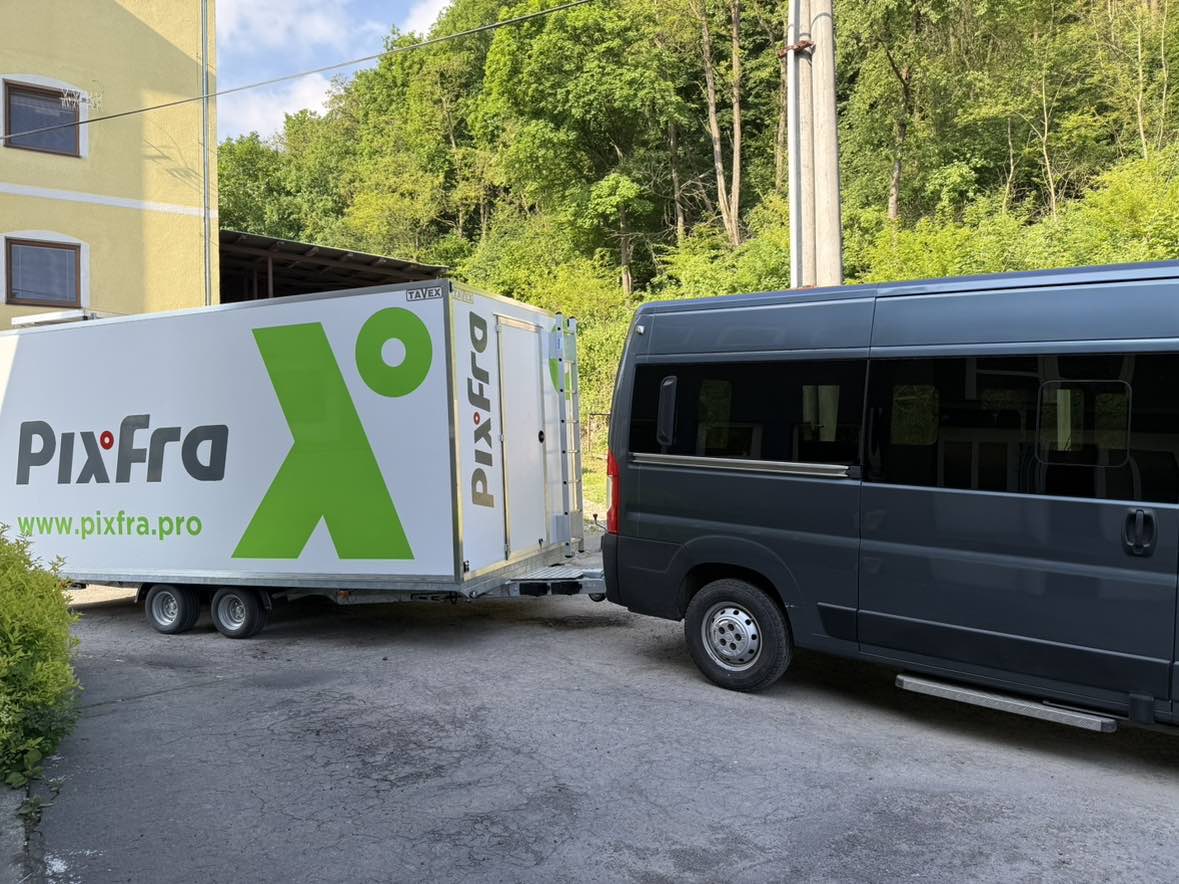
This unique setup features a dedicated exhibition trailer specifically designed to showcase Pixfra’s extensive thermal imaging product portfolio. The trailer, which can be opened to create an instant showroom, is pulled by a black transport vehicle, creating a mobile exhibition space that can travel directly to customers and events.
“This mobile exhibition approach represents the future of trade show participation,” explained the Slovakia distributor. “Instead of renting expensive booth space at exhibitions, we can now bring the entire Pixfra experience directly to our customers, allowing them to experience our products in various locations.”
The mobile showroom features Pixfra’s latest thermal imaging innovations, including the compact Mile 2 series monocular that recently won the prestigious Red Dot Design Award 2024. With its 640×512 pixel sensor, 25mm lens, and exceptional thermal sensitivity of less than 25mK, the Mile 2 weighs just 320 grams while delivering detection capabilities up to 1,300 meters. The device offers 6.5 hours of battery life, making it perfect for extended outdoor use.
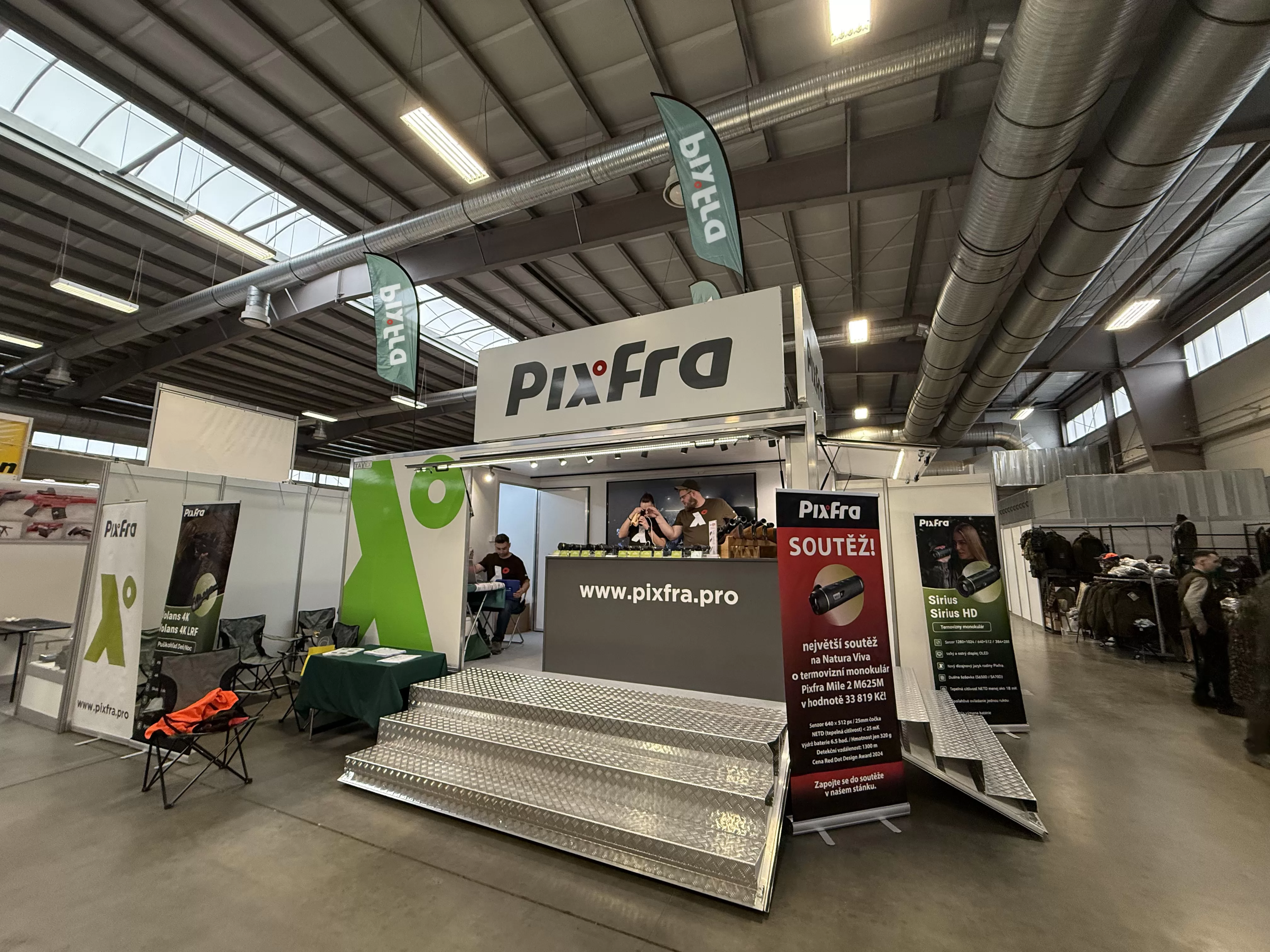
Visitors to the mobile exhibition can explore Pixfra’s complete product range, from the high-performance Sirius HD series with its 1280×1024 HD sensor, to the versatile Taurus thermal front attachments, and the advanced Chiron LRF series with integrated laser rangefinder capabilities.
Founded in 2015 and headquartered in Hangzhou, China, Pixfra has rapidly grown to serve over 150 countries with its thermal imaging solutions. The company’s products are widely used in wildlife observation, outdoor sports, emergency management, and various industrial applications.
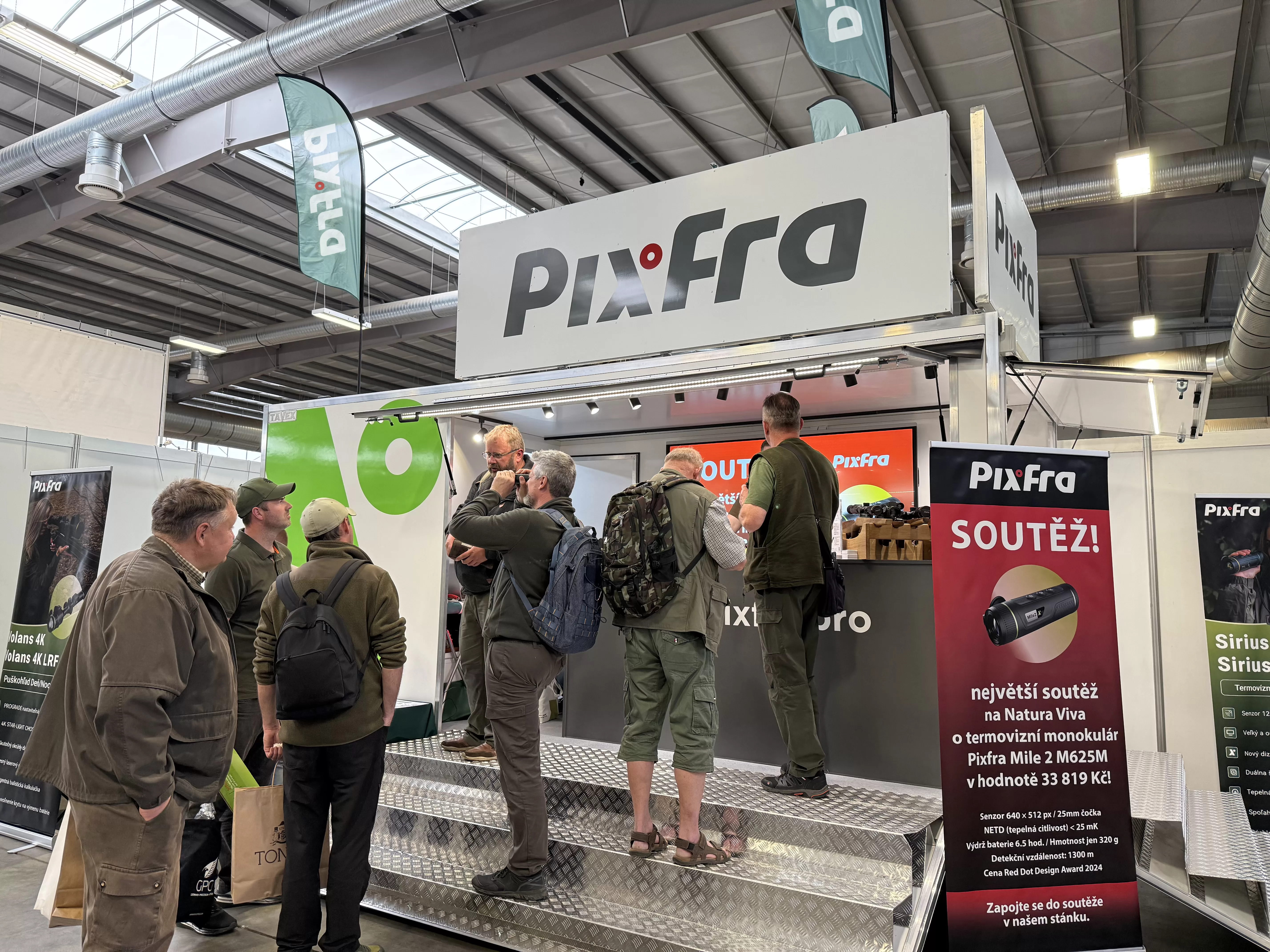
This mobile exhibition initiative in Slovakia demonstrates Pixfra’s commitment to innovative customer engagement and reflects the company’s forward-thinking approach that has earned it recognition as a national high-tech enterprise and multiple design awards.
The exhibition vehicle will be touring various locations across Slovakia and neighboring countries, bringing Pixfra’s cutting-edge thermal imaging technology directly to outdoor enthusiasts, hunters, and professional users.
In termisk billedteknologi, spot size is one of the parameters that directly impacts detection capability, measurement accuracy, and overall system performance. Put simply, spot size refers to the smallest area that a thermal imaging system can effectively resolve at a given distance. This parameter determines what objects can be detected and accurately measured in a thermal image, making it essential knowledge for anyone seeking optimal performance from thermal devices.
The physical principles behind spot size relate to the optical resolution of the system, which is influenced by the detector resolution, lens quality, and distance to the target. As distance increases, the spot size grows proportionally, reducing the ability to detect smaller objects or temperature differences. This relationship follows optical physics principles where the smallest resolvable detail is limited by both the optical system and the fundamental wave properties of infrared radiation.
According to research published by the European Institute of Thermal Imaging:
“Insufficient understanding of spot size calculations accounts for approximately 64% of accuracy issues reported in field-deployed thermal imaging systems, particularly in applications requiring precise measurement or small target detection.”
For users of advanced thermal systems like the Pixfra Sirius HD Series with its 1280×1024 HD sensor, understanding spot size calculation ensures the full capabilities of these high-resolution systems can be leveraged for maximum detection performance at optimal operational distances.
The calculation of spot size in thermal imaging follows a straightforward mathematical relationship that connects optical parameters with measurement distance. The basic formula for calculating spot size is:
Spot Size = (Distance to Target × IFOV)
Where IFOV (Instantaneous Field of View) represents the angular resolution of the system measured in milliradians (mrad) or degrees. The IFOV is determined by the detector size and the focal length of the optics:
IFOV = (Detector Element Size / Focal Length)
For a complete system, this translates to a practical formula where:
Spot Size (mm) = Distance (m) × IFOV (mrad)
This relationship creates what’s known as the Distance-to-Spot ratio (D:S ratio), which is often used as a specification in thermal imaging systems. A higher D:S ratio indicates a better ability to measure smaller objects at greater distances.
For example, the Pixfra Pegasus Pro Series, with its premium optics and sensor configuration, achieves superior spot size performance that enables detection of smaller temperature anomalies at greater distances compared to systems with lower optical resolution.
The detector resolution represents a fundamental limitation on spot size performance in any thermal imaging system. Higher resolution detectors, with more pixels covering the same field of view, inherently provide smaller spot sizes and better spatial resolution at any given distance.
This relationship can be illustrated by comparing different sensor resolutions available in modern thermal imaging devices:
| Sensoropløsning | Typical IFOV (mrad) | Spot Size at 100m | Practical Application |
|---|---|---|---|
| 256×192 | 1.308 | 130.8mm | Basic detection |
| 384×288 | 0.873 | 87.3mm | General purpose |
| 640×512 | 0.524 | 52.4mm | Advanced detection |
| 1280×1024 | 0.262 | 26.2mm | Premium measurement |
(Note: Values are representative and may vary based on specific optical configurations)
The Pixfra product lineup reflects this progression, with the Mile 2 Series offering configurations starting at 256×192 resolution for basic detection needs, while the premium Sirius HD Series delivers the exceptional spatial resolution of a 1280×1024 HD sensor for applications requiring maximum detection precision.
According to the International Thermal Imaging Standards Organization:
“A doubling of linear detector resolution translates to approximately a 30-40% improvement in minimum detectable object size at equivalent distances, assuming comparable optical quality.”
This relationship underscores why sensor resolution represents such a critical specification for thermal imaging performance in applications where small target detection is essential.
While sensor resolution establishes the baseline for spot size performance, the lens selection plays an equally critical role in determining the actual spot size capabilities of a thermal imaging system. The focal length of the lens directly impacts the IFOV (Instantaneous Field of View), with longer focal lengths providing smaller IFOV values and consequently smaller spot sizes at any given distance.
This relationship explains why thermal imaging devices designed for long-range detection, such as the Pixfra Taurus LRF Series with its 50mm lens option, can achieve superior spot size performance compared to wider-angle systems, even when using identical sensor resolutions.
The practical effects of lens selection can be demonstrated through a comparison of different focal length options:
For a 640×512 sensor with 12μm pixel pitch:
This relationship creates an important consideration when selecting a thermal imaging system for specific applications. Wider-angle lenses (shorter focal lengths) provide larger fields of view but at the cost of larger spot sizes, while telephoto lenses (longer focal lengths) deliver smaller spot sizes but narrower fields of view.
The versatility of systems like the Pixfra Sirius S650D model, with its innovative 25-50mm continuous zoom capability, addresses this tradeoff by allowing users to optimize between field of view and spot size based on specific detection requirements and conditions.
For hunting applications, proper understanding of spot size calculation directly translates to field performance in target detection and identification. The spot size determines the minimum size object that can be reliably detected at various distances, which is crucial for identifying game animals in complex environmental backgrounds.
Consider these practical hunting scenarios where spot size knowledge proves crucial:
According to research by the European Hunting Association:
“Hunters utilizing thermal imaging equipment properly matched to their typical engagement distances report 37% higher positive identification rates and 42% improvement in ethical shot placement compared to those using systems with inadequate spot size performance for their applications.”
The Pixfra Arc LRF Series addresses these practical hunting requirements through its balanced optical design, offering spot size performance optimized for common European hunting scenarios while integrating laser rangefinding technology for precise distance measurement—a critical component in field-applicable spot size calculation.
To simplify the application of spot size principles in the field, various calculation tools have been developed ranging from basic formulas to sophisticated digital applications. These calculators help users determine the practical limitations of their thermal imaging systems at various distances and for different target sizes.
Basic Spot Size Calculator Formula:
Spot Size (mm) = Distance (m) × IFOV (mrad)
Advanced Calculator Considerations:
Professional thermal imaging applications often incorporate spot size calculators directly into their interfaces, allowing real-time assessment of detection capabilities based on current settings and measured distances. For systems with integrated laser rangefinders, like the Pixfra Chiron LRF Series, this calculation can be performed automatically, providing users with immediate feedback on detection limitations for the current target.
The Pixfra Outdoor App, compatible with Pixfra thermal devices, includes an advanced spot size calculator that factors in the specific optical characteristics of connected devices, allowing users to:
This integration of theoretical spot size calculation with practical field applications represents a significant advancement in making complex optical principles accessible to users without specialized technical backgrounds.
One of the most prevalent misconceptions in thermal imaging relates to the interpretation of manufacturer-specified detection ranges without consideration of spot size limitations. Many users incorrectly assume that the quoted maximum detection range applies equally to all target sizes, leading to unrealistic expectations in field performance.
The reality is that detection range must always be qualified by the size of the target being detected. A thermal device might detect a large heat source (like a vehicle) at several kilometers, but be limited to detecting human-sized targets at only 1-2 kilometers, and small animals at even shorter ranges—all due to spot size limitations.
Common misconceptions include:
Misconception: “This thermal scope can detect targets at 2,000 meters” (without specifying target size)
Reality: At 2,000 meters, the system may only resolve objects larger than 1 meter across, making small animal detection impossible at this range.
Misconception: “Higher magnification always improves detection capability”
Reality: Optical magnification does not change the fundamental spot size limitations of the sensor and lens combination; it merely makes the limited resolution more visually apparent.
Misconception: “Digital zoom enhances detection range”
Reality: Digital zoom cannot overcome the physical spot size limitations; it only enlarges the pixels without adding detection capability.
Understanding these limitations through proper application of spot size calculation allows users to develop realistic expectations for their thermal imaging equipment and select systems appropriately matched to their detection requirements.
The mathematics of spot size calculation may seem technical, but the practical applications are straightforward and essential for anyone seeking to maximize the utility of thermal imaging technology. Whether for hunting, wildlife observation, security, or other applications, spot size awareness ensures users can extract the full potential from their thermal imaging systems.
As thermal imaging technology continues to advance with higher resolution sensors and improved optics, spot size performance will similarly improve—but the fundamental principles of calculation and their practical implications will remain constant.
If you’re interested in exploring how spot size calculations apply to specific thermal imaging applications or want to identify the optimal system for your detection requirements, Pixfra’s technical specialists can provide expert guidance. Our comprehensive product range—from the versatile Mile 2 Series to the premium Sirius HD Series—offers solutions tailored to diverse detection needs with clear specifications on spot size performance.
For detailed spot size calculations specific to your application or to discuss distribution opportunities in European markets, contact our technical team at info@pixfra.com or visit pixfra.com to explore our full product range. Let our experts help you select a thermal imaging solution that delivers the precise spot size performance required for your specific detection challenges.
Termisk billedteknologi has revolutionized the way we detect water leaks by leveraging the fundamental principle that water affects surface temperatures in predictable ways. As water leaks through structures, it creates temperature differentials that become visible to thermal imaging devices even when the moisture itself remains hidden from view. This capability stems from water’s high thermal conductivity and specific heat capacity, which cause it to absorb and transfer heat differently than surrounding dry materials. When water infiltrates building materials or ground surfaces, it creates distinct thermal patterns that appear as temperature anomalies on thermal imaging displays.
The physics behind this detection method relies on several key properties: water typically evaporates and creates cooling effects on surfaces; it changes the thermal conductivity of materials it saturates; and it retains temperature differently than dry materials during ambient temperature fluctuations. High-sensitivity thermal imaging devices, such as the Pixfra Sirius Series with its exceptional ≤18mK NETD (Noise Equivalent Temperature Difference), can detect these subtle temperature variations with remarkable precision, revealing water intrusion long before visible damage occurs.Besides this application,there are many other applications, together,they make thermal imaging cameras useful
According to research published by the European Building Research Institute:
“Thermal imaging detection can identify water leaks in building structures up to 6-8 weeks before visible signs appear, potentially reducing water damage restoration costs by 45-60% through early intervention.”
This early detection capability makes thermal imaging an invaluable tool for property maintenance, especially in regions like Central and Northern Europe where building water damage represents a significant annual economic impact.
The effectiveness of water leak detection through thermal imaging depends significantly on the technological sophistication of the equipment used. Modern thermal imaging systems have advanced well beyond basic infrared cameras, incorporating multiple enhancements that dramatically improve detection capabilities for water-related issues.
High-resolution thermal sensors, like the 640×512 detector found in Pixfra’s premium devices, provide the pixel density necessary to identify subtle temperature patterns indicative of water infiltration. This resolution allows for detailed examination of larger areas while still capturing the minute temperature differentials that might indicate early-stage water leaks. When combined with advanced optics, such as the F0.9 large aperture lens found in the Sirius Series, these systems can deliver exceptional clarity in thermal imaging.
Perhaps even more significant for water leak detection applications is the processing technology that enhances raw thermal data. Pixfra’s PIPS 2.0 (Pixfra Imaging Processing System) exemplifies these advancements, employing sophisticated algorithms that:
These technological advancements transform thermal imaging from a specialized tool into an accessible and highly effective solution for water leak detection across multiple applications and environments.
In residential settings across Europe, thermal imaging has evolved from a luxury inspection method to an essential preventive maintenance tool. Water damage represents one of the most common and costly home insurance claims, with the European Insurance Association reporting that water-related claims account for approximately 29% of all residential property insurance payouts, exceeding €5.2 billion annually across EU member states.
Thermal imaging offers homeowners and property managers a non-invasive method to:
Portable thermal devices like the Pixfra Mile 2 Series Thermal Monocular provide sufficient sensitivity (≤25mK NETD) for most residential applications while offering exceptional portability and ease of use. These compact systems allow for comprehensive property inspections without specialized training, making thermal imaging accessible to a broader range of users than ever before.
According to a study by the European Property Management Association:
“Properties that implement regular thermal imaging inspections for water intrusion report 72% fewer catastrophic water damage incidents and realize average maintenance cost savings of €0.37 per square meter annually.”
The stakes of water damage increase dramatically in commercial and industrial settings, where leaks can damage expensive equipment, disrupt operations, and create safety hazards. Thermal imaging provides a powerful preventive tool for protecting these high-value assets and ensuring operational continuity.
In industrial facilities, thermal imaging can detect:
| Application | Detection Target | Potential Savings |
|---|---|---|
| Process Piping | Leaks in water, steam, and chemical lines | Prevent costly product loss and contamination |
| Roof Systems | Moisture infiltration in flat commercial roofs | Extend roof lifespan by 30-40% |
| Cooling Systems | Water leaks in cooling towers and HVAC | Reduce energy costs and prevent equipment damage |
| Electrical Systems | Water intrusion near electrical infrastructure | Prevent catastrophic failures and fire hazards |
| Data Centers | Moisture near critical IT infrastructure | Avoid equipment damage and data loss |
The precision requirements for these applications often necessitate higher-end thermal systems. Devices like the Pixfra Sirius HD Series, with its 1280×1024 HD sensor and exceptional thermal sensitivity, provide the detailed imaging necessary for inspecting complex industrial systems where small leaks can have major consequences.
European industrial facility managers report that incorporating thermal imaging into preventive maintenance programs for water leak detection yields an average return on investment of 310% within the first 18 months, primarily through avoided downtime and equipment damage.
Beyond buildings and infrastructure, thermal imaging offers significant advantages for agricultural water management—a growing concern across Europe as climate change impacts water availability and cost. Thermal imaging can identify irrigation system leaks and inefficiencies that waste water and energy while potentially damaging crops through uneven distribution.
Modern thermal imaging devices can detect:
For agricultural applications, thermal systems with wider fields of view are often most effective. The Pixfra Arc LRF Series, with its broad detection capability and integrated laser rangefinder, allows agricultural professionals to efficiently survey large areas while precisely measuring distances to identified problem spots.
According to research from the European Agricultural Water Management Institute:
“Thermal imaging detection of irrigation system leaks has helped participating farms reduce water consumption by an average of 18.7% while improving crop yield uniformity by 12.3%, representing significant economic and environmental benefits.”
In water-stressed regions of Southern Europe, these efficiency improvements translate directly to substantial cost savings and improved agricultural sustainability.
An emerging application for thermal water leak detection extends beyond built infrastructure into environmental monitoring and conservation efforts. European environmental agencies and conservation organizations increasingly utilize thermal imaging to monitor natural waterways, detect groundwater seepage, and identify unauthorized water diversions.
These environmental applications leverage the same temperature differential principles used in building inspections but apply them to natural systems. Water moving through soil or emerging from springs creates distinct thermal signatures that can be detected with sensitive thermal imaging equipment, especially during periods when ambient and water temperatures differ significantly.
Conservation organizations have successfully employed thermal imaging to:
For these environmental applications, thermal devices with extended detection range, such as the Pixfra Pegasus Pro Series with its detection capability up to 2,600 meters, provide the standoff distance necessary to survey waterways and natural areas without disturbing wildlife or sensitive habitats.
European conservation agencies report that thermal surveys can reduce the cost of comprehensive waterway monitoring by up to 64% compared to traditional methods while significantly increasing detection rates for small-scale unauthorized water diversions.
Maximizing the effectiveness of thermal imaging for water leak detection requires understanding several key operational best practices that significantly impact results. These techniques enhance detection capabilities beyond simply pointing a thermal camera at a suspect area:
Optimal Timing: Water leak detection is most effective when temperature differentials between wet and dry areas are maximized. Early morning inspections (before solar heating) often provide ideal conditions as wet areas will have retained heat or cold differently than surrounding dry materials throughout the night.
Comparative Imaging: Establishing baseline thermal images during dry conditions provides valuable reference points for identifying anomalies during subsequent inspections.
Environmental Considerations: Wind, precipitation, and direct sunlight can all affect surface temperatures and potentially mask or create false indicators of water intrusion. Inspections should account for these environmental factors.
Multiple Angle Assessment: Viewing potential leak areas from multiple angles helps distinguish between actual moisture issues and reflective or emissivity-related anomalies.
Complementary Testing: While thermal imaging excels at identifying potential problem areas, complementary moisture meter testing of suspicious locations can confirm findings and quantify moisture levels.
According to professional water damage restoration experts:
“The combination of proper thermal imaging techniques with focused moisture meter confirmation has shown to improve leak detection accuracy by 83% compared to traditional visual inspection methods.”
Implementing these best practices ensures thermal imaging delivers consistent, reliable results across various water leak detection scenarios.
Thermal imaging has evolved from a specialized tool into an essential technology for comprehensive water leak detection across residential, commercial, industrial, agricultural, and environmental applications. By visualizing the otherwise invisible temperature patterns created by water infiltration, modern thermal devices enable early detection of issues long before visible damage occurs, offering significant economic and environmental benefits through water conservation and damage prevention.
The applications of this technology continue to expand as thermal imaging devices become more sophisticated, affordable, and user-friendly. From homeowners protecting their investments to industrial facility managers safeguarding critical infrastructure, the ability to “see” water through its thermal signature provides a powerful advantage in maintenance and conservation efforts.
As water scarcity and infrastructure aging increasingly impact European communities, the importance of effective leak detection will only grow. Thermal imaging represents not merely an improved detection method but a fundamental shift in how we approach water management and conservation across multiple sectors.
If you’re interested in incorporating thermal imaging into your water management, property maintenance, or conservation efforts, Pixfra offers a range of devices suitable for various detection applications. From the compact Mile 2 Series for residential inspections to the high-definition Sirius HD Series for demanding commercial applications, our product lineup delivers the sensitivity and resolution needed for effective water leak detection.
Hvis du ønsker yderligere oplysninger om vores termografiløsninger eller vil drøfte distributionsmuligheder på de europæiske markeder, kan du kontakte vores specialister på info@pixfra.com or visit pixfra.com to explore our full product range. Our team can provide expert guidance on selecting the optimal thermal system for your specific water leak detection requirements, ensuring you maximize the benefits of this powerful technology.
For at besvare spørgsmålet om, hvorvidt termiske kikkerter For at kunne se infrarødt lys må vi først forstå sammenhængen mellem termisk billeddannelse og det infrarøde spektrum. Det elektromagnetiske spektrum omfatter stråling med forskellige bølgelængder, fra gammastråler (de korteste) til radiobølger (de længste). Infrarød stråling ligger mellem synligt lys og mikrobølgestråling i dette spektrum og dækker bølgelængder fra ca. 700 nanometer til 1 millimeter.
Det er vigtigt at være klar over, at infrarødt (IR) er en bred kategori, der omfatter flere underbånd. Nærinfrarødt (NIR) strækker sig fra 0,7 til 1,4 μm, kortbølget infrarødt (SWIR) fra 1,4 til 3 μm, mellem-infrarødt (MWIR) fra 3 til 8 μm og langbølget infrarødt (LWIR) fra 8 til 15 μm. Det, vi almindeligvis kalder “termisk billedbehandling”, fungerer primært i MWIR- og LWIR-båndene, hvor det registrerer de varmesignaturer, som objekter naturligt udsender,og denne funktion er en stor fordel for jægere.
Ifølge Den Internationale Belysningskommission:
“Alle genstande med temperaturer over det absolutte nulpunkt udsender infrarød stråling. Denne strålings bølgelængdefordeling og intensitet hænger direkte sammen med genstandens temperatur.”
Dette videnskabelige princip udgør grundlaget for termisk billedteknologi. Moderne termiske kikkerter som Pixfra Pegasus Pro-serien og Chiron LRF-serien er specifikt udviklet til at registrere og visualisere MWIR- eller LWIR-stråling, hvilket svarer til de varmesignaturer, der udsendes af dyr, mennesker og genstande i omgivelserne. Derfor “ser” termiske kikkerter faktisk infrarød stråling – nærmere bestemt de infrarøde emissioner med mellemlang til lang bølgelængde, der svarer til varmesignaturer.
Der er en vigtig teknisk forskel mellem de forskellige teknologier, der anvendes til at registrere infrarød stråling. Denne forskel er med til at afklare, hvad termiske kikkerter præcist kan og ikke kan registrere, når det gælder infrarødt lys.
Passiv infrarød detektion (termisk billedbehandling): Enheder som Pixfra Sirius-seriens termiske monokular bruger uafkølede mikrobolometersensorer til at registrere naturligt udsendt infrarød stråling (varme) uden behov for en ekstern lyskilde. Disse enheder opererer primært i LWIR-spektret (8–14 μm) og skaber billeder udelukkende på baggrund af temperaturforskelle.
Aktive infrarøde teknologier: Heriblandt er nattsynsudstyr, der aktivt projicerer nærinfrarødt lys (NIR, 0,7–1,4 μm) for at belyse et område – på samme måde som en lommelygte, som det menneskelige øje ikke kan se. Dette projicerede lys opfanges derefter af specialkameraer.
Nærinfrarøde lyskilder: Disse enheder udsender NIR-lys, som almindelige termiske kikkerter ikke kan registrere, da de i stedet er indstillet til at registrere MWIR- og LWIR-stråling.
| Teknologitype | Bølgelængde | Kræver en lyskilde | Hvad den registrerer | Eksempel på Pixfra |
|---|---|---|---|---|
| Termografi | 8–14 μm (LWIR) | Nej | Varmesignaturer | Pegasus Pro-serien |
| Nattesyn | 0,7–1,4 μm (NIR) | Ja (enten omgivelseslys eller IR-lys) | Reflekteret NIR-lys | Volans-serien (kan bruges både om dagen og om natten) |
| Optik til dagtimerne | 0,4–0,7 μm (synligt lys) | Ja (naturligt lys) | Reflekteret synligt lys | Ikke relevant |
Denne forskel forklarer, hvorfor termiske billeddannelsesenheder som Pixfra Taurus-seriens termiske frontmonteringsenhed kan fungere i fuldstændig mørke uden nogen form for ekstern belysning – de registrerer den LWIR-stråling, som alle objekter med temperaturer over det absolutte nul naturligt udsender, i stedet for at være afhængige af reflekteret lys af nogen art.
Kernen i et moderne termisk kikkerts evne til at registrere infrarød stråling er mikrobolometer-sensorteknologien. En forståelse af denne komponent hjælper med at afklare, hvilke specifikke typer infrarød stråling termiske kikkerter kan registrere og visualisere.
Mikrobolometersensorer består af matriser af mikroskopiske detektorelementer fremstillet af materialer (typisk vanadiumoxid eller amorft silicium), der ændrer deres elektriske modstand, når de udsættes for infrarød stråling. Disse ubetydelige ændringer i modstanden måles, behandles og omdannes til et synligt termisk billede.
Disse sensorers følsomhed måles ved hjælp af støjækvivalent temperaturforskel (NETD), der angives i millikelvin (mK). Førsteklasses termiske enheder som Pixfra Sirius HD-serien er udstyret med sensorer med NETD-værdier på ≤18 mK, hvilket indikerer en enestående følsomhed over for minimale temperaturforskelle – hvilket er afgørende for at kunne registrere svage termiske signaturer på store afstande.
Opløsningen spiller også en afgørende rolle for et termisk kikkerts evne til at registrere og vise infrarød stråling tydeligt. Sensorer med højere opløsning, såsom 640×512-detektoren i Pixfra Arc LRF-serien, giver en mere detaljeret visning af termiske mønstre sammenlignet med alternativer med lavere opløsning.
Ifølge Dr. Heinrich Müller, ekspert i termografi fra Det Europæiske Institut for Termisk Videnskab:
“Fremskridt inden for mikrobolometerteknologi har reduceret NETD-værdierne fra ca. 100 mK i de tidlige kommercielle enheder til under 20 mK i de nuværende førsteklasses systemer, hvilket svarer til en femdobling af temperaturfølsomheden i løbet af det seneste årti.”
Dette teknologiske fremskridt betyder i praksis, at jægere og naturobservatører, der anvender termisk billedudstyr under udfordrende miljøforhold, får bedre muligheder for at opdage dyr.
Mens den fysiske sensor registrerer infrarød stråling, er behandlingen af disse termiske data lige så afgørende for, hvad et termisk sigte effektivt kan “se”. Moderne termiske billeddannelsessystemer anvender avanceret signalbehandling for at forbedre detekteringsmulighederne ud over, hvad de rå sensordata ellers ville kunne levere.
Pixfras egenudviklede PIPS 2.0 (Pixfra Imaging Processing System) er et godt eksempel på, hvordan avancerede behandlingsalgoritmer kan forbedre visualiseringen af infrarøde data betydeligt. Dette system forbedrer billedets skarphed gennem flere behandlingsfaser:
Disse forbedringer i billedbehandlingen udvider reelt det infrarøde strålingsområde, som brugeren kan registrere og fortolke på en meningsfuld måde. For eksempel kan billedbehandlingsalgoritmerne under udfordrende forhold som let tåge eller regn – som delvist kan dæmpe LWIR-strålingen – forstærke svage signaler, der ellers risikerer at gå tabt.
Den praktiske betydning af disse behandlingsmuligheder kommer især til udtryk i felten, hvor miljøforholdene hele tiden ændrer sig. En feltundersøgelse foretaget af en europæisk jagtforening viste, at:
“Termiske enheder med avancerede databehandlingsfunktioner viste sig at have en op til 40% større effektiv detekteringsrækkevidde under udfordrende miljøforhold sammenlignet med systemer med lignende sensorer, men med mindre avanceret signalbehandling.”
Termiske kikkerters evne til at registrere infrarød stråling på afstand afhænger af flere faktorer end blot sensorspecifikationerne. En forståelse af disse faktorer hjælper brugerne med at danne sig realistiske forventninger til registreringsmulighederne i forskellige situationer.
Sensoropløsning: Sensorer med højere opløsning (f.eks. 640×512 i forhold til 384×288) leverer mere detaljerede infrarøde oplysninger på større afstande. Pixfra Mile 2-serien tilbyder opløsninger fra 256×192 til 640×512 for at imødekomme forskellige krav til detekteringsrækkevidde.
Objektivspecifikationer: Brændvidde og blænde har stor indflydelse på detekteringsrækkevidden. Optik med længere brændvidde, som f.eks. 50 mm-objektivet på Pixfra Sirius S650-modellen, giver større forstørrelse og detekteringsrækkevidde sammenlignet med alternativer med kortere brændvidde.
Atmosfæriske forhold: Vanddamp, støv og nedbør kan dæmpe LWIR-stråling. Høj luftfugtighed, regn og tåge reducerer den effektive detekteringsrækkevidde.
Målstørrelse og termisk kontrast: Større mål med en større temperaturforskel i forhold til baggrunden kan detekteres på større afstande. En typisk matrix for detekteringsrækkevidde kan se således ud:
| Målstørrelse | Termisk kontrast | Detektionsrækkevidde med 640×512-sensor | Registreringsrækkevidde |
|---|---|---|---|
| Stor (menneske/hjort) | Høj (>10 °C) | 1.800–2.600 m | 500–900 m |
| Medium (Fox) | Mellem (5–10 °C) | 900–1 400 m | 300–500 m |
| Lille (Kanin) | Lav (<5 °C) | 400–700 m | 150–250 m |
Disse rækkevidder gælder under optimale forhold og vil blive mindre ved ugunstige vejrforhold eller når målene har minimal termisk kontrast i forhold til omgivelserne.
Selvom termiske kikkerter er særdeles effektive til at registrere udstrålet infrarød stråling (varme), kan de ikke registrere visse infrarøde fænomener, der er knyttet til refleksion snarere end udstråling. Det er vigtigt, at brugerne forstår denne begrænsning, når de vurderer termisk billedudstyrs muligheder og begrænsninger.
Termiske kikkerter kan ikke registrere:
Ifølge dr. Anna Kowalski fra Det Europæiske Institut for Optiske Systemer:
“Den udbredte misforståelse, at termiske kameraer kan registrere alle infrarøde frekvenser, fører til urealistiske forventninger. Disse apparater er specifikt indstillet til at registrere udsendt varmestråling i området 8–14 μm, hvilket gør dem blinde over for belysning i det nærinfrarøde spektrum og lasersystemer, der opererer ved kortere bølgelængder.”
Denne skelnen er især vigtig for professionelle brugere, der eventuelt arbejder i miljøer, hvor der anvendes flere forskellige infrarøde teknologier samtidigt, f.eks. inden for vildtforvaltning eller sikkerhedsformål.
Ved at forstå de specifikke infrarøde detekteringsmuligheder ved termiske kikkerter kan brugerne identificere de optimale anvendelsesområder for denne teknologi. Termiske billeddannelsesenheder som Pixfra Taurus LRF-serien udmærker sig i situationer, hvor deres evne til at detektere mellem- og langbølget infrarød stråling udnyttes:
Påvisning af vilde dyr i tæt bevoksning: Den LWIR-stråling, som dyr udsender, trænger bedre igennem let bevoksning end synligt lys, hvilket gør varmesynskikkerter bedre egnet til at opdage vilde dyr i moderat tæt bevoksning.
Sporing efter optagelsen: Den resterende varmesignatur, som vildtet efterlader, danner et tydeligt termisk spor, der kan følges, selv når synlige blodspor er svære at finde.
Forvaltning af nataktive vilde dyr: For arter, der primært er aktive om natten, såsom vildsvin, muliggør termiske detektionssystemer en effektiv bestandsforvaltning uden at forstyrre de naturlige adfærdsmønstre.
Identifikation af miljøfarer: Termiske kikkerter kan identificere potentielle miljøfarer, såsom brandherder i skoven, der udsender karakteristiske infrarøde signaler, inden de bliver synlige for det blotte øje.
Det Europæiske Konsortium for Vildtforvaltning oplyser:
“I kontrollerede feltforsøg viste erfarne jægere, der anvendte termisk billedudstyr, en 78% højere detekteringsrate af camouflerede vilde dyr sammenlignet med traditionel optik, og denne fordel steg til 94% under dårlige lysforhold.”
Disse praktiske fordele skyldes direkte, at det termiske sigte kan registrere bestemte infrarøde bølgelængder, der er forbundet med varmesignaturer, i stedet for at basere sig på reflekteret synligt lys.
For direkte at besvare det oprindelige spørgsmål: Ja, termiske kikkerter registrerer infrarød stråling – nærmere bestemt registrerer de infrarød stråling med mellemlang og lang bølgelængde (MWIR og LWIR), som svarer til de varmesignaturer, der udsendes af objekter i omgivelserne. De kan dog ikke registrere den nærinfrarøde (NIR) belysning, der anvendes af nattsynsudstyr eller IR-lasersystemer.
Denne særlige evne til infrarød detektering gør termisk billedteknologi særdeles værdifuld til anvendelser, der kræver visualisering af varmesignaturer uanset lysforholdene. Moderne termiske kikkerter, som dem i Pixfra-serien, kombinerer følsom mikrobolometerteknologi med avanceret billedbehandling for at levere en enestående evne til termisk infrarød detektering under forskellige miljøforhold.
Ved at forstå disse tekniske muligheder og begrænsninger kan brugerne træffe velovervejede beslutninger om, hvornår termisk billedteknologi udgør den optimale løsning til deres specifikke behov, uanset om det drejer sig om observation af vilde dyr, jagt eller sikkerhedsformål.
Hvis du er interesseret i at udforske, hvordan termisk billedteknologi kan forbedre dine jagt- eller observationsmuligheder, tilbyder Pixfra et omfattende produktsortiment, der er udviklet til at imødekomme forskellige behov og budgetter. Fra den kompakte Mile 2-serie til den eksklusive Pegasus Pro-serie leverer vores sortiment af termiske billedprodukter enestående infrarød detekteringskapacitet, understøttet af PIPS 2.0-behandlingsteknologi.
Hvis du ønsker yderligere oplysninger om vores termografiløsninger eller vil drøfte distributionsmuligheder på de europæiske markeder, kan du kontakte vores specialister på info@pixfra.com eller besøg pixfra.com for at se vores fulde produktsortiment og tekniske specifikationer. Vores team kan yde ekspertvejledning i valget af det optimale termiske system til netop dine anvendelseskrav, så du får det optimale udbytte af denne avancerede teknologi.
Termisk billedteknologi has revolutionized the hunting landscape by fundamentally changing how hunters detect, identify, and track game. Unlike traditional night vision that amplifies available light, thermal imaging detects heat signatures emitted by all objects, creating a distinct visual representation based on temperature differences. This core capability makes thermal scopes uniquely valuable in hunting scenarios where visual identification through conventional optics would be challenging or impossible.It should be noted that different countries have varies of restrictions on thermal imaging technology, make sure to check the related regulations before using it.
The technology works by detecting infrared radiation (heat) emitted by animals, which typically stand out prominently against cooler backgrounds regardless of ambient lighting conditions. Modern thermal imaging devices, such as the Pixfra Pegasus Pro Series with its exceptional ≤18mK NETD (Noise Equivalent Temperature Difference), can detect minute temperature variations, allowing hunters to identify game at significant distances even through environmental obstacles like light fog or sparse vegetation.
According to research published in the European Journal of Wildlife Research:
“Thermal imaging technology has demonstrated detection efficiency improvements of 65-78% in low-light hunting scenarios compared to traditional optics, with particularly significant advantages in densely vegetated environments.”
This fundamental capability addresses one of hunting’s primary challenges: reliably locating game in suboptimal conditions. For hunters pursuing nocturnal species like wild boar or managing predators like foxes, thermal imaging provides detection capabilities that traditional optics simply cannot match, regardless of quality or price point.
The detection range offered by quality thermal scopes represents a significant advantage for hunters across various environments and hunting scenarios. Premium thermal imaging devices can detect large game animals at distances exceeding 2,000 meters in optimal conditions, though identification range is typically more limited. This extended detection capability allows hunters to spot game long before being detected themselves, providing valuable time for strategic positioning.
The Pixfra Chiron LRF Series exemplifies this capability, offering detection ranges up to 2,600 meters for large game. When combined with integrated laser rangefinder technology, these systems provide not just detection but precise distance measurement, critical for ethical shot placement and effective hunting.
Comparative Detection Capabilities:
| Environmental Condition | Traditional Optics | Entry Thermal | Premium Thermal (≤20mK NETD) |
|---|---|---|---|
| Clear Night | 50-200m | 500-800m | 1.800–2.600 m |
| Light Fog/Rain | 20-50m | 300–500 m | 800-1,300m |
| Dense Vegetation | 30-80m | 200-400m | 500–900 m |
| Full Daylight | 200-1,000m+ | 300-600m | 1,000-2,000m |
This extended detection capability translates directly to hunting success, particularly for species that are primarily active during twilight or nighttime hours. The technology’s effectiveness is further enhanced by advanced image processing systems like PIPS 2.0 (Pixfra Imaging Processing System), which improves contrast, reduces noise, and enhances detail recognition—critical factors for positive species identification at extended ranges.
Perhaps the most significant contribution thermal imaging makes to hunting is in the realm of ethical practices. Superior target identification capabilities allow hunters to:
These capabilities directly support responsible hunting practices and wildlife conservation efforts. With devices like the Pixfra Taurus Series Thermal Front Attachment, which features high-definition zeroing with ultra-fine 0.9cm@100m click value, hunters can achieve exceptional precision in shot placement once a target has been ethically identified.
The European Hunting Federation notes:
“Thermal imaging technology, when properly utilized, has contributed to a 43% reduction in wounded game and non-recovered animals during managed night hunting operations across multiple European study sites.”
This ethical advantage becomes particularly pronounced in wildlife management contexts, such as controlling invasive species or managing populations causing agricultural damage. The ability to confidently identify specific target animals while avoiding protected or non-target species represents a significant advancement in hunting ethics and efficiency.
One of thermal imaging’s most valuable attributes for hunters is its effectiveness across virtually all weather conditions and times of day. Unlike conventional optics that may be severely limited by fog, light rain, snow, or darkness, thermal imaging maintains consistent performance across these variables, with only heavy precipitation causing significant degradation in imaging capability.
The Pixfra Arc LRF Series demonstrates this versatility with its robust environmental rating and high-sensitivity ≤20mK NETD sensor, allowing it to function effectively across a wide spectrum of hunting conditions. For European hunters facing diverse and often rapidly changing weather conditions, this weather independence provides crucial reliability for planned hunting expeditions.
Key Environmental Advantages:
This consistency across environmental variables means hunters can plan activities with greater confidence and maintain effectiveness regardless of time of day or weather changes. For many European hunting regions where weather conditions can shift rapidly, this capability transforms previously unhuntable conditions into productive opportunities.
Beyond recreational hunting, thermal imaging technology has become an essential tool for wildlife management professionals and conservation organizations. The technology’s ability to efficiently conduct population surveys, monitor movement patterns, and implement targeted control measures makes it invaluable for evidence-based wildlife management.
The Pixfra Sirius HD Series, with its 1280×1024 HD sensor, exemplifies the type of high-resolution thermal imaging system that wildlife managers use for accurate population assessment and monitoring. These applications extend beyond game species to include:
According to research published by the International Association for Wildlife Management:
“Thermal imaging surveys have demonstrated accuracy improvements of 31-47% in population estimates for nocturnal ungulate species compared to traditional spotlight counting methods, providing more reliable data for hunting quota determinations.”
This improved data collection directly contributes to more sustainable hunting practices by ensuring harvest quotas are based on accurate population assessments. For European regions implementing adaptive management approaches to hunting, thermal imaging provides the precision monitoring tools needed to make evidence-based decisions about sustainable harvest levels.
While thermal imaging technology offers significant advantages for hunters, its use is subject to varying regulations across European countries. Understanding these legal frameworks is essential for hunters considering thermal equipment investments. The regulatory landscape can be summarized as follows:
| Land | Thermal for Hunting | Primary Restrictions | Notable Exceptions |
|---|---|---|---|
| Spanien | Generally Permitted | Species-specific regulations | Broadly allowed for invasive species |
| Frankrig | Limited Permission | Authorized for specific species/situations | Wild boar management programs |
| Tyskland | Generally Restricted | Limited to professional use | Some pest control exceptions |
| Storbritannien | Tilladt | Primarily for non-game species | Extensive use for pest control |
| Italien | Varies by Region | Administrative authorizations | Wild boar management programs |
These regulations continue to evolve as wildlife management needs change and as the technology becomes more widely adopted. For example, increasing wild boar populations and associated agricultural damage have prompted regulatory adjustments in countries like France and Germany that previously maintained stricter limitations.
The Pixfra Outdoor App, compatible with devices like the Sirius Series and Pegasus Pro Series, includes features that help hunters maintain compliance with local regulations while maximizing the utility of their thermal equipment within legal parameters. This integration of technology with regulatory awareness represents an important advancement in responsible thermal imaging use for hunting applications.
Thermal imaging devices represent a significant investment, with quality systems ranging from €2,000 to €8,000 depending on specifications and capabilities. This investment merits careful cost-benefit analysis for hunters considering adoption of the technology. Key factors to consider include:
Hunting Frequency: For frequent hunters or those involved in wildlife management, the per-use cost becomes more reasonable over time.
Target Species: For hunters focusing on nocturnal species like wild boar, the effectiveness improvement may justify higher costs compared to primarily daytime hunting.
Professional Applications: For professional hunting guides, wildlife managers, or agricultural protection, the investment may be offset by professional benefits or damage reduction.
Technical Requirements: Not all hunting scenarios require the highest specifications. For example, the Pixfra Mile 2 Series offers excellent performance for many hunting applications at a more accessible price point than the premium Pegasus Pro Series.
According to a survey conducted by the European Hunting Equipment Association:
“83% of hunters who invested in quality thermal imaging equipment reported that the technology significantly improved their hunting success rate, with 76% indicating the investment had proven worthwhile within the first year of ownership.”
For distributors and dealers, understanding this cost-benefit equation is essential for guiding customers toward appropriate thermal imaging solutions that match their specific hunting needs and budget constraints.
Thermal scopes have undeniably transformed modern hunting, offering capabilities that extend beyond conventional optics in critical dimensions: detection range, environmental adaptability, and target identification precision. For hunters operating in European contexts—particularly those involved in wildlife management, nocturnal species hunting, or challenging environmental conditions—thermal imaging provides advantages that directly translate to increased effectiveness and enhanced ethical practices.
The technology’s ability to operate across environmental conditions, detect game at extended ranges, and provide precise target identification supports both recreational hunting success and professional wildlife management objectives. While regulatory frameworks vary across European nations, the trend appears to be toward increasing acceptance of thermal imaging as a valuable tool for specific hunting applications, particularly in wildlife damage control contexts.
For hunters considering thermal imaging technology, the investment should be evaluated against specific hunting objectives, frequency of use, and regulatory context. When properly matched to these factors, thermal imaging devices like those in the Pixfra lineup can significantly enhance the hunting experience while supporting responsible and ethical practices.
If you’re interested in elevating your hunting capabilities with state-of-the-art thermal imaging technology, Pixfra offers a comprehensive range of products designed specifically for European hunting applications. From the compact Mile 2 Series for mobile hunting to the precision-focused Pegasus Pro Series for demanding applications, our product line addresses the full spectrum of hunting scenarios while ensuring regulatory compliance.
To learn more about which thermal solution best matches your specific hunting requirements, contact our European specialists at info@pixfra.com or visit pixfra.com to explore our product lineup in detail. Our team can provide guidance on regulatory considerations for your region and help identify the optimal thermal imaging solution for your hunting objectives.