Pixfra Technology, the thermal imaging specialist known for its award-winning outdoor products, is breaking new ground in product demonstrations with an innovative mobile exhibition concept in Slovakia. The company’s local distributor has introduced a custom brand exhibition vehicle that transforms traditional trade show participation.
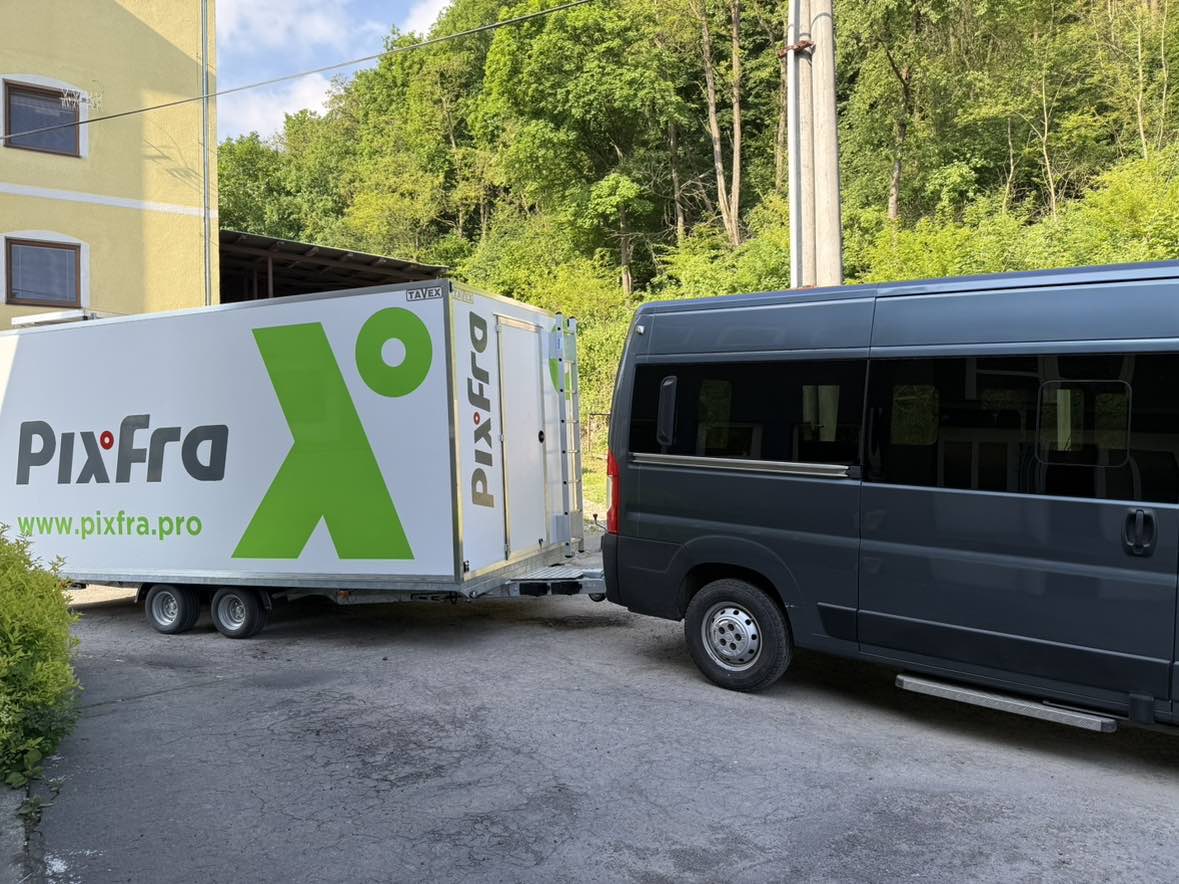
This unique setup features a dedicated exhibition trailer specifically designed to showcase Pixfra’s extensive thermal imaging product portfolio. The trailer, which can be opened to create an instant showroom, is pulled by a black transport vehicle, creating a mobile exhibition space that can travel directly to customers and events.
“This mobile exhibition approach represents the future of trade show participation,” explained the Slovakia distributor. “Instead of renting expensive booth space at exhibitions, we can now bring the entire Pixfra experience directly to our customers, allowing them to experience our products in various locations.”
The mobile showroom features Pixfra’s latest thermal imaging innovations, including the compact Mile 2 series monocular that recently won the prestigious Red Dot Design Award 2024. With its 640×512 pixel sensor, 25mm lens, and exceptional thermal sensitivity of less than 25mK, the Mile 2 weighs just 320 grams while delivering detection capabilities up to 1,300 meters. The device offers 6.5 hours of battery life, making it perfect for extended outdoor use.
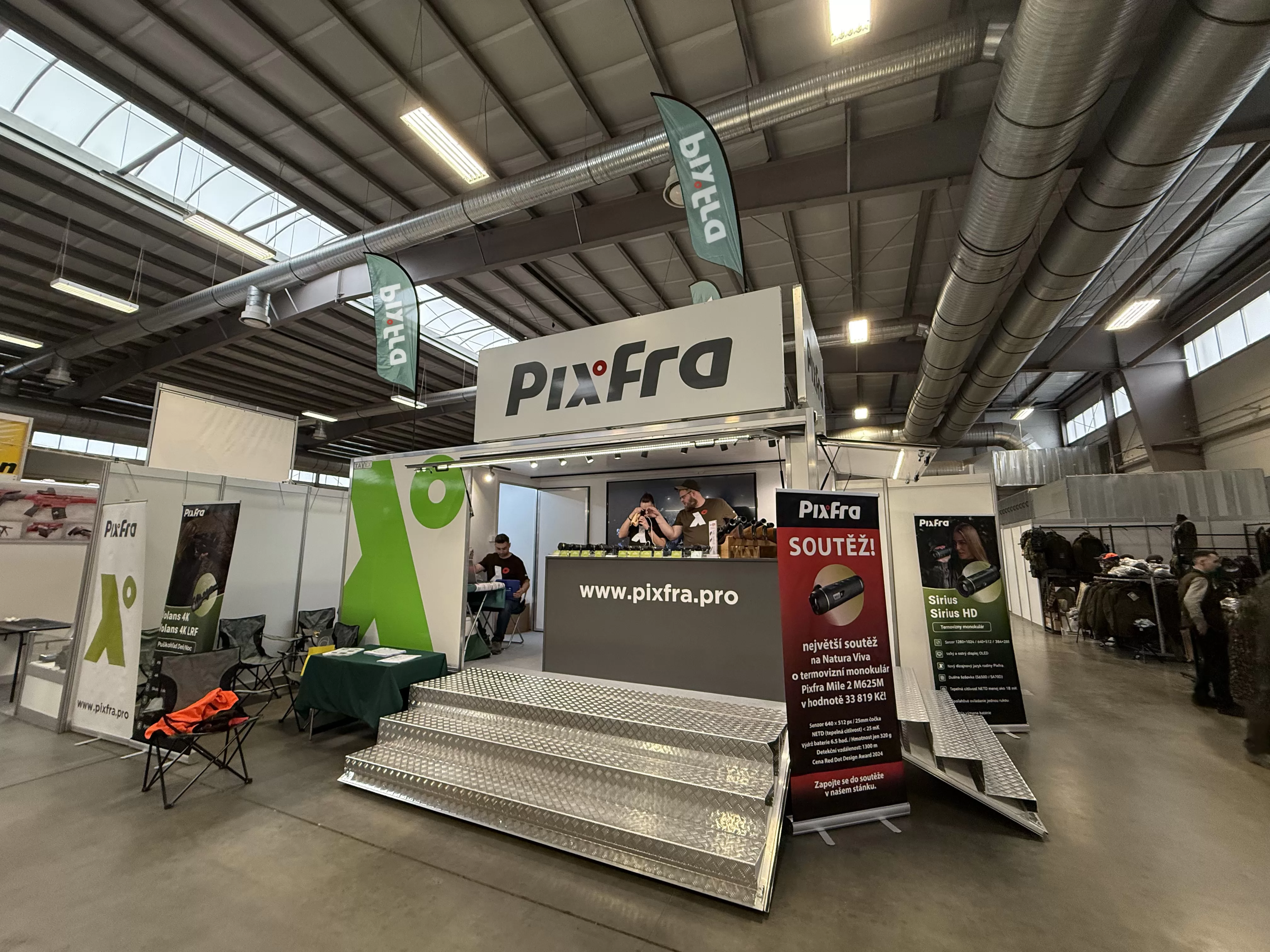
Visitors to the mobile exhibition can explore Pixfra’s complete product range, from the high-performance Sirius HD series with its 1280×1024 HD sensor, to the versatile Taurus thermal front attachments, and the advanced Chiron LRF series with integrated laser rangefinder capabilities.
Founded in 2015 and headquartered in Hangzhou, China, Pixfra has rapidly grown to serve over 150 countries with its thermal imaging solutions. The company’s products are widely used in wildlife observation, outdoor sports, emergency management, and various industrial applications.
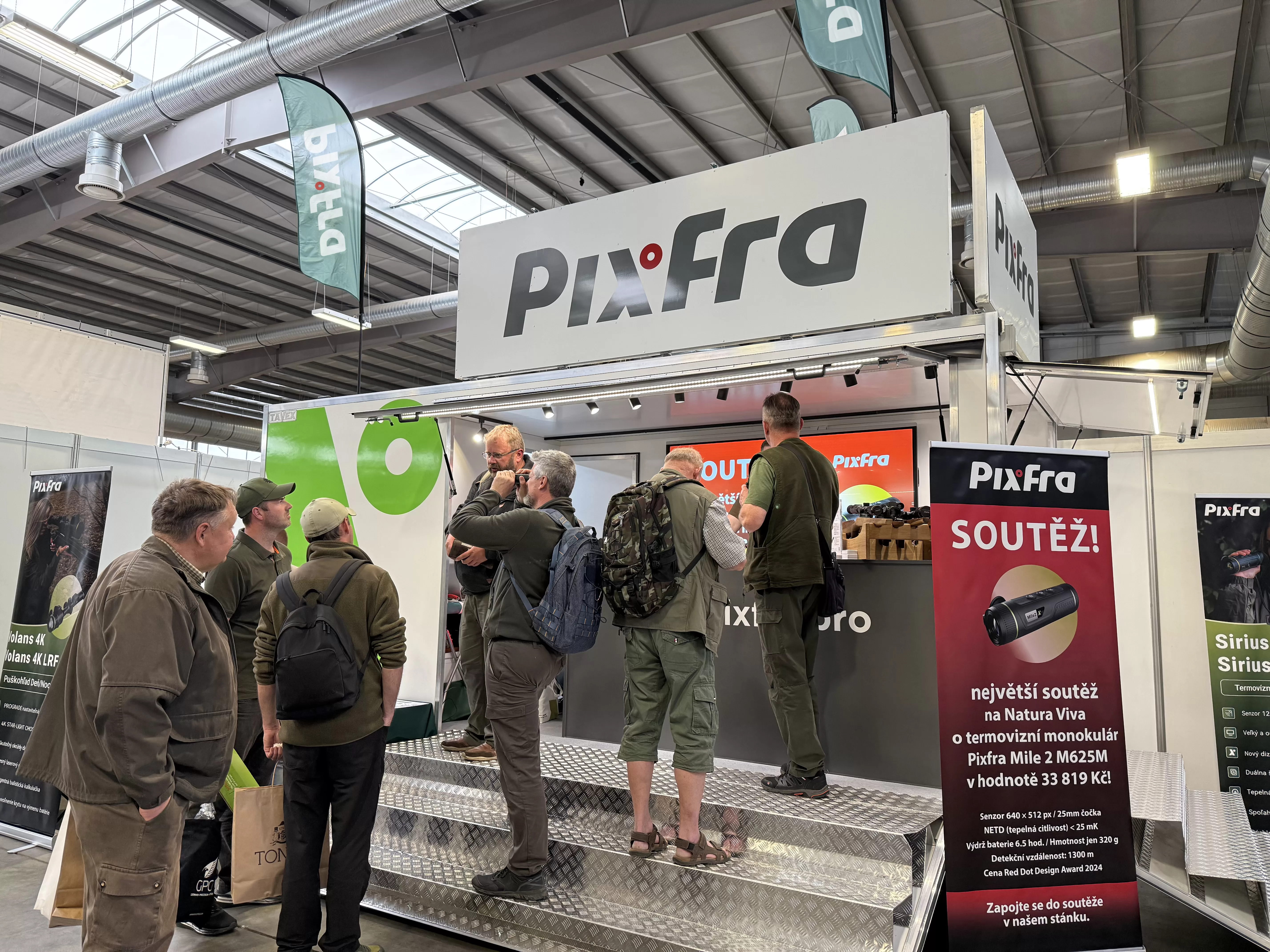
This mobile exhibition initiative in Slovakia demonstrates Pixfra’s commitment to innovative customer engagement and reflects the company’s forward-thinking approach that has earned it recognition as a national high-tech enterprise and multiple design awards.
The exhibition vehicle will be touring various locations across Slovakia and neighboring countries, bringing Pixfra’s cutting-edge thermal imaging technology directly to outdoor enthusiasts, hunters, and professional users.
In thermal imaging technology, spot size is one of the parameters that directly impacts detection capability, measurement accuracy, and overall system performance. Put simply, spot size refers to the smallest area that a thermal imaging system can effectively resolve at a given distance. This parameter determines what objects can be detected and accurately measured in a thermal image, making it essential knowledge for anyone seeking optimal performance from thermal devices.
The physical principles behind spot size relate to the optical resolution of the system, which is influenced by the detector resolution, lens quality, and distance to the target. As distance increases, the spot size grows proportionally, reducing the ability to detect smaller objects or temperature differences. This relationship follows optical physics principles where the smallest resolvable detail is limited by both the optical system and the fundamental wave properties of infrared radiation.
According to research published by the European Institute of Thermal Imaging:
“Insufficient understanding of spot size calculations accounts for approximately 64% of accuracy issues reported in field-deployed thermal imaging systems, particularly in applications requiring precise measurement or small target detection.”
For users of advanced thermal systems like the Pixfra Sirius HD Series with its 1280×1024 HD sensor, understanding spot size calculation ensures the full capabilities of these high-resolution systems can be leveraged for maximum detection performance at optimal operational distances.
The calculation of spot size in thermal imaging follows a straightforward mathematical relationship that connects optical parameters with measurement distance. The basic formula for calculating spot size is:
Spot Size = (Distance to Target × IFOV)
Where IFOV (Instantaneous Field of View) represents the angular resolution of the system measured in milliradians (mrad) or degrees. The IFOV is determined by the detector size and the focal length of the optics:
IFOV = (Detector Element Size / Focal Length)
For a complete system, this translates to a practical formula where:
Spot Size (mm) = Distance (m) × IFOV (mrad)
This relationship creates what’s known as the Distance-to-Spot ratio (D:S ratio), which is often used as a specification in thermal imaging systems. A higher D:S ratio indicates a better ability to measure smaller objects at greater distances.
For example, the Pixfra Pegasus Pro Series, with its premium optics and sensor configuration, achieves superior spot size performance that enables detection of smaller temperature anomalies at greater distances compared to systems with lower optical resolution.
The detector resolution represents a fundamental limitation on spot size performance in any thermal imaging system. Higher resolution detectors, with more pixels covering the same field of view, inherently provide smaller spot sizes and better spatial resolution at any given distance.
This relationship can be illustrated by comparing different sensor resolutions available in modern thermal imaging devices:
| Sensoroppløsning | Typical IFOV (mrad) | Spot Size at 100m | Practical Application |
|---|---|---|---|
| 256×192 | 1.308 | 130.8mm | Basic detection |
| 384×288 | 0.873 | 87.3mm | General purpose |
| 640×512 | 0.524 | 52.4mm | Advanced detection |
| 1280×1024 | 0.262 | 26.2mm | Premium measurement |
(Note: Values are representative and may vary based on specific optical configurations)
The Pixfra product lineup reflects this progression, with the Mile 2 Series offering configurations starting at 256×192 resolution for basic detection needs, while the premium Sirius HD Series delivers the exceptional spatial resolution of a 1280×1024 HD sensor for applications requiring maximum detection precision.
According to the International Thermal Imaging Standards Organization:
“A doubling of linear detector resolution translates to approximately a 30-40% improvement in minimum detectable object size at equivalent distances, assuming comparable optical quality.”
This relationship underscores why sensor resolution represents such a critical specification for thermal imaging performance in applications where small target detection is essential.
While sensor resolution establishes the baseline for spot size performance, the lens selection plays an equally critical role in determining the actual spot size capabilities of a thermal imaging system. The focal length of the lens directly impacts the IFOV (Instantaneous Field of View), with longer focal lengths providing smaller IFOV values and consequently smaller spot sizes at any given distance.
This relationship explains why thermal imaging devices designed for long-range detection, such as the Pixfra Taurus LRF Series with its 50mm lens option, can achieve superior spot size performance compared to wider-angle systems, even when using identical sensor resolutions.
The practical effects of lens selection can be demonstrated through a comparison of different focal length options:
For a 640×512 sensor with 12μm pixel pitch:
This relationship creates an important consideration when selecting a thermal imaging system for specific applications. Wider-angle lenses (shorter focal lengths) provide larger fields of view but at the cost of larger spot sizes, while telephoto lenses (longer focal lengths) deliver smaller spot sizes but narrower fields of view.
The versatility of systems like the Pixfra Sirius S650D model, with its innovative 25-50mm continuous zoom capability, addresses this tradeoff by allowing users to optimize between field of view and spot size based on specific detection requirements and conditions.
For hunting applications, proper understanding of spot size calculation directly translates to field performance in target detection and identification. The spot size determines the minimum size object that can be reliably detected at various distances, which is crucial for identifying game animals in complex environmental backgrounds.
Consider these practical hunting scenarios where spot size knowledge proves crucial:
According to research by the European Hunting Association:
“Hunters utilizing thermal imaging equipment properly matched to their typical engagement distances report 37% higher positive identification rates and 42% improvement in ethical shot placement compared to those using systems with inadequate spot size performance for their applications.”
The Pixfra Arc LRF Series addresses these practical hunting requirements through its balanced optical design, offering spot size performance optimized for common European hunting scenarios while integrating laser rangefinding technology for precise distance measurement—a critical component in field-applicable spot size calculation.
To simplify the application of spot size principles in the field, various calculation tools have been developed ranging from basic formulas to sophisticated digital applications. These calculators help users determine the practical limitations of their thermal imaging systems at various distances and for different target sizes.
Basic Spot Size Calculator Formula:
Spot Size (mm) = Distance (m) × IFOV (mrad)
Advanced Calculator Considerations:
Professional thermal imaging applications often incorporate spot size calculators directly into their interfaces, allowing real-time assessment of detection capabilities based on current settings and measured distances. For systems with integrated laser rangefinders, like the Pixfra Chiron LRF Series, this calculation can be performed automatically, providing users with immediate feedback on detection limitations for the current target.
The Pixfra Outdoor App, compatible with Pixfra thermal devices, includes an advanced spot size calculator that factors in the specific optical characteristics of connected devices, allowing users to:
This integration of theoretical spot size calculation with practical field applications represents a significant advancement in making complex optical principles accessible to users without specialized technical backgrounds.
One of the most prevalent misconceptions in thermal imaging relates to the interpretation of manufacturer-specified detection ranges without consideration of spot size limitations. Many users incorrectly assume that the quoted maximum detection range applies equally to all target sizes, leading to unrealistic expectations in field performance.
The reality is that detection range must always be qualified by the size of the target being detected. A thermal device might detect a large heat source (like a vehicle) at several kilometers, but be limited to detecting human-sized targets at only 1-2 kilometers, and small animals at even shorter ranges—all due to spot size limitations.
Common misconceptions include:
Misconception: “This thermal scope can detect targets at 2,000 meters” (without specifying target size)
Reality: At 2,000 meters, the system may only resolve objects larger than 1 meter across, making small animal detection impossible at this range.
Misconception: “Higher magnification always improves detection capability”
Reality: Optical magnification does not change the fundamental spot size limitations of the sensor and lens combination; it merely makes the limited resolution more visually apparent.
Misconception: “Digital zoom enhances detection range”
Reality: Digital zoom cannot overcome the physical spot size limitations; it only enlarges the pixels without adding detection capability.
Understanding these limitations through proper application of spot size calculation allows users to develop realistic expectations for their thermal imaging equipment and select systems appropriately matched to their detection requirements.
The mathematics of spot size calculation may seem technical, but the practical applications are straightforward and essential for anyone seeking to maximize the utility of thermal imaging technology. Whether for hunting, wildlife observation, security, or other applications, spot size awareness ensures users can extract the full potential from their thermal imaging systems.
As thermal imaging technology continues to advance with higher resolution sensors and improved optics, spot size performance will similarly improve—but the fundamental principles of calculation and their practical implications will remain constant.
If you’re interested in exploring how spot size calculations apply to specific thermal imaging applications or want to identify the optimal system for your detection requirements, Pixfra’s technical specialists can provide expert guidance. Our comprehensive product range—from the versatile Mile 2 Series to the premium Sirius HD Series—offers solutions tailored to diverse detection needs with clear specifications on spot size performance.
For detailed spot size calculations specific to your application or to discuss distribution opportunities in European markets, contact our technical team at info@pixfra.com or visit pixfra.com to explore our full product range. Let our experts help you select a thermal imaging solution that delivers the precise spot size performance required for your specific detection challenges.
Termisk bildeteknologi har revolusjonert måten vi oppdager vannlekkasjer på, ved å utnytte det grunnleggende prinsippet om at vann påvirker overflatetemperaturer på forutsigbare måter. Når vann lekker gjennom konstruksjoner, skaper det temperaturforskjeller som blir synlige for termiske kameraer, selv når fuktigheten i seg selv forblir skjult for øyet. Denne egenskapen skyldes vannets høye varmeledningsevne og spesifikke varmekapasitet, som gjør at det absorberer og overfører varme på en annen måte enn tørre materialer i omgivelsene. Når vann trenger inn i byggematerialer eller i bakken, skaper det tydelige termiske mønstre som vises som temperaturavvik på termiske bildeskjermer.
Fysikken bak denne deteksjonsmetoden bygger på flere sentrale egenskaper: Vann fordamper vanligvis og gir en avkjølende effekt på overflater; det endrer varmeledningsevnen til materialer det gjennomtrenger; og det opprettholder temperaturen på en annen måte enn tørre materialer når omgivelsestemperaturen svinger. Høyfølsomme termiske bildesystemer, som for eksempel Pixfra Sirius-serien med sin eksepsjonelle NETD (Noise Equivalent Temperature Difference) på ≤18 mK, kan registrere disse subtile temperaturvariasjonene med bemerkelsesverdig presisjon og avsløre vanninntrengning lenge før synlige skader oppstår. I tillegg til denne anvendelsen finnes det mange andre bruksområder, og til sammen produsere termiske kameraer nyttig
Ifølge en undersøkelse publisert av Det europeiske bygningsforskningsinstituttet:
“Ved hjelp av termisk avbildning kan man oppdage vannlekkasjer i bygningskonstruksjoner opptil 6–8 uker før synlige tegn viser seg, noe som potensielt kan redusere kostnadene ved utbedring av vannskader med 45–60% gjennom tidlig inngrep.”
Denne muligheten til tidlig påvisning gjør termisk avbildning til et uvurderlig verktøy for vedlikehold av eiendommer, særlig i regioner som Sentral- og Nord-Europa, hvor vannskader i bygninger utgjør en betydelig årlig økonomisk belastning.
Effektiviteten ved påvisning av vannlekkasjer ved hjelp av termisk avbildning avhenger i stor grad av hvor avansert utstyret som brukes er. Moderne termiske avbildningssystemer har utviklet seg langt utover enkle infrarøde kameraer og inneholder en rekke forbedringer som dramatisk øker evnen til å oppdage vannrelaterte problemer.
Termiske sensorer med høy oppløsning, som 640×512-detektoren som finnes i Pixfras premium-enheter, gir den piksel tettheten som er nødvendig for å identifisere subtile temperaturmønstre som kan tyde på vanninntrengning. Denne oppløsningen gjør det mulig å undersøke større områder i detalj, samtidig som man fanger opp de minste temperaturforskjellene som kan tyde på vannlekkasjer i et tidlig stadium. Når disse systemene kombineres med avansert optikk, som for eksempel F0,9-objektivet med stor blenderåpning som finnes i Sirius-serien, kan de levere eksepsjonell klarhet i termisk bildebehandling.
Kanskje enda viktigere for anvendelser innen påvisning av vannlekkasjer er prosesseringsteknologien som forbedrer rå termiske data. Pixfras PIPS 2.0 (Pixfra Imaging Processing System) er et godt eksempel på disse fremskrittene, og benytter avanserte algoritmer som:
Disse teknologiske fremskrittene gjør at termisk avbildning går fra å være et spesialisert verktøy til å bli en tilgjengelig og svært effektiv løsning for påvisning av vannlekkasjer i en rekke bruksområder og miljøer.
I boligmiljøer over hele Europa har termisk avbildning utviklet seg fra å være en luksuriøs inspeksjonsmetode til å bli et uunnværlig verktøy for forebyggende vedlikehold. Vannskader utgjør en av de vanligste og mest kostbare skadekravene innen boligforsikring. Den europeiske forsikringsforeningen rapporterer at vannrelaterte skadekrav utgjør omtrent 29% av alle utbetalinger fra boligforsikringer, noe som overstiger 5,2 milliarder euro årlig i EUs medlemsland.
Varmekamera gir huseiere og eiendomsforvaltere en ikke-invasiv metode til å:
Bærbare termiske enheter som Pixfra Mile 2-serien termisk monokulær gir tilstrekkelig følsomhet (≤25 mK NETD) for de fleste bruksområder i boliger, samtidig som de byr på enestående bærbarhet og brukervennlighet. Disse kompakte systemene gjør det mulig å gjennomføre omfattende eiendomsinspeksjoner uten spesialopplæring, noe som gjør termisk avbildning tilgjengelig for et bredere spekter av brukere enn noensinne.
Ifølge en undersøkelse utført av European Property Management Association:
“Eiendommer som gjennomfører regelmessige termografiske inspeksjoner for å oppdage vanninntrengning, melder om 72% færre tilfeller av katastrofale vannskader og oppnår en gjennomsnittlig besparelse på vedlikeholdskostnadene på 0,37 euro per kvadratmeter årlig.”
Risikoen ved vannskader øker dramatisk i nærings- og industrimiljøer, der lekkasjer kan skade kostbart utstyr, forstyrre driften og utgjøre en sikkerhetsrisiko. Termisk avbildning er et effektivt forebyggende verktøy for å beskytte disse verdifulle eiendelene og sikre driftskontinuitet.
I industrianlegg kan termisk avbildning påvise:
| Søknad | Deteksjonsmål | Potensielle besparelser |
|---|---|---|
| Prosessrørledninger | Lekkasjer i vann-, damp- og kjemikalierørledninger | Unngå kostbare produkttap og forurensning |
| Taksystemer | Fuktinntrengning i flate tak på næringsbygg | Forleng takets levetid med 30–40% |
| Kjølesystemer | Vannlekkasjer i kjøletårn og VVS-anlegg | Reduser energikostnadene og forhindre skader på utstyret |
| Elektriske systemer | Vanninntrengning i nærheten av elektrisk infrastruktur | Forebygge katastrofale feil og brannfare |
| Datasentre | Fuktighet i nærheten av kritisk IT-infrastruktur | Unngå skader på utstyret og tap av data |
Nøyaktighetskravene til disse bruksområdene gjør det ofte nødvendig å bruke termiske systemer i toppklassen. Enheter som Pixfra Sirius HD-serien, med sin 1280×1024 HD-sensor og enestående termisk følsomhet, gir de detaljerte bildene som trengs for å inspisere komplekse industrielle systemer der små lekkasjer kan få store konsekvenser.
Europeiske driftsledere for industrianlegg oppgir at bruk av termisk avbildning i forebyggende vedlikeholdsprogrammer for å oppdage vannlekkasjer gir en gjennomsnittlig avkastning på investeringen på 310% i løpet av de første 18 månedene, hovedsakelig gjennom unngått driftsstans og skader på utstyret.
I tillegg til bygninger og infrastruktur gir termisk avbildning betydelige fordeler for vannforvaltningen i landbruket – et tema som får stadig større oppmerksomhet i hele Europa, ettersom klimaendringene påvirker tilgangen på vann og kostnadene knyttet til dette. Termisk avbildning kan avdekke lekkasjer og ineffektivitet i vanningsanlegg som fører til sløsing med vann og energi, samtidig som det kan skade avlingene på grunn av ujevn fordeling.
Moderne termiske kameraer kan oppdage:
I landbrukssammenheng er termiske systemer med bredere synsfelt ofte mest effektive. Pixfra Arc LRF-serien, med sin brede detekteringskapasitet og integrerte laseravstandsmåler, gjør det mulig for fagfolk i landbruket å kartlegge store områder effektivt, samtidig som de nøyaktig kan måle avstander til identifiserte problemområder.
Ifølge en undersøkelse fra Det europeiske instituttet for vannforvaltning i landbruket:
“Bruk av termisk avbildning til å oppdage lekkasjer i vanningsanlegg har bidratt til at de deltakende gårdene har redusert vannforbruket med gjennomsnittlig 18,7%, samtidig som avlingens jevnhet er forbedret med 12,3%, noe som gir betydelige økonomiske og miljømessige fordeler.”
I regioner i Sør-Europa som sliter med vannmangel, fører disse effektivitetsforbedringene direkte til betydelige kostnadsbesparelser og økt bærekraft i landbruket.
En ny anvendelse for deteksjon av lekkasjer i termisk vann strekker seg utover bygget infrastruktur og omfatter også miljøovervåking og bevaringsarbeid. Europeiske miljømyndigheter og naturvernorganisasjoner bruker i stadig større grad termisk avbildning til å overvåke naturlige vassdrag, oppdage grunnvannssiv og identifisere ulovlige vannavledninger.
Disse miljørelaterte anvendelsene utnytter de samme prinsippene om temperaturforskjeller som brukes ved bygningsinspeksjoner, men anvender dem på naturlige systemer. Vann som strømmer gjennom jord eller springer ut fra kilder, skaper tydelige termiske signaturer som kan oppdages med følsomt termisk bildeutstyr, særlig i perioder hvor omgivelsestemperaturen og vanntemperaturen avviker betydelig fra hverandre.
Naturvernorganisasjoner har med hell tatt i bruk termisk avbildning for å:
For slike miljørelaterte anvendelser gir termiske enheter med utvidet deteksjonsrekkevidde, som for eksempel Pixfra Pegasus Pro-serien med en deteksjonsrekkevidde på opptil 2 600 meter, den nødvendige avstanden for å kartlegge vassdrag og naturområder uten å forstyrre dyrelivet eller sårbare habitater.
Europeiske naturvernmyndigheter opplyser at termiske undersøkelser kan redusere kostnadene ved omfattende overvåking av vassdrag med opptil 64% sammenlignet med tradisjonelle metoder, samtidig som de øker oppdagelsesraten for småskala, ulovlige vannavledninger betydelig.
For å oppnå best mulig effekt av termisk avbildning ved påvisning av vannlekkasjer må man ha kjennskap til flere sentrale driftsmessige beste praksis som har stor innvirkning på resultatene. Disse teknikkene forbedrer påvisningsmulighetene utover det å bare rette et termisk kamera mot et mistenkelig område:
Optimal tidsplanlegging: Deteksjon av vannlekkasjer er mest effektiv når temperaturforskjellene mellom våte og tørre områder er størst. Inspeksjoner tidlig om morgenen (før soloppvarming) gir ofte ideelle forhold, da våte områder gjennom natten vil ha beholdt varme eller kulde på en annen måte enn de omkringliggende tørre materialene.
Sammenlignende bildediagnostikk: Å ta termiske referansebilder under tørre forhold gir verdifulle referansepunkter for å identifisere avvik ved senere inspeksjoner.
Miljøhensyn: Vind, nedbør og direkte sollys kan alle påvirke overflatetemperaturene og potensielt skjule eller gi falske indikasjoner på vanninntrengning. Ved inspeksjoner bør man ta hensyn til disse miljøfaktorene.
Vurdering fra flere vinkler: Ved å undersøke potensielle lekkasjeområder fra flere vinkler kan man skille mellom reelle fuktproblemer og avvik som skyldes refleksjon eller emissivitet.
Supplerende tester: Selv om termisk avbildning er svært effektivt til å identifisere potensielle problemområder, kan supplerende målinger med fuktighetsmåler på mistenkelige steder bekrefte funnene og fastslå fuktighetsnivåene.
Ifølge profesjonelle eksperter på sanering etter vannskader:
“Kombinasjonen av riktige termografiteknikker og målrettet bekreftelse med fuktighetsmåler har vist seg å forbedre nøyaktigheten ved lekkasjedeteksjon med 83% sammenlignet med tradisjonelle visuelle inspeksjonsmetoder.”
Ved å følge disse beste praksisene sikres det at termisk avbildning gir konsistente og pålitelige resultater i ulike situasjoner knyttet til påvisning av vannlekkasjer.
Termisk avbildning har utviklet seg fra å være et spesialisert verktøy til å bli en uunnværlig teknologi for omfattende påvisning av vannlekkasjer innen bolig-, nærings-, industri-, landbruks- og miljøsektoren. Ved å synliggjøre de ellers usynlige temperaturmønstrene som oppstår ved vanninntrengning, gjør moderne termiske apparater det mulig å oppdage problemer på et tidlig stadium, lenge før synlige skader oppstår. Dette gir betydelige økonomiske og miljømessige fordeler gjennom vannbesparelse og forebygging av skader.
Anvendelsesområdene for denne teknologien utvides stadig i takt med at termiske bildesystemer blir mer avanserte, rimeligere og brukervennlige. Fra huseiere som ønsker å beskytte sine investeringer til driftsledere i industrien som skal sikre kritisk infrastruktur – muligheten til å “se” vann gjennom dets termiske signatur gir en betydelig fordel i vedlikeholds- og bevaringsarbeidet.
Etter hvert som vannmangel og aldrende infrastruktur i stadig større grad påvirker europeiske lokalsamfunn, vil betydningen av effektiv lekkasjedeteksjon bare øke. Termisk avbildning er ikke bare en forbedret deteksjonsmetode, men et grunnleggende skifte i hvordan vi tilnærmer oss vannforvaltning og vannbesparelse på tvers av flere sektorer.
Hvis du er interessert i å ta i bruk termisk avbildning i forbindelse med vannforvaltning, vedlikehold av eiendommer eller miljøvernarbeid, tilbyr Pixfra en rekke enheter som egner seg for ulike deteksjonsformål. Fra den kompakte Mile 2-serien for inspeksjoner i boliger til Sirius HD-serien med høy oppløsning for krevende kommersielle bruksområder – vårt produktsortiment gir den følsomheten og oppløsningen som kreves for effektiv påvisning av vannlekkasjer.
For mer informasjon om våre løsninger innen termisk avbildning eller for å diskutere distribusjonsmuligheter på de europeiske markedene, kan du kontakte våre spesialister på info@pixfra.com eller besøk pixfra.com for å utforske hele vårt produktsortiment. Vårt team kan gi deg faglig veiledning i valg av det optimale termiske systemet for akkurat dine behov innen vannlekkasjedeteksjon, slik at du får mest mulig ut av fordelene ved denne kraftfulle teknologien.
To address the question of whether termiske kikkerter can see infrared, we must first understand the relationship between thermal imaging and the infrared spectrum. The electromagnetic spectrum encompasses radiation of varying wavelengths, from gamma rays (shortest) to radio waves (longest). Infrared radiation sits between visible light and microwave radiation on this spectrum, covering wavelengths from approximately 700 nanometers to 1 millimeter.
It’s crucial to recognize that infrared (IR) is a broad category that includes multiple sub-bands. Near-infrared (NIR) ranges from 0.7-1.4 μm, short-wavelength infrared (SWIR) from 1.4-3 μm, mid-wavelength infrared (MWIR) from 3-8 μm, and long-wavelength infrared (LWIR) from 8-15 μm. What we commonly call “thermal imaging” primarily operates in the MWIR and LWIR bands, detecting the heat signatures naturally emitted by objects,and this feature is a major advantage for hunters.
According to the International Commission on Illumination:
“All objects with temperatures above absolute zero emit infrared radiation. The wavelength distribution and intensity of this radiation are directly related to the object’s temperature.”
This scientific principle forms the foundation of thermal imaging technology. Modern thermal scopes like the Pixfra Pegasus Pro Series and Chiron LRF Series are specifically designed to detect and visualize MWIR or LWIR radiation, which corresponds to the heat signatures emitted by animals, humans, and objects in the environment. Therefore, thermal scopes do indeed “see” infrared radiation—specifically, the mid to long-wavelength infrared emissions that correspond to heat signatures.
An important technical distinction exists between the different technologies used to detect infrared radiation. This distinction helps clarify what exactly thermal scopes can and cannot detect in terms of infrared light.
Passive Infrared Detection (Thermal Imaging): Devices like the Pixfra Sirius Series Thermal Monocular use uncooled microbolometer sensors to detect naturally emitted infrared radiation (heat) without requiring any external light source. These operate primarily in the LWIR spectrum (8-14 μm) and create images based solely on temperature differences.
Active Infrared Technologies: These include night vision devices that actively project near-infrared light (NIR, 0.7-1.4 μm) to illuminate an area, similar to a flashlight that human eyes cannot see. This projected light is then detected by specialized cameras.
Near-Infrared Illuminators: These devices project NIR light that standard thermal scopes cannot detect, as they are tuned to detect MWIR and LWIR radiation instead.
| Technology Type | Wavelength | Requires Light Source | What It Detects | Pixfra Example |
|---|---|---|---|---|
| Varmebilde | 8-14 μm (LWIR) | Nei | Heat signatures | Pegasus Pro Series |
| Night Vision | 0.7-1.4 μm (NIR) | Yes (either ambient or IR illuminator) | Reflected NIR light | Volans Series (supports day/night use) |
| Daytime Optics | 0.4-0.7 μm (Visible) | Yes (natural light) | Reflected visible light | N/A |
This distinction explains why thermal imaging devices like the Pixfra Taurus Series Thermal Front Attachment can function in complete darkness without any external illumination—they detect the LWIR radiation naturally emitted by all objects with temperatures above absolute zero, rather than requiring reflected light of any kind.
At the core of a modern thermal scope’s ability to detect infrared radiation is the microbolometer sensor technology. Understanding this component helps clarify what specific types of infrared radiation thermal scopes can detect and visualize.
Microbolometer sensors consist of arrays of microscopic detector elements made from materials (typically vanadium oxide or amorphous silicon) that change electrical resistance when exposed to infrared radiation. These minute resistance changes are measured, processed, and converted into a visible thermal image.
The sensitivity of these sensors is measured by Noise Equivalent Temperature Difference (NETD), expressed in millikelvin (mK). Premium thermal devices like the Pixfra Sirius HD Series feature sensors with NETD values of ≤18mK, indicating exceptional sensitivity to minute temperature differences—critical for detecting subtle thermal signatures at extended ranges.
Resolution also plays a vital role in a thermal scope’s capability to detect and display infrared radiation clearly. Higher resolution sensors like the 640×512 detector in the Pixfra Arc LRF Series provide more detailed visualization of thermal patterns compared to lower resolution alternatives.
According to thermal imaging expert Dr. Heinrich Müller from the European Institute of Thermal Science:
“Advancements in microbolometer technology have reduced NETD values from approximately 100mK in early commercial devices to below 20mK in current premium systems, representing a five-fold improvement in temperature sensitivity over the past decade.”
This technological advancement directly translates to improved detection capabilities for hunters and wildlife observers using thermal imaging equipment in challenging environmental conditions.
While the physical sensor detects infrared radiation, the processing of this thermal data is equally crucial in determining what a thermal scope can effectively “see.” Modern thermal imaging systems incorporate sophisticated signal processing to enhance detection capabilities beyond what raw sensor data might provide.
Pixfra’s proprietary PIPS 2.0 (Pixfra Imaging Processing System) exemplifies how advanced processing algorithms can significantly improve the visualization of infrared data. This system enhances image clarity through multiple processing stages:
These processing enhancements effectively expand the range of infrared radiation that can be meaningfully detected and interpreted by the user. For instance, in challenging conditions like light fog or rain, which can partially attenuate LWIR radiation, processing algorithms can amplify subtle signals that might otherwise be lost.
The real-world impact of these processing capabilities is particularly evident in the field, where environmental conditions constantly change. A European Hunting Association field test found that:
“Thermal devices with advanced processing capabilities demonstrated up to 40% greater effective detection range in challenging environmental conditions compared to systems with similar sensors but less sophisticated signal processing.”
The ability of thermal scopes to detect infrared radiation at distance is influenced by multiple factors beyond just the sensor specifications. Understanding these factors helps users develop realistic expectations about detection capabilities in various scenarios.
Sensoroppløsning: Higher resolution sensors (e.g., 640×512 vs. 384×288) provide more detailed infrared information at greater distances. The Pixfra Mile 2 Series offers options ranging from 256×192 to 640×512 resolution to address different detection range requirements.
Lens Specifications: Focal length and aperture significantly impact detection range. Longer focal length optics like the 50mm lens on the Pixfra Sirius S650 model provide greater magnification and detection range compared to shorter focal length alternatives.
Atmospheric Conditions: Water vapor, dust, and precipitation can attenuate LWIR radiation. High humidity, rain, and fog reduce effective detection ranges.
Target Size and Thermal Contrast: Larger targets with greater temperature differential from the background are detectable at greater distances. A typical detection range matrix might look like:
| Target Size | Thermal Contrast | Detection Range with 640×512 Sensor | Recognition Range |
|---|---|---|---|
| Large (Human/Deer) | High (>10°C) | 1,800-2,600m | 500-900m |
| Medium (Fox) | Medium (5-10°C) | 900-1,400m | 300-500m |
| Small (Rabbit) | Low (<5°C) | 400-700m | 150-250m |
These ranges represent optimal conditions and will decrease with adverse weather or when targets have minimal thermal contrast with their surroundings.
While thermal scopes excel at detecting emitted infrared radiation (heat), they cannot detect certain infrared phenomena related to reflectivity rather than emission. This limitation is important for users to understand when considering the capabilities and constraints of thermal imaging equipment.
Thermal scopes cannot detect:
According to Dr. Anna Kowalski of the European Optical Systems Institute:
“The common misconception that thermal imagers can detect all infrared frequencies leads to unrealistic expectations. These devices are specifically tuned to detect emitted thermal radiation in the 8-14 μm range, making them blind to near-infrared illumination and laser systems operating in shorter wavelengths.”
This distinction is particularly important for professional users who might be operating in environments where multiple infrared technologies are in use simultaneously, such as in wildlife management or security applications.
Understanding the specific infrared detection capabilities of thermal scopes helps users identify the optimal applications for this technology. Thermal imaging devices like the Pixfra Taurus LRF Series excel in scenarios that leverage their ability to detect mid and long-wave infrared radiation:
Wildlife Detection in Dense Vegetation: The LWIR radiation emitted by animals penetrates light vegetation more effectively than visible light, making thermal scopes superior for detecting wildlife in moderately dense cover.
Tracking After Shot: The residual heat signature left by game animals provides a distinct thermal trail that can be followed even when visible blood trails are difficult to detect.
Nocturnal Wildlife Management: For species active primarily during nighttime hours, such as wild boar, thermal detection capabilities enable effective population management without disturbing natural behavior patterns.
Environmental Hazard Identification: Thermal scopes can identify potential environmental dangers like forest fire hotspots that emit distinctive infrared signatures before they become visible to the naked eye.
The European Wildlife Management Consortium reports:
“In controlled field tests, experienced hunters using thermal imaging equipment demonstrated 78% higher detection rates of camouflaged wildlife compared to traditional optics, with the advantage increasing to 94% in low-light conditions.”
These practical advantages stem directly from the thermal scope’s ability to detect specific infrared wavelengths associated with heat signatures rather than relying on reflected visible light.
To directly answer the original question: Yes, thermal scopes do see infrared radiation—specifically, they detect mid and long-wavelength infrared radiation (MWIR and LWIR) that corresponds to heat signatures emitted by objects in the environment. However, they cannot detect near-infrared (NIR) illumination used by night vision devices or IR laser systems.
This specific infrared detection capability makes thermal imaging technology uniquely valuable for applications requiring the visualization of heat signatures regardless of lighting conditions. Modern thermal scopes like those in the Pixfra lineup combine sensitive microbolometer technology with sophisticated image processing to provide exceptional thermal infrared detection capability across diverse environmental conditions.
Understanding these technical capabilities and limitations allows users to make informed decisions about when thermal imaging technology represents the optimal solution for their specific requirements, whether for wildlife observation, hunting, or security applications.
If you’re interested in exploring how thermal imaging technology can enhance your hunting or observation capabilities, Pixfra offers a comprehensive range of products designed to meet diverse requirements and budgets. From the compact Mile 2 Series to the premium Pegasus Pro Series, our thermal imaging lineup delivers exceptional infrared detection capabilities backed by PIPS 2.0 processing technology.
For mer informasjon om våre løsninger innen termisk avbildning eller for å diskutere distribusjonsmuligheter på de europeiske markedene, kan du kontakte våre spesialister på info@pixfra.com or visit pixfra.com to explore our full product range and technical specifications. Our team can provide expert guidance on selecting the optimal thermal system for your specific application requirements, ensuring you maximize the benefits of this advanced technology.
Termisk bildeteknologi has revolutionized the hunting landscape by fundamentally changing how hunters detect, identify, and track game. Unlike traditional night vision that amplifies available light, thermal imaging detects heat signatures emitted by all objects, creating a distinct visual representation based on temperature differences. This core capability makes thermal scopes uniquely valuable in hunting scenarios where visual identification through conventional optics would be challenging or impossible.It should be noted that different countries have varies of restrictions on thermal imaging technology, make sure to check the related regulations before using it.
The technology works by detecting infrared radiation (heat) emitted by animals, which typically stand out prominently against cooler backgrounds regardless of ambient lighting conditions. Modern thermal imaging devices, such as the Pixfra Pegasus Pro Series with its exceptional ≤18mK NETD (Noise Equivalent Temperature Difference), can detect minute temperature variations, allowing hunters to identify game at significant distances even through environmental obstacles like light fog or sparse vegetation.
According to research published in the European Journal of Wildlife Research:
“Thermal imaging technology has demonstrated detection efficiency improvements of 65-78% in low-light hunting scenarios compared to traditional optics, with particularly significant advantages in densely vegetated environments.”
This fundamental capability addresses one of hunting’s primary challenges: reliably locating game in suboptimal conditions. For hunters pursuing nocturnal species like wild boar or managing predators like foxes, thermal imaging provides detection capabilities that traditional optics simply cannot match, regardless of quality or price point.
The detection range offered by quality thermal scopes represents a significant advantage for hunters across various environments and hunting scenarios. Premium thermal imaging devices can detect large game animals at distances exceeding 2,000 meters in optimal conditions, though identification range is typically more limited. This extended detection capability allows hunters to spot game long before being detected themselves, providing valuable time for strategic positioning.
The Pixfra Chiron LRF Series exemplifies this capability, offering detection ranges up to 2,600 meters for large game. When combined with integrated laser rangefinder technology, these systems provide not just detection but precise distance measurement, critical for ethical shot placement and effective hunting.
Comparative Detection Capabilities:
| Environmental Condition | Traditional Optics | Entry Thermal | Premium Thermal (≤20mK NETD) |
|---|---|---|---|
| Clear Night | 50-200m | 500-800m | 1,800-2,600m |
| Light Fog/Rain | 20-50m | 300-500m | 800-1,300m |
| Dense Vegetation | 30-80m | 200-400m | 500-900m |
| Full Daylight | 200-1,000m+ | 300-600m | 1,000-2,000m |
This extended detection capability translates directly to hunting success, particularly for species that are primarily active during twilight or nighttime hours. The technology’s effectiveness is further enhanced by advanced image processing systems like PIPS 2.0 (Pixfra Imaging Processing System), which improves contrast, reduces noise, and enhances detail recognition—critical factors for positive species identification at extended ranges.
Perhaps the most significant contribution thermal imaging makes to hunting is in the realm of ethical practices. Superior target identification capabilities allow hunters to:
These capabilities directly support responsible hunting practices and wildlife conservation efforts. With devices like the Pixfra Taurus Series Thermal Front Attachment, which features high-definition zeroing with ultra-fine 0.9cm@100m click value, hunters can achieve exceptional precision in shot placement once a target has been ethically identified.
The European Hunting Federation notes:
“Thermal imaging technology, when properly utilized, has contributed to a 43% reduction in wounded game and non-recovered animals during managed night hunting operations across multiple European study sites.”
This ethical advantage becomes particularly pronounced in wildlife management contexts, such as controlling invasive species or managing populations causing agricultural damage. The ability to confidently identify specific target animals while avoiding protected or non-target species represents a significant advancement in hunting ethics and efficiency.
One of thermal imaging’s most valuable attributes for hunters is its effectiveness across virtually all weather conditions and times of day. Unlike conventional optics that may be severely limited by fog, light rain, snow, or darkness, thermal imaging maintains consistent performance across these variables, with only heavy precipitation causing significant degradation in imaging capability.
The Pixfra Arc LRF Series demonstrates this versatility with its robust environmental rating and high-sensitivity ≤20mK NETD sensor, allowing it to function effectively across a wide spectrum of hunting conditions. For European hunters facing diverse and often rapidly changing weather conditions, this weather independence provides crucial reliability for planned hunting expeditions.
Key Environmental Advantages:
This consistency across environmental variables means hunters can plan activities with greater confidence and maintain effectiveness regardless of time of day or weather changes. For many European hunting regions where weather conditions can shift rapidly, this capability transforms previously unhuntable conditions into productive opportunities.
Beyond recreational hunting, thermal imaging technology has become an essential tool for wildlife management professionals and conservation organizations. The technology’s ability to efficiently conduct population surveys, monitor movement patterns, and implement targeted control measures makes it invaluable for evidence-based wildlife management.
The Pixfra Sirius HD Series, with its 1280×1024 HD sensor, exemplifies the type of high-resolution thermal imaging system that wildlife managers use for accurate population assessment and monitoring. These applications extend beyond game species to include:
According to research published by the International Association for Wildlife Management:
“Thermal imaging surveys have demonstrated accuracy improvements of 31-47% in population estimates for nocturnal ungulate species compared to traditional spotlight counting methods, providing more reliable data for hunting quota determinations.”
This improved data collection directly contributes to more sustainable hunting practices by ensuring harvest quotas are based on accurate population assessments. For European regions implementing adaptive management approaches to hunting, thermal imaging provides the precision monitoring tools needed to make evidence-based decisions about sustainable harvest levels.
While thermal imaging technology offers significant advantages for hunters, its use is subject to varying regulations across European countries. Understanding these legal frameworks is essential for hunters considering thermal equipment investments. The regulatory landscape can be summarized as follows:
| Land | Thermal for Hunting | Primary Restrictions | Notable Exceptions |
|---|---|---|---|
| Spania | Generally Permitted | Species-specific regulations | Broadly allowed for invasive species |
| Frankrike | Limited Permission | Authorized for specific species/situations | Wild boar management programs |
| Tyskland | Generally Restricted | Limited to professional use | Some pest control exceptions |
| Storbritannia | Tillatt | Primarily for non-game species | Extensive use for pest control |
| Italia | Varies by Region | Administrative authorizations | Wild boar management programs |
These regulations continue to evolve as wildlife management needs change and as the technology becomes more widely adopted. For example, increasing wild boar populations and associated agricultural damage have prompted regulatory adjustments in countries like France and Germany that previously maintained stricter limitations.
The Pixfra Outdoor App, compatible with devices like the Sirius Series and Pegasus Pro Series, includes features that help hunters maintain compliance with local regulations while maximizing the utility of their thermal equipment within legal parameters. This integration of technology with regulatory awareness represents an important advancement in responsible thermal imaging use for hunting applications.
Thermal imaging devices represent a significant investment, with quality systems ranging from €2,000 to €8,000 depending on specifications and capabilities. This investment merits careful cost-benefit analysis for hunters considering adoption of the technology. Key factors to consider include:
Hunting Frequency: For frequent hunters or those involved in wildlife management, the per-use cost becomes more reasonable over time.
Target Species: For hunters focusing on nocturnal species like wild boar, the effectiveness improvement may justify higher costs compared to primarily daytime hunting.
Professional Applications: For professional hunting guides, wildlife managers, or agricultural protection, the investment may be offset by professional benefits or damage reduction.
Technical Requirements: Not all hunting scenarios require the highest specifications. For example, the Pixfra Mile 2 Series offers excellent performance for many hunting applications at a more accessible price point than the premium Pegasus Pro Series.
According to a survey conducted by the European Hunting Equipment Association:
“83% of hunters who invested in quality thermal imaging equipment reported that the technology significantly improved their hunting success rate, with 76% indicating the investment had proven worthwhile within the first year of ownership.”
For distributors and dealers, understanding this cost-benefit equation is essential for guiding customers toward appropriate thermal imaging solutions that match their specific hunting needs and budget constraints.
Thermal scopes have undeniably transformed modern hunting, offering capabilities that extend beyond conventional optics in critical dimensions: detection range, environmental adaptability, and target identification precision. For hunters operating in European contexts—particularly those involved in wildlife management, nocturnal species hunting, or challenging environmental conditions—thermal imaging provides advantages that directly translate to increased effectiveness and enhanced ethical practices.
The technology’s ability to operate across environmental conditions, detect game at extended ranges, and provide precise target identification supports both recreational hunting success and professional wildlife management objectives. While regulatory frameworks vary across European nations, the trend appears to be toward increasing acceptance of thermal imaging as a valuable tool for specific hunting applications, particularly in wildlife damage control contexts.
For hunters considering thermal imaging technology, the investment should be evaluated against specific hunting objectives, frequency of use, and regulatory context. When properly matched to these factors, thermal imaging devices like those in the Pixfra lineup can significantly enhance the hunting experience while supporting responsible and ethical practices.
If you’re interested in elevating your hunting capabilities with state-of-the-art thermal imaging technology, Pixfra offers a comprehensive range of products designed specifically for European hunting applications. From the compact Mile 2 Series for mobile hunting to the precision-focused Pegasus Pro Series for demanding applications, our product line addresses the full spectrum of hunting scenarios while ensuring regulatory compliance.
To learn more about which thermal solution best matches your specific hunting requirements, contact our European specialists at info@pixfra.com or visit pixfra.com to explore our product lineup in detail. Our team can provide guidance on regulatory considerations for your region and help identify the optimal thermal imaging solution for your hunting objectives.