Pixfra Technology, the thermal imaging specialist known for its award-winning outdoor products, is breaking new ground in product demonstrations with an innovative mobile exhibition concept in Slovakia. The company’s local distributor has introduced a custom brand exhibition vehicle that transforms traditional trade show participation.
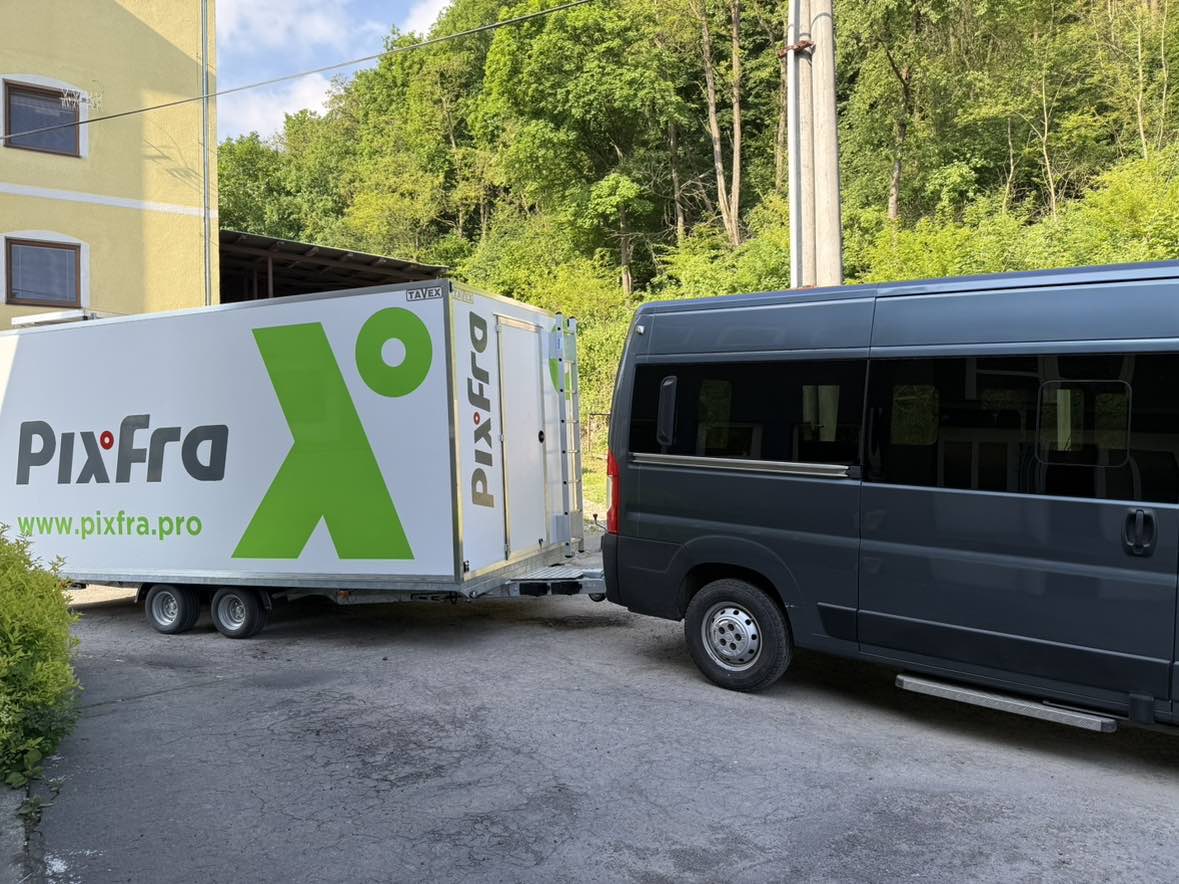
This unique setup features a dedicated exhibition trailer specifically designed to showcase Pixfra’s extensive thermal imaging product portfolio. The trailer, which can be opened to create an instant showroom, is pulled by a black transport vehicle, creating a mobile exhibition space that can travel directly to customers and events.
“This mobile exhibition approach represents the future of trade show participation,” explained the Slovakia distributor. “Instead of renting expensive booth space at exhibitions, we can now bring the entire Pixfra experience directly to our customers, allowing them to experience our products in various locations.”
The mobile showroom features Pixfra’s latest thermal imaging innovations, including the compact Mile 2 series monocular that recently won the prestigious Red Dot Design Award 2024. With its 640×512 pixel sensor, 25mm lens, and exceptional thermal sensitivity of less than 25mK, the Mile 2 weighs just 320 grams while delivering detection capabilities up to 1,300 meters. The device offers 6.5 hours of battery life, making it perfect for extended outdoor use.
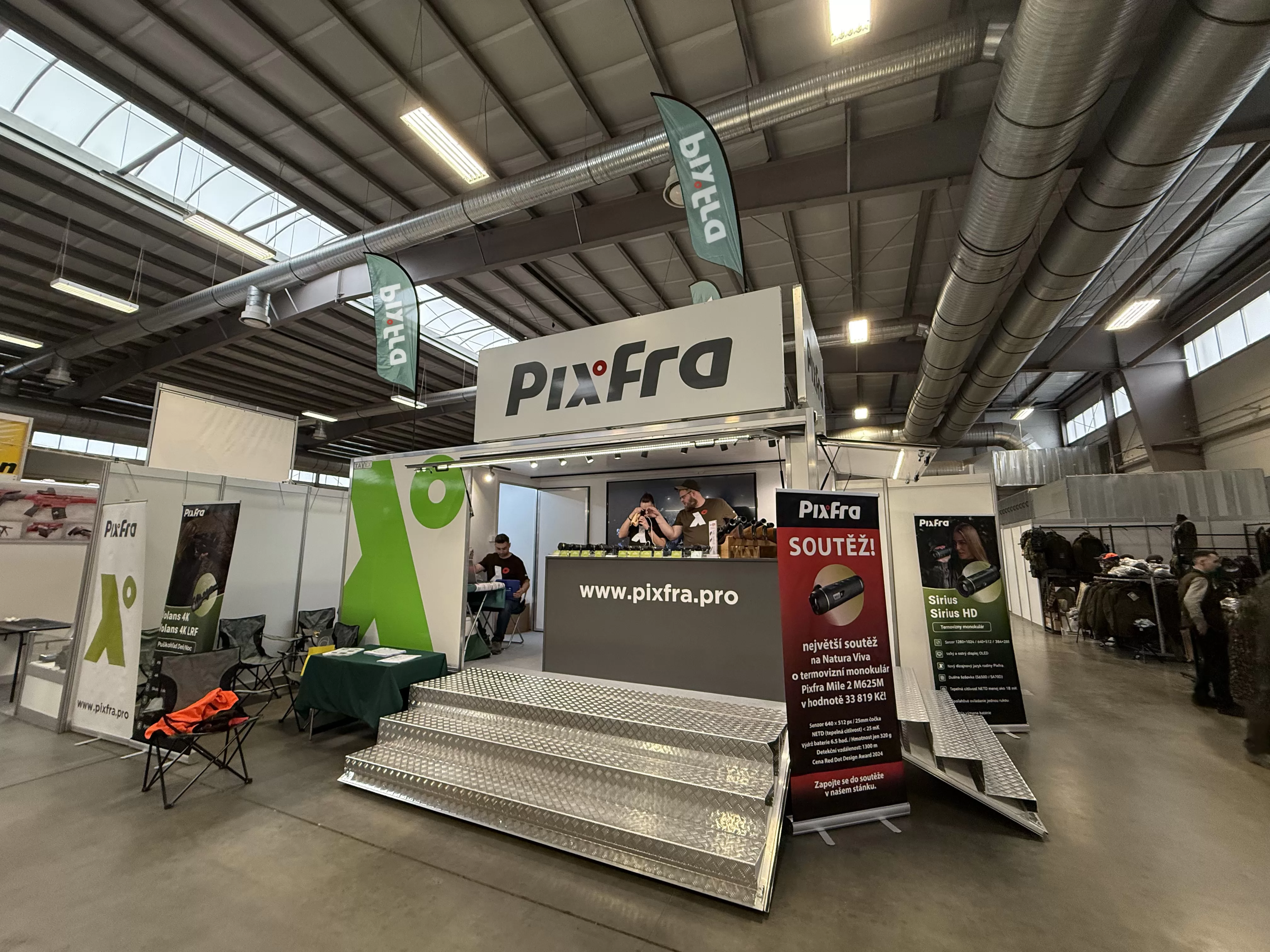
Visitors to the mobile exhibition can explore Pixfra’s complete product range, from the high-performance Sirius HD series with its 1280×1024 HD sensor, to the versatile Taurus thermal front attachments, and the advanced Chiron LRF series with integrated laser rangefinder capabilities.
Founded in 2015 and headquartered in Hangzhou, China, Pixfra has rapidly grown to serve over 150 countries with its thermal imaging solutions. The company’s products are widely used in wildlife observation, outdoor sports, emergency management, and various industrial applications.
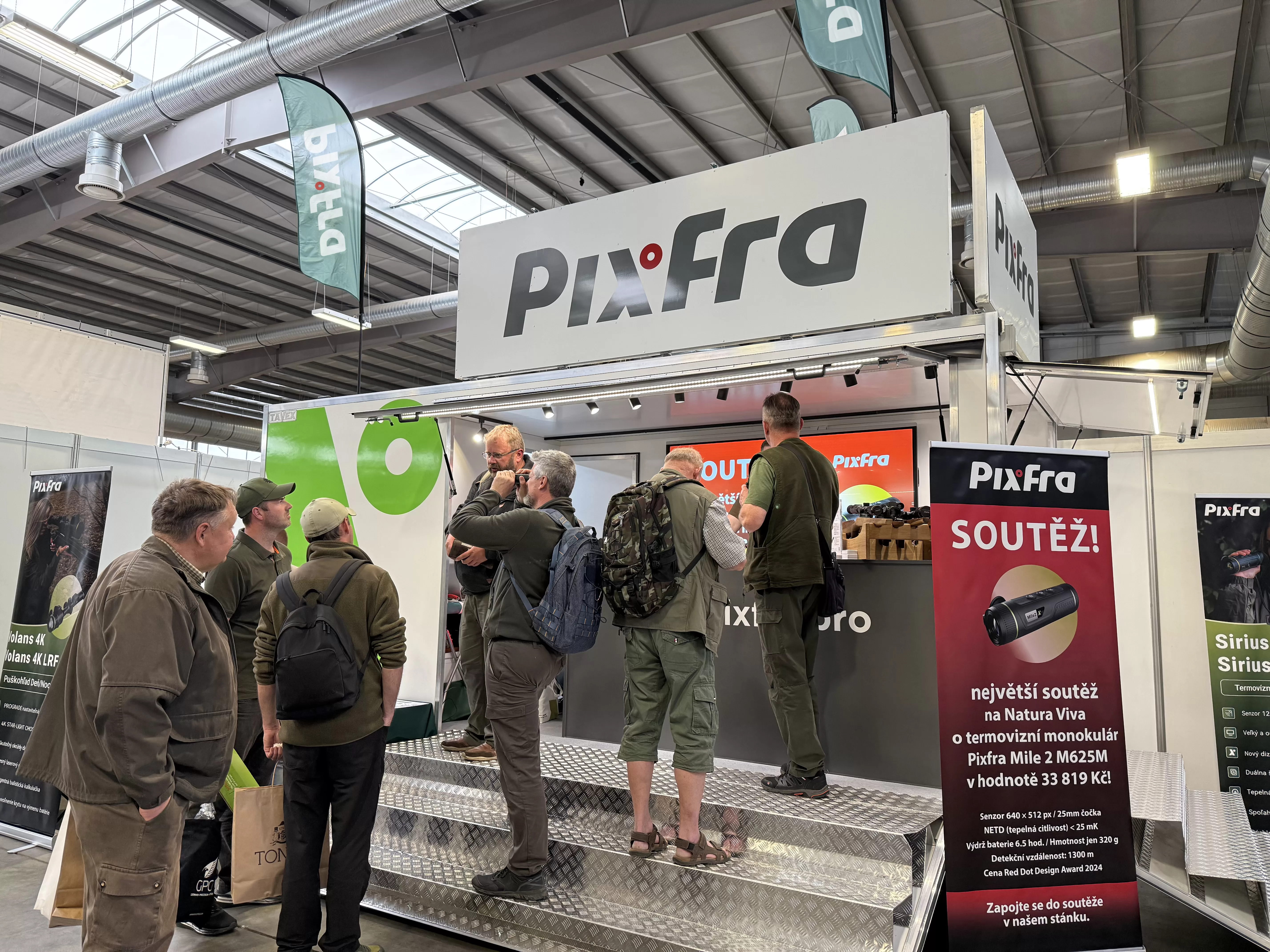
This mobile exhibition initiative in Slovakia demonstrates Pixfra’s commitment to innovative customer engagement and reflects the company’s forward-thinking approach that has earned it recognition as a national high-tech enterprise and multiple design awards.
The exhibition vehicle will be touring various locations across Slovakia and neighboring countries, bringing Pixfra’s cutting-edge thermal imaging technology directly to outdoor enthusiasts, hunters, and professional users.
In thermal imaging technology, spot size is one of the parameters that directly impacts detection capability, measurement accuracy, and overall system performance. Put simply, spot size refers to the smallest area that a thermal imaging system can effectively resolve at a given distance. This parameter determines what objects can be detected and accurately measured in a thermal image, making it essential knowledge for anyone seeking optimal performance from thermal devices.
The physical principles behind spot size relate to the optical resolution of the system, which is influenced by the detector resolution, lens quality, and distance to the target. As distance increases, the spot size grows proportionally, reducing the ability to detect smaller objects or temperature differences. This relationship follows optical physics principles where the smallest resolvable detail is limited by both the optical system and the fundamental wave properties of infrared radiation.
According to research published by the European Institute of Thermal Imaging:
“Insufficient understanding of spot size calculations accounts for approximately 64% of accuracy issues reported in field-deployed thermal imaging systems, particularly in applications requiring precise measurement or small target detection.”
For users of advanced thermal systems like the Pixfra Sirius HD Series with its 1280×1024 HD sensor, understanding spot size calculation ensures the full capabilities of these high-resolution systems can be leveraged for maximum detection performance at optimal operational distances.
The calculation of spot size in thermal imaging follows a straightforward mathematical relationship that connects optical parameters with measurement distance. The basic formula for calculating spot size is:
Spot Size = (Distance to Target × IFOV)
Where IFOV (Instantaneous Field of View) represents the angular resolution of the system measured in milliradians (mrad) or degrees. The IFOV is determined by the detector size and the focal length of the optics:
IFOV = (Detector Element Size / Focal Length)
For a complete system, this translates to a practical formula where:
Spot Size (mm) = Distance (m) × IFOV (mrad)
This relationship creates what’s known as the Distance-to-Spot ratio (D:S ratio), which is often used as a specification in thermal imaging systems. A higher D:S ratio indicates a better ability to measure smaller objects at greater distances.
For example, the Pixfra Pegasus Pro Series, with its premium optics and sensor configuration, achieves superior spot size performance that enables detection of smaller temperature anomalies at greater distances compared to systems with lower optical resolution.
The detector resolution represents a fundamental limitation on spot size performance in any thermal imaging system. Higher resolution detectors, with more pixels covering the same field of view, inherently provide smaller spot sizes and better spatial resolution at any given distance.
This relationship can be illustrated by comparing different sensor resolutions available in modern thermal imaging devices:
| Resolutie van de sensor | Typical IFOV (mrad) | Spot Size at 100m | Practical Application |
|---|---|---|---|
| 256×192 | 1.308 | 130.8mm | Basic detection |
| 384×288 | 0.873 | 87.3mm | General purpose |
| 640×512 | 0.524 | 52.4mm | Advanced detection |
| 1280×1024 | 0.262 | 26.2mm | Premium measurement |
(Note: Values are representative and may vary based on specific optical configurations)
The Pixfra product lineup reflects this progression, with the Mile 2 Series offering configurations starting at 256×192 resolution for basic detection needs, while the premium Sirius HD Series delivers the exceptional spatial resolution of a 1280×1024 HD sensor for applications requiring maximum detection precision.
According to the International Thermal Imaging Standards Organization:
“A doubling of linear detector resolution translates to approximately a 30-40% improvement in minimum detectable object size at equivalent distances, assuming comparable optical quality.”
This relationship underscores why sensor resolution represents such a critical specification for thermal imaging performance in applications where small target detection is essential.
While sensor resolution establishes the baseline for spot size performance, the lens selection plays an equally critical role in determining the actual spot size capabilities of a thermal imaging system. The focal length of the lens directly impacts the IFOV (Instantaneous Field of View), with longer focal lengths providing smaller IFOV values and consequently smaller spot sizes at any given distance.
This relationship explains why thermal imaging devices designed for long-range detection, such as the Pixfra Taurus LRF Series with its 50mm lens option, can achieve superior spot size performance compared to wider-angle systems, even when using identical sensor resolutions.
The practical effects of lens selection can be demonstrated through a comparison of different focal length options:
For a 640×512 sensor with 12μm pixel pitch:
This relationship creates an important consideration when selecting a thermal imaging system for specific applications. Wider-angle lenses (shorter focal lengths) provide larger fields of view but at the cost of larger spot sizes, while telephoto lenses (longer focal lengths) deliver smaller spot sizes but narrower fields of view.
The versatility of systems like the Pixfra Sirius S650D model, with its innovative 25-50mm continuous zoom capability, addresses this tradeoff by allowing users to optimize between field of view and spot size based on specific detection requirements and conditions.
For hunting applications, proper understanding of spot size calculation directly translates to field performance in target detection and identification. The spot size determines the minimum size object that can be reliably detected at various distances, which is crucial for identifying game animals in complex environmental backgrounds.
Consider these practical hunting scenarios where spot size knowledge proves crucial:
According to research by the European Hunting Association:
“Hunters utilizing thermal imaging equipment properly matched to their typical engagement distances report 37% higher positive identification rates and 42% improvement in ethical shot placement compared to those using systems with inadequate spot size performance for their applications.”
The Pixfra Arc LRF Series addresses these practical hunting requirements through its balanced optical design, offering spot size performance optimized for common European hunting scenarios while integrating laser rangefinding technology for precise distance measurement—a critical component in field-applicable spot size calculation.
To simplify the application of spot size principles in the field, various calculation tools have been developed ranging from basic formulas to sophisticated digital applications. These calculators help users determine the practical limitations of their thermal imaging systems at various distances and for different target sizes.
Basic Spot Size Calculator Formula:
Spot Size (mm) = Distance (m) × IFOV (mrad)
Advanced Calculator Considerations:
Professional thermal imaging applications often incorporate spot size calculators directly into their interfaces, allowing real-time assessment of detection capabilities based on current settings and measured distances. For systems with integrated laser rangefinders, like the Pixfra Chiron LRF Series, this calculation can be performed automatically, providing users with immediate feedback on detection limitations for the current target.
The Pixfra Outdoor App, compatible with Pixfra thermal devices, includes an advanced spot size calculator that factors in the specific optical characteristics of connected devices, allowing users to:
This integration of theoretical spot size calculation with practical field applications represents a significant advancement in making complex optical principles accessible to users without specialized technical backgrounds.
One of the most prevalent misconceptions in thermal imaging relates to the interpretation of manufacturer-specified detection ranges without consideration of spot size limitations. Many users incorrectly assume that the quoted maximum detection range applies equally to all target sizes, leading to unrealistic expectations in field performance.
The reality is that detection range must always be qualified by the size of the target being detected. A thermal device might detect a large heat source (like a vehicle) at several kilometers, but be limited to detecting human-sized targets at only 1-2 kilometers, and small animals at even shorter ranges—all due to spot size limitations.
Common misconceptions include:
Misconception: “This thermal scope can detect targets at 2,000 meters” (without specifying target size)
Reality: At 2,000 meters, the system may only resolve objects larger than 1 meter across, making small animal detection impossible at this range.
Misconception: “Higher magnification always improves detection capability”
Reality: Optical magnification does not change the fundamental spot size limitations of the sensor and lens combination; it merely makes the limited resolution more visually apparent.
Misconception: “Digital zoom enhances detection range”
Reality: Digital zoom cannot overcome the physical spot size limitations; it only enlarges the pixels without adding detection capability.
Understanding these limitations through proper application of spot size calculation allows users to develop realistic expectations for their thermal imaging equipment and select systems appropriately matched to their detection requirements.
The mathematics of spot size calculation may seem technical, but the practical applications are straightforward and essential for anyone seeking to maximize the utility of thermal imaging technology. Whether for hunting, wildlife observation, security, or other applications, spot size awareness ensures users can extract the full potential from their thermal imaging systems.
As thermal imaging technology continues to advance with higher resolution sensors and improved optics, spot size performance will similarly improve—but the fundamental principles of calculation and their practical implications will remain constant.
If you’re interested in exploring how spot size calculations apply to specific thermal imaging applications or want to identify the optimal system for your detection requirements, Pixfra’s technical specialists can provide expert guidance. Our comprehensive product range—from the versatile Mile 2 Series to the premium Sirius HD Series—offers solutions tailored to diverse detection needs with clear specifications on spot size performance.
For detailed spot size calculations specific to your application or to discuss distribution opportunities in European markets, contact our technical team at info@pixfra.com or visit pixfra.com to explore our full product range. Let our experts help you select a thermal imaging solution that delivers the precise spot size performance required for your specific detection challenges.
Warmtebeeldtechnologie has revolutionized the way we detect water leaks by leveraging the fundamental principle that water affects surface temperatures in predictable ways. As water leaks through structures, it creates temperature differentials that become visible to thermal imaging devices even when the moisture itself remains hidden from view. This capability stems from water’s high thermal conductivity and specific heat capacity, which cause it to absorb and transfer heat differently than surrounding dry materials. When water infiltrates building materials or ground surfaces, it creates distinct thermal patterns that appear as temperature anomalies on thermal imaging displays.
The physics behind this detection method relies on several key properties: water typically evaporates and creates cooling effects on surfaces; it changes the thermal conductivity of materials it saturates; and it retains temperature differently than dry materials during ambient temperature fluctuations. High-sensitivity thermal imaging devices, such as the Pixfra Sirius Series with its exceptional ≤18mK NETD (Noise Equivalent Temperature Difference), can detect these subtle temperature variations with remarkable precision, revealing water intrusion long before visible damage occurs.Besides this application,there are many other applications, together,they make thermal imaging cameras useful
According to research published by the European Building Research Institute:
“Thermal imaging detection can identify water leaks in building structures up to 6-8 weeks before visible signs appear, potentially reducing water damage restoration costs by 45-60% through early intervention.”
This early detection capability makes thermal imaging an invaluable tool for property maintenance, especially in regions like Central and Northern Europe where building water damage represents a significant annual economic impact.
The effectiveness of water leak detection through thermal imaging depends significantly on the technological sophistication of the equipment used. Modern thermal imaging systems have advanced well beyond basic infrared cameras, incorporating multiple enhancements that dramatically improve detection capabilities for water-related issues.
High-resolution thermal sensors, like the 640×512 detector found in Pixfra’s premium devices, provide the pixel density necessary to identify subtle temperature patterns indicative of water infiltration. This resolution allows for detailed examination of larger areas while still capturing the minute temperature differentials that might indicate early-stage water leaks. When combined with advanced optics, such as the F0.9 large aperture lens found in the Sirius Series, these systems can deliver exceptional clarity in thermal imaging.
Perhaps even more significant for water leak detection applications is the processing technology that enhances raw thermal data. Pixfra’s PIPS 2.0 (Pixfra Imaging Processing System) exemplifies these advancements, employing sophisticated algorithms that:
These technological advancements transform thermal imaging from a specialized tool into an accessible and highly effective solution for water leak detection across multiple applications and environments.
In residential settings across Europe, thermal imaging has evolved from a luxury inspection method to an essential preventive maintenance tool. Water damage represents one of the most common and costly home insurance claims, with the European Insurance Association reporting that water-related claims account for approximately 29% of all residential property insurance payouts, exceeding €5.2 billion annually across EU member states.
Thermal imaging offers homeowners and property managers a non-invasive method to:
Portable thermal devices like the Pixfra Mile 2 Series Thermal Monocular provide sufficient sensitivity (≤25mK NETD) for most residential applications while offering exceptional portability and ease of use. These compact systems allow for comprehensive property inspections without specialized training, making thermal imaging accessible to a broader range of users than ever before.
According to a study by the European Property Management Association:
“Properties that implement regular thermal imaging inspections for water intrusion report 72% fewer catastrophic water damage incidents and realize average maintenance cost savings of €0.37 per square meter annually.”
The stakes of water damage increase dramatically in commercial and industrial settings, where leaks can damage expensive equipment, disrupt operations, and create safety hazards. Thermal imaging provides a powerful preventive tool for protecting these high-value assets and ensuring operational continuity.
In industrial facilities, thermal imaging can detect:
| Application | Detection Target | Potential Savings |
|---|---|---|
| Process Piping | Leaks in water, steam, and chemical lines | Prevent costly product loss and contamination |
| Roof Systems | Moisture infiltration in flat commercial roofs | Extend roof lifespan by 30-40% |
| Cooling Systems | Water leaks in cooling towers and HVAC | Reduce energy costs and prevent equipment damage |
| Electrical Systems | Water intrusion near electrical infrastructure | Prevent catastrophic failures and fire hazards |
| Data Centers | Moisture near critical IT infrastructure | Avoid equipment damage and data loss |
The precision requirements for these applications often necessitate higher-end thermal systems. Devices like the Pixfra Sirius HD Series, with its 1280×1024 HD sensor and exceptional thermal sensitivity, provide the detailed imaging necessary for inspecting complex industrial systems where small leaks can have major consequences.
European industrial facility managers report that incorporating thermal imaging into preventive maintenance programs for water leak detection yields an average return on investment of 310% within the first 18 months, primarily through avoided downtime and equipment damage.
Beyond buildings and infrastructure, thermal imaging offers significant advantages for agricultural water management—a growing concern across Europe as climate change impacts water availability and cost. Thermal imaging can identify irrigation system leaks and inefficiencies that waste water and energy while potentially damaging crops through uneven distribution.
Modern thermal imaging devices can detect:
For agricultural applications, thermal systems with wider fields of view are often most effective. The Pixfra Arc LRF Series, with its broad detection capability and integrated laser rangefinder, allows agricultural professionals to efficiently survey large areas while precisely measuring distances to identified problem spots.
According to research from the European Agricultural Water Management Institute:
“Thermal imaging detection of irrigation system leaks has helped participating farms reduce water consumption by an average of 18.7% while improving crop yield uniformity by 12.3%, representing significant economic and environmental benefits.”
In water-stressed regions of Southern Europe, these efficiency improvements translate directly to substantial cost savings and improved agricultural sustainability.
An emerging application for thermal water leak detection extends beyond built infrastructure into environmental monitoring and conservation efforts. European environmental agencies and conservation organizations increasingly utilize thermal imaging to monitor natural waterways, detect groundwater seepage, and identify unauthorized water diversions.
These environmental applications leverage the same temperature differential principles used in building inspections but apply them to natural systems. Water moving through soil or emerging from springs creates distinct thermal signatures that can be detected with sensitive thermal imaging equipment, especially during periods when ambient and water temperatures differ significantly.
Conservation organizations have successfully employed thermal imaging to:
For these environmental applications, thermal devices with extended detection range, such as the Pixfra Pegasus Pro Series with its detection capability up to 2,600 meters, provide the standoff distance necessary to survey waterways and natural areas without disturbing wildlife or sensitive habitats.
European conservation agencies report that thermal surveys can reduce the cost of comprehensive waterway monitoring by up to 64% compared to traditional methods while significantly increasing detection rates for small-scale unauthorized water diversions.
Maximizing the effectiveness of thermal imaging for water leak detection requires understanding several key operational best practices that significantly impact results. These techniques enhance detection capabilities beyond simply pointing a thermal camera at a suspect area:
Optimal Timing: Water leak detection is most effective when temperature differentials between wet and dry areas are maximized. Early morning inspections (before solar heating) often provide ideal conditions as wet areas will have retained heat or cold differently than surrounding dry materials throughout the night.
Comparative Imaging: Establishing baseline thermal images during dry conditions provides valuable reference points for identifying anomalies during subsequent inspections.
Environmental Considerations: Wind, precipitation, and direct sunlight can all affect surface temperatures and potentially mask or create false indicators of water intrusion. Inspections should account for these environmental factors.
Multiple Angle Assessment: Viewing potential leak areas from multiple angles helps distinguish between actual moisture issues and reflective or emissivity-related anomalies.
Complementary Testing: While thermal imaging excels at identifying potential problem areas, complementary moisture meter testing of suspicious locations can confirm findings and quantify moisture levels.
According to professional water damage restoration experts:
“The combination of proper thermal imaging techniques with focused moisture meter confirmation has shown to improve leak detection accuracy by 83% compared to traditional visual inspection methods.”
Implementing these best practices ensures thermal imaging delivers consistent, reliable results across various water leak detection scenarios.
Thermal imaging has evolved from a specialized tool into an essential technology for comprehensive water leak detection across residential, commercial, industrial, agricultural, and environmental applications. By visualizing the otherwise invisible temperature patterns created by water infiltration, modern thermal devices enable early detection of issues long before visible damage occurs, offering significant economic and environmental benefits through water conservation and damage prevention.
The applications of this technology continue to expand as thermal imaging devices become more sophisticated, affordable, and user-friendly. From homeowners protecting their investments to industrial facility managers safeguarding critical infrastructure, the ability to “see” water through its thermal signature provides a powerful advantage in maintenance and conservation efforts.
As water scarcity and infrastructure aging increasingly impact European communities, the importance of effective leak detection will only grow. Thermal imaging represents not merely an improved detection method but a fundamental shift in how we approach water management and conservation across multiple sectors.
If you’re interested in incorporating thermal imaging into your water management, property maintenance, or conservation efforts, Pixfra offers a range of devices suitable for various detection applications. From the compact Mile 2 Series for residential inspections to the high-definition Sirius HD Series for demanding commercial applications, our product lineup delivers the sensitivity and resolution needed for effective water leak detection.
Neem voor meer informatie over onze oplossingen op het gebied van warmtebeeldcamera’s of om distributiemogelijkheden op de Europese markten te bespreken contact op met onze specialisten via info@pixfra.com or visit pixfra.com to explore our full product range. Our team can provide expert guidance on selecting the optimal thermal system for your specific water leak detection requirements, ensuring you maximize the benefits of this powerful technology.
Om de vraag te beantwoorden of warmtebeeldkijkers Om infrarood te kunnen waarnemen, moeten we eerst de relatie tussen warmtebeeldtechniek en het infraroodspectrum begrijpen. Het elektromagnetische spectrum omvat straling met verschillende golflengten, van gammastraling (de kortste) tot radiogolven (de langste). Infraroodstraling bevindt zich in dit spectrum tussen zichtbaar licht en microgolfstraling en bestrijkt golflengten van ongeveer 700 nanometer tot 1 millimeter.
Het is van cruciaal belang om te beseffen dat infrarood (IR) een brede categorie is die meerdere subbanden omvat. Het nabij-infrarood (NIR) loopt van 0,7 tot 1,4 μm, het kortgolvige infrarood (SWIR) van 1,4 tot 3 μm, midden-infrarood (MWIR) van 3 tot 8 μm en langgolvig infrarood (LWIR) van 8 tot 15 μm. Wat we doorgaans “warmtebeeldtechniek” noemen, werkt voornamelijk in de MWIR- en LWIR-banden en detecteert de warmtesignaturen die objecten van nature uitstralen,en deze functie is een groot voordeel voor jagers.
Volgens de Internationale Commissie voor Verlichting:
“Alle voorwerpen met een temperatuur boven het absolute nulpunt zenden infraroodstraling uit. De golflengteverdeling en de intensiteit van deze straling hangen rechtstreeks samen met de temperatuur van het voorwerp.”
Dit wetenschappelijke principe vormt de basis van de warmtebeeldtechnologie. Moderne warmtebeeldkijkers, zoals de Pixfra Pegasus Pro-serie en de Chiron LRF-serie, zijn speciaal ontworpen om MWIR- of LWIR-straling te detecteren en weer te geven, wat overeenkomt met de warmtesignaturen die worden uitgezonden door dieren, mensen en voorwerpen in de omgeving. Daarom “zien” warmtebeeldkijkers inderdaad infraroodstraling – met name de infraroodemissies met middellange tot lange golflengten die overeenkomen met warmteafgifte.
Er bestaat een belangrijk technisch verschil tussen de verschillende technologieën die worden gebruikt om infraroodstraling te detecteren. Dit verschil maakt duidelijk wat thermische kijkers precies wel en niet kunnen detecteren als het gaat om infraroodlicht.
Passieve infrarooddetectie (warmtebeeldtechniek): Apparaten zoals de Pixfra Sirius-serie thermische monoculair maken gebruik van ongekoelde microbolometersensoren om natuurlijk uitgestraalde infraroodstraling (warmte) te detecteren zonder dat daarvoor een externe lichtbron nodig is. Deze werken voornamelijk in het LWIR-spectrum (8-14 μm) en genereren beelden die uitsluitend op temperatuurverschillen zijn gebaseerd.
Actieve infraroodtechnologieën: Hiertoe behoren nachtkijkers die actief nabij-infraroodlicht (NIR, 0,7-1,4 μm) uitstralen om een gebied te verlichten, vergelijkbaar met een zaklamp waarvan het menselijk oog het licht niet kan waarnemen. Dit uitgestraalde licht wordt vervolgens opgevangen door speciale camera’s.
Nabij-infraroodverlichtingsbronnen: Deze apparaten zenden NIR-licht uit dat door standaard warmtebeeldkijkers niet kan worden gedetecteerd, aangezien deze zijn afgestemd op het detecteren van MWIR- en LWIR-straling.
| Type technologie | Golflengte | Lichtbron vereist | Wat het detecteert | Pixfra-voorbeeld |
|---|---|---|---|---|
| Warmtebeeldtechniek | 8-14 μm (LWIR) | Nee | Warmtepatronen | Pegasus Pro-serie |
| Nachtzicht | 0,7-1,4 μm (NIR) | Ja (omgevingslicht of IR-verlichting) | Gereflecteerd NIR-licht | Volans-serie (geschikt voor gebruik overdag en ’s nachts) |
| Optica voor overdag | 0,4-0,7 μm (zichtbaar) | Ja (natuurlijk licht) | Gereflecteerd zichtbaar licht | n.v.t. |
Dit onderscheid verklaart waarom warmtebeeldapparatuur, zoals de Pixfra Taurus Series Thermal Front Attachment, in volledige duisternis kan functioneren zonder enige externe verlichting: deze apparaten detecteren de LWIR-straling die van nature wordt uitgezonden door alle objecten met een temperatuur boven het absolute nulpunt, in plaats van dat ze op enige vorm van gereflecteerd licht aangewezen zijn.
De microbolometer-sensortechnologie vormt de kern van het vermogen van een moderne warmtebeeldkijker om infraroodstraling te detecteren. Inzicht in dit onderdeel maakt duidelijk welke specifieke soorten infraroodstraling warmtebeeldkijkers kunnen detecteren en weergeven.
Microbolometersensoren bestaan uit rijen microscopisch kleine detectorelementen die zijn vervaardigd uit materialen (meestal vanadiumoxide of amorf silicium) waarvan de elektrische weerstand verandert wanneer ze worden blootgesteld aan infraroodstraling. Deze minuscule veranderingen in weerstand worden gemeten, verwerkt en omgezet in een zichtbaar warmtebeeld.
De gevoeligheid van deze sensoren wordt gemeten aan de hand van de Noise Equivalent Temperature Difference (NETD), uitgedrukt in millikelvin (mK). Hoogwaardige thermische apparaten zoals de Pixfra Sirius HD-serie zijn uitgerust met sensoren met NETD-waarden van ≤18 mK, wat wijst op een uitzonderlijke gevoeligheid voor minieme temperatuurverschillen – van cruciaal belang voor het detecteren van subtiele thermische signaturen op grote afstanden.
De resolutie speelt ook een cruciale rol bij het vermogen van een warmtebeeldkijker om infraroodstraling duidelijk te detecteren en weer te geven. Sensoren met een hogere resolutie, zoals de 640×512-detector in de Pixfra Arc LRF-serie, bieden een gedetailleerdere weergave van warmtepatronen in vergelijking met alternatieven met een lagere resolutie.
Volgens Dr. Heinrich Müller, expert op het gebied van warmtebeeldtechniek bij het European Institute of Thermal Science:
“Dankzij de vooruitgang in de microbolometertechnologie zijn de NETD-waarden gedaald van ongeveer 100 mK in de eerste commerciële apparaten tot minder dan 20 mK in de huidige hoogwaardige systemen, wat neerkomt op een vijfvoudige verbetering van de temperatuurgevoeligheid in de afgelopen tien jaar.”
Deze technologische vooruitgang vertaalt zich direct in verbeterde detectiemogelijkheden voor jagers en natuurwaarnemers die warmtebeeldapparatuur gebruiken in uitdagende omgevingsomstandigheden.
Hoewel de fysieke sensor infraroodstraling detecteert, is de verwerking van deze thermische gegevens even cruciaal om te bepalen wat een warmtebeeldkijker daadwerkelijk kan “zien”. Moderne warmtebeeldsystemen maken gebruik van geavanceerde signaalverwerking om de detectiemogelijkheden te verbeteren tot boven het niveau dat de ruwe sensorgegevens op zich zouden bieden.
Het door Pixfra ontwikkelde PIPS 2.0 (Pixfra Imaging Processing System) illustreert hoe geavanceerde verwerkingsalgoritmen de weergave van infraroodgegevens aanzienlijk kunnen verbeteren. Dit systeem verbetert de beeldhelderheid via verschillende verwerkingsfasen:
Deze verbeteringen in de verwerking zorgen ervoor dat het bereik van infraroodstraling dat door de gebruiker zinvol kan worden gedetecteerd en geïnterpreteerd, effectief wordt uitgebreid. Zo kunnen verwerkingsalgoritmen onder moeilijke omstandigheden, zoals lichte mist of regen – die LWIR-straling gedeeltelijk kunnen verzwakken – subtiele signalen versterken die anders wellicht verloren zouden gaan.
De praktische impact van deze verwerkingsmogelijkheden komt vooral tot uiting in het veld, waar de omgevingsomstandigheden voortdurend veranderen. Uit een veldtest van de Europese Jachtvereniging bleek dat:
“Thermische apparaten met geavanceerde verwerkingsmogelijkheden bleken onder uitdagende omgevingsomstandigheden een tot 40% groter effectief detectiebereik te hebben in vergelijking met systemen met vergelijkbare sensoren maar met een minder geavanceerde signaalverwerking.”
Het vermogen van warmtebeeldkijkers om infraroodstraling op afstand te detecteren, wordt beïnvloed door meerdere factoren die verder gaan dan alleen de specificaties van de sensor. Inzicht in deze factoren helpt gebruikers om realistische verwachtingen te vormen over de detectiemogelijkheden in verschillende scenario’s.
Resolutie van de sensor: Sensoren met een hogere resolutie (bijvoorbeeld 640×512 versus 384×288) leveren gedetailleerdere infraroodinformatie op grotere afstanden. De Pixfra Mile 2-serie biedt opties met een resolutie variërend van 256×192 tot 640×512 om aan verschillende eisen op het gebied van detectiebereik te voldoen.
Specificaties van de lens: De brandpuntsafstand en het diafragma hebben een aanzienlijke invloed op het detectiebereik. Optieken met een langere brandpuntsafstand, zoals de 50 mm-lens op het Pixfra Sirius S650-model, bieden een grotere vergroting en een groter detectiebereik in vergelijking met alternatieven met een kortere brandpuntsafstand.
Weersomstandigheden: Waterdamp, stof en neerslag kunnen LWIR-straling verzwakken. Een hoge luchtvochtigheid, regen en mist verminderen het effectieve detectiebereik.
Doelgrootte en thermisch contrast: Grotere doelen met een groter temperatuurverschil ten opzichte van de achtergrond zijn op grotere afstanden waarneembaar. Een typische matrix voor het detectiebereik zou er als volgt uit kunnen zien:
| Doelgrootte | Thermisch contrast | Detectiebereik met een sensor van 640×512 | Detectiebereik |
|---|---|---|---|
| Groot (mens/hert) | Hoog (>10 °C) | 1.800–2.600 m | 500-900 m |
| Medium (Fox) | Gemiddeld (5-10 °C) | 900–1.400 m | 300-500 m |
| Klein (konijn) | Laag (<5 °C) | 400-700 m | 150-250 m |
Deze bereiken gelden bij optimale omstandigheden en zullen afnemen bij slecht weer of wanneer doelen een minimaal thermisch contrast vertonen ten opzichte van hun omgeving.
Hoewel warmtebeeldcamera's uitstekend geschikt zijn voor het detecteren van uitgezonden infraroodstraling (warmte), kunnen ze bepaalde infraroodverschijnselen die verband houden met reflectie in plaats van emissie niet waarnemen. Het is belangrijk dat gebruikers zich bewust zijn van deze beperking wanneer ze de mogelijkheden en beperkingen van warmtebeeldapparatuur in overweging nemen.
Warmtebeeldkijkers kunnen het volgende niet detecteren:
Volgens dr. Anna Kowalski van het European Optical Systems Institute:
“De wijdverbreide misvatting dat warmtebeeldcamera’s alle infraroodfrequenties kunnen detecteren, leidt tot onrealistische verwachtingen. Deze apparaten zijn specifiek afgestemd op het detecteren van uitgezonden warmtestraling in het bereik van 8-14 μm, waardoor ze geen waarneming kunnen doen van ver-infraroodlicht en lasersystemen die op kortere golflengten werken.”
Dit onderscheid is met name van belang voor professionele gebruikers die mogelijk werkzaam zijn in omgevingen waar meerdere infraroodtechnologieën tegelijkertijd worden gebruikt, zoals bij het beheer van wilde dieren of in beveiligingstoepassingen.
Inzicht in de specifieke infrarooddetectiemogelijkheden van warmtebeeldkijkers helpt gebruikers bij het bepalen van de optimale toepassingen voor deze technologie. Warmtebeeldapparatuur zoals de Pixfra Taurus LRF-serie blinkt uit in situaties waarin gebruik wordt gemaakt van hun vermogen om midden- en langegolf-infraroodstraling te detecteren:
Detectie van wilde dieren in dichte begroeiing: De LWIR-straling die door dieren wordt uitgezonden, dringt beter door lichte begroeiing heen dan zichtbaar licht, waardoor warmtebeeldkijkers beter geschikt zijn voor het opsporen van wilde dieren in matig dichtbegroeide gebieden.
Volgopname: Het warmtespoor dat door wild wordt achtergelaten, vormt een duidelijk thermisch spoor dat kan worden gevolgd, zelfs wanneer zichtbare bloedsporen moeilijk te vinden zijn.
Beheer van nachtdieren: Voor diersoorten die voornamelijk ’s nachts actief zijn, zoals wilde zwijnen, maken thermische detectiemogelijkheden een effectief populatiebeheer mogelijk zonder de natuurlijke gedragspatronen te verstoren.
Identificatie van milieugevaren: Warmtebeeldkijkers kunnen potentiële gevaren in de omgeving, zoals brandhaarden in bossen die kenmerkende infraroodsignaturen afgeven, opsporen nog voordat ze met het blote oog zichtbaar worden.
Het European Wildlife Management Consortium meldt:
“Tijdens gecontroleerde veldtests hebben ervaren jagers die gebruik maakten van warmtebeeldapparatuur aangetoond dat ze met de 78% een hogere detectiegraad van gecamoufleerde wilde dieren behaalden in vergelijking met traditionele optische apparatuur, waarbij dit voordeel onder omstandigheden met weinig licht opliep tot 94%.”
Deze praktische voordelen vloeien rechtstreeks voort uit het vermogen van de warmtebeeldkijker om specifieke infraroodgolflengten te detecteren die verband houden met warmtesignaturen, in plaats van te vertrouwen op gereflecteerd zichtbaar licht.
Om direct op de oorspronkelijke vraag te antwoorden: ja, warmtebeeldkijkers detecteren inderdaad infraroodstraling — om precies te zijn detecteren ze infraroodstraling met middellange en lange golflengten (MWIR en LWIR) die overeenkomt met de warmtesignaturen die door objecten in de omgeving worden uitgezonden. Ze kunnen echter geen nabij-infrarood (NIR) verlichting detecteren die wordt gebruikt door nachtzichtapparatuur of IR-lasersystemen.
Dankzij deze specifieke infrarooddetectiecapaciteit is warmtebeeldtechnologie bijzonder waardevol voor toepassingen waarbij warmtesignaturen moeten worden weergegeven, ongeacht de lichtomstandigheden. Moderne warmtebeeldkijkers, zoals die uit het Pixfra-assortiment, combineren gevoelige microbolometertechnologie met geavanceerde beeldverwerking om uitzonderlijke thermische infrarooddetectiecapaciteit te bieden onder uiteenlopende omgevingsomstandigheden.
Door inzicht te krijgen in deze technische mogelijkheden en beperkingen kunnen gebruikers weloverwogen beslissingen nemen over wanneer warmtebeeldtechnologie de optimale oplossing is voor hun specifieke behoeften, of het nu gaat om het observeren van wilde dieren, de jacht of beveiligingstoepassingen.
Als u wilt ontdekken hoe warmtebeeldtechnologie uw jacht- of observatiemogelijkheden kan verbeteren, biedt Pixfra een uitgebreid assortiment producten die zijn ontworpen om aan uiteenlopende eisen en budgetten te voldoen. Van de compacte Mile 2-serie tot de hoogwaardige Pegasus Pro-serie: ons assortiment warmtebeeldapparatuur biedt uitzonderlijke infrarooddetectiemogelijkheden, ondersteund door PIPS 2.0-verwerkingstechnologie.
Neem voor meer informatie over onze oplossingen op het gebied van warmtebeeldcamera’s of om distributiemogelijkheden op de Europese markten te bespreken contact op met onze specialisten via info@pixfra.com of ga naar pixfra.com om ons volledige productassortiment en de technische specificaties te bekijken. Ons team kan u deskundig advies geven bij het kiezen van het optimale thermische systeem voor uw specifieke toepassingsbehoeften, zodat u optimaal kunt profiteren van de voordelen van deze geavanceerde technologie.
Warmtebeeldtechnologie heeft een revolutie teweeggebracht in de jachtwereld door de manier waarop jagers wild opsporen, identificeren en volgen ingrijpend te veranderen. In tegenstelling tot traditionele nachtzichtapparatuur, die het beschikbare licht versterkt, detecteert thermische beeldvorming warmtesignaturen die door alle objecten worden uitgezonden, waardoor een duidelijk beeld ontstaat op basis van temperatuurverschillen. Deze kernfunctie maakt thermische richtkijkers bijzonder waardevol in jachtsituaties waarin visuele identificatie met conventionele optiek moeilijk of onmogelijk zou zijn. Er moet worden opgemerkt dat verschillende landen verschillende beperkingen op warmtebeeldtechnologie, Zorg ervoor dat u de betreffende voorschriften doorneemt voordat u het gebruikt.
De technologie werkt door infraroodstraling (warmte) te detecteren die door dieren wordt uitgezonden; deze straling steekt doorgaans duidelijk af tegen een koelere achtergrond, ongeacht de omgevingslichtomstandigheden. Moderne warmtebeeldapparatuur, zoals de Pixfra Pegasus Pro-serie met zijn uitzonderlijke NETD (Noise Equivalent Temperature Difference) van ≤18 mK, kan minuscule temperatuurverschillen detecteren, waardoor jagers wild op aanzienlijke afstanden kunnen identificeren, zelfs door obstakels in de omgeving zoals lichte mist of schaarse begroeiing heen.
Volgens onderzoek dat is gepubliceerd in het European Journal of Wildlife Research:
“Warmtebeeldtechnologie heeft in jachtsituaties bij weinig licht een verbetering van de detectie-efficiëntie van 65-78% laten zien ten opzichte van traditionele optische systemen, met bijzonder grote voordelen in omgevingen met dichte begroeiing.”
Deze essentiële functie biedt een oplossing voor een van de grootste uitdagingen bij de jacht: het betrouwbaar opsporen van wild onder minder gunstige omstandigheden. Voor jagers die op nachtdieren zoals wilde zwijnen jagen of roofdieren zoals vossen in toom houden, biedt warmtebeeldtechnologie detectiemogelijkheden die traditionele optische apparatuur simpelweg niet kan evenaren, ongeacht de kwaliteit of de prijs.
Het detectiebereik van hoogwaardige warmtebeeldkijkers biedt jagers een aanzienlijk voordeel in diverse omgevingen en jachtsituaties. Hoogwaardige warmtebeeldapparatuur kan onder optimale omstandigheden groot wild detecteren op afstanden van meer dan 2.000 meter, hoewel het identificatiebereik doorgaans beperkter is. Dankzij dit uitgebreide detectievermogen kunnen jagers wild waarnemen lang voordat ze zelf worden opgemerkt, wat hen waardevolle tijd oplevert om zich strategisch te positioneren.
De Pixfra Chiron LRF-serie is een goed voorbeeld van deze mogelijkheden en biedt een detectiebereik tot 2.600 meter voor groot wild. In combinatie met de geïntegreerde laserafstandsmetertechnologie bieden deze systemen niet alleen detectie, maar ook nauwkeurige afstandsmeting, wat van cruciaal belang is voor het ethisch verantwoord plaatsen van schoten en effectief jagen.
Vergelijkende detectiemogelijkheden:
| Omgevingsomstandigheden | Traditionele optica | Toegang Thermal | Premium Thermal (≤20 mK NETD) |
|---|---|---|---|
| Heldere nacht | 50-200 m | 500–800 m | 1.800–2.600 m |
| Lichte mist/regen | 20-50 m | 300-500 m | 800-1.300 m |
| Dichte begroeiing | 30-80 m | 200-400 m | 500-900 m |
| Volledig daglicht | 200–1.000 m+ | 300-600 m | 1.000-2.000 m |
Dit verbeterde detectievermogen vertaalt zich direct in jachtsucces, met name bij diersoorten die voornamelijk tijdens de schemering of ’s nachts actief zijn. De effectiviteit van de technologie wordt verder versterkt door geavanceerde beeldverwerkingssystemen zoals PIPS 2.0 (Pixfra Imaging Processing System), dat het contrast verbetert, ruis vermindert en de herkenning van details verbetert – cruciale factoren voor een betrouwbare soortidentificatie op grotere afstanden.
Misschien wel de belangrijkste bijdrage die warmtebeeldtechnologie levert aan de jacht, ligt op het gebied van ethische praktijken. Dankzij de superieure mogelijkheden om doelen te identificeren kunnen jagers:
Deze functies dragen rechtstreeks bij aan verantwoorde jachtpraktijken en inspanningen op het gebied van natuurbehoud. Met apparaten zoals de Pixfra Taurus Series Thermal Front Attachment, die beschikt over high-definition-instellingsmogelijkheden met een ultrafijne klikwaarde van 0,9 cm op 100 m, kunnen jagers een uitzonderlijke precisie bereiken bij het plaatsen van het schot, zodra een doelwit op ethisch verantwoorde wijze is geïdentificeerd.
De Europese Jachtfederatie merkt op:
“Warmtebeeldtechnologie heeft, mits op de juiste wijze toegepast, bijgedragen aan een afname van 43% van het aantal gewonde wilddieren en niet-gevonden dieren tijdens gecontroleerde nachtelijke jachtoperaties op verschillende Europese onderzoekslocaties.”
Dit ethische voordeel komt vooral duidelijk naar voren in het kader van het beheer van wilde dieren, bijvoorbeeld bij de bestrijding van invasieve soorten of het beheer van populaties die schade toebrengen aan de landbouw. Het vermogen om specifieke doelsoorten met zekerheid te identificeren en tegelijkertijd beschermde of niet-doelsoorten te ontwijken, betekent een aanzienlijke vooruitgang op het gebied van jachtethiek en efficiëntie.
Een van de grootste voordelen van warmtebeeldtechnologie voor jagers is dat deze onder vrijwel alle weersomstandigheden en op elk moment van de dag effectief is. In tegenstelling tot conventionele optische apparatuur, die sterk kan worden beperkt door mist, lichte regen, sneeuw of duisternis, levert warmtebeeldtechnologie onder al deze omstandigheden consistente prestaties; alleen bij hevige neerslag treedt er een aanzienlijke verslechtering van de beeldkwaliteit op.
De Pixfra Arc LRF-serie laat deze veelzijdigheid zien dankzij de robuuste beschermingsklasse en de zeer gevoelige sensor met een NETD van ≤20 mK, waardoor het apparaat onder de meest uiteenlopende jachtomstandigheden effectief functioneert. Voor Europese jagers die te maken hebben met uiteenlopende en vaak snel veranderende weersomstandigheden, biedt deze weersbestendigheid cruciale betrouwbaarheid voor geplande jachtexpedities.
Belangrijkste milieuvoordelen:
Dankzij deze consistentie tussen de verschillende omgevingsvariabelen kunnen jagers hun activiteiten met meer vertrouwen plannen en hun effectiviteit behouden, ongeacht het tijdstip van de dag of weersveranderingen. Voor veel Europese jachtgebieden, waar de weersomstandigheden snel kunnen omslaan, zorgt deze mogelijkheid ervoor dat omstandigheden waarin voorheen niet gejaagd kon worden, nu omgezet worden in productieve kansen.
Naast de recreatieve jacht is warmtebeeldtechnologie uitgegroeid tot een onmisbaar hulpmiddel voor professionals op het gebied van wildbeheer en natuurbeschermingsorganisaties. Dankzij de mogelijkheid om op efficiënte wijze populatieonderzoeken uit te voeren, bewegingspatronen te volgen en gerichte beheersmaatregelen te nemen, is deze technologie van onschatbare waarde voor evidence-based wildbeheer.
De Pixfra Sirius HD-serie, met zijn 1280×1024 HD-sensor, is een goed voorbeeld van het soort thermische beeldvormingssysteem met hoge resolutie dat natuurbeheerders gebruiken voor nauwkeurige populatiebeoordeling en -monitoring. Deze toepassingen reiken verder dan wildsoorten en omvatten onder meer:
Volgens onderzoek dat is gepubliceerd door de International Association for Wildlife Management:
“Uit onderzoek met warmtebeeldcamera’s is gebleken dat de nauwkeurigheid van populatieschattingen voor nachtactieve hoefdieren met 31-47% is verbeterd ten opzichte van traditionele telmethoden met schijnwerpers, waardoor er betrouwbaardere gegevens beschikbaar zijn voor het vaststellen van jachtquota.”
Deze verbeterde gegevensverzameling draagt rechtstreeks bij aan duurzamere jachtpraktijken, doordat zo wordt gewaarborgd dat de jachtquota’s gebaseerd zijn op nauwkeurige populatie-inschattingen. Voor Europese regio’s die adaptieve beheersbenaderingen voor de jacht toepassen, biedt warmtebeeldtechnologie de nauwkeurige monitoringinstrumenten die nodig zijn om op feiten gebaseerde beslissingen te nemen over duurzame jachtquota’s.
Hoewel warmtebeeldtechnologie aanzienlijke voordelen biedt voor jagers, gelden er in de verschillende Europese landen uiteenlopende voorschriften voor het gebruik ervan. Inzicht in deze wettelijke kaders is essentieel voor jagers die overwegen te investeren in warmtebeeldapparatuur. Het regelgevingskader kan als volgt worden samengevat:
| Land | Thermische kleding voor de jacht | Belangrijkste beperkingen | Opmerkelijke uitzonderingen |
|---|---|---|---|
| Spanje | Algemeen toegestaan | Soortspecifieke voorschriften | In grote lijnen toegestaan voor invasieve soorten |
| Frankrijk | Beperkte toestemming | Toegestaan voor specifieke soorten/situaties | Programma's voor het beheer van wilde zwijnen |
| Duitsland | Algemeen beperkt | Uitsluitend voor professioneel gebruik | Enkele uitzonderingen op het gebied van ongediertebestrijding |
| VK | Toegestaan | Voornamelijk voor soorten die niet tot de jacht behoren | Op grote schaal toegepast voor ongediertebestrijding |
| Italië | Verschilt per regio | Administratieve vergunningen | Programma's voor het beheer van wilde zwijnen |
Deze regelgeving blijft zich ontwikkelen naarmate de behoeften op het gebied van het beheer van wilde dieren veranderen en de technologie op grotere schaal wordt toegepast. Zo hebben de groeiende wildezwijnenpopulaties en de daarmee gepaard gaande schade aan de landbouw geleid tot aanpassingen in de regelgeving in landen als Frankrijk en Duitsland, waar voorheen strengere beperkingen golden.
De Pixfra Outdoor-app, die compatibel is met apparaten zoals de Sirius-serie en de Pegasus Pro-serie, bevat functies die jagers helpen om aan de lokale voorschriften te voldoen en tegelijkertijd het nut van hun warmtebeeldapparatuur binnen de wettelijke kaders te maximaliseren. Deze combinatie van technologie en kennis van de regelgeving betekent een belangrijke stap voorwaarts in het verantwoorde gebruik van warmtebeeldtechnologie bij de jacht.
Warmtebeeldapparatuur vormt een aanzienlijke investering: hoogwaardige systemen kosten tussen de 2.000 en 8.000 euro, afhankelijk van de specificaties en mogelijkheden. Deze investering verdient een zorgvuldige kosten-batenanalyse voor jagers die overwegen deze technologie aan te schaffen. Belangrijke factoren waarmee rekening moet worden gehouden, zijn onder meer:
Jachtfrequentie: Voor mensen die vaak jagen of zich bezighouden met het beheer van wilde dieren, worden de kosten per keer dat het wordt gebruikt na verloop van tijd steeds redelijker.
Doelsoorten: Voor jagers die zich richten op nachtactieve soorten zoals wilde zwijnen, kan de verbetering in effectiviteit de hogere kosten rechtvaardigen in vergelijking met jagen dat voornamelijk overdag plaatsvindt.
Professionele toepassingen: Voor professionele jachtgidsen, natuurbeheerders of landbouwbeschermers kan de investering worden gecompenseerd door professionele voordelen of schadebeperking.
Technische vereisten: Niet alle jachtsituaties vereisen de hoogste specificaties. Zo biedt de Pixfra Mile 2-serie uitstekende prestaties voor tal van jachttoepassingen tegen een lagere prijs dan de premium Pegasus Pro-serie.
Volgens een enquête van de Europese Vereniging voor Jachtuitrusting:
“83% jagers die in hoogwaardige warmtebeeldapparatuur hadden geïnvesteerd, gaven aan dat de technologie hun jachtsucces aanzienlijk had verbeterd, waarbij 76% aangaven dat de investering zich al binnen het eerste jaar had terugbetaald.”
Voor distributeurs en dealers is het van essentieel belang om deze kosten-batenverhouding te begrijpen, zodat zij klanten kunnen begeleiden bij het kiezen van geschikte warmtebeeldoplossingen die aansluiten bij hun specifieke jachtbehoeften en budgettaire beperkingen.
Warmtebeeldkijkers hebben de moderne jacht onmiskenbaar ingrijpend veranderd en bieden mogelijkheden die op cruciale punten verder gaan dan die van conventionele optische apparatuur: detectiebereik, aanpassingsvermogen aan de omgeving en precisie bij het identificeren van doelen. Voor jagers die in Europese omgevingen actief zijn – met name degenen die zich bezighouden met wildbeheer, de jacht op nachtdieren of jagen onder uitdagende omgevingsomstandigheden – biedt warmtebeeldtechnologie voordelen die zich direct vertalen in een grotere effectiviteit en verbeterde ethische praktijken.
Het vermogen van deze technologie om onder uiteenlopende omgevingsomstandigheden te functioneren, wild op grote afstand te detecteren en een nauwkeurige identificatie van het doelwit te bieden, draagt zowel bij aan het succes van de recreatieve jacht als aan de doelstellingen van professioneel wildbeheer. Hoewel de regelgeving per Europese land verschilt, lijkt de trend te zijn dat warmtebeeldtechnologie steeds meer wordt geaccepteerd als een waardevol hulpmiddel voor specifieke jachttoepassingen, met name in het kader van de bestrijding van schade door wild.
Jagers die thermische beeldtechnologie overwegen, moeten de investering afwegen tegen hun specifieke jachtdoelstellingen, de gebruiksfrequentie en de wettelijke context. Wanneer ze goed zijn afgestemd op deze factoren, kunnen thermische beeldapparaten, zoals die uit het Pixfra-assortiment, de jachtervaring aanzienlijk verbeteren en tegelijkertijd verantwoord en ethisch jagen ondersteunen.
Als u uw jachtprestaties wilt verbeteren met de allernieuwste warmtebeeldtechnologie, biedt Pixfra een uitgebreid assortiment producten die speciaal zijn ontworpen voor Europese jachttoepassingen. Van de compacte Mile 2-serie voor mobiel jagen tot de op precisie gerichte Pegasus Pro-serie voor veeleisende toepassingen: onze productlijn is geschikt voor alle mogelijke jachtsituaties en voldoet tegelijkertijd aan alle wettelijke voorschriften.
Neem contact op met onze Europese specialisten via info@pixfra.com of ga naar pixfra.com om ons productassortiment in detail te bekijken. Ons team kan u adviseren over wettelijke aspecten die in uw regio van toepassing zijn en u helpen bij het vinden van de optimale warmtebeeldoplossing voor uw jachtdoelstellingen.