Pixfra Technology, the thermal imaging specialist known for its award-winning outdoor products, is breaking new ground in product demonstrations with an innovative mobile exhibition concept in Slovakia. The company’s local distributor has introduced a custom brand exhibition vehicle that transforms traditional trade show participation.
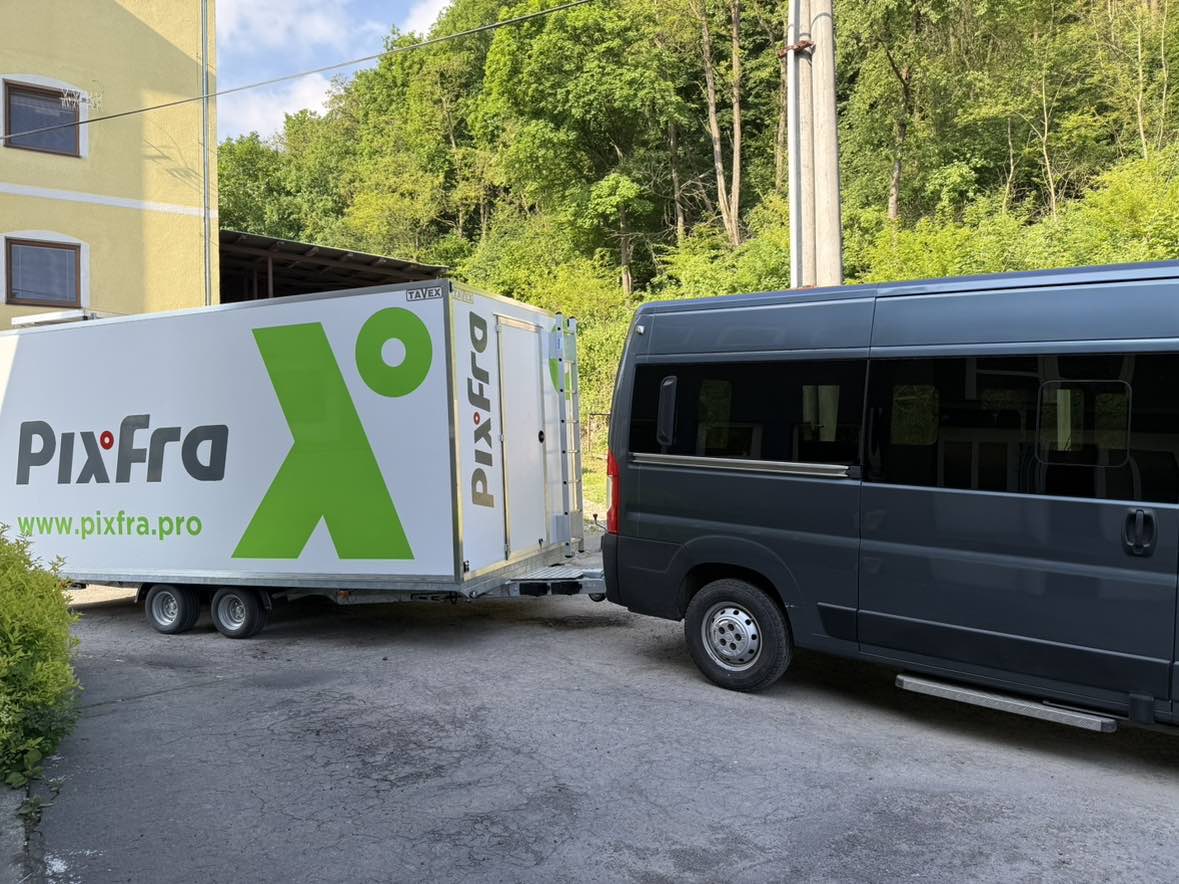
This unique setup features a dedicated exhibition trailer specifically designed to showcase Pixfra’s extensive thermal imaging product portfolio. The trailer, which can be opened to create an instant showroom, is pulled by a black transport vehicle, creating a mobile exhibition space that can travel directly to customers and events.
“This mobile exhibition approach represents the future of trade show participation,” explained the Slovakia distributor. “Instead of renting expensive booth space at exhibitions, we can now bring the entire Pixfra experience directly to our customers, allowing them to experience our products in various locations.”
The mobile showroom features Pixfra’s latest thermal imaging innovations, including the compact Mile 2 series monocular that recently won the prestigious Red Dot Design Award 2024. With its 640×512 pixel sensor, 25mm lens, and exceptional thermal sensitivity of less than 25mK, the Mile 2 weighs just 320 grams while delivering detection capabilities up to 1,300 meters. The device offers 6.5 hours of battery life, making it perfect for extended outdoor use.
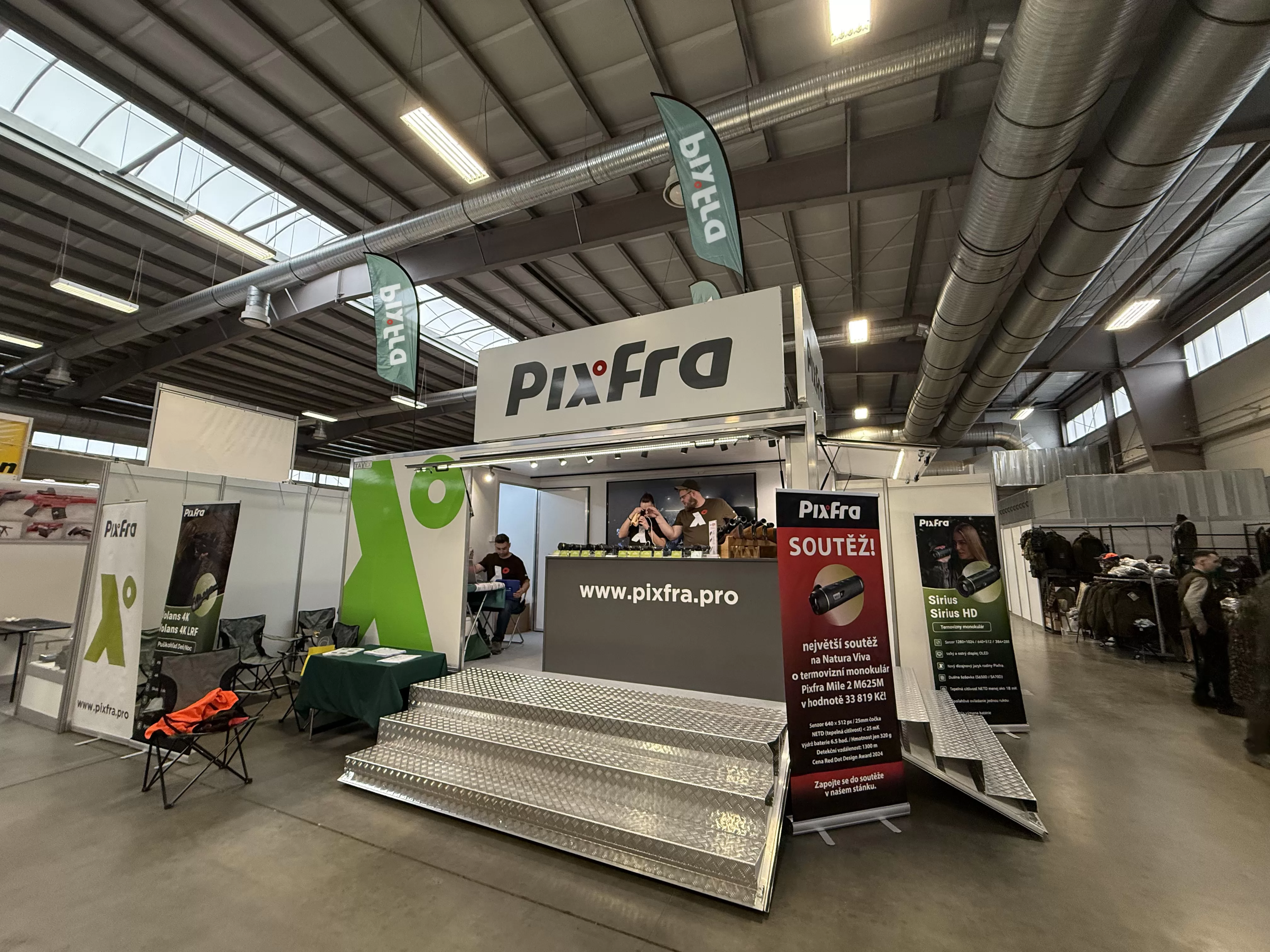
Visitors to the mobile exhibition can explore Pixfra’s complete product range, from the high-performance Sirius HD series with its 1280×1024 HD sensor, to the versatile Taurus thermal front attachments, and the advanced Chiron LRF series with integrated laser rangefinder capabilities.
Founded in 2015 and headquartered in Hangzhou, China, Pixfra has rapidly grown to serve over 150 countries with its thermal imaging solutions. The company’s products are widely used in wildlife observation, outdoor sports, emergency management, and various industrial applications.
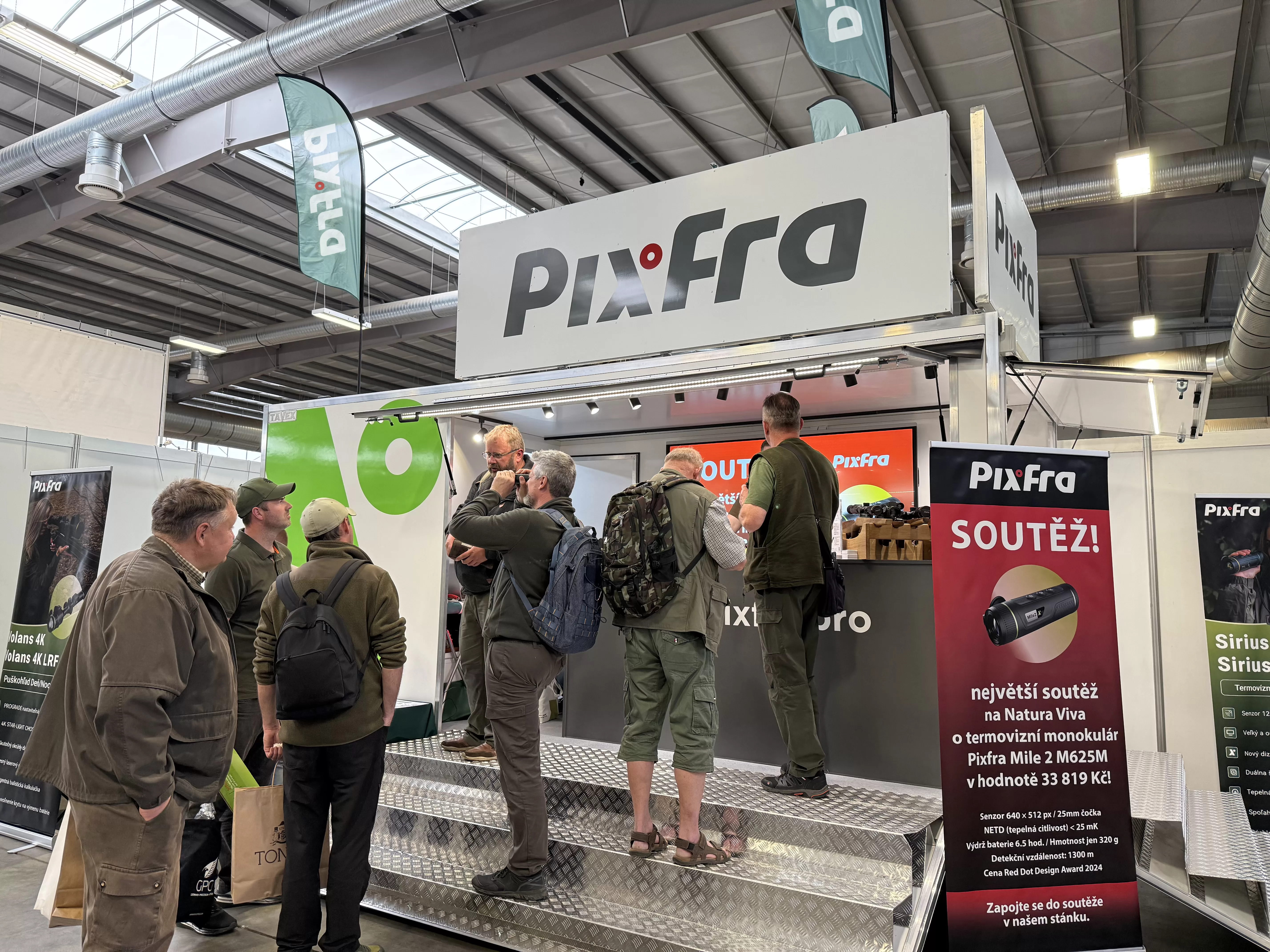
This mobile exhibition initiative in Slovakia demonstrates Pixfra’s commitment to innovative customer engagement and reflects the company’s forward-thinking approach that has earned it recognition as a national high-tech enterprise and multiple design awards.
The exhibition vehicle will be touring various locations across Slovakia and neighboring countries, bringing Pixfra’s cutting-edge thermal imaging technology directly to outdoor enthusiasts, hunters, and professional users.
In tecnología de imagen térmica, spot size is one of the parameters that directly impacts detection capability, measurement accuracy, and overall system performance. Put simply, spot size refers to the smallest area that a thermal imaging system can effectively resolve at a given distance. This parameter determines what objects can be detected and accurately measured in a thermal image, making it essential knowledge for anyone seeking optimal performance from thermal devices.
The physical principles behind spot size relate to the optical resolution of the system, which is influenced by the detector resolution, lens quality, and distance to the target. As distance increases, the spot size grows proportionally, reducing the ability to detect smaller objects or temperature differences. This relationship follows optical physics principles where the smallest resolvable detail is limited by both the optical system and the fundamental wave properties of infrared radiation.
According to research published by the European Institute of Thermal Imaging:
“Insufficient understanding of spot size calculations accounts for approximately 64% of accuracy issues reported in field-deployed thermal imaging systems, particularly in applications requiring precise measurement or small target detection.”
For users of advanced thermal systems like the Pixfra Sirius HD Series with its 1280×1024 HD sensor, understanding spot size calculation ensures the full capabilities of these high-resolution systems can be leveraged for maximum detection performance at optimal operational distances.
The calculation of spot size in thermal imaging follows a straightforward mathematical relationship that connects optical parameters with measurement distance. The basic formula for calculating spot size is:
Spot Size = (Distance to Target × IFOV)
Where IFOV (Instantaneous Field of View) represents the angular resolution of the system measured in milliradians (mrad) or degrees. The IFOV is determined by the detector size and the focal length of the optics:
IFOV = (Detector Element Size / Focal Length)
For a complete system, this translates to a practical formula where:
Spot Size (mm) = Distance (m) × IFOV (mrad)
This relationship creates what’s known as the Distance-to-Spot ratio (D:S ratio), which is often used as a specification in thermal imaging systems. A higher D:S ratio indicates a better ability to measure smaller objects at greater distances.
For example, the Pixfra Pegasus Pro Series, with its premium optics and sensor configuration, achieves superior spot size performance that enables detection of smaller temperature anomalies at greater distances compared to systems with lower optical resolution.
The detector resolution represents a fundamental limitation on spot size performance in any thermal imaging system. Higher resolution detectors, with more pixels covering the same field of view, inherently provide smaller spot sizes and better spatial resolution at any given distance.
This relationship can be illustrated by comparing different sensor resolutions available in modern thermal imaging devices:
| Resolución del sensor | Typical IFOV (mrad) | Spot Size at 100m | Practical Application |
|---|---|---|---|
| 256×192 | 1.308 | 130.8mm | Basic detection |
| 384×288 | 0.873 | 87.3mm | General purpose |
| 640×512 | 0.524 | 52.4mm | Advanced detection |
| 1280×1024 | 0.262 | 26.2mm | Premium measurement |
(Note: Values are representative and may vary based on specific optical configurations)
The Pixfra product lineup reflects this progression, with the Mile 2 Series offering configurations starting at 256×192 resolution for basic detection needs, while the premium Sirius HD Series delivers the exceptional spatial resolution of a 1280×1024 HD sensor for applications requiring maximum detection precision.
According to the International Thermal Imaging Standards Organization:
“A doubling of linear detector resolution translates to approximately a 30-40% improvement in minimum detectable object size at equivalent distances, assuming comparable optical quality.”
This relationship underscores why sensor resolution represents such a critical specification for thermal imaging performance in applications where small target detection is essential.
While sensor resolution establishes the baseline for spot size performance, the lens selection plays an equally critical role in determining the actual spot size capabilities of a thermal imaging system. The focal length of the lens directly impacts the IFOV (Instantaneous Field of View), with longer focal lengths providing smaller IFOV values and consequently smaller spot sizes at any given distance.
This relationship explains why thermal imaging devices designed for long-range detection, such as the Pixfra Taurus LRF Series with its 50mm lens option, can achieve superior spot size performance compared to wider-angle systems, even when using identical sensor resolutions.
The practical effects of lens selection can be demonstrated through a comparison of different focal length options:
For a 640×512 sensor with 12μm pixel pitch:
This relationship creates an important consideration when selecting a thermal imaging system for specific applications. Wider-angle lenses (shorter focal lengths) provide larger fields of view but at the cost of larger spot sizes, while telephoto lenses (longer focal lengths) deliver smaller spot sizes but narrower fields of view.
The versatility of systems like the Pixfra Sirius S650D model, with its innovative 25-50mm continuous zoom capability, addresses this tradeoff by allowing users to optimize between field of view and spot size based on specific detection requirements and conditions.
For hunting applications, proper understanding of spot size calculation directly translates to field performance in target detection and identification. The spot size determines the minimum size object that can be reliably detected at various distances, which is crucial for identifying game animals in complex environmental backgrounds.
Consider these practical hunting scenarios where spot size knowledge proves crucial:
According to research by the European Hunting Association:
“Hunters utilizing thermal imaging equipment properly matched to their typical engagement distances report 37% higher positive identification rates and 42% improvement in ethical shot placement compared to those using systems with inadequate spot size performance for their applications.”
The Pixfra Arc LRF Series addresses these practical hunting requirements through its balanced optical design, offering spot size performance optimized for common European hunting scenarios while integrating laser rangefinding technology for precise distance measurement—a critical component in field-applicable spot size calculation.
To simplify the application of spot size principles in the field, various calculation tools have been developed ranging from basic formulas to sophisticated digital applications. These calculators help users determine the practical limitations of their thermal imaging systems at various distances and for different target sizes.
Basic Spot Size Calculator Formula:
Spot Size (mm) = Distance (m) × IFOV (mrad)
Advanced Calculator Considerations:
Professional thermal imaging applications often incorporate spot size calculators directly into their interfaces, allowing real-time assessment of detection capabilities based on current settings and measured distances. For systems with integrated laser rangefinders, like the Pixfra Chiron LRF Series, this calculation can be performed automatically, providing users with immediate feedback on detection limitations for the current target.
The Pixfra Outdoor App, compatible with Pixfra thermal devices, includes an advanced spot size calculator that factors in the specific optical characteristics of connected devices, allowing users to:
This integration of theoretical spot size calculation with practical field applications represents a significant advancement in making complex optical principles accessible to users without specialized technical backgrounds.
One of the most prevalent misconceptions in thermal imaging relates to the interpretation of manufacturer-specified detection ranges without consideration of spot size limitations. Many users incorrectly assume that the quoted maximum detection range applies equally to all target sizes, leading to unrealistic expectations in field performance.
The reality is that detection range must always be qualified by the size of the target being detected. A thermal device might detect a large heat source (like a vehicle) at several kilometers, but be limited to detecting human-sized targets at only 1-2 kilometers, and small animals at even shorter ranges—all due to spot size limitations.
Common misconceptions include:
Misconception: “This thermal scope can detect targets at 2,000 meters” (without specifying target size)
Reality: At 2,000 meters, the system may only resolve objects larger than 1 meter across, making small animal detection impossible at this range.
Misconception: “Higher magnification always improves detection capability”
Reality: Optical magnification does not change the fundamental spot size limitations of the sensor and lens combination; it merely makes the limited resolution more visually apparent.
Misconception: “Digital zoom enhances detection range”
Reality: Digital zoom cannot overcome the physical spot size limitations; it only enlarges the pixels without adding detection capability.
Understanding these limitations through proper application of spot size calculation allows users to develop realistic expectations for their thermal imaging equipment and select systems appropriately matched to their detection requirements.
The mathematics of spot size calculation may seem technical, but the practical applications are straightforward and essential for anyone seeking to maximize the utility of thermal imaging technology. Whether for hunting, wildlife observation, security, or other applications, spot size awareness ensures users can extract the full potential from their thermal imaging systems.
As thermal imaging technology continues to advance with higher resolution sensors and improved optics, spot size performance will similarly improve—but the fundamental principles of calculation and their practical implications will remain constant.
If you’re interested in exploring how spot size calculations apply to specific thermal imaging applications or want to identify the optimal system for your detection requirements, Pixfra’s technical specialists can provide expert guidance. Our comprehensive product range—from the versatile Mile 2 Series to the premium Sirius HD Series—offers solutions tailored to diverse detection needs with clear specifications on spot size performance.
For detailed spot size calculations specific to your application or to discuss distribution opportunities in European markets, contact our technical team at info@pixfra.com or visit pixfra.com to explore our full product range. Let our experts help you select a thermal imaging solution that delivers the precise spot size performance required for your specific detection challenges.
Tecnología de imagen térmica has revolutionized the way we detect water leaks by leveraging the fundamental principle that water affects surface temperatures in predictable ways. As water leaks through structures, it creates temperature differentials that become visible to thermal imaging devices even when the moisture itself remains hidden from view. This capability stems from water’s high thermal conductivity and specific heat capacity, which cause it to absorb and transfer heat differently than surrounding dry materials. When water infiltrates building materials or ground surfaces, it creates distinct thermal patterns that appear as temperature anomalies on thermal imaging displays.
The physics behind this detection method relies on several key properties: water typically evaporates and creates cooling effects on surfaces; it changes the thermal conductivity of materials it saturates; and it retains temperature differently than dry materials during ambient temperature fluctuations. High-sensitivity thermal imaging devices, such as the Pixfra Sirius Series with its exceptional ≤18mK NETD (Noise Equivalent Temperature Difference), can detect these subtle temperature variations with remarkable precision, revealing water intrusion long before visible damage occurs.Besides this application,there are many other applications, together,they make thermal imaging cameras useful
According to research published by the European Building Research Institute:
“Thermal imaging detection can identify water leaks in building structures up to 6-8 weeks before visible signs appear, potentially reducing water damage restoration costs by 45-60% through early intervention.”
This early detection capability makes thermal imaging an invaluable tool for property maintenance, especially in regions like Central and Northern Europe where building water damage represents a significant annual economic impact.
The effectiveness of water leak detection through thermal imaging depends significantly on the technological sophistication of the equipment used. Modern thermal imaging systems have advanced well beyond basic infrared cameras, incorporating multiple enhancements that dramatically improve detection capabilities for water-related issues.
High-resolution thermal sensors, like the 640×512 detector found in Pixfra’s premium devices, provide the pixel density necessary to identify subtle temperature patterns indicative of water infiltration. This resolution allows for detailed examination of larger areas while still capturing the minute temperature differentials that might indicate early-stage water leaks. When combined with advanced optics, such as the F0.9 large aperture lens found in the Sirius Series, these systems can deliver exceptional clarity in thermal imaging.
Perhaps even more significant for water leak detection applications is the processing technology that enhances raw thermal data. Pixfra’s PIPS 2.0 (Pixfra Imaging Processing System) exemplifies these advancements, employing sophisticated algorithms that:
These technological advancements transform thermal imaging from a specialized tool into an accessible and highly effective solution for water leak detection across multiple applications and environments.
In residential settings across Europe, thermal imaging has evolved from a luxury inspection method to an essential preventive maintenance tool. Water damage represents one of the most common and costly home insurance claims, with the European Insurance Association reporting that water-related claims account for approximately 29% of all residential property insurance payouts, exceeding €5.2 billion annually across EU member states.
Thermal imaging offers homeowners and property managers a non-invasive method to:
Portable thermal devices like the Pixfra Mile 2 Series Thermal Monocular provide sufficient sensitivity (≤25mK NETD) for most residential applications while offering exceptional portability and ease of use. These compact systems allow for comprehensive property inspections without specialized training, making thermal imaging accessible to a broader range of users than ever before.
According to a study by the European Property Management Association:
“Properties that implement regular thermal imaging inspections for water intrusion report 72% fewer catastrophic water damage incidents and realize average maintenance cost savings of €0.37 per square meter annually.”
The stakes of water damage increase dramatically in commercial and industrial settings, where leaks can damage expensive equipment, disrupt operations, and create safety hazards. Thermal imaging provides a powerful preventive tool for protecting these high-value assets and ensuring operational continuity.
In industrial facilities, thermal imaging can detect:
| Application | Detection Target | Potential Savings |
|---|---|---|
| Process Piping | Leaks in water, steam, and chemical lines | Prevent costly product loss and contamination |
| Roof Systems | Moisture infiltration in flat commercial roofs | Extend roof lifespan by 30-40% |
| Cooling Systems | Water leaks in cooling towers and HVAC | Reduce energy costs and prevent equipment damage |
| Electrical Systems | Water intrusion near electrical infrastructure | Prevent catastrophic failures and fire hazards |
| Data Centers | Moisture near critical IT infrastructure | Avoid equipment damage and data loss |
The precision requirements for these applications often necessitate higher-end thermal systems. Devices like the Pixfra Sirius HD Series, with its 1280×1024 HD sensor and exceptional thermal sensitivity, provide the detailed imaging necessary for inspecting complex industrial systems where small leaks can have major consequences.
European industrial facility managers report that incorporating thermal imaging into preventive maintenance programs for water leak detection yields an average return on investment of 310% within the first 18 months, primarily through avoided downtime and equipment damage.
Beyond buildings and infrastructure, thermal imaging offers significant advantages for agricultural water management—a growing concern across Europe as climate change impacts water availability and cost. Thermal imaging can identify irrigation system leaks and inefficiencies that waste water and energy while potentially damaging crops through uneven distribution.
Modern thermal imaging devices can detect:
For agricultural applications, thermal systems with wider fields of view are often most effective. The Pixfra Arc LRF Series, with its broad detection capability and integrated laser rangefinder, allows agricultural professionals to efficiently survey large areas while precisely measuring distances to identified problem spots.
According to research from the European Agricultural Water Management Institute:
“Thermal imaging detection of irrigation system leaks has helped participating farms reduce water consumption by an average of 18.7% while improving crop yield uniformity by 12.3%, representing significant economic and environmental benefits.”
In water-stressed regions of Southern Europe, these efficiency improvements translate directly to substantial cost savings and improved agricultural sustainability.
An emerging application for thermal water leak detection extends beyond built infrastructure into environmental monitoring and conservation efforts. European environmental agencies and conservation organizations increasingly utilize thermal imaging to monitor natural waterways, detect groundwater seepage, and identify unauthorized water diversions.
These environmental applications leverage the same temperature differential principles used in building inspections but apply them to natural systems. Water moving through soil or emerging from springs creates distinct thermal signatures that can be detected with sensitive thermal imaging equipment, especially during periods when ambient and water temperatures differ significantly.
Conservation organizations have successfully employed thermal imaging to:
For these environmental applications, thermal devices with extended detection range, such as the Pixfra Pegasus Pro Series with its detection capability up to 2,600 meters, provide the standoff distance necessary to survey waterways and natural areas without disturbing wildlife or sensitive habitats.
European conservation agencies report that thermal surveys can reduce the cost of comprehensive waterway monitoring by up to 64% compared to traditional methods while significantly increasing detection rates for small-scale unauthorized water diversions.
Maximizing the effectiveness of thermal imaging for water leak detection requires understanding several key operational best practices that significantly impact results. These techniques enhance detection capabilities beyond simply pointing a thermal camera at a suspect area:
El momento óptimo: Water leak detection is most effective when temperature differentials between wet and dry areas are maximized. Early morning inspections (before solar heating) often provide ideal conditions as wet areas will have retained heat or cold differently than surrounding dry materials throughout the night.
Comparative Imaging: Establishing baseline thermal images during dry conditions provides valuable reference points for identifying anomalies during subsequent inspections.
Environmental Considerations: Wind, precipitation, and direct sunlight can all affect surface temperatures and potentially mask or create false indicators of water intrusion. Inspections should account for these environmental factors.
Multiple Angle Assessment: Viewing potential leak areas from multiple angles helps distinguish between actual moisture issues and reflective or emissivity-related anomalies.
Complementary Testing: While thermal imaging excels at identifying potential problem areas, complementary moisture meter testing of suspicious locations can confirm findings and quantify moisture levels.
According to professional water damage restoration experts:
“The combination of proper thermal imaging techniques with focused moisture meter confirmation has shown to improve leak detection accuracy by 83% compared to traditional visual inspection methods.”
Implementing these best practices ensures thermal imaging delivers consistent, reliable results across various water leak detection scenarios.
Thermal imaging has evolved from a specialized tool into an essential technology for comprehensive water leak detection across residential, commercial, industrial, agricultural, and environmental applications. By visualizing the otherwise invisible temperature patterns created by water infiltration, modern thermal devices enable early detection of issues long before visible damage occurs, offering significant economic and environmental benefits through water conservation and damage prevention.
The applications of this technology continue to expand as thermal imaging devices become more sophisticated, affordable, and user-friendly. From homeowners protecting their investments to industrial facility managers safeguarding critical infrastructure, the ability to “see” water through its thermal signature provides a powerful advantage in maintenance and conservation efforts.
As water scarcity and infrastructure aging increasingly impact European communities, the importance of effective leak detection will only grow. Thermal imaging represents not merely an improved detection method but a fundamental shift in how we approach water management and conservation across multiple sectors.
If you’re interested in incorporating thermal imaging into your water management, property maintenance, or conservation efforts, Pixfra offers a range of devices suitable for various detection applications. From the compact Mile 2 Series for residential inspections to the high-definition Sirius HD Series for demanding commercial applications, our product lineup delivers the sensitivity and resolution needed for effective water leak detection.
Si desea obtener más información sobre nuestras soluciones de termografía o hablar sobre oportunidades de distribución en los mercados europeos, póngase en contacto con nuestros especialistas en info@pixfra.com or visit pixfra.com to explore our full product range. Our team can provide expert guidance on selecting the optimal thermal system for your specific water leak detection requirements, ensuring you maximize the benefits of this powerful technology.
Para abordar la cuestión de si visores térmicos Para poder ver el infrarrojo, primero debemos comprender la relación entre la termografía y el espectro infrarrojo. El espectro electromagnético abarca radiaciones de distintas longitudes de onda, desde los rayos gamma (las más cortas) hasta las ondas de radio (las más largas). La radiación infrarroja se sitúa entre la luz visible y la radiación de microondas en este espectro, abarcando longitudes de onda que van desde aproximadamente 700 nanómetros hasta 1 milímetro.
Es fundamental tener en cuenta que el infrarrojo (IR) es una categoría amplia que incluye múltiples subbandas. El infrarrojo cercano (NIR) abarca de 0,7 a 1,4 μm, el infrarrojo de longitud de onda corta (SWIR) de 1,4 a 3 μm, el infrarrojo de longitud de onda media (MWIR), de 3 a 8 μm, y el infrarrojo de longitud de onda larga (LWIR), de 8 a 15 μm. Lo que comúnmente denominamos “imagen térmica” opera principalmente en las bandas MWIR y LWIR, detectando las señales térmicas que emiten de forma natural los objetos,y esta característica supone una gran ventaja para los cazadores.
Según la Comisión Internacional de Iluminación:
“Todos los objetos cuya temperatura sea superior al cero absoluto emiten radiación infrarroja. La distribución de longitudes de onda y la intensidad de esta radiación están directamente relacionadas con la temperatura del objeto”.”
Este principio científico constituye la base de la tecnología de imagen térmica. Los visores térmicos modernos, como los de las series Pixfra Pegasus Pro y Chiron LRF, están diseñados específicamente para detectar y visualizar la radiación MWIR o LWIR, que se corresponde con las señales térmicas emitidas por animales, personas y objetos del entorno. Por lo tanto, los visores térmicos sí que “ven” la radiación infrarroja; concretamente, las emisiones infrarrojas de longitud de onda media a larga que corresponden a las huellas térmicas.
Existe una importante distinción técnica entre las diferentes tecnologías utilizadas para detectar la radiación infrarroja. Esta distinción ayuda a aclarar qué es exactamente lo que los visores térmicos pueden y no pueden detectar en lo que respecta a la luz infrarroja.
Detección por infrarrojos pasivos (imágenes térmicas): Los dispositivos como el monocular térmico de la serie Sirius de Pixfra utilizan sensores microbolométricos no refrigerados para detectar la radiación infrarroja (calor) emitida de forma natural, sin necesidad de ninguna fuente de luz externa. Estos dispositivos funcionan principalmente en el espectro LWIR (8-14 μm) y generan imágenes basadas exclusivamente en las diferencias de temperatura.
Tecnologías de infrarrojos activos: Entre ellos se incluyen los dispositivos de visión nocturna que proyectan de forma activa luz del infrarrojo cercano (NIR, 0,7-1,4 μm) para iluminar una zona, de forma similar a una linterna, pero de manera que el ojo humano no puede verla. A continuación, esta luz proyectada es captada por cámaras especializadas.
Iluminadores de infrarrojo cercano: Estos dispositivos emiten luz NIR que los visores térmicos estándar no pueden detectar, ya que están configurados para detectar radiación MWIR y LWIR.
| Tipo de tecnología | Longitud de onda | Requiere una fuente de luz | Qué detecta | Ejemplo de Pixfra |
|---|---|---|---|---|
| Imágenes térmicas | 8-14 μm (LWIR) | No | Señales térmicas | Serie Pegasus Pro |
| Visión nocturna | 0,7-1,4 μm (NIR) | Sí (ya sea con luz ambiental o con iluminador IR) | Luz NIR reflejada | Serie Volans (apta para uso diurno y nocturno) |
| Óptica diurna | 0,4-0,7 μm (luz visible) | Sí (luz natural) | Luz visible reflejada | N/A |
Esta distinción explica por qué los dispositivos de imagen térmica, como el accesorio frontal térmico de la serie Taurus de Pixfra, pueden funcionar en completa oscuridad sin necesidad de iluminación externa: detectan la radiación LWIR que emiten de forma natural todos los objetos con temperaturas superiores al cero absoluto, en lugar de necesitar luz reflejada de ningún tipo.
La clave de la capacidad de un visor térmico moderno para detectar la radiación infrarroja reside en la tecnología de sensores microbolométricos. Comprender este componente ayuda a aclarar qué tipos específicos de radiación infrarroja pueden detectar y visualizar los visores térmicos.
Los sensores microbolométricos consisten en matrices de elementos detectores microscópicos fabricados con materiales (normalmente óxido de vanadio o silicio amorfo) que modifican su resistencia eléctrica al exponerse a la radiación infrarroja. Estos minúsculos cambios de resistencia se miden, se procesan y se convierten en una imagen térmica visible.
La sensibilidad de estos sensores se mide mediante la diferencia de temperatura equivalente al ruido (NETD), expresada en milikelvin (mK). Los dispositivos térmicos de gama alta, como la serie Pixfra Sirius HD, cuentan con sensores con valores de NETD de ≤18 mK, lo que indica una sensibilidad excepcional a diferencias de temperatura mínimas, algo fundamental para detectar firmas térmicas sutiles a grandes distancias.
La resolución también desempeña un papel fundamental en la capacidad de un visor térmico para detectar y mostrar con claridad la radiación infrarroja. Los sensores de mayor resolución, como el detector de 640×512 de la serie Pixfra Arc LRF, ofrecen una visualización más detallada de los patrones térmicos en comparación con las alternativas de menor resolución.
Según el Dr. Heinrich Müller, experto en imagen térmica del Instituto Europeo de Ciencias Térmicas:
“Los avances en la tecnología de los microbolómetros han permitido reducir los valores de NETD desde aproximadamente 100 mK en los primeros dispositivos comerciales hasta menos de 20 mK en los sistemas de gama alta actuales, lo que supone una mejora de cinco veces en la sensibilidad a la temperatura a lo largo de la última década”.”
Este avance tecnológico se traduce directamente en una mejora de la capacidad de detección para los cazadores y los observadores de fauna silvestre que utilizan equipos de imagen térmica en condiciones ambientales adversas.
Si bien el sensor físico detecta la radiación infrarroja, el procesamiento de estos datos térmicos es igualmente crucial para determinar lo que un visor térmico puede “ver” realmente. Los sistemas modernos de imagen térmica incorporan un sofisticado procesamiento de señales para mejorar las capacidades de detección más allá de lo que podrían ofrecer los datos brutos del sensor.
El sistema PIPS 2.0 (Pixfra Imaging Processing System), desarrollado por Pixfra, es un ejemplo de cómo los algoritmos de procesamiento avanzados pueden mejorar significativamente la visualización de los datos infrarrojos. Este sistema mejora la nitidez de la imagen a través de varias etapas de procesamiento:
Estas mejoras en el procesamiento amplían de forma efectiva el rango de radiación infrarroja que el usuario puede detectar e interpretar de manera significativa. Por ejemplo, en condiciones difíciles, como una ligera niebla o lluvia —que pueden atenuar parcialmente la radiación LWIR—, los algoritmos de procesamiento pueden amplificar señales sutiles que, de otro modo, podrían perderse.
El impacto real de estas capacidades de procesamiento resulta especialmente evidente sobre el terreno, donde las condiciones ambientales cambian constantemente. Una prueba de campo realizada por una asociación europea de caza reveló que:
“Los dispositivos térmicos con capacidades avanzadas de procesamiento demostraron un alcance de detección efectivo hasta 40% mayor en condiciones ambientales adversas, en comparación con sistemas que cuentan con sensores similares pero con un procesamiento de señales menos sofisticado”.”
La capacidad de los visores térmicos para detectar radiación infrarroja a distancia depende de múltiples factores que van más allá de las simples especificaciones del sensor. Comprender estos factores ayuda a los usuarios a formarse unas expectativas realistas sobre las capacidades de detección en distintos escenarios.
Resolución del sensor: Los sensores de mayor resolución (por ejemplo, 640×512 frente a 384×288) proporcionan información infrarroja más detallada a mayores distancias. La serie Pixfra Mile 2 ofrece opciones que van desde una resolución de 256×192 hasta 640×512 para satisfacer diferentes requisitos de alcance de detección.
Especificaciones de la lente: La distancia focal y la apertura influyen de manera significativa en el alcance de detección. Los sistemas ópticos con una distancia focal mayor, como el objetivo de 50 mm del modelo Pixfra Sirius S650, ofrecen un mayor aumento y un mayor alcance de detección en comparación con las alternativas de distancia focal más corta.
Condiciones atmosféricas: El vapor de agua, el polvo y las precipitaciones pueden atenuar la radiación LWIR. La alta humedad, la lluvia y la niebla reducen los alcances efectivos de detección.
Tamaño del objetivo y contraste térmico: Los objetivos más grandes, con un mayor diferencial de temperatura respecto al fondo, se pueden detectar a mayores distancias. Una matriz típica de alcance de detección podría tener el siguiente aspecto:
| Tamaño del objetivo | Contraste térmico | Alcance de detección con un sensor de 640×512 | Alcance de reconocimiento |
|---|---|---|---|
| Grande (humano/ciervo) | Alta (>10 °C) | 1.800-2.600 m | 500-900 m |
| Medium (Fox) | Medio (5-10 °C) | 900-1.400 m | 300-500 m |
| Pequeño (conejo) | Baja (<5 °C) | 400-700 m | 150-250 m |
Estos alcances corresponden a condiciones óptimas y disminuirán en caso de condiciones meteorológicas adversas o cuando los objetivos presenten un contraste térmico mínimo con su entorno.
Aunque los visores térmicos destacan por su capacidad para detectar la radiación infrarroja emitida (calor), no pueden detectar determinados fenómenos infrarrojos relacionados con la reflectividad y no con la emisión. Es importante que los usuarios comprendan esta limitación a la hora de valorar las capacidades y las limitaciones de los equipos de imagen térmica.
Los visores térmicos no pueden detectar:
Según la Dra. Anna Kowalski, del Instituto Europeo de Sistemas Ópticos:
“La idea errónea de que las cámaras termográficas pueden detectar todas las frecuencias infrarrojas genera expectativas poco realistas. Estos dispositivos están ajustados específicamente para detectar la radiación térmica emitida en el rango de 8-14 μm, lo que hace que no puedan detectar la iluminación del infrarrojo cercano ni los sistemas láser que funcionan en longitudes de onda más cortas”.”
Esta distinción es especialmente importante para los usuarios profesionales que puedan trabajar en entornos en los que se utilicen simultáneamente varias tecnologías de infrarrojos, como en la gestión de la fauna silvestre o en aplicaciones de seguridad.
Comprender las capacidades específicas de detección de infrarrojos de los visores térmicos ayuda a los usuarios a identificar las aplicaciones óptimas para esta tecnología. Los dispositivos de imagen térmica, como la serie Pixfra Taurus LRF, destacan en situaciones en las que se aprovecha su capacidad para detectar radiación infrarroja de onda media y larga:
Detección de fauna silvestre en vegetación densa: La radiación LWIR que emiten los animales penetra en la vegetación rala con mayor eficacia que la luz visible, lo que hace que los visores térmicos sean más eficaces para detectar fauna silvestre en zonas con una cobertura vegetal moderadamente densa.
Seguimiento tras el disparo: La huella térmica residual que dejan los animales de caza proporciona un rastro térmico bien definido que puede seguirse incluso cuando los rastros de sangre visibles son difíciles de detectar.
Gestión de la fauna nocturna: En el caso de las especies que se muestran activas principalmente durante la noche, como el jabalí, las capacidades de detección térmica permiten una gestión eficaz de la población sin alterar los patrones de comportamiento naturales.
Identificación de riesgos medioambientales: Los visores térmicos pueden identificar posibles peligros medioambientales, como los focos de incendios forestales, que emiten señales infrarrojas características antes de que sean visibles a simple vista.
El Consorcio Europeo para la Gestión de la Fauna Silvestre informa:
“En pruebas de campo controladas, cazadores experimentados que utilizaban equipos de imagen térmica demostraron unas tasas de detección de animales salvajes camuflados un 78% superiores a las de la óptica tradicional, y esta ventaja aumentaba hasta un 94% en condiciones de poca luz”.”
Estas ventajas prácticas se derivan directamente de la capacidad del visor térmico para detectar longitudes de onda infrarrojas específicas asociadas a las señales térmicas, en lugar de basarse en la luz visible reflejada.
Para responder directamente a la pregunta original: sí, los visores térmicos detectan la radiación infrarroja; concretamente, detectan la radiación infrarroja de longitud de onda media y larga (MWIR y LWIR), que se corresponde con las señales térmicas emitidas por los objetos del entorno. Sin embargo, no pueden detectar la iluminación del infrarrojo cercano (NIR) que utilizan los dispositivos de visión nocturna o los sistemas láser de infrarrojos.
Esta capacidad específica de detección por infrarrojos hace que la tecnología de imagen térmica resulte especialmente valiosa para aplicaciones que requieren la visualización de señales térmicas, independientemente de las condiciones de iluminación. Los visores térmicos modernos, como los de la gama Pixfra, combinan la sensible tecnología de microbolómetros con un sofisticado procesamiento de imágenes para ofrecer una capacidad excepcional de detección térmica por infrarrojos en diversas condiciones ambientales.
Comprender estas capacidades y limitaciones técnicas permite a los usuarios tomar decisiones fundamentadas sobre cuándo la tecnología de imagen térmica representa la solución óptima para sus necesidades específicas, ya sea para la observación de fauna silvestre, la caza o aplicaciones de seguridad.
Si te interesa descubrir cómo la tecnología de imagen térmica puede mejorar tus capacidades de caza u observación, Pixfra ofrece una amplia gama de productos diseñados para satisfacer diversas necesidades y presupuestos. Desde la compacta serie Mile 2 hasta la serie premium Pegasus Pro, nuestra gama de productos de imagen térmica ofrece unas capacidades excepcionales de detección por infrarrojos, respaldadas por la tecnología de procesamiento PIPS 2.0.
Si desea obtener más información sobre nuestras soluciones de termografía o hablar sobre oportunidades de distribución en los mercados europeos, póngase en contacto con nuestros especialistas en info@pixfra.com o visita pixfra.com para conocer nuestra gama completa de productos y sus especificaciones técnicas. Nuestro equipo puede ofrecerte asesoramiento especializado a la hora de seleccionar el sistema térmico óptimo para los requisitos específicos de tu aplicación, garantizando que aproveches al máximo las ventajas de esta tecnología avanzada.
Tecnología de imagen térmica ha revolucionado el panorama de la caza al cambiar radicalmente la forma en que los cazadores detectan, identifican y rastrean a las presas. A diferencia de la visión nocturna tradicional, que amplifica la luz disponible, la imagen térmica detecta las señales de calor emitidas por todos los objetos, creando una representación visual distintiva basada en las diferencias de temperatura. Esta capacidad fundamental hace que los visores térmicos sean especialmente valiosos en situaciones de caza en las que la identificación visual mediante ópticas convencionales resultaría difícil o imposible. Cabe señalar que los distintos países tienen diversas restricciones relativas a la tecnología de imagen térmica, Asegúrate de consultar la normativa correspondiente antes de utilizarlo.
Esta tecnología funciona detectando la radiación infrarroja (calor) que emiten los animales, los cuales suelen destacar claramente sobre fondos más fríos, independientemente de las condiciones de iluminación ambiental. Los modernos dispositivos de imagen térmica, como la serie Pixfra Pegasus Pro, con su excepcional NETD (diferencia de temperatura equivalente al ruido) de ≤18 mK, pueden detectar variaciones de temperatura mínimas, lo que permite a los cazadores identificar a las presas a distancias considerables, incluso a través de obstáculos ambientales como una ligera niebla o una vegetación escasa.
Según un estudio publicado en la revista «European Journal of Wildlife Research»:
“La tecnología de imagen térmica ha demostrado mejoras en la eficacia de detección de entre el 65 y el 781 TP3T en situaciones de caza con poca luz, en comparación con la óptica tradicional, con ventajas especialmente significativas en entornos con vegetación densa”.”
Esta capacidad fundamental aborda uno de los principales retos de la caza: localizar con fiabilidad a las presas en condiciones poco favorables. Para los cazadores que persiguen especies nocturnas, como el jabalí, o que gestionan depredadores, como los zorros, la imagen térmica ofrece capacidades de detección que la óptica tradicional simplemente no puede igualar, independientemente de su calidad o precio.
El alcance de detección que ofrecen los visores térmicos de calidad supone una ventaja significativa para los cazadores en diversos entornos y situaciones de caza. Los dispositivos de imagen térmica de gama alta pueden detectar animales de caza mayor a distancias superiores a los 2.000 metros en condiciones óptimas, aunque el alcance de identificación suele ser más limitado. Esta capacidad de detección ampliada permite a los cazadores avistar a la presa mucho antes de ser detectados ellos mismos, lo que les proporciona un tiempo valioso para posicionarse estratégicamente.
La serie Pixfra Chiron LRF es un claro ejemplo de esta capacidad, ya que ofrece alcances de detección de hasta 2.600 metros para caza mayor. Al combinarse con la tecnología integrada de telémetro láser, estos sistemas no solo permiten la detección, sino también la medición precisa de la distancia, algo fundamental para realizar disparos éticos y garantizar una caza eficaz.
Capacidades comparativas de detección:
| Condiciones ambientales | Óptica tradicional | Entrada térmica | Térmica premium (NETD ≤ 20 mK) |
|---|---|---|---|
| Noche despejada | 50-200 m | 500-800 m | 1.800-2.600 m |
| Niebla ligera/Lluvia | 20-50 m | 300-500 m | 800-1 300 m |
| Vegetación densa | 30-80 m | 200-400 m | 500-900 m |
| Luz natural total | 200-1.000 m+ | 300-600 m | 1.000-2.000 m |
Esta capacidad de detección ampliada se traduce directamente en el éxito de la caza, especialmente en el caso de especies que se muestran activas principalmente durante el crepúsculo o la noche. La eficacia de esta tecnología se ve reforzada por sistemas avanzados de procesamiento de imágenes como PIPS 2.0 (Pixfra Imaging Processing System), que mejora el contraste, reduce el ruido y potencia el reconocimiento de detalles —factores fundamentales para la identificación correcta de especies a grandes distancias—.
Quizás la contribución más importante que aporta la termografía a la caza se sitúe en el ámbito de las prácticas éticas. Las excelentes capacidades de identificación de objetivos permiten a los cazadores:
Estas prestaciones contribuyen directamente a las prácticas de caza responsables y a los esfuerzos de conservación de la fauna silvestre. Con dispositivos como el accesorio térmico delantero de la serie Pixfra Taurus, que cuenta con un sistema de puesta a cero de alta definición con un valor de clic ultrafino de 0,9 cm a 100 m, los cazadores pueden alcanzar una precisión excepcional en la colocación del disparo una vez que se ha identificado el objetivo de forma ética.
La Federación Europea de Caza señala:
“La tecnología de imagen térmica, cuando se utiliza correctamente, ha contribuido a una reducción de 43% en el número de piezas de caza heridas y de animales no recuperados durante las operaciones de caza nocturna controlada llevadas a cabo en varios lugares de estudio europeos”.”
Esta ventaja ética cobra especial relevancia en el ámbito de la gestión de la fauna silvestre, por ejemplo, en el control de especies invasoras o en la gestión de poblaciones que causan daños a la agricultura. La capacidad de identificar con seguridad a los animales específicos a los que se pretende dar caza, evitando al mismo tiempo a las especies protegidas o no objetivo, supone un avance significativo en la ética y la eficacia de la caza.
Una de las características más valiosas de la imagen térmica para los cazadores es su eficacia en prácticamente todas las condiciones meteorológicas y a cualquier hora del día. A diferencia de los dispositivos ópticos convencionales, que pueden verse muy limitados por la niebla, la lluvia ligera, la nieve o la oscuridad, la imagen térmica mantiene un rendimiento constante ante estas variables, y solo las precipitaciones intensas provocan una degradación significativa de la capacidad de visualización.
La serie Pixfra Arc LRF demuestra esta versatilidad gracias a su sólida resistencia a las condiciones ambientales y a su sensor de alta sensibilidad con un NETD ≤20 mK, lo que le permite funcionar con eficacia en una amplia variedad de condiciones de caza. Para los cazadores europeos, que se enfrentan a condiciones meteorológicas diversas y a menudo cambiantes, esta independencia de las condiciones meteorológicas ofrece una fiabilidad fundamental para las expediciones de caza planificadas.
Principales ventajas medioambientales:
Esta coherencia entre las variables ambientales permite a los cazadores planificar sus actividades con mayor seguridad y mantener la eficacia independientemente de la hora del día o de los cambios meteorológicos. En muchas regiones cinegéticas europeas, donde las condiciones meteorológicas pueden cambiar rápidamente, esta capacidad transforma situaciones que antes impedían la caza en oportunidades productivas.
Más allá de la caza recreativa, la tecnología de imagen térmica se ha convertido en una herramienta esencial para los profesionales de la gestión de la fauna silvestre y las organizaciones de conservación. La capacidad de esta tecnología para realizar censos de población de forma eficaz, supervisar los patrones de movimiento y aplicar medidas de control específicas la convierte en un recurso inestimable para la gestión de la fauna silvestre basada en datos empíricos.
La serie Pixfra Sirius HD, con su sensor HD de 1280×1024, es un ejemplo del tipo de sistema de imagen térmica de alta resolución que utilizan los gestores de fauna silvestre para realizar evaluaciones y seguimientos precisos de las poblaciones. Estas aplicaciones van más allá de las especies cinegéticas e incluyen:
Según un estudio publicado por la Asociación Internacional para la Gestión de la Fauna Silvestre:
“Los estudios con cámaras termográficas han demostrado mejoras en la precisión de entre 31 y 471 TP3T en las estimaciones de población de especies de ungulados nocturnos, en comparación con los métodos tradicionales de recuento con focos, lo que proporciona datos más fiables para la determinación de las cuotas de caza”.”
Esta mejora en la recopilación de datos contribuye directamente a unas prácticas cinegéticas más sostenibles, al garantizar que las cuotas de captura se basen en evaluaciones precisas de las poblaciones. Para las regiones europeas que aplican enfoques de gestión adaptativa a la caza, la imagen térmica proporciona las herramientas de seguimiento de precisión necesarias para tomar decisiones basadas en datos contrastados sobre los niveles de captura sostenibles.
Aunque la tecnología de imagen térmica ofrece importantes ventajas para los cazadores, su uso está sujeto a normativas que varían de un país europeo a otro. Conocer estos marcos legales es fundamental para los cazadores que estén planteándose invertir en equipos térmicos. El panorama normativo puede resumirse de la siguiente manera:
| País | Ropa térmica para la caza | Restricciones principales | Excepciones destacadas |
|---|---|---|---|
| España | Permitido en general | Normativa específica para cada especie | Se permite de forma generalizada en el caso de las especies invasoras |
| Francia | Permiso limitado | Autorizado para especies o situaciones concretas | Programas de gestión del jabalí |
| Alemania | Restringido en general | Reservado para uso profesional | Algunas excepciones en materia de control de plagas |
| Reino Unido | Permitido | Destinado principalmente a especies que no son de caza | Extensive use for pest control |
| Italia | Varies by Region | Administrative authorizations | Programas de gestión del jabalí |
These regulations continue to evolve as wildlife management needs change and as the technology becomes more widely adopted. For example, increasing wild boar populations and associated agricultural damage have prompted regulatory adjustments in countries like France and Germany that previously maintained stricter limitations.
The Pixfra Outdoor App, compatible with devices like the Sirius Series and Pegasus Pro Series, includes features that help hunters maintain compliance with local regulations while maximizing the utility of their thermal equipment within legal parameters. This integration of technology with regulatory awareness represents an important advancement in responsible thermal imaging use for hunting applications.
Thermal imaging devices represent a significant investment, with quality systems ranging from €2,000 to €8,000 depending on specifications and capabilities. This investment merits careful cost-benefit analysis for hunters considering adoption of the technology. Key factors to consider include:
Hunting Frequency: For frequent hunters or those involved in wildlife management, the per-use cost becomes more reasonable over time.
Target Species: For hunters focusing on nocturnal species like wild boar, the effectiveness improvement may justify higher costs compared to primarily daytime hunting.
Professional Applications: For professional hunting guides, wildlife managers, or agricultural protection, the investment may be offset by professional benefits or damage reduction.
Technical Requirements: Not all hunting scenarios require the highest specifications. For example, the Pixfra Mile 2 Series offers excellent performance for many hunting applications at a more accessible price point than the premium Pegasus Pro Series.
According to a survey conducted by the European Hunting Equipment Association:
“83% of hunters who invested in quality thermal imaging equipment reported that the technology significantly improved their hunting success rate, with 76% indicating the investment had proven worthwhile within the first year of ownership.”
For distributors and dealers, understanding this cost-benefit equation is essential for guiding customers toward appropriate thermal imaging solutions that match their specific hunting needs and budget constraints.
Thermal scopes have undeniably transformed modern hunting, offering capabilities that extend beyond conventional optics in critical dimensions: detection range, environmental adaptability, and target identification precision. For hunters operating in European contexts—particularly those involved in wildlife management, nocturnal species hunting, or challenging environmental conditions—thermal imaging provides advantages that directly translate to increased effectiveness and enhanced ethical practices.
The technology’s ability to operate across environmental conditions, detect game at extended ranges, and provide precise target identification supports both recreational hunting success and professional wildlife management objectives. While regulatory frameworks vary across European nations, the trend appears to be toward increasing acceptance of thermal imaging as a valuable tool for specific hunting applications, particularly in wildlife damage control contexts.
For hunters considering thermal imaging technology, the investment should be evaluated against specific hunting objectives, frequency of use, and regulatory context. When properly matched to these factors, thermal imaging devices like those in the Pixfra lineup can significantly enhance the hunting experience while supporting responsible and ethical practices.
If you’re interested in elevating your hunting capabilities with state-of-the-art thermal imaging technology, Pixfra offers a comprehensive range of products designed specifically for European hunting applications. From the compact Mile 2 Series for mobile hunting to the precision-focused Pegasus Pro Series for demanding applications, our product line addresses the full spectrum of hunting scenarios while ensuring regulatory compliance.
To learn more about which thermal solution best matches your specific hunting requirements, contact our European specialists at info@pixfra.com or visit pixfra.com to explore our product lineup in detail. Our team can provide guidance on regulatory considerations for your region and help identify the optimal thermal imaging solution for your hunting objectives.